• News
    • News & Views
    • RGME Activities for 2024 and 2025
    • Around & About with the RGME
    • Reviews
    • Highlights
  • Blogs
    • Manuscript Studies
      • Manuscript Studies: Contents List
    • International Congress on Medieval Studies
      • Abstracts of Congress Papers
        • Abstracts of Papers Listed by Author
        • Abstracts of Papers Listed by Year
  • About
    • Mission
    • Who We Are
      • Officers, Associates & Volunteers
      • RGME Committees
      • Friends of the Research Group on Manuscript Evidence
    • Policies & Statements
      • RGME Privacy Policy Statement
      • RGME Intellectual Property Statement & Agreements
    • People
      • Mildred Budny — Her Page
      • Adelaide Bennett Hagens
    • Activities
      • Events
      • Congress Activities
        • Sponsored Conference Sessions (1993‒)
          • Panels at the M-MLA Convention (from 2016)
        • Co-sponsored Conference Sessions (2006‒)
    • History
      • Seals, Matrices & Documents
      • Genealogies & Archives
    • Contact Us
  • Bembino
    • Multi-Lingual Bembino
    • RGME Bembino: Resources
  • Congress
    • Sponsored Conference Sessions (1993‒)
    • Co-sponsored Conference Sessions (2006‒)
    • Abstracts of Congress Papers
      • Abstracts Listed by Author
      • Abstracts Listed by Year
    • Kalamazoo Archive
    • Panels at the M-MLA Convention (2016-2019)
      • Abstracts of Papers for the M-MLA Convention
      • Panels at the M-MLA Convention (from 2016)
  • Events
    • RGME Activities for 2024 and 2025
      • 2023 Activities and 2024 Planned Activities
    • Seminars, Workshops, Colloquia & Symposia (1989–)
      • Seminars on ‘The Evidence of Manuscripts’
      • Symposia on ‘The Transmission of the Bible’
      • The New Series (2001-)
        • 2019 Anniversary Symposium Program: The Roads Taken
        • 2019 Anniversary Symposium Registration
        • 2019 Anniversary Symposium Registration Open
      • RGME Symposia: The Various Series
      • The Research Group Speaks: The Series
      • Meetings of the Friends of the Research Group on Manuscript Evidence
      • RGME Online Events
    • Abstracts of Papers for Events
      • Abstracts of Papers for Seminars on ‘The Evidence of Manuscripts’
      • Abstracts of Papers for Symposia, Workshops & Colloquia
    • Receptions & Parties
    • Business Meetings
    • Photographic Exhibitions & Master Classes
    • Events Archive
  • ShelfLife
    • Journal Description
    • ShelfMarks: The RGME-Newsletter
    • Publications
      • “Insular, Anglo-Saxon, and Early Anglo-Norman Manuscript Art at Corpus Christi College, Cambridge” (1997)
        • Mildred Budny, ‘Catalogue’
        • The Illustrated Catalogue (1997)
      • The Illustrated Handlist
      • Semi-Official Counterfeiting in France 1380-1422
      • No Snap Decisions: Challenges of Manuscript Photography
    • History and Design of Our Website
  • Galleries
    • Watermarks & the History of Paper
    • Galleries: Contents List
    • Scripts on Parade
    • Texts on Parade
      • Latin Documents & Cartularies
      • New Testament Leaves in Old Armenian
    • Posters on Display
    • Layout Designs
  • Donations and Contributions
    • RGME Donor Promise
    • 2023 End-of-Year Fundraiser for our 2024 Anniversary Year
    • 2019 Anniversary Appeal
    • Orders
  • Links
    • Catalogs, Metadata, and Databases: A Handlist of Links
    • Handlist of Resources for Manuscript Studies and Fragmentology
    • Manuscripts & Rare Books
    • Maps, Plans & Drawings
    • Seals, Seal-Matrices & Documents

  • News
    • News & Views
    • RGME Activities for 2024 and 2025
    • Around & About with the RGME
    • Reviews
    • Highlights
  • Blogs
    • Manuscript Studies
      • Manuscript Studies: Contents List
    • International Congress on Medieval Studies
      • Abstracts of Congress Papers
        • Abstracts of Papers Listed by Author
        • Abstracts of Papers Listed by Year
  • About
    • Mission
    • Who We Are
      • Officers, Associates & Volunteers
      • RGME Committees
      • Friends of the Research Group on Manuscript Evidence
    • Policies & Statements
      • RGME Privacy Policy Statement
      • RGME Intellectual Property Statement & Agreements
    • People
      • Mildred Budny — Her Page
      • Adelaide Bennett Hagens
    • Activities
      • Events
      • Congress Activities
        • Sponsored Conference Sessions (1993‒)
          • Panels at the M-MLA Convention (from 2016)
        • Co-sponsored Conference Sessions (2006‒)
    • History
      • Seals, Matrices & Documents
      • Genealogies & Archives
    • Contact Us
  • Bembino
    • Multi-Lingual Bembino
    • RGME Bembino: Resources
  • Congress
    • Sponsored Conference Sessions (1993‒)
    • Co-sponsored Conference Sessions (2006‒)
    • Abstracts of Congress Papers
      • Abstracts Listed by Author
      • Abstracts Listed by Year
    • Kalamazoo Archive
    • Panels at the M-MLA Convention (2016-2019)
      • Abstracts of Papers for the M-MLA Convention
      • Panels at the M-MLA Convention (from 2016)
  • Events
    • RGME Activities for 2024 and 2025
      • 2023 Activities and 2024 Planned Activities
    • Seminars, Workshops, Colloquia & Symposia (1989–)
      • Seminars on ‘The Evidence of Manuscripts’
      • Symposia on ‘The Transmission of the Bible’
      • The New Series (2001-)
        • 2019 Anniversary Symposium Program: The Roads Taken
        • 2019 Anniversary Symposium Registration
        • 2019 Anniversary Symposium Registration Open
      • RGME Symposia: The Various Series
      • The Research Group Speaks: The Series
      • Meetings of the Friends of the Research Group on Manuscript Evidence
      • RGME Online Events
    • Abstracts of Papers for Events
      • Abstracts of Papers for Seminars on ‘The Evidence of Manuscripts’
      • Abstracts of Papers for Symposia, Workshops & Colloquia
    • Receptions & Parties
    • Business Meetings
    • Photographic Exhibitions & Master Classes
    • Events Archive
  • ShelfLife
    • Journal Description
    • ShelfMarks: The RGME-Newsletter
    • Publications
      • “Insular, Anglo-Saxon, and Early Anglo-Norman Manuscript Art at Corpus Christi College, Cambridge” (1997)
        • Mildred Budny, ‘Catalogue’
        • The Illustrated Catalogue (1997)
      • The Illustrated Handlist
      • Semi-Official Counterfeiting in France 1380-1422
      • No Snap Decisions: Challenges of Manuscript Photography
    • History and Design of Our Website
  • Galleries
    • Watermarks & the History of Paper
    • Galleries: Contents List
    • Scripts on Parade
    • Texts on Parade
      • Latin Documents & Cartularies
      • New Testament Leaves in Old Armenian
    • Posters on Display
    • Layout Designs
  • Donations and Contributions
    • RGME Donor Promise
    • 2023 End-of-Year Fundraiser for our 2024 Anniversary Year
    • 2019 Anniversary Appeal
    • Orders
  • Links
    • Catalogs, Metadata, and Databases: A Handlist of Links
    • Handlist of Resources for Manuscript Studies and Fragmentology
    • Manuscripts & Rare Books
    • Maps, Plans & Drawings
    • Seals, Seal-Matrices & Documents

Log in

Archives

Featured Posts

2026 International Congress on Medieval Studies: Program
Episode 24. “Life with Books” (Interview with John Windle)
Announcing the Launch of RGME Bembino WP
2026 RGME Colloquium at The Grolier Club: Report
Medieval Missal Fragment as Early-Modern Cover
The Weber Leaf from Ege MS 61
"Bembino" Booklet Cover
Episode 23. “Meet RGME Bembino: Facets of a Font”
2026 RGME Colloquium on “Transformations & Renewals” at The Grolier Club
2026 Theme of the Year: “Transformations and Renewals”
A Leaf with Patchwork from the Saint Albans Bible
A Sister Leaf from a Miniature Latin Vulgate Bible
A Little Latin Vulgate Bible Manuscript Leaf in Princeton
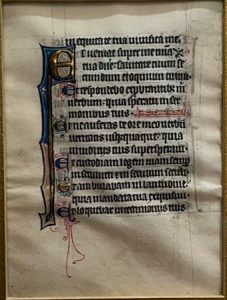
J. S. Wagner Collection. Leaf from from Prime in a Latin manuscript Breviary. Folio 4 Verso, with part of Psalm 117 (118) in the Vulgate Version, set out in verses with decorated initials.
2026 Annual Appeal
Episode 22: “Encounters with Local Saints and Their Cults”
Private Collection, Ege's FBNC Portfolio, Dante Leaf, Verso, Detail. Reproduced by Permission.
2025 RGME Autumn Colloquium on Fragments
Workshop 8: A Hybrid Book where Medieval Music Meets Early-Modern Herbal
2025 RGME Autumn Symposium on “Readers, Fakers, and Re-Creators of Books”
RGME Workshops on “The Evidence of Manuscripts, Etc.”
2025 International Medieval Congress at Leeds: RGME Program
Episode 21. “Learning How to Look”
2025 International Congress on Medieval Studies: Program
2025 RGME Visit to Vassar College
Two Leaves in the Book of Numbers from the Chudleigh Bible
Delibovi on Glassgold on Boethius: A Blogpost
Ronald Smeltzer on “Émilie du Châtelet, Woman of Science”
2025 Spring Symposium: “Makers, Producers, and Collectors of Books”
Starters’ Orders
The Weber Leaf from the Saint Albans Bible
Workshop 4. “Manuscript Fragments Compared”
Episode 20. “Comic Book Theory for Medievalists”
Episode 19: “At the Gate: Starting the Year 2025 at its Threshold”
Favorite Recipes for Lemonade, Etc.
RGME Visit to the Lomazow Collection: Report
2024 Autumn Symposium: “At the Helm”
A Latin Vulgate Leaf of the Book of Numbers
The RGME ‘Lending Library’
Florence, Italy, Ponte Vecchio from Ponte alle Grazie. Photo: Ingo Mehling, CC BY-SA 4.0 , via Wikimedia Commons
Episode 17. “RGME Retrospect and Prospects: Anniversary Reflections”
2024 Anniversary Symposium: The Booklet
Jesse Hurlbut at the Bonneville Salt Flats, Utah. Photograph Jesse Hurlbut.
Episode 16: An Interview with Jesse D. Hurlbut
To Whom Do Manuscripts Belong?
Kalamazoo, MI Western Michigan University, Valley III from the side. Photograph: David W. Sorenson.
2024 International Congress on Medieval Studies: Report
2024 Spring Symposium at Vassar College
Puente de San Martín: Bridge with reflection over the River Targus, Toledo, Spain.
2024 Grant for “Between Past and Future” Project from The Gladys Krieble Delmas Foundation Research Libraries Program
2024 Anniversary Symposium in Thanks to Jesse Hurlbut: Program

You are browsing the Blog for Uncategorized

Portfolio 93 of Ege’s “Famous Books in Eight Centuries” in the Collection of Richard Weber

June 22, 2022 in Manuscript Studies, Uncategorized

Selected Specimens,
Manuscript and Printed,
in Portfolio 93
of Otto Ege’s Famous Books in Eight Centuries (FBEC)
in the Collection of Richard Weber

[Posted on 21 June 2022, with updates]

Richard Weber Collection, Famous Books in Eight Centuries, Portfolio Set 93, Aristotle, Folio 23 Verso. Reproduced by Permission

With thanks, we offer a preliminary view of the full, and unexpected, glimpse of the Portfolio Number 93, which had been assembled by of Otto Ege (1888–1951) from manuscripts and printed books, so as to exhibit specimens of Famous Books, religious and other, from the medieval period onwards, in the Western middle ages and beyond.

This post offers a start in exploring the treasures in this set of the Portfolio.  Earlier blogposts have begun to examine the structure and elements of the Portfolio both in general and in particular.

This post takes note of the specifics, which hold some surprises.  The post builds upon some previous investigations, which establish points of departure and advances for various of the specimens in the Portfolio, both manuscript and printed.

Earlier blogposts reflect upon such possibilities and complexities.  For example:

  • Otto Ege’s Aquinas Manuscript in Humanist Script: Ege Manuscript 40
  • Otto Ege’s Portfolio of Famous Books and Ege Manuscript 53 (Quran)

We had intended to report more on the specimens of printed leaves, and not only the manuscripts, whilst other tasks called for attention.  The time has come to pick up those aspirations.
Read the rest of this entry →

Tags: Aristotle, Ege's Portfolio of Famous Books, Ege's Portfolio of Famous Books in Eight Centuries, Erfurt, Medieval Manuscript Fragments, Otto Ege Manuscript 51, Richard Weber Collection
No Comments »

More Leaves from an Old Armenian Praxapostolos

May 30, 2022 in Manuscript Studies, Reports, Uncategorized

More Leaves from
an Old Armenian New Testament Manuscript:
The “Kurdian/Chicago Praxapostolos“

Separate Leaves on Vellum
from the Acts of the Apostles
in Different Collections

Double columns of 27 lines in bolorgir minuscule script,
with rubrications and Euthalian apparatus

1) Private Collection: Acts 16:24 [middle] – 17:6 [middle]

2) Richard Weber Collection: Acts 20:5 [beginning] – Acts 20:26 [end]
(Leaf size: 10.2 x 13.7 cm; Written area: 7.1 x 10.2 cm; Column width: 3.2 cm)

[Posted on 30 May 2022, with updates]

"Cover, with the opening of Acts 23:12"

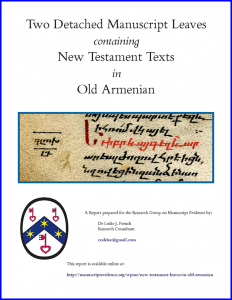
Research Group on Manuscript Evidence, “Two Detached Leaves” Booklet Cover, with the opening of Acts 23:12.

More leaves emerge into view from a dismembered manuscript in Old Armenian with selections from the New Testament. Apparently it comprised a copy of a Praxapostolos, that is, containing parts of the New Testament without the Gospels and certain other Books.  We have examined several leaves from this book before.

Some earlier blogposts, and an RGME Research Booklet, have introduced other leaves from the same manuscript.

  • New Testament Leaves in Old Armenian
    reporting “A Pair of Leaves [in a Private Collection] Identified, Described, Collated, and Set into the Context of its Manuscript”
  • Leslie J. French, Two Detached Manuscript Leaves containing New Testament Texts in Old Armenian: A Report prepared for the Research Group on Manuscript Evidence (RGME, 2015)
  • The Plot Thickens
    reporting on “A New Leaf Found at the University of Pennsylvania
    from the “Kurdian/Chicago New Testament Praxapostolos[?]
    in Old Armenian”

For the Research Report, Armenian glyphs were designed for the Research Group’s multi-lingual digital font Bembino, freely available on our website.  (See Multi-lingual Bembino.)

As the word spreads, the story grows.

After those reports, we were contacted by Sani Eskinazi (then at Stanford University), as he worked to complete a Final Project for History 14N on “Reconstituting an Armenian Bible from the 15th Century” (2019), based upon a leaf in Special Collections with part of II Corinthians:  Stanford University Libraries, M0297, Box 1, Item 103. With Sani’s expected collaboration, we continue to prepare an updated and expanded version of the Report Booklet.

Meanwhile, it is time to show some more leaves from the same manuscript, as custodians and owners respond to our blogpost, and wish to share their materials more widely. As part of the work for the updated Report, here we present two leaves which have come to our attention this year.

First, we recall some other leaves from the manuscript.  (See below.)

Next we present the “new” leaves. Each of them was purchased online as a separate leaf, with or without an accompanying label. Each presents part of the text of the Acts of the Apostles.

1) One has come to the same Private Collection with the two leaves which prompted both our first blogpost on the manuscript and its accompanying Report Booklet. Those two leaves are considered to be Folios “I” and “II” in the collection; the new one is its Folio “III” (or “3”).

2) The other belongs to the collection of Richard Weber. While we prepare a report, or series of reports, on a group of other materials in his collection, manuscript and printed, we begin with the Old Armenian New Testament Leaf which he purchased on its own (plus label) from an online seller, who had little information about it.

Read the rest of this entry →

Tags: Dawson's Bookshop, Kurdian/Chicago Praxapostolos, manuscript fragments, Medieval Manuscript Fragments, Old Armenian, Old Armenian New Testament Praxapostolos, Otto F. Ege, Portfolio of Original Leaves from Famous Bibles, Richard Weber Collection, University of Pennsylvania Libraries, Zohrab Bible
No Comments »

Another Leaf from a Portable Manuscript Bible in the Collection of Birgitt G. Lopez

May 18, 2022 in Manuscript Studies, Uncategorized

Another Latin Bible Manuscript Leaf
in the Collection of Birgitt G. Lopez

Single Leaf from a Latin Vulgate Bible
Folio “74[?]” with Part of the Book of Daniel

Daniel 9:11 ([. . . et declinaverunt / ] ne audirent)
– 11:30 (et cogitabit [ / advesum eos . . . ])

Double Columns of 56 lines

Written in Gothic Script
with Running Titles, Initials, Pen-flourishes, and Annotations
including a Modern Folio Number
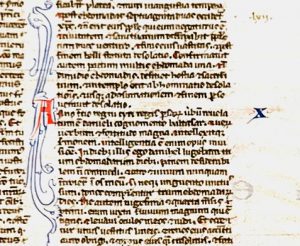
Collection of Birgitt G. Lopez, Vulgate Bible Manuscript Leaf purchased in London around 2000: Recto with opening of Daniel Chapter X.

[Posted on 17 May 2022]
Collection of Birgitt G. Lopez, Framed Leaf from ‘Otto Ege Manuscript 20’, Front-Facing Page (“Recto”).
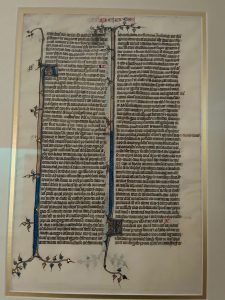
Collection of Birgitt G. Lopez, Framed Leaf from ‘Otto Ege Manuscript 14’.

Following our blogpost reporting Two Ege Manuscript Leaves and Two Ege Labels in the Collection of Birgitt G. Lopez, we learn of another leaf in the same collection, with a different provenance.  Those two Ege leaves and labels pertain to three manuscripts dismembered and distributed by Otto F. Ege (1888–1951).  That is,

  • with a leaf from “Otto Ege Manuscript 14” and its Ege Label,
  • an Ege Label from “Ege Manuscript 54”, and
  • a leaf from “Ege Manuscript 20”.

They all pertain to books of the Latin Vulgate Bible, either as full Bibles in large or small format, or as the Book of Psalms in a separate volume (or Psalter) in small format. They came to their collector in stages, by purchase at auction at the Dallas Public Library in 1998, or as a gift in 2003 from its former Librarian, Lillian Moore Bradshaw (1915–2010), with a mix-up at some stage between labels and leaves.
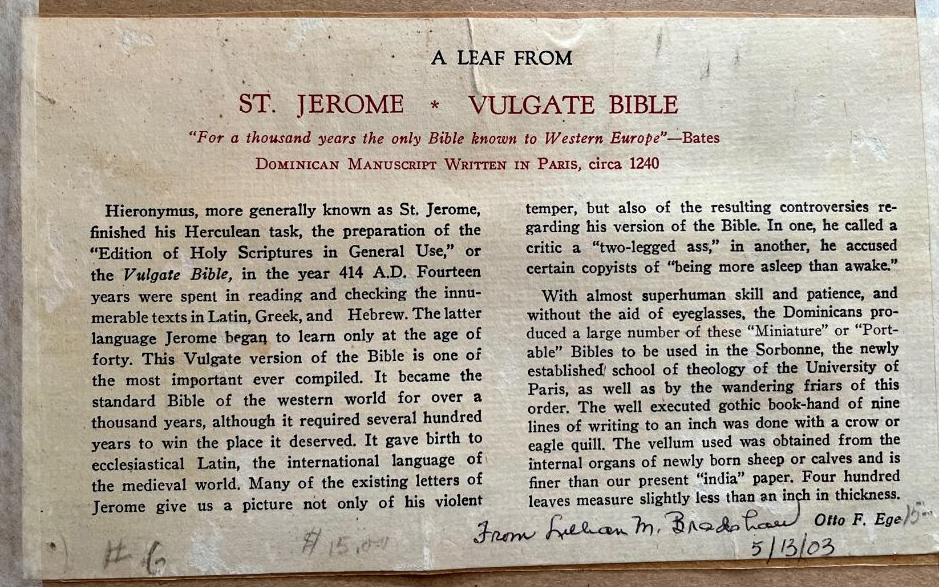
Collection of Birgitt G. Lopez, Otto Ege Label for “Ege Manuscript 54”.

The Next Leaf

The next leaf reaching our attention came from a small-format Vulgate Bible manuscript.  In correspondence, Ernesto Lopez reports that he purchased the leaf in London, England, around the year 2000.

The unframed leaf and its seller’s label tell the story of a pattern of transmission of a dismembered medieval manuscript leaf which, at some stage in transmission after dismemberment, lost a record of connection to the original book.  Here we examine the label and both sides of the leaf, as revealed in the collector’s photographs, generously supplied for study and for presentation here to a wider world.

The Seller’s Label

With the leaf is a folded rectangular paper label with printed or print-out text in two halves above and below the fold-line which would permit the label to stand upright, say in a case or on a shelf.  The upper half of the sheet, above the fold line, identifies the seller, the Parthenon Gallery in London, purveyor of “Ancient coins, antiquities & fossils”.  This gallery is still located in the same place, at 25, Bury Place, WC1A 2JH.
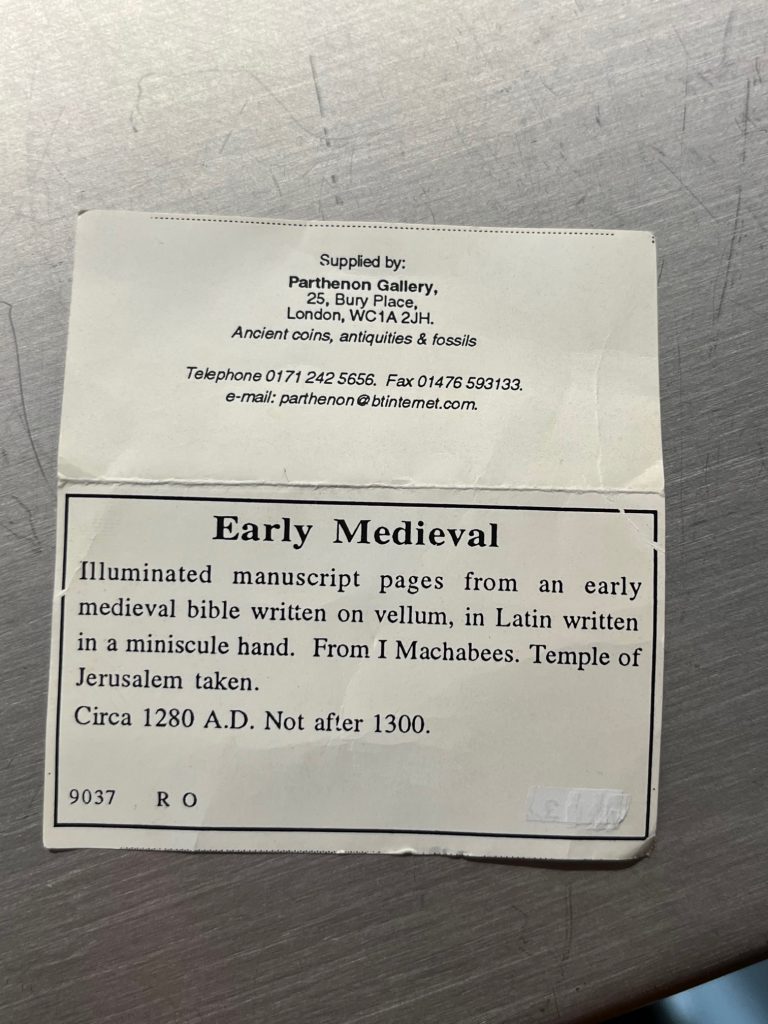
Within a rectangular frame, the lower half of the label calls the specimen “Early Medieval”.  Details cite the item as comprising “Illuminated manuscript pages [sic] from an early medieval bible written on vellum, with Latin written in a miniscule hand”; identifies the contents as part of the text of “I Machabees, relating the episode of “The Temple taken”; and dates the item to “Circa 1280 A.D. Not after 1300.”

At the bottom of the frame, at the left, there stands the printed identifier “9037   R  0”, in arabic-numbers-plus-letters (or-letter).   At the right, layered pieces of gauze tape cover the price identifier, which is partly visible in show-through, beginning with the currency-identifier for pounds sterling (£).

The Leaf

Side 1

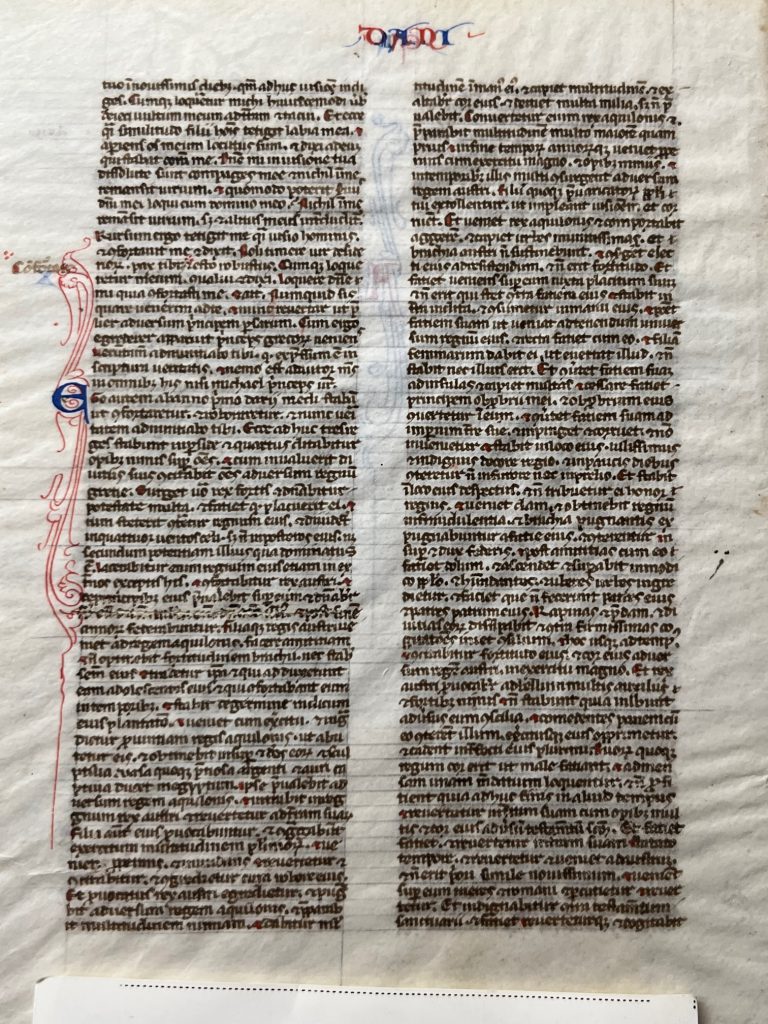
To begin with, we saw a photograph of only one side.  The cropped edges of the photograph do not offer indications of which side of the leaf it is, whether recto or verso.  We decided to examine the image for what it might show.
The Text

Despite the label, this leaf does not belong to any part of the First Book of Maccabees (I Maccabees). Instead it has part of the text in the Book of Daniel.

The text on the page starts within Daniel 10:14 ([ . . . sunt populo / ] tuo in novissimis diebus, quoniam adhuc visio in dies).   The page ends in the middle of 11:30 (et faciet: reverteturque, et cogitabit [ / advesum eos . . . ]).

The enlarged initial signals the beginning of Chapter 11:1, which reads:  Ego autem ab anno primo Darii Medi stabam ut confortaretur et roboraretur.  Rendered in blue pigment, the initial E stands outside the column of text.  Above and below the letter extend pen-flourishes in red pigment, which reach most of the height of the column. In places, the flourishes form the outlines of foliate motifs, sometimes branching, with rippled contours in some places.

Show-through from the opposite side of the leaf indicates that a similar enlarged chapter-initial, with pen-flourishes, stands in the intercolumn, pertaining to a place in column b, about one-quarter of the way down its course.  Chapter 12 would begin with an initial I:  In tempore autem . . .  Chapter 10 would begin with an initial A:  Anno tertio Cyri regis Persarum . . .  On the strength of those different letter-forms, it is tempting to guess that that opposite side of the leaf carries the last part of Chapter 9 and the first part of Chapter 10.

Even the running title points to the Book of Daniel.  Centered at the top of the page , the bichrome red-and-blue capital letters designate the first part of the name:  “DANI-“.  Given the orientation, this portion of a bi-partite title on a verso would be complemented by the second portion on the formerly facing recto of the next leaf in the book.

An addition in ink in the left margin supplies a missing word confortare, with a signe-de-renvoi linking it with its place in the text, within Daniel 10:19

et dixit: Noli timere, vir desideriorum: pax tibi: confortare, et esto robustus. Cumque loqueretur mecum, convalui, et dixi: Loquere, domine mi, quia confortasti me.

The signes-de-renvoi take the form of an identical pair of triple dots in triangular formation in red pigment.  One twin stands at the upper left of the correction.  The other hovers in the interline at the place within the column of text where the insertion is to be supplied.  A wash of red pigment enhances the bow of the somewhat enlarged letter c, like various minor text initials in the columns of text.

At first, when I examined the photograph of this page, some features, including forms of the pen-flourishing, reminded me especially of a couple of Vulgate Bible manuscripts dismembered by Otto Ege and distributed in more than one of his several Portfolios of specimen leaves from manuscripts and printed books.

The pair of manuscripts , which I come on occasion to think of as “Otto Ege Manuscript 9 + Manuscript 54”, featured in my recent blogpost exploring the Two Ege Manuscript Leaves and Two Ege Labels in the Collection of Birgitt G. Lopez.  Their numbers derive from the different positions of cataloguing the two manuscripts in Scott Gwara’s Handlist of Ege’s Manuscripts.  They figure on the one hand as its Handlist Number 9 (for its position among the numbered specimens in the Fifty Original Leaves Portfolio, or FOL) on the one hand; and, on the other, as its Handlist Number 54 (for both versions of the Original Leaves from Famous Books Portfolio, respectively in Eight and Nine Centuries, or FBEC and FBNC).  For citations, please see that earlier blogpost.

The overlap or perhaps sometimes confusion between the two manuscripts results from the distribution of their respective specimens sometimes in FOL and sometimes in the versions of Famous Books , as substitutions might arise in the course of assembling individual sets of one or other Portfolio.  For example, the manuscript normally deployed for Number 9 in FOL sometimes did service in FBEC or FBNC.   The other manuscript sometimes or normally deployed instead for FBEC (as Leaf 1) or FBNC (as Leaf 2), has Gwara’s assigned Number 54.

If this seems complicated, welcome to the world of Ege Manuscript Studies!  Fortunately, careful and precise examination of the individual cases can aid the process by bringing a strong dose of recognition of their specific characteristics.

Ege’s Labels for these two manuscripts, curiously interlinked or intermixed in Ege’s distribution patterns, identify them differently as

  • a Bible written written in France, specifically Paris, in the middle of the XIIIth Century (FOL), or
  • a Bible written by Dominicans in Paris circa 1240 (FBNC)
    — as seen above, in one of the Ege Labels in the Collection of Birgitt G. Lopez.

For the two books Gwara prefers an attribution of “France, ca. 1250” (No. 9 for FOL and FBEC); and “Northern France, ca. 1250” (No. 54 for FBEC and FBNC), with cross-references between both numbers.  Gwara’s list notes different numbers of lines for those two items, with script in double columns respectively of “53 lines” and  “57 lines”.

The variation in numbers of lines per column and page in a single volume with closely-spaced text is not unaccustomed in small-format Vulgate Bible manuscripts of the period, so that the span of 56 lines on the Lopez Leaf under examination here, like some stylistic variations in script and pen-flourishes, need not in themselves rule out a possible association or connection with that Ege manuscript.

The point is that the general resemblance only, without closer inspection, brings to mind rather similar manuscripts from Ege’s collection whose features I have been recently been surveying, in the quest to sort out the partly divergent evidence of the Ege Labels and Leaves with a Dallas Public Library in the Collection of Birgitt G. Lopez.

More information comes to light on the other side of the leaf from London.

Side 2

Next, upon request, we could see the other side, revealing the full expanse of the leaf, insofar as it survives, and with a scale to indicate size.
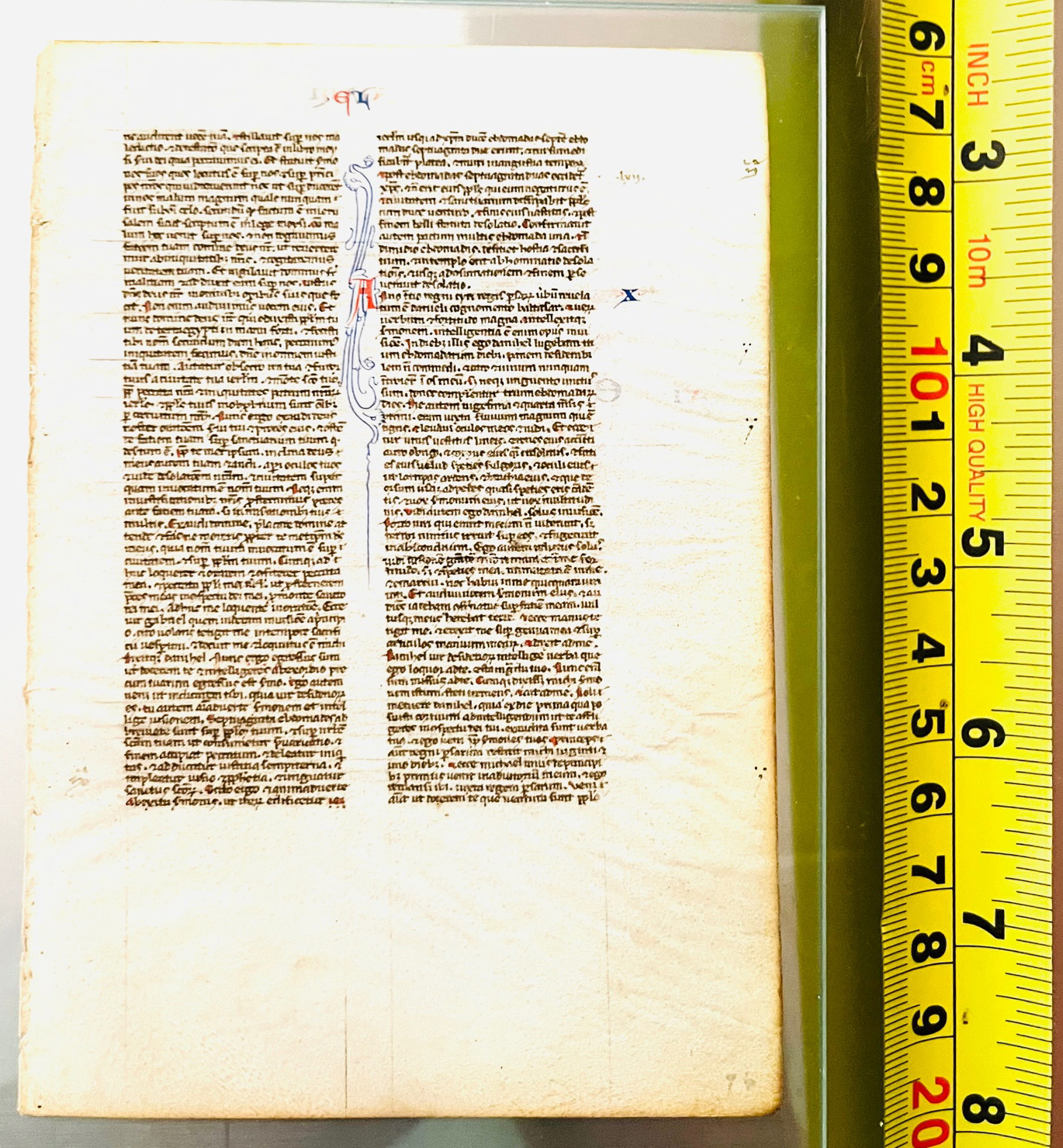
Collection of Birgitt G. Lopez, Vulgate Bible Manuscript Leaf purchased in London around 2000: Recto with Scale.

This page shows some tell-tale features pertaining to the structure, location, and forms of use of the leaf within its former book.  They include annotations which provide medieval references in ink in the outer margin and a modern folio number in pencil at the bottom right.  The edge of the gutter, or stitching line, remains at the right-hand contour, while the wider expanse of the outer margin on the opposite edge appears to represent its full original extent.

In that outer margin stand the blue Chapter numeral X; a mark designating the roman numeral lvii or lxii (“lvij” or “xlij”) opposite line 4 of the text; an abbreviated mark awaiting decipherment to its right; a vertical set of three marks at intervals down the page, in the form of triple dots in triangular formation atop a leftwards-curving tail (let’s cite it here as “;”); and the arabic numeral 74, 75, or 76[?] in the lower outer corner.

At the top of the page stands part of of a bipartite running title in bichrome Gothic Capitals, forming the second half of the name for the Biblical Book of [DANI-/]EL.

Evidently, this side of the leaf is the original recto.
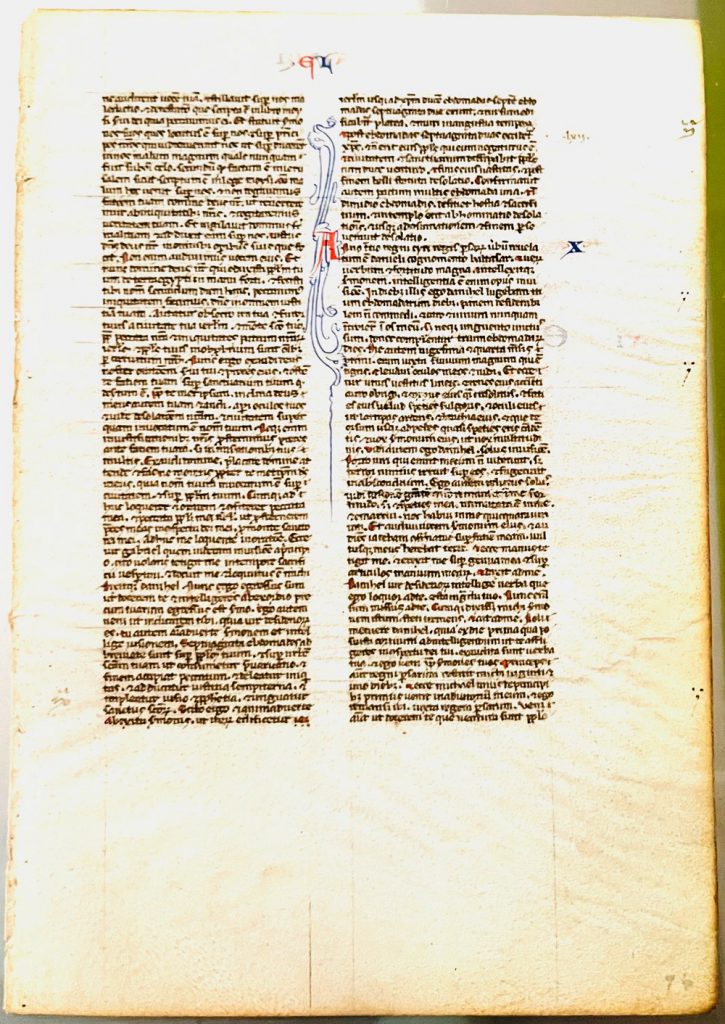
Collection of Birgitt G. Lopez, Vulgate Bible Manuscript Leaf purchased in London around 2000: Recto.

The text begins within Daniel 9:11.

[11 Et omnis Israël prævaricati sunt legem tuam, et declinaverunt / ] ne audirent vocem tuam: et stillavit super nos maledictio et detestatio quæ scripta est in libro Moysi servi Dei, quia peccavimus ei.

The marks opposite line 4 in the outer margin, lvij or lxij, plus a larger abbreviation to its right, might signal the passage for reading.  The ‘;’ markings at intervals opposite more lines lower down might be related to the readings from Daniel for the 21-day fast.  See:

  • https://likeabubblingbrook.com/daniel-fast-scripture-readings/

The listed readings in that resource do not exactly line up with this version, but it is the closest which we have found so far.

*****

Further research might identify which Vulgate Bible manuscript gave this specimen, somehow to reach the antiquary shop in London.  As yet, it is unclear by which time and where the leaf acquired its modern folio number within the original volume, became separated from the book, and acquired its inventory number, selling price, and label, giving an attribution to a different text, and a particular passage, from a different Biblical Book in the Old Testament.  We might assume, say, given the plural “pages” in the label, that its text was drafted to identify a group of specimens from the specific manuscript, laid out in an array from which a purchase might be selected.  From them one, but not this one, could correspond to the specified passage about the Temple in I Macabees.

Perhaps the formula which the label assigns to the date-range of the specimen, like the citation of “I Machabees”, will provide a clue to its former location in a source-manuscript, according with a form of identification not unlike some employed by, say, Otto Ege, in labeling the dismembered pieces for distribution and perhaps offering a selling-point.  For now, we might begin to look for Vulgate Bible specimens in double columns of around 56 lines, with comparable dimensions, and with corresponding folio numbers, all of which are identified as dating from “Circa 1280 A.D. Not after 1300.”

The modern folio number points to a different manuscript than the one which first came to mind when I saw a photograph from its “first side”, perhaps probably because that manuscript was fresh in mind.  Some Ege manuscripts have modern folio numbers, entered before the books were taken to pieces.  (See, for example, More Leaves from “Otto Ege Manuscript 51”.) But not, apparently, any leaves from Ege MS 9 or MS 54.  The quest is open.

I invite your advice.

*****

Do you know of more leaves from this manuscript?  Do you recognize the hands of these scribes, artists, and annotators in other parts of this book or in other manuscripts?

You might reach us via Contact Us or our Facebook Page. Comments here are welcome too. We look forward to hearing from you.

Watch our blog on Manuscript Studies for more discoveries. Please visit its Contents List.

*****

Tags: Book of Daniel, Book of I Macabees, Latin Vulgate Bibles, manuscript fragments, Otto Ege Manuscript 14, Otto Ege Manuscript 20, Otto Ege Manuscript 54, Otto Ege Manuscript 9, Otto Ege Manuscripts
No Comments »

Two Ege Leaves and Two Ege Labels in the Collection of Birgitt G. Lopez

May 10, 2022 in Manuscript Studies, Uncategorized

Two Ege Leaves in Frames
with
Two Ege Labels

in the Collection of Birgitt G. Lopez

(Ege MS 14, MS 20, and MS 9 + 54)

Mildred Budny

Collection of Birgitt G. Lopez, Framed Leaf from ‘Otto Ege Manuscript 20’, Front-Facing Page (“Recto”).

[Posted on 10 May 2022, with an update]

Acquired separately in Dallas, Texas, over the course of some five years and through the Dallas Public Library, two vellum leaves from manuscripts dispersed through Otto F. Ege (1888–1951) now belong to a single collection, that of Birgitt G. Lopez. The two leaves, differing in size, script, layout, and type of book, come from two different manuscripts from Ege’s collection.  With each leaf travelled a printed Label composed and printed by Ege to accompany the dispersed specimens of the particular manuscript.

Each leaf has been reframed.  Its identifying Label is retained and taped to the back of the frame.  Recently, after a visit to Dallas Public Library to examine its relative from one of those Ege manuscripts, Mr. Lopez contacted me, at the suggestion of the Librarian, and generously offered to share information about both Ege leaves in the collection with our and others’ study of Ege materials.

The Links of Transmission from Otto Ege

When reporting the existence of the leaves to me, Ernesto Lopez recollects that the first leaf was purchased at an auction benefiting the Dallas Public Library.  The second was a gift some five years later from Lillian Moore Bradshaw (1915–2010), long-time Director of the Dallas Public Library (1962–1984).

Mr. Lopez reports:

I purchased the first one in an auction benefiting the Dallas Public Library 1998 and the second one was a gift in 2003 from Lillian Bradshaw, the long-time Dallas Public Library Director.  Ms. Bradshaw told me at the time that she purchased the items directly from Mr. Ege; I have the letter laying out the provenance in Ms. Bradshaw’s hand.  . . . .  She told me [that] she was working in the Dallas Public Library’s Director’s office when Mr. Ege came to make a sales call. . . . I served eight years on the Dallas Municipal Library Board where I got to know Mrs. Bradshaw.

Also:

Several months ago, I went to the Rare Books collection at Dallas Public Library to do some research on the two leaves that I own.  The Rare Books Librarian gave me your email address so that my two leaves can be added to the body of work your group is doing on the Otto Ege manuscripts.

I framed both of the leaves leaving the explanatory text from Otto Ege on the back of the framed works.
The first leaf is similar to the leaf in the Dallas Public Library collection. It is roughly 15″ by 10″.

With permission, we publish images and report some preliminary research results, which can aid in allowing the leaves to become more widely known in their own right.

Read the rest of this entry →

Tags: Beinecke Rare Book & Manuscript Library, Collection of Birgitt G Lopez, Dallas Public Library, Ege FOL Portfolio, Ege Labels, Ege's Portfolio of Famous Bibles, Ege's Portfolio of Famous Books, Lilian Moore Bradshaw, manuscript fragments, Otto Ege Manuscript 14, Otto Ege Manuscript 20, Otto Ege Manuscript 54, Otto Ege Manuscript 9
1 Comment »

2022 Spring Symposium on “Structures of Knowledge”

March 15, 2022 in Abstracts of Conference Papers, Conference, Conference Announcement, Uncategorized

2022 RGME Spring and Autumn Symposia
on “Structured Knowledge”

1 of 2: Spring Symposium
“Structures of Knowledge”
Saturday, 2 April 2022 (Online)

2020 Spring Symposium "From Cover to Cover" Poster 2

2020 Spring Symposium Poster 2

[Posted on 15 March 2022, with updates]

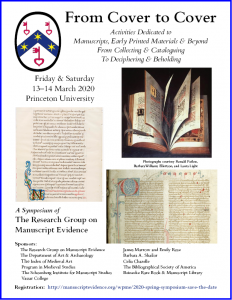
In 2022, the Research Group returns to our series of Symposia (formerly held in person). The series underwent an interruption with the cancelled 2020 Spring Symposium, “From Cover to Cover”. See its record in the illustrated Program Booklet, with Abstracts of the planned presentations and workshops. Its core and its promise inspire this renewal.

This year, each Symposium in the pair is designed as a one-day event, with sessions and workshops of about 1 and 1/2 hours, giving scope for discussion. The Spring Symposium will be held online by Zoom. (The Autumn Symposium would be held online, but, conditions permitting, it might be hybrid, that is, partly in person, as well as online.) See 2022 Spring and Autumn Symposia.

  1. Structures of Knowledge (Spring)
  2. Structures for Knowledge (Autumn)

These events, by request, flow in addition to — and partly from — our other activities during the year:

1) Continuing Episodes in the online series of The Research Group Speaks (2021–)

  • https://manuscriptevidence.org/wpme/the-research-group-speaks-the-series/
  • Catalogs, Metadata, and Databases (Part I)

2) Our four sponsored and c0-sponsored Congress Sessions at the 57th International Congress on Medieval Studies (online) in May

  • https://manuscriptevidence.org/wpme/2022-international-congress-on-medieval-studies-program
    (Abstracts of the Papers are included).

Structured Knowledge (Parts I and II)

The interlinked pair of Spring and Autumn Symposia examine themes of Structured Knowledge.

Some proposed presentations at these Symposia offer refreshed materials which had been planned for the cancelled 2020 Spring Symposium.

  • See https://manuscriptevidence.org/wpme/2020-spring-symposium-save-the-date, with a published Program Booklet including illustrations and Abstracts.
The Spring Symposium is dedicated to “Structures of Knowledge”. The Autumn Symposium considers “Supports for Knowledge”. Sessions include approaches to databases and library catalogs; specific case studies and projects; issues relating to reproductions and display, research and teaching, and more.

Part I: Spring Symposium (Saturday, 2 April 2022)
on “Structures of Knowledge”

Note: If you wish to register for the Symposium, please contact director@manuscriptevidence.org.

Eugene, Oregon, University of Oregon, Knight Library, MS 027, folio 25r. Manicle as outstretched paw, with cuff. Photography Zoey Kambour.

Presenters, Respondents, and Presiders for the Spring Symposium include (in alphabetical order): Phillip A. Bernhardt-House, Linde M. Brocato, Mildred Budny, Katharine C. Chandler, Barbara Williams Ellertson, Howard German, Hannah Goeselt, Thomas E. Hill, Eric. J. Johnson, Zoey Kambour, David Porreca, Jessica L. Savage, Derek Shank, Ronald Smeltzer, and David W. Sorenson.

As the Program evolves, adapting to changes in some speakers’ plans or requirements, we thank all the speakers who responded willingly to such changes, even at short notice, for example by expanding an intended “Response” to a “Presentation”, or the reverse, so as to keep to the time-allotments of the Sessions. We also thank the Presiders for their help in monitoring each of the Sessions during the course of the Symposium.
We acknowledge, with thanks, the renewed sponsorship of the Symposia this year by Barbara A. Shailor.

Read the rest of this entry →

Tags: Advertisements in Early Scientific Publications, BASIRA Project, Book Arts, CANTUS Chant, Decretals of Gregory IX, Esoterica, Fragmentarium Database, Gobelin Tapestries, History of Cataloging, History of Paper, Library Catalogues, Lima (OH) Public Library Staff Loan Assistance Fund, Louise Ege, Manuscript studies, Otto Ege Collection, Otto Ege Manuscript 6, Otto F. Ege, Shahnameh, Structured Knowledge, Structures of Knowledge, Tale of Cupid and Psyche, The Ohio State University, University of Oregon MS 027, Vassar College Library, Warburg Institute Library
No Comments »

2022 Spring and Autumn Symposia

March 2, 2022 in International Congress on Medieval Studies, Kalamazoo, Manuscript Studies, Research Group Speaks (The Series), Uncategorized

Spring and Autumn Symposia 2022
2 April and 15 October

2020 Symposium "From Cover to Cover" Poster 2

2020 Symposium Poster 2

The Research Group prepares a pair of Symposia in 2022. In this way, we return to our series of Symposia (formerly held in person). The series underwent an interruption with the cancelled 2020 Spring Symposium. That Symposium was planned for subjects extending From Cover to Cover:  Activities Dedicated to Manuscripts, Early Printed Materials & Beyond, From Collecting & Cataloguing to Deciphering & Beholding.  It has its record in the illustrated Program Booklet, with Abstracts of the planned presentations and workshops.  Its core and its promise inspire this renewal.

This year, each Symposium in the pair is designed as a one-day event, with sessions and workshops of about 1 and 1/2 hours, giving scope for discussion. The dates are set for Saturday 2 April and Saturday 15 October (The “Sweetest Day”). The Spring Symposium will be held online by Zoom. The Autumn Symposium would be held online, but, conditions permitting, it might be hybrid, that is, partly in person, as well as online.

These events, by request, flow in addition to — and partly from — our other activities during the year:

1) Continuing Episodes in the online series of The Research Group Speaks (2021–)

  • https://manuscriptevidence.org/wpme/the-research-group-speaks-the-series/

2) Our four sponsored and c0-sponsored Congress Sessions at the 57th International Congress on Medieval Studies (online) in May

  • https://manuscriptevidence.org/wpme/2022-international-congress-on-medieval-studies-program
    (Abstracts of the Papers are included).

“Structures of Knowledge” (Spring)
and “Supports for Knowledge” (Autumn)

The interlinked pair of Spring and Autumn Symposia examine themes of Structured Knowledge.

Some proposed presentations at these Symposia offer refreshed materials which had been planned for the cancelled 2020 Spring Symposium.

  • See https://manuscriptevidence.org/wpme/2020-spring-symposium-save-the-date, with a published Program Booklet including illustrations and Abstracts.
Sessions under consideration include approaches to databases and library catalogs; specific case studies and projects; issues relating to reproductions and display, research and teaching, and more.

A Monk Reflects Upon the Text. Eugene, Oregon, University of Oregon, Knight Library, MS 027, folio 34v, detail. Latin Decretals of Pope Gregory IX. Rome, 1290, folio 34v.

For example:

  • “Catalogs, Metadata, and Databases, Continued (Parts II and III)”
    — building upon our Roundtable in February on Catalogs, Metadata, and Databases, Part I.
  • “The Living Library”
  • “History and Uses of Paper”
  • “Hybrid Books, I and II”
  • “Manuscripts, Works of Art, Photography, and Facsimiles, I and II”
  • “Teaching with Manuscripts”
  • “Pattern in and on Books”
  • Etc.

Spring Symposium
(2 April 2022 online)

[Now see 2022 Spring Symposium on “Structures of Knowledge”]

Speakers and respondents for the Spring Symposium include Phillip Bernhardt-House, Linde M. Brocato, Mildred Budny, Katharine C. Chandler, Barbara Williams Ellertson, Howard German, Hannah Goeselt, Thomas E. Hill, Eric J. Johnson, Zoey Kambour, David Porreca, Jessica L. Savage, Ronald Smeltzer, and David W. Sorenson.
Presentations examine such subjects as:
  • “The Warburg Institute Library: Where Idiosyncracy Meets User-Friendliness”
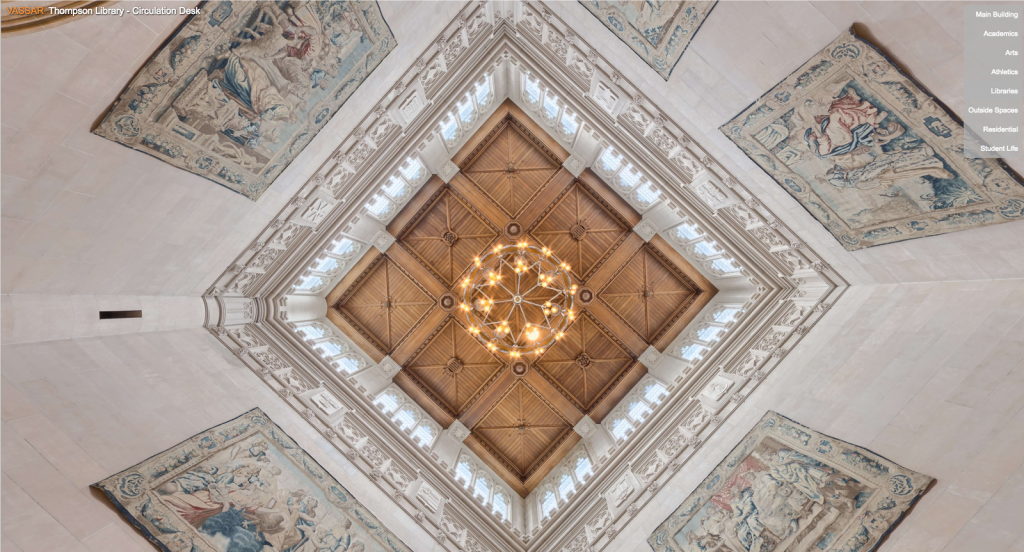
  • “Psyche’s Library:  Reading the Library as a Text Illuminated by the Cupid and Psyche Tapestries in the Frederick Thompson Memorial Library at Vassar College“
  • a collector’s view of a series of limited-edition fine-printed publications in mixed media on esoteric subjects, with accompanying amulets and related materials
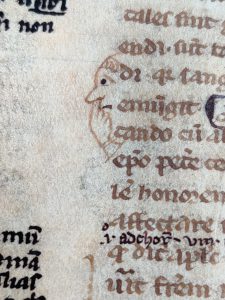
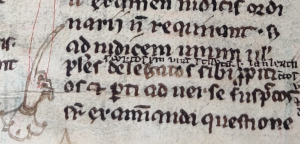
  • medieval scribes’ and readers’ responses to the text in a copy of the Latin Decretals of Pope Gregory IX (University of Oregon, Knight Library, MS 027), formerly owned by the Abbey of San Bartolomeo di Azzano d’Asti
  • experiences in “Teaching Cataloging Today”, with an Update on the DACT (Digital Analysis of Chant Transmission) Fragments Campaign (https://dact-chant.ca/ ) and Controlled Vocabularies for the Fragmentarium (https://fragmentarium.ms/ ) and CANTUS Chant (https://cantus.uwaterloo.ca) databases.
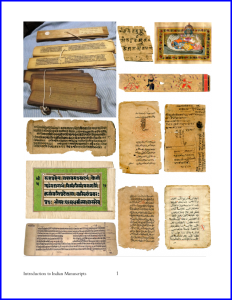
  • Cover Page for Sorenson (2020 Spring Symposium Paper as a Draft For Comment), with an array of illustrations and the title "Introduction to Indian Manuscripts"

    Cover Page for Sorenson (2020 as Draft for Comment).

    a discussion about the published “Draft for Feedback” from David W. Sorenson’s planned 2020 Spring Symposium paper on An Introduction to Indian Manuscripts for the NonSpecialist: Draft for Feedback, with updates

Suggestions for Reading and Browsing

  • Catalogs, Metadata, and Databases: A Handlist of Links.
  • David W. Sorenson, An Introduction to Indian Manuscripts for the NonSpecialist: Draft for Feedback (2020).
  • _____, Paper-Moulds and Paper Traditions: Draft for Comment (2020).
  • [Mildred Budny and David Sorenson,] Watermarks and the History of Paper (2020–).

Vassar College, Frederick Thompson Memorial Library, Entry, Ceiling and Gobelin Tapestry Series.

Autumn Symposium
(15 October online or hybrid)

Plans for the Autumn Symposium develop some of these themes, and add more.

See 2022 Autumn Symposium on Supports for Knowledge.

Watch this space.

And There Is More . . .

Workshops, Webinars, Interviews, etc.

Subjects for episodes for The Research Group Speaks include, by request, a workshop to follow up the episode on How to be Indiana Jones in the Catalog (December 2021), with a demonstration by Linde M. Brocato:
  • “How to be Tarzan in the Catalog” (with audience requests invited ahead of time).

A Pointer to the Text. Eugene, Oregon, University of Oregon, MS 027, Latin Decretals of Pope Gregory IX, folio 3r, detail: manicle with an extended forefinger and flounced cuff.

RGME at the 2022 ICMS

Note that the RGME activities (4 Sessions and our Open Business Meeting) at the Kalamazoo Congress (online in May 2022) will provide more ways to announce the Autumn Symposium and the series of “The Research Group Speaks”, to plan further activities, and to gather their audiences.

  • See https://manuscriptevidence.org/wpme/2022-international-congress-on-medieval-studies-program
    (Abstracts of the Papers are included).

Pre-Congress Business Meeting

Like 2021, before the online Congress in May, the RGME will precede its Open Business Meeting online at the Congress with a Pre-Congress Business Meeting, likewise online.  Thus it may gather participants from within Congress-goers and beyond, so as to prepare for the planning in the Congress Business Meeting, for example about which Sessions the RGME might wish to propose for its sponsorship and co-sponsorship at the 2023 Congress.

More details about events will follow. Watch this space.

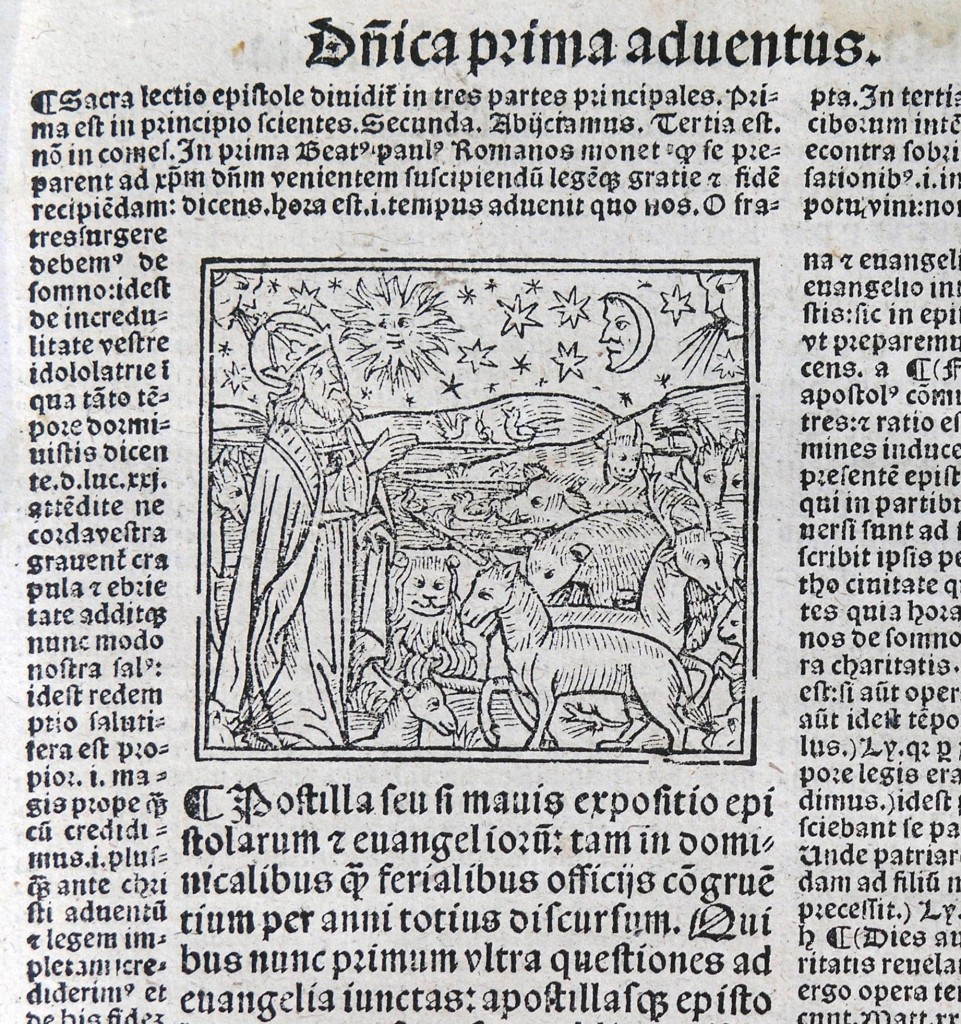
Woodcut Illustration for the First Sunday of Advent in "Postilla" (Lyons, 1527). Photograph by Mildred Budny

Creation. Woodcut Illustration for the First Sunday of Advent (Postilla, 1527). Photograph Mildred Budny.

*****

Do you have suggestions for subjects? Please let us know.

Would you like to help with organizing the events, presenting contributions to them, preparing our publications, engaging in our research projects, and volunteering as interns?

Would you like to donate to our mission and activities, in funds and/or in kind? Suggestions about methods, causes, and purposes are described for Donations and Contributions.

Please leave your Comments below, Contact Us, and visit our FaceBook Page. We look forward to hearing from you.

*****


Tags: Catalogues & Metadata & Databases, Manuscript Photography, Pattern in and on Books, RGME Symposia, Structured Knowledge, Structures of Knowledge, Supports for Knowledge, Teaching with Manuscripts, The Living Library, Warburg Institute Library
No Comments »

Lead the People Forward (by Zoey Kambour)

February 13, 2022 in Manuscript Studies, Uncategorized

Lead the People Forward:
The Contemporaneity
of the Medieval Iberian Haggadah

Zoey Kambour, MA

15 February, 2022

Pursuit by the Egyptians. Detail of Figure 4 (see Figure 4b below). Manchester, John Rylands Library, Rylands Heb. MS 6, fol. 18v, lower. Copyright of the University of Manchester.

[Editor’s Note: This blogpost, by GuestBlogger, Zoey Kambour, is published through the process of peer review by three expert reviewers, each of whom we thank. Thanks are due to the owners of the manuscripts and photographers for permission to reproduce the images here of the medieval manuscripts and architectural structures.

About Zoey, see linkedin.com, uoregon.academia.edu/ZoeyK (with CV), and below.  We thank Zoey for proposing to contribute to our blog, preparing this essay from on-going research interests and projects, joining the peer-review process, responding to questions and suggestions, completing the presentation for publication in this format, and obtaining the permissions to reproduce the illustrations here. Congratulations!

Zoey’s essay in the format of a blogpost presents its scholarly structure with Text, interlinked Notes, Acknowledgments, Zoey Kambour’s Biography, and Figures. All the full-size Figures appear in a group at the end, with details along the way.]

“Lead the People Forward”

Passover is a holiday that focuses on the personalized retelling of Exodus — the second book in the Torah, which tells the story of the plight, liberation, and departure of the Israelites under the prophet Moses in Egypt. In this retelling, the participants must see themselves as if they were liberated from Egypt.[1]  In addition, the exercise facilitates reflection on how the story of Jewish liberation applies to the current moment.  During a time of stress and loss, such as the current  pandemic, Passover is a deeply unifying holiday; it reminds the Jewish people of their deep connection to each other, despite the quarantined distance, through their suffering and fight for freedom. Passover conveys a message of hope that applies to any current moment.

The Haggadah (plural Haggadot), the text recited at Seder, is not liturgical, but rather a guide. The participants follow the order of prayers and interactions with the ritual foods displayed on the Seder plate. After the Seder, Exodus is retold in the Maggid portion of the Haggadah.[2]  However, unlike a standard liturgical text, the worshippers are encouraged to ad lib, improvise, and add their own unique spin upon the story of Exodus during the performance.

Read the rest of this entry →

Tags: British Library Add MS. 27210, Castillo Templario de Ponferrada, Golden Haggadah, Illustrations of Exodus, Manuscript Illumination, Manuscript studies, Medieval Architecture, Medieval Clothing, Medieval Iberian Hagaddah, Medieval manuscripts, Rylands Haggadah, Rylands Hebrew MS. 6, Santa Maria de Léon Cathedral, Visual Anachronism, Zoey Kambour
No Comments »

Catalogs, Metadata, and Databases (Part I)

February 9, 2022 in Manuscript Studies, Research Group Speaks (The Series), Uncategorized

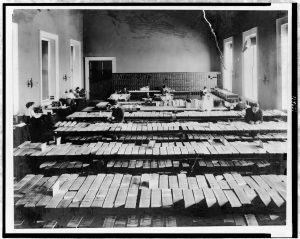
Card Division in the Library of Congress, Washington, D.C. Photograph circa 1900-1920. Image Public Domain.

The Research Group Speaks
Episode 6

Catalogs, Metadata, and Databases (Part I)
A Roundtable

19 February 2022

[Posted on 9 February 2022, with updates, now with the accomplishment of the event.]

By special request, a roundtable discussion aims to consider challenges and opportunities encountered in making, and using, catalogs and databases — with a focus especially on bibliographical and manuscript materials. This aim flows from the plan to hold a lunch at the Index of Medieval Art at Princeton University during our 2020 Spring Symposium (which had to be cancelled), to bring together participants engaged with such issues, from the Index of Medieval Art, the BASIRA Project, the Schoenberg Institute for Manuscript Studies, and elsewhere.

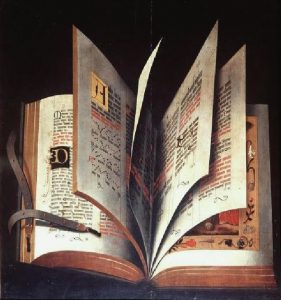
Florence, Galleria degli Uffizi, Anonymous, Still Life of an Illuminated Book, German School, 15th century. Oil on Wood. Opened book with fanned pages. Image via Wikimedia, Public Domain.

Florence, Galleria degli Uffizi, Anonymous, Still Life of an Illuminated Book, German School, 15th century. Image Public Domain.

As the next episode in the online series of webinars, workshops, and other meetings wherein The Research Group Speaks, the February 2022 Roundtable  explores challenges and opportunities for the catalogs, metadata, and databases, the characteristics of the materials which these structures seek to address, and some case studies.  Examples include the BASIRA Project on “Books as Symbols in Renaissance Art”, the Index of Medieval Art Database, Digital Scriptorium 2.0, the Pinakes/Πίνακες Database of Greek Texts and Manuscripts, and approaches to cataloging collections or selected source materials (such as artists’ books).

Speakers and Respondents include Barbara Williams Ellertson, Jessica L. Savage, Linde M. Brocato, Lynn Ransom, Katharine Chandler, Georgi Parpulov, Howard German, and David Porreca.  Subjects for consideration include “Standards and Vocabularies in Art-History Cataloging”, “Labelling, Way-finding, and Meaning”, “About ‘Aboutness’ “, “Teaching Cataloguing Today”, “The Pinakes Database”, “Digital Scriptorium 2.0:  Manuscript Description in a Linked Open Data Context”, and more.  See the Program below.

We gather perspectives from those who make, and those who use, such resources.

Preparations for the roundtable offer ‘Handouts’ in online format.

1) Below here:

  • a preliminary list of Questions for discussion at the roundtable and beyond, with a view also to planning further sessions on these subjects
  • an announcement about Future Plans, as Some Next Steps, for further sessions on these and related subjects.

2) Also, as an individual webpage:

  • an online Handout with a Draft List of Links to projects, databases, and other resources, including some mentioned in presentations in the roundtable:
    Catalogs, Metadata, and Databases: A Handlist of Links.

The roundtable is designed to compare notes, formulate questions, express wishes, and plan further sessions.  For example, we prepare sessions on “Catalogs, Metadata, and Databases, Continued“, for the pair of Spring and Autumn Symposia on “Structures of Knowledge” and “Supports for Knowledge”.  They belong to one of the overarching themes for RGME activities in 2022:  “Structured Knowledge“.

We welcome advice, suggestions, and contributions.

Read the rest of this entry →

Tags: BASIRA Project, CANTUS Chant, Controlled Vocabulary, DACT Project, Digital Scriptorium, Digital Scriptorium 2.0, Fragmentarium, History of Cataloging, Index of Medieval Art, Linked Open Data, Manuscript studies, Metadata and Databases, Pinakes | Πίνακες Database, Structures of Knowledge, Supports for Knowledge, The Research Group Speaks
No Comments »

A Leaf of Deuteronomy from ‘Otto Ege Manuscript 14’ in the Rosenbrook Collection

February 8, 2022 in Manuscript Studies, Uncategorized

Brent Rosenbrook Collection, Leaf from Ege Manuscript 14, ‘Recto’ (original Verso), top: Running title.

An Old Testament Leaf
from ‘Otto Ege Manuscript 14’
with part of Deuteronomy
in the Rosenbrook Collection

Large-format Latin Vulgate Lectern Bible
made in France
late 13th- or early 14th century

Single Leaf within a matted frame
Double columns of 50 lines

Maximum measurements circa 16 1/8″ × 10 11/16″ <written area circa 11″ × 7 3/8″>

Deuteronomy 11:21 ([quam iuravit] /) dominus patribus)
– 14:15 (strutionem ac noc-(/tuam et larum])

With bichrome running titles and chapter numbers,
polychrome decorated initials and border ornament with geometric and foliate motifs,
and added lection marks

[Posted on 8 February 2022, with updates]

Virginia Lazenby O’Hara Fine Books Division, Dallas Public Library, Framed Leaf from Otto Ege MS 14, ‘Recto’ (original Verso).

Brent Rosenbrook Collection, Matted Leaf from Otto Ege Manuscript 14, ‘Recto’ (original Verso).

Continuing the series of posts for our blog on Manuscript Studies, Mildred Budny describes another leaf from ‘Otto Ege Manuscript 14’, a large-format copy on vellum of the full Latin Bible in the Vulgate Version.

A leaf from this manuscript recently reached the collection of Brent Rosenbrook, who generously sent images and information about it, in response to the blogpost reporting More Discoveries for ‘Otto Ege Manuscript 14’.

A similar response several months ago brought to our attention the Dallas Leaf from the same manuscript, now kept at the Virginia Lazenbury O’Hara Fine Books Division of the Dallas Public Library in the City of Dallas, Texas. A report of that leaf, which carries the end of the Book of Joshua and the beginning of Judges in the Old Testament portion of the manuscript, appears in our blog on A Leaf in Dallas from ‘Otto Ege Manuscript 14’.

The ‘new’ leaf likewise comes from one of the early Books of the Old Testament. In the sequence, it stood one Book ahead.

Otto Ege Manuscript 14 and Manuscript Studies

Some discoveries for the manuscript have been reported in our blog.

  • A New Leaf from ‘Otto Ege Manuscript 14’
  • More Discoveries for ‘Otto Ege Manuscript 14’
  • A Leaf from ‘Otto Ege Manuscript 19’ and Ege’s Workshop Practices
  • Updates for Some ‘Otto Ege Manuscripts’ (Ege MSS 8, 14, 41, and 61)
  • Some Leaves in Set 1 of ‘Ege’s FOL Portfolio’ (Ege MSS 8, 14, 19, and 41)
  • Patch Work in ‘Otto Ege Manuscript 14’
  • A Leaf in Dallas from ‘Otto Ege Manuscript 14’.

See also The Illustrated Handlist (Number 4).

Brent Rosenbrook Collection, Leaf from Ege Manuscript 14, ‘Recto’ (original Verso), middle right: Deuteronomy 14 opens.

The Rosenbrook Leaf

When contacting me about the Leaf, its collector described the origins of his collecting spirit and the development of his book-collecting.

I wanted to give you a little bit of backstory and brief history. I am a layman in this field but have always been a collector of things since my childhood. I was a bibliophile long before I ever heard the term or would have understood its meaning. And although I am new to collecting illuminated manuscripts, I have always felt drawn to the beauty of them. As a teenager and young man I was especially stuck by the intricate, amazing imagery and knotwork in the Book of Kells. In 1998 I was fortunate to have visited Trinity College in Dublin and see it firsthand along with other books on display. It was a moment of wonder to finally be in the presence of that book. Although I never lost that sense of awe, for the next many years that was the extent of my experience and attention concerning manuscripts.

In December of 2016 my wife and I were visiting a friend’s home for the holidays when I noticed on the wall a large framed musical page of some sort. I could tell that it was hundreds of years old, handwritten, on animal skin. He knew little about it other than it belonged to a relative down the line and that at some point it was gifted to him. It was of course an antiphonal as I later discovered by searching online. It was (is) likely early 16th century and had one very large, but simple rubricated initial. Although it wouldn’t be considered elaborate or rare to a person knowledgeable in such things, for me the affect was basically “Wow, that’s really cool. I’ve got to figure out what that is. I want one of those”. The collector bug bit me again. . . .

Brent Rosenbrook Collection, Leaf from Ege MS 14, ‘Verso’ original Recto), bottom left.

My interest and enjoyment of looking at and learning about illuminated manuscripts (especially Bibles with historiated and zoomorphic initials) grew as I visited multiple websites over many weeks and scrolled through countless images of various western manuscripts. In March 2017 I acquired my first true illuminated leaf when I bid on and (unexpectedly) won a large Bible leaf which was from a manuscript previously owned by the famous collector Chester Beatty. As far as the Otto Ege leaf, it was a spontaneous purchase.

I received a notification . . . when this page was listed recently by Rodger Friedman Rare Book Studio. It wasn’t on my radar (or necessarily in the budget) to make a purchase but after glancing at the listing throughout the day I committed to buying it. I only knew the name Otto Ege vaguely through my reading up on manuscripts.

When I received the package and saw the leaf for the first time it evoked a lot of emotion. Although I knew its measurements when I purchased it, I still wasn’t prepared for the size and beauty of seeing it firsthand – it is stunning. It was only in the last few weeks after this acquiring this that I began reading up on and watching video postings about this famous biblioclast and the sets he sold off. . . . It was just this past Thursday night when I came across the RGME website and decided to reach out to you.

As for the Leaf itself, the collector reports that “It remains in the original matting that Ege used when he compiled these books.” Thus, this specimen qualifies for the group of survivors from the manuscript which circulated on their own, as a ‘Rogue Leaf’. Many of them traveled within one of Ege’s standard mats of a uniform size, accompanied by Ege’s printed Label giving a generic description of his Leaf 14. They resemble the presentation designed for specimen leaves from various manuscripts in Ege’s ‘FOL’ Portfolio of Fifty Original Leaves from Medieval Manuscripts, in which leaves from the dismembered Lectern Bible have the position of Number 14.

Now, with the collector’s permission, the Leaf might begin to assume its place within the virtual Reconstruction of the manuscript, as known from its fragments.  Brent Rosenbrook observes:

I think it’s nice for others to know that there are those who aren’t necessarily part of academic institution but still would like to contribute what they can to the advance of manuscript study.

We greatly admire this view!

A Note on the Photographs of the Leaf 

The images here show the Leaf and its details under several forms of light, taken at different times and at different angles. Their variety shows multiple aspects, including some 3-dimensional features which views at an angle can reveal of the curvature of the surface(s) of the animal skin and the furrows of the ruled lines upon it in drypoint.

Read the rest of this entry →

Tags: 'Fifty Original Leaves from Medieval Manuscripts', Beinecke Rare Book and Manuscript Library, Book of Deuteronomy, Brent Rosenbrook Collection, Dallas Public Library, Ege's FOL Portfolios, FOL Portfolio Set Number 39, Latin Vulgate Bible, Lectern Bible, Medieval Manuscript Fragments, Otto Ege, Otto Ege Collection, Otto Ege Manuscript 14, Reconstructing Manuscripts Virtually, Running Titles, Stony Brook University Library
6 Comments »

The Curious Printing History of ‘La Science de l’Arpenteur’

December 1, 2021 in Manuscript Studies, Research Group Speaks (The Series), Uncategorized

The Research Group Speaks
Episode 5

The Curious, Possibly Unique, Printing History
of Editions (1766–1813)
of La Science de l’Arpenteur
by Dupain de Montesson

Ronald K. Smeltzer

Dupain de Montesson, Le spectacle de la campagne and La science de l’arpenteur (1777), First Title-page, Vignette. Ronald K. Smeltzer Collection. Photograph Ronald K. Smeltzer, reproduced by permission.

[Posted on 1 December 2021, with updates]

For Episode 5 in our series (23 January 2022), Ronald K. Smeltzer (Ronald K. Smeltzer, Ph.D.) examines a telling case of multiple editions, issued with variations in printing methods, of an eighteenth-century treatise in French on methods of surveying.  The technique of surveying has a long and venerable tradition, with a varied series of books on the subject from late-antiquity onward.

The Plan

Direct, detailed examination of the editions, all in octavo format, of La science de l’arpenteur by Louis Charles Dupain de Montesson reveals multiple changes and adaptations that illuminate its extraordinary printing history.  Early editions were printed all engraved including signatures of the leaves.  Some of the later changes to the text and to the book design were a direct result of the French Revolution.  Assembling examples of all the known editions has taken twenty years.  The process attests to the value of direct inspection.  This presentation describes the results.

Read the rest of this entry →

Tags: Dupain de Montesson, French Revolution, history of printing, History of surveying, Intaglio printing, La science de l'arpenteur, Le spectacle de la campagne, Letterpress Printing, The Research Group Speaks
No Comments »

« Older Entries
Newer Entries »
  • Top
©2024 Research Group on Manuscript Evidence.


is proudly powered by WordPress. WordPress Themes X2 developed by ThemeKraft.