• News
    • News & Views
    • RGME Activities for 2024 and 2025
    • Around & About with the RGME
    • Reviews
    • Highlights
  • Blogs
    • Manuscript Studies
      • Manuscript Studies: Contents List
    • International Congress on Medieval Studies
      • Abstracts of Congress Papers
        • Abstracts of Papers Listed by Author
        • Abstracts of Papers Listed by Year
  • About
    • Mission
    • Who We Are
      • Officers, Associates & Volunteers
      • RGME Committees
      • Friends of the Research Group on Manuscript Evidence
    • Policies & Statements
      • RGME Privacy Policy Statement
      • RGME Intellectual Property Statement & Agreements
    • People
      • Mildred Budny — Her Page
      • Adelaide Bennett Hagens
    • Activities
      • Events
      • Congress Activities
        • Sponsored Conference Sessions (1993‒)
          • Panels at the M-MLA Convention (from 2016)
        • Co-sponsored Conference Sessions (2006‒)
    • History
      • Seals, Matrices & Documents
      • Genealogies & Archives
    • Contact Us
  • Bembino
    • Multi-Lingual Bembino
    • RGME Bembino: Resources
  • Congress
    • Sponsored Conference Sessions (1993‒)
    • Co-sponsored Conference Sessions (2006‒)
    • Abstracts of Congress Papers
      • Abstracts Listed by Author
      • Abstracts Listed by Year
    • Kalamazoo Archive
    • Panels at the M-MLA Convention (2016-2019)
      • Abstracts of Papers for the M-MLA Convention
      • Panels at the M-MLA Convention (from 2016)
  • Events
    • RGME Activities for 2024 and 2025
      • 2023 Activities and 2024 Planned Activities
    • Seminars, Workshops, Colloquia & Symposia (1989–)
      • Seminars on ‘The Evidence of Manuscripts’
      • Symposia on ‘The Transmission of the Bible’
      • The New Series (2001-)
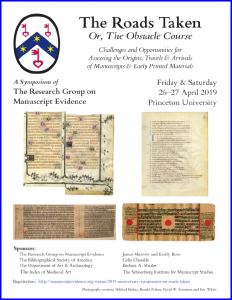
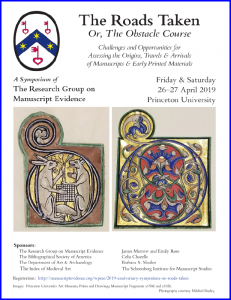
        • 2019 Anniversary Symposium Program: The Roads Taken
        • 2019 Anniversary Symposium Registration
        • 2019 Anniversary Symposium Registration Open
      • RGME Symposia: The Various Series
      • The Research Group Speaks: The Series
      • Meetings of the Friends of the Research Group on Manuscript Evidence
      • RGME Online Events
    • Abstracts of Papers for Events
      • Abstracts of Papers for Seminars on ‘The Evidence of Manuscripts’
      • Abstracts of Papers for Symposia, Workshops & Colloquia
    • Receptions & Parties
    • Business Meetings
    • Photographic Exhibitions & Master Classes
    • Events Archive
  • ShelfLife
    • Journal Description
    • ShelfMarks: The RGME-Newsletter
    • Publications
      • “Insular, Anglo-Saxon, and Early Anglo-Norman Manuscript Art at Corpus Christi College, Cambridge” (1997)
        • Mildred Budny, ‘Catalogue’
        • The Illustrated Catalogue (1997)
      • The Illustrated Handlist
      • Semi-Official Counterfeiting in France 1380-1422
      • No Snap Decisions: Challenges of Manuscript Photography
    • History and Design of Our Website
  • Galleries
    • Watermarks & the History of Paper
    • Galleries: Contents List
    • Scripts on Parade
    • Texts on Parade
      • Latin Documents & Cartularies
      • New Testament Leaves in Old Armenian
    • Posters on Display
    • Layout Designs
  • Donations and Contributions
    • RGME Donor Promise
    • 2023 End-of-Year Fundraiser for our 2024 Anniversary Year
    • 2019 Anniversary Appeal
    • Orders
  • Links
    • Catalogs, Metadata, and Databases: A Handlist of Links
    • Handlist of Resources for Manuscript Studies and Fragmentology
    • Manuscripts & Rare Books
    • Maps, Plans & Drawings
    • Seals, Seal-Matrices & Documents

  • News
    • News & Views
    • RGME Activities for 2024 and 2025
    • Around & About with the RGME
    • Reviews
    • Highlights
  • Blogs
    • Manuscript Studies
      • Manuscript Studies: Contents List
    • International Congress on Medieval Studies
      • Abstracts of Congress Papers
        • Abstracts of Papers Listed by Author
        • Abstracts of Papers Listed by Year
  • About
    • Mission
    • Who We Are
      • Officers, Associates & Volunteers
      • RGME Committees
      • Friends of the Research Group on Manuscript Evidence
    • Policies & Statements
      • RGME Privacy Policy Statement
      • RGME Intellectual Property Statement & Agreements
    • People
      • Mildred Budny — Her Page
      • Adelaide Bennett Hagens
    • Activities
      • Events
      • Congress Activities
        • Sponsored Conference Sessions (1993‒)
          • Panels at the M-MLA Convention (from 2016)
        • Co-sponsored Conference Sessions (2006‒)
    • History
      • Seals, Matrices & Documents
      • Genealogies & Archives
    • Contact Us
  • Bembino
    • Multi-Lingual Bembino
    • RGME Bembino: Resources
  • Congress
    • Sponsored Conference Sessions (1993‒)
    • Co-sponsored Conference Sessions (2006‒)
    • Abstracts of Congress Papers
      • Abstracts Listed by Author
      • Abstracts Listed by Year
    • Kalamazoo Archive
    • Panels at the M-MLA Convention (2016-2019)
      • Abstracts of Papers for the M-MLA Convention
      • Panels at the M-MLA Convention (from 2016)
  • Events
    • RGME Activities for 2024 and 2025
      • 2023 Activities and 2024 Planned Activities
    • Seminars, Workshops, Colloquia & Symposia (1989–)
      • Seminars on ‘The Evidence of Manuscripts’
      • Symposia on ‘The Transmission of the Bible’
      • The New Series (2001-)
        • 2019 Anniversary Symposium Program: The Roads Taken
        • 2019 Anniversary Symposium Registration
        • 2019 Anniversary Symposium Registration Open
      • RGME Symposia: The Various Series
      • The Research Group Speaks: The Series
      • Meetings of the Friends of the Research Group on Manuscript Evidence
      • RGME Online Events
    • Abstracts of Papers for Events
      • Abstracts of Papers for Seminars on ‘The Evidence of Manuscripts’
      • Abstracts of Papers for Symposia, Workshops & Colloquia
    • Receptions & Parties
    • Business Meetings
    • Photographic Exhibitions & Master Classes
    • Events Archive
  • ShelfLife
    • Journal Description
    • ShelfMarks: The RGME-Newsletter
    • Publications
      • “Insular, Anglo-Saxon, and Early Anglo-Norman Manuscript Art at Corpus Christi College, Cambridge” (1997)
        • Mildred Budny, ‘Catalogue’
        • The Illustrated Catalogue (1997)
      • The Illustrated Handlist
      • Semi-Official Counterfeiting in France 1380-1422
      • No Snap Decisions: Challenges of Manuscript Photography
    • History and Design of Our Website
  • Galleries
    • Watermarks & the History of Paper
    • Galleries: Contents List
    • Scripts on Parade
    • Texts on Parade
      • Latin Documents & Cartularies
      • New Testament Leaves in Old Armenian
    • Posters on Display
    • Layout Designs
  • Donations and Contributions
    • RGME Donor Promise
    • 2023 End-of-Year Fundraiser for our 2024 Anniversary Year
    • 2019 Anniversary Appeal
    • Orders
  • Links
    • Catalogs, Metadata, and Databases: A Handlist of Links
    • Handlist of Resources for Manuscript Studies and Fragmentology
    • Manuscripts & Rare Books
    • Maps, Plans & Drawings
    • Seals, Seal-Matrices & Documents

Log in

Archives

Featured Posts

Episode 24. “Life with Books” (Interview with John Windle)
Announcing the Launch of RGME Bembino WP
2026 RGME Colloquium at The Grolier Club: Report
Medieval Missal Fragment as Early-Modern Cover
The Weber Leaf from Ege MS 61
"Bembino" Booklet Cover
Episode 23. “Meet RGME Bembino: Facets of a Font”
2026 RGME Colloquium on “Transformations & Renewals” at The Grolier Club
2026 Theme of the Year: “Transformations and Renewals”
A Leaf with Patchwork from the Saint Albans Bible
A Sister Leaf from a Miniature Latin Vulgate Bible
A Little Latin Vulgate Bible Manuscript Leaf in Princeton
J. S. Wagner Collection. Leaf from from Prime in a Latin manuscript Breviary. Folio 4 Verso, with part of Psalm 117 (118) in the Vulgate Version, set out in verses with decorated initials.
2026 Annual Appeal
Episode 22: “Encounters with Local Saints and Their Cults”
Private Collection, Ege's FBNC Portfolio, Dante Leaf, Verso, Detail. Reproduced by Permission.
2025 RGME Autumn Colloquium on Fragments
Workshop 8: A Hybrid Book where Medieval Music Meets Early-Modern Herbal
2025 RGME Autumn Symposium on “Readers, Fakers, and Re-Creators of Books”
RGME Workshops on “The Evidence of Manuscripts, Etc.”
2025 International Medieval Congress at Leeds: RGME Program
Episode 21. “Learning How to Look”
2025 International Congress on Medieval Studies: Program
2025 RGME Visit to Vassar College
Two Leaves in the Book of Numbers from the Chudleigh Bible
Delibovi on Glassgold on Boethius: A Blogpost
Ronald Smeltzer on “Émilie du Châtelet, Woman of Science”
2025 Spring Symposium: “Makers, Producers, and Collectors of Books”
Starters’ Orders
The Weber Leaf from the Saint Albans Bible
Workshop 4. “Manuscript Fragments Compared”
Episode 20. “Comic Book Theory for Medievalists”
Episode 19: “At the Gate: Starting the Year 2025 at its Threshold”
Favorite Recipes for Lemonade, Etc.
RGME Visit to the Lomazow Collection: Report
2024 Autumn Symposium: “At the Helm”
A Latin Vulgate Leaf of the Book of Numbers
The RGME ‘Lending Library’
Florence, Italy, Ponte Vecchio from Ponte alle Grazie. Photo: Ingo Mehling, CC BY-SA 4.0 , via Wikimedia Commons
Episode 17. “RGME Retrospect and Prospects: Anniversary Reflections”
2024 Anniversary Symposium: The Booklet
Jesse Hurlbut at the Bonneville Salt Flats, Utah. Photograph Jesse Hurlbut.
Episode 16: An Interview with Jesse D. Hurlbut
To Whom Do Manuscripts Belong?
Kalamazoo, MI Western Michigan University, Valley III from the side. Photograph: David W. Sorenson.
2024 International Congress on Medieval Studies: Report
2024 Spring Symposium at Vassar College
Puente de San Martín: Bridge with reflection over the River Targus, Toledo, Spain.
2024 Grant for “Between Past and Future” Project from The Gladys Krieble Delmas Foundation Research Libraries Program
2024 Anniversary Symposium in Thanks to Jesse Hurlbut: Program

You are browsing the Blog for manuscript fragments

An Illustrated Leaf from the Shahnameh with a Russian Watermark

August 4, 2021 in Manuscript Studies

An Illustrated Persian Leaf on Paper
from the Shahnameh
(Humai & Darab)
with a Russian Watermark

[Posted on 5 August 2021]

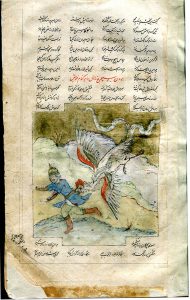
Continuing our examination of Watermarks and the History of Paper, we display an illustrated paper leaf from an illustrated manuscript which has come to our notice.  Its owner identified the text, but wondered about the watermark.  Responding to our blog, he offered its images for examination.

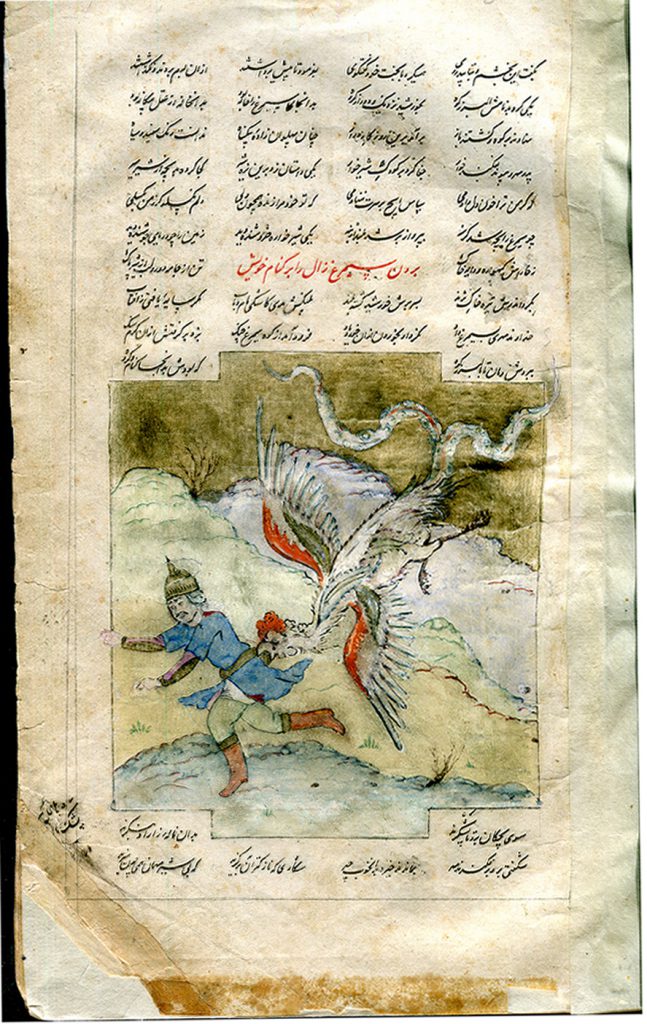
Private Collection, Leaf from a Persian Shanameh. Simurgh and Zal.

Private Collection, Leaf from a Persian Shanameh. Simurgh and Zal.

Now in a private collection, the detached leaf formerly belonged to an illustrated manuscript in Persian of the Shahnameh or ŠĀH-NĀMA / Šāhnāme (شاهنامه or “Book of Kings”), the renowned epic poem by the Persian poet Abul-Qâsem Ferdowsi Tusi or Ferdowsi (circa 329 – 411 AH / 940 – 1010 CE).  This poem, which the poet began to compose circa 977 CE and completed on 8 March 1010 CE, extends for more than 50,000 couplets.  Its text recounts the history of the kings and heroes of Persia from mythical times to the overthrow of the Sassanids by the Arabs in the middle of the 7th century.

The importance and popularity of the text ensured that it has circulated in very many copies produced at various times and in various places, manuscripts included.  Not all of them survive, and some survive only in pieces.

An earlier post in our blog (see its Contents List) considered a detached leaf from another portion of the epic, from another illustrated manuscript, and in another private collection.

Simurgh and Zal from a Persian Shahnameh.

That leaf illustrates an episode from the fabulous story of the winged creature Simurgh and her adopted human warrior son Zāl. Within a stepped frame set within the page of text, its illustration depicts the large creature as she swoops down to grasp or grab him by the waistband as he flees.

The ‘new’ leaf belongs to a different episode, a different manuscript, and a different style of illustration, in the long and richly varied tradition of illustrations for the Shahnameh or Šāh-nāma  in books and other visual arts, and in Persian and other spheres.

Humai and Darab

Among the Episodes of the Shahnameh, the sections devoted to a legendary queen of Iran, Humai or Humay Chehrzad (sections 609–614 in one form of reckoning), recount events of her reign within the legendary Kayanian dynasty. They relate the birth of her son Kai Darab, her abandonment of him as an infant, her recognition of him as an adult as her son, after he had helped to defeat the attacking Romans at the edge of the Iranian Empire.  These sections end with her retirement from the throne in favor of him as the next king, Dara I.

The text on the leaf belongs to the episode that recounts how, after “Darab fights against the Host of Rum” (612), “Humai recognises her Son Darab” (613).

Read the rest of this entry →

Tags: History of Watermarks, Humai and Darab, manuscript fragments, Manuscript studies, Russian Watermarks, Shahnameh
No Comments »

More Leaves from a Deconstructed Sinhalese Palm-Leaf Manuscript

April 10, 2021 in Manuscript Studies

More Leaves of a Deconstructed
Sinhalese Palm-Leaf Manuscript

with Stringing Holes

Part 2

Private Collection, Sinhalese Palm-Leaf Manuscript, Leaf ’31’, Side 1, Detail: Left-hand Side. Reproduced by Permission.

[Posted on 10 April, with updates, as Mildred Budny continues the quest, and the owner supplies the full series of images.]

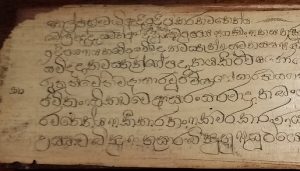
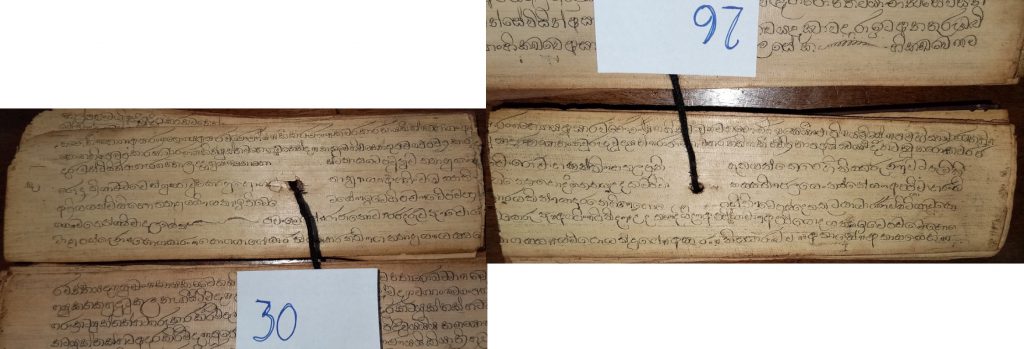
Following Part 1, we continue the display of the leaves — or rather bisected half-leaves — in a Sinhalese Palm-Leaf Manuscript now in a private collection. The fragment apparently presents a single Buddhist text, albeit in a disordered sequence with some gaps.  The text is not yet identified.

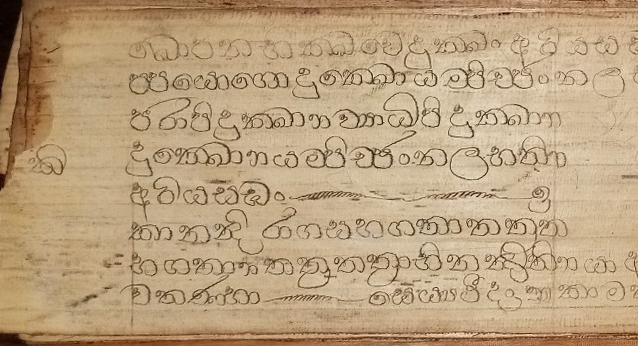
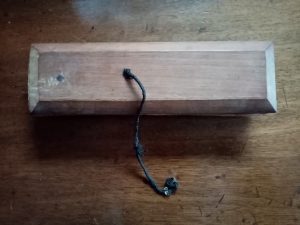
The manuscript is written, from left to right, in Sinhalese script (see Sinhala_script) upon palm-leaves.  The language is mostly likely Pali (a guide: Pali).  At present, the 33 half-leaves are strung on string or cord through a single stringing hole, ending in a simple beveled rectangular cover.  The text is written in single columns of 5 to 8 lines per column.

A match for the specimen in terms of script appears here, with transliteration of its text:

  • www.ancient-buddhist-texts.net/Buddhist-Texts/XX-Dhammacakka/Dhammacakka.htm.

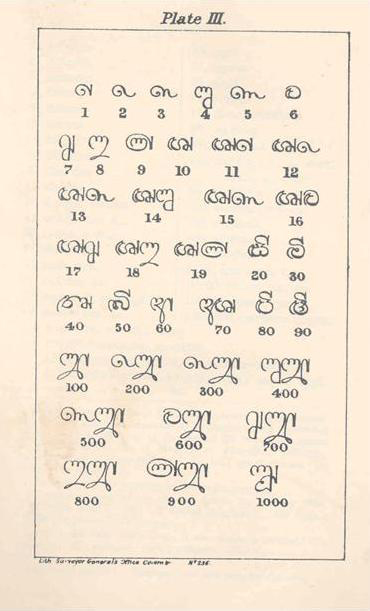
Some half-leaves have Letter/Number Marks in the left-hand margin.  They correspond with one of the systems for Sinhala Numerals.

The Kaṭapayādi or Katapayadi System uses Sinhala consonants to depict Numbers 1 to 9 and 0, “for easy remembrance of numbers as words or verses”.  The numeration “is known as Katapayadiya since number one is allocated with the Sinhala letters ‘Ka’ (ක), ‘Ta’ (ට), ‘Pa’ (ප ) and ‘Ya’ (ය)”.

Some archaic Sinhala Numerals are shown in A Comprehensive Grammar of Sinhalese Language by Mendis Gunasekera (1891), Plate III.

Mendia Gunesekera (1891), Plate III. Image via Creative Commons.

By such guides, as well as other material and textual features of the half-leaves, a conjectured reconstruction might be assembled.

A Full Leaf Reconstructed

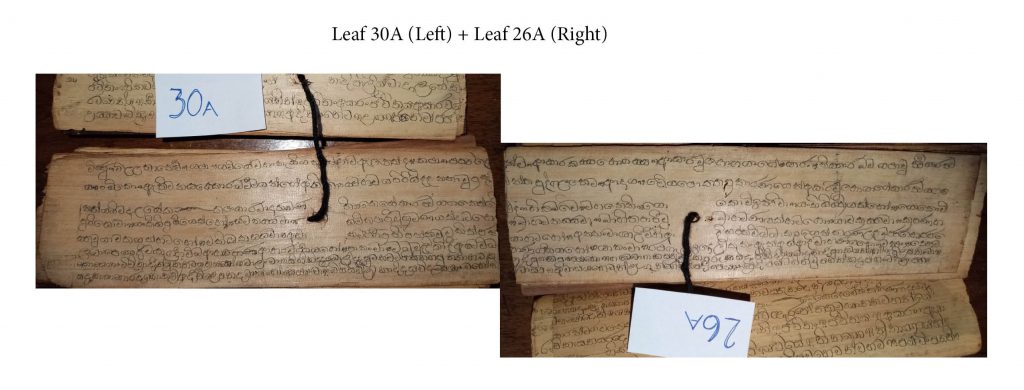
An example, showing the full leaf on one of its sides, combines its fragmentary half-leaves photographically.  Part 1 already showed one side. Now in Part 2 we show both.

One Side (30A + 26A Upright)

Private Collection, Sinhalese Palm-Leaf Manuscript, Reconstructed View of Former Leaf ('30A' + 26A').

Private Collection, Sinhalese Palm-Leaf Manuscript, Reconstructed View of Former Leaf (’30A’ + 26A’).

The Other Side (30 + 26 Upright)

Private Collection, Sinhalese Palm-Leaf Book. Reconstructed View of Former Leaf (’30’ + 26′ upright). Reproduced by Permission.

A Case Study

The goal here is both:

  • to show the book as a case study, or cautionary tale, for materials from foreign lands and languages, and
  • to gather feedback and suggestions for reconstructing its original order, recognizing its text, and identifying its probable date and place of production.

You can join the quest even if you do not (yet) know the language, because material features and pattern recognition offer useful guides for solving the puzzle.

Part 1 considered:

  • A Sinhalese Palm-Leaf Book in Deconstructed and Reconstructed Order.
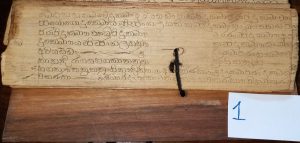
Private Collection, Sinhalese Palm-Leaf Manuscript, End-Leaf 01, Left, with Letter/Number Ka..

Private Collection, Sinhalese Palm-Leaf Manuscript, End-Leaf 01, Left.

That first Post presented, with the owner’s permission, images of some leaves out of the full set in the book at present.  The full set of images encompasses Sides 1–30A, plus the cover.

The numbering was adopted by the collector for photographing the half-leaves in their current series within the book. Numbers 1–30 for the leaves, and suffix A for their second sides:  1, 1A, 2, 2A, and so on.  Let’s call them “Sides”.  Note that the current assembly of the leaves, and the photographs made in consecutive sequence turning its leaves one by one, sometimes show the text on them upside-down.

The first post displayed images in several groups:

  • Beveled Rectangular Cover

    Private Collection, Sinhalese Palm-Leaf Manuscript, Cover.

    Private Collection, Sinhalese Palm-Leaf Manuscript, Cover.

  • Numbers 1–8A

    To Start the Show

    Private Collection, Sinhalese Palm-Leaf Manuscript, End Leaf '01a' =Side 1.

    Private Collection, Sinhalese Palm-Leaf Manuscript, End Leaf ’01a’ =Side 1.

  • Numbers 9–11A and 23–24A

    To Exhibit the Half-Leaves which have Doubled (or Repierced) Sets of Stringing Holes

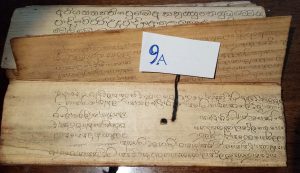
    Private Collection, Sinhalese Palm-Leaf Manuscript, Leaf 9A.

    Private Collection, Sinhalese Palm-Leaf Manuscript, Leaf 9A.

  • Numbers 30A + 26A:

    To Demonstrate the Virtual Reconstruction of the Originally Conjoined Halves of one Full Side (front or back) of a Single Leaf

    Private Collection, Sinhalese Palm-Leaf Manuscript, Reconstructed View of Former Leaf ('30A' + 26A').

    Private Collection, Sinhalese Palm-Leaf Manuscript, Reconstructed View of Former Leaf (’30A’ + 26A’).

That virtual reconstruction of 1 former side of 1 full leaf vividly demonstrates the reshuffling of the half-leaves in producing a newly reconstructed ‘deck’ for the sequence.

Now we show more of the manuscript.

Read the rest of this entry →

Tags: Buddhist Texts, Deconstructed Manuscripts for the Market, Fragmentology, manuscript fragments, Palm-Leaf Manuscripts, Reconstructing Manuscripts Virtually, Sinhalese Manuscripts
2 Comments »

Specimens of Ege Manuscript 40 in the Ege Family Portfolio

March 19, 2021 in Manuscript Studies, Uncategorized

Specimens of the Aquinas Manuscript in Humanist Script
(Ege Manuscript 40)
in the ‘Ege Family Portfolio’

— Part III of III in the series on this manuscript —

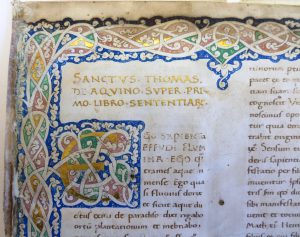
Beinecke Rare Book & Manuscript Library, Otto Ege Collection, FOL Set 3, MS 40, Specimen 1: folio '1'r, Bottom Center. Photography Mildred Budny.

Beinecke Rare Book & Manuscript Library, Otto Ege Collection, FOL Set 3, MS 40, Specimen 1: folio ‘1’r, Bottom Center. Photography Mildred Budny.

Thomas Aquinas, Commentary on Book I of Peter Lombard’s Sentences

Written in Latin on vellum

Italy, probably late 15th Century (circa 1475)

Circa 288 × 210 mm <Written area circa 178 × 130 mm>

Double columns of 37 lines

in Humanist Script (with Gothic Features)

*****

Folios ‘1’ and 216

[1] Super Sententiis, Prooemium (to Ipse dedit quosdam)
and
[2331] Super Sent., Liber 1, Distinctio 32, Quaestio 2, Articulo 2 (qc. 1 co), to [2341] Distinctio 33, Quaestio 1, Articulo 1 (arg. 2)

Beinecke Rare Book & Manuscript Library, Otto Ege Collection, FOL Set 3, MS 40, Specimen 2 = folio 216v (turned to the front in Ege's Mount: Top Left. Photography Mildred Budny.

Beinecke Rare Book & Manuscript Library, Otto Ege Collection, FOL Set 3, MS 40, Specimen 2 = Folio 216v, Top Left. Photography Mildred Budny.

Previously, in exploring the Portfolio of Famous Books assembled by Otto F. Ege, we examined the 15th-century Aquinas Manuscript whose dismembered specimens appear in 2 of his Portfolios.  See

  • Part I: Otto Ege’s “Aquinas Manuscript in Humanist Script” (Ege Manuscript 40).
  • Otto Ege Manuscript 40, Part II: Before and After Ege

Now we reach Part III of III.

Known as Ege Manuscript 40 from its assigned number in the Portfolio of Fifty Original Leaves from Medieval Western Manuscripts (“FOL”), its leaves also joined Ege’s Portfolio of Famous Books in Nine Centuries (“FBNC”) as the 6th Manuscript Specimen (of 6).  By virtue of its FOL position, it appears in the Handlist of Otto Ege’s Manuscripts (2016), as no. 40 (pp. 131–132 etc.).

Humanist Script and Book-Production

Its case pertains to the notable genre of Humanist Manuscripts, which emerged in Italy from the early 15th century onwards.  Illustrated descriptions of the origins and development of Humanist(ic) Script include:

  • Humanistic Script, via Digitized Medieval Manuscripts, and
  • Humanist Minuscule, via Wikipedia.

Displays of such books include:

  • The Humanistic Book at The Fitzwilliam Museum in Cambridge.
Beinecke Rare Book & Manuscript Library, Otto Ege Collection, FOL Set 3, MS 40, Specimen 1: folio '1'r, Top Left. Photography Mildred Budny.

Beinecke Rare Book & Manuscript Library, Otto Ege Collection, FOL Set 3, MS 40, Specimen 1: folio ‘1’r, Top Left. Photography Mildred Budny.

There, we find a concise description of the phenonemon (I emphasize several elements in red).

In Italy in the early fifteenth century a revolution took place in the script and decoration of the manuscript book, first in Florence, and very soon after in the rest of the peninsula. It involved the rediscovery of classical texts, the revival of ancient literature as a central element of the curriculum, the reform of Latin spelling, and a new style of writing, called by its contemporaries littera antica and known to us today as ‘humanistic script’.

The new type of book received a new style of decoration. At first, it was limited to the white-vine scrolls meandering around birds, butterflies, and chubby little boys, the ubiquitous putti. But by the mid-fifteenth century, illuminators were experimenting with three-dimensional images corresponding to the antiquarian passions of Humanist scholars and collectors. Ancient inscriptions, jewels, and archaeological finds inspired the illusionistic monumental frontispieces and architectural title pages, one of the most lasting contributions of the Humanistic manuscript to book design.

As they come into view, more leaves from the fragmented Ege Manuscript 40 allow its case to assume its proper place within the robust tradition of Humanist script and book-production.  Now we focus upon the special contributions which its leaves in the ‘Ege Family Portfolio’ can make to a fuller understanding of its origin and history.

Read the rest of this entry →

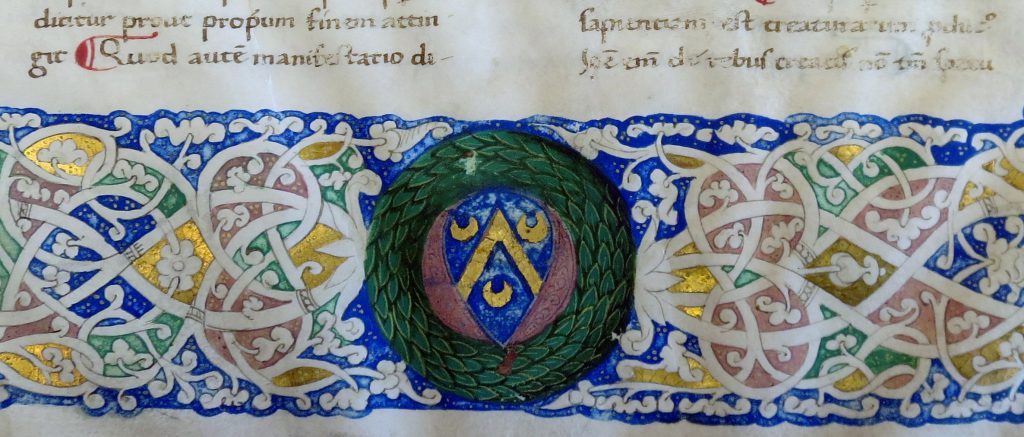
Tags: Aquinas on the Sentences of Peter Lombard, Beinecke Rare Book and Manuscript Library, British Library Harley MS 3110, Corpus Christi College Cambridge MS 81, Dispersed Manuscript Leaves, Ege Family Portfolio, Ege Manuscript 41, Ege's FOL Portfolio, Ege's Portfolio of Famous Books, Humanist Manuscripts, Humanist Script, Lawrence J. Schoenberg Collection LJS 225, manuscript fragments, Medieval Manuscript Fragments, Morgan Library MS M 476, Otto Ege Manuscript 31, Otto Ege Manuscript 40, Otto Ege Manuscript 51, Otto Ege Manuscript 53, Otto Ege Portfolios, Owner's Arms in Wreath, White Vine-Scroll Ornament
4 Comments »

Otto Ege’s Aquinas Manuscript in Humanist Script (‘Ege Manuscript 40’)

March 4, 2021 in Manuscript Studies

Otto Ege’s Aquinas Manuscript in Humanist Script
(‘Ege Manuscript 40’)

— Part I of III in a series on this manuscript —
Private Collection, Ege's FBNC Portfolio, Aquinas Leaf, Recto, Top Right. Reproduced by Permission.

Private Collection, Ege’s FBNC Portfolio, Aquinas Leaf, Recto, Detail. Reproduced by Permission.

Thomas Aquinas, Commentary on Book I of Peter Lombard’s Sentences

Written in Latin on vellum

Italy, probably late 15th Century (circa 1475)

Circa 288 × 210 mm <Written area circa 178 × 130 mm>

Double columns of 37 lines

in Humanist Script (with Gothic Features)

*****

Folio 300

Super Sententiis, Liber 1, Distinctio 47, Quaestio 1,
Articulo 3 (ad 1 [
3340]) – Articulo 4 (sed contra 1 [3349])

With Initials and Pilcrows (Paragraph-marks) in Red or Blue
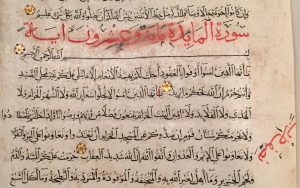
Private Collection, Koran Leaf in Ege's Famous Books in Nine Centuries, Back of Leaf, Detail. Reproduced by permission.

Private Collection, Koran Leaf in Ege’s Famous Books in Nine Centuries (Ege MS 53), Back of Leaf, Detail. Reproduced by permission.

We continue to explore a newly revealed Set of Otto Ege‘s Portfolio of Famous Books in Nine Centuries (FBNC) which belongs to a Private Collection.

Our first post about that unnumbered Set first focused upon the Portfolio as an entity and then examined one of its specimen “Manuscript Leaves”:

  • Otto Ege’s Portfolio of Famous Books and ‘Ege Manuscript 53’ (Koran/Quran)

Known by its assigned number in Scott Gwara’s “Handlist” of Otto Ege’s Manuscripts (2016), that manuscript (seen at the right) represents the remnants of a dismembered Quran/Koran written on paper, late-medieval in date.

As the ‘Deluxe’ version of Ege’s Famous Books, the Portfolio in Nine Centuries was issued in 50 sets, with 40 specimen Leaves extracted from manuscripts and printed books. The shorter version in Eight Centuries was issued in 110 sets of 25 Leaves.

In earlier blogposts, as we examined various manuscripts and printed materials distributed by Otto Ege, some Sets in both versions of the Famous Leaves Portfolios have come into our direct view. See our Contents List.

At first, mainly on account of the specimens from a 14th-century manuscript in Latin on paper with Aristotle’s Nichomachean Ethics and its commentaries or other texts. Our study of that manuscript (Ege Manuscript 51) began with an isolated leaf in a private collection, then moved to examine more of its relatives surviving elsewhere — particularly as more parts of the manuscript emerged into view, including the ‘residue’ or ‘carcass’ of one of its original 3 volumes.
  • More Leaves from ‘Otto Ege Manuscript 51’
  • More Parts of ‘Otto Ege Manuscript 51’
Beinecke Rare Book & Manuscript Library, Otto Ege Collection, Ege MS 51, Volume II, folio 1r, top left. Photography Mildred Budny.

Beinecke Rare Book & Manuscript Library, Otto Ege Collection, Ege MS 51, Volume II, folio 1r, top left. Photography Mildred Budny.

Now, we continue the process of exploration by turning to more of the six Manuscript Leaves which open the Portfolio of Nine Centuries of Famous Books.

Famous Books in Nine Centuries

Bearing its title in a printed panel on the front, the Portfolio case encloses its group of specimens, individually framed within pairs of mat boards. They are accompanied by a full-page Contents List printed in red and black on a separate leaf.
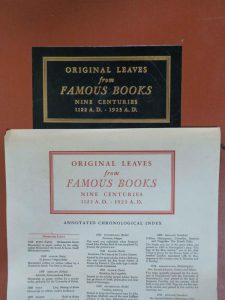
Private Collection, Ege's FBNC, Title and Headpiece for the Contents List.
Private Collection, Ege’s FBNC, Title and Headpiece for the Contents List.

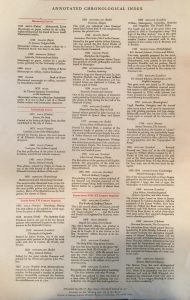
Private Collection, Contents List in Ege's Famous Books in Nine Centuries, Chronological Index. Reproduced by permission.

Private Collection, Contents List in Ege’s Famous Books in Nine Centuries, Chronological Index. Reproduced by permission.

Contents List and Specimen Leaves

Of uniform size, the pairs of mat boards have windows cut at the front to suit the different sizes of the specimens. A separate, full-page printed Contents List stands at the front of the group.

Ege’s “Annotated Contents List” in a single page stands as a loose leaf at the front of the Portfolio case.

The Portfolio gathers its specimen Leaves in a stack of individual framed mats, accompanied by their own printed Label.

As characteristic for Ege’s Portfolios, the mats present hinged pairs of boards. They combine a windowed mat at the front and a plain mat at the back, attached by hinged tapes at one side. The mats can be opened upon the hinges to reveal the individual specimen Leaf (sometimes, more than one Leaf) within its ‘sandwich’. The revealed Leaf might in turn might be lifted partly on its own hinged gauze tapes attached at one side, to show the other side of the leaf.

Their mats all have the same dimensions overall, so as to present a uniform group within the set. The back board is uncut. The window cut on the front board derives its specific size and shape in order to suit the specific specimen, albeit with a somewhat smaller opening than it. This approach produces the effect of some cropping at all sides, which masks the edges of the original.

Contents List: Manuscripts and Other Texts

The Contents List groups its entries chronologically and by genre, identified by medium. They divide into 4 parts (let us call them Parts I–IV), starting with Manuscript Leaves (Part I) and moving on to printed materials spanning 5 centuries.

[Parts II–IV]. The Printed Leaves

After Part I, the groups in the Contents List and the other Specimens of the Portfolio exhibit printed materials. Arranged chronologically, they start with specimens of early printing in the West (“Part II”), and move onto later centuries (“Parts III and IV”). We consider these elements in other blogposts.

[Part I]. The Manuscript Leaves

The Manuscript Leaves form the first group of specimens in the FBNC Portfolio. The 6 varied specimens derive from manuscripts of different sizes, materials, types of texts, and styles of script, layout, and design.
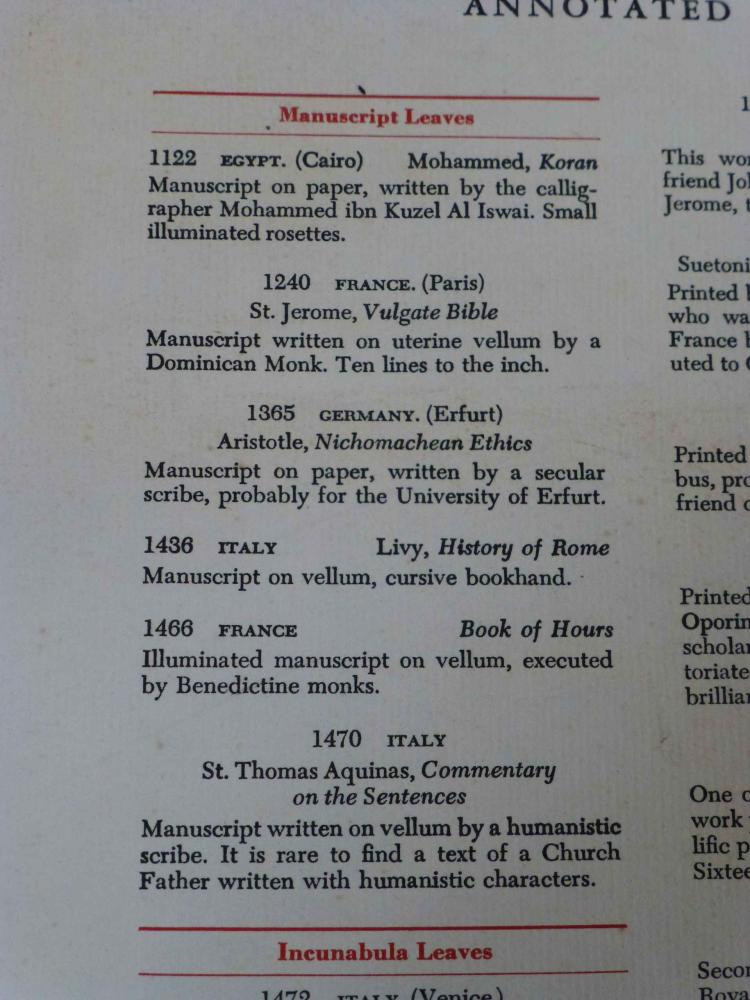
Private Collection, Ege FBNC Contents List, Detail: Manuscript Leaves.

Private Collection, Ege FBNC Contents List, Detail: Manuscript Leaves.

Our first blogpost on the Portfolio (Otto Ege’s Portfolio of Famous Books and ‘Ege Manuscript 53’) surveyed these 6 Manuscript Specimens, their assigned Handlist Numbers among Otto Ege’s Manuscripts (2016), and their representation and distribution in one or more Portfolios assembled by Ege. Namely, their specimens appear in one and/or another of these Portfolios:

  • Original Leaves from Famous Books, Nine Centuries, 1122 A. E. – 1923 A. D. (“FBNC“), in the longer, Deluxe version,
    with 40 unnumbered Leaves in 50 sets
  • Original Leaves from Famous Books, Eight Centuries, 1240 A. D. – 1923 A. D. (“FBEC“),
    with 25 Leaves in 110 sets
  • Fifty Original Leaves from Medieval Manuscripts, Western Europe: XII–XVI Century (“FOL“),
    with 50 numbered leaves in 40 sets
  • Fifteen Original Oriental Leaves of Six Centuries: Twelve of the Middle East, Two of Russia, and One of Tibet (“Oriental Leaves“),
    with 15 Leaves in 40 sets

To recap from our previous post:

The Manuscript Leaves in FBNC and their Ege Manuscript Numbers

[1]. Koran of ‘1122’ (CE) on paper (Ege MS 53)

— also in the Oriental Leaves Portfolio
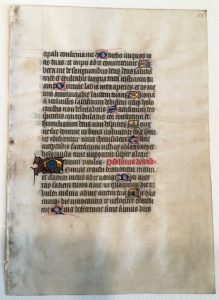
Private Collection, Ege's Famous Books in Nine Centuries, Book of Hours Leaf, Front. Reproduced by permission.

Private Collection, Ege’s Famous Books in Nine Centuries, Book of Hours Leaf, Front. Reproduced by permission.

(See Otto Ege’s Portfolio of Famous Books and ‘Ege Manuscript 53’)

[2]. Vulgate Bible of 1240 on ‘uterine vellum’ (Ege MS 54)

— also sometimes in FBEC (in alternation with Ege MS 9 of FOL)

[3]. Aristotle of ‘1365’ on paper (Ege MS 51)

— in both FBNC and FBEC

[4]. Livy of ‘1436’ (Ege MS 52)

— in both FBNC and FBEC

[5]. Book of Hours of ‘1466’ (Ege MS 55)

— only in this Portfolio of Nine Centuries (FBNC)

[6]. Aquinas of ‘1470’ or ‘Late XVth Century’ (Ege MS 40)

— also in FOL (Leaf 40)

Now we focus upon one of these Leaves and its manuscript context.

The Aquinas Manuscript in Humanist Script

We pick Specimen [6] from the Aquinas Manuscript (Ege MS 40), which ends the group of Manuscript Leaves in the Portfolio and finds a place also in FOL. To judge by its accomplished script, the manuscript must have been written somewhere in Italy within the sphere of humanist influence modeled upon examples of Carolingian Minuscules and of Capital Letters.
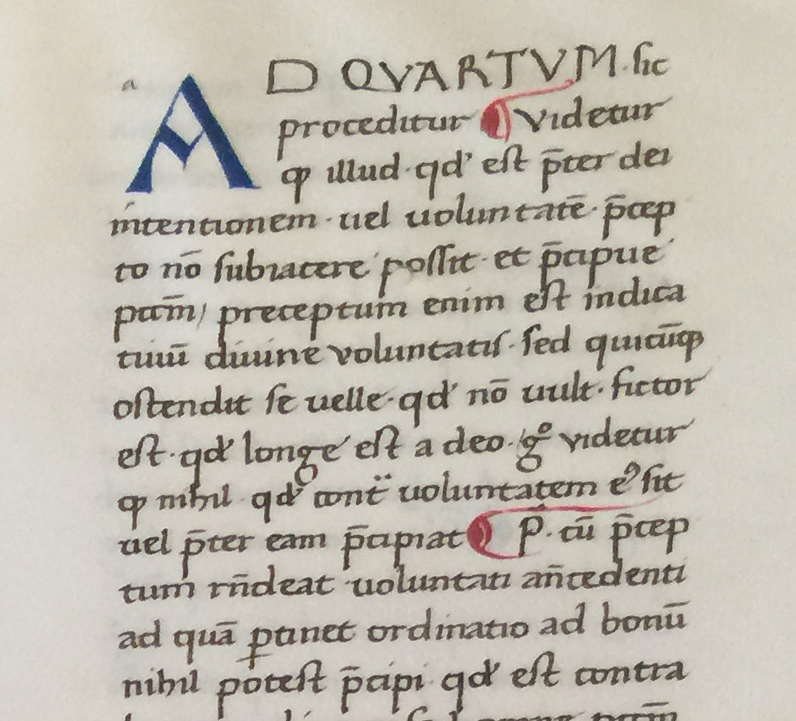
Private Collection, Ege's FBNC Portfolio, Aquinas Leaf, Recto, Top Right. Reproduced by Permission.

Private Collection, Ege’s FBNC Portfolio, Aquinas Leaf, Recto, Top Right. Reproduced by Permission.

The Author(s), the Text, and the Manuscripts
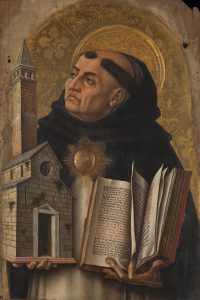
London, National Gallery, Demidoff Altarpiece, Detail: Thomas Aquinas. Panel painting by Carlo Crivelli for the Church of San Dominico at Ascoli Piceno. Image in the Public Domain, via Wikimedia Commons.

London, National Gallery, Demidoff Altarpiece, Detail: Thomas Aquinas. Panel painting by Carlo Crivelli (c. 1430/5 – c. 1494) for the Church of San Dominico at Ascoli Piceno. Image in the Public Domain, via Wikimedia Commons.

To set the stage, we introduce some members of the cast. The principals are Thomas Aquinas (1225–1274) and Peter Lombard (circa 1096 – 1160). Other agents, across the centuries, have had a hand in copying the text in humanist script from its exemplar, commissioning the work, transmitting the copy from collection to collection across time and space, bringing it to the United States, distributing its dismembered pieces, researching the distribution patterns, and examining the fragments in their new settings, as well as in their own right.

In his Labels, Otto Ege identified the leaves as pertaining to a copy in Latin of the Commentary by Thomas Aquinas upon Book I of the Sentences — a weighty text comprising 4 Books in all — composed in an earlier generation by Peter Lombard. By its very nature, the text of the commentary introduces Aquinas, Dominican friar, priest, philosopher, and theologian, posthumously to Peter Lombard, scholastic theologian and Bishop of Paris. Both came from origins in Italy (south and north respectively) to study and teach in Paris.

The text amounts to an indirect sort of dialogue, or a disputation, over distance and time, between 2 prodigious Christian authors, in which the younger and later one perforce has the last say. The text introduces its readers to Aquinas at a rather early stage in the formation and articulation of his deeply philosophical theology.

The Libri Quattuor Sententiarum (“Four Books of Sentences”) — Peter Lombard’s master work, composed circa 1150 — assembles a systematic compilation of theology which became a major textbook. It derives its name from the assembled sententiae, that is, “Sentences” or authoritative statements on biblical passages derived from the text of the Bible and texts by Church Fathers. Within the 4 Books, the author himself subdivided the material into chapters. Subsequently, many chapters were further subdivided, into “distinctions” (Distinctiones). The work served as a principal theological textbook for several centuries. Every master of theology was required to prepare a commentary on the Sentences, as part of the examination system.

Aquinas’s response to the assignment ascended to the stature of a textbook in its own right.
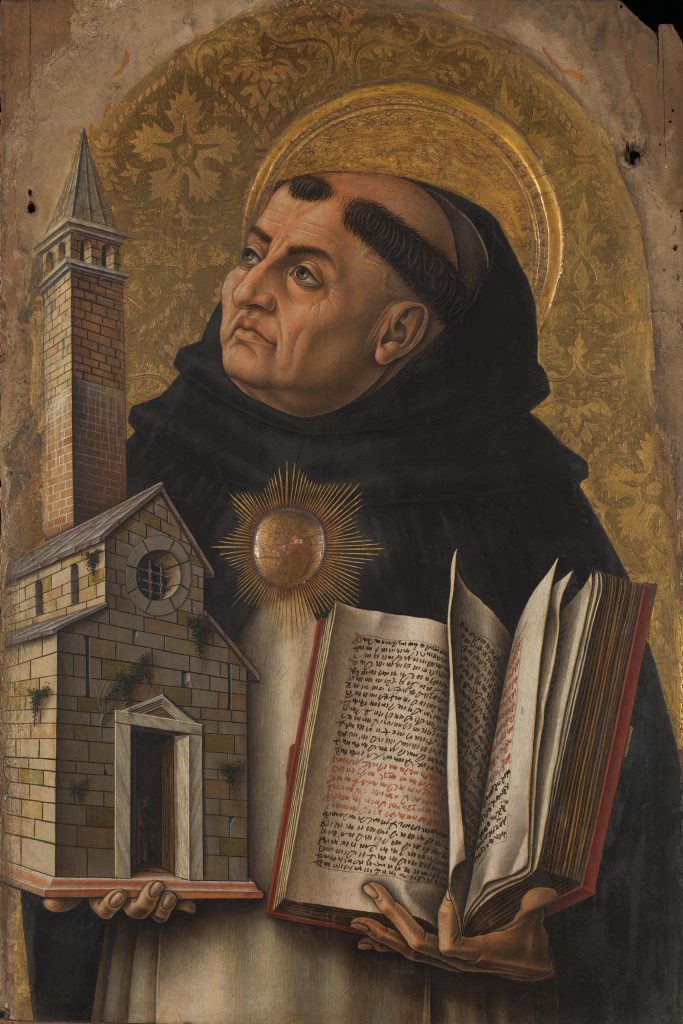
London, National Gallery, Demidoff Altarpiece, Detail: Thomas Aquinas. Panel painting by Carlo Crivelli for the Church of San Dominico at Ascoli Piceno. Image in the Public Domain, via Wikimedia Commons.

London, National Gallery, Demidoff Altarpiece, Detail: Thomas Aquinas. Panel painting by Carlo Crivelli (c. 1430/5 – c. 1494) for the Church of San Dominico at Ascoli Piceno. Image in the Public Domain, via Wikimedia Commons.

Peter Lombard’s Sentences

In one of its 14th-century copies, the opening page of the Book of Sentences by Peter Lombard looks like this.
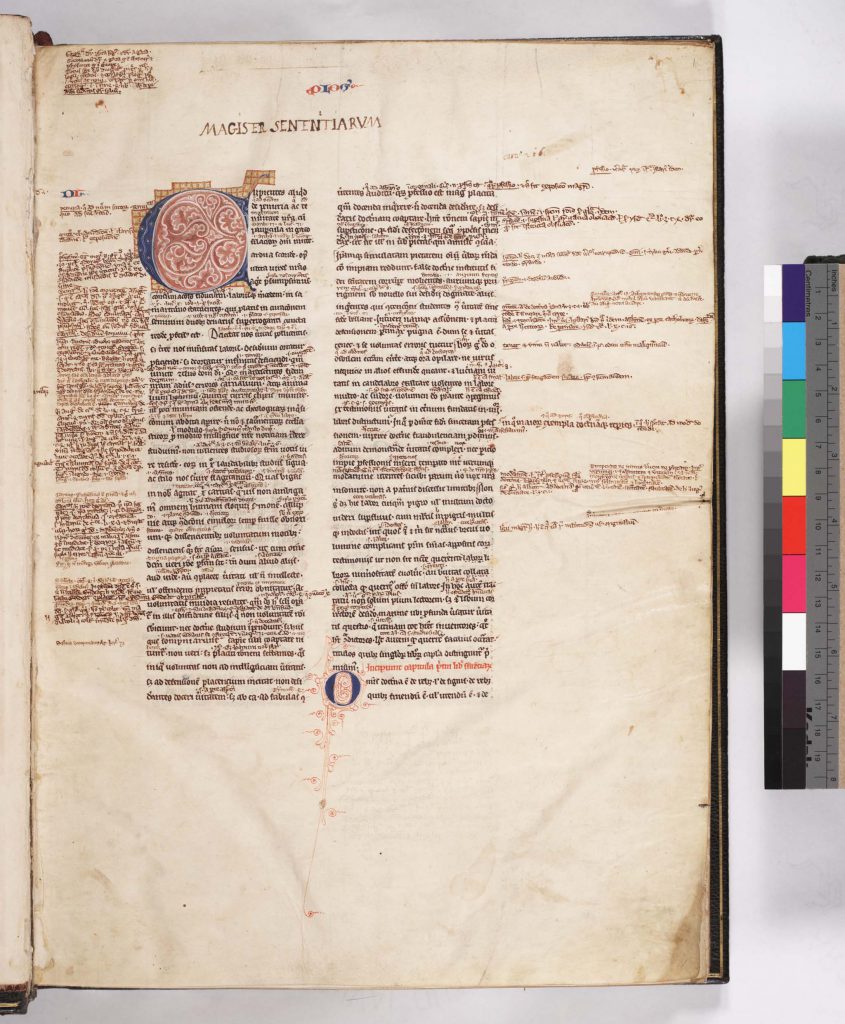
Free Library of Philadelphia, Rare Book Department, Lewis E 170, fol. 1r, Opening the Book of Sentences, via http://libwww.freelibrary.org/medievalman/Detail.cfm?imagetoZoom=mca1700011

Free Library of Philadelphia, Rare Book Department, Lewis E 170, fol. 1r, Opening the Book of Sentences, via http://libwww.freelibrary.org/medievalman/Detail.cfm?imagetoZoom=mca1700011

Laid out in double columns, the text has titles for sections, decorated initials for sections, and running titles, as aids for orientation. The wide margins offer, as intended, expansive scope for additions. Many comments, or glosses, by different hands are densely placed both in the margins around the columns and between the lines of text.

Remember, Aquinas encountered the source text in one or more manuscript copies. They – as well as his own – may well have held such forms of visual ‘dialogue’ or ‘argument’ between the main text and its comments.

Aquinas’s Commentary on the Sentences

Studies of Aquinas and his large body of work abound, not least because of the breadth, scope, and impact of his intellect and output. Reference materials for approaching the work or works appear in such sites as the guide to Thomas Aquinas in English: A Bibliography.

Aquinas’s commentary on Peter Lombard’s textbook, the Scriptum super libros Sententiarum (“Writing on the Books of the Sentences”), stands securely within the development or evolution of his own monumental oeuvre. About this Commentary, the circumstances of its composition, and its approach, a brief summary might set the stage. For example, according to the Aquinas Institute,

The Commentary on the Sentences dates from St. Thomas’s first teaching years in Paris, where he began teaching around the year 1252. As a new teacher, St. Thomas was expected to prepare lectures based on the Sentences of Peter Lombard, thus demonstrating his knowledge of and insight into both theology and philosophy. In the Sentences, St. Thomas was presented with a general theology text which draws upon the writings of the Church Fathers. This was a significant opportunity for St. Thomas to delve into the beauty of theology. Although this text is a commentary on the Sentences, it also contains much original theological thought of St. Thomas himself as he departs at times from the text that he is commenting on to explore other facets of the teaching set forth by Peter Lombard. As this work comes from the earlier years of St. Thomas’s career, it is evident that it represents St. Thomas’s seminal theological thought that is later developed and sharpened in the Summa Theologiae and the Summa Contra Gentiles.

— Sentences Commentary.

The Texts, Editions, and Translations

Among freely available editions online, examples include:

1. The Sentences by Peter Lombard in Latin

  • Textus Sententiarum (Patrologia Latina, vol. 192, cols. 519–964)
  • Textus Sententiarum: cum conclusionibus magistri Henrici Gorichem (1502 Edition, via Bayerische Staatsbibliothek digital)
  • Libri Quattuor Sententiarum (via Hochschule Augsburg)

A translation of the full work in English:

  • Peter Lombard, The Sentences, Books 1–4. translated by Giulio Silano (Toronto: Pontifical Institute of Mediaeval Studies, 4 vols., 2007–2010).

Book 1: The Mystery of the Trinity
Book 2: On Creation
Book 3: On the Incarnation of the Word
Book 4: On the Doctrine of Signs

2. The Commentary by Aquinas on those Sentences in Latin

  • Thomas Aquinas, In Libros Sententiarum Petri Lombardi. via Documenta Catholica Omnia
  • Sanctae Thomae de Aquino, Scriptum super Sententiis, via Corpus Thomisticum, based upon the edition of (Parma, 1856).

Liber I in particular, on “The Mystery of the Trinity”

  • Scriptum super Sententiis , Liber I distinctio I . . . (via Corpus Thomisticum)
  • Commentum in Quatuor Libros Sententiarium, Vol. I (Parma, 1852), via Google Books
  • Scriptum super Sententiis, Liber I (via la.wikisource.org)
  • Scriptum Super Libros Sententiarum, edited by R. P. Mandonnet, vol. I (Paris, 1921)

The Commentary rendered in English

Parts of the text have received, or are receiving, English translations. Online translations and studies of the text include:
  • Commentary on the Sentences by Thomas Aquinas, via isidore.co/calibre.
  • Aquinas in English, via neocities.org, with a list starting with this Commentary, the Scriptum super libros Sententiarum.
  • Supplement to the “Readings from the Commentary on the Sentences”.
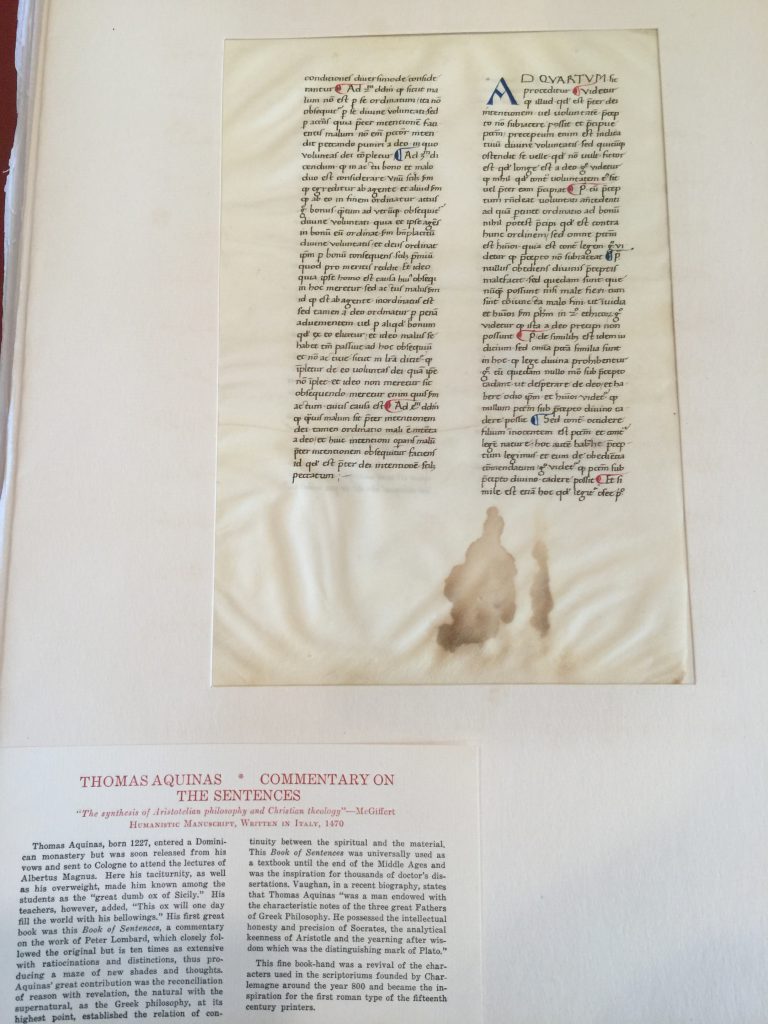
Private Collection, FBNC Aquinas Leaf in Mat with Label. Reproduced by permission.

Private Collection, FBNC Aquinas Leaf in Mat with Label. Reproduced by permission.

Surviving manuscript copies of Aquinas’ Commentary on Peter Lombard’s Sentences include an specimen of about half of the Commentary on Book IV. Made in France circa 1460, it is laid out in columns of 34–41 lines and written in Gothic scripts. It amounts to 350 folios.

  • Washington, DC, Catholic University of America, University Libraries, Rare Books & Special Collections, MS 200, described thus:
    www.worldcat.org/title/commentarium-super-quarto-libro-sententiarum-magistri-petri-lombardi/oclc/190846792

Such a book might be the sort of copy of Aquinas’ Commentary (or part of its 4 Books) prepared at about the same time as the Aquinas Manuscript in Humanist Script, but in a different region practicing late-medieval styles of script and book-production as yet untouched by a revivalist approach to ‘antique’ and classicizing precedents.

Book I of the Commentary

Aquinas’s Book I follows the order in the Sentences, guiding an exploration of the Trinity. The text takes shape in a series of Distinctions (customarily numbered 1–48). It examines the unity of God, the generation of the Son, and the “proceeding” of the Holy Spirit; considers the equality of the Persons in the Trinity; discusses ways in which God can be known; and relates an understanding of predestination and Divine Will, with a view to eternity.

Ege’s Labels for the Aquinas Manuscript

Ege’s Labels for the specimens of the manuscript take different forms. Not only do they focus upon different aspects of the text, script, and other features, but also, curiously, they report a different date or a date-range for the manuscript. The differences are reflected in the transmitted reports or records of the dismembered and differently distributed parts.

1. The Contents List for the Famous Books in Nine Centuries

The Contents List describes the item simply, and gives a precise date.
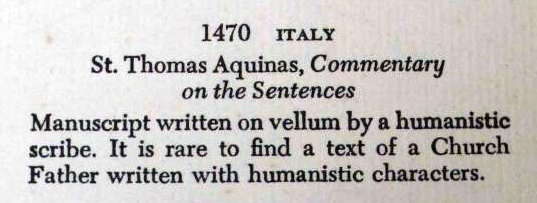
Private Collection, Ege's FBNS, Contents List, Detail: The Aquinas Manuscript. Reproduced by permission

Private Collection, Ege’s FBNS, Contents List, Detail: The Aquinas Manuscript. Reproduced by permission.

Thus:

1470 Italy

St. Thomas Aquinas, Commentary
on the Sentences

Manuscript written on vellum by a humanistic
scribe. It is rare to find a text of a Church
Father written with humanistic characters.

2. The Label for the Leaf in the Famous Books Portfolio

Ege’s Label for the manuscript in the Famous Books Portfolio (FBNC) states the case more elaborately. The Label takes the form of a separate rectangular strip of paper, pasted at the back of the frame and folded around the windowed mat at the lower left. The terms of the Label consider the nature of the text and the authorial genius of the author at some length, before turning to a concluding paragraph about the type of script, its inspiration in early-medieval Carolingian models, and its impact upon early printing in the West.

Again, the assigned date takes the precise form of 1470 — tout court. In the form of a motto below the title of the work, the 1-line quotation from a “recent” biography of the author (attributed to “McGiffert”, or Arthur Cushman McGiffert) adds a smidgen of adulation.
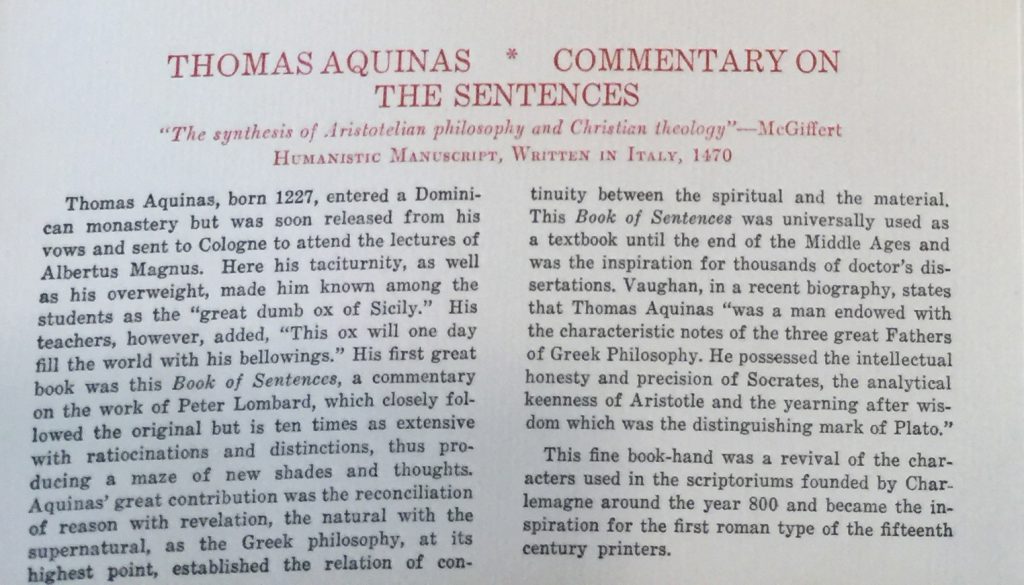
Private Collection, Ege's Famous Books in Nine Centuries, Label for the Aquinas Manuscript Leaf. Reproduced by permission.

Private Collection, Ege’s Famous Books in Nine Centuries, Label for the Aquinas Manuscript Leaf. Reproduced by permission.

The Label states:

THOMAS AQUINAS * COMMENTARY ON THE SENTENCES

“The synthesis of Aristotelian philosophy and Christian theology” — McGiffert.

Humanistic Manuscript, written in Italy, 1470

Thomas Aquinas, born 1227, entered a Dominican monastery but was soon released from his vows and sent to Cologne to attend the lectures of Albertus Magnus. Here this taciturnity, as well as his overweight, made him known among the students as the “great dumb ox of Sicily.” His teachers, however, added, “This ox will one day fill the world with his bellowings”. His first great book was this Book of Sentences, a commentary on the work of Peter Lombard, which closely followed the original but is ten times as extensive with ratiocinations and distinctions, thus producing a maze of new shades and thoughts. Aquinas’ great contribution was the reconciliation of reason with revelation, the natural with the supernatural, as the Greek philosophy, at its highest point, established the relation of continuity between the spiritual and the material. This Book of Sentences was universally used as a textbook until the end of the Middle Ages and was the inspiration for thousands of doctor’s dissertations. Vaughan, in a recent biography, states that Thomas Aquinas “was a man endowed with the characteristics notes of the three great Fathers of Greek Philosophy. He possessed the intellectual honesty and precision of Socrates, the analytical keenness of Aristotle and the yearning after wisdom which was the distinguishing mark of Plato.

This fine book-hand was a revival of the characters used in the scriptoriums founded by Charlemagne around the year 800 and became the inspiration for the first roman type of the fifteenth century printers.
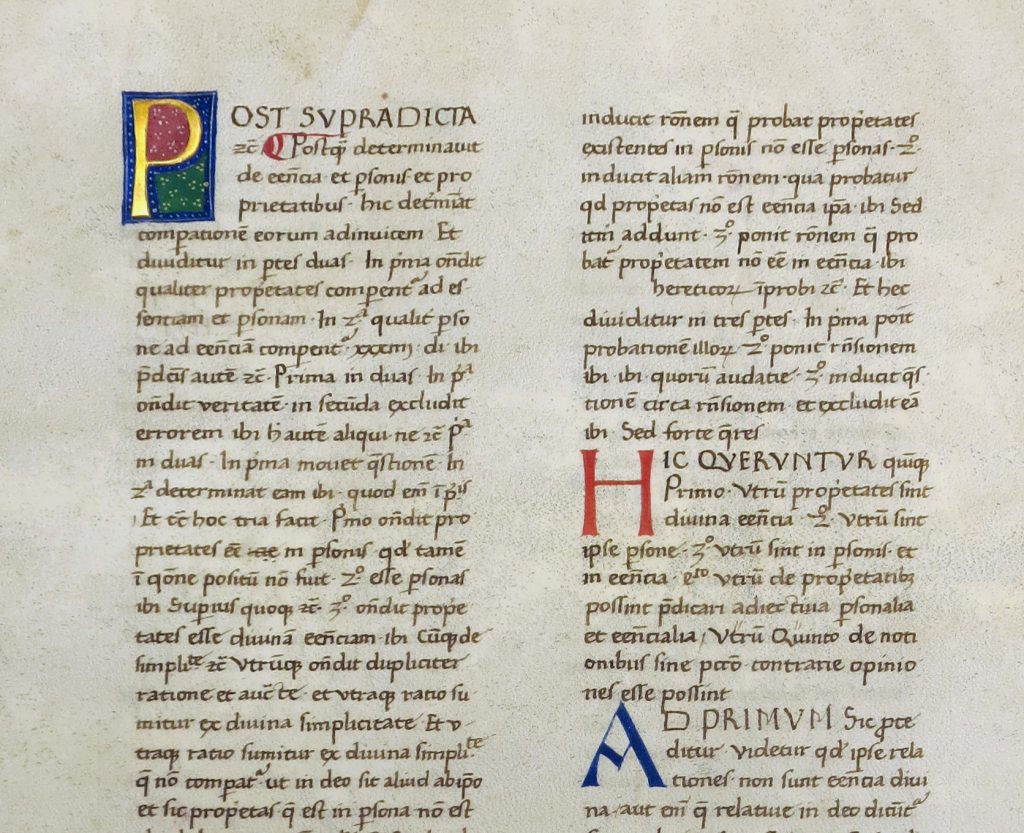
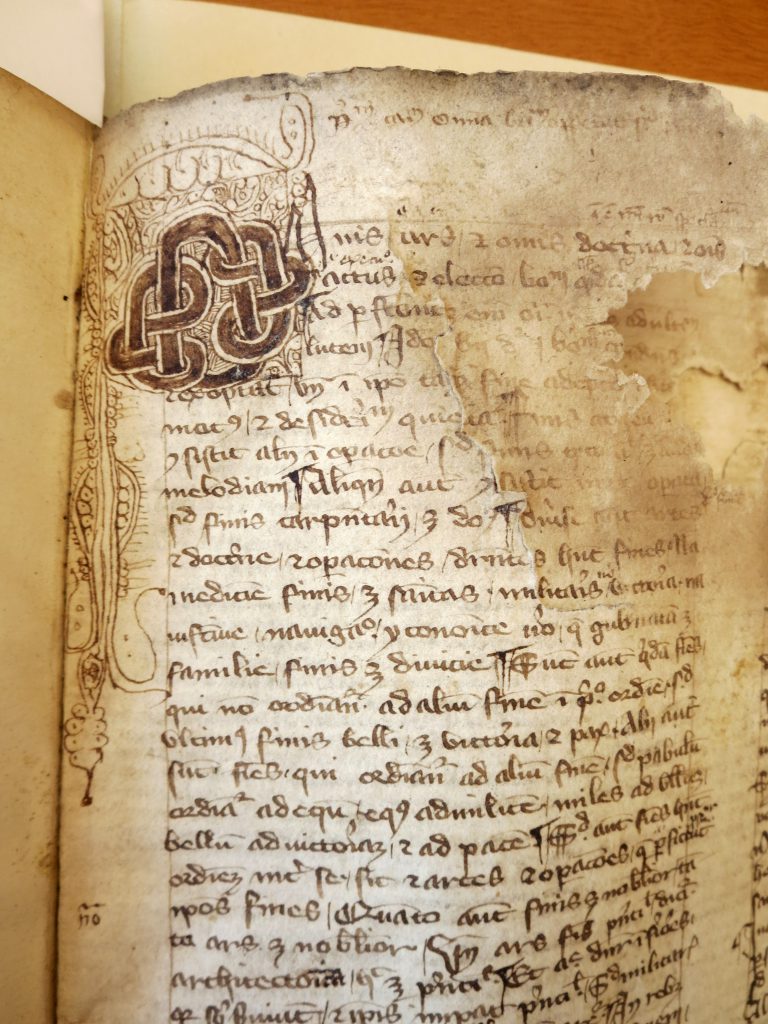
Beinecke Rare Book & Manuscript Library, Otto Ege Collection, FOL Set 3, MS 40, Specimen 2 = folio 216v (turned to the front in Ege's Mount:) Top of Textblock. Photography Mildred Budny.

Beinecke Rare Book & Manuscript Library, Otto Ege Collection, FOL Set 3, MS 40, Specimen 2 = folio 216v (turned to the front in Ege’s Mount): Top of Textblock. Photography Mildred Budny.

3. The Label for the Leaf in the FOL Portfolio, with Ege’s Manuscript Number 40

Ege’s Label for the specimens from the Aquinas manuscript in his Portfolio of Fifty Original Leaves from Western Manuscripts, Western Europe, XII–XVI Century (FOL) takes a more compressed approach, and focuses upon the script. In this case, the Label fudges about the assigned date, reported as “Late XVth Century”.

As with the Labels for the other manuscript specimens in the FOL Portfolio (but unlike the unnumbered Labels for the FBNC Portfolio), the Number assigned to the Leaf in the sequence on the Contents List is printed at the top right. The Label for Number 40 states the case thus:
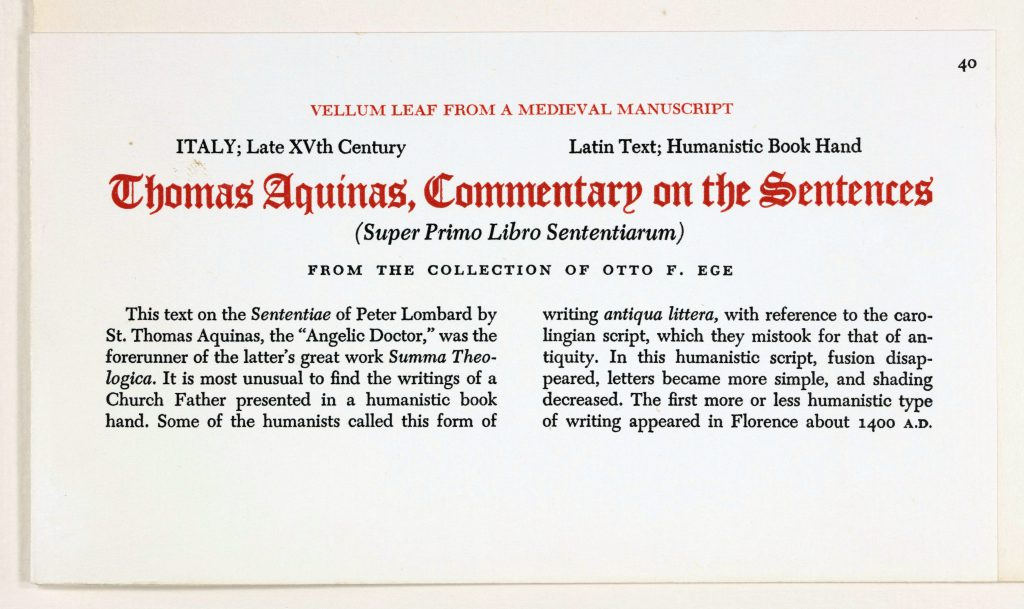
Otto F. Ege: Fifty Original Leaves from Medieval Manuscripts, Leaf 40, Printed Label, Special Collections and University Archives, Stony Brook University Libraries.

Otto F. Ege: Fifty Original Leaves from Medieval Manuscripts, Leaf 40, Printed Label, Special Collections and University Archives, Stony Brook University Libraries.

That is, under the headings of “ITALY; Late XVth Century” and “Latin Text; Humanistic Book Hand”, the Label introduces the specimen in the terms focusing upon the script and its unusual use for such a non-secular text.

Thomas Aquinas, Commentary on the Sentences

(Super Primo Libro Sententiarum)

FROM THE COLLECTION OF OTTO F. EGE

This text on the Sententiae of Peter Lombard by St. Thomas Aquinas, the “Angelic Doctor,” was the forerunner of the latter’s great work Summa Theologica. It is most unusual to find the writings of a Church Father presented in a humanistic book hand. Some of the humanists called this form of writing antiqua littera, with reference to the carolingian script, which they mistook for that of antiquity. In this humanistic script, fusion disappeared, letters became more simple, and shading decreased. The first more or less humanistic type of writing appeared in Florence about 1400 A.D.

A Specimen from the manuscript in a Set of the FOL Portfolio at Harvard University:
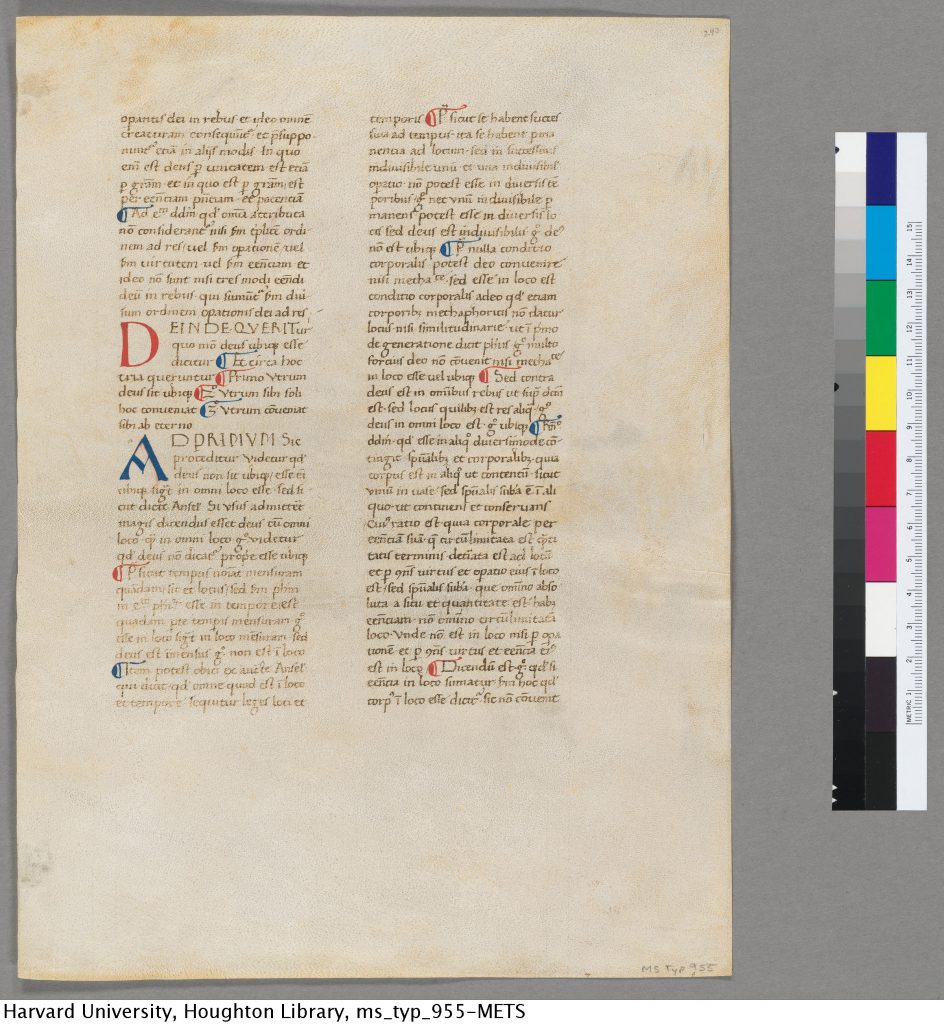
Harvard University, Houghton Library, MS Typ 995, recto = Ege MS 40, folio 243 recto.

Harvard University, Harvard University, Houghton Library, MS Typ 995, recto = Ege MS 40, folio 243 recto.

4. The Contents List for the FOL Portfolio
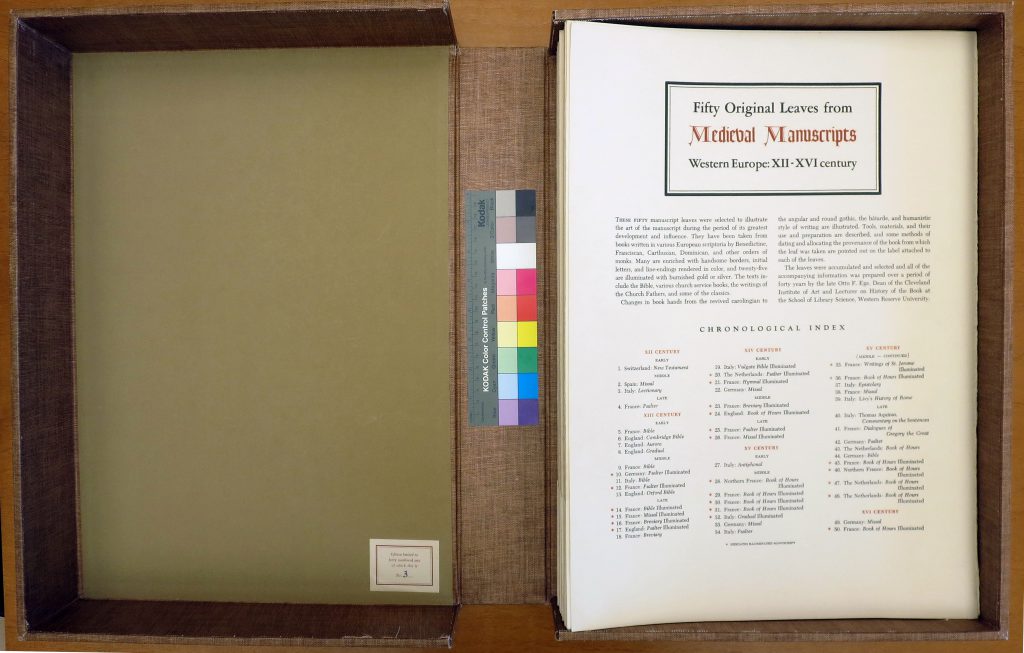
Beinecke Rare Book & Manuscript Library, Otto Ege Collection, FOL Set 3, with Case opened to Inside Front Cover and the Contents List. Photography Mildred Budny.

Beinecke Rare Book & Manuscript Library, Otto Ege Collection, FOL Set 3, with Case opened to Inside Front Cover and the Contents List. Photography Mildred Budny.

The full-page Contents List for the FOL Portfolio lists Leaf Number 40 within the “LATE” grouping for the “XV Century”. Its listing names only the Country, Author, and Text:

40. Italy: Thomas Aquinas, Commentary on the Sentences.

It appears that the ‘rules’ for this “CHRONOLOGICAL INDEX”, grouped by centuries with subdivisions into “EARLY”, “MIDDLE”, and “LATE”, governed the omission of more specific dates for cases where they might have been known.

While we survey Ege’s several approaches, it is important to note another form of description which he adopted for some leaves intended for sale separately.

5. The Leaves in the 1944 Staff Loan Catalogue (Lima, OH)

Prepared in support of the Lima Public Library Staff Loan Fund, Lima, OH, the 1944 Staff Loan Catalogue offered for sale numerous Original Leaves & Sets of Leaves from Medieval Manuscripts, Incunabula, Famous Bibles, and Noted Presses, 1150 A. D. – 1935 A. D. The catalogue appeared in a stapled booklet of 15 printed pages, with a cover page announcing that title and related information.

A rare surviving copy of the Catalogue, mailed to Alexandria, Minnesota, and bearing a postmark of 1944, is reproduced in part in Scott Gwara, Otto Ege’s Manuscripts (2016), figures 41–48 on pages 253–260 (showing pages 1–5 and 14–15 of the Catalogue). See also pp. 41–48 and 208, as well as p. 40 and note 97.

The Catalogue lists some leaves from the Aquinas manuscript (Ege Manuscript 40 = Handlist number 40) in 2 different sections. In both cases, the items within sets containing leaves from several different books.

First:

  1. Set of 18 Leaves, The Book Beautiful through Nine Centuries (pages 1–2 in the Catalogue; Gwara, figure 42 on p. 254)Within this “Superb Set”, for the price of $100.00, the Aquinas Commentary joins 6 manuscripts as well as multiple printed items. It appears as

[Item 1.] (f): 1470 A.D. ITALY. St. Thomas Aquinas’ Commentary. Fine humanistic bookhand with fine illuminated letter.

Second:

Sets of Leaves from Medieval Manuscripts, listed as 3 groups, numbered as Sets 9–11 (Pages 4–5 in the Catalogue; Gwara’s figure 46 on page 258). For the sets, “All leaves are matted and enclosed in portfolios”.

The Aquinas Commentary appears in Set 10 (for $25.00), as its item 6.

[Set] 10. Eight Original Manuscript Leaves from the 12th to the 16th Centuries

[Item] (6) 1470 A.D. Italy. St. Thomas Aquinas’s Commentary on the Sentences.

In each case, the cited date for the manuscript conforms with the precise version presented in the Labels for the Famous Books Portfolio, rather than for the FOL Portfolio.

Variable, and Indicative (or ‘Diagnostic’), Terms for the Leaves

Ege’s variability in the presentation of information circulating with the different dispersed leaves not only might generate frustration from the obfuscation. But also they can, in some cases, provide useful clues for the specific patterns of transmission beyond his collection.

In combination, conflation, or diversion, Ege’s several approaches to the Labels for the manuscript provide scraps of evidence or information about the manuscript as it came to him, about its features as they appeared to him, and about the way(s) in which he came to understand it as he worked to separate its leaves from each other and to scatter them widely into different hands, both public and private.

‘Diagnostic’ Terms for the Distributions of Leaves

Because Ege’s provisions of information for the individual leaves about to be dispersed in various ways were themselves so variable, it can be helpful to pay attention to the terms themselves in Ege’s Labels and handwritten annotations.

The variability may partly have arisen as Ege’s understanding of the manuscript materials deepened or extended, with changes or refinements in such aspects as the assignments of dates or date-ranges. But it must have resulted in no small measure from the varieties in approach to reporting and recording salient information pertaining to the manuscripts as wholes. Encountering that remission requires careful attention to the specific terms and forms of description which Ege employed at different times for the materials emanating from a single manuscript.

Such care can repay effort, as the terms which travel with a given manuscript specimen sometimes serve as indirect, and occasionally clear, evidence for the method by which that specimen left Ege’s hands, workshop, and collection.

An example is demonstrated in More Discoveries for ‘Otto Ege Manuscript 61’. A sales ‘clipping’ which travelled with one of its leaves, and which happily remained in view within an uncropped image of that leaf (as sent to me by its institution for higher quality resolution for reproduction), goes far to show that the leaf departed through the 1944 Sale Catalogue.

The clipping focuses upon Item 26 on page 7 — reproduced in Gwara, Otto Ege’s Manuscripts, figure 43 (page 255). The clipping of the printed item, including its number, is still attached to the surviving cropped segment of Ege’s characteristic ivory-colored mat, ruled in vermilion framing lines, with which the leaf came to its collection.
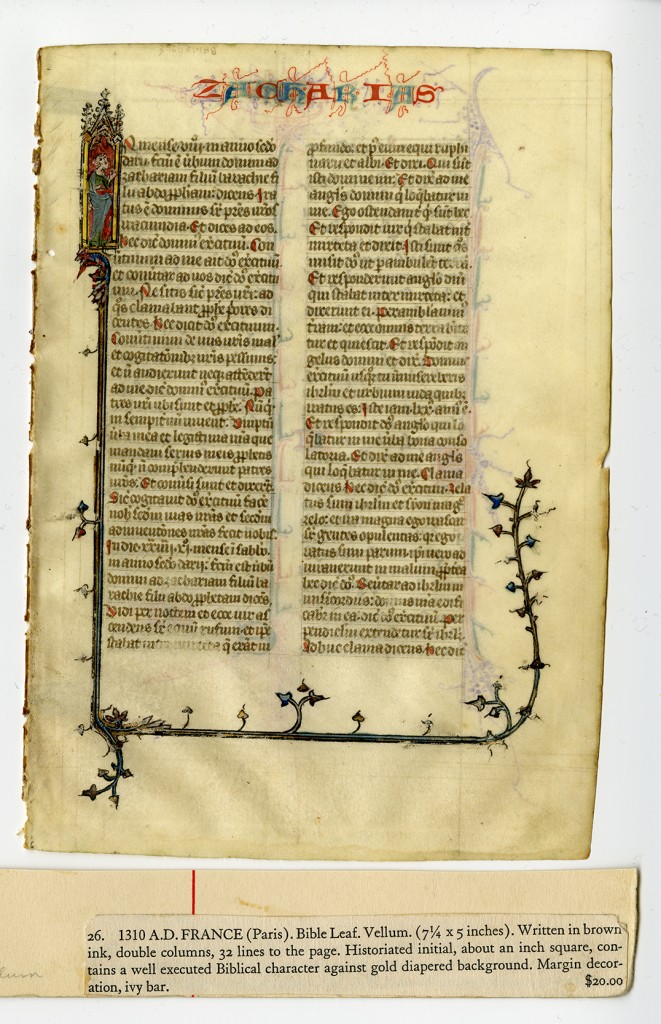
Recto of Leaf Opening the Book of Zachariah, plus Clipping from its Sale Catalogue. Courtesy of Flora Lamson Hewlett Library, Graduate Theological Union, Berkeley, CA. Reproduced by permission.

Recto of Leaf Opening the Book of Zachariah, plus Clipping from its Sale Catalogue. Courtesy of Flora Lamson Hewlett Library, Graduate Theological Union, Berkeley, CA. Reproduced by permission.

The ‘New’ Leaf from the Aquinas Manuscript in Humanist Script

The text combines, or interlinks, segments of discourse by Thomas Aquinas (1225–1274) and Peter Lombard (circa 1096 – 1160). The leaf forms part of Aquinus’ Commentary on the Sentences of Peter Lombard, Book I, dedicated to ” The Mystery of the Trinity”. Laid out in double columns of 37 lines, the script appears to date to circa 1475. The leaf forms part of Ege MS 40, listed in Gwara, “Handlist” = Otto Ege’s Manuscripts, Appendix X, pages 131–132, at pages 131–132.

This ‘new’ Specimen Leaf has the pencil number 300 at the top outer corner on the ‘verso’ of the leaf, as Ege mounted it, turning back to front so as to display the opening initial for a new section.

The Leaf stands seemingly cropped within Ege’s mat, with Ege’s printed Label attached to the lower left at the front of the mat.

Private Collection, FBNC Aquinas Leaf in Mat with Label. Reproduced by permission.

Private Collection, FBNC Aquinas Leaf in Mat with Label. Reproduced by permission.

The ‘front’ of the Leaf, as revealed below the lifted front of the windowed mat:
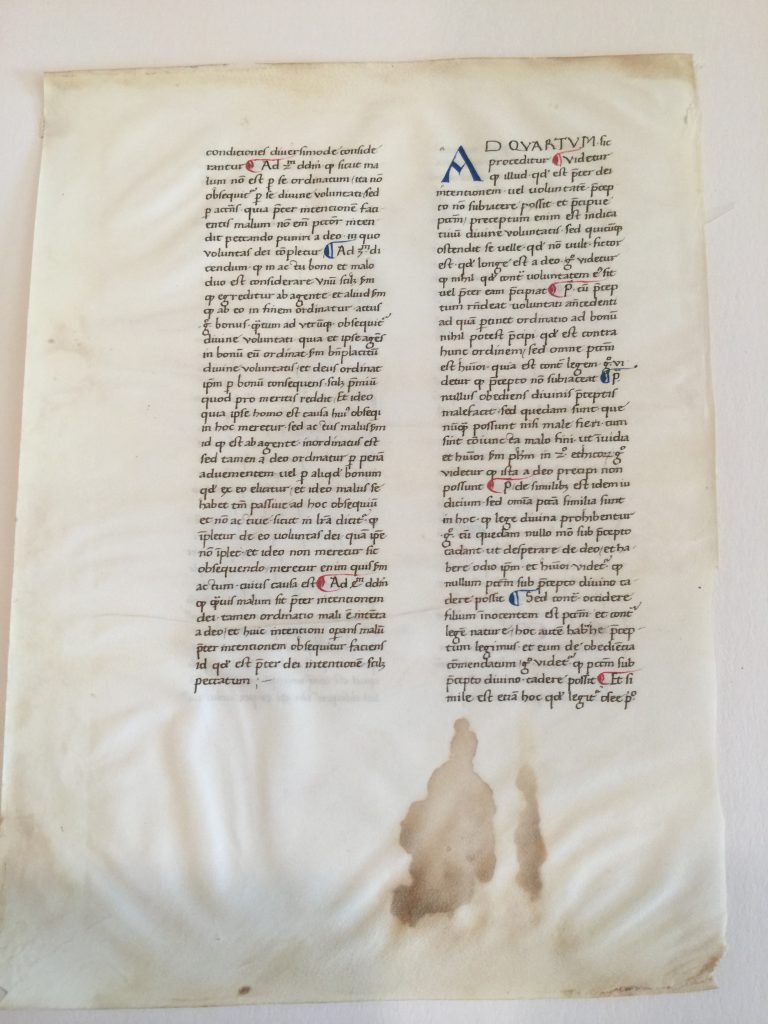
Private Collection, FBNC, Aquinas Leaf 'Front'. Reproduced by permission.

Private Collection, FBNC, Aquinas Leaf ‘Recto’. Reproduced by permission.

Note that it is the original verso of the leaf, with the wider outer margin positioned at the left.

The large dark stains from some liquid spills in the lower margin form a couple of irregular ‘pools’ which stand side-by-side. The effects of moisture along the bottom edge have cockled the vellum when drying unstretched. A few dark stains affect the lower outer edge, with some losses along the outer corner.

Dark stains from dirt and perhaps also moisture falling from the top of the book extend across the upper edge. Presumably they were shared by adjacent parts of the closed volume in vertical storage of some sort.

To reveal the ‘back’ of the Leaf, it is possible to lift it partly away from the back mat, to which it is attached by a pair of Ege’s gauze mounting tapes.
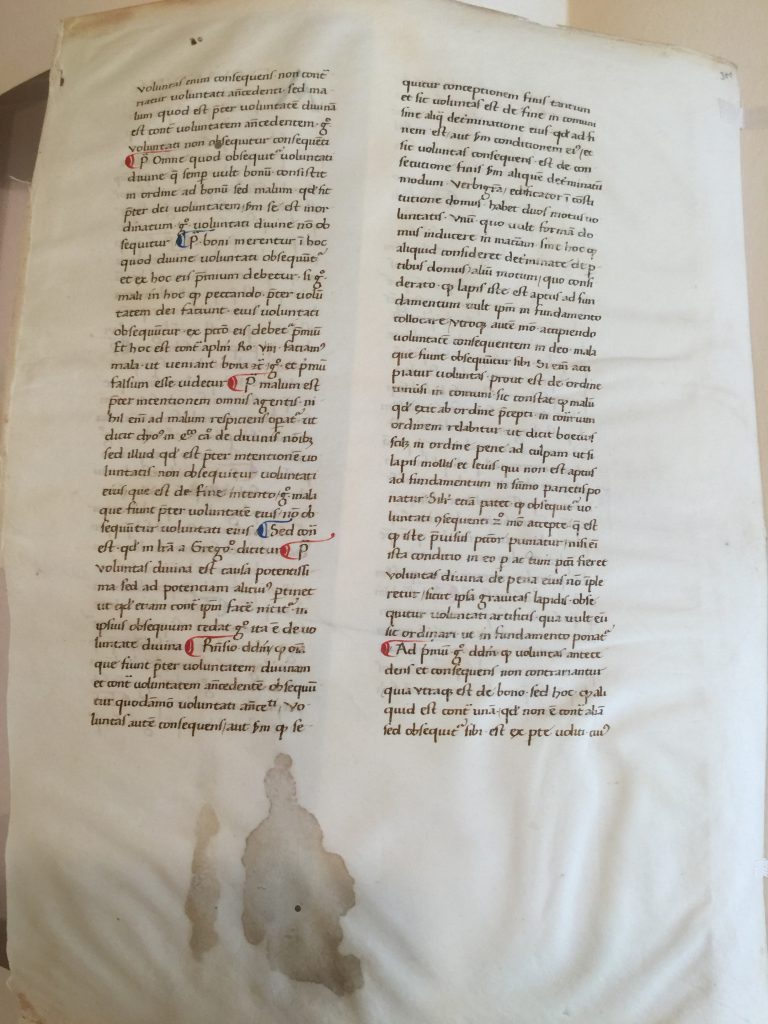
Private Collection, FBNC, Aquinas Leaf 'Verso'. Reproduced by permission.

Private Collection, FBNC, Aquinas Leaf ‘Verso’. Reproduced by permission.

With the outer margin positioned at the right, the folio number emerges into view. In the top corner, the modern pencil number ‘300’ rises at a diagonal to the right.
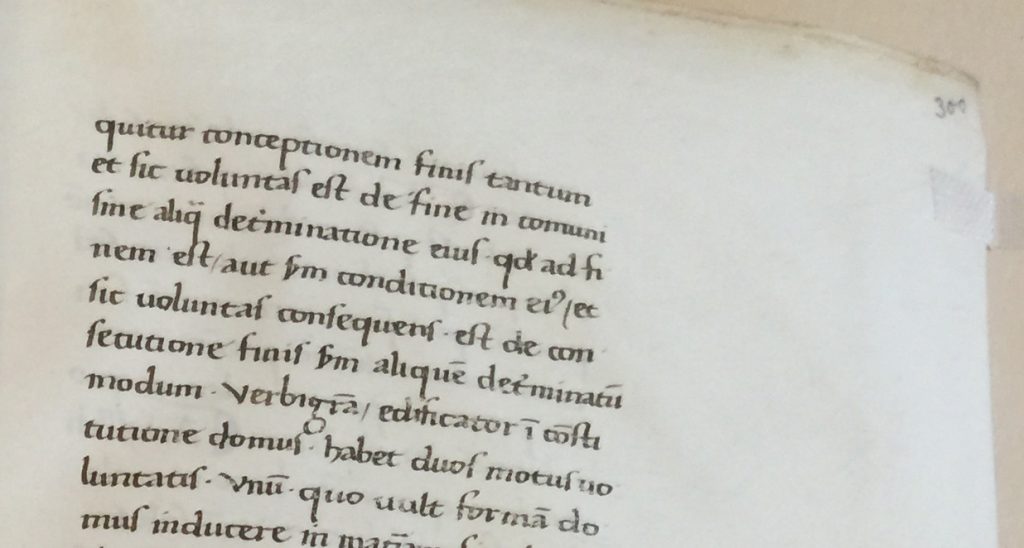
Private Collection, FBNC, Aquinas Leaf 'Back' top right and page number.

Private Collection, FBNC, Aquinas Leaf ‘Back’ top right and page number. Reproduced by permission.

An opening section of text with an enlarged initial stands at the top of column b on the original verso; it was this side that Ege turned to the fore in his windowed mat.

Private Collection, Ege's FBNC Portfolio, Aquinas Leaf, Recto, Top Right. Reproduced by Permission.

Private Collection, Ege’s FBNC Portfolio, Aquinas Leaf, Recto, Top Right. Reproduced by Permission.

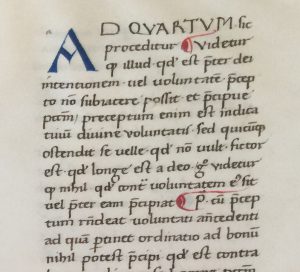
The heading begins with an inset 3-line initial A (for Ad, “To” or “Toward”) rendered in blue pigment. Written discreetly in ink, a small cue letter a stands to its left, as a prompt for the letter when the time came to add the initial in color, after the script in ink had been entered. A paraph-marker in red pigment fits within line 2, between the heading (AD QVARTUM sic proceditur) and the opening of the section (Videtur quod . . . ).

Ad quartum sic proceditur.
Videtur quod id quod est praeter Dei voluntatem, praecepto non subjaceat, et praecipue peccatum. . .

Within the Commentary on Book I of the Sentences, this passage corresponds to the opening of Distinctio 47, Quaestio 1, Articulus 4, Argumentum 1.

= Super Sententiis, Liber I, Distinctio 46, Quaestio I, Articulus 4, Argumentum
Or, “On the Sentences, Book I, Part (Distinctio) 46, Question I, Article 4, Argument 1″
For short: [3345] “Super Sent., lib. 1 d. 47 q. 1 a. 4 arg. 1”
— as marked out in the freely available edition online: www.corpusthomisticum.org/snp1045.html, numbering the individual sections with a series of consecutive arabic numbers (which I emphasize here in bold).

Although not specified as such in this manuscript, the subject or summary of the section is known as

Utrum id quod est praeter voluntatem Dei praecepto non subjaceat

Might the blank line or so at the end of column a have been intended to hold the title or summary for the section, in enlarged and perhaps rubricated form? To read, perhaps, something like this?

Articulus IV: Utrum Deus velit mala fieri.

On its own, the leaf does not reveal whether that skipped last line in the column was designed to leave space for such a heading, or else simply responded to the opportunity shortly to begin a new section with the next, new column.

Do any other leaves from the manuscript have such elements? Might such a feature have existed in the exemplar from which this copy in humanist script was made?

The Span of Text on the Leaf

With its modern folio number 300, the text on the leaf starts and stops mid-phrase. It extends from within

[3340] Super Sent., lib. 1 d. 47 q. 1 a. 3 ad 1 ([Ad primum ergo dicendum] / voluntas enim . . . )

to within

[3340] Super Sent., lib. 1 d. 47 q. 1 a. 3 ad 1 ( . . . voliti cujus / [conditiones diversimode]
— via www.corpusthomisticum.org/snp1045.html.

Over time, the customary forms of citation for the different parts of the work have adapted to the demands and structure of Thomas’s complexly ordered texts. Guides in English for general readers can be found in the descriptions of How to Read an Article in Aquinas’s Summa Theologiae and Methods of referring to parts of the Summa theologiae. From the latter:

These parts [in the Summa] break down into questions (qq.); and each question (in Latin, quaestio, abbreviated q. or quaest.) is comprised of articles (etymologically, ‘little joints’ in the organic whole; a. = article). Most articles contain ‘objections’ (suggested arguments) on one side of an issue, an argument or quotation supporting the other side and introduced with the formula sed contra (‘on the other hand’), Thomas’ solution (solutio) in the body (corpus) of the article, and replies to the objections; replies open with the Latin preposition ad (‘to’ or ‘toward’) followed by an ordinal number (e.g., ad primum means ‘in reply to the first objection,’ while ad tertium indicates the reply to the third).

Expanding such citations, we might see that the text on the ‘new’ Leaf fits within the section of

Super Sententiis (“On the Sentences“), Liber (Book) 1, Distinctio (Part) 47, Quaestio (Question) 1.

Within that section, the leaf extends between its Articles 3 and 4, specifically from within this point:

Articulo (Article) 3, [Solutio] ad 1 (= primum) [Objectionum] = “Reply to the First Objection” within the body (corpus) of the Article [3340]

to within this point:

Articulo 4, s. c. [that is, Sed Contra = “On the contrary”, regarding] 1 [= primum Objectionum] [3349].

The Span of Text on Other Leaves

The spans of text on other leaves from the manuscript are indicated in some reference sources. They range from entries in sales catalogues to the metadata in catalogue entries online for individual collections.

The reported spans of text for some dispersed leaves are gathered into a single place. They are reported for the group of 15 participating institutions on the website ege.denison.edu for the cases of Leaf 40 within the FOL Portfolio in their particular sets, albeit with a few omissions because scans of some leaves or of the other side of some leaves were not available (“N/A”) when the website was being drawn up. On the site, identifications are reported for each leaf individually (accessible via Leaf 40), as well as gathered in the list of contents_31-40.php (at “Leaf 40”). Thus, with abbreviations for the names of the participating institutions (starting with Case for Case Western University):

Leaf 40: Aquinas’ Super Sententiis
Case: Lib. 1 d. 16 q. 1 a. 1 ad 5 [1235], to Lib. 1 d. 16 q. 1 a. 2 ad 1 [1250]
Cinci: Lib. 1 d. 11 q. 1 a. 1 ad 2 [897] , to Lib. 1 d. 11 q. 1 a. 2 ad arg. [912]
CIA: Lib. 1 d. 32 q. 1 a. 1 co. [2258], to Lib. 1 d. 32 q. 1 a. 2 arg. 2. [2292]
Clev: Lib. 1 d. 6 q. 1 a. 3 co. [532], to Lib. 1 d. 7 q. 1 a. 1 s. c. 1 [542]
Deni: Lib. 1 d. 33 q. 1 a. 2 arg. 5 [2357], to Lib. 1 d. 33 q. 1 a. 3 arg. 3 [2369]
Kent: Lib. 1 d. 32 q. 1 a. 3 arg. 1 [2303], to Lib. 1 d. 32 q. 2 a. 1 co. [2319] §
Keny: Lib. 1 d. 32 q. 2 a. 1 co. [2319], to Lib. 1 d. 32 q. 2 a. 2 qc. 1 co. [2331] §
Lima: Lib. 1 d. 3 q. 3 pr. [310], to Lib. 1 d. 3 q. 3 a. 1 ad 1 [318]
OSU: Lib. 1 d. 8 q. 5 a. 1 co. [749], to Lib. 1 d. 8 q. 5 a. 2 co. [758]
Oh U: N/A
Roch: Q. 1 a. 5 ad 4 [62], followed (!) by [Emphasis added] Q. 1 pr. [2]
U-Co: Lib. 1 d. 1 q. 4 a. 2 expos. [154], and Lib. 1 d. 2 q. 1 pr. [155]
U-Ma: Lib.1 d.4 q.2 a.2 expos. [452], to Lib.1 d.5 q.1 pr. [453]
U-Sk: N/A
U-SC: Lib. 1 d. 1 q. 3 a. 1 ad 4 [128], to Lib. 1 d. 1 q. 4 a. 2 s. c. 1 [149]

The system of identification accords with the version of the Commentary according to www.clericus.org, using the out-of-copyright edition of Sancti Thomae de Aquino, Scriptum super Sententiis (Parma, 1846).

Within that online edition, the series of arabic numerals (“[2]“, “[62]“, “[128]“, etc), offer convenient points of orientation and navigation within the complex text. Similarly, the modern folio numbers in pencil on some leaves (all?) permit ready recognition of where the individual leaves formerly stood in the manuscript itself.

Provisional List of Leaves

Because only some of the leaves are recognized, because only some of them have their span of text identified, because the folio numbers are visible on the images only of some of the rectos, and because more leaves await recognition and online display or access to view, I offer a provisional list of known leaves (and, where feasible, their textual span and/or folio number), according to the location of their current collection.

Reordering them into an original, or approximate, textual sequence would wait for a later stage of collective research. It is worth noting that the text on the leaves might not always run in the sequence presented or established in an edited version. This caution is shown by the span on the leaf now at the Rochester Institute of Technology (Set 35), as reported on the website ege.denison.edu, for Rochester Leaf 40.

“Q. 1 a. 5 ad 4 [62], followed (!) by Q. 1 pr. [2]”. (Emphasis added.)

Leaves According to Current Locations, Listed Alphabetically by Place-Name

Where known, the folio number on the leaf is indicated here in red (“Folio 12” etc) at the start of the entry.

I. Locations Unknown or Unspecified

*****
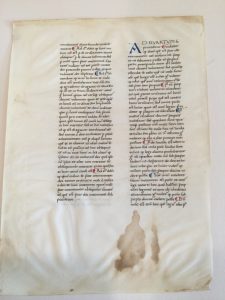
Private Collection, FBNC, Aquinas Leaf 'Front'. Reproduced by permission.

Private Collection, FBNC, Aquinas Leaf ‘Recto’. Reproduced by permission.

Folio 300. Location unspecified, Private Collection (unnumbered set of FBNC). Illustrated above and at the right.

[3340] Super Sent., lib. 1 d. 47 q. 1 a. 3 ad 1 ([ergo dicendum] / voluntas enim consequens), to
[3349] Super Sent., lib. 1 d. 47 q. 1 a. 4 s. c. 1 (voliti cujus / [conditiones diversimode])
— corpusthomisticum.org/snp1045.html.

*****

Folios ??. Location(s) unknown.

Group of 32 detached leaves from the manuscript offered for sale at the auction of Western Manuscripts and Miniatures at Sotheby’s, London, on 26 November 1985, as Lot 80 (with no plate). See below.

*****

Folio ?. Location unknown.

Leaf within FOL Set 55, offered for sale by Phillip J. Pirages, Catalogue 55 (n. d.), no. 111 (no plate).

*****

Folio ?. Location unknown.

Leaf within FBNC Set 28, offered for sale by Christie’s, 12 September 2020, lot. 10 unsold (no plate).

*****

II. Locations in Alphabetical Order

*****

Folio ?. Albany, NY, New York State Library (FOL Set 8).

*****

Folio ?. Amherst, MA, University of Massachusetts, Amherst, W. E. B. Du Bois Library (FOL Set 6).
Amherst Leaf 40 (verso) and via umass.edu (verso).

Verso only: [452] Super Sententiis, lib.1 d.4 q.2 a.2 expos., to [453] Super Sententiis, lib.1 d.5 q.1 pr.
— http://www.corpusthomisticum.org/snp1004.html. “A scan of the recto is not currently available”.

*****

Folio 66. Athens, OH, Ohio University, Vernon R. Alden Library (FOL Set 5). Manuscript leaf from Thomas Aquinas’ Commentary on the Sentences.

[764] Super Sent., lib. 1 d. 8 q. 5 a. 2 ad 6 ([non individuatur] / nisi ex corpore), to
[774] Super Sent., lib. 1 d. 8 q. 5 a. 3 ad 2(virtute secundum quod / [ex ejus essentia])
— via corpusthomisticum.org/snp1008.html.

*****

Folio ?. Bloomington, IN, Indiana University, The Lilly Library (FOL Set 2).

*****

Folio 14?. Boulder, CO, University of Colorado, Norlin Library (FOL Set 32). Boulder Leaf 40 (recto) and now here (recto and verso).

The online image of the recto appears to have no folio number.

“Super Primo Libro Sententiarum, fol. 14[?]v [sic]. Recto and verso: First Book of Sentences, 1.4.2.ex/68–2.1.pr/4″ (here).

[154] Super Sententiis, lib. 1 d. 1 q. 4 a. 2 expos., and
[155] Super Sententiis, lib. 1 d. 2 q. 1 pr.
— via corpusthomisticum.org/snp1001.html and corpusthomisticum.org/snp10020.html. (Boulder Leaf 40).
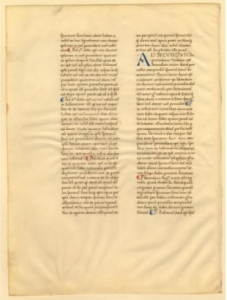
Buffalo and Erie Public Library, Ege, Otto F., compiler., “Fifty original leaves from medieval manuscripts” (Leaf 40, verso). B&ECPL Digital Collections, accessed February 3, 2021, http://digital.buffalolib.org/document/1671. http://digital.buffalolib.org/document/1671#?c=0&m=0&s=0&cv=44&z=0.349%2C0.1267%2C1.0344%2C0.6954.

Buffalo and Erie Public Library, Ege, Otto F., compiler., “Fifty original leaves from medieval manuscripts.” (Leaf 40, verso). B&ECPL Digital Collections, accessed February 3, 2021, http://digital.buffalolib.org/document/1671.
http://digital.buffalolib.org/document/1671#?c=0&m=0&s=0&cv=44&z=0.349%2C0.1267%2C1.0344%2C0.6954.

*****

Folio 90. Buffalo, NY, Buffalo and Erie County Public Library, Central Library (Fol Set 11). Page ’70’, here.

[1046] Super Sent., lib. 1 d. 14 q. 2 a. 1 qc. 1 arg. 4 ([in operibus] / politicis sed), to
[1062] Super Sent., lib. 1 d. 14 q. 2 a. 2 arg. 4 (quod spiritus / [sanctus datus est])
— via corpusthomisticum.org/snp1009.html

*****

Folio ?. Cambridge, MA, Harvard University, Houghton Library (FOL Set 1, acquired at auction at Christie’s, London, on 6 December 2020, lot 9).

*****

Folio 243. Cambridge, MA, Harvard University, Houghton Library, MS Typ 955.

“A single leaf containing the beginning of Distinctio 35, quaestio 1 ‘Quomodo Deus ubique esse dicitur’.”

[2626] Super Sent., lib. 1 d. 37 q. 1 a. 2 ad 3 ([ex parte ipsis dei] / operantis in rebus), to
[2645] Super Sent., lib. 1 d. 37 q. 2 a. 2 ad 1 (vel posterius / [conveniat toti quam])
— via corpusthomisticum.org/snp1035.html

In the last 2 lines on the verso, within the Response in Questio 2, Articulus 2, the scribe (or the exemplar) performed dittography by doubling the phrase ex arte eius quod in loco est.

Recto

Harvard University, Houghton Library, MS Typ 995, recto = Ege MS 40, folio 243 recto.

Harvard University, Harvard University, Houghton Library, MS Typ 995, recto = Ege MS 40, folio 243 recto.

Verso
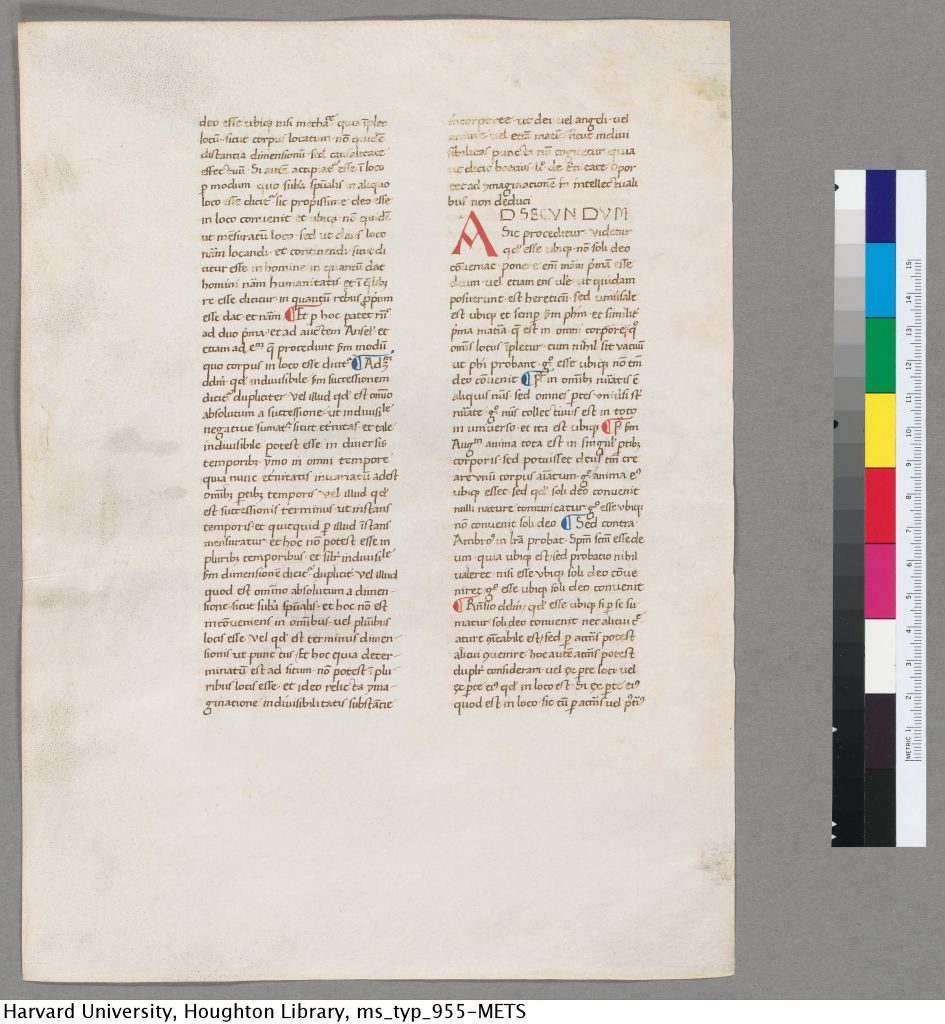
Ege MS 40, folio 243 verso. Harvard University, Houghton Library, MS Typ 955, verso.

Ege MS 40, folio 243 verso. Harvard University, Houghton Library, MS Typ 955, verso.

*****

Folio 106. Cleveland, OH, Case Western University, Kelvin Smith Library (FOL Set 37). Case Leaf 40 and No. 40.

[1235] Super Sententiis, lib. 1 d. 16 q. 1 a. 1 ad 5, to
[1250] Super Sententiis, lib. 1 d. 16 q. 1 a. 2 ad 1
— corpusthomisticum.org/snp1009.html.

In Ege’s mat the original verso was turned to the front, because remnants of the gauze tape are visible on the original recto.

*****

Folio 78. Cincinnati, OH, Cincinnati & Hamilton County Public Library, Main Library (FOL Set 22). Cincinnati Leaf 40 and now here.

[897] Super Sententiis, lib. 1 d. 11 q. 1 a. 1 ad 2, to
[912] Super Sententiis, lib. 1 d. 11 q. 1 a. 2 ad arg.
— corpusthomisticum.org/snp1009.html” target=”_blank”>www.corpusthomisticum.org/snp1009.html.

*****

Folio ?. Cleveland, OH, Cleveland Institute of Art, Gund Library (FOL Set 4). CIA Leaf 40.

[2285] Super Sententiis, lib. 1 d. 32 q. 1 a. 1 co., to
[2292] Super Sententiis, lib. 1 d. 32 q. 1 a. 2 arg. 2.
– corpusthomisticum.org/snp1026.html.

*****

Folio ?. Cleveland, OH, Cleveland Public Library (Cleveland Leaf 40 )

[532] Super Sententiis, lib. 1 d. 6 q. 1 a. 3 co., to
[542] Super Sententiis, lib. 1 d. 7 q. 1 a. 1 s. c. 1
— corpusthomisticum.org/snp1004.html.

*****

Folio 12. Columbia, SC, University of South Carolina, Rare Books and Special Collections (RBSC), Otto F. Ege Collection, No. 40 (FOL Set 27).
USC Leaf 40 and No. 40.

[128] Super Sententiis, lib. 1 d. 1 q. 3 a. 1 ad 4, to
[149] Super Sententiis, lib. 1 d. 1 q. 4 a. 2 s. c. 1
— corpusthomisticum.org/snp1001.html.

According to USC Leaf 40: “Reconstruction Note! In Ege’s original manuscript, this leaf was probably followed by what is now Leaf 40 in the University of Colorado, Boulder portfolio.” See above and further below.

*****

Folio ?. Columbus, OH, The Ohio State University, Thompson Library (FOL Set 2). OSU Leaf 40.

[749] Super Sententiis, lib. 1 d. 8 q. 5 a. 1 co., to
[758] Super Sententiis, lib. 1 d. 8 q. 5 a. 2 co.
— www.corpusthomisticum.org/snp1008.html.

*****

Folio ?. Gambier, OH, Kenyon College, Olin Library (FOL Se 23). Kenyon Leaf 40.

[2319] Super Sententiis, lib. 1 d. 32 q. 2 a. 1 co., to
[2331] Super Sententiis, lib. 1 d. 32 q. 2 a. 2 qc. 1 co.
— http://www.corpusthomisticum.org/snp1026.html.

As noted by Kenyon Leaf 40: “Reconstruction Note! In Ege’s original manuscript, this leaf followed what is now Leaf 40 in the Kent State University portfolio.” See below.

*****

Folio 219. Granville, OH, Denison University, William Howard Doane Library (FOL Set 30). Denison Leaf 40

[2357] Super Sententiis, lib. 1 d. 33 q. 1 a. 2 arg. 5, to
[2369] Super Sententiis, lib. 1 d. 33 q. 1 a. 3 arg. 3
— .corpusthomisticum.org/snp1033.html.

*****

Folio 207. Greensboro, NC, University of North Carolina, Jackson Library (FOL Set 38). Page 040.

*****

Folio ?. Hartford, CN, Wadsworth Athenaeum (FOL Set 10).

*****

Folio ?. Kent, OH, Kent State University Libraries (FOL Set 15). Kent Leaf 40.

The online image of the recto does not extend to the upper corner for a folio number.

[2303] Super Sententiis, lib. 1 d. 32 q. 1 a. 3 arg. 1, to
[2319] Super Sententiis, lib. 1 d. 32 q. 2 a. 1 co. [2319]
— www.corpusthomisticum.org/snp1026.php.

According to Kent Leaf 40 : “Reconstruction Note! In Ege’s original manuscript, this leaf was followed by what is now Leaf 40 in the Kenyon College portfolio.” See below.

*****

Folio ?. Lima, OH, Lima Public Library, Main Library (FOL Set 29). Lima Leaf 40.

[310] Super Sententiis, lib. 1 d. 3 q. 3 pr., to
[318] Super Sententiis, lib. 1 d. 3 q. 3 a. 1 ad 1
— corpusthomisticum.org/snp1003.html.

*****

Folio 70. Minneapolis, MN, University of Minnesota (FOL Set 13). Ege Manuscript 40 and Ege Manuscript 40 recto.
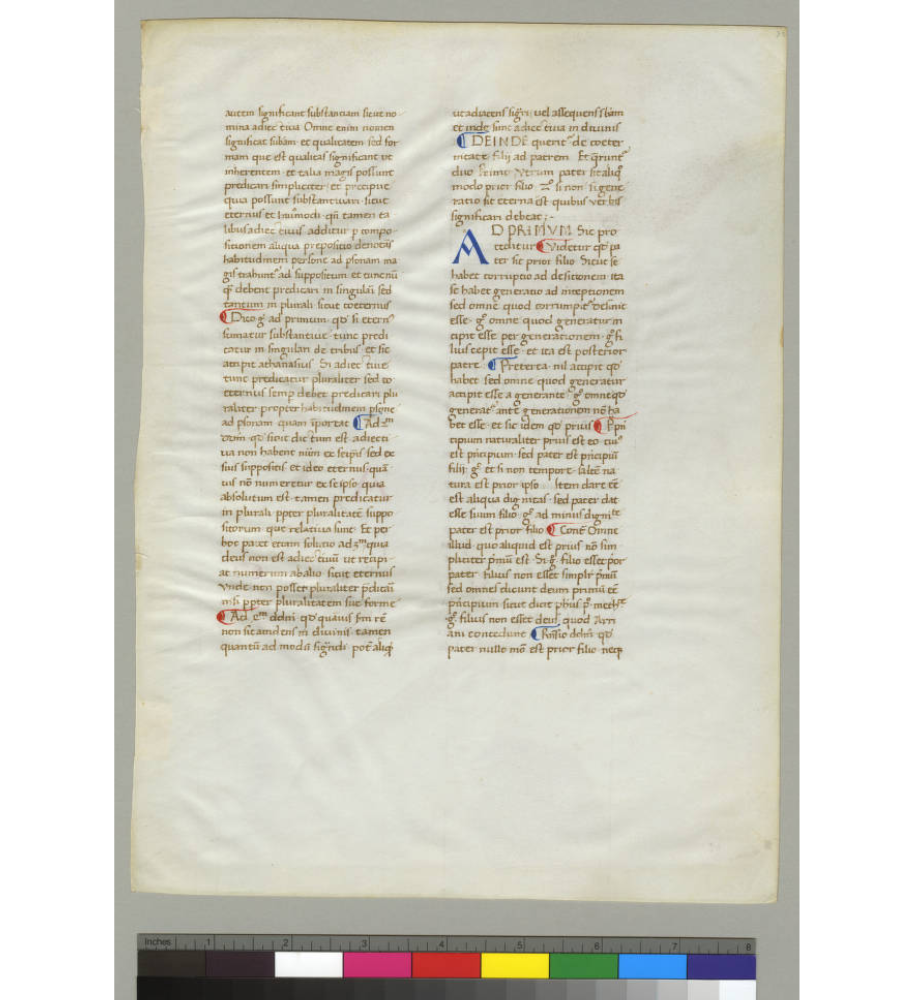
University of Minnesota Libraries, Ege Manuscript 40, Recto. Image via Creative Commons.

University of Minnesota Libraries, Ege Manuscript 40, Recto. Image via Creative Commons.

*****

2 Folios. New Haven, CT, Yale University, Beinecke Rare Book & Manuscript Library, Otto Ege Collection (FOL Set 3, the “Ege Family Portfolio”).
In this Specimen, there are 2 separate (and non-consecutive) Leaves within the Mat, one after the other.

Folio ‘1’. Opening leaf of the Text, with a full-page frame on the recto.

[1] Super Sent., pr. (up to Ipse dedit quosdam / [apostolos quidam])

Folio 216. The leaf is turned back-to-front as it is hinged to the mat.

[2331] Super Sent., lib. 1 d. 32 q. 2 a. 2 qc. 1 co. ([etiam sapientia] / genita dicitur), to
[2341] Super Sent., lib. 1 d. 33 q. 1 a. 1 arg. 2 (essentia divina / [est paternitas])
— via corpusthomisticum.org/snp1026.html and corpusthomisticum.org/snp1027.html

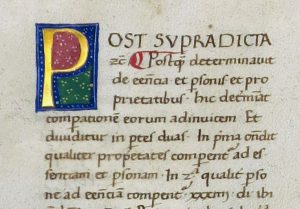
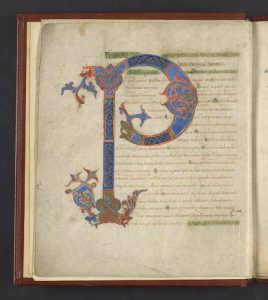
The illuminated initial P (for Post) at the top of the verso opens Distinctio 33.
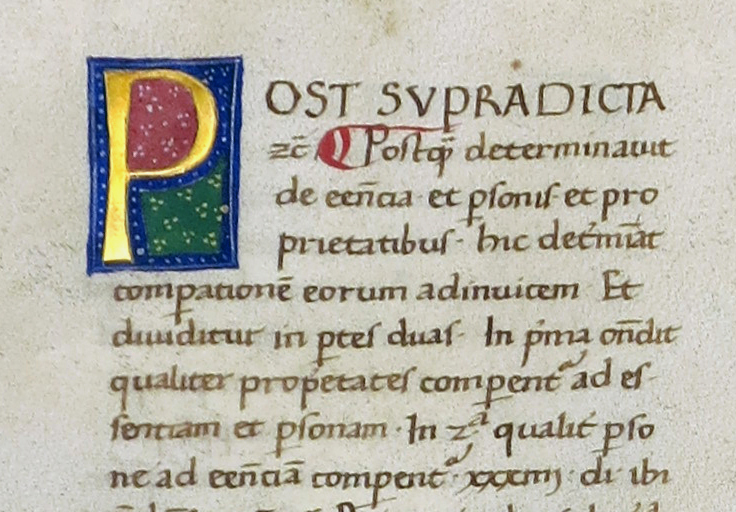
Beinecke Rare Book & Manuscript Library, Otto Ege Collection, FOL Set 3, MS 40, Specimen 2 = folio 216v (turned to the front in Ege's Mount: Top Left. Photography Mildred Budny.

Beinecke Rare Book & Manuscript Library, Otto Ege Collection, FOL Set 3, MS 40, Specimen 2 = folio 216v (turned to the front in Ege’s Mount: Top Left. Photography Mildred Budny.

*****

Folio ?. New York, NY, Morgan Library (FOL Set 28).

*****

Folio ?. Newark, NJ, The Newark Public Library, Special Collections Department, Medieval Manuscript Collections (FOL Set 34). 40. Thomas.

The online images for the leaf crop the pages, so that the folio number (if there is one) is out of frame.

The initial D for Deinde in column b on the recto opens Liber I, Distinctio I, Quaestio 3, Articulus 1.
= [118] Super Sent., lib. 1 d. 1 q. 3 a. 1 arg. 1 via corpusthomisticum.org/snp1001.html

*****

Folio ?. Northampton, MA, Smith College, Neilson Library, Mortimer Rare Book Room (FOL set, unnumbered).

*****

Folio 188. Princeton, NJ, Princeton University, Firestone Library (FBNC Set 20).

The span: [nomine verba] / et filius non distinguuntur . . . nullo modo / [praecedit intellectu]

[2011] Super Sent., lib. 1 d. 27 q. 1 a. 1 ad 4 + [2014] Super Sent., lib. 1 d. 27 q. 1 a. 2 arg. 1, to
[2024] Super Sent., lib. 1 d. 27 q. 1 a. 2 ad 4
[The text skips [2012] Super Sent., lib. 1 d. 27 q. 1 a. 1 ad 5.]

The initial A (for Ad) in column a on the recto opens Distinctio 27, Article 2.

*****

Folio 6. Rochester, NY, Rochester Institute of Technology, Wallace Center (FOL Set 35). Rochester Leaf 40 and now online via the RIT Libraries website: Record Number b1426520 (for the Commentary leaf), but linked incorrectly to images (here) actually for a different manuscript Specimen — recte Ege MS 39 (Livy, in its folio 39) — while the images of Ege MS 40 are wrongly identified as Ege MS 41 (Gregory the Great et al.).

“Aquinas’s Super Sententiis, q. 1 a. 5 ad 4 [62], followed (!) by Super Sententiis, q. 1 pr. [2], the latter of which begins at the illuminated ‘H'”
— via corpusthomisticum.org/snp0001.php. “A scan of the recto is not currently available.”

Now available (here, despite the mislabelling), the scan shows that the recto begins within [58] Super Sent., q. 1 a. 5 co.

[Note: The full set of Leaves in this FOL Set is displayed online, but some images and identifications are interchanged.]

*****

Folio 50. Saskatchewan, SK, University of Saskatchewan, Murray Library (FOL Set 25). University of Saskatchewan (recto only, and with no ID of the text), and also David Brindle et al., 50 Medieval Manuscript Leaves: The Otto Ege Collection at the University of Saskatchewan Library (2011), pp. 174–177 (recto and verso)

[565] Super Sent., lib. 1 d. 7 q. 1 a. 3 co., to
[593] Super Sent., lib. 1 d. 7 q. 2 a. 2 qc. 1 ad 2
— via corpusthomisticum.org/snp1004.html

*****

Folio 135. Seattle, WA, University of Washington, University Libraries, UW MS 83 (recto only). (See also below.)

Recto: “Book I, Distinction 19, Questions 2 and 3. (UW MS 83 recto)”
“Incipit and Explicit: //motus in illo sicut in propria mensura . . . potentia contra magnitudinem//”

Recto only:
[1504] Super Sent., lib. 1 d. 19 q. 2 a. 2 ad 1 ([nunc temporis] / motis in illo . . . ),
to [1513] Super Sent., lib. 1 d. 19 q. 3 a. 1 arg. 4 ( . . . potentia contra magnitudinem / [Ergo non intelligitur])
– via corpusthomisticum.org/snp1019.html

*****

Folio ?. Stony Brook, NY, Stony Brook University Libraries, Special Collections and University Archives (FOL Set 19). Thomas Aquinas: Commentary.

The folio number is covered by one of Ege’s gauze mounting tapes.

[333] Super Sent., lib. 1 d. 3 q. 4 a. 1 co. ([et non sit] / impressa organa corporali), to
[349] Super Sent., lib. 1 d. 3 q. 4 a. 2 s. c. 2 (Ergo non / [est agens])
— via corpusthomisticum.org/snp1003.html

Original Recto
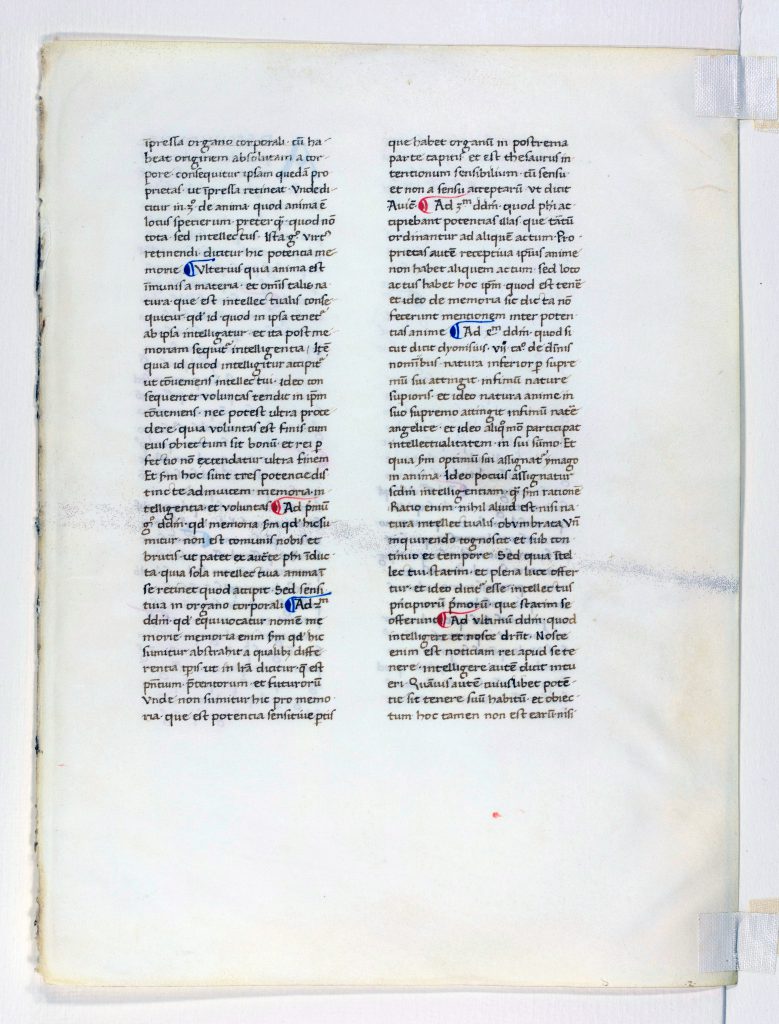
Otto F. Ege: Fifty Original Leaves from Medieval Manuscripts, Leaf 40, "Verso", Special Collections and University Archives, Stony Brook University Libraries.

Otto F. Ege: Fifty Original Leaves from Medieval Manuscripts, Leaf 40, “Verso”, Special Collections and University Archives, Stony Brook University Libraries.

Original Verso
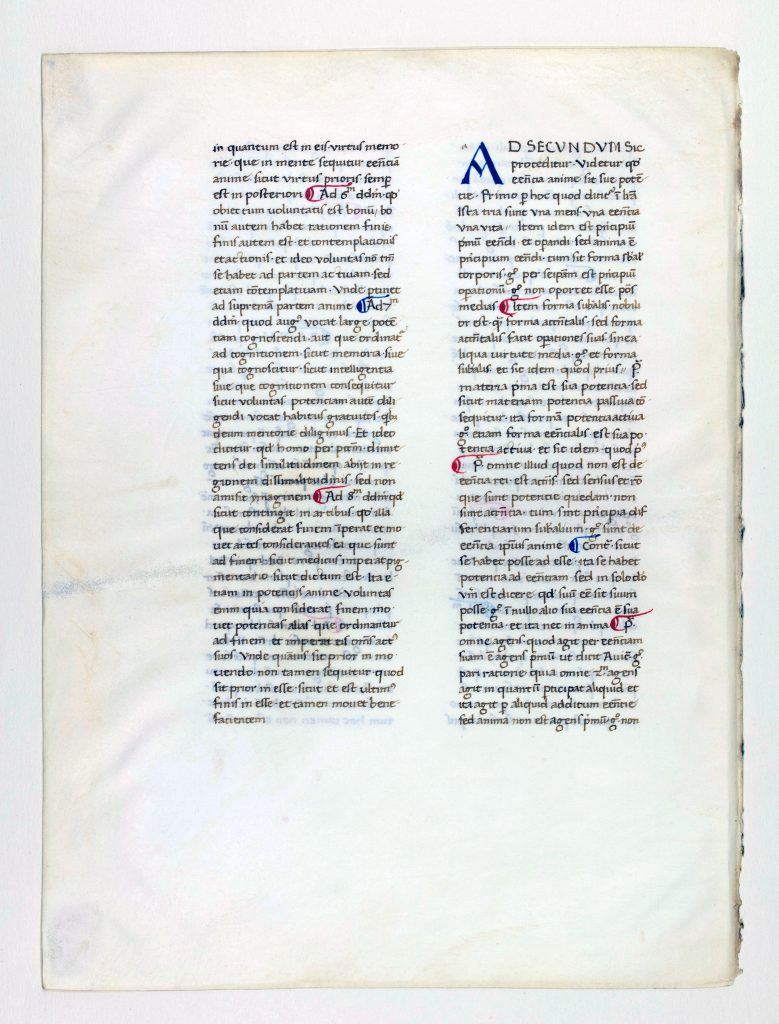
Otto F. Ege: Fifty Original Leaves from Medieval Manuscripts, Leaf 40, "Recto", Special Collections and University Archives, Stony Brook University Libraries.

Otto F. Ege: Fifty Original Leaves from Medieval Manuscripts, Leaf 40, “Recto”, Special Collections and University Archives, Stony Brook University Libraries.

*****

Folio 75(?). Toledo, OH, Toledo Museum of Art, 1953.129A–XX (FOL Set 12), 1953.1929NN. Manuscript leaf from the Commentary on the Sentences, No. 40.

Ege’s mounting turned the recto to the back side.

[863] Super Sent., lib. 1 d. 10 q. 1 a. 4 co. ([dicimus duos homines] / amantes se et concordes esse), to
[874] Super Sent., lib. 1 d. 10 q. 1 a. 5 co. (determinetur per specialem / [modum originis])
— via corpusthomisticum.org/snp1009.html.

*****

Folio ?. Toronto, ON, Art Gallery Ontario (FOL Set 16).

*****

Folio ?. Toronto, ON, Ontario College of Art and Design (OCAD), Dorothy H. Hoover Library (FOL Set 36).

*****

Folio ?. Toronto, ON, University of Toronto, Massey College, Robertson Davies Library, Gurney FF 0001 (FOL Set 17).

*****

Etc.

*****

A Note about Consecutive Leaves

A few leaves among the identified survivors can be seen to have been consecutive in the original manuscript.

Two cases are signaled in the website ege.denison.edu (see above), on the basis of spans of text. Cases of this kind may be confirmed by consecutive folio numbers (where known or discoverable) and by the consecutive course of the text.

1) Evidently adjacent

[Folio ?]. Kent [State University]: Lib. 1 d. 32 q. 1 a. 3 arg. 1 [2303], to Lib. 1 d. 32 q. 2 a. 1 co. [2319] §
( . . . concedendum est quod / [genita sapiens sit])
>
[Folio ?]. Keny[on College]: Lib. 1 d. 32 q. 2 a. 1 co. [2319], to Lib. 1 d. 32 q. 2 a. 2 qc. 1 co. [2331] §
([concedendum est quod] / genita sapiens sit . . . )
— ending on the verso of the one and beginning consecutively on the recto of the other (. . . concendum est quod / genita sapiens sit . . . )

2) Evidently not

[Folio 12]. U-S[outh]C[arolina]: Lib. 1 d. 1 q. 3 a. 1 ad 4 [128], to Lib. 1 d. 1 q. 4 a. 2 s. c. 1 [149] ( . . . quia caritas nunquam / [excidit sed proximus])

? > × [Instead, a leaf or more went in between them, with text spanning excidit sed proximus . . . in speculo cogniscimus, or the like]

[Folio 14?]. U-Co[lorado at Boulder]: Lib. 1 d. 1 q. 4 a. 2 expos. [154], and Lib. 1 d. 2 q. 1 pr. [155] ([in speculo cogniscimus] / excidit sed proximus . . . )

Near Rather than Adjacent

Like that ‘not-quite consecutive’ pair of leaves now in South Carolina and Colorado, some leaves formerly stood near each other, rather than adjacent. For example:

Folio 66 (Ohio University) and
Folio 70 (University of Minnesota)

Folio 216 (Beinecke Rare Book & Manuscript Library) and
Folio 219 (Denison University).

A Note about Descriptions and Metadata

Library catalogues and descriptions of separate leaves from the manuscript, as part of Ege’s Portfolios or from other sources, mostly employ the Labels which Ege composed to accompany them, just like that. Often the metadata for the Leaves quote those Labels, in whole or in part. Sometimes, an identification of the span of text is proferred, as with Leaf 40 at Boulder at the University of Colorado, and MS Typ 955 at the Houghton Library.

An exemplary case is offered by the description for Folio 135, catalogued as Seattle, WA, University of Washington, University Libraries, UW MS 83 (with image of the recto only). See also above.

Besides identifying the location of the text (as an “excerpt”) within Aquinas’s Commentary (“Book I, Distinction 19, Questions 2 and 3” on the recto), and citing the first and last words on the leaf (the Incipit and Explicit), the description mentions specific features of script, ruling, layout, and condition. It results from direct observation of the object itself (or of the image of its recto), thereby noting and reporting some salient bibliographical and related characteristics specific to the leaf and to its manuscript context.

Text in brown ink. Initials 13 mm (3 lines) high at the start of Question 3 and Article 1.
Guide letter visible to the left of the large red A.
Other arguments and counter-arguments are set off by a colored paragraph mark, in alternating blue and red.

Layout: Two columns, 37 lines each. Drypoint ruling, ruling lines redrawn on verso with leadpoint.

Script: Use of Arabic numerals; Clearly-spaced letters and words; Upright d; Few abbreviations; Strokes over i; Feet on the minims; Continued use of e for ae so likely an early example of humanist. When several i’s are in a row, the last one is elongated. Double-bowl g and tall s at the end of words.

Condition: Excellent condition overall, some lines faint (probably water damage). Hair follicles visible.

Contextual Remarks. The Scriptum Super Sententiis is one of Thomas Aquinas’s earliest writings. In this excerpt from his commentary on Peter Lombard’s Sentences, he considers the three persons of the trinity, and the definition of eternity.

*****

Specimens

Some Specimens present the text similarly to the ‘New’ Leaf, as they present an enlarged 3-line initial (red or blue) for a significant section, followed by a line or part-line of capital letters in ink. Paragraph-markers, alternately in red and blue, signal subdivisions of text within the sections.

Leaf 40 in FOL Set 19 (Stony Brook University) offers such a case. On the verso, Column b (or ‘vb’) begins with the inset 3-line initial A (for AD) in blue pigment, with a cue-letter a to one side.

Otto F. Ege: Fifty Original Leaves from Medieval Manuscripts, Leaf 40, "Recto", Special Collections and University Archives, Stony Brook University Libraries.

Otto F. Ege: Fifty Original Leaves from Medieval Manuscripts, Leaf 40, “Recto”, Special Collections and University Archives, Stony Brook University Libraries.

Other parts of the text receive more elevated grades of embellishment. Usually they take the form of taller inset 4-line initials placed within rectangular frames and provided with polychrome pigment, including gold, as well as simple geometric decoration. Examples include the P (for Post) at the top of column a on Folio 216v. As Ege positioned this Leaf, he turned the verso forward, facing front, and leaving the customary, less embellished, text on the original recto to press against the back board of the mat.
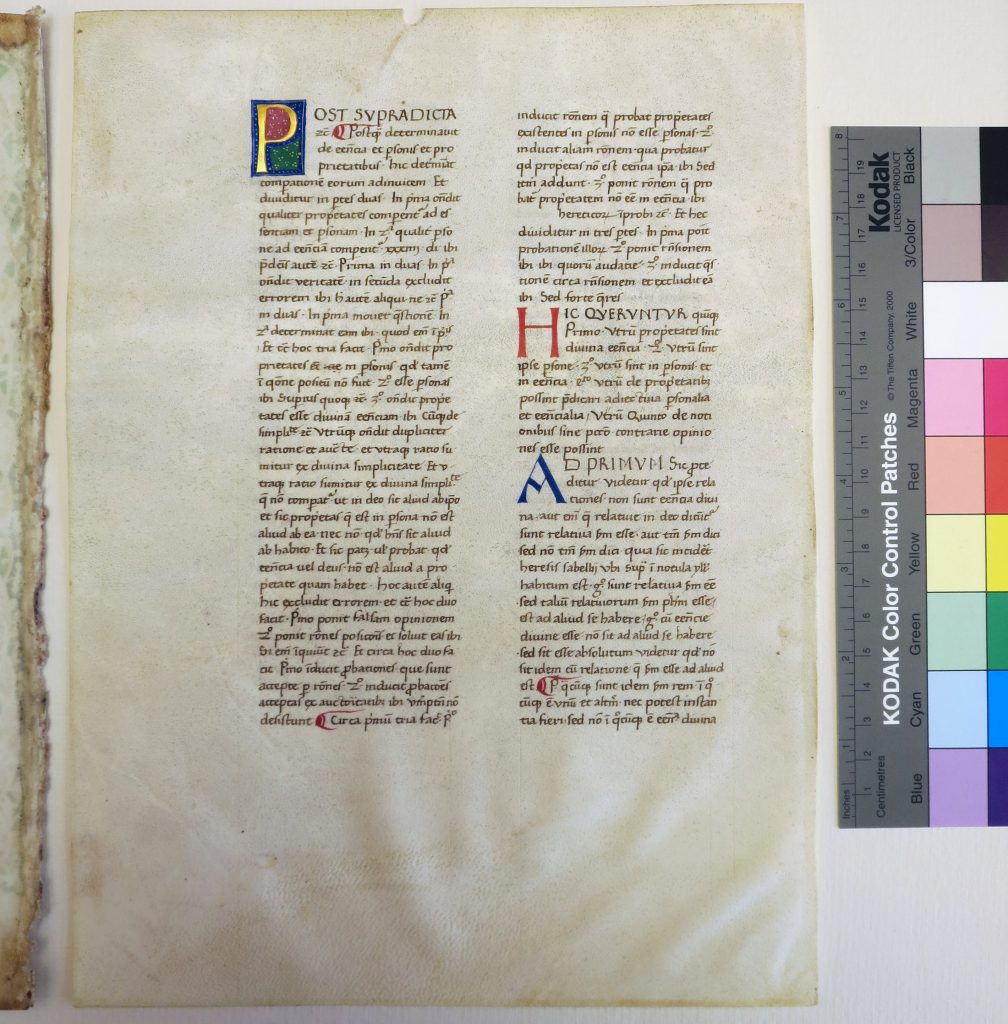
Beinecke Rare Book & Manuscript Library, Otto Ege Collection, FOL Set 3, MS 40, Specimen 2 = folio 216v (turned to the front in Ege's Mount. Photography Mildred Budny.

Beinecke Rare Book & Manuscript Library, Otto Ege Collection, FOL Set 3, MS 40, Specimen 2 = folio 216v (turned to the front in Ege’s Mount. Photography Mildred Budny.

Note that, unlike the various editions of Aquinas’s Commentary on the Sentences of Peter Lombard, this manuscript has — insofar as the revealed pages and leaves indicate — no numbering system or running titles by which to navigate a course through it. Nor, apparently, does it provide names for the different parts (Distinctio, Articulus, etc.).

To say that the presentation of this copy may constitute a challenge to consultation of the lengthy and complexly structured text perhaps is an understatement. It may be significant that the leaves which have surfaced from the manuscript do not carry marks of consultation in the forms of corrections, annotations, readers’ marks, and the like — aside from the modern folio-numeration in pencil and the marks of ownership.

*****

Continuing to examine this manuscript, Part II in our series (II of III) now turns to

  • The Manuscript Before and After Ege

As customary with Ege’s dismembered manuscripts, Sales Catalogues can offer significant (and tantalizing) information, both before and after Ege altered and distributed them.

*****

Before moving to the next Post, we make sure to thank the owner of the ‘new’ Portfolio and the owners of other specimens for permission to examine them and for permission to reproduce the images. Thanks, as always, for the advice, encouragement, and suggestions of colleagues, students, and friends!

Do you know of other leaves from this Aquinas manuscript? Other Sets of the Portfolio of Famous Books in Nine Centuries (FBNC), or Sets of the Fifty Original Leaves (FOL)?  Do you recognize the work of the scribe(s) in other manuscripts?

Please let us know. Please leave your Comments here, Contact Us, and/or visit our Facebook Page. We look forward to hearing from you.
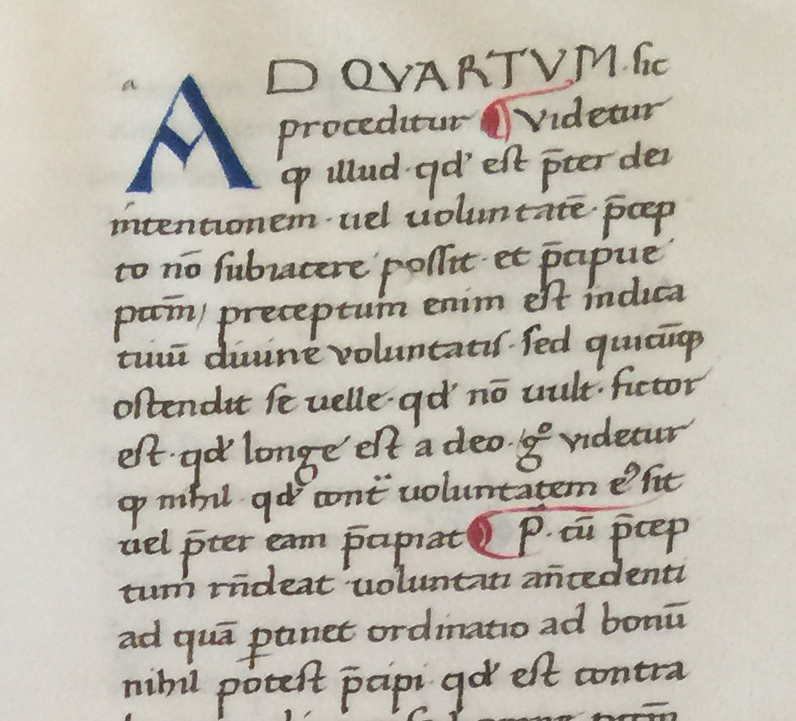
Private Collection, FBNC, Aquinas Leaf 'Front' top right. Reproduced by permission.

Private Collection, FBNC, Aquinas Leaf ‘Front’ top right. Reproduced by permission.

*****

Tags: Aquinas on the Sentences of Peter Lombard, Ege's FOL Portfolio, Ege's Portfolio of Famous Bibles, Ege's Portfolio of Famous Books, Fragmentology, Humanist Manuscripts, Humanist Script, manuscript fragments, Medieva Manuscript Fragments, Otto Ege, Otto Ege Manuscript 40, Otto Ege Manuscript 51, Otto Ege Manuscript 53, Peter Lombard, Thomas Aquinas
1 Comment »

More Discoveries for ‘Otto Ege Manuscript 14’

August 3, 2020 in Manuscript Studies, Uncategorized

Some Known Leaves
from ‘Otto Ege Manuscript 14’
In Sequence

[Posted on 3 August 2020, with updates.]

Beinecke Rare Book & Manuscript Library, Otto Ege Collection, Family FOL Portfolio, Leaf 18 original recto, opening of Apocalypse Prologue.

Beinecke Rare Book & Manuscript Library, Otto Ege Collection, Family FOL Portfolio, Leaf 18 original recto, opening of Apocalypse Prologue.

We offer an updated and illustrated list of some of the leaves — not all — which have come to light from the dismembered and widely dispersed copy of the Vulgate Bible in large format now known as “Otto Ege Manuscript 14”.

It takes its name from the owner, Otto F. Ege (1888–1951), who took it to pieces and destroyed its integrity as an intact volume which had been purchased at auction in New York after World War II.  It takes its Number from the number which Ege assigned to it in the series of specimens from similarly dismembered medieval manuscripts arranged in his Portfolio of Fifty Original Leaves from Western Manuscripts (FOL for short), numbered 1–50.

There the specimens are presented in matted frames of uniform size and provided with a printed label which cites the Leaf Number and offers a paragraph with some generic observations about the manuscript, the author, the type of script, the genre of text, and suchlike.  The label was worded so as, presumably, to suit many different leaves from a given book.

Within the frame, the manuscript leaf would stand behind the windowed mat which obscures some of its exterior features.  The hinged mat allows (if permitted by the owner) for opening the frame to inspect the full extent of the leaf and, it may be, to lift the leaf so as to observe features on its other side.  Not infrequently, Ege turned the original rectos of the leaves to the verso position in the frame, so as to display whichever features might be deemed preferable for display.

Beinecke Rare Book & Manuscript Library, Otto Ege Collection, Leaf with the opening of the Book of Revelation within Ege's mat, which turns the original verso to the front.

Beinecke Rare Book & Manuscript Library, Otto Ege Collection, Leaf with the opening of the Book of Revelation within Ege’s mat, which turns the original verso to the front.

The former manuscript had many more leaves than the number required for the 40 numbered Sets of the FOL Portfolio — plus any unnumbered Sets, of which perhaps 1 or 2 are known.  As characteristic of Ege’s distribution strategies, individual leaves could have their own mats and, often, their own labels.

The current locations of a number of Sets have been identified, and more may come to light.  So too, many other leaves have turned up in various collections.  The work of identifying them as belonging to Ege Manuscript 14 and discovering where they are preserved represents a significant stage in the recovery process.  That many have passed through the sales rooms of auction houses and book-sellers, sometimes more than once, introduces challenges to that process of discovery.

Read the rest of this entry →

Tags: Beinecke Rare Book & Manuscri, Fragmentology, History of Bindings, Interpretation of Hebrew Names, Interpretationes Hebraicorum Nominum, Lectern Bible, manuscript fragments, Medieval Manuscript Fragments, Otto Ege Manuscript 14, Reconstructing Manuscripts Virtually
No Comments »

Simurgh and Zal from a Persian “Shahnameh”

May 7, 2020 in Manuscript Studies, Uncategorized

Simurgh and Zaal
from a Persian Shahnameh

[Posted on 7 May 2020]

Private Collection, Leaf from a Persian Shanameh. Simurgh and Zal.

Continuing to examine manuscripts or manuscript fragments and related materials in our blog, we turn to an illustrated paper leaf, now in a private collection, from a Persian Shahnameh or ŠĀH-NĀMA (“Book of Kings”).

The Contents List for our blog shows the range of our explorations.  Our Galleries of Scripts on Parade include specimens of script in Persian as well as other languages, Western and non-Western.

The Paper Leaf

The leaf was purchased in the Portabello Road in London circa 1985.  The paper is typical of Persian paper from at least the fifteenth through the nineteenth centuries CE. One side has text, and the other has both text and inset illustration. The ensemble probably dates from the 19th century, with acquired damage of various kinds, including unevenly trimmed edges.

Private Collection, Leaf from a Persian Shanameh. Simurgh and Zal.

Private Collection, Leaf from a Persian Shanameh. Simurgh and Zal.

Read the rest of this entry →

Tags: Freer Gallery, Houghton Library, Illustrated Manuscripts, manuscript fragments, Morgan Library & Museum, Shahnameh, Simurgh, Simurgh and Zal, Tahmasp Shahnameh, Zal
No Comments »

A Leaf from ‘Otto Ege Manuscript 19’ and Ege’s Workshop Practices

May 1, 2020 in Manuscript Studies, Uncategorized

An Old Testament Leaf from ‘Otto Ege Manuscript 19’

And Ege’s Workshop Habits
in Assembling His Portfolios

Opening of the Book of Macabees in Otto Ege MS 19. Private Collection.

Portable Bible in the Latin Vulgate Version
Italy, circa 1275, with Illuminations made apparently in Paris

Double columns in 48 lines
circa 235 × 170 mm <written area circa 153 × 107 mm>

End of Malachi (within 2:13 – 4:10),
Jerome’s Prologue to Maccabees, Argumentum,
and Opening of I Maccabees (1:1 – within 1:21)

J. S. Wagner Collection

[Posted on 1 May 2020, with updates]
A detached leaf from ‘Otto Ege Manuscript 19’, now in the J. S. Wagner Collection, provides the transition from one Old Testament Book to the next.  In reporting its survival and setting it into the context of its former manuscript and the known patterns of Otto Ege’s distribution of his dismembered manuscripts, we examine the leaf, its presentation as part of a larger series (initially as Ege’s Number 19, altered for some reason to a Number 13), and Ege’s evolving “workshop practices” in mounting and distributing manuscript leaves to wider audiences.

[Note:  This post began as the report of a Leaf from one of the manuscripts dispersed by Otto F. Ege, to follow our earlier reports for some other manuscripts of his.  It grew into a report also of Ege’s varying workshop practices over time in assembling or reassembling his Portfolios of specimen Leaves extracted from manuscripts and other books.  Selected specimens would be mounted in mats, often with identifying labels or inscriptions in print or pencil, arranged in groups (notably in the Portfolios, but also in other batches) or distributed as left-overs, and sold far and wide.  Mercifully, apart from cutting the individual leaves out of the books, Ege did not crop them except by the rectangular windows of their mats.

As reported in other posts on this blog (see the Contents List), our cumulative examination of various Portfolios, individual sets thereof, and individual leaves either extracted from Portfolios or distributed on their own (as “Strays”), has yielded detailed grounds for conjectures about Ege’s evolving and revolving practices over an extended period of intense activity dedicated to maximizing the teaching (and commercial) potential of his collection.  We share some results of that research here.]

Opening of the Book of Macabees in Otto Ege MS 19. Private Collection.

Wagner Leaf from Ege Manuscript 19, verso, detail.

With thanks to the present collector, J. S. Wagner, who drew this find to our attention on account of our blog (You are Here), we present the images, front and back, of a detached leaf from a small-format 13th-century Vulgate Latin Bible dispersed by Otto F. Ege (1888–1951).  The leaf was formerly part of Ege Manuscript 19 (Gwara, Handlist, No. 19, page 124).

Already, in our blog on Manuscript Studies (You are Here), we have considered leaves from other manuscripts distributed by Ege.  See our Contents List for the series of discoveries, which so far principally concern Ege Manuscripts 8, 14, 41, 51, 61,  and 214; we begin work also on Ege Manuscript 56 in Armenian.

This new opportunity opens the possibility to consider another of Ege’s dismembered manuscripts showcased in his Portfolio of Fifty Original Manuscripts (= “FOL”), for which a core study was developed with the website devoted to a group of its survivors as ege.denison.edu, and for which work has continued to advance apace in multiple centers.

This Portfolio is one of several which Ege devoted to specific titles or genres of books in manuscript and/or print (such as the Bible in several languages).  Ege gave this one the title of Fifty Leaves from Medieval Manuscripts, XII–XVI Century [sic for the plural].  Ege numbered its Leaves as “1–50”, in the sequence which he chose for their presentation there.  Their source manuscripts, accordingly, in Scott Gwara’s Handlist of Ege’s manuscripts are known as “Ege Manuscripts 1–50” (of at least 1–325, and counting).  A provisional summary of the contents of this Portfolio and some of its known sets appears online in The Otto F. Ege Palaeography Portfolio: Towards a Virtual and Interactive Reconstruction of Fifty Dismembered Manuscripts.  Virtual reconstructions of one and another of its manuscripts continue to emerge, as with FOL Leaf 15, the 14th-century Beauvais Missal.

J. S. Wagner Collection. Leaf from from Prime in a Latin manuscript Breviary. Folio 4 Recto, Initial C for "Confitimini" of Psalm 117 (118), with scrolling foliate decoration.

Already, in this blog, we have presented 2 leaves from the J. S. Wagner Collection:

  • The Penitent King David from a Book of Hours
  • A Leaf from Prime in a Large-Format Breviary .

Now we turn to the Ege Leaf in that Collection.

Read the rest of this entry →

Tags: "Fifty Original Manuscripts", Bible Manuscripts, Charles Carmichael Lacaita, Ege's Portfolios, Ege's Workshop Practices, J.S. Wagner Collection, Latin Vulgate Bible, manuscript fragments, Otto Ege, Otto Ege Manscript 61, Otto Ege Manuscriipt 23, Otto Ege Manuscript 13, Otto Ege Manuscript 14, Otto Ege Manuscript 19, Otto Ege Manuscript 41, Otto Ege Manuscripts, Portable Bibles, Sir Joseph Lacaita
6 Comments »

2020 Spring Symposium: Save the Date

February 15, 2020 in Announcements, Conference, Conference Announcement, Events, Index of Medieval Art, Princeton University, Reception, Uncategorized

New York, Grolier Club, \*434.14\Aug\1470\Folio. Flavius Josephus, De antiquitate Judiaca and De bello Judaico, translated by Rufinus Aquileinensis, printed in Augsburg on paper by Johannn Schüsseler in 2 Parts, dated respectively 28 June 1470 and 23 August 1470, and bound together with a manuscript copy dated 1462 of Eusebius Caesariensis, Historia ecclesiastica.

New York, Grolier Club, *434.14Aug1470Folio.

“From Cover to Cover”

Activities Devoted to Manuscripts, Early Printed Books & Beyond
From Collecting & Cataloguing to Deciphering & Beholding

2020  Spring Symposium
of the Research Group on Manuscript Evidence

Princeton University
Friday & Saturday 13–14 March 2020


Update 5 April 2020

The Symposium Booklet, with illustrations and Abstracts of Papers, is now published and available for download.
See Keeping Up: Updates for Spring 2020.

The Abstract of one paper in the 2020 Symposium Booklet has been expanded to a Draft Paper, available for Feedback:

  • “A Quick Introduction to Indian Manuscripts for the Non-Specialist”, with examples and illustrations,
    downloadable here.

Update 9 March 2020

This event is now cancelled, as Princeton University and other institutions respond to current health concerns, and take precautions regarding travel and meetings of various kinds in person.
The Symposium might be rescheduled, conditions permitting.  

Meanwhile, the Research Group aims to complete the Symposium Booklet and distribute it to contributors, registrants, and others, as a souvenir of our speakers’ good intentions.  Already, as a sign of appreciation, we have adopted the custom of posting on our website the abstracts of contributors who become unable to attend to present in person (as with the 2018 Congress, among others).

This time, under wider — even global — circumstances affecting the ensemble as a whole, we wish to show appreciation for the remarkable enthusiasm and dedication for the collaborative event demonstrated by our hosts, sponsors, speakers, moderators, and others.  This knowledge is something to remember with satisfaction, gratitude, and praise.

The publication could, perhaps, give a token to show for our shared efforts, and to demonstrate something of the spirit of dedication and focus which prepared to assemble for the event itself.

This aim might help to ease some of the disappointment over cancellation, while the cancellation itself might ease some uncertainties about travel at present.

P. S.  Only once before, in more than 30 years of activities in many centers in the United States and elsewhere (see our Events and Congress Activities}, has the Research Group had to cancel an event.  It, however, was only 1 Session among 7 sponsored and co-sponsored Sessions at the 48th International Congress on Medieval Studies in May 2013, when the Session organizer and 2 presenters were unable to travel to the Congress.  We honored their intentions to contribute by continuing to record their abstracts and the statement of purpose of the Session on this  website.

Similar solidarity pertains to our record of this intended 2020 Spring Symposium.  A summary of this Update appears in its own post.

Here we preserve the description of the event in the updated version just before the decision to cancel this Symposium, among many gatherings at Princeton University and elsewhere at the beginning of the week in which the Symposium was planned to take place.

*****
What We Planned

Saint Andrew. Oil on Canvas. Artus Wollfort (1581–1641). Private Collection, Public Domain. Via Wikipedia Commons.

Saint Andrew. Oil on Canvas. Artus Wollfort (1581–1641). Private Collection, Public Domain. Via Wikipedia Commons.

We announce the next Symposium of the Research Group on Manuscript Evidence, to be held at Princeton University on Friday afternoon and Saturday, 13–14 March 2020. This event follows from, and builds upon, our earlier events, including our 2019 Anniversary Symposium, also held at Princeton University.

Our subject this time: “From Cover to Cover”.   Some say, “That Covers It”.  (We might well agree.)

Such activities include Collecting, Curating, Conserving, Cataloguing, Deciphering, Editing, Reading, Teaching, Translating, Displaying, Accessing, Beholding, Reconsidering, and More.  Cover to Cover.

Naturally, these activities need not necessarily occur in that order, and often they appear in combination.

In addition we consider activities dedicated to manuscripts, early printed books, and beyond, in terms (as is our custom) of both media and chronology.  As often, we consider medieval manuscripts and early printed books from Western Europe, but also— as usual — we examine materials from other cultures, languages, and time-frames.

This recognition of the processes (necessarily integrated) infuses the collection of presentations and conversations which our Symposium aims to gather.  In a nutshell:  Food for Thought, Refreshments included.

For which ability, we have Sponsors, Hosts, Trustees, Associates, Contributors, and Volunteers heartily to thank.

Sponsors

Research Group on Manuscript Evidence

Department of Art & Archaeology, Princeton University

The Index of Medieval Art at Princeton University

Program in Medieval Studies, Princeton University

James Marrow and Emily Rose

Barbara A. Shailor

Celia Chazelle

The Schoenberg Institute for Manuscript Studies

The Bibliographical Society of America

Vassar College

On the Road

Poster 1 for 2019 Anniversary Symposium, with symposium information with images of manuscript and early printed pages..

Poster 1 for 2019 Symposium

Poster 2 for 219 Anniversary Symposium, with symposium information and 2 images of cropped initials, from 12th-century Latin manuscripts, from the Princeton University Art Museum.

Poster 2 for 2019 Symposium

Following upon, and building upon, the success of our Anniversary Symposium last year, we prepare the 2020 Spring Symposium.  Its date is now set, as is the Schedule.  (See below.)

For our 2019 Anniversary Symposium, see its Report and its freely downloadable 2019 Anniversary Symposium Booklet.  Like the Booklet, the 2 Posters (seen here) illustrate examples of manuscripts (Western and non-Western) showcased in the Symposium, its papers, and its workshops.

All these publications, as customary, are set in our very own copyright multilingual font Bembino , and designed and laid out according with our Style Manifesto.  This font is freely available through our website, for your use – whether individual, nonprofit, or commercial.

Both the font, and its descriptive Booklet, are downloadable here .  We have also prepared a booklet showing its abilities in setting multiple languages, both Western and non-Western.  See Multi-Lingual Bembino . Plus our Style Manifesto .

Cover Story

Now we turn to our 2020 Spring Symposium.  Please register (details below).

Poster 1 for the 2022 Spring Symposium.

Gladly we list the Sponsors, Speakers, and Moderators.

Speakers and Moderators (in alphabetical order)

Philadelphia, University of Pennsylvania Libraries, Lawrence J. Schoenberg Collection, MS LJS 101, folio 1v. Opening of Boethius's translation of Aristotle's "Peri erimenias" within a collection of secular and classical texts, France, possibly at the Abbey of Fleury (Saint-Benoît-sur-Loire), 9th–11th centuries. Photograph courtesy OPenn.

Philadelphia, University of Pennsylvania Libraries, Lawrence J. Schoenberg Collection, MS LJS 101, folio 1v. Photograph courtesy OPenn.

Paris, Bibliothèque nationale de France, MS latin 190, folio 1r. Opening page of the Commentarii notarum tironiarum, with an enlarged initial decorated with interlace and foliate ornament. Image via gallica.bnf.fr.

Paris, Bibliothèque nationale de France, MS latin 190, folio 1r. Photograph via gallica.bnf.fr.

Christine E. Bachman (Art History Department, University of Delaware and Graduate Student Fellow 2019–2020, Schoenberg Institute for Manuscript Studies, University of Pennsylvania)

Mildred Budny (Director, Research Group on Manuscript Evidence, Princeton)

Raymond Clemens (Curator, Early Books and Manuscripts, Beinecke Rare Book and Manuscript Library, Yale University, New Haven)

Meghan Constantinou (Librarian, The Grolier Club, New York, New York)

Barbara Williams Ellertson (Books as Symbols in Renaissance Art and Research Group on Manuscript Evidence)

Lynley Anne Herbert (Curator of Manuscripts and Rare Books, The Walters Art Museum, Baltimore, Maryland)

Carson Koepke (Program in Medieval Studies, Yale University)

Laura Light (Director and Senior Specialist, Text Manuscripts, Les Enluminures)

John T. McQuillen (Associate Curator, Printed Books & Bindings, The Morgan Library & Museum, New York, New York)

Bernard Maisner (Bernard Maisner and Bernard Maisner, Master Calligrapher)

New York, Morgan Library & Museum, PML 7, folio P2r. Blockbook of Apocalypsis Sancti Johannis, printed in Germany circa 1468. Revelation 15:1, with hand-colored illustration.

New York, Morgan Library & Museum, PML 7, folio P2r. Blockbook of Apocalypsis Sancti Johannis, printed in Germany circa 1468. Revelation 15:1, with hand-colored illustration.

Sabrina Minuzzi (Researcher in Early Modern History, Marie Skłodowska-Curie Fellow, Ca’ Foscari University of Venice)

Ronald D. Patkus (Associate Director of the Libraries for Special Collections and Vassar Head of Special Collections, Vassar College, Poughkeepsie, New York)

Pamela Patton (Director, Index of Medieval Art at Princeton University)

Lynn Ransom (Curator of Programs, The Schoenberg Institute for Manuscript Studies, University of Pennsylvania Libraries)

Helmut Reimitz (Professor of History and Director, Program in Medieval Studies, Princeton University)

Jessica L. Savage (Art History Specialist, Index of Medieval Art)

Barbara A. Shailor (Department of Classics, Yale University, and President, Bibliographical Society of America)

       David W. Sorenson (Independent, Quincy, Massachusetts)

Kelly Tuttle (Project Cataloger, Manuscripts of the Muslim World, University of Pennsylvania Libraries)

Eric White (Curator of Rare Books and Acting Curator of Manuscripts, Special Collections, Firestone Library, Princeton University)

Princeton University Library, Rare Books and Special Collections, William H. Scheide Library, 53.8. Latin Bible in double columns of 49 lines, printed in Strasbourg by Johann Mentelin, not after 1460 CE.

Princeton University Library, Rare Books and Special Collections, William H. Scheide Library, 53.8. Latin Bible (printed in Strasbourg by Johann Mentelin, not after 1460 CE.) Photograph courtesy Princeton University Library, Rare Books and Special Collections.

The Aim

In a nutshell.

2020 Spring Symposium Announcement, describing the scope of the event, listing the Sponsors, and citing the link to the registration form.

2020 Spring Symposium Announcement, describing the scope of the event, listing the Sponsors, and citing the link to the registration form.

The Plan

Day 1

Friday 13 March: Classes, Workshops, Discussion, and a Reception

1) 12:00–1:00, 12:00–1:30, or 12:00–2:00pm (By Invitation)
Seminar Room of the Index of Medieval Art

“Comparing Notes about Databases:  Past, Present & Futures”
An Informal Discussion

2–3) 1:00–2:45 pm or 3:00–4:45 pm
Classes on Site at Firestone Library (Registration Required and Space Limited)

For registration for these classes and the symposium, see below.

“Material Evidence: A Workshop with 15th-Century Manuscripts and Incunabules”

Classes given (twice) by Eric White, Curator of Rare Books, Princeton University Library, in the Large Classroom of Floor C (Rare Books and Special Collections) at Firestone Library

Please gather in the Lobby at the entrance to Firestone Library, for special escorted access to Floor C, where there are lockable lockers (free) for your coats and cases, before entry to Special Collections.

2) Class 1:  Meet at 1:00 for 1:15–2:45 pm

3) Class 2 (repeated):  Meet at 3:00 for 3:15–4:45 pm

or

4) Session 3:00–5:00 pm
106 McCormick Hall

“Materials, Processes & Products:  A Workshop”

This workshop offers presentations by Bernard Maisner on “The Materials and Methods of Medieval & Renaissance Manuscript Gold-Illumination Techniques” and by David W. Sorenson on “An Introduction to Indian Manuscripts for the Non-Specialist”, along with curated displays of original materials in private collections and demonstrations of results from their close study.

5) Reception

5:00–7:00 pm
Lobby outside 106 McCormick Hall

Florence, Galleria degli Uffizi, Anonymous, Still Life, German school of the XVI century, circa 1510, oil on wood, 70.2 × 65 cm. Opened book with fanned leaves showing pages of text and music set out in double columns and adorned with decorated initials and illustrations. Image via Wikimedia, public domain.

Florence, Galleria degli Uffizi, Anonymous, Still Life of an Illuminated Book, German school of the XVI century, circa 1510. Opened book with fanned leaves. Image via Wikimedia, public domain.

Day 2

Saturday 14 March:  Sessions, Refreshments, and Reception

106 McCormick Hall and its Lobby

6) 10:00 am – 5:30 pm

Sessions, Coffee Breaks, Lunch, and Discussion

7) Reception (5:30–7:00 pm)

2020 Symposium "From Cover to Cover" Poster 2

2020 Symposium Poster 2

*****
The Schedule

The Schedule is available here.

*****
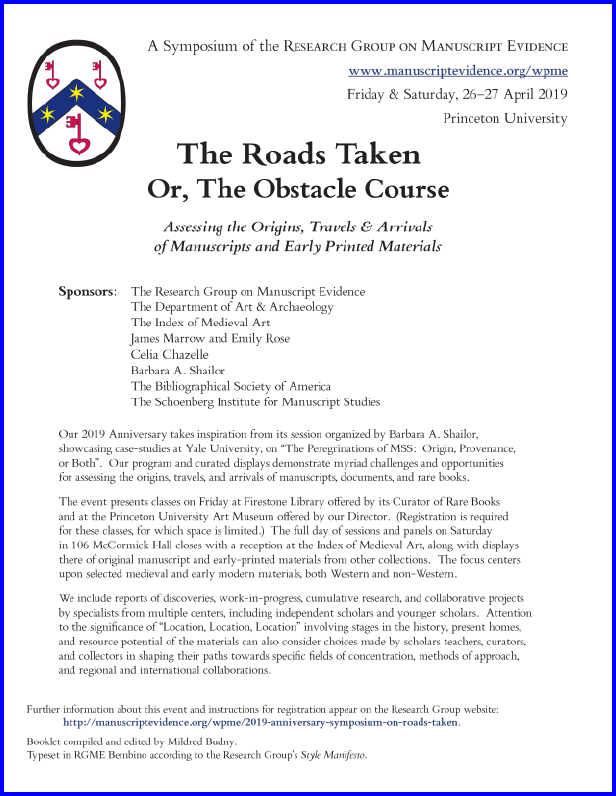
Registration

Please register for the Symposium.  We offer the Registration form as a downloadable pdf .

*****

Maps and Directions

Here.

*****

Please Contact us with questions and suggestions.

Watch this space and visit our FaceBook Page for updates.

Floral Motif as Lower Border in a Book of Hours. Photography Mildred Budny.

We invite you to donate to our nonprofit educational mission. Donations may be tax-deductible. We welcome donations in funds and in kind: Contributions and Donations .

Please join us at the symposium, open to all.  You can register here .

*****

Tags: Early Printing, manuscript fragments, Manuscript Illumination, Manuscript studies, Medieval Manuscript Fragments, Medieval Studies, Medieval Writing Materials, Spring Symposium
6 Comments »

2019 Anniversary Symposium Report: The Roads Taken

July 28, 2019 in Abstracts of Conference Papers, Anniversary, Announcements, Bembino, Conference, Index of Medieval Art, Manuscript Studies, Princeton University, Reception, Reports

The Roads Taken, Or, The Obstacle Course

Challenges & Opportunities for
Assessing the Origins, Travels & Arrivals
of Manuscripts & Early Printed Materials

2019 Anniversary Symposium
of the Research Group on Manuscript Evidence

Princeton University
Friday 26 & Saturday 27 April 2019

Co-Sponsored by The Bibliographical Society of America

Rejoined Pieces of a Leaf from a Book of Hours. Private Collection, reproduced by permission.

Rejoined Pieces of a Leaf from a Book of Hours. Private Collection.

Sponsors

Department of Art & Archaeology, Princeton University

The Index of Medieval Art at Princeton University

James Marrow and Emily Rose

Celia Chazelle

Barbara A. Shailor

The Schoenberg Institute for Manuscript Studies

Vassar College

The Plan

In 2019 the Research Group on Manuscript [and Other] Evidence celebrates 20 years as a nonprofit educational corporation based in Princeton, and 30 years as an international scholarly society founded at the Parker Library of Corpus Christi College, Cambridge. Across the years, we have engaged in multiple events in many places, over multiple manuscripts and other original sources, and on a broad range of subjects. We celebrate our friends, colleagues, hosts, donors, volunteers, and subjects of study.

As part of these celebrations, our Anniversary Symposium took place at Princeton University, host of many of our events over the years, as remembered here.  Sponsorship for this Symposium included Sponsors from earlier years, as well as new sponsorship by The Bibliographical Society of America and by Vassar College .

The Cover Page for the 2019 Anniversary Symposium Booklet displays the name and logo of the Research Group on Manuscript Evidence, the title and subtitle of the Symposium, the List of Sponsors, and a description of the scope and aims of the Symposium. Like the rest of the Booklet, the Cover Page is set in RGME Bembino, the copyright multilingual font of the Research Group on Manuscript Evidence.

2019 Anniversary Symposium Booklet Cover Page

Read the rest of this entry →

Tags: Anniversary Symposium, Early Printing, manuscript fragments
No Comments »

2019 Anniversary Symposium: The Roads Taken

March 29, 2019 in Anniversary, Announcements, Conference, Conference Announcement, Manuscript Studies

The Roads Taken, Or, The Obstacle Course

Challenges and Opportunities for
Assessing the Origins, Travels, and Arrivals
of Manuscripts and Early Printed Materials

2019 Anniversary Symposium
of the Research Group on Manuscript Evidence

Princeton University
Friday 26 and Saturday 27 April 2019

Co-Sponsored by The Bibliographical Society of America

Rejoined Pieces of a Leaf from a Book of Hours. Private Collection, reproduced by permission.

Rejoined Pieces of a Leaf from a Book of Hours. Private Collection.

Sponsors

Department of Art & Archaeology, Princeton University

The Index of Medieval Art at Princeton University

James Marrow and Emily Rose

Celia Chazelle

Barbara A. Shailor

The Schoenberg Institute for Manuscript Studies

The Plan

In 2019 the Research Group on Manuscript [and Other] Evidence celebrates 20 years as a nonprofit educational corporation based in Princeton, and 30 years as an international scholarly society founded at the Parker Library of Corpus Christi College, Cambridge.  Across the years, we have engaged in multiple events in many places, over multiple manuscripts and other original sources, and on a broad range of subjects.  We celebrate our friends, colleagues, hosts, donors, volunteers, and subjects of study.

As part of these celebrations, we announce our Anniversary Symposium at Princeton University, host of many of our events over the years.  This event takes place on Friday afternoon 26 April and Saturday 27 April 2019.

Read the rest of this entry →

Tags: Book of Hours, Early Printing, History of Paper, manuscript fragments, Manuscript Fragments Reused in Bindings, Manuscript studies, Medieval Writing Materials
No Comments »

« Older Entries
Newer Entries »
  • Top
©2024 Research Group on Manuscript Evidence.


is proudly powered by WordPress. WordPress Themes X2 developed by ThemeKraft.