• News
    • News & Views
    • RGME Activities for 2024 and 2025
    • Around & About with the RGME
    • Reviews
    • Highlights
  • Blogs
    • Manuscript Studies
      • Manuscript Studies: Contents List
    • International Congress on Medieval Studies
      • Abstracts of Congress Papers
        • Abstracts of Papers Listed by Author
        • Abstracts of Papers Listed by Year
  • About
    • Mission
    • Who We Are
      • Officers, Associates & Volunteers
      • RGME Committees
      • Friends of the Research Group on Manuscript Evidence
    • Policies & Statements
      • RGME Privacy Policy Statement
      • RGME Intellectual Property Statement & Agreements
    • People
      • Mildred Budny — Her Page
      • Adelaide Bennett Hagens
    • Activities
      • Events
      • Congress Activities
        • Sponsored Conference Sessions (1993‒)
          • Panels at the M-MLA Convention (from 2016)
        • Co-sponsored Conference Sessions (2006‒)
    • History
      • Seals, Matrices & Documents
      • Genealogies & Archives
    • Contact Us
  • Bembino
    • Multi-Lingual Bembino
    • RGME Bembino: Resources
  • Congress
    • Sponsored Conference Sessions (1993‒)
    • Co-sponsored Conference Sessions (2006‒)
    • Abstracts of Congress Papers
      • Abstracts Listed by Author
      • Abstracts Listed by Year
    • Kalamazoo Archive
    • Panels at the M-MLA Convention (2016-2019)
      • Abstracts of Papers for the M-MLA Convention
      • Panels at the M-MLA Convention (from 2016)
  • Events
    • RGME Activities for 2024 and 2025
      • 2023 Activities and 2024 Planned Activities
    • Seminars, Workshops, Colloquia & Symposia (1989–)
      • Seminars on ‘The Evidence of Manuscripts’
      • Symposia on ‘The Transmission of the Bible’
      • The New Series (2001-)
        • 2019 Anniversary Symposium Program: The Roads Taken
        • 2019 Anniversary Symposium Registration
        • 2019 Anniversary Symposium Registration Open
      • RGME Symposia: The Various Series
      • The Research Group Speaks: The Series
      • Meetings of the Friends of the Research Group on Manuscript Evidence
      • RGME Online Events
    • Abstracts of Papers for Events
      • Abstracts of Papers for Seminars on ‘The Evidence of Manuscripts’
      • Abstracts of Papers for Symposia, Workshops & Colloquia
    • Receptions & Parties
    • Business Meetings
    • Photographic Exhibitions & Master Classes
    • Events Archive
  • ShelfLife
    • Journal Description
    • ShelfMarks: The RGME-Newsletter
    • Publications
      • “Insular, Anglo-Saxon, and Early Anglo-Norman Manuscript Art at Corpus Christi College, Cambridge” (1997)
        • Mildred Budny, ‘Catalogue’
        • The Illustrated Catalogue (1997)
      • The Illustrated Handlist
      • Semi-Official Counterfeiting in France 1380-1422
      • No Snap Decisions: Challenges of Manuscript Photography
    • History and Design of Our Website
  • Galleries
    • Watermarks & the History of Paper
    • Galleries: Contents List
    • Scripts on Parade
    • Texts on Parade
      • Latin Documents & Cartularies
      • New Testament Leaves in Old Armenian
    • Posters on Display
    • Layout Designs
  • Donations and Contributions
    • RGME Donor Promise
    • 2023 End-of-Year Fundraiser for our 2024 Anniversary Year
    • 2019 Anniversary Appeal
    • Orders
  • Links
    • Catalogs, Metadata, and Databases: A Handlist of Links
    • Handlist of Resources for Manuscript Studies and Fragmentology
    • Manuscripts & Rare Books
    • Maps, Plans & Drawings
    • Seals, Seal-Matrices & Documents

  • News
    • News & Views
    • RGME Activities for 2024 and 2025
    • Around & About with the RGME
    • Reviews
    • Highlights
  • Blogs
    • Manuscript Studies
      • Manuscript Studies: Contents List
    • International Congress on Medieval Studies
      • Abstracts of Congress Papers
        • Abstracts of Papers Listed by Author
        • Abstracts of Papers Listed by Year
  • About
    • Mission
    • Who We Are
      • Officers, Associates & Volunteers
      • RGME Committees
      • Friends of the Research Group on Manuscript Evidence
    • Policies & Statements
      • RGME Privacy Policy Statement
      • RGME Intellectual Property Statement & Agreements
    • People
      • Mildred Budny — Her Page
      • Adelaide Bennett Hagens
    • Activities
      • Events
      • Congress Activities
        • Sponsored Conference Sessions (1993‒)
          • Panels at the M-MLA Convention (from 2016)
        • Co-sponsored Conference Sessions (2006‒)
    • History
      • Seals, Matrices & Documents
      • Genealogies & Archives
    • Contact Us
  • Bembino
    • Multi-Lingual Bembino
    • RGME Bembino: Resources
  • Congress
    • Sponsored Conference Sessions (1993‒)
    • Co-sponsored Conference Sessions (2006‒)
    • Abstracts of Congress Papers
      • Abstracts Listed by Author
      • Abstracts Listed by Year
    • Kalamazoo Archive
    • Panels at the M-MLA Convention (2016-2019)
      • Abstracts of Papers for the M-MLA Convention
      • Panels at the M-MLA Convention (from 2016)
  • Events
    • RGME Activities for 2024 and 2025
      • 2023 Activities and 2024 Planned Activities
    • Seminars, Workshops, Colloquia & Symposia (1989–)
      • Seminars on ‘The Evidence of Manuscripts’
      • Symposia on ‘The Transmission of the Bible’
      • The New Series (2001-)
        • 2019 Anniversary Symposium Program: The Roads Taken
        • 2019 Anniversary Symposium Registration
        • 2019 Anniversary Symposium Registration Open
      • RGME Symposia: The Various Series
      • The Research Group Speaks: The Series
      • Meetings of the Friends of the Research Group on Manuscript Evidence
      • RGME Online Events
    • Abstracts of Papers for Events
      • Abstracts of Papers for Seminars on ‘The Evidence of Manuscripts’
      • Abstracts of Papers for Symposia, Workshops & Colloquia
    • Receptions & Parties
    • Business Meetings
    • Photographic Exhibitions & Master Classes
    • Events Archive
  • ShelfLife
    • Journal Description
    • ShelfMarks: The RGME-Newsletter
    • Publications
      • “Insular, Anglo-Saxon, and Early Anglo-Norman Manuscript Art at Corpus Christi College, Cambridge” (1997)
        • Mildred Budny, ‘Catalogue’
        • The Illustrated Catalogue (1997)
      • The Illustrated Handlist
      • Semi-Official Counterfeiting in France 1380-1422
      • No Snap Decisions: Challenges of Manuscript Photography
    • History and Design of Our Website
  • Galleries
    • Watermarks & the History of Paper
    • Galleries: Contents List
    • Scripts on Parade
    • Texts on Parade
      • Latin Documents & Cartularies
      • New Testament Leaves in Old Armenian
    • Posters on Display
    • Layout Designs
  • Donations and Contributions
    • RGME Donor Promise
    • 2023 End-of-Year Fundraiser for our 2024 Anniversary Year
    • 2019 Anniversary Appeal
    • Orders
  • Links
    • Catalogs, Metadata, and Databases: A Handlist of Links
    • Handlist of Resources for Manuscript Studies and Fragmentology
    • Manuscripts & Rare Books
    • Maps, Plans & Drawings
    • Seals, Seal-Matrices & Documents

Log in

Archives

Featured Posts

2026 International Congress on Medieval Studies: Program
Episode 24. “Life with Books” (Interview with John Windle)
Announcing the Launch of RGME Bembino WP
2026 RGME Colloquium at The Grolier Club: Report
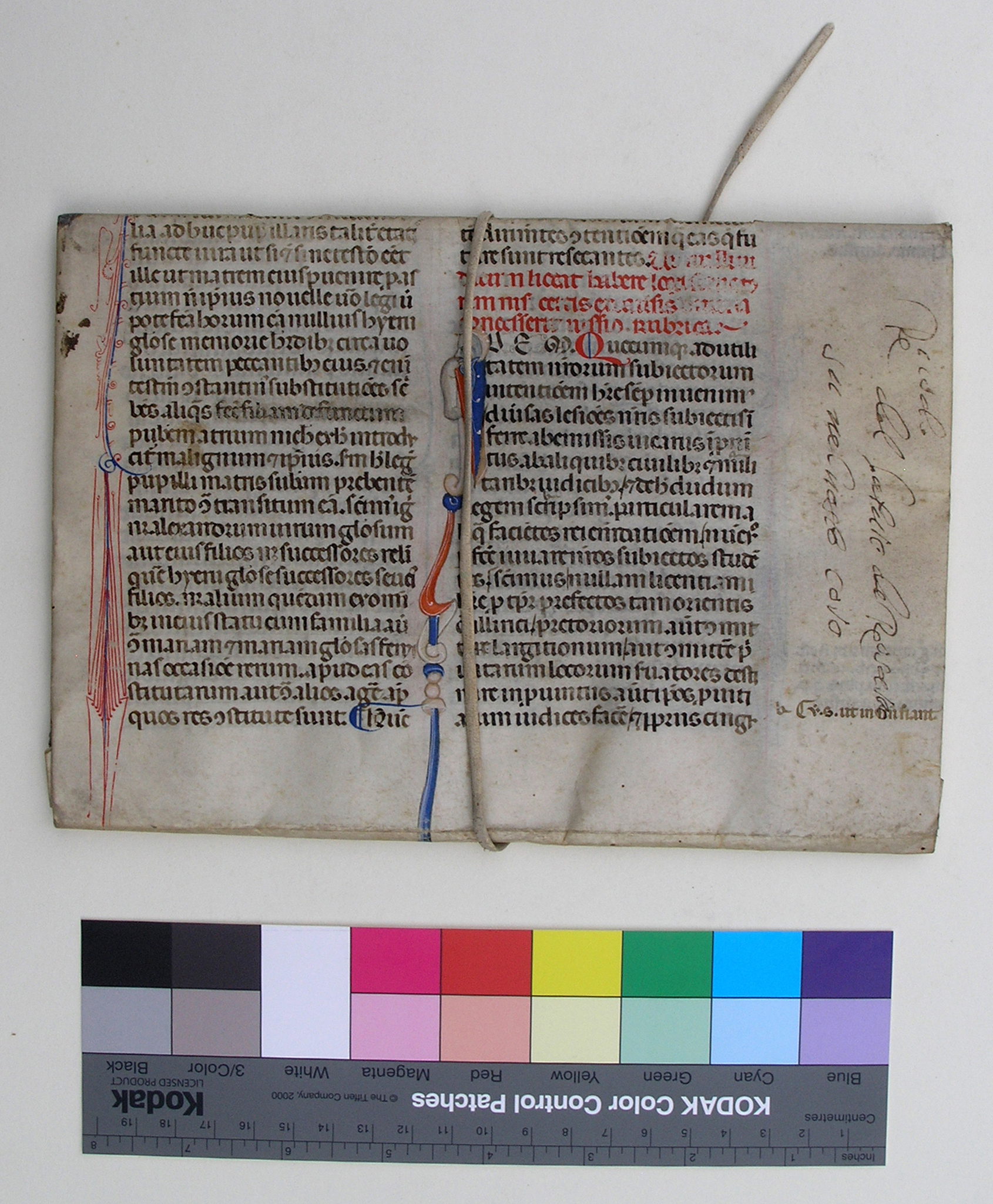
Medieval Missal Fragment as Early-Modern Cover
The Weber Leaf from Ege MS 61
"Bembino" Booklet Cover
Episode 23. “Meet RGME Bembino: Facets of a Font”
2026 RGME Colloquium on “Transformations & Renewals” at The Grolier Club
2026 Theme of the Year: “Transformations and Renewals”
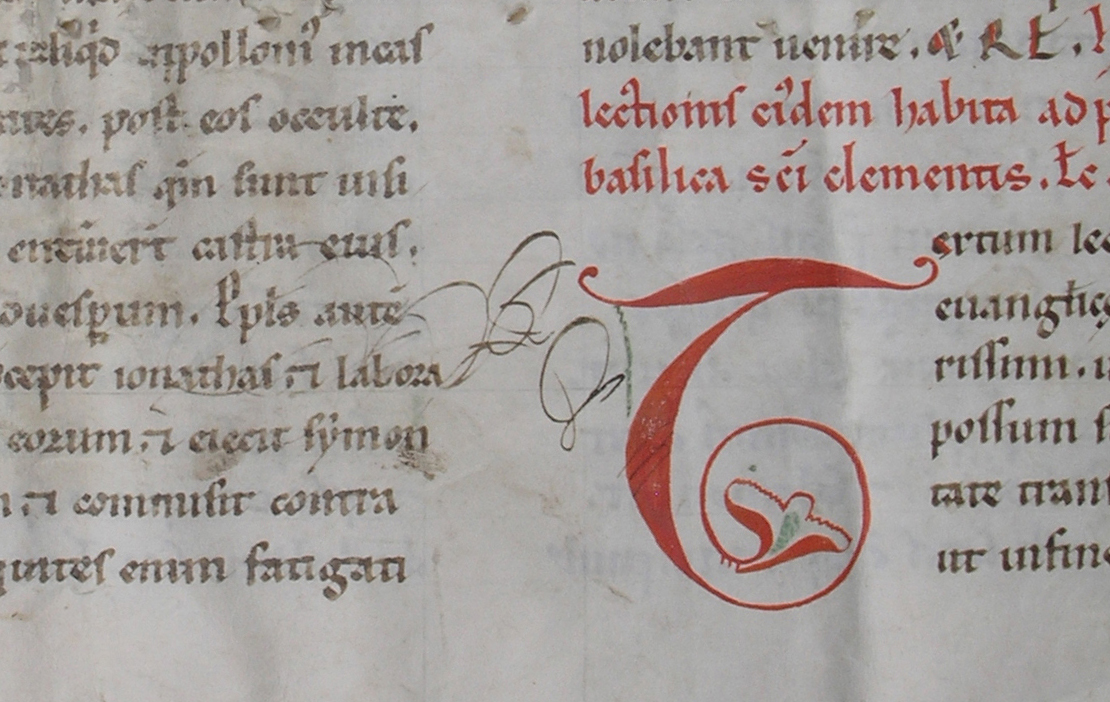
A Leaf with Patchwork from the Saint Albans Bible
A Sister Leaf from a Miniature Latin Vulgate Bible
A Little Latin Vulgate Bible Manuscript Leaf in Princeton
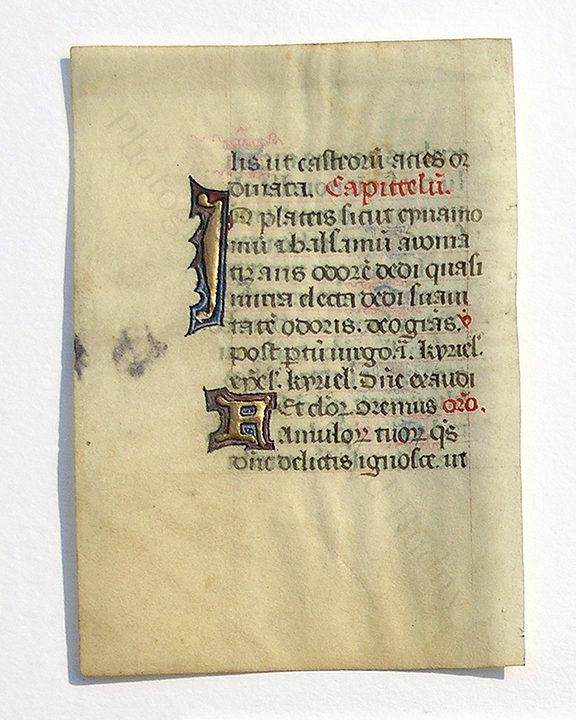
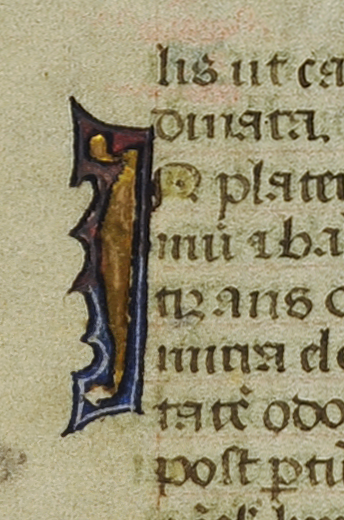
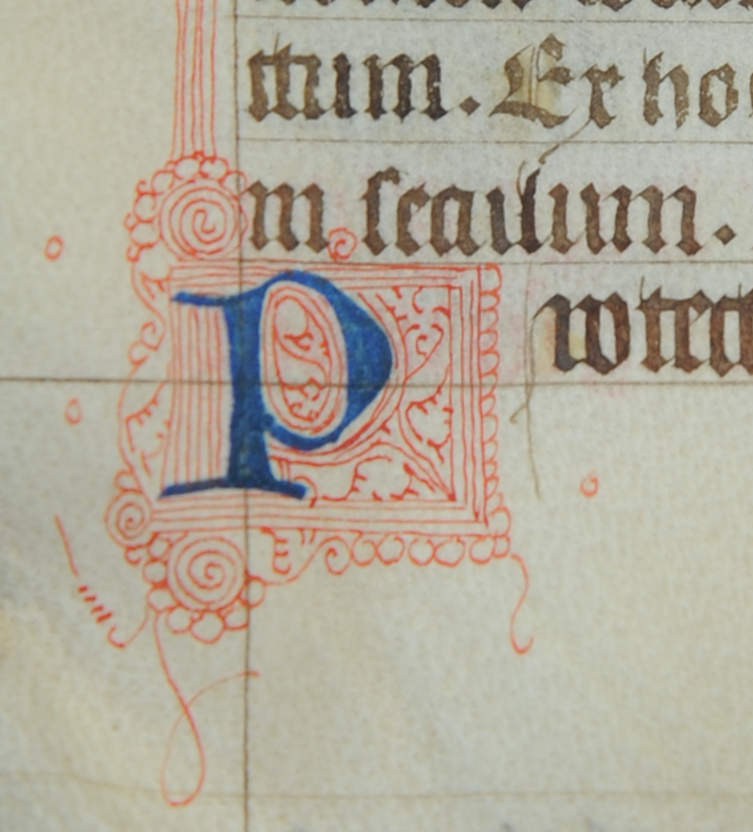
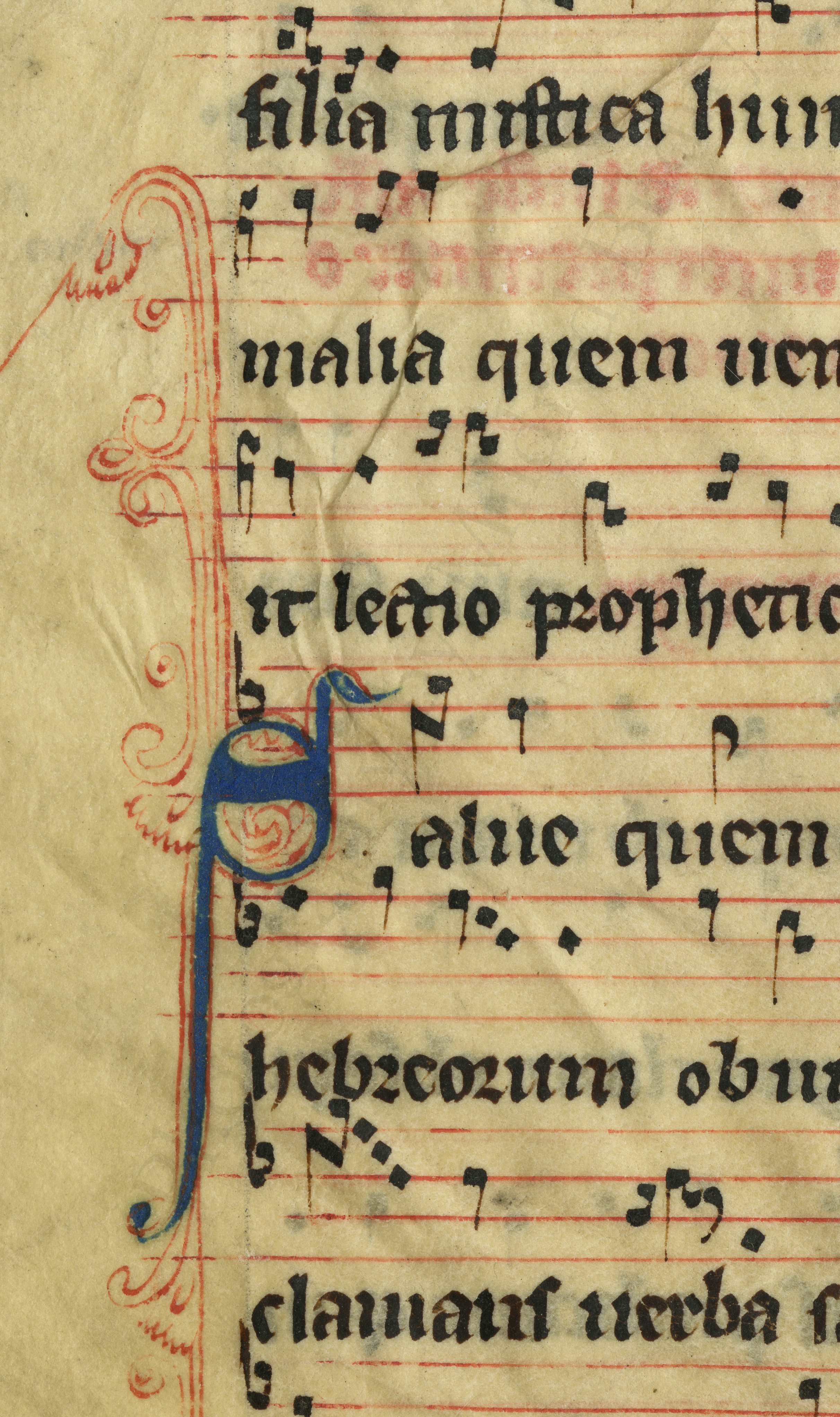
J. S. Wagner Collection. Leaf from from Prime in a Latin manuscript Breviary. Folio 4 Verso, with part of Psalm 117 (118) in the Vulgate Version, set out in verses with decorated initials.
2026 Annual Appeal
Episode 22: “Encounters with Local Saints and Their Cults”
Private Collection, Ege's FBNC Portfolio, Dante Leaf, Verso, Detail. Reproduced by Permission.
2025 RGME Autumn Colloquium on Fragments
Workshop 8: A Hybrid Book where Medieval Music Meets Early-Modern Herbal
2025 RGME Autumn Symposium on “Readers, Fakers, and Re-Creators of Books”
RGME Workshops on “The Evidence of Manuscripts, Etc.”
2025 International Medieval Congress at Leeds: RGME Program
Episode 21. “Learning How to Look”
2025 International Congress on Medieval Studies: Program
2025 RGME Visit to Vassar College
Two Leaves in the Book of Numbers from the Chudleigh Bible
Delibovi on Glassgold on Boethius: A Blogpost
Ronald Smeltzer on “Émilie du Châtelet, Woman of Science”
2025 Spring Symposium: “Makers, Producers, and Collectors of Books”
Starters’ Orders
The Weber Leaf from the Saint Albans Bible
Workshop 4. “Manuscript Fragments Compared”
Episode 20. “Comic Book Theory for Medievalists”
Episode 19: “At the Gate: Starting the Year 2025 at its Threshold”
Favorite Recipes for Lemonade, Etc.
RGME Visit to the Lomazow Collection: Report
2024 Autumn Symposium: “At the Helm”
A Latin Vulgate Leaf of the Book of Numbers
The RGME ‘Lending Library’
Florence, Italy, Ponte Vecchio from Ponte alle Grazie. Photo: Ingo Mehling, CC BY-SA 4.0 , via Wikimedia Commons
Episode 17. “RGME Retrospect and Prospects: Anniversary Reflections”
2024 Anniversary Symposium: The Booklet
Jesse Hurlbut at the Bonneville Salt Flats, Utah. Photograph Jesse Hurlbut.
Episode 16: An Interview with Jesse D. Hurlbut
To Whom Do Manuscripts Belong?
Kalamazoo, MI Western Michigan University, Valley III from the side. Photograph: David W. Sorenson.
2024 International Congress on Medieval Studies: Report
2024 Spring Symposium at Vassar College
Puente de San Martín: Bridge with reflection over the River Targus, Toledo, Spain.
2024 Grant for “Between Past and Future” Project from The Gladys Krieble Delmas Foundation Research Libraries Program
2024 Anniversary Symposium in Thanks to Jesse Hurlbut: Program

You are browsing the Blog for Manuscript Studies

Scrap of Information

August 7, 2015 in Manuscript Studies, Photographic Exhibition

The Scrap

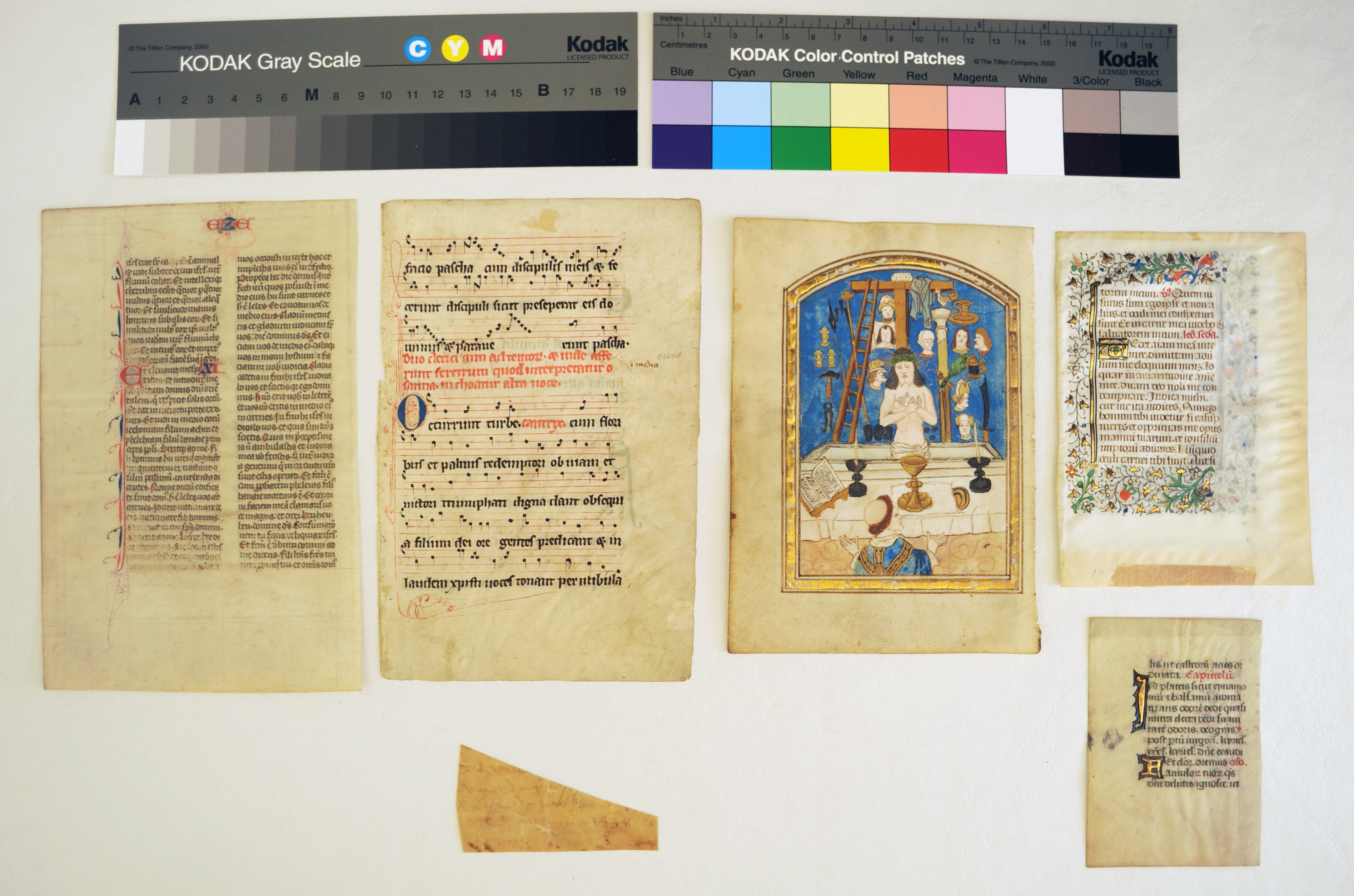
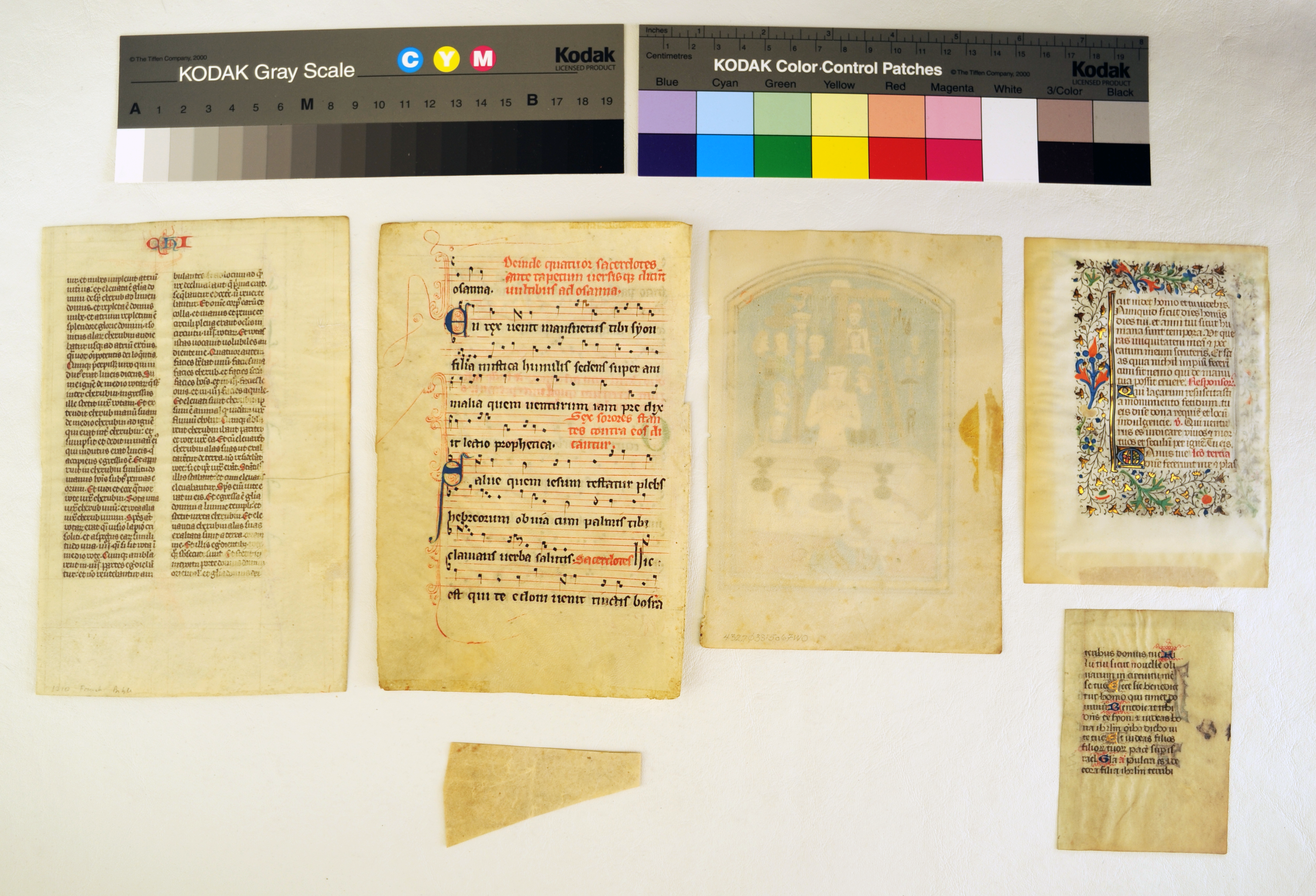
Continuing our series on ‘Manuscript Fragments’, starting with Lost and Foundlings and still focusing on the Handlist of Medieval and Early Modern Materials, we showcase Handlist 22, the Scrap of a 16th-Century Charter on Vellum in French.

[Posted on 7 August 2015, with updates]

Six Manuscript Fragments in the 'Illustrated Handlist', View 1. Photography © Mildred Budny

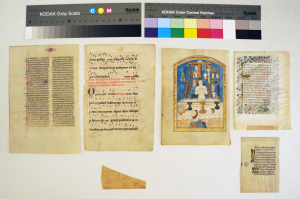
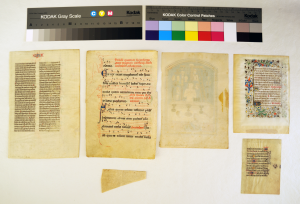
Group Portrait, View 1, with the Scrap at the left in the Bottom Row

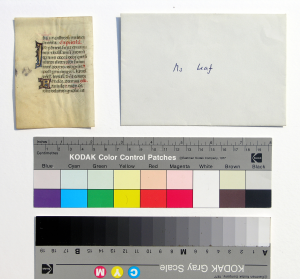
Earlier posts about the Handlist included a Preview which showcased the Front & Back Views (as in Both Best Views) of this ‘Scrap’.  Those Views included a measurement scale and a color guide, which help to show(case) how small and seemingly inconsequential the Scrap can seem. There it is, Bottom Sort-of-Center in the Group Portrait.

Inconsequential?  Not necessarily.  Worth a closer look.
Read the rest of this entry →

Tags: The Illustrated Handlist
3 Comments »

Manuscript Groupies

August 2, 2015 in Manuscript Studies, Photographic Exhibition

Preview:

An Illustrated Handlist of a Group of
Medieval and Early Modern
Manuscripts, Documents, and Printed Materials

Conservation, Photography, Research, and Descriptions

by Mildred Budny

Detail of opened book with schematic text. Photography © Mildred Budny

Bookish

As we unveil more of the research results for an extended study of a group of medieval and early modern manuscripts, documents, and printed materials, its Illustrated Handlist deserves an Introduction.  Here, instead, is a Preview or Trailer.

[Update:  And here is the Illustrated Handlist.]

Jest for Fun

Details of the materials in the Handlist, their conservation, and cumulative research results are reported, in stages, on other parts of this website (for example here), as well as in an illustrated Album, now in preparation for print.  Here is a light-hearted Preview, in the form of:

A Brief Introduction,
Partly Playful but Also Earnest,
Illustrations Included

Photography by Mildred Budny

The Best Side

To set the scene, a pair of informal Group Portraits shows the Best Sides of some hand-written leaves in the Handlist.
(P.S. Each Side counts as a Best Side in our book . . . )

These specimens — AKA ‘Models’ for the Portraits — come from several different parts of the Handlist.  Our Models here belong among Parts I and II of the Handlist, along with the other ‘Single Leaves’ and ‘Documents’ — in these cases all on vellum or parchment and mostly in Latin.

Some of them have richer decoration than others, depending upon their own resources, their talents, their training, their agents, their stylists, their make-up, the set-designers, the Director (in this context, that would be me), and the parts they have been assigned, or have decided, to play.  Play is the operative word today.

Take Two

And so here we have Group Portraits I & II (with Lady), unretouched.  Don’t we love seeing the Stars when they don’t have extra makeup, bodyguards, etc., and can show their real, natural selves?

For my part, I like both these Portraits.  For one thing, they show different Sides.  For another, they both look fabulous, just the way they are.  That’s my view(s), anyway.

Which would you prefer?

Six Manuscript Fragments in the 'Illustrated Handlist', View 1. Photography © Mildred Budny

Group Portrait, Take 1

Six Manuscript Fragments in the Illustrated Handlist, View 2. Photography © Mildred Budny

Group Portrait, Take 2

Seeing the Bright

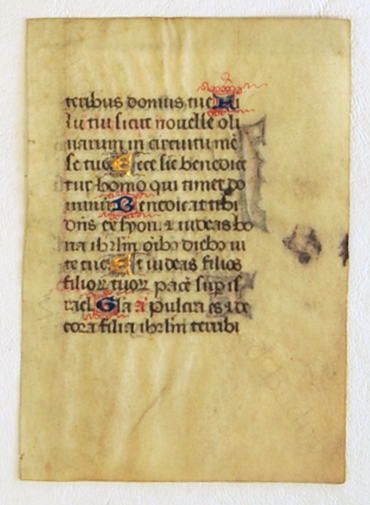
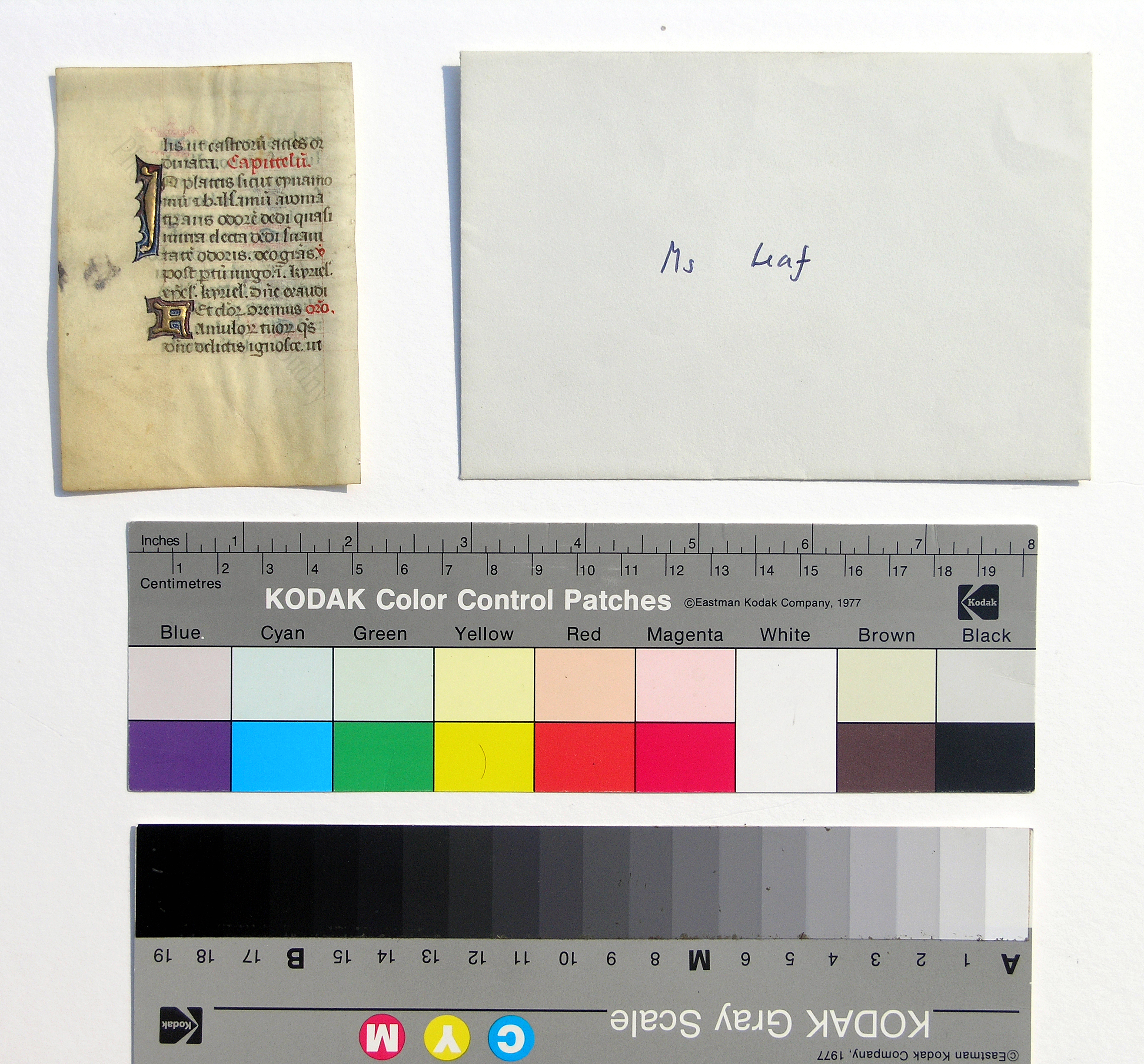
Lower half of Recto of Leaf from the Office of the Dead in a Small-Format Book of Hours. Photography © Mildred Budny

All That Glitters Might Be Gold

As for asking for their autographs, well, these Models already show their signature handwriting.  Some elements are even in gold.  Real gold, at that.

By the way, as a photographer (See Here Too), I observe that the gold leaf worn, for real, by three of our Models gleams especially effectively in these informal Portraits. Did you know that gold is diabolically difficult to photograph well on manuscripts?  No kidding.  No matter if you didn’t know that already, now you do.

Happily, the gold shows brightly in these snapshots, better even than in some more formal settings.  Didn’t plan it.  It just happened.  A bonus!  Remember what I said about their Good Sides?  Er, no, I mean, their Best Sides?

When it comes to photographing touchy, sensitive, demanding Subjects (As If! Who’s the Subject, as in Servant, here?), the Golden Oldies can be extremely demanding. It feels special when, without elaborate Special Effects, they can be allowed to reveal their unique inner light.  Now that takes Talent Scouting.

Roll Credits

To give credit where credit is due, I will readily name names.  In each version of the Group Portrait, here are, from left to right, in Rows 1 and 2 (upper and lower):

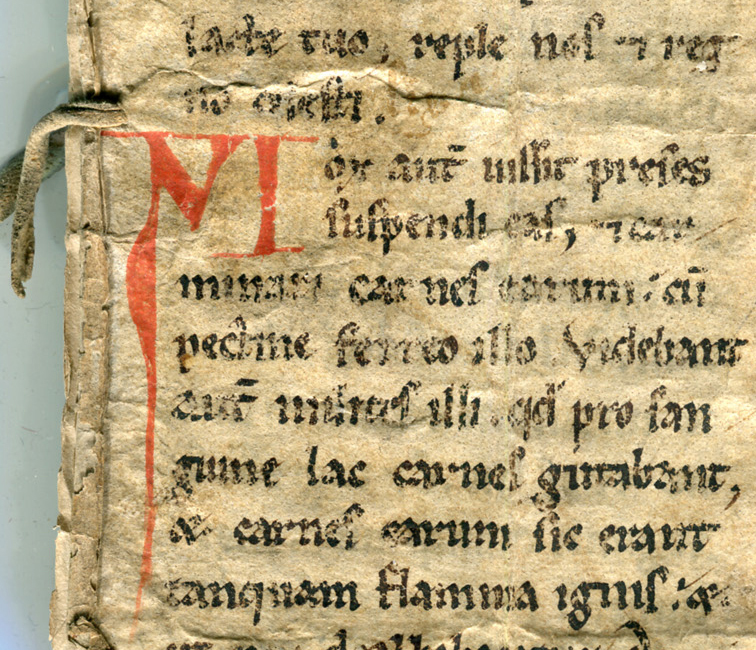
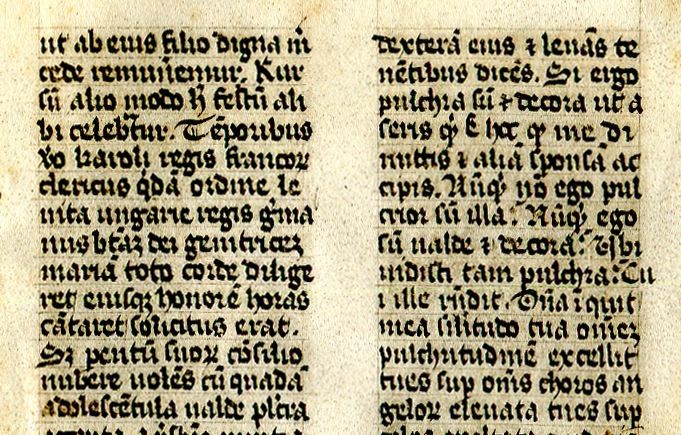
  • Handlist 7.   From the Book of Ezekiel in a ‘Pocket Bible’ made in France
    (part of the dismembered ‘Otto Ege Manuscript 61’)
  • Handlist 4.   From a Processional for Singing Nuns on Palm Sunday
    (part of the dismembered ‘Otto Ege Manuscript 8’, also known as the Wilton Processional)
  • Handlist 13.  From a Prayerbook, the Gregory Mass Revealed
  • Handlist 12.  From the Office of the Dead in a small-format Book of Hours
  • Handlist 22.  The ‘Scrap’ (Also Known As a Scrap of Information, and
  • Handlist 11.  From the Hours of the Virgin in a Tiny Book of Hours.
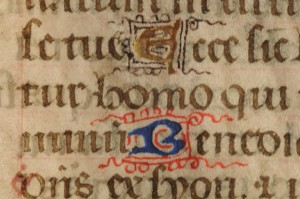
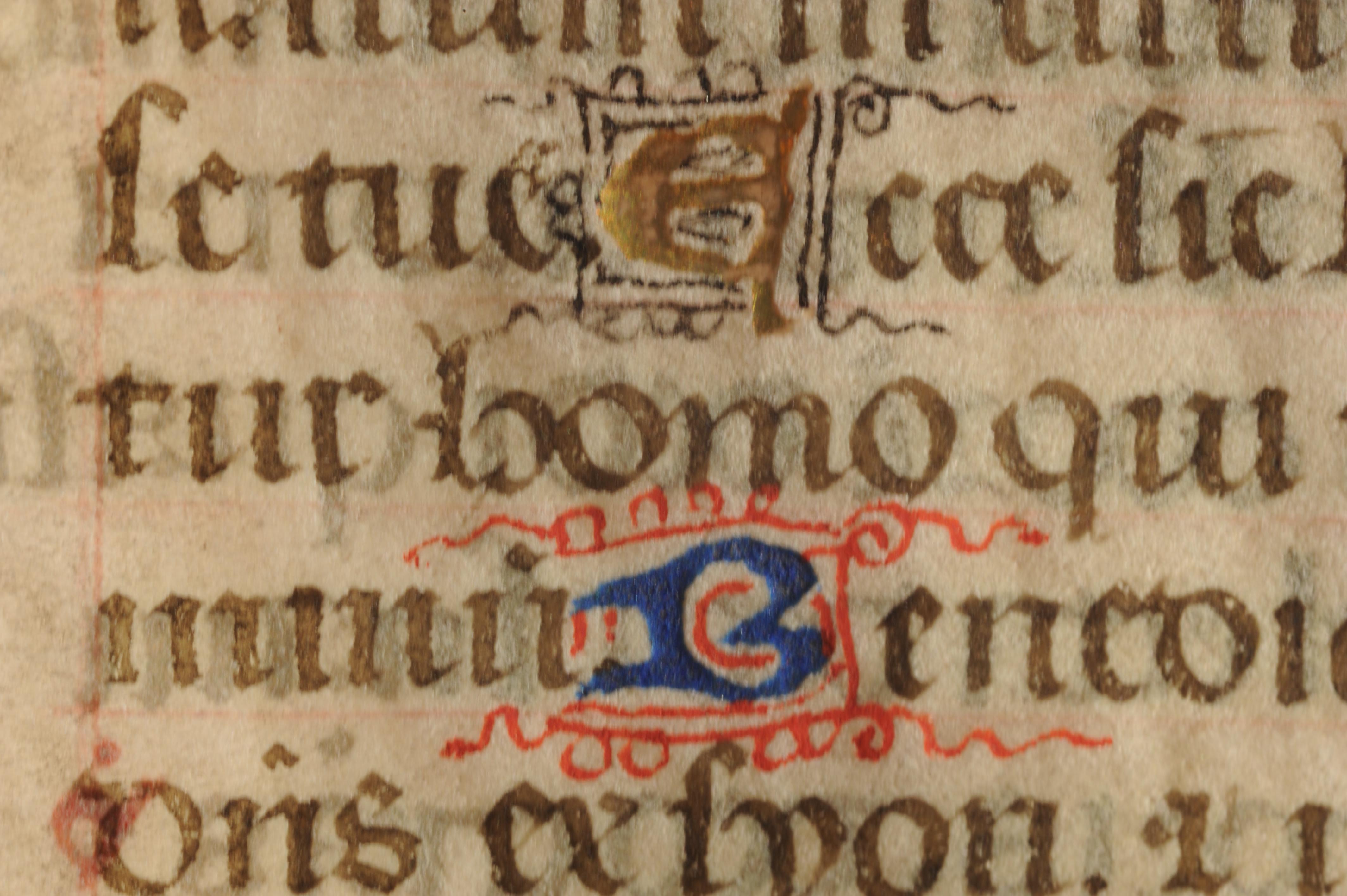
Detail of an initial M on the verso of the leaf. Photography by Mildred Budny

M for ‘Manus’ (‘Hand’), Bouquets Included

Their relative sizes are clear at a glance, don’t you think?

As they line up, it is as if they take their bows and acknowledge our applause.  After all, it took centuries to get their acts together! And they look really good for their ages.

We should be so lucky.  (We live in hope.)

Back to Front

You may wonder that, in each Group Portrait, some leaves show their recto (‘front’), while others show their verso (‘back’), seemingly inconsistently.

As in: Verso/Recto/Verso/Recto/Recto/Verso in Take 1, and the reverse in Take 2.

Well, to let you in on the secret, when the time came for their Group Portrait — it was an exceptional Photo Op, which, shall we say, required clearing with their Press-Agents and within my own schedule — they jostled for pride of place, like any or every celebrity or hopeful. It seemed helpful, anyway energy-conserving (for some, or one, of us at least), to allow them to choose their positions, while I worked on the lighting.

This opportunity came at an early stage in the processes of photography, conservation, and research (in varying order, sometimes as the interlinked stages of examination, consultation, photography, and research entered into cycles of immersion, reflection, revision, and renewal), and before more of the items arrived.  At that first stage, at the Photo Op, I had to recognize, not at all unwillingly, although a bit warily, that I had returned to photography of original manuscript materials after all, and after many things had rapidly changed, the world of photography included.

This return happened unexpectedly, and fortunately, after a gap of some years since the completion of the collaborative research project during which the Research Group on Manuscript Evidence was born, and the completion of its photographic work — some of which is showcased in the Illustrated Catalogue (1997), other publications, and other photographic exhibitions.  With this invigorating renewal, I began to experiment with different approaches to manuscript photography, both analogue (as before) and digital (as now, in addition to analogue), with different views of the artefacts, with different forms of backgrounds and lighting, and with a new sense of exploration.

Exploration for its own sake, and for what it might offer for manuscript studies.  With limited resources, true.  (Life is short.)

But also with resourcefulness, dedication, perseverance, curiosity — and, yes, a sense of fun.

Back to the Future

Some of the results appear on exhibition, in print, and on screen in various ways.  For example, Handlist 13 (Row 1), with its haunting image of the visionary Mass of Gregory the Great, is revealed in detail in a report, and it also features as the Star, Spokesman, and Poster Person (‘Poster Poster’?) representing principles and practices for photographic reproduction in our newly revised Style Manifesto.

Back on that set, during the Photo Op, without assistants to set the equipment, to soothe and distract the Models, to order pizza for them, to contend with their agents, to redirect the many requests for autographs, to arrange the bouquets, to hold back the paparazzi, and to book the tables for the post-shoot festivities, I had the pleasure of completing a first Test Shoot, in Takes 1 and 2, with narry a tantrum nor publicity agent in sight.  A fantastic, auspicious start.

These Models were the Best!  (No offense to the others!)  Great Cast.  Assigning their parts, or places, in the Handlist came later, as its script came into shape.  Likewise, discovering their identities mostly came later, as my and others’ research work yielded more discoveries — as with the ‘Stage Names’ for the original volumes from which some of the dispersed fragments came, as with the ‘Otto Ege Manuscripts’ (on which see, for example, our 2016 Symposium, its Report, and its Illustrated Program Booklet).

If these Models were in print rather than manuscript, I might say that they were Type Cast, but that distinction belongs to some of the other Items in the Handlist.

Hug Shots

Years later, coming upon these snap-shots from the Photo Shoot, I wondered why I hadn’t taken more formal Portraits of the whole Group, that is, with others in the Handlist included.  This while I had been taking such care to photograph each one in various views — as you can see, for example, in the reports about them in turn, on their own terms.  (As in the revealing personal interview with the Gregory Leaf.)

The look back and into the future, at this stage of shaping the Handlist, allows for a moment of wistfulness, while welcoming those quick, provisional, snapshots (‘Polaroids’ in an even earlier age).  Wistfulness, not regret. It is possible to be clear.

You see, now I see that perhaps these quick snaps can suffice to show the happy occasion of a gathering in recognition.  Happy, we can say, it marks the resumption of detailed study of manuscript materials in the flesh, and also the celebration of companions gathered as ‘foundlings’ from among many ‘waifs and strays’ of medieval and early modern written materials ‘abducted’ from their original homes (books, documents, libraries, collections, locations) in Western Europe (not forgetting the British Isles), brought one way or another across the ocean to the United States, and welcomed into a new form of ‘foster home’ — whether, say, as a mobile or a ‘forever’ home.

Perhaps it is not really a mystery, although it remains a wonder.  Every artist/actor/writer/manuscript worth his/her/its salt/sugar/weight-in-gold needs an audience.  Nice when we can meet and greet, don’t you agree?

Lost-and-Foundling Hospitality

You can see that I continue to reflect on the fates of Lost and Foundlings among dispersed bits and pieces of written materials from earlier centuries, and to consider the possibilities of a Foundling Hospital of sorts, where we might welcome them, directly or indirectly, tangibly or virtually, and together find some companionable nourishment in embarking on our picnics with the past.

And now, next, let me introduce more of them, and their rescued companions, to you.  Watch this space!

As the posts emerge, they join the Contents List for this blog on Manuscript Studies. Arranged by subjects or categories, rather than in the chronological sequence of publication, the List allows you to select your choices as from a Menu. Even possible is Dessert First!

*****

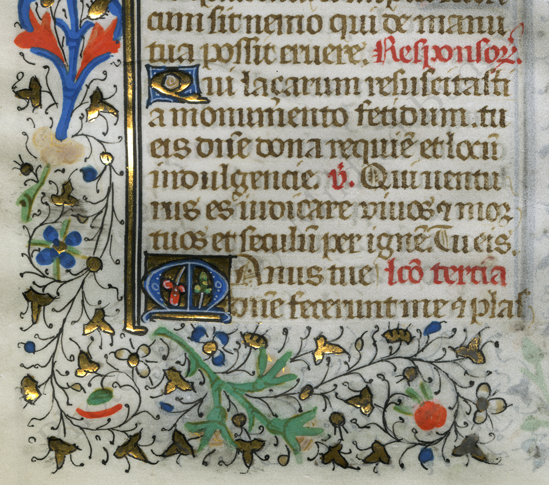
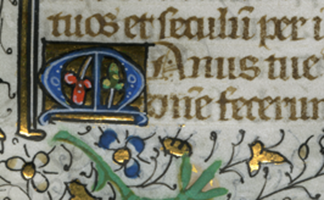
Floral border from 15th-century Book of Hours, with photography copyright Mildred Budny

Photography © Mildred Budny

Tags: Book of Ezekiel, Budny's Illustrated Catalogue, Hours of the Virgin, manuscript fragments, Manuscript Photography, Mass of Gregory the Great, Mass of Saint Gregory, Office of the Dead, Otto Ege MS 61, Otto Ege MS 8, Otto Ege's Manuscripts, Pocket Bible, Style Manifesto, The Illustrated Handlist, Wilton Processional
No Comments »

A New Leaf from ‘Otto Ege Manuscript 41’

July 7, 2015 in Manuscript Studies, Photographic Exhibition, Uncategorized

Part of the Dialogues of Gregory the Great

Book III, Chapters 12,3.23 (intra eandem) ‒ 14,6.60 (in ortum), plus catchword

Produced probably in Flanders, perhaps circa 1450

Mildred Budny reports on a stray leaf and its former manuscript, as part of a series including
The Foundling Hospital and Lost & Foundlings among Manuscript Fragments.

[Published on 7 July 2015, with updates. The announcement that (after earlier sales from that collection), the residue of manuscript materials in the possession of Otto F. Ege’s family has been purchased by the Beinecke Library at Yale University encourages the anticipation of more revelations about surviving leaves from the dispersed manuscripts, perhaps also this one. Reports on that collection figured in our 2016 Symposium on ‘Words & Deeds’. Also, we can include the specimen from this manuscript now at The Newark Public Library.]

With permission, we illustrate a detached leaf, now in a private collection, from one of the manuscripts which the notorious bibliophile and self-styled ‘biblioclast’ Otto F. Ege (1888‒1951) dismantled for dispersal, mostly by sale, among different collectors and collections far and wide.  Our recent post reflected on the conditions of dispersal and partial recovery for some of those fragments.

The leaf, seen here on both recto and verso, was purchased on its own several years ago in Boston. Its seller had little information about the leaf, whose identity awaited recognition.  The present owner, having identified the Ege connection, told me about the leaf when I mentioned my work on some dispersed Ege leaves in other connections, and generously allowed me to study the specimen and report further findings.

Read the rest of this entry →

Tags: 'Fifty Original Leaves from Medieval Manuscripts', Anselm's Meditations and Prayers, catchword, Château du Sart, Dialogues of Gregory the Great, Ege MS 41, Homilies of John Chrysostom, library of the Van Der Cruisse de Waziers family, manuscript fragments, Otto F. Ege, Thomas Thorpe
2 Comments »

Lost & Foundlings

June 26, 2015 in Manuscript Studies, Photographic Exhibition

The Tainted Legacy of ‘Biblioclasts’
The Case of Otto F. Ege as Collector and Despoiler

As Part II in a series on ‘Manuscript Fragments’, now part of a larger series on Manuscript Studies, Mildred Budny reflects on the predicaments and potentials of dispersed, deliberately detached randomly dispersed leaves from medieval manuscripts collected and dismembered by Otto F. Ege in the first half of the 20th century.
Part I in this series considered the ‘Foundling Hospital’ for Manuscript Fragments, as exhibited in earlier ages of manuscript despoiliation.  The issue calls for further exploration, bringing it up to date in an unhappy continuing state of dispersal.

[Part III (next) will reveal ‘A New Leaf from Ege Manuscript 41’]

The Foundling Hospital: The main buildings seen from within the grounds. Coloured engraving by J. Henshall after T. H. Shepherd. Via http://welcomeimages.org/ under Creative Commons

The Foundling Hospital: The main buildings seen from within the grounds. Coloured engraving by J. Henshall after T. H. Shepherd. Via http://welcomeimages.org/ under Creative Commons

Outcasts Flung into a Wider World
With Uncertain Hopes for Finding Foster Homes

This series of posts continues to celebrate the legacy of the Foundling Hospital in London.  We take inspiration from its complicated legacy of a brave endeavour to provide sustenance to lost and abandoned creatures.  And so, we consider the implications for reconstitution regarding medieval manuscripts which have been dispersed and, in some ways, abandoned for future rescue, if possible.

In recent years, keeping up with developments in various areas of manuscript studies, I have paid attention to the research discoveries of various scholars, including some Associates of the Research Group on Manuscript Evidence, in their efforts to examine, collate, and reconstruct the traces of medieval and other manuscript fragments let loose onto the world by such agents as the book-destroyer Otto F. Ege (1888‒1951), teacher, lecturer, graphic artist, bookseller, and professed ‘biblioclast’ active mainly at Cleveland, Ohio.

Invaluable contributions to this painstaking research and reconstruction (for the most part virtually) of his dismembered books appear in print, exhibition, or online.  They encourage me to report my own contributions, guided by their progress.

Little did I know that paying attention to those generous postings would prove to be valuable, not only in order to learn about progress in manuscript studies as such, but also to provide breakthroughs in some of the research I was already developing.  It can help to pay attention, huh?

More ‘Foundlings’ Identified

In preparing the Handlist of medieval and early modern manuscript and early printed materials in a private assemblage, as reported earlier, I reflect upon the precarious fates of original written materials in their uncertain transmission across the ages and through the hands of different custodians or predators, by turns – not necessarily in that order.  The first post in this series described such effects in the Middle Ages, at a center prepared to despoil and dismember, by turns across the centuries, one of its most splendid and illustrated manuscripts. The central case involved the magnificent Royal Bible of Saint Augustine’s Abbey, Canterbury, with partial dispersal or dismemberment at several stages and subsequent attempts to restore the remnants in some fashion.

Perhaps it is one thing for the creator of a monument to re-create it in various ways as the changing centuries might dictate. It may be something else again for others who take the materials into their own hands to decide how to dispose of them, with the operative word being ‘dispose’.

And so, now I turn to the methods of some 20th-century plunderers and distributors of medieval manuscript fragments. Within the Handlist, a few items are identifiable (after the fact) as leaves which passed through the hands of Otto Ege in the fuller form of their former manuscripts.

For example, one leaf, which carries the Arabic numeral 4 in black ink on its original recto, was contained within a glass-fronted frame when I first saw it, nearly a decade ago, as part of the initial stage of photographic work on the assemblage (in its state at the time). For conservation, I removed the frame and then photographed the leaf, recto and verso, while still attached to its existing cardboard mat. In consultation with the owner of the leaf, we decided to remove the mat and conserve the leaf separately. Those practices for the Assemblage as a whole, in stages, will be reported elsewhere. Meanwhile, I can show a first photograph (under flourescent lights) of the leaf lifted at an angle from its ‘original’ mat.

Because of my training, and awareness of the importance of respecting the evidence of manuscripts (and other materials), even if, at first sight, the value of specific clues might not be recognized, I have taken care to try to keep them in mind, while my experience might widen into areas which they require for decipherment.

I didn’t know it at the time, but the style of matting itself turns out to be a potentially diagnostic feature in the quest for identifying the fragment, its context, and its provenance. Call it a forensic clue in this complex detective work. Another post will focus upon this leaf, but, for now, we focus upon the clues in question.

Folio 4r still attached to the mat. Photography © Mildred Budny

A detached folio 4r still attached to a cardboard mat with Ege-style tapes asymmetrically aligned (Budny Handlist 9)

Bits & Pieces, Reassembled

The cumulative contributions are worth celebrating, as we collectively move forward with their clues and directions.  Some examples of these contributions (mostly freely available) set the scene, with observations, discoveries, illustrations, references, and suggestions for further discoveries:

Barbara A. Shailor (our Associate)

“Otto Ege: His Manuscript Fragment Collection and the Opportunities Presented by Electronic Technology”

Lisa Fagin Davis (our Associate and former Trustee):

“In Otto Ege’s Footsteps”
“Otto Ege, St. Margaret, and Digital Fragmentology”
“Manuscript Road Trip to Virginia”
“Reconstructing the Beauvais Missal”

Peter Kidd:

“A Newly Discovered Leaf”
“Ege’s 12th-Century Italian Lectionary”
“Ege Leaves at Glencairn Museum” (with specimens of the handwriting of Otto Ege and of his wife Louise)

Scott Gwara (our Associate):

Otto Ege’s Manuscripts: A Study of Ege’s Manuscript Collections, Portfolios, and Retail Trade (a book for sale),
with a survey of the evidence for the acquisition and dispersal of his manuscripts,
including a “Handlist of Manuscripts and Fragments Collected or Sold by Otto F. Ege” (Appendix X).

An important part of these processes of investigation and discovery is the ability to examine the originals, whether in person or by proxy, through images reproduced in print or otherwise. Digital facsimiles of all or parts of their Ege materials are available online for some collections, as here:

The Ege Manuscript Leaf Portfolios in several collections, gathered virtually by the Denison University Library
Fifty Original Leaves . . . From the Otto F. Ege Collection at Case Western Reserve University
Otto Ege Collection in the Public Library of Cinncinati and Hamilton County
Fifty Original Leaves From Medieval Manuscripts (Otto F. Ege Collection) at the University of Minnesota
50 Medieval Manuscript Leaves at the University of Sasketchewan
Pages from the Past: Ege at the University of South Carolina
Massey College Medieval Manus . . . at the University of Toronto.

Examining and comparing these specimens, together with the scattered evidence for the distribution and identification of the sundered portions of the original manuscripts, which apparently survived more-or-less intact into the 20th century before their ‘repurposing’, may help to recognize more of their separated parts. Such is the case here.

Way to Go

More discoveries await recognition, as the news spreads about research and discoveries relating to the dispersed manuscripts and the processes of acquisition, dismemberment, and piecemeal distribution. While deploring the vandalism of monuments of the past, we admire the dedicated efforts to assemble the virtual ‘reconstitution’ of their fragments. At least it is something.

That it is less than perfect, and less than it could have been, is not the responsibility principally of the despoilers who dismembered the materials and failed to record the crucial contextual information as they let the fragments loose onto the world. Orphans by intent. Foundlings by goodwill, dedication, and good fortune. Sometimes, it seems, we find them without notice. Sometimes, it may be, they call out to us.

Lost & Foundlings

Penwork extending from a decorated initial extends below the final line of text and ends in a horned animal head which looks into its direction. Photography © Mildred Budny

A whimsical creature at the bottom of the page faces the music. Budny Handlist 4

And so, now, as I round out the preparations of illustrated reports on the private ‘Assemblage’ of medieval manuscript fragments and documents, now with a Handlist assigning numbers to the items, the rapidly advancing research on Otto Ege’s manuscripts and fragments by scholars, librarians, catalogers, and book-sellers can enable the further recognition of other stray fragments which came from (or through) his holdings, set loose into the world with little information to record their origins, state their contexts, or signal the survival of any other siblings from the same original volume. Such recognition often comes only in pieces, that is, as we individually or collectively might find the relevant expertise and discover some firmer information about the original whole that may reside in one or another of its other surviving or recorded parts, with a colophon naming the maker.

In some cases, the identification of a stray leaf as having formerly belonged to a known Ege Manuscript might be secured by the continuity of textual sequences between it and another in that book (as listed occasionally here), by offsets of pigment from the formerly adjacent page onto it, or similar clues. In contrast, in some cases, while the processes of research and recovery continue to advance, such specific establishing indicators might not survive, or come yet to light, so that the identification might have to remain tentative, perhaps at least for the time being, or as having belonged to a volume in the same style, by the same hand(s), from the same center at about the same period of production, or the like.

It’s a shame that we have to restore some sense of continuity and context to these ‘waifs’ so laboriously and sometimes haphazardly, at best.

Otto Ege cut into pieces many medieval and early modern manuscripts of various types, dates, and places of origin, for assembly as individual leaves into various unique sets, as with the series of portfolios entitled Fifty Original Leaves from Medieval Manuscripts. Mounted on individual mats, given identifying labels, and numbered in sequence, the selected leaves were placed into boxes and distributed mostly by sale to museums, institutions, and private book-collectors. Only a generic descriptive label, printed on a slip, accompanied each of these individual representatives of a former unique whole. Other leaves from the same manuscripts – the rejected ‘random or rogue’ leaves as described by Lisa Fagin Davis and by Barbara Shailor – were circulated in various ways through gift or sale. Some of those leaves, if they are ‘lucky’, carry brief inscriptions written by Ege or his helper(s) in the lower margins of their rectos. Over time, the ownership and locations of some sets, parts of sets, and individual leaves have changed. The current locations of some of this Portfolio of Fifty and other Portfolios (focusing upon other themes) assembled by Ege are known; some of them have lost some of their individual components. It remains a tedious task for scholars to attempt to pick up the pieces, even if only virtually.

It is an asset that some collections offer digitized views of their representatives of these fragments. The form or appearance of such representatives can vary greatly. Those variations, some cumbersome, merit another reflection or review. Now let’s look briefly at what the individual ‘Orphans’, ‘Waifs’, and Strays’ might bring with them when they come into our view. I think of them as Foundlings, left upon our doorsteps. Here is why.

Babies & Bathwater

Approaches to abandoning babies — human babies, snatched from their birth-mothers and birth-families — can vary enormously, (un-)naturally. Across the centuries, such approaches might range from inexorably casting the new-born, naked, into the mouth of the lair of wolves, at one extreme, to placing them, lovingly, wistfully, at the other extreme, at the entrance of the forum, church, or sanctuary, say at dawn at the beginning of the day’s commerce and traffic, and setting them on to their new, uncertain, course, with a basket or cradle, a tender supply of clothing, a blanket, jewelry of some kind, a toy perhaps, maybe a bit of food, to hope to smooth the safe passage of the living being into the hands and care of strangers, who might be prepared to offer them foster homes or even adoption.

Clues or Clueless

Babies are different, true, from manuscript fragments, but the point is clear. What traces do their occasional owners, masters, agents, or purveyors choose to hand on, or hand over, to the adoptive homes or ‘adoptive agencies’ so as, perchance, to allow for some awareness of the parentage, ‘birth certificates’, genetic tendencies, family contexts, and other relevant information about their origins and upbringing?

In a nutshell: Not Much, in many cases. Ah well, sometimes the results may be due to negligence, indifference, or haste, but in some cases the effects as well as the methods appear to resemble the actions of ‘criminals’ who have the sense to destroy as much evidence as possible, take the money, and run. At ‘best’, the conveyers of altered, fragmented manuscript materials might be little aware of how much forensic evidence can reside in the substances, surfaces, and accretions of those materials.

Forensics in Manuscript Studies

Frontispiece image, with the prostrate figure of Saint Dunstan beside Christ, in Saint Dunstan's Classbook, MS. Auct. F. 4. 32, folio 1r, tenth century. Photo: © Bodleian Library, University of Oxford (2015)

Saint Dunstan’s Classbook, MS. Auct. F. 4. 32, folio 1r, tenth century. Photo: © Bodleian Library, University of Oxford (2015).

Permitting those seemingly insignificant traces of many kinds to remain in place (provided, for example, they do not actively harm the artefacts) may allow them to be observed, recognized, and deciphered by appropriate expertise.

An example of such discoveries applied to a renowned early medieval manuscript, or rather composite manuscript (assembling into one volume several different portions containing different texts, languages, dates, places of origin, annotations, scribbles, and other alterations), can be observed for the so-called ‘Classbook’ of Saint Dunstan and its ‘signed’ frontispiece image.  For centuries that image has been believed — wrongly, it turns out, through forensic examination – to be the saint’s self-portrait.  Yet it does have his own ‘autograph’ in the form of a prayer in his own hand and in his own name, added to the drawing of a monk before Christ made by a different scribal artist.  Appropriation may be a sincere form of flattery, but it does not necessarily constitute (when detected) the authentication of the appropriator as the creator of the artwork in full.

‘ID Bracelets’ and ‘Identity Marks’

In the absence of explicit testimony, both within or upon the fragment itself, it can be appropriate or expedient to turn to forensic and other forms of evidence, implicit or indirect. Such testimony, when properly recognized, can work wonders.

The ‘Seller’s Tell’

The ‘Identity Marks’ or tags made by many sellers of manuscript fragments may take distinctive, recognizable forms. The styles and methods may be telling. The statements may serve as concise cues identifying the item in some way, say with a verbal description or an inventory number. Some may function as cryptic notation, perhaps including codes denoting the expected price or price-range in a manner obvious to the seller but not the buyer. When entered in pencil discreetly at the bottom of a page, the tag might seem unobtrusive, possibly erasable without much trace, and readily ignored — especially when covered by the overlap of a mounting frame.

Exhibit A

A cryptic form of seller’s mark appears in the cryptic string of numbers and letters on the recto of the leaf with the Gregory Mass, purchased by its present owner from a major international bookseller in the 1990s.

Seller's Mark in Code. Budny Handlist 13. Photography © Mildred Budny

Seller’s Mark in Code (Budny Handlist 13)

Exhibit B

A different form of Seller’s Mark characterizes the approach to marking many of the ‘Rogue’ leaves dispersed from Otto Ege’s collection. Not all such leaves carry this form (which has some variations). But where they do, they may give significant, if compacted, information besides the price.

A simple form, reduced to the presumed date and genre of book, labels a pocket-sized leaf with text from the Book of Exekiel as ‘1310 French Bible’, tout court. By itself, the inscription might hold little promise, but a detailed comparison indicates the identity of the hand and the conditions of the ‘Tagging’.

Ezekiel recto with pencil inscription. Photography © Mildred Budny

Pencil inscription (Budny Handlist 7)

The discovery of the connection of this fragment to Otto Ege’s collection and its former manuscript had to await the recent research on the ensemble of manuscript materials as a whole. It is both fortuitous and beneficial that my ongoing research on the ensemble and its components coincided with the plenitude of reports of rapidly advancing discoveries about many of Ege’s dispersed fragments, their current locations, their marks of Ege’s handling, and their interrelations.

Various of the reports listed above identify and illustrate these marks, including specimens of Ege’s handwriting, the characteristics of his his mats for many of the leaves both within and beyond his Portfolios, and his form and uneven style of mounting tapes for the leaves and their mats. More about those mounting tapes in a moment, but first, a closer look at another pencil inscription which clinches the deal.

Exhibit C

One leaf which, according to his recollection, the present owner purchased at the shop of the Cleveland Museum of Art in or about 1953, carries on its recto the price of ‘$2.—’ and, spaced at an interval to the right, the brief description of the item as ‘French Bible 1300 – List of Hebrew names’. The owner purchased the leaf on its own, unmounted, and without any further description. A future post will tell more about this leaf and its former manuscript, a massive Bible now dispersed in many directions and collections, with confusingly inconsistent seller’s and cataloguers’ descriptions.

Pencil Inscription at the lower front of a manuscript leaf. Photography © Mildred Budny

‘List of Hebrew Names’ in a ‘French Bible’ of ‘1300’, price ‘$2’, purchased circa 1953 at the Cleveland Museum of Art shop (Budny Handlist 8)

Exhibit D

A leaf now identifiable on other grounds as an Ege ‘Rogue’ Leaf appears to have a pencil inscription characteristic for the varied genre, starting with a price of ’10 –’ (presumably in dollars), followed perhaps by some more information entered at the same time, by the same hand, and in the same medium. However, the subsequently applied masking tape, with unevenly torn edges, which served to adhere the leaf to a mat by 1959 when the leaf was given to its present owner (and which has recently been removed in conservation) also mostly masks (presumably) the rest of an inscription. When the leaf was conserved recently, it was decided to allow the masking tape to remain, as a record of the history of the leaf. And so the rest of the inscription (if any) could remain for future revelations.

The pencil inscription at the bottom of a manuscript fragment names the price ($10) but the rest is veiled by a masking tape mount from a former frame. Photography © Mildred Budny

Pencil Inscription Partly Veiled (Budny Handlist 12)

‘Baby Blankets’, ‘Swaddling Clothes’ & ‘Cradles’
Mats & Mounting Tapes

Some telling, or ‘diagnostic’, features might seem insignificant at first glance, but they could provide evidence of the hand at work. Where other clues have been removed, such traces may be essential and solitary in their attestations as witnesses. And so they might have to testify (see above) as Tips of Icebergs. Let us consider the often dismal evidence of mounting tapes, that is, the adhesive tapes found on manuscript fragments — which, in some cases, they not only accompany, but also enslave.

At most glances, such tapes might easily be ignored. Who cares? Well, some of us do, although not everyone has to. It’s enough to recognize that someone might find them worth examining. To forensic examination, their features can sometimes reveal significant testimony.

Exhibit E

A simple example can set the scene. Non-archival masking tape is sometimes readily employed in framing materials, presumably for its convenience, ignorance about its interactive characteristics, and awareness that its presence will be hidden under the mat or the edges of the frame. In recent conservation, the removal of the frame, glass, and mat from a detached leaf of an 11th-century Giant Latin Bible purchased in 1951 in Florence, Italy, and subsequently framed in the United States has revealed some strips of tape, with unevenly torn edges.

Masking Tape added after 1951 to the reframed fragments of a single large-format 11th-century leaf. Budny Handlist 1.

Masking Tape added after 1951 to the reframed fragments of a single large-format 11th-century leaf (Budny Handlist 1)

Exhibit F

Now we turn to examples of Ege’s mounting tapes within the Handlist. The pair of unevenly cut and unevenly placed mounting strips of gauze tape glued along one long side of ‘Folio 4’ of Handlist Number 9 (shown above still attached to its former mat) is representative of his style of application, given the cases already attested.

On various grounds, even apart from the tapes, this leaf can be identified as one of Ege’s ‘reject’ leaves from a manuscript deployed among the Fifty Original Leaves. Known Ege examples are illustrated, for example, here and here.

A detached Folio, which carries the Arabic number ‘4’ in black ink at the top of its recto (inscribed on the leaf while it still stood in place in its former manuscript), retains its asymmetrically placed whitish gauze mounting tapes attached to the outer edge. The non-archival cardboard mount for this leaf, to which the tape strips formerly adhered in the form of hinges, has been detached during recent conservation, and is kept separately. On the mat, the leaf was mounted with its original recto turned to the verso.

The type of tape and its style of placement corresponds with known Ege methods. A ‘stroll’ or ‘scroll’ through the digital facsimiles of mounted Ege materials (as in the Massey College Medieval Manus . . . series) reveals many cases of such mounting tapes, not infrequently positioned asymmetrically. Same as here:

Pieces of gauze mounting tips in a pair along the long edge of a detached manuscript leaf, with Photography © by Mildred Budny

The outer edge of a detached Folio ‘4’ recto and its 20th-century ‘Ege’ mounting tapes (Budny Handlist 9)

Exhibit G

In another case, such mounting tapes were removed some time ago by some agent or other, without record. Similar traces appear, for example, here.

Ezekiel recto White cropped to tape traces rotated with branding at 5 percent

Remnants of a pair of gauze mounting tapes (Budny Handlist 7)


Fortunately, it turns out, the gummy substance resisted the removal of all trace of the tapes, whose material, form, and alignment are familiar to observers of Ege’s methods of mounting the detached leaves, whether for his Portfolios or other forms of dispersal.

Even so, many of his dispersed leaves ‘rejected’ for inclusion in the Portfolios have wandered without the addition of mats. In their cases, the brief (or briefest) pencil inscriptions might have to serve alone as a clue to his intervention in the history of the artefact. In other cases, Ege’s dispersed leaves might have to roam without any of his recognizable marks, until, say, the identification of the text, the scribe, the workshop, or some other means of connection with the original manuscript might be accomplished. Meanwhile, every step forward, by whatever clues, may count as progress.

Next we report the discoveries for another detached ‘Ege Manuscript Leaf’, which has wandered on its own, without label, identifying inscription, or other explicit mark of Ege’s ownership. For such a case, other detective methods also are required.

A Virtual ‘Orphanage’

How the different ‘Foundlings’ among manuscript fragments might sometime find a proper, albeit virtual, home so as to acknowledge, to record, and to welcome their familial connections in former whole manuscripts as a form of ‘genealogical recovery’ remains to be determined in the concerted quest in various centers to establish and to foster such projects. While they find their fuller footing, with larger institutional supports, we will turn to the next report on our findings.

Next stop: ‘A New Leaf from Ege Manuscript 41’, from a different collection.

We welcome your comments, questions, and feedback. Please leave a comment or Contact Us.

*****


Tags: Budny Handlist, Foundling Hospital, Manuscript studies, Medieval Manuscript Collecting, Medieval Manuscript Fragments, Otto Ege's Manuscripts
No Comments »

The ‘Foundling Hospital’ for Manuscript Fragments

June 26, 2015 in Book & Exhibition Reviews, Manuscript Studies, Photographic Exhibition, Uncategorized

Gathering Waifs and Strays among Manuscript Fragments
Dispersed to the Winds of Change

Their Recognition for What They Are
Can Emerge Through Chance Discoveries as Well as Dedicated Expertise

As Part I in a series, Mildred Budny reflects on recognizing the familial connections of ‘orphans’ among dispersed manuscript leaves. Part II considers a group of them as ‘Lost and Foundlings’.

Initial d in woodcut with winged hybrid creature as an inhabitant. Photography © Mildred Budny

Initial D on a detached bifolium, printed on vellum. Photography © Mildred Budny

‘Do the right thing’, we often hear.  Yes, presumably, that seems worthwhile, given the chance, ability, or will.   But how to do it and what to do?

Doing the Right Thing for Historical Records?  Hmm.  Preserving artefacts and monuments from the past is not always straightforward, nor always deemed desirable.  The issues remain subject to controversy and concern.  When it comes to old manuscripts and their fragments, the set of choices could depend upon opportunities, determination, and intention, as well as, on occasion, serendipity.

Foundlings, Given the Chance

Recently I have been thinking about the humanitarian purpose and activities of the 18th-century foundation of the Foundling Hospital, whose grounds I used to visit during my long postgraduate years in London.   Now my thoughts focus on that place, and its place in history, not only in its own right, but as a metaphor or model for the challenges and opportunities in gathering together the orphans, waifs, and strays among despoiled manuscripts and books of earlier ages.

Coloured engraving of a bird's eye view of the Courtyard of the Foundling Hospital, Holbourne, London, with scenes of humans and other creatures both within and without.  Coloured engraving by T. Bowles after L.P. Boitard (1753).  Image via Wikimedia Commons from Wellcome Images (http://wellcomeimages.org

The Foundling Hospital, Holbourn, London: A bird’s eye view of the courtyard. Coloured engraving by T. Bowles after L.P. Boitard (1753). Wellcome Images (wellcomeimages.org) via Wikimedia Commons

These reflections have come to mind as I work to shape the illustrated Handlist of a group of medieval and early modern manuscript fragments and documents, plus some early printed materials, which I have had the opportunity to photograph, conserve, and study for some time (as reported, for example, on this website and in a close-up).  By its owner’s wishes, for now the group is called an ‘Assemblage’ because its group was assembled over decades less specifically or purposefully than a ‘Collection’ as such might imply.

Recently, during the accelerated course of the work on the materials as a group, there has appeared the poignant illustrated blogpost by Erik Kwaakel showcasing a group of handwritten tags intended to identify, and to accompany, children who passed through the Holy Spirit Orphanage (Heilige Geest- of Arme Wees- en Kinderhuis in Dutch) in Leiden in The Netherlands in the 15th century.  These brief slips can or must stand now for their bearers, long gone into the past, perhaps with little or no other written record for their living existence.

Manuscripts and Foundlings:  somehow they interrelate.  Manuscripts as Foundlings, and Human Foundlings with Manuscript Tags.  Poignant predicaments, and poignant traces.  It seems a mercy that any traces may remain to bear witness to the lives, and also the books which any lives have produced, owned, read, perhaps enjoyed, and lost.  The time has come for finding, and for caring.

A New Handlist for a Group of Manuscript and Early Printed Materials

Leaf with Gregory Mass illustration on black background. Photography © Mildred Budny

Budny Handlist 13

Although few in number, the fragments in the Handlist come from a varied range of types of texts, dates and places of origin, and modes of descent into modern times — not least through their dismembered reuse as binding materials of several kinds or for individual display as specimens of script, decoration, or illustration.  Mostly they comprise single leaves (folia), pairs of conjoined leaves (folded bifolia), or scraps.  Mostly they come with few, if any, indications of either their former ‘families’ within their original volumes and their former ‘homes’ in libraries or collections, or the identity of their despoilers.  That is, apart from the clues which they carry upon their very surfaces or on materials which may have migrated with them, whether by chance or by design.

Those indicators, written or unwritten, may reveal their testimony principally in connection with the evidence preserved in other materials in other collections, provided that researchers might find it or learn about it.  We have described and illustrated the interim results for one of the Handlist items recently (‘Handlist 13’, shown here), a detached 15th-century leaf with an intricate illustration on its verso of the Mass of Saint Gregory the Great, at which the celebrant of the Mass experiences a vision of Christ surrounded by the Instruments and Agents of the Passion.

The widespread dispersal, across the centuries and even — alas — nowadays, of scraps, leaves, or bits of manuscripts without regard, usually, to their complete original context within a whole manuscript, collection, or body of work by their given creator(s) can give rise to mixed feelings.  The degree of mixture may depend upon the circumstances of dispersal or the disposition of the viewer, in various measures.  On the one hand, the phenomenon constitutes a trashing of cultural heritage to be deplored.  On the other, we might have some slender sense of relief that something, at least, has remained, if only by the skin of its teeth.

Following that toothy metaphor, we might lament or marvel, by turns or in combination, that any traces whatsoever might remain of past achievements, however down in the tooth, toothless, or plagued with perhaps ill-fitting artificial teeth they might now be.   Let’s chew on that.

The Tips of Icebergs

In recent years, much attention in medieval manuscript studies (for example) has considered the despoliation, usually willful, of whole manuscripts so as to extract the juicy bits, such as illustrations, decoration, and choice specimens of script.  Mostly without bothering to record their context and companions. Such practices have occurred across the centuries in many situations and for varied purposes, sometimes laudable.

The Magnificent, Despoiled,
Royal Bible of Saint Augustine’s Abbey, Canterbury

© The British Library Board, Royal MS 1 E.VI, folio 43r. Reproduced by permission

© The British Library Board, Royal MS 1 E.VI, folio 43r. Reproduced by permission

Years ago, in embarking on manuscript studies in earnest as a graduate student at University College London, I encountered this tendency, at a safe distance removed by centuries, in deciphering the evidence of the remnants of a superb manuscript made in the 9th century C.E. at St. Augustine’s Abbey, Canterbury. The manuscript contained a large-format copy of the full Vulgate Bible in Latin, with some prefatory texts and illustrations.Its remaining treasures include some richly purple-dyed leaves with full-page monumental inscriptions in gold and silver lettering and the majestic opening to the Gospel of Luke, which enshrines the intricately decorated opening words Quoniam quidem (‘Foreasmuch as’) within a full-page arcade with panels of ornamental interlace, geometrical, foliate, and animal patterns and with the half-length figures of both the evangelist’s symbol (a winged bull) and Christ holding books and appearing within heavenly clouds.

That monument, whose remnants survive mostly in London, British Library, Royal MS 1 E.vi, formed the subject of a detailed, holistic study, entitled ‘British Library Manuscript Royal 1 E. VI:  The Anatomy of an Anglo-Saxon Bible Fragment’ (London, 1984), available freely online.  Further discoveries about the manuscript and its astonishing Late-Antique model, the now-lost Biblia Gregoriana of the abbey, are reported here.

The process, progress, and discoveries of this cumulative work, demonstrating the value of a detailed, holistic study integrating multiple forms of evidence and fields of expertise, helped to lead to the formation and practices of the Research Group on Manuscript Evidence.  Such fruits appear, for example, in the largest co-publication to date of the Research Group:  the 2-volume Illustrated Catalogue of Insular, Anglo-Saxon, and Early Anglo-Norman Manuscript Art at Corpus Christi College, Cambridge.

© The British Library Board, Royal MS 1 E vi, folio 4r. Reproduced by permission

© The British Library Board, Royal MS 1 E vi, folio 4r. Reproduced by permission

© The British Library Board, Royal MS 1 E vi, folio 28v. Reproduced by permission

© The British Library Board, Royal MS 1 E vi, folio 28v. Reproduced by permission


Taking It Out

Why the medieval abbey — one of the principal centers of book-production in England — which had created so splendid a manuscript as the Royal Bible would choose to strip it of samples of illustrations and exemplary script within a mere two centuries of its creation (as the evidence establishes) remains a mystery, although there are some possible explanations.  Explanations are not necessarily tenable justifications, of course.

By about the middle of the 11th century, some leaves and parts of leaves were cut from the manuscript at knifepoint, mostly with uneven cuts which appear to manifest disdain or haste — or both — in the process of excision.  Thus were removed:

  • numerous whole leaves with illustrations, leaving no gaps in the Bible text
  • some frontispieces with illustrations for individual Books of the Bible (as with each of the four Gospels and the Gospel unit itself)
  • some of the full-page monumental inscriptions which provided descriptive captions (tituli) for those illustrations (as with Matthew and John)
  • some elaborate openings of Books of the Bible (as with the Gospels of Matthew, Mark, and John)
  • some specimens of one or more elaborate lines of script (as with the last line of the Gospel frontispiece titulus on folio 1 and the complete concluding titles for the Mark and John chapter lists on folios 29 and 69)
  • and perhaps more sorts of elements.
© The British Library Board, Royal MS 1 E vi, folio 29r.  Reproduced by permission

© The British Library Board, Royal MS 1 E vi, folio 29r. Reproduced by permission

© The British Library Board, Royal MS 1 E vi, folio 1v.  Reproduced by permission

© The British Library Board, Royal MS 1 E vi, folio 1v. Reproduced by permission


Some of those removed leaves or parts of leaves left offsets of their pigments on the pages which they formerly faced.  Such are the case, for example, with the concluding title for the Mark chapter list and both the titulus and opening page for John.

Sometimes the removed portion introduced a gap within a leaf or at a lower corner of a leaf left behind.  They occurred in excising specimens of elaborate script from it:  taking the last line, in gold, from the descriptive titulus for the frontispiece to the Gospels (folio 1) and the elaborate concluding titles for the Mark and John chapter lists (folios 29 and 68).

The gaps were replaced with patches of parchment pasted onto the bare backs of the leaves. For a purple leaf, the patch was colored, somewhat inefficiently, with a pigment that has now faded to brown.

Taking Advantage, with Restorations of Sorts, in the 11th Century

© The British Library Board, Royal MS 1 E vi, folio 30v. Reproduced by permission

© The British Library Board, Royal MS 1 E vi, folio 30v. Reproduced by permission

The cutting lines along part or all of some leaves adjacent to fully excised leaves, resulting from the slits of the knife drawn along the inner margin of the book, as the plunderer faced the wanted page, have been stitched together in a set of repairs following the spoliation and, it seems, following the retrieval of some of the fully severed leaves.  For example, the leaf with the titulus for the Mark Gospel frontispiece (now folio 30) was completely severed, but it was resewn to its resulting ‘stub’.  The following leaf received the same treatments, that is, severance by knife followed by reconnection with needle and thread.

© The British Library Board, Royal MS 1 E vi, folio 30v, detail.  Reproduced by permission.

© The British Library Board, Royal MS 1 E vi, folio 30v, detail. Reproduced by permission.

That this spoliation occurred by the mid-11th century or so is established by the white pigment overlay and overflow onto one of those stitching lines, along the inner margin of verso of that leaf  which carries the Mark titulus on its recto.  The overlying pigment belongs to the added frontispiece on the verso, which provides a framed frontispiece in a different style and with a different structure.  In outlining the roundel at the bottom right of the paneled rectangular frame, the brush caught onto the repairing stitch, which tugged part of its tip and dragged some of the pigment, leaving the track which establishes the sequence of accretions.  First came the cuts to excise leaves and parts of leaves.  There followed the repairs to stitch some severed parts back into the book.  Then came the addition of the painted frontispiece for the Mark Gospel, perhaps in an effort to refurbish the book, replace the lost Mark frontispiece in a new style, and/or try out an approach to painting on a purple-dyed leaf on an available expanse.

The artist of that Mark addition is identifiable as an artistic active in Canterbury, and at Saint Augustine’s Abbey, in about the mid-11th century.  I have identified his work in some other manuscripts in my detailed long-term study.  Among them are

  • contributions to parts of the Illustrated Old English Hexateuch
  • the 2 added frontispieces for the Rule of Saint Benedict and the Regularis Concordia
    in British Library, Cotton MS Tiberius A. iii and
  • the added frontispieces in the Corpus Eremetical Saints’ Lives.

Within the Royal Bible, in applying an outline of white pigment to the border roundel at the lower right-hand corner of the frame, his brush caught onto the stitching repair and left its traces there. Caught in the act.

Taking More, with Some Further Repairs, by the 14th Century

By the late Middle Ages, the manuscript had lost many more of its leaves — while still at the abbey — for reuse as binding material for other texts.  Two of those reused leaves have surfaced at Canterbury Cathedral (as a folder for some unknown materials, removed from them without record in the 19th century) and in the Bodleian Library in Oxford (as a folded pair of endleaves for a 10th-century manuscript, removed from it in the 19th century).  This form of despoilation of leaves for reuse in binding texts of other kinds occurred apparently by the 14th century.  The forms of evidence which point to this date-range include the abbey librarian’s inscriptions, entered in stages at the top of one of the flyleaves added to the Royal portion by the 14th century.  They provide the library ownership inscription, the library pressmark, and a brief description of the contents as an ‘old’ (vetera) and ‘bare’ or ‘despoiled’ (nuda) copy of the ‘4 Gospels with [the lettermark] A’.   As on other books from the library, the lettermark stood on the binding (now lost in the rebinding at the British Museum in the 18th century).  The rough parchment patches on the flyleaves, like the flyleaves themselves, belong to a recognizable stock of parchment leaves used for flyleaves, patches, and other work on the manuscripts in the abbey library during the 14th century.

Useful to know.  And that knowledge about those tell-tale features of the parchment itself comes from having looked at very many of the many manuscripts which survive from the abbey library and show signs of refurbishment and other forms of alteration during this period (among others).

© The British Library Board, Royal MS 1 E vi, folio ii recto, top. Reproduced by permission

© The British Library Board, Royal MS 1 E vi, folio ii recto, top. Reproduced by permission

Altogether only 79 leaves remain of more than 1,000 leaves originally, plus the 2 endleaves added in the 14th-century to the front and back of the London portion, then reduced to a fragment of the Gospels.  The Canterbury leaf, with its part from the John Gospel, formerly followed the last leaf in the Royal portion directly, as the first leaf of the next quire.  Formerly placed at the distance of a few leaves from the Gospel portion, perhaps halfway through the quire after that, the Oxford leaf holds part of the Acts of the Apostles.

A small, but significant, remnant.

Competition

Few full Bibles survive from the Latin West up to the time of this 9th-century Royal Bible, and only one made in England:  the early 8th-century Codex Amiatinus, but with fewer illustrations and less magnificent decoration.  (No offense to that Bible, an astonishing witness in its own ways.)  That somewhat distant relative, from Northumbria, and from the double monasteries of Monkwearmouth–Jarrow, home of the Venerable Bede (who may have had a hand in the production or design), helps to gauge the former stature of the monument, when complete.

The nearly contemporary Continental competition for our Royal Bible among large-format illustrated Carolingian Bibles or Spanish and other Bibles is another story.  Have a look, for example at one of the earliest.  These are big books, worth standing up to view them and, when chance arises, turn their pages.

‘The Ozymandias of Early Anglo-Saxon Book-Production’

About the Royal Bible, it is worth remembering that the despoiled carcass (shall we say) which remains of that vibrant whole, although dispersed between London (now with online facsimile), Canterbury, and Oxford, continues to bear witness to a former monument of extraordinary magnificence, albeit reduced to the floating tips of a once-weighty and mighty iceberg. Having worked to identify its significance as a precarious, but vigorous, witness, both to its original monument and to its majestic Late-Antique exemplar, the lost Biblia Gregoriana, I find some solace in the recognition by a sympathetic colleague, Richard Gameson  (our Associate), that this 9th-century Royal Bible of St. Augustine’s Abbey, “still majestic despite truncation and mutilation,” might rightly be regarded as “the Ozymandias of early Anglo-Saxon book-production” (Royal Manuscripts: The Genius of Illumination (2011), no. 2).

In order words, this fractured, but still magnificent, monument must and can carry the weight of centuries. Fortunate it might be to find the opportunity, after all, to regain some of its eloquence. It is a privilege to spend time in its company, and I continue to remember, with affection, the very many days, months, and years on end of turning its pages, inspecting its details, learning to know its features, reflecting upon its character and contexts, and becoming familiar with its variety, complexity, and beauty as one of the most significant manuscripts of its age.

*****

And so now, with this case study freshly in mind, we turn to another group of ‘Lost and Foundlings’ among manuscript fragments, this time from dispersals of books from various centers, periods, types of texts, and styles of medieval book production, in ‘The Case of Otto F. Ege’, selfstyled ‘Biblioclast’. We invite you to have a look, as we unveil some newly recognized fragments among those dispersals.

Penwork extending from a decorated initial extends below the final line of text and ends in a horned animal head which looks into its direction.  Photography © Mildred Budny

A whimsical creature at the bottom of the page faces the music. Budny Handlist 4


A Virtual ‘Orphanage’

How the different ‘Foundlings’ among manuscript fragments might sometime find a proper, albeit virtual, home so as to acknowledge, to record, and to welcome their familial connections in former whole manuscripts as a form of ‘genealogical recovery’ remains to be determined in the concerted quest in various centers to establish and to foster such projects.  While they find their fuller footing, with larger institutional supports, we will turn to the next report on our findings.

Next stop:  ‘Lost and Foundlings’.

We welcome your comments, questions, and feedback.  Please leave a comment or Contact Us.

*****


Tags: Biblia Gregoriana, Illustrated Old English Hexateuch, Mass of Gregory the Great, Medieval Manuscript Fragments, Otto Ege's Manuscripts, Otto F. Ege, Royal Bible of St. Augustine's Abbey Canterbury, Saint Dunstan's 'Classbook'
No Comments »

Curiouser & Curiouser

June 10, 2015 in Documents in Question, Manuscript Studies, Photographic Exhibition

Document on Paper from Grenoble,
Dated 22 February 1345 (Old Style),
With a curious Seal

[Posted on 20 June 2010, with updates]

Mildred Budny reflects upon a fragmentary document, its enigmatic wax seal, and the mid-14th-century owner of the seal.

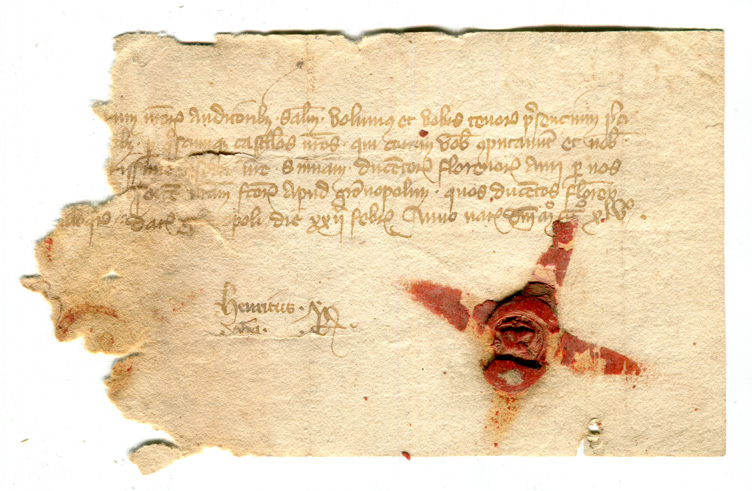
Today we showcase the fragment of a documentary record on paper which has traveled across time and space to find renewed attention.  Among its curiosities, it carries a seal in red wax depicting a male human head accompanied by creatures and part-creatures drawn from the animal, avian, and insect realms.  Now in a private collection, the document was recently purchased online from a seller in Isère, France, not far from its place of origin in or near Grenoble nearly seven centuries ago. Document in 5 lines on paper, dated 22 February 1345 (Old Style), with red wax seal. Image reproduced by permission.Reproduced here by permission, the fragmentary document written in Latin on paper records a transaction conducted apud Gratianopolis (‘at Grenoble’) in the Dauphiné” (now France), with the date of 22 February 1345 Old Style.  The left-hand side of the document has been roughly torn away, with the loss (of uncertain extent, probably about half) of the first part of the lines of text.

Map it Out

The ‘Carte du Dauphiné’ by Christophe (or Nicolas) Tassin (died 1660), printed in 1630, sets the scene.

'Carte du Dauphiné' by Christophe (or Nicolas) Tassin, printed in 1630. Private Collection, reproduced by permission.

‘Carte du Dauphiné’ by Christophe (or Nicolas) Tassin, printed in 1630. Private Collection, reproduced by permission.

[Update:  A Comment by Wales Legerwood on 11 January 2022 observes: “I have this map in my collection. Interesting that the north arrow of the compass rose as drawn on this particular map is engraved pointing in the wrong direction: south. It should be rotated about 180 degrees.”

'Carte du Dauphiné' by Christophe (or Nicolas) Tassin, printed in 1630. Private Collection, reproduced by permission.

‘Carte du Dauphiné’ by Christophe (or Nicolas) Tassin, printed in 1630. Private Collection, reproduced by permission.

[A map printed a few years later by the same cartographer shows another view.]

Govvernement du Grenoble. 'Plans, vues et cartes du Dauphiné' by Christophe Tassin (1634). Via gallica.bfn.fr: https://gallica.bnf.fr/ark:/12148/btv1b53152793f/f2.item.r=Christophe%20TassinDauphine%20Dauphine.

Govvernement du Grenoble. ‘Plans, vues et cartes du Dauphiné’ by Christophe Tassin (1634). Via gallica.bfn.fr.

Seal the Deal

Written in an expert cursive documentary script in brown ink by a single scribe, the 5-line record is ‘signed’ or attested by the double names of Henricus in full (‘Henri’) and the abbreviated Joha[nnes?] (‘Jean’?), accompanied by a tall monogram or cypher to their right.  Both the single names and the cypher are flanked or surrounded by dots, setting them off as names and/or signs as such.

The names and cypher are written in 2 lines by a single hand, perhaps different from the main scribe, in a more compressed upright script.  The names are flanked by dots.  The cypher, both flanked and surmounted by dots, perhaps combines their initial letters h and J in an elegant flourish.

If the names pertain to a single individual, during this period the combination implies a person of some importance worthy of a first and a second name together.  Both the names and the cypher manifest an accomplished hand.  If written by their named individual, they manifest his scribal training to proficiency and, perhaps as well, a commensurate degree of literacy.

Detail of red wax seal on Latin document issued at Grenoble and dated on 22 February 1345 Old Style, with human head in profile facing left. Image reproduced by permission.The names may hold some clue(s) to the meaning of the Device (that is, images) on the Seal, which bears no Legend (that is, inscription) to aid, compound, or delight the process of its decipherment. Perhaps deciphering the one in time may speed the decipherment of the other.

Whoever their owner, the complexity of the design on the Device and the manifest skill of its execution demonstrates an imposing, and perhaps comparably idiosyncratic, identity for this Henricus Joha[. . . ], whose second name could be Johannes (or the like).  It is worth recognizing, however, that, given late medieval naming practices in many regions, the abbreviation for a second name or surname could stand for a place-name, an occupational name, a nickname, or some other appellation, rather than a personal name.

The seal in red wax affixed directly to the page to the lower right of these 2 names depicts within a now-fragmentary roundel the image of a male human head seen in profile with a straight nose, both beard and moustache, and either a conical helmet (albeit without any rim) or an elongated, distorted skull formation.  As it stands on the page, sealed in wax, the head faces downward, but when it is seen upright, the head faces left.

On the page to the left of the names Henri and Jean[?] there appear the remnants in red of a rimmed element and other elements pertaining either to the offset of this seal (for which no folds on the document bear obvious witness) or perhaps to another attestation of unknown identity, now mostly effaced.

Paper Trail

The paper itself carries no watermark, unfortunately, but the surviving remnant of the document is a small portion of the original sheet of paper.  The lines within the paper, however, are very different from those found on later samples, so that the specimen merits interest as an unusual survivor in the history of the development of European paper.

Back-lighting, as seen here, reveals the structure of the lines more clearly.  More posts about this subject, plus a gallery of specimens of European paper across centuries, are in preparation for our website.

Back-lit view of the paper of the Grenoble document of 22 February 1345 Old Style, showing the lines of the paper. Image reproduced by permission.

Wax Lyrical

The red wax seal seen upright, with the male human head facing left. Document on paper issued at Grenoble and dated 13 February 1345 (Old Style). Image reproduced by permissionClose-up of the seal with side-lighting. Image reproduced by permission.Close-up of the seal with lower side-lighting. Image reproduced by permission.Different levels of side-lighting, shown here, reveal more of the details of the Device on the seal.  Its features are curious, to say the least.

At the base of the human neck appears the frontal face (or ‘mask’) of a lion-like creature, which grips in its jaws the base of the long neck of a wide-eyed, winged goose-like creature, seen in profile, crouched beneath the human head.  Fanned plumes or a crest rise(s) above and in front of the head or, it may be, helmet.  Details to the fore of the face seem difficult to discern, perhaps an indication of some wear and age to the seal matrix.  Such ‘blurred’ or fragmented features could suggest that the matrix had received much use, perhaps from being handed down within a family.

A knob-like extension at the crest of the head-or-helmet leads to the base of some formation lost in the damaged ‘apex’ of the field. Behind the rounded back of the head stretches a skinny lizard-like creature, seen from above, rising or crawling above the goose’s head toward the ‘top’ of the scene.  Damage to the seal (or imperfection in its impression) at the right of the lower half of the ‘lizard’ perhaps removed some element in the scene.  The goose’s closed beak clamps onto the remnant of lizard’s right hind-leg.  A curious combination.

The depicted food chain appears to defy biology.  But it does pique curiosity.  Human Neck —> ‘Lion’ Mask —> ‘Goose’ —> ‘Lizard’.  Huh?

Homo sapiens sapiens - Deliberate deformity of the skull, "Toulouse deformity"

«_déformation_toulousaine_»_MHNT (Author Unknown / restoration and digitization. Didier Descouens / Wikimedia Commons / Public Domain)

Skull-Duggery

Curious, too, is the elongated shape of the skull, which might or might not be ‘natural’.  The shape appears deformed, like the cranial deformation of human heads or skulls observed in many parts of the world across the centuries or millenia, whether biological or artificial. Widely ranging examples include many ancient Peruvian skulls (from circa 6000–7000 BCE onward), ancient Egyptian examples from the sphere of the Pharoah Akhenaten (1375–1358 BCE), manifestations in art and the archaeological record through many periods of Mesoamerican Mayan culture, and recognized cases of skulls among East Germanic and Huns peoples in migration in the early medieval period in the West.

[Update: Newly discovered is a ‘Conehead’ skeleton, approximately 2,000 years old, of a woman of the Sarmati tribe excavated at Arkaim, near Chelyabinsk, in the southern Urals.]

Such practices reshaped the heads of some humans, for whatever reasons, perhaps or apparently involving prestige.  Both the evidence and the issues remain subjects of fascination and controversy. For example, not all cases which have been considered as representatives of the habit still qualify, as with a Proto-Neolithic skull from Shanidar (circa 300,000–30,000 BCE), previously believed to comprise the earliest known example but now differently reconstructed. But the amplitude of the bodies of evidence for alteration of the shape of skulls through human intervention provides a source of wonder. The practice of intentional cranial deformation, in different manifestations across the centuries in many parts of the world, could produce a ‘permanently visible symptom of social affiliation’. So prominent a feature is hard to miss.

It seems that, in certain contexts, head shape demarcates membership and hierarchies within social or ethnic groups among larger societies, with some apparent manipulation of shapes in the pursuit of demonstrating, or cultivating, affiliations with groups or individuals in power.  The wide range of observable cases of skull deformation globally has been the focus of medical study and classification, for example by Eric John Dingwall (1931) (freely available in full online) and by Amit Ayer, Alexander Campbell, et al. ‘The Sociopolitical History and Physiological Underpinnings of Skull Deformation’ (2010).

Not all cases of strange skull shapes are deliberate, of course, but, whatever the case here in the wax seal, the outcome — if it represents head-shape rather than helmet (which might, presumably, be removed at will) — would be permanently, irrevocably visible for all to see.  Perhaps for some it would have been a source of awe, if not admiration.

Such aspirations for altering physical characteristics of a specific, and visible, part of the human body seem to have governed, for example, the practices of Chinese foot-binding.  The late survivors of that practice make it possible to interview, as well as to photograph in the flesh, some living witnesses.

In a way, the seal of Henry J. itself might give us a glimpse, close-up, of his particular, if not peculiar, characteristics, along with some choices of his own about elements outside his body (animal, etc.) to express his identity on the page.

A Medieval Case of the ‘Toulouse Deformity’?

« Crane déformé 1905 MHNT » par Didier Descouens — Travail personnel. Sous licence CC BY-SA 3.0 via Wikimedia Commons

Déformation toulousaine – Muséum de Toulouse. « Crane déformé 1905 MHNT » par Didier Descouens (Own work), via Wikimedia Commons

Curiouser for the presence of our seal on a Grenoble document is the persistence of such a custom, altering the shape of the human cranium by artificial distortion, in parts of Southern France until rather recently, as described and illustrated, for example, in the Wiki articles on Artificial Cranial Deformation or Déformation volontaire du crâne.  This ‘deliberate deformity of the skull’ is known as the ‘Toulouse deformity’.  In this style or type of cranial deformation, a tight cap is placed upon the head, or a band is wrapped around the cranium to compress it into a circular shape, which expands upwards into a cone.

The study of ‘Later Artificial Cranial Deformation in Europe’ (1931) observes that such practices in recent centuries centered upon France.  Perhaps the elongated conical shape of the head on the wax seal formed in 1345 bears witness to the custom as a revival or survival of earlier practices, in their transmission variably across time within or across regions.

It’s a Stretch

It seems not inappropriate to consider in this connection the condition — not entirely a predicament — of being ‘stretched tall’, in which Alice found herself to appear in Wonderland (1853), under the heading of Curiouser and Curiouser.

©The British Library Board, Add. MS 46700, pgs 10-11

©The British Library Board, Add. MS 46700, pgs 10-11. Reproduced by permission

“Curiouser and curiouser!” cried Alice, (she was so surprised that she quite forgot how to speak good English,) “now I’m opening out like the largest telescope that ever was! Goodbye, feet!”

The author’s original manuscript of the first version of the text, now in the British Library, illustrates Alice’s elongated form as envisioned by her creator ‘Lewis Carroll’ (1832–1898), whose pen-name itself is a confection.

The similarly elongated neck on the seal enters a world of fantasy and imagination with its combination of creatures somehow integrated with the human world, both seemingly easily and not so much.

Skull-asticism

Whether the image on the seal represents, or is intended to represent, a given human individual rather than some fanciful being, the combination of creatures clustered around his head suggests a puzzle or word-play.  Within the complex, wide-ranging world of medieval seals and their molds or matrices, there were multiple forms of presenting, or combining, images of one kind and/or another, with or without text.  Many other medieval seals, too, draw upon non-heraldic structures — that is, elements not specifically assigned (as yet) in the time-honored code of heraldry, according to specific rules for devising heraldic coats of arms of rank for persons, families, dynasties, towns, cities, and other organizations.

Non-heraldic forms on seals can indicate in less formally codified, but not necessarily less rigorously chosen, elements to indicate, or to suggest, the identity, name, occupation, preoccupations, predilections, or other characteristics of the owner of the seal.  Many cases, which we in the Research Group on Manuscript Evidence have had the opportunity over recent years to study in detail on site over time, occur within the remarkable selection of medieval seal matrices and documents assembled in the Collection of our Associate John H. Rassweiler and now presented in part as the Rassweiler Collection Online.

The red wax seal seen upright, with the male human head facing left. Document on paper issued at Grenoble and dated 13 February 1345 (Old Style). Image reproduced by permissionThe ensemble in Henricus J.‘s seal confirming a transaction in Grenoble in 1345 may, for example, function as a form of rebus, with an allusion to the owner or his identity in some way, or as the visual illustration of some proverb, in a motto for his or anyone’s consideration.  Such practices are not uncommon in shaping the Devices of medieval European seals.

Or, could we say, such practices may be most uncommon, although widespread.  Common and Uncommon:  that combination could be right for this seal’s Device.  Its designer may have smiled to think of the curious combination.

Within the genre, this Device seems remarkably ingenious.  The script of its owner’s ‘signature’ could indicate that he was well educated.

Dare we say Cerebral?

Its answer, or solution, may yet come to light.

You Think?

More research might illuminate the context of this document, reveal more of its original text, identify the person(s) involved in its record and attestation, and provide the key to its curious seal.  Perhaps you could help with suggestions and information.

We invite you to contribute to the exploration – and its adventure.

Please leave a  Comment here, Contact Us, or join the conversation on our Facebook page.

P. S.  In the conversations about this Post, one of our friends called it a case where ‘Codicology Meets Craniology’.  Cool.

*****

[Published on 10 June 2015, with updates]

Tags: 'Toulouse deformity', 22 February 1345 Old Style, Alice in Wonderland, Artificial cranial deformation, Cranial deformation, Grenoble, History of Paper, Medieval Dauphiné, Medieval Latin documents, medieval seal, Red wax seal
No Comments »

The Mass of Saint Gregory, Illustrated

April 7, 2015 in Manuscript Studies, Photographic Exhibition

A Solitary Leaf, Detached

[Published on 7 April 2015, with updates]
Mildred Budny (see Her Page) reflects on a medieval manuscript leaf and its clues as a detached artifact.  This post is one of the first in our blog on Manuscript Studies, for which there is now a Contents List.

Detail of the head of Christ. Photography © Mildred Budny

Christ’s Head, with Crown of Thorns

Detail of Veronica's Veil with the imprinted Face of Christ. Photography © Mildred Budny

Veronica’s Veil


On the occasion of Holy Week, Good Friday, and Easter (Western and Orthodox) 2015, we post a new set of photographs of a detached leaf from a 15th-century prayerbook of some kind, as yet unidentified.  Perhaps other parts of the book survive elsewhere.

The Image

Illustration of Gregory Mass, cropped to frame. Photography © Mildred Budny

The Mass of Saint Gregory

The small-format vellum leaf carries a full-page, framed illustration of the visionary Mass of Saint Gregory the Great (pope from 590 to 604).  It represents a scene derived from an early account of his life and transmitted through later sources.

Here, the part-length upright figure of Christ, surrounded by many of the Instruments of His Passion as well as the disembodied heads of Tormenters, Traitors, and Others involved in those processes, arises from the open top of a sarcophagus behind a draped altar, which stretches the full width of the scene, as He appears to the tonsured and richly vested celebrant of the Mass.  Seen from the back, turning his head toward the right, and lacking a halo, the part-length celebrant, who understandably raises both hands in wonder, might represent not only Gregory himself but also any metropolitan (or above) entitled to wear the pallium over his chasuble.  With such cues, the image appears to stand, and to resonate, within, across, and outside time.  The niche-like frame, with straight sides and a curved top, encloses the votive image with a rimmed gold band.

Both the details of the subject and the style of the skillful illustration point to a place of production probably in Flanders or Northern France in the early fifteenth century.  The subject of Gregory’s Mass enjoyed wide popularity in the late Middle Ages, especially at this time, with depictions in various media (including manuscripts) encouraging meditation upon Christ’s Passion and its implications.  Surveys of the transmission of the subject and suggested reading lists for further information appear freely online for example in German, French, and English, dedicated to somewhat different audiences and interests as well as languages — much as the subject itself could do in its medieval and early modern spheres.

An example of an illustration fit for a king, likewise with a bright blue background, painted circa 1500 in Tours, France, by the expert artist Jean Poyer, precedes the Seven Prayers of Saint Gregory in the Hours of Henry VIII, accompanied in its reproduction online by an exemplary curatorial description of the nature, history, and setting of the subject.  Although less richly and expertly painted, with fewer human “witnesses” present, and deprived of its former manuscript context as well as the name of its artist and its place of production, “our” leaf apparently belong to a similar version of the genre, and perhaps to a similar place in its own book.  Within Books of Hours, the illustration of Gregory’s Mass often, fittingly, accompanied the Hours of the Cross or the Seven Penitential Psalms as well as “Gregory’s Prayers”.

Surveys of the surviving medieval corpus of materials with representations of the subject and variations upon its theme, such as the Instruments of the Passion (or Arma Christi) on their own, include the German Gregorsmesse database and the Index of Christian Art at Princeton University, whose resources and staff on site have aided the study and decipherment of this case.  Without identifying inscriptions, the interpretation of some objects among the Instruments and the Persons among the scattered heads depend upon their characteristics, attributes, and location, for example as some pairs of heads may depict a particular scene or episode.  For a contemporary audience, the various forms of headdress, expression, and demeanor would have conveyed clear clues which to some extent have disappeared from our own awareness of modes of social presentation, given the extent to which customs, fashions, and expectations have changed over the centuries.  Fortunately we might find help, for example, in expert guides (for example here) to the depiction of forms of dress in manuscripts in France and the Netherlands during the period of production and early ownership of “our” image.  Among many variants of the scene, cases with similar choices of objects and heads appearing in Gregory’s vision include this one.

The Instruments and Individuals

As in many cases, here the Instruments and Participants in the Passion seem to be scattered across, or clustered upon, the background, without identifying inscriptions, as if they challenge the viewer to discern their identities correctly, somewhat like a Riddle or Rebus.  Set for the Mass, the altar table carries an opened missal-type book, poised upon a lectern, with double columns of indecipherable text per page; two silver candlesticks supporting tall, unlit white candles; and a gold chalice standing upon a spread corporal, which partly covers a rimmed gold paten.  Below the short front of the plain white altarcloth, the pale foreground flanking the celebrant is decorated with branching, scrolling foliage, perhaps emulating an embroidered or brocaded altarfront.

Illustration of Gregory Mass, cropped to upper portion of scene. Photography © Mildred BudnyAs for the Instruments, how many do you see?

I count the centrally placed tau-shaped True Cross, surmounted by its Titulus, draped with a garment (presumably the Shroud or seamless Garment, not the purple Robe), and flanked by the Ladder for the Deposition at the left and the Column for the Flagellation at the right.  The Crown of Thorns rests upon Christ’s Head.  The rim of the Sarcophagus appears as an extension beyond the altar table.  Between the Cross and the Ladder stretches the Veil of Veronica, bearing the imprint of Christ’s closed-eyed frontal Head. Atop the Column perches the Rooster, facing left, for Peter’s Denial.  The Whips (Scourge and Switches) are crossed, right over left, halfway down the front of the Column, with a dangling pair of romal reins of another Whip (or two) which descends from the base of the Switches to the top of the Sarcophagus.  Between the unbroken rungs of the Ladder, which leans upon the Cross, rise the long shaft of the Lance and reed of the Sponge.  Between their tops hover three Nails for Christ’s Wounds.  Suspended, as if scattered, upon the background in counterclockwise formation, there appear three more-or-less identical balustraded Vessels (perhaps buckets, salt-cellars, censers, and/or covered Jars for the gall-with-vinegar and the anointing myrrh); a Hammer and set of Pincers for attaching and removing the Nails; three stacks of Silver Coins for Judas’s price of betrayal; three silver Dice for casting lots for the Robe; the Scimitar for severing the High Priest’s Servant’s Ear; a Lantern for the Arrest; and a Pitcher or Ewer upon a Platter or Basin for service perhaps severally at the Last Supper, the Washing of the Hands, and the gathering of Christ’s Blood.

Seven human Heads, male and female, hover in the background.  Those in profile appear to scowl or scoff.  Five heads wear headgear. The base of each neck has the rounded neckline of a garment.  A helmeted, short-haired, clean-shaven soldier (presumably Longinus) rises above the Veil.  Below it, a Mocker or Spitter confronts Christ’s Head, with a brimmed “bag hat”(capeline) and projected, pointed beard which abuts Christ’s hair.  To the right of the Column, more-or-less in line with the Veil, there appears a woman wearing a neat white wimple (perhaps Veronica, the Servant Girl at Peter’s Denial, or Mary).  In a row to the right appears a bearded, long-haired head tilted outward below the Ewer-with-Dish (probably Christ at the Betrayal, rather than Peter at either his Denial or the Notice Thereof) and the scowling Judas wearing a pendant moneybag at his neck.  In a vertical row beside the upright Sword; a glowering figure wearing a high hat with a bilobed top (probably the High Priest Caiaphas) and an imposing frontal figure  with an elaborate headdress or diadem (presumably Pilate or, rather, Herod).

Wearing a loincloth, a double-pointed beard, and long, straight hair, Christ opens his eyes and crosses his hands in front of his bare chest, with rays of light as a cross-nimbus streaming from his head.  Without visible Wounds, He emerges alive through or despite the Crucifixion.  Similar rays extend both from the version of his Head on Veronica’s Veil and the Head of Judas’ Companion.  Some other depictions of the Gregory Mass endow other figures than Christ (notably Gregory) with rays of light, so that this case could designate or imply Peter (compromised at the Denial, but rehabilitated and raised to sainthood through subsequent events).  However, the features of face, hair, and beard, the rays, and the positioning appear here to designate Christ at the Moment of Betrayal, with a prescient set of rays of light which also pertain to Veronica’s Veil.  Wedged between the Ewer, the branching Scourge, and the Lantern, this Companion seems to be hemmed in for the events of Holy Week leading to the Crucifixion and the Re-emergence from the Tomb.  Such tokens imply that the “narrative” of the imagery follows a sequence that moves, or might move, from moment to moment, from episode to episode, from implement to implement, and from import to impact in a cycle which follows varying directions and possibilities from top to bottom, left to right, right to left, around and about, and back again, as contemplation, reflection, and reconsideration might direct.

The choices among which Instruments to include, and how to represent them, opt for plenitude as to number of Instruments (among representatives of the genre) and for triplicate in series of objects.  That there are 3 Nails (for the spread Hands and the overlapping Feet), 3 similarly-shaped Vessels (perhaps for different types of materials more or-less-viscous and more-or-less vicious applied at different stages of the proceedings), 3 piles of the 30 silver Coins, and 3 Dice, reiterates an emphasis upon trifold entities.  That is, in sum, a Trinity.  Such emphasis could govern the focus for this illustration, its intended viewer, and, perhaps, within (or at) its full volume.

The Leaf

The leaf now belongs to a private assemblage of manuscript and early printed materials.  It was purchased, on its own, from a renowned bookseller about 25 years ago.  A black-and-white reproduction of the illustration appears in print here (first published in 1995), page 229.

Beginning several years ago, I have had the opportunity to examine, photograph, conserve, and re-frame the fragment, as part of a long-term project described elsewhere on this website.  This work included the preparation of photographs with different lights, backgrounds, cameras, and lenses, experimenting with different methods and responding to various aspects of the artifacts themselves as the research developed.

The time has come to illustrate the leaf, on both sides, and in detail, as a contribution toward the study of this artifact, its genre, and the group of medieval and early modern materials to which it now belongs.  In my Handlist of those materials, this leaf is Number 13.  [Future posts, starting here, describe the Handlist and its components.]

First, to show its scale and the brilliance of its colors, including gold, we exhibit an image of the leaf in full, with both a standard scale (both inches and centimeters) and color-guide.  The presence of the color guide within the image can demonstrate — even at first glance — the degree of fidelity of the color reproduction which this shared method of digital transmission permits (or not), as it passes from screen to screen, from device to device, and from viewer to viewer.

Full-page, framed illustration of the Mass of Saint Gregory on a detached leaf from a prayerbook. Photography © Mildred Budny

The Full Extent of the Leaf, plus Scale and Color Guide

Although the “interesting” part of the leaf — for those who (like Alice) prefer their books to have pictures — would be the illustrated side, it is worth showing the other side, too, for what it’s worth.

 The Front and Back, Revealed

Blank side of leaf with illustration of the Mass of Saint Gregory. Photography © Mildred Budny

Recto

Leaf with Gregory Mass illustration on black background. Photography © Mildred Budny

Verso


It is worthwhile to see what the leaf, in all its surviving glory, both has and does not have.  No text, not a bit, apart, that is, from the 20th-century seller’s code in pencil at the bottom left (‘4327Ø3315o67W0’), the schematic lines of “text” on the celebrant’s opened book, and the partly effaced Monumental Capitals of the Latin Titulus (“Label”) of the Cross, with the acronym INRI abbreviating Iesus Nazarenus Rex Iudaeorum (“Jesus the Nazarene, King of the Jews“).

Gregory Leaf on Black cropped to top of cross reduced

The Titulus

So, apart from that Titulus, the leaf itself carries no original text as such to indicate what language(s), form(s) of script, numbers of lines of text per page, and specific genre of prayerbook pertained to the manuscript to which this now-solitary leaf once belonged, nor the place which it held within the sequence of the book, apart from somewhere in the “middle” and within a binding. The size of the leaf implies that the main text occurred in single columns.  The language may have been Latin and/or a vernacular.  The professionalism of the painted illustration and the use of gold leaf and powdered gold among its pigments indicate a production of some quality and expense.  Some details of the execution — like schematic facial features and the overshot outlines of the outer contours of the frame as they rise from the left-hand side into, and partly over, the curved top of the frame — demonstrate an approach somewhat below the highest order of meticulous craftsmanship and artistry.

For a while when I first encountered the fragment, it could be viewed only behind the glass and mat of the gilded frame into which its owner had placed it. This setting allowed a view only of part of the illustrated side, “cropped” by the window of the mat to a narrow margin around the arch-shaped border of the scene.  (As you see at the top of this Post.)

The considered decision to remove the fragment from the frame, to release it from the non-archival mat and backing, to conserve and photograph it, and to re-frame it (with archival materials) allowed the opportunity to see the full extent of the leaf, that is, insofar as its historical spoliation permits.

Clues

Thus revealed are the surviving extents of the margins, the notched edge of the stitching line at the former spine of the leaf, and consequently the former layout of the leaf as recto and verso.  It is clear that the originally blank flesh side and the illustrated hair side of the animal skin were turned to the front and back respectively. Within the volume, the illustration faced the opening of its companion text, after the “blank” page at the end of the preceding text.

Orange pigment offsets onto the blank recto from the formerly adjacent leaf (now lost). Photography © Mildred Budny

Orange pigment offsets from the (lost) preceding verso

Detail of recto lower edge with red stain and inner edge with stitching groove. Photography © Mildred Budny

Stitching notches (bottom here) and red stain traces (at right)

Revealed, too, are some other tell-tale features. They reveal aspects of the processes of production and characteristics of the volume apart from the image itself.

For example, the offsets of a pair of curved segments of bright reddish orange pigment on the “blank” recto migrated from the formerly adjacent page, perhaps part of an initial in an upper line of the text.

The faint traces of reddish stain at the lower edge of the leaf indicate colored treatment which it must have shared with the other leaves in the rest of the closed book-block.

Production prickings to lay out the contours of the frame and yellow "gunge" on the recto of the leaf. Photography © Mildred Budny

Pricking holes lower on the frame

Detail of "blank" recto with show-through from the illustration and preliminary pricking holes to delineate the contours of the border. Photography © Mildred Budny

Pricking holes for the frame

The closely spaced pricking holes made to delineate the outer contours of the frame and some other parts for the illustration have pierced the leaf, with partly blackened edges from corrosion of the metallic traces left by the sharpened implement.  On the “blank” side, these holes emerge more clearly into view.  The yellowish “gunge” comes from an unknown stage in the history of the fragment.

The clear background revealed between the surviving portions of the gold leaf, where other portions have flaked or lifted away, indicates the uncolored form of adhesive used in its application.  In addition, the illustration employs powdered gold pigment, adding highlights and rays of light.

The pair of darkened stains at the outer edge of the leaf may bear witness to clasps for the volume. The notches along the inner edge, severed by an uneven cutting line from its former stub or adjacent leaf in its original bifolium, demarcate the stitching stations for the binding, in accordance with widespread medieval bookbinding practices, in this case 5 stations.

Detail of cross-shaft, rays of light, and blue sky or background in the illustration of the Mass of Saint Gregory. Photography © Mildred Budny

Layers of pigment, including powdered gold

Such traces could help to confirm the identification of other parts of the same volume, should they survive.  In the absence of a specimen text-page, this leaf must await other methods of discovery than, say, the convenient and widely employed searching method to reunite (even if only virtually) books and their fragments by number of lines per column and per page.

It is a pity that this leaf has been forcibly removed from its original manuscript setting, presumably for commercial purposes, but it is useful to recognize that, at least, the despoiler did not trim away all traces of the former margins and sewing line.  In such ways, the leaf itself, when revealed in the processes of conservation, photography, and uncropped reframing, can show clues about its former book that the cropped image alone fails to do.

Set “free” in such a way, it might direct our research more surely to its former “home”, even if that reunion might have to remain within our imagined or “virtual” reconstruction.  Such a process could befit the aims of the image, intended to evoke reflective meditation upon the nature and significance of its subject-matter across the instances of time and place.

Gold Leaf partly lifted. Photography © Mildred Budny

The Fragility and Tenacity of Gold Leaf

*****

Photography © Mildred Budny
High-quality images suitable for reproduction may be available upon request to director@manuscriptevidence.org.

Perhaps you know where other parts of the original manuscript may survive?  We would be glad to hear from you.
Please leave a Comment here, Contact Us, or enter into a conversation with us on Facebook.

*****


Tags: Archaeology of Manuscripts, Budny Handlist, Instruments of Christ's Passion, Manuscript Photography, Mass of Saint Gregory, Medieval Manuscript Fragments
No Comments »

Seminar on the Evidence of Manuscripts (March 1990)

February 11, 2015 in Events, Manuscript Studies, Seminars on Manuscript Evidence, Uncategorized

“Facsimiles, Diplomatic Texts and Editions”
19 March 1990

In the Series of Seminars on the Evidence of Manuscripts
Mainly at the Parker Library, Corpus Christi College, Cambridge

Cover for "Selected Pages from Anglo-Saxon Manuscripts: A Palaeographical and Textual Handbook" by Mildred Budny, Leslie French et al.This seminar demonstrated the current state of The Palaeographical and Textual Handbook, in course of preparation as a teaching text for manuscript studies.

'Facsimiles, Diplomatic Texts and Editions' Seminar Invitation 17 March 1990.Invitation in pdf here.  Note the addition of the sign of an opened pair of scissors to cue the motion for separating the RSVP slip from the single-page Invitation Letter.  The sign represents part of the evolution of the form for the Invitation Letters of the Series.

[First published on 11 February 2015, with updates]

The seminar presented the work in progress at the Library on a series of sample facsimiles of pages from early medieval manuscripts, with transcriptions and commentaries, to teach postgraduate students the elements of manuscript study.  We began with an account of its aims, with a demonstration of the range of representations of the selected pages or facing pages.

The series proceed from photographic facsimile of the original at original size (with scale and colour guide), through computerised representation of the layout of the texts upon its page(s), to transcription, edition, and translation, with commentary.   Then we sought “comments from some of the younger members who remember more clearly their problems on first approaching materials in manuscript . . . and from others, particularly from those whose expertise lies outside textual material, but who use it in their work.”   The original manuscripts were also available for comparison.

We examined the cases selected so far for this approach:

  • MS 12 (the Cura Pastoralis in Old English, with glosses by the ‘Tremulous Worcester Hand’)
    [= Number 13 in the Illustrated Catalogue and now online]
  • MS 111 (Old English manumissions)
    [= Number 38 in the Illustrated Catalogue and now online]
  • MS 173 (Annal of 755 from the Anglo-Saxon Chronicle)
    [= Number 11 in the Illustrated Catalogue and now online]
  • MS 183 (Bede’s Life of Saint Cuthbert in prose and verse)
    [= Number 12 in the Illustrated Catalogue and now online]
  • MS 197B (Latin Gospel Book)
    [= Number 3 in the Illustrated Catalogue and now online]
  • MS 326 (Ealdhelm poem in Old English and opening of De laude virginitatis)
    [= Number 21 in the Illustrated Catalogue and now online]
  • MS 422 (verse Solomon and Saturn)
    [= Number 44 in the Illustrated Catalogue and now online]

Invitations were sent to:

David Wilson, Christine Fell, Mildred Budny, Nicholas Hadgraft, Patrick Wormald, Richard Sharpe, Leslie Webster, David Parsons, Kathryn Lowe, Carol Hough, Richard Gem, Timothy Graham, James Graham-Campbell, Donald Bullough, Leslie French, Andy Hopper.

Present:

Carmen Acevedo
Mildred Budny
Donald A. Bullough
Christine Fell
L.J. French
Timothy C. Graham
Nicholas Hadgraft / Nicholas Hadgraft
Alice Harting–Correa (afterward Alice Correa–Bullough)
Carol Hough
Kathryn Lowe
John Mollon
R.I. Page
Chris Turner
Leslie E. Webster
David M. Wilson

A typescript report of this Meeting of the Seminar was prepared by Mildred Budny.  It survives in the Research Group Archives.

'Facsimiles, Diplomatic Texts and Editions' Seminar Invitation 17 March 1990.

Accounts of the progress on the Handbook appear in the Annual Reports to the Leverhulme Trust.  (See our list of Publications.)  A summary account of The Palaeographical and Textual Handbook appeared in print:

Mildred Budny’s description of
‘The Research Group on Manuscript Evidence: Contributions to the CORPUS Project’
Old English Newsletter, 28:1 (Fall 1994), A-8–A-23, at page A-9 and Plate 4 on A-20
now available online

Cover for "Selected Pages from Anglo-Saxon Manuscripts: A Palaeographical and Textual Handbook" by Mildred Budny, Leslie French et al.

*****

Invitation to '16th-Century Interventions in Anglo-Saxon Manuscripts' Seminar on 13 April 1990The next Seminar considered
“Sixteenth-Century Interventions in Anglo-Saxon and Related Manuscripts”
(Parker Library, 13 April 1990).

Most of the Seminars on the Evidence of Manuscripts considered manuscripts, types of text, approaches to scripts and layout, and challenges for transcribing, editing, translating, and analysing the evidence upon the pages, chosen for the Handbook, which engaged our collective attention throughout the rest of the Research Project and, to a limited extent, beyond.

With the requirement at short notice to find a different base for the Research Group on Manuscript Evidence following the completion of the Project, rather than the base that had been contracted, some intended publications fell into disarray for a while.  The Handbook was one of them.  Now, in digitising and recording more of the Research Group’s records on our website, we can present a clearer representation of the vision of that plan.  Watch this space.

*****


Tags: Anglo-Saxon Chronicle, Anglo-Saxon Manumussions, Bede's Life of Saint Cuthbert, Cambridge-London Gospels, Corpus Christi College MS 111, Corpus Christi College MS 12, Corpus Christi College MS 173, Corpus Christi College MS 173B, Corpus Christi College MS 183, Corpus Christi College MS 197B, Corpus Christi College MS 326, Corpus Christi College MS 422, De laude virginitatis, Old English Pastoral Care, Old English poem Ealdhelm, Palaeographical and Textual Handbook, Parker Library, Seminars on Manuscript Evidence, Solomon and Saturn
No Comments »

2014 Seminar on “Manuscripts & Their Photographs”

December 12, 2014 in Events, Manuscript Studies, Photographic Exhibition

Initial P of Prayer in Book of Hours, with Photography © Mildred Budny

Photography © Mildred Budny

Close Up & Up Close

On Tuesday, 9 December 2014, we held a seminar at the Index of Christian Art of Princeton University.  With examples on hand, Giles Constable and Mildred Budny offered reflections on the processes involved in

1) assembling over decades an ‘accumulation’ — not exactly a deliberate ‘collection’ — of medieval manuscripts (or fragments thereof), documents, and early printed materials, and

2) photographing them over several years, in stages and under varied conditions, for the record and for research, sometimes along with conservation work (where called for in certain cases).

Read the rest of this entry →

Tags: Book of Hours, Index of Christian Art, manuscript fragments, Manuscript Photography, manuscripts reused in bindings, medieval seal, Philip II Count of Savoy, Vitae Patrum
2 Comments »

The Bouquet List: A Gathering of Books

October 31, 2014 in Book & Exhibition Reviews, Index of Christian Art, Manuscript Studies, reviews


"The Bouquet List: A Gathering of Books", a review by Mildred Budny with motto: "A Rose by Another Name is a Bouquet of n Circles" (Anonymous)

The first in a series of reviews by Mildred Budny

This review celebrates research by and partly by Trustees and Associates of the Research Group on Manuscript Evidence (RGME) by showcasing some recent publications in print and online.  The title alludes to the widespread medieval genre of florilegia (“gatherings of flowers”), which collect selected extracts of texts from a larger body or bodies of work. Such compilations, also called “Commonplace Books” or “Miscellanies” — whether deliberate, haphazard, or serendipitous in their assembly — have figured in various RGME workshops and publications, and continue to offer challenges for examination.  The title also takes inspiration from the term bouquet in mathematics, wherein, according to some definitions, a “rose”, also known as a “bouquet of n circles”, yields a “topological space” by “gluing” together a collection of circles (which might take various shapes such as loops) along a single point (Bouquet of circles).  The mathematical term ‘Rose’ is defined at Wolfram MathWorld. Figural examples appear here:  Bouquet of n circles via Tikz.

roses croppedThe group of flowering works selected here represent a sampling of our collective and individual interests, which converge and overlap to various extents.

First I salute the most recent publications in the long series issuing from conferences held by the Index of Christian Art at Princeton University.  This University, through its Departments and Programs, including the Department of Art and Archaeology, the Index, and the Program in Medieval Studies, has been the most frequent host and co-sponsor for symposia of the RGME since our arrival in Princeton in 1994.  The publications are edited by our Honorary Trustee Colum Hourihane, with contributions by some of our Trustees, Officers, and Associates.  They are:

  • Patronage:  Power & Agency in Medieval Art (Princeton, 2013, ISBN 978-0-9837537-4-2), issuing from the 2012 conference celebrating the 95th anniversary of the foundation of the Index, and
  • Index of Christian Art Online Publications (generously available without subscription), starting with the first two, which record the annual conference proceedings devoted to The Digital World of Art History
    [originally [I] (July 12th, 2012), now here] (July 12th, 2012) and
    [originally II: Theory and Practice, now here] (June 26th, 2013).

The fourteen papers in the Patronage volume consider diverse materials, regions, dynamics of creation/commission, patterns of patronage, and issues of interpretation.  Cases poised upon textual evidence — occurring in manuscript, documentary, and monumental forms — are plentiful.  They include Elizabeth Carson Pastan’s nuanced assessment of “The Bayeux Embroidery [not a Tapestry!] & Its Interpretative History” particularly within the sphere of its original creators and audience; Nigel Morgan’s reading of “Patrons & Their Scrolls in Fifteenth-Century English Art” through text- or speech-scrolls in manuscripts, stained glass windows, and monumental brasses; Lucy Freeman Sandler’s sensitive assessment of “The Bohun Women & Manuscript Patronage in Fourteenth-Century England”, as revealed through the stages of “commissioning, conceiving, executing, receiving, and bequeathing”, and our Trustee Adelaide Bennett’s reconsideration of “Issues of Female Patronage: French Books of Hours, 1220–1320”, with an instructive analysis of the traces of women’s reading habits and instruction.  The ensemble offers a series of explorations into both charted and hitherto uncharted waters in the vast ocean of medieval materials which came into being through the aid, impediments, guidance, inspiration, and vision of patronage in many forms.

Among the multiple worthy subjects considered in the two e-volumes of The Digital World of Art History (with twenty-two papers), several are firmly central to RGME research activities.  For example, jointly Maria Oldal, Elizabeth O’Keefe, and William Voelkle (Volume I, chapter 4 = I.4) present a guide to the Corsair database of the Pierpont Morgan Library, which freely provides “unified access to over 250,000 records for medieval and Renaissance manuscripts, rare and reference books, literary and historical manuscripts, music scores, ancient seals and tablets, drawings, prints, and other art objects”.  Gretchen Wagner offers a trenchant survey of the challenges and possible solutions facing the issues of “Copyright and Scholarship in the Arts” (I.5) in a fast-changing world.  In “The ‘Art’ of Digital Art History” (II.7), focusing upon her experiences in assembling a major report on Transitioning to a Digital World for the Kress Foundation, Diane Zorich reflects as a consultant on the nature and potential of digital strategies and issues involving cultural heritage in cultural and educational institutions, principally major museums.  Members of the Staff of the Index of Christian Art – Judith Golden, Jessica Savage, our Associate Henry Schilb, Beatrice Raddan Keefe, and Jon Niola – contribute reports (in I.10–14) of its iconographic and bibliographic work, its collaborative projects accomplished or in preparation, and its other resources.

Kandice Rawlings (II.4) describes the varied history and development of the Oxford Art Online encyclopedia — available through subscription — about anything and everything connected with art, also said to provide “access to the most authoritative, inclusive, and easily searchable online art resources available today”.  As a contributor to the original printed form, that is, the Grove Dictionary of Art (1996), I find the story of this enterprise instructive as a vigorous case of transfer from an earlier age of publication, in book form, to the present internet industry of cumulative and composite forces able and willing to overtake, update, expand, and gain, while offering valuable research resources to privileged subscribers.

ShelfMarks 1 as booklet 23 Oct LJF page 3 really with images as a pair

Anglo-Saxon double-sided seal-matrix of the thegn Godwin (front) and the nun Godgytha (back), made of walrus-ivory in the first half of the 11th century C.E.  The front of the handle depicts the Trinity resting upon a prone human figure.  The coin-like roundels on obverse and reverse depict the part-length male and female figures identified by Latin inscriptions, ready for sealing wax.  Photographs © Genevra Kornbluth, reproduced by permission.  A detail appears here, with more information here.  Original: London, British Museum, M&ME 1881,4-4,1.

The report by our Associate Genevra Kornbluth on “Kornbluth Photography: From Private Research to Private Archive” (II.4) describes the creation, many years in the making, of her expert photographic archive, now available, with honorable copyright conditions, on her website.  Its “Historical Archive” gathers images of objects or monuments arranged by multiple indexes (culture/period, chronology, iconography, medium, object type, location, and artist), including text-based works such as manuscripts, charters, seals and matrices, relic labels, book covers, and inscriptions.

I first met Genevra years ago, when she was conducting research for her Ph.D. dissertation, published as Engraved Gems of the Carolingian Empire (Penn State University Press, 1995, ISBN 978-0-271-01426-5), and I have followed the progress of her work with care, so that I have long been aware of the beauty of her detailed photographs of carved rock-crystal gemstones and many other objects of complexity.  Like her, I have devoted much time to photographing original source materials — in my case mostly manuscripts and other written works — not only for my own study, but also for that of others, already in the age before digital methods paved the way for widespread access, now at least on screen and often in high-definition.

As a practitioner, I can attest that the active photographic process (not only as product) of close study of the works themselves – including manuscripts and other written works – might reveal features otherwise unsuspected.  For the gems, the microscopic traces of carving methods, with tools of distinctly differing points, allowed Genevra to distinguish between Byzantine and Carolingian works, in a valuable contribution to knowledge of their identifying characteristics, with photographs recording the features for all to see.  While Genevra’s contribution to the Index volume freely provides a sampling of her photographs we may illustrate other examples from her website here, generously with her permission.  Thus it can be possible to look through, as it were, the eyes of the expert examining the sources directly and closely.

ShelfMarks 1 page 4 really images as a pair

Rock crystal (quartz stone) intaglio, mid-to-late 9th century, seen from the smooth front and the engraved, incised back of the stone.  The upright, cross-bearing “St. Paul the Apostle”, is identified by Latin inscription.  Photographs © Genevra Kornbluth, reproduced by permission.  An oblique view appears here.  Original: Paris, Bibliothèque Nationale de France, Cabinet des Médailles, H3416.

Now, to the bouquet I respectfully add the final publications by our RGME Associate Malcolm B. Parkes, who died in 2013 at the age of eighty-three.  A memorial by our Trustee David Ganz appears here:  Malcolm B. Parkes., Palaeographer (1930‒2013.  A collection of Malcolm’s essays in 2012 (complementing an earlier collection in 1991) has now followed the printed version in 2008 of his Lyell Lectures.

  • 3) M. B. Parkes, Their Hands Before Our Eyes:  A Closer Look at Scribes.  The Lyell Lectures Delivered in the University of Oxford, 1999 (Ashgate Publishing, 2008, [formerly “http://www.ashgate.com/isbn/9780754663379” but now] ISBN 978-0-7546-6337-9).
  • 4) M. B. Parkes, Pages from the Past:  Medieval Writing Skills and Manuscript Books, edited by P. R. Robinson and Rivkah Zim (Ashgate Publishing, 2012, [formerly “http://www.ashgate.com/isbn/9781409438069” but now ISBN 978-1-4094-3806-9).

These works record and preserve multiple fundamental, often ground-breaking, insights into the nature of scripts in relation to the process of writing, the minds at work, and the voices of the languages, authors, and speakers which the scripts transmit.  The plates offer examples for study and instruction.  We are grateful for their presence, while we lament the passing of their author, a kind friend and teacher.

This requirement calls forth the wistful reflection that some florilegia transmitted from the past may represent cherished recollections of previous living voices and vivid moments of instruction — of which only parts of the originally full representations may yet endure, both in memory and in “print”.  We treasure these traces.

For the next issues of the Newsletter, the RGME invites suggestions and donations for books to review.  While this first “Bouquet” centers upon publications by, or with contributions by, contributors to the Research Group on Manuscript Evidence, we welcome works by others too.

GenEld_1

Genoels–Elderen openwork ivory diptych made circa 800 C.E. — perhaps formerly the paired covers for a sacred book or a writing tablet.  Framed within geometric and interlace borders and accompanied by Latin inscriptions, the cross-bearing Christ, flanked by angels, stands upon the Beasts (with Bird in the form of Rooster), while His mother Mary experiences both the Annunciation with Gabriel and the Visitation with Elizabeth, all with attendants.   Photograph © Genevra Kornbluth, reproduced by permission.   More views and details here: Genoels Elderen.   Original: Brussels, Musées royaux d’Art et d’Histoire, Musée du Cinquantenaire, no. 1474.

Roses according to n=6, n=7, and n=8, laid out by Mildred Budny

*****

This review forms part of the first issue of the Research Group Newsletter, ShelfMarks.
An e-version of this issue, with ShelfTags for ShelfMarks and some extra images, appears here.
The full issue appears here: ShelfMarks, Volume 1, Number 1 (PDF).
You might Subscribe here.

Masthead for ShelfMarks, the newsletter of the Research Group on Manuscript Evidence, laid out in RGME Bembino

*****

Tags: Florilegia, Index of Christian Art, Manuscript Illumination, Manuscript Photography, Manuscript studies, Palaeography, Photography of Works of Art, Roses in Mathematics
1 Comment »

« Older Entries
Newer Entries »
  • Top
©2024 Research Group on Manuscript Evidence.


is proudly powered by WordPress. WordPress Themes X2 developed by ThemeKraft.