“Artists, Activists, and Manuscript Evidence”
Research Group on Manuscript Evidence
Permanent Panel
at the
Midwest Modern Language Association (M-MLA)
2017 Convention
Cincinnati, Ohio
November 9-12, 2017
Following the successful Call for Papers, we announce the program for our sponsored Panel at the 2017 Convention of the M-MLA. Organized by Justin Hastings, this panel forms the second year of our participation at the Annual Convention of the M-MLA. Last year’s pair of panels, organized by Justin, are described in the 2016 M-MLA Report.
The panel planned for the 2017 Convention explores a comparably broad range of subjects. In keeping with the 2017 M-MLA Convention’s theme of “Artists and Activists,” the Research Group on Manuscript Evidence sponsors a panel on manuscripts and printed books and the illuminators, scribes, editors, and other artists who created them and the scholars and readers who used or disseminated them. The session explores multiple subjects and approaches, including textual, art historical, codicological, and paleographical.
*****
Our 2017 Panel
Make It and/or Break It:
the Material Evidence
of Creating, Using, Disseminating, and Dispersing Manuscripts
Sponsored by: Research Group on Manuscript Evidence
Organizer and Presider
Justin Hastings (Loyola University Chicago)
Presenters
1. Laura Melin (University of York, United Kingdom)
“The Coronation Roll of Edward IV and Its Audience”
Abstract:
My paper will focus on the artwork on the Chronicle of the History of the World from Creation to Woden, with a Genealogy of Edward IV (Free Library of Philadelphia, Lewis 201), otherwise known as the ‘Coronation Roll’, to see what its content reveals about possible audiences. The Roll was commissioned circa 1461 by Edward IV, who needed to legitimise his usurpation of the English throne from Henry VI in order to gain the support of both the English nobility and international noble (and royal) audiences. I will argue that the artists of the Coronation Roll appealed to both sets of audiences through the creative use of traditional iconographies of kingship within the genealogical format. After emphasising the common use of genealogies among the nobility, both at home and abroad, I will examine three key artistic clues within the Coronation Roll:
- the strong emphasis on Edward’s personal heraldry and badges, which line the Roll and are intertwined with the genealogical table, included to appeal to the nobility’s sense of heritage and lineage;
- Edward’s equestrian portrait, which echoes similar portraits found on seals, coins, and manuscripts across Europe;
- and the inclusion of emblems such as the Order of the Garter, which would have been familiar to an international noble audience.
I will conclude by assessing available evidence to determine how the Roll might have been displayed for the visual consumption of his audience.
Note: See the manuscript online here: Coronation Roll, and the Arms of Edward IV here (from this manuscript:
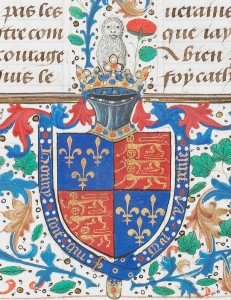
©The British Library Board. London, British Library, Royal MS 14 E. I, folio 3r, detail: Royal Arms of Edward IV.
2. Katie Gutierrez (Loyola University Chicago)
“Native American Misrepresentation in Early America:
A Study on the Variants Presented in Conrad Weiser’s Travel Narrative:
A Journal of the Proceedings of Conrad Weiser”
Abstract:
The Native American translator and colonial government official Conrad Weiser (1696 – 1760) is an often-overlooked figure in Early American history. As a translator for the Pennsylvanian government, Weiser occupied a unique position in both colonial America and the Iroquois nation. Conrad Weiser’s state-sponsored travel narrative, “A journal of the proceedings of Conrad Weiser: on his journey to Ohio with a message & present from the government of Pensilvania to the Indians there, 1748 Aug. 11 – Oct. 2”, exists in four separate versions. By applying a critical lens to the text, this paper will illuminate the significant changes between its versions, particularly by examining the representation of the Sinicker tribe of the Iroquois nation.
This paper will carefully outline the variants that occur over the four versions of Weiser’s travel narrative:
- Weiser’s original manuscript written in 1748,
- a copy of Weiser’s journal transcribed by his descendent Hiester Muhlenberg in 1830,
- a copy of Weiser’s journal proceedings published in the Colonial Records of Pennsylvania in 1851,
- and a reproduction of Weiser’s journal proceedings published in 1847 in I.D. Rupp’s Early history of western Pennsylvania: and of the West, and of western expeditions and campaigns from MDCCLIV to MDCCCXXXIII.
By examining these four versions simultaneously, it is evident that Conrad Weiser’s interactions with Queen Scayhuhady of the Sinicker tribe were omitted in the later versions of his document, the official colonial record book and historical book of Pennsylvania.
I will argue for a restoration of Weiser’s original 1748 travel-narrative in order to re-establish historical accuracy and to include the interactions with the Sinicker tribe omitted from later historical documents and records. This paper will attempt to answer questions of how and when changes were introduced to Weiser’s narrative and to outline themes between each set of variants that occur, as well as their importance to a modern reader.
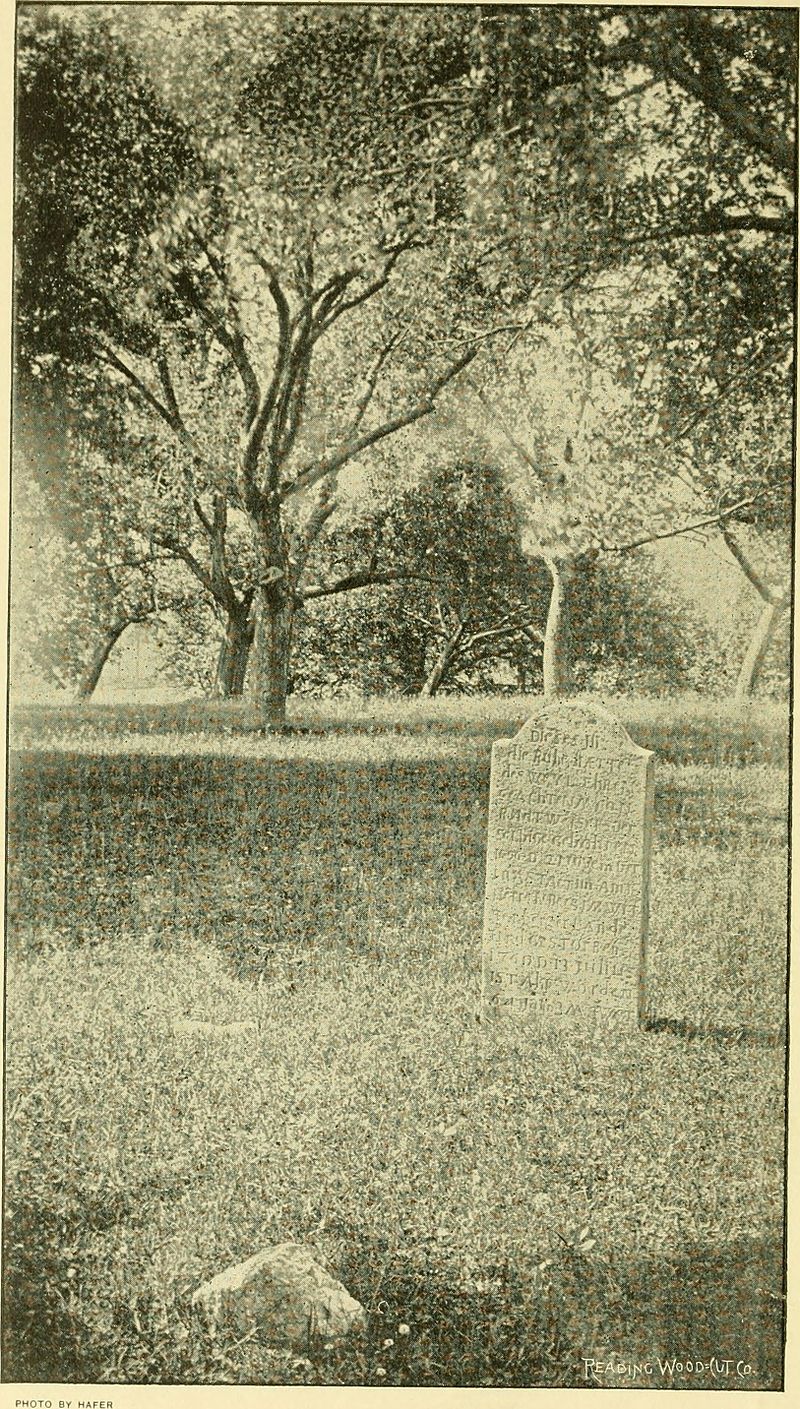
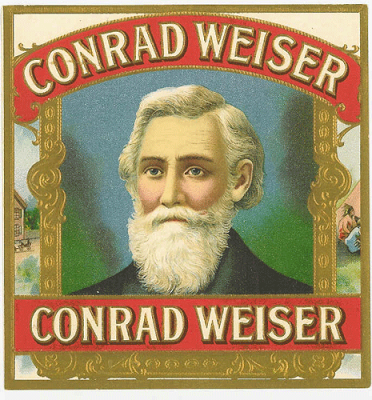
Note: Images of Conrad Weiser appear to be scarce, little attested, or confected after the fact. We might glimpse an old image of his tombstone and a fanciful or wishful image for tobacco purveyance, as here.
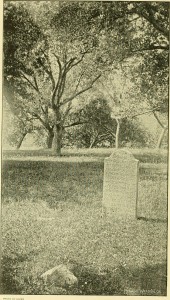
Tombstone of Conrad Weiser, from Morton L. Montgomery, “Life and Times of Conrad Weiser” (1893), via Wikipedia Commons.
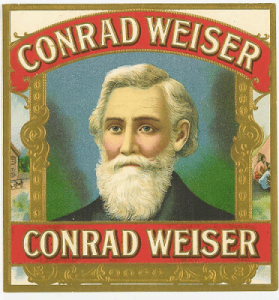
Emblem for Conrad Weiser Cigars, manufactured in Lebanon Pennsylvania, via Wikipedia Commons.
3. Mildred Budny (Research Group on Manuscript Evidence)
“ ‘It’s amazing what you can see when you look’:
New Light on Old Manuscripts Dispersed by Otto Ege”
Just as Yogi Berra’s catchy turns of phrase encourage, or, for that matter, require, us to think, as well as rethink, so, too, does the process of looking, and looking again (even again and again), have the power to conjure forth fresh views, insights, and understandings. The term ‘conjure’ here may convey some of the steps, skills, and wondrous results in that process — when it works — of close interaction between the scholar, viewer, beholder and the materials in question.
In this case, we consider the potential for medieval (and other) manuscripts of many kinds, dates, genres, subjects, patterns of transmission, and challenges in general or particular. All the more so when accomplished cumulatively, with assembled, tested, and refined expertise, whereby, fortunately and ‘magically’, the total gain is far greater than the sum of the parts.
This paper reports new, also cumulative and collaborative, discoveries concerning some of the vast numbers of leaves detached and dispersed from their former manuscripts by the notorious bibliophile and self-styled ‘biblioclast’ Otto F. Ege (1888‒1951), whose spheres of activity mostly centered upon Cleveland. In the past few years, as my own tasks of conservation and research regarding telling cases of those manuscript ‘strays’ or ‘orphans’, seemingly unrelated, turn out to be related powerfully in terms of linked or implicated transmission, discerned by means of discovery through expertise gathered cumulatively over the years, across a broad range of written and printed materials.
Our celebration of these rediscoveries may include fresh observations of materials close to Otto Ege’s home base. Surprises await when we look.
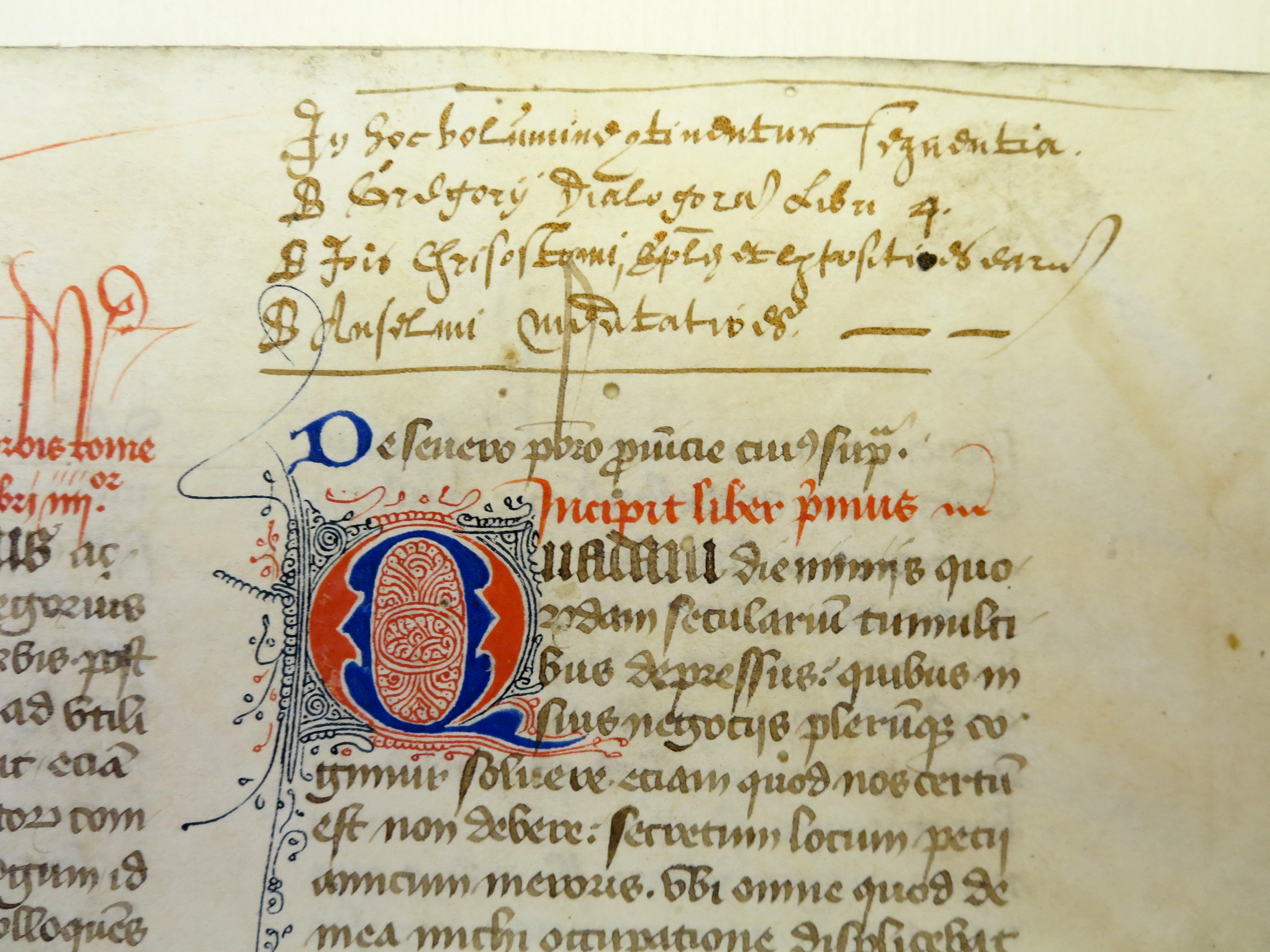
Note: Some discoveries are reported on our website, for example here:
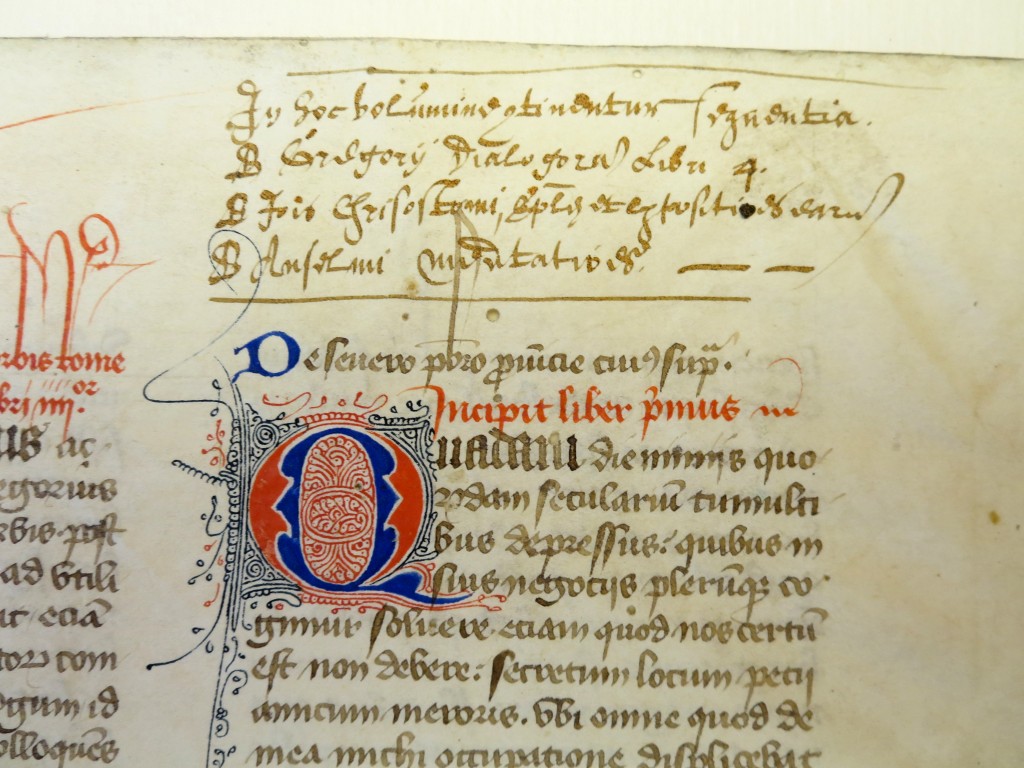
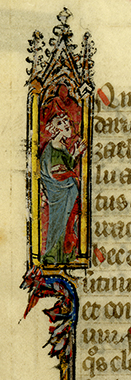
Leaf 41, Recto, Top Right, in the Family Album (Set Number 3) of Otto Ege’s Portfolio of ‘Fifty Original Leaves’ (FOL). Otto Ege Collection, Beinecke Rare Book and Manuscript Library, Yale University. Photograph by Mildred Budny.
Respondent
4. Justin Hastings
“Making, Breaking, and Using Manuscripts:
New Looks at Material Evidence”
*****
More information about the Convention itself appears on its website. Full details for the 2017 Annual Convention are now published in its Program Book.
As Permanent Session 55 at the Convention, our sponsored panel will take place on Friday, 12 November 2017, from 11:30 a.m. to 12:45 p.m. at the Convention venue.
Please join us!
*****

 As in recent years, we co-sponsor Sessions with the Societas Magica (3 Sessions), and we co-sponsor a Reception.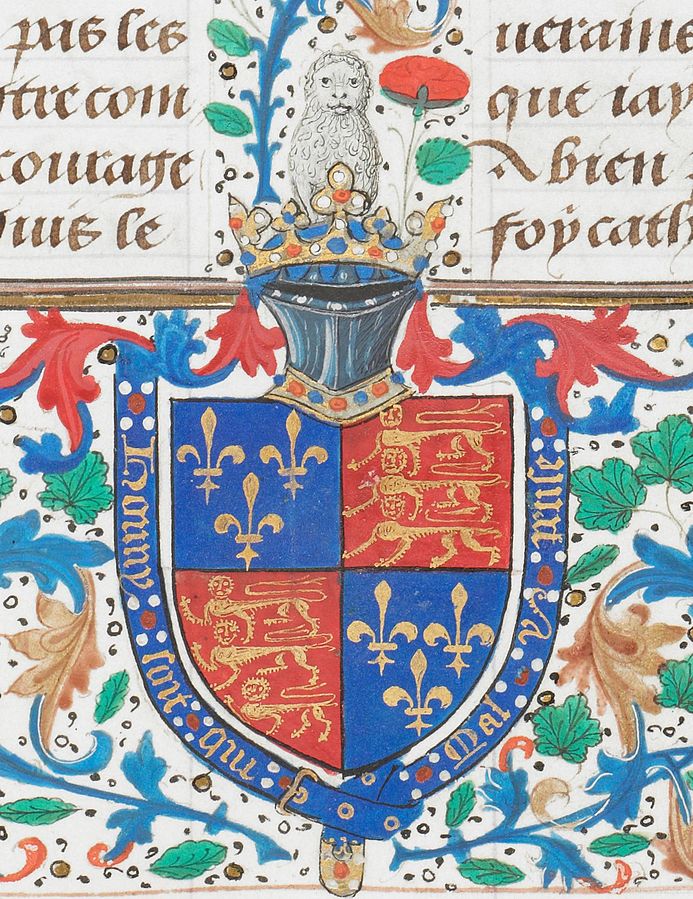

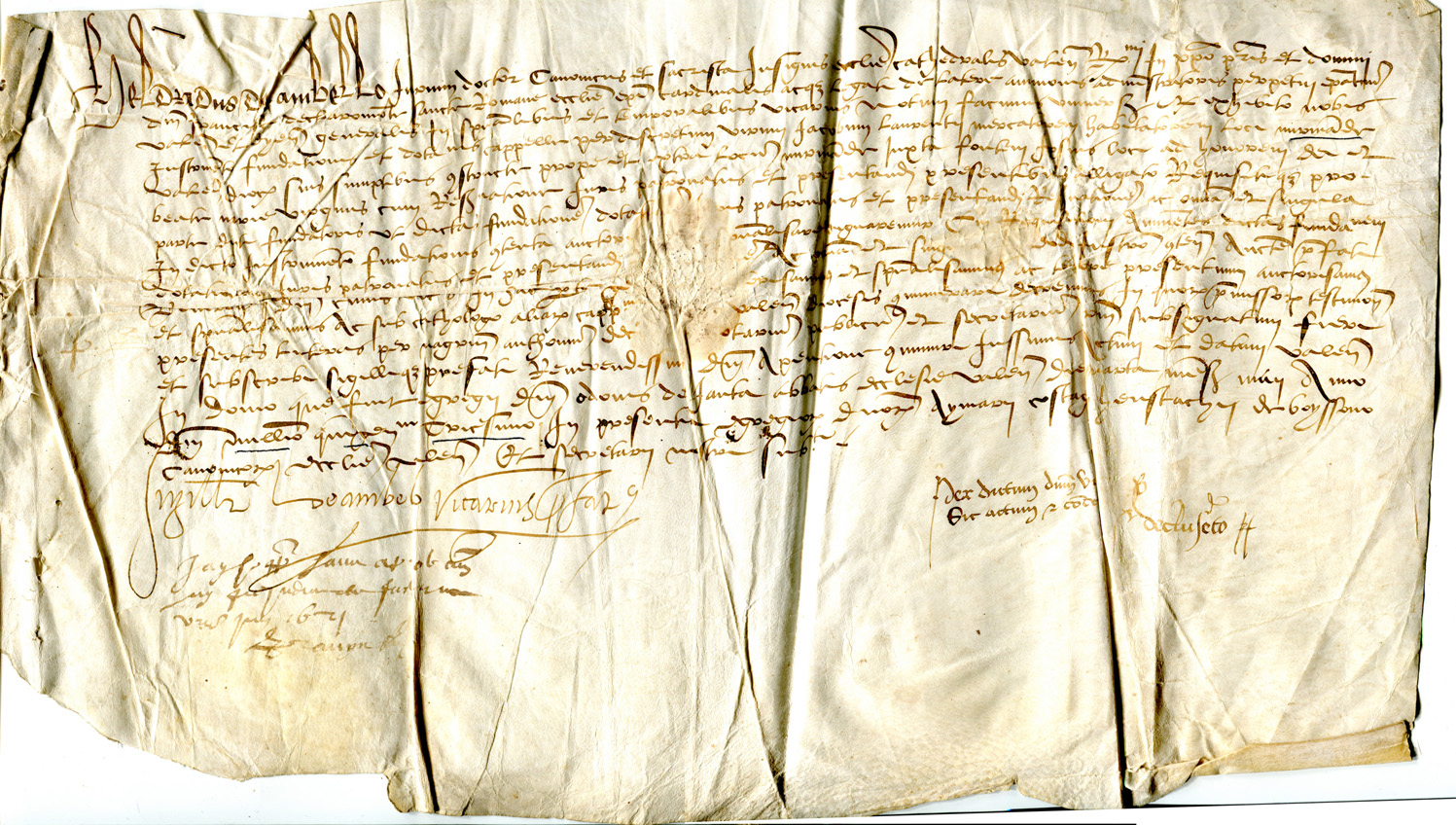
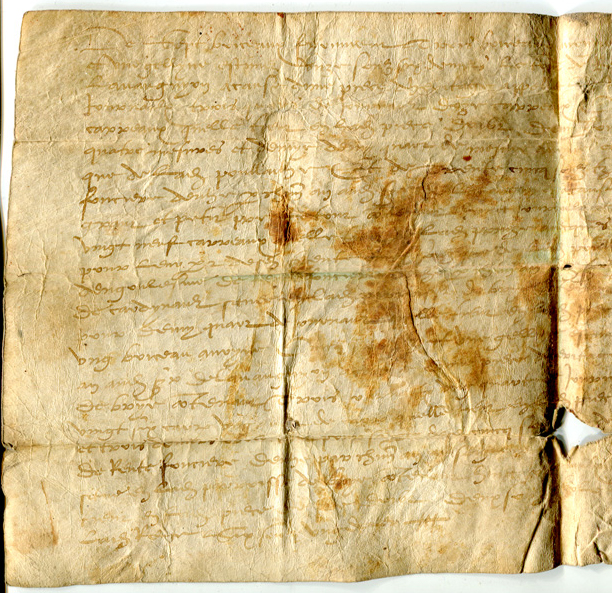
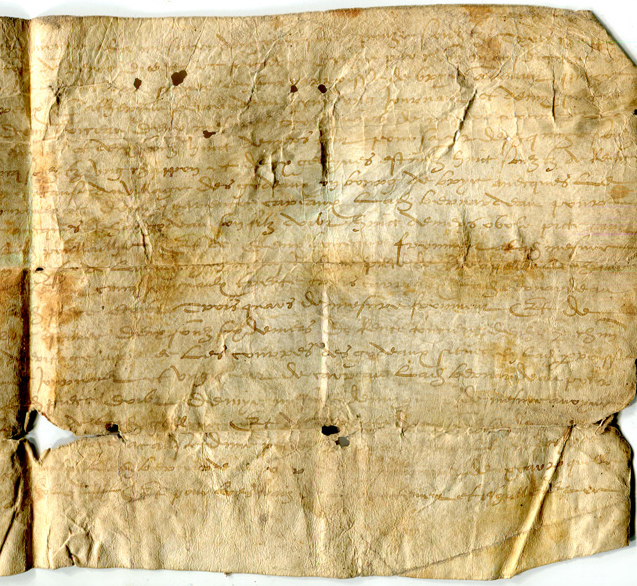
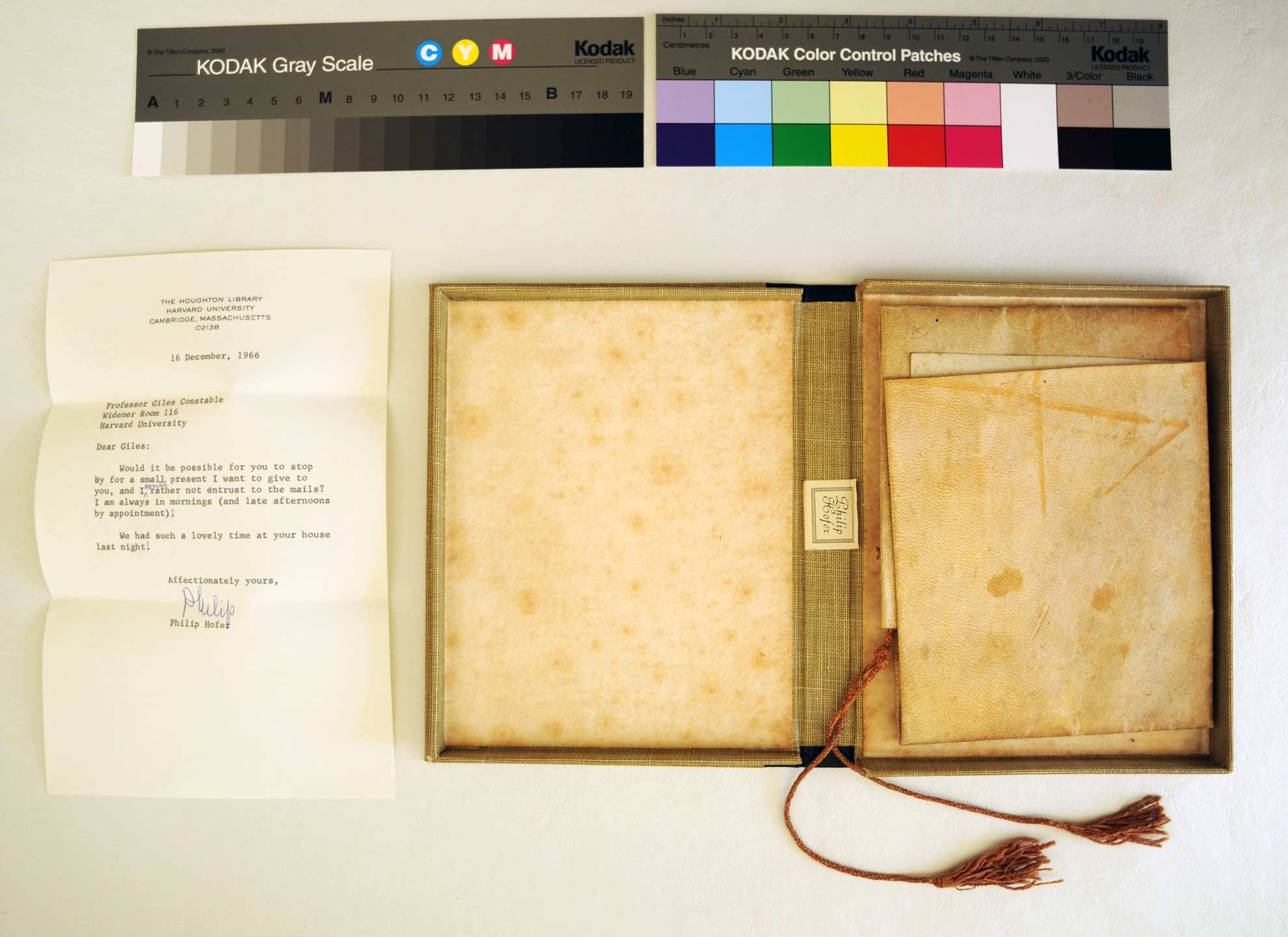
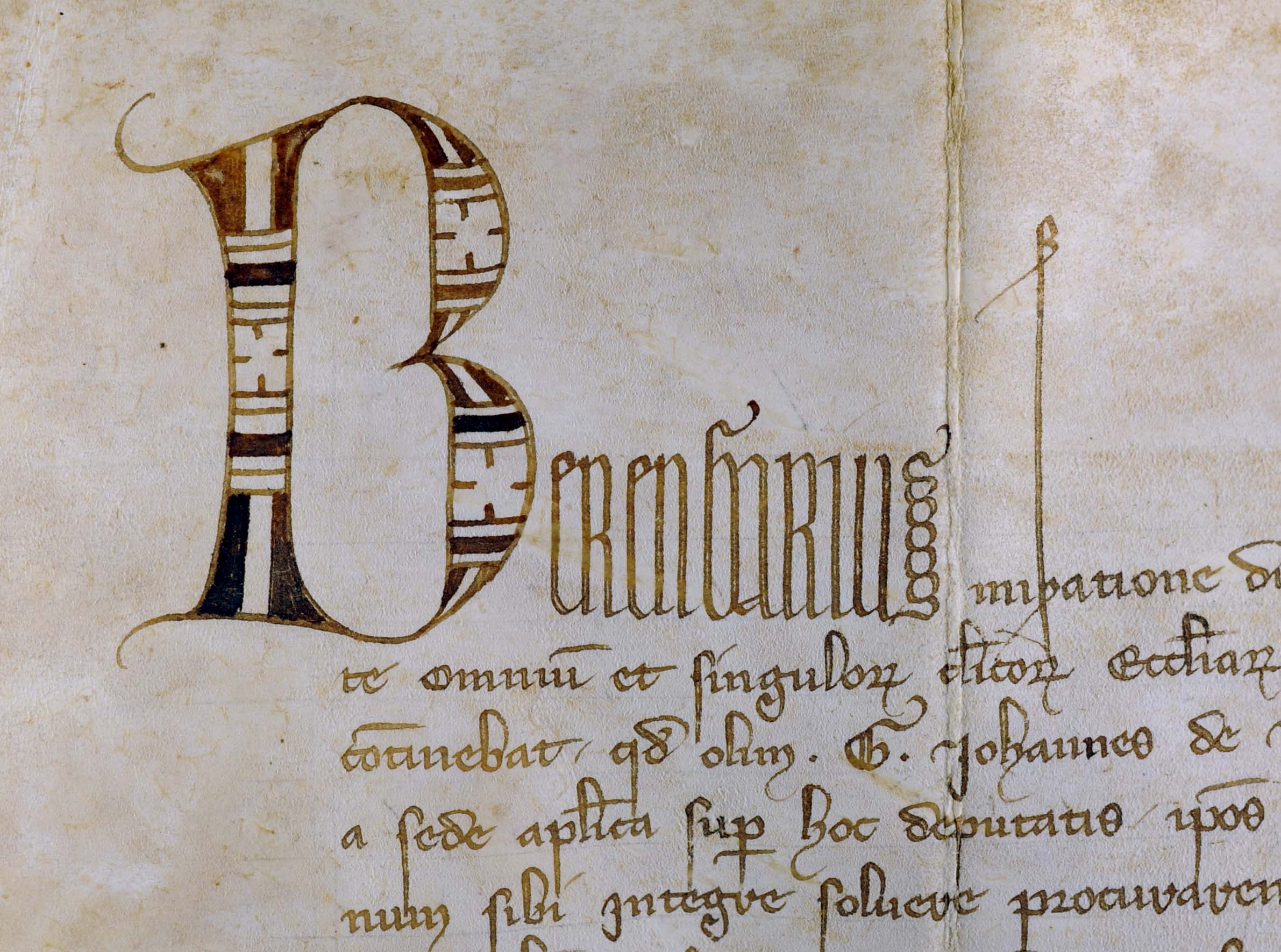

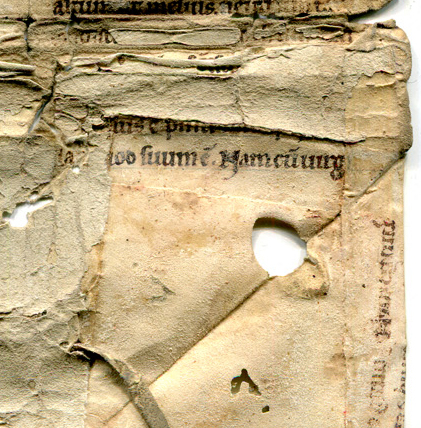
A Leaf from Gregory’s Dialogues Reused for Euthymius
December 24, 2016 in Manuscript Studies, Photographic Exhibition, Uncategorized
A Leaf from Gregory’s Dialogues
Reused for Binding
A Copy of
Euthymius Zigabenus’s On the Psalms
Budny Handlist 3
In our blog on Manuscript Studies (see its Contents List), Mildred Budny (see Her Page) continues to report the results of research for her Illustrated Handlist.
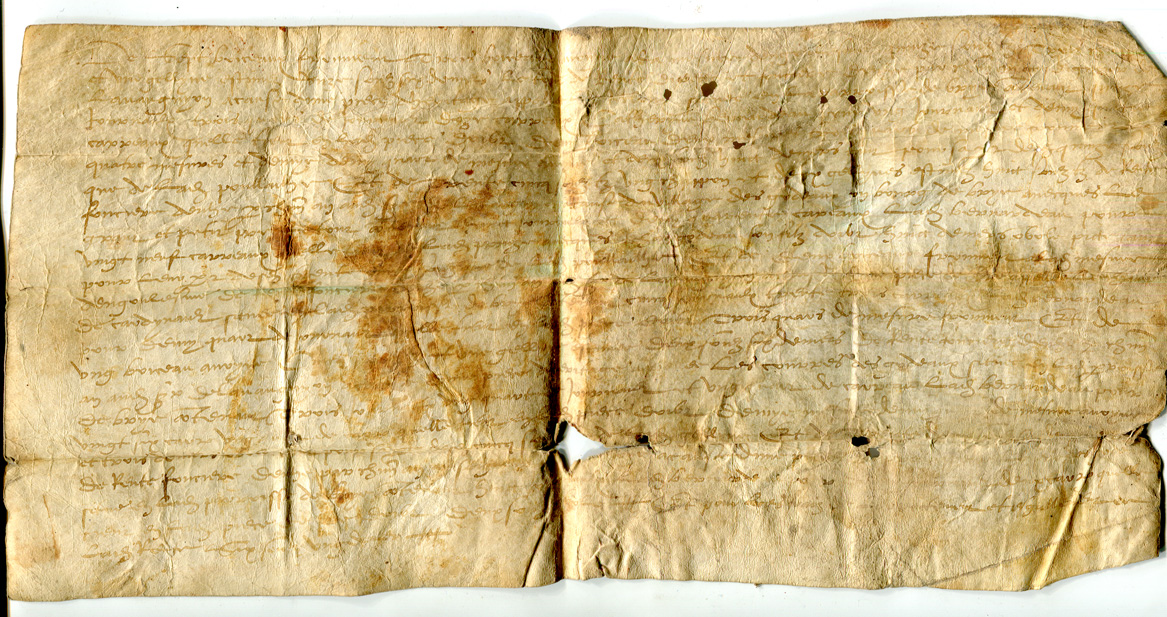
Here, we focus upon a leaf plucked from its 12th-century manuscript and pressed into service, with trimmed edges and mitered folds, as the vellum covering for a binding for a different text of small format. Both texts, primary and secondary in the life of the leaf, concern religious subjects, but they emanate from authors of different dates, locations, and languages in the Latin West and the Orthodox East respectively. The primary text represents a remnant of a text and an author familiar in some other blogposts, which consider the Dialogues, the Sermons or Homilies, and other texts by Pope Gregory the Great (pope from 590 to 694 CE).
Handlist 3, Recto
Handlist 3, Verso
Part of Gregory’s Dialogues, Book III, Chapter 7
(on Andreas, Bishop of Fondi/Fundi):
Sections 2 (Hic namque uenerabilis uir) –
8 (uel quae in conuentu)
Present measurements:
Circa 357 × 237 mm
< written area circa 266 × 133 mm >
Single column of 28 lines
in revived Caroline minuscule
without embellishments
Germany, circa 1175
Reused for some time as the vellum cover for the binding of a copy of
Euthymius Zigabenus‘s Commentary on the Psalms
in Greek or in Latin translation?
(now lost or preserved elsewhere in a location unknown)
For this secondary use, the remnants of a set of titles on the outside of the spine of the cover (the original verso of the reused leaf) remain in place, albeit abraded and fragmented, as both a pasted, inscribed paper label (orientated along the ‘horizontal’ across the spine) and an ink inscription on the reused leaf itself in Capitals (‘vertical’, with the tops of those letters turned toward the ‘front cover’). Another, smaller and fragmentary pasted label with a broad rectangular border stands near the bottom of the broad spine of the cover and partly overlies the ‘vertical’ spine inscription.
Acquired, probably by purchase (according to the Owner’s recollections), in France in the past 15 years or so, but before 2007 when I first saw and began to photograph the leaf. This item and others in the Illustrated Handlist acquired in France at various times and by various means (purchase, gift, or exchange), came from a single source in the Département of Saône-et-Loire, from about 1999 onward. Because the leaf does not carry indications of its original place and time of production, apart from its materials, layout, design, script, orthography, and punctuation, those unknowns must depend upon evaluations of the style of the script, lacking any forms of embellishment, such as decorated initials, which might have provided possibly more closely datable symptoms than the letters “alone”.
Read the rest of this entry →
Tags: 'Fifty Original Leaves from Medieval Manuscripts', Binding History, Bishop Andrew of Fundi, Budny's Illustrated Catalogue, Ege Manuscript 41, Euthymius Zigabenos, Fondi, Gregory the Great, Gregory's Dialogues, manuscript fragments, Manuscript Fragments Reused in Bindings, Manuscript studies, Psalter Commentary, Saki, Temple of Apollo
No Comments »