• News
    • News & Views
    • RGME Activities for 2024 and 2025
    • Around & About with the RGME
    • Reviews
    • Highlights
  • Blogs
    • Manuscript Studies
      • Manuscript Studies: Contents List
    • International Congress on Medieval Studies
      • Abstracts of Congress Papers
        • Abstracts of Papers Listed by Author
        • Abstracts of Papers Listed by Year
  • About
    • Mission
    • Who We Are
      • Officers, Associates & Volunteers
      • RGME Committees
      • Friends of the Research Group on Manuscript Evidence
    • Policies & Statements
      • RGME Privacy Policy Statement
      • RGME Intellectual Property Statement & Agreements
    • People
      • Mildred Budny — Her Page
      • Adelaide Bennett Hagens
    • Activities
      • Events
      • Congress Activities
        • Sponsored Conference Sessions (1993‒)
          • Panels at the M-MLA Convention (from 2016)
        • Co-sponsored Conference Sessions (2006‒)
    • History
      • Seals, Matrices & Documents
      • Genealogies & Archives
    • Contact Us
  • Bembino
    • Multi-Lingual Bembino
    • RGME Bembino: Resources
  • Congress
    • Sponsored Conference Sessions (1993‒)
    • Co-sponsored Conference Sessions (2006‒)
    • Abstracts of Congress Papers
      • Abstracts Listed by Author
      • Abstracts Listed by Year
    • Kalamazoo Archive
    • Panels at the M-MLA Convention (2016-2019)
      • Abstracts of Papers for the M-MLA Convention
      • Panels at the M-MLA Convention (from 2016)
  • Events
    • RGME Activities for 2024 and 2025
      • 2023 Activities and 2024 Planned Activities
    • Seminars, Workshops, Colloquia & Symposia (1989–)
      • Seminars on ‘The Evidence of Manuscripts’
      • Symposia on ‘The Transmission of the Bible’
      • The New Series (2001-)
        • 2019 Anniversary Symposium Program: The Roads Taken
        • 2019 Anniversary Symposium Registration
        • 2019 Anniversary Symposium Registration Open
      • RGME Symposia: The Various Series
      • The Research Group Speaks: The Series
      • Meetings of the Friends of the Research Group on Manuscript Evidence
      • RGME Online Events
    • Abstracts of Papers for Events
      • Abstracts of Papers for Seminars on ‘The Evidence of Manuscripts’
      • Abstracts of Papers for Symposia, Workshops & Colloquia
    • Receptions & Parties
    • Business Meetings
    • Photographic Exhibitions & Master Classes
    • Events Archive
  • ShelfLife
    • Journal Description
    • ShelfMarks: The RGME-Newsletter
    • Publications
      • “Insular, Anglo-Saxon, and Early Anglo-Norman Manuscript Art at Corpus Christi College, Cambridge” (1997)
        • Mildred Budny, ‘Catalogue’
        • The Illustrated Catalogue (1997)
      • The Illustrated Handlist
      • Semi-Official Counterfeiting in France 1380-1422
      • No Snap Decisions: Challenges of Manuscript Photography
    • History and Design of Our Website
  • Galleries
    • Watermarks & the History of Paper
    • Galleries: Contents List
    • Scripts on Parade
    • Texts on Parade
      • Latin Documents & Cartularies
      • New Testament Leaves in Old Armenian
    • Posters on Display
    • Layout Designs
  • Donations and Contributions
    • RGME Donor Promise
    • 2023 End-of-Year Fundraiser for our 2024 Anniversary Year
    • 2019 Anniversary Appeal
    • Orders
  • Links
    • Catalogs, Metadata, and Databases: A Handlist of Links
    • Handlist of Resources for Manuscript Studies and Fragmentology
    • Manuscripts & Rare Books
    • Maps, Plans & Drawings
    • Seals, Seal-Matrices & Documents

  • News
    • News & Views
    • RGME Activities for 2024 and 2025
    • Around & About with the RGME
    • Reviews
    • Highlights
  • Blogs
    • Manuscript Studies
      • Manuscript Studies: Contents List
    • International Congress on Medieval Studies
      • Abstracts of Congress Papers
        • Abstracts of Papers Listed by Author
        • Abstracts of Papers Listed by Year
  • About
    • Mission
    • Who We Are
      • Officers, Associates & Volunteers
      • RGME Committees
      • Friends of the Research Group on Manuscript Evidence
    • Policies & Statements
      • RGME Privacy Policy Statement
      • RGME Intellectual Property Statement & Agreements
    • People
      • Mildred Budny — Her Page
      • Adelaide Bennett Hagens
    • Activities
      • Events
      • Congress Activities
        • Sponsored Conference Sessions (1993‒)
          • Panels at the M-MLA Convention (from 2016)
        • Co-sponsored Conference Sessions (2006‒)
    • History
      • Seals, Matrices & Documents
      • Genealogies & Archives
    • Contact Us
  • Bembino
    • Multi-Lingual Bembino
    • RGME Bembino: Resources
  • Congress
    • Sponsored Conference Sessions (1993‒)
    • Co-sponsored Conference Sessions (2006‒)
    • Abstracts of Congress Papers
      • Abstracts Listed by Author
      • Abstracts Listed by Year
    • Kalamazoo Archive
    • Panels at the M-MLA Convention (2016-2019)
      • Abstracts of Papers for the M-MLA Convention
      • Panels at the M-MLA Convention (from 2016)
  • Events
    • RGME Activities for 2024 and 2025
      • 2023 Activities and 2024 Planned Activities
    • Seminars, Workshops, Colloquia & Symposia (1989–)
      • Seminars on ‘The Evidence of Manuscripts’
      • Symposia on ‘The Transmission of the Bible’
      • The New Series (2001-)
        • 2019 Anniversary Symposium Program: The Roads Taken
        • 2019 Anniversary Symposium Registration
        • 2019 Anniversary Symposium Registration Open
      • RGME Symposia: The Various Series
      • The Research Group Speaks: The Series
      • Meetings of the Friends of the Research Group on Manuscript Evidence
      • RGME Online Events
    • Abstracts of Papers for Events
      • Abstracts of Papers for Seminars on ‘The Evidence of Manuscripts’
      • Abstracts of Papers for Symposia, Workshops & Colloquia
    • Receptions & Parties
    • Business Meetings
    • Photographic Exhibitions & Master Classes
    • Events Archive
  • ShelfLife
    • Journal Description
    • ShelfMarks: The RGME-Newsletter
    • Publications
      • “Insular, Anglo-Saxon, and Early Anglo-Norman Manuscript Art at Corpus Christi College, Cambridge” (1997)
        • Mildred Budny, ‘Catalogue’
        • The Illustrated Catalogue (1997)
      • The Illustrated Handlist
      • Semi-Official Counterfeiting in France 1380-1422
      • No Snap Decisions: Challenges of Manuscript Photography
    • History and Design of Our Website
  • Galleries
    • Watermarks & the History of Paper
    • Galleries: Contents List
    • Scripts on Parade
    • Texts on Parade
      • Latin Documents & Cartularies
      • New Testament Leaves in Old Armenian
    • Posters on Display
    • Layout Designs
  • Donations and Contributions
    • RGME Donor Promise
    • 2023 End-of-Year Fundraiser for our 2024 Anniversary Year
    • 2019 Anniversary Appeal
    • Orders
  • Links
    • Catalogs, Metadata, and Databases: A Handlist of Links
    • Handlist of Resources for Manuscript Studies and Fragmentology
    • Manuscripts & Rare Books
    • Maps, Plans & Drawings
    • Seals, Seal-Matrices & Documents

Log in

Archives

Featured Posts

2026 International Congress on Medieval Studies: Program
Episode 24. “Life with Books” (Interview with John Windle)
Announcing the Launch of RGME Bembino WP
2026 RGME Colloquium at The Grolier Club: Report
Medieval Missal Fragment as Early-Modern Cover
The Weber Leaf from Ege MS 61
"Bembino" Booklet Cover
Episode 23. “Meet RGME Bembino: Facets of a Font”
2026 RGME Colloquium on “Transformations & Renewals” at The Grolier Club
2026 Theme of the Year: “Transformations and Renewals”
A Leaf with Patchwork from the Saint Albans Bible
A Sister Leaf from a Miniature Latin Vulgate Bible
A Little Latin Vulgate Bible Manuscript Leaf in Princeton
J. S. Wagner Collection. Leaf from from Prime in a Latin manuscript Breviary. Folio 4 Verso, with part of Psalm 117 (118) in the Vulgate Version, set out in verses with decorated initials.
2026 Annual Appeal
Episode 22: “Encounters with Local Saints and Their Cults”
Private Collection, Ege's FBNC Portfolio, Dante Leaf, Verso, Detail. Reproduced by Permission.
2025 RGME Autumn Colloquium on Fragments
Workshop 8: A Hybrid Book where Medieval Music Meets Early-Modern Herbal
2025 RGME Autumn Symposium on “Readers, Fakers, and Re-Creators of Books”
RGME Workshops on “The Evidence of Manuscripts, Etc.”
2025 International Medieval Congress at Leeds: RGME Program
Episode 21. “Learning How to Look”
2025 International Congress on Medieval Studies: Program
2025 RGME Visit to Vassar College
Two Leaves in the Book of Numbers from the Chudleigh Bible
Delibovi on Glassgold on Boethius: A Blogpost
Ronald Smeltzer on “Émilie du Châtelet, Woman of Science”
2025 Spring Symposium: “Makers, Producers, and Collectors of Books”
Starters’ Orders
The Weber Leaf from the Saint Albans Bible
Workshop 4. “Manuscript Fragments Compared”
Episode 20. “Comic Book Theory for Medievalists”
Episode 19: “At the Gate: Starting the Year 2025 at its Threshold”
Favorite Recipes for Lemonade, Etc.
RGME Visit to the Lomazow Collection: Report
2024 Autumn Symposium: “At the Helm”
A Latin Vulgate Leaf of the Book of Numbers
The RGME ‘Lending Library’
Florence, Italy, Ponte Vecchio from Ponte alle Grazie. Photo: Ingo Mehling, CC BY-SA 4.0 , via Wikimedia Commons
Episode 17. “RGME Retrospect and Prospects: Anniversary Reflections”
2024 Anniversary Symposium: The Booklet
Jesse Hurlbut at the Bonneville Salt Flats, Utah. Photograph Jesse Hurlbut.
Episode 16: An Interview with Jesse D. Hurlbut
To Whom Do Manuscripts Belong?
Kalamazoo, MI Western Michigan University, Valley III from the side. Photograph: David W. Sorenson.
2024 International Congress on Medieval Studies: Report
2024 Spring Symposium at Vassar College
Puente de San Martín: Bridge with reflection over the River Targus, Toledo, Spain.
2024 Grant for “Between Past and Future” Project from The Gladys Krieble Delmas Foundation Research Libraries Program
2024 Anniversary Symposium in Thanks to Jesse Hurlbut: Program

You are browsing the Blog for Uncategorized

Revisiting Anglo-Saxon Symposia 2002/2018

May 1, 2019 in Abstracts of Conference Papers, British Museum, Conference, Manuscript Studies, The British Library, Uncategorized

Revisiting Beloved Ground

[Published on May 1, 2019]  A personal post by our Director.

A New Look

© The British Library Board, Royal MS 1 E vi, folio 4r. Reproduced by permission

© The British Library Board, Royal MS 1 E vi, folio 4r. The Royal Bible of Saint Augustine’s Abbey, Canterbury. 

We have returned from a trip to London for multiple views of the exhibition of Anglo-Saxon and related manuscripts at The British Library, and for a visit to its companion set of conferences to showcase work by selected elder and younger scholars.

My review does not have the purpose of providing a purview as such of the exhibition or the conferences.  Other venues have provided more-and-less expert evaluations of the exhibition and its scholarly events.

It was lovely to see the manuscripts — in most cases, again, for I have seen them in person in their current collections.  It took decades of travel, decades of dedication, and worth the view.

#turnedthepages

Suffice it to say that I, for one, can state accurately as well as precisely that, with determination, time, travel funding, part-time work, and perseverence, topped by a deep and abiding love of the subject, along with permission by the custodians, I have been able to examine closely and directly, and to turn the pages of almost all the manuscripts (and many of the documents) on display. A labour of love.

Having the opportunity to view the gathered manuscripts of course demands praise for the organisers of the exhibition and the enlightened donors for its accomplishment. Having the opportunity to attend the conference and to view the exhibition of course commands recognition that I have myself had to pay for that privilege, in travel, housing, conference dues, exhibition entrance, and the like. It is important to record, with thanks, the generous donation of 2 tickets for attendance by a Research Group Associate, which made it possible to continue to view the exhibition in company.

I talk about logistics because these matters, also, matter.

You all who talk, and with reason, about the need to have funding in order to persist and persevere with this and or that field of study, I hear you.  Funding applications, part-time jobs, free-lance work, supposedly ignominious independent scholarly endeavors all must hold their place.  Sometimes hard work.

Center Stage

For me, it was important to see, in person, again, some manuscripts which I love deeply. That comes from close and appreciative knowledge. Did I mention my favorite hashtag. #turnedthepages.  Here, aplenty, in this exhibition, it applies.  And then some.

Plus, the exhibition is nontrivial.  See here:  Anglo-Saxon Manuscripts.

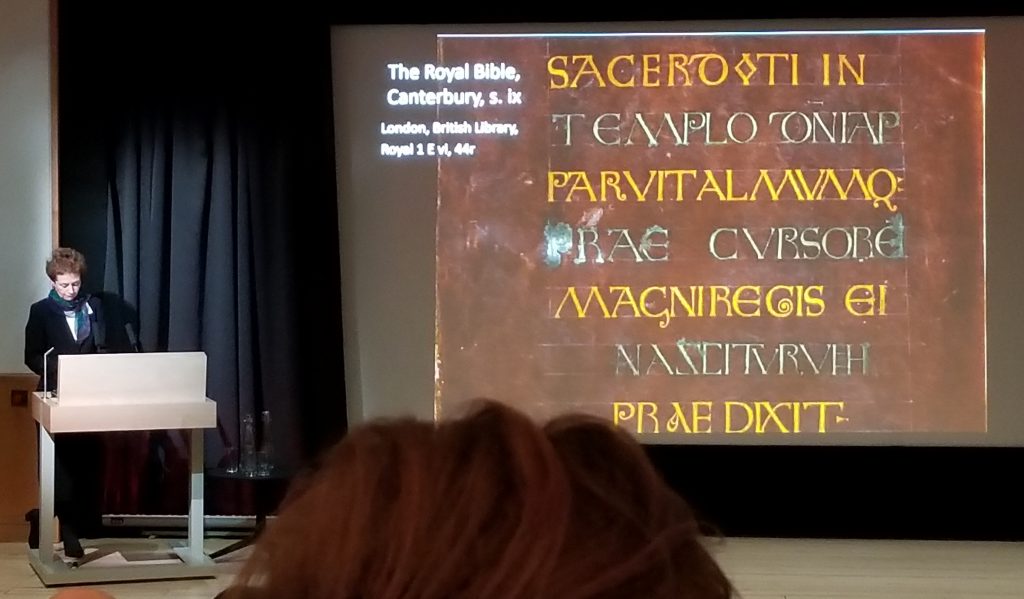
It was a special delight to see as the first images for the concluding plenary lecture such a view, from “my thesis manuscript”, and from such an excellent speaker.

The Thesis is available without charge via British Library Manuscript Royal 1 E.vi: The Anatomy of an Anglo-Saxon Bible Fragment (1985) or ethos.bl.uk (order no. thesis00342356)

Julia Smith introduces The Royal Bible of Saint Augustine's Anbbey Canterbury in her Plenary Lecture December 2018. Photograph by Mildred Budny

Julia Smith introduces The Royal Bible of Saint Augustine’s Abbey Canterbury in her Plenary Lecture December 2018.

Revisiting the Territory

Interesting, isn’t it, that there remain on the scene in this new “international conference” at The British Library so many Anglo-Saxonists that participated in the 2002 British Museum Symposium of the Research Group on Manuscript Evidence?

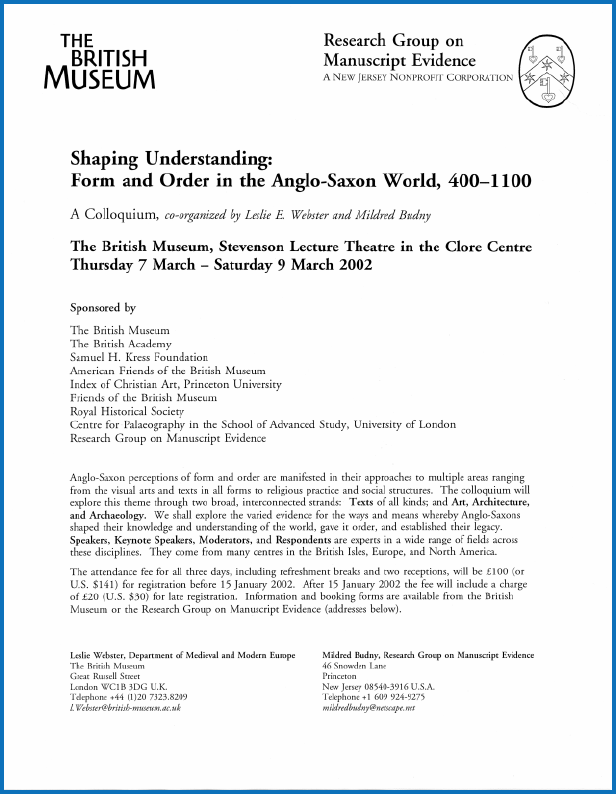
2002 Poster in monochrome for the 'Form and Order' Symposium at The British Museum.The 2002 BM Symposium:

Form and Order in the Anglo-Saxon World

Its Program:

2002 BM Program

Its Program Booklet, with Abstracts of Papers:

British Museum Colloquium Booklet

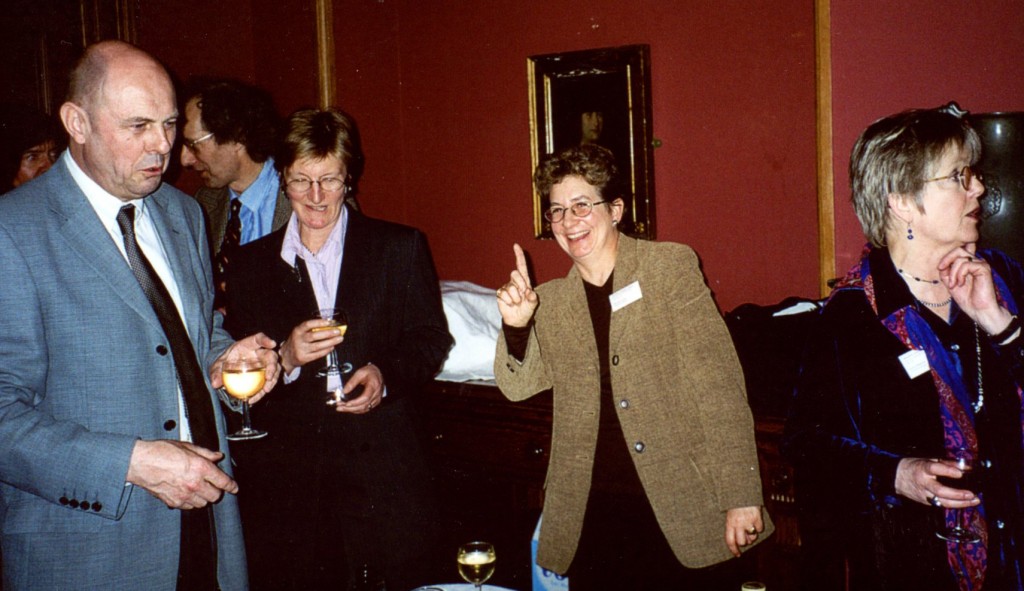
Reception at the 2002 British Museum Colloquium. Photography © Mildred Budny

Reception at the 2002 British Museum Colloquium.

Instructive, don’t you think, that the speakers and presiders from that Colloquium in 2002 are mostly represented among the speakers, presiders, and attendees of the 2018 British Library International Conference?  Here, in the order in which they appeared on our 2002 Program, they are:

Dáibhí Ó Cróinin
Richard Gameson
Rosamond McKitterick
Andy Orchard
Simon Keynes
Helen Gittos
Alan Thacker
Carol Neuman de Vegvar
Michael Ryan
Susan Youngs
James Graham-Campbell
Jane Hawkes
Carol Farr
Nancy Netzer
Mildred Budny
Michael Wood
Elizabeth M. Tyler
Leslie E. Webster

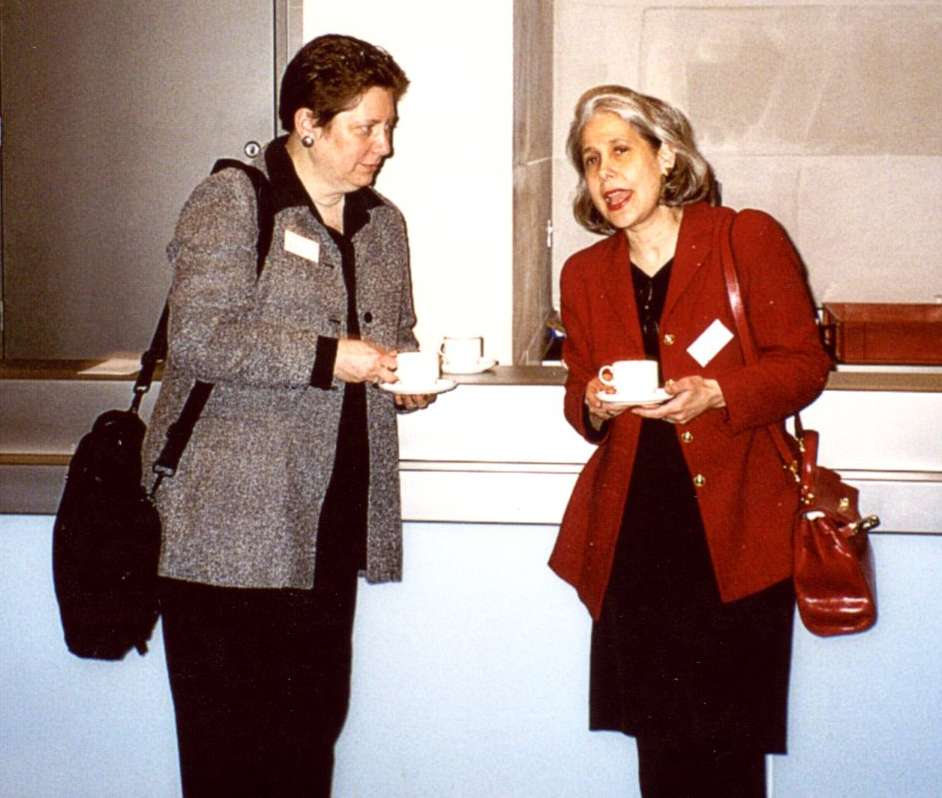
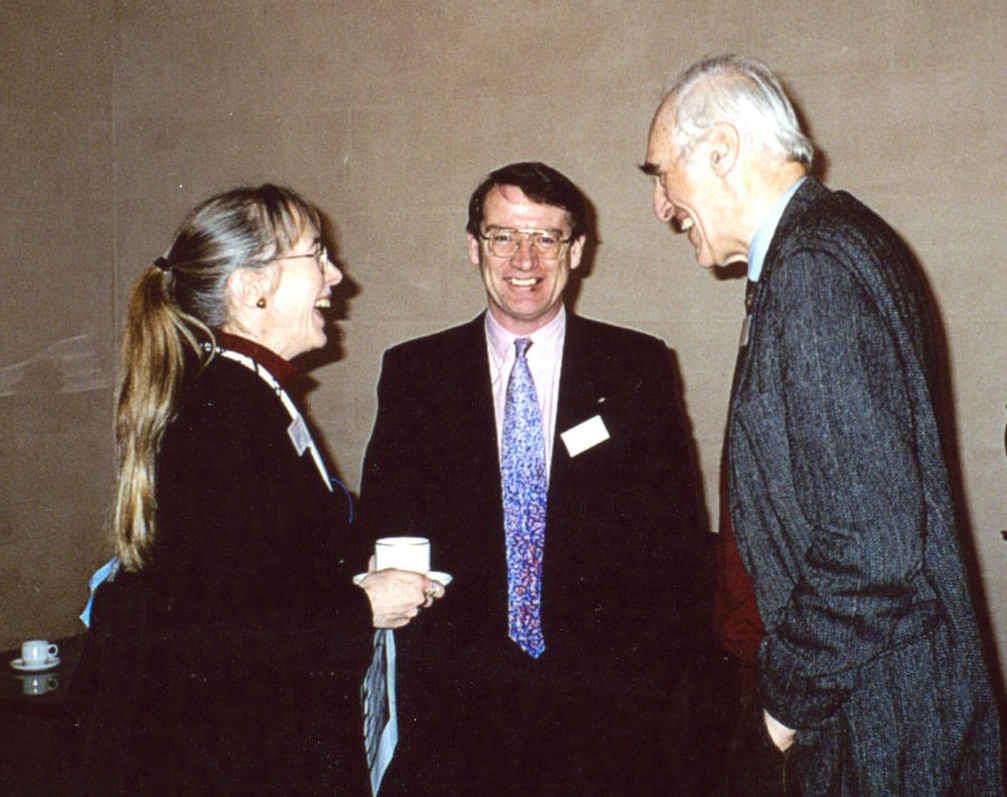
Coffee Break at the 2002 British Museum Colloquium.

Coffee Break at our 2002 British Museum Colloquium.

Some others on our 2002 Program could not be present in 2018 because they had died. We remember them with esteem.

A few others on our 2002 Program did not, alas, feel included sufficiently in 2018 to attend the British Library event.

We remember both events with appreciation for the conversations, presentations, and collegiality.

Coffee Break at the 2002 British Museum Colloquium.

At our 2002 Colloquium.

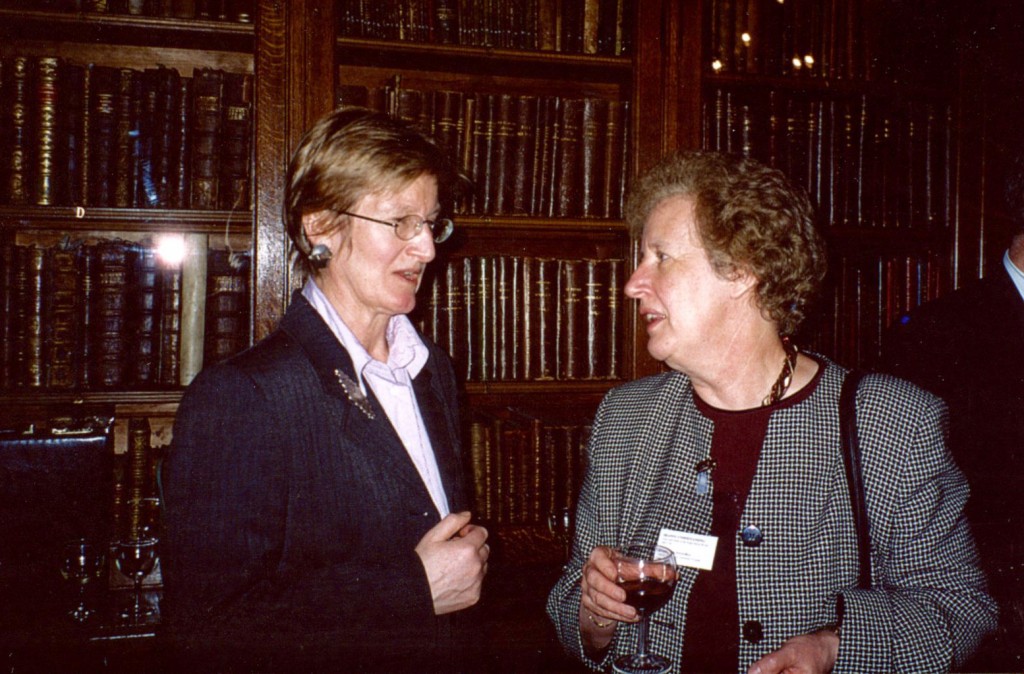
Reception at the 2002 British Museum Colloquium.

At our 2002 Colloquium Reception:  Sue Youngs and Joyce Hill.  Photograph by Mildred Budny.

Tags: 2002 British Museum Colloquium, 2018 British Library Symposium, Anglo-Saxon Manuscripts, British Library MS Royal 1 E. vi, Manuscript Illumination, Manuscript studies, Research Group Symposia
No Comments »

Vellum Bifolium from Augustine’s “Homilies on John”

November 27, 2018 in International Congress on Medieval Studies, Manuscript Studies, Uncategorized

Recycled and Reclaimed
Large-Format Vellum Bifolium
from a Discarded Medieval Copy
of Saint Augustine’s Sermons
on the Gospel of Saint John
In Double Columns of 47 Lines

Measuring at most circa 384 mm high × 523 mm wide
< written area, or text block, circa 274 × 180 mm,
with columns circa 80 mm wide and intercolumn circa 20 mm >

Formerly Reused as the Cover for
An Account Book for A Garden at Ysenburg
For the Parish Church at Büdingen

Now in a Private Collection

[Published on 28 November 2018, with updates, continuing our series of Blogposts on Manuscript Studies, for which see the Contents List]

Augustine Homilies Bifolium Folio IIr detail with title and initial for Sermon XCVI. Private Collection, reproduced by permission. Photograph by Mildred Budny.

Augustine Homilies Bifolium Folio IIr detail with title and initial for Sermon XCVI. Private Collection, reproduced by permission. Photograph by Mildred Budny.

Read the rest of this entry →

Tags: Augustine of Hippo, Büdingen, Homilies on John the Evangelist, Isenburg, manuscript fragments, Manuscript Fragments Reused in Bindings, Medieval Writing Materials, Rotulus, Saint John the Evangelist
2 Comments »

2018 M-MLA Panel

October 17, 2018 in Abstracts of Conference Papers, Announcements, Midwest Modern Language Association, Uncategorized

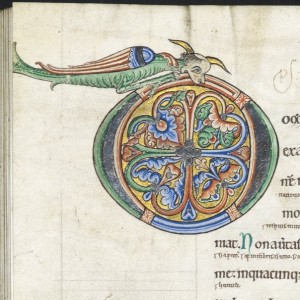
© The British Library Board. Harley MS 628, folio 160 verso. the initial 'd' for 'Domini'.

© The British Library Board. Harley MS 628, folio 160 verso, detail. Psalm 101 begins with the initial ‘d’ for ‘Domini’.

“Consuming Cultures and Manuscript Evidence”

2018 Permanent Panel
sponsored by the
Research Group on Manuscript Evidence
at the
Midwest Modern Language Association (M-MLA)
2018 Convention

Kansas City, Missouri
November 15–18, 2018

[Posted on 30 August 2018, with updates, now with a change to the Program.  An earlier version of this announcement appeared as Consuming Cultures and Manuscript Evidence 2018.]

The Research Group on Manuscript Evidence, in keeping with the M-MLA’s theme of “Consuming Cultures” for its 2018 Convention, sponsors a panel on the “Consumption of Manuscripts”.  After the completion of the Call for Papers, we now announce the Program for the Panel, which will take place on 15 November. The Program for the Convention in full is now available in preview through the M-MLA website: 2018 Program Booklet.

Food for Thought

In our design for the Panel, both in its proposal (as circulated in the Call for Papers) and in the selected design for its Program, we recognize that consideration of “consumption” can be literal, metaphorical, or both.  For example, the process and product could mean the destruction wrought by bookworms, fires, and biblioclasts, and/or the consumption effected by textual transmission and reception more broadly.

Accordingly, we have invited all approaches, including textual, art historical, codicological, and paleographical.  Also invite subjects from all periods.  Nice.

Year 3 of Our Panels at the M-MLA

Thanks to the expert initiatives by our Associate Justin Hastings, this will be the 3rd year that the Research Group sponsors Permanent Panels at the Annual Convention of the Midwest Modern Language Association.

The plan to sponsor the 2018 Panels draws inspiration from the success of our Panels at the M-MLA in the past 2 years. Details here:

2017

2017 M-MLA Panel on “Artists, Activists, and Manuscript Evidence”
2017 M-MLA Panel Report

2016

“Marginalia in Manuscripts and Books” for the 2016 M-MLA
2016 M-MLA Report
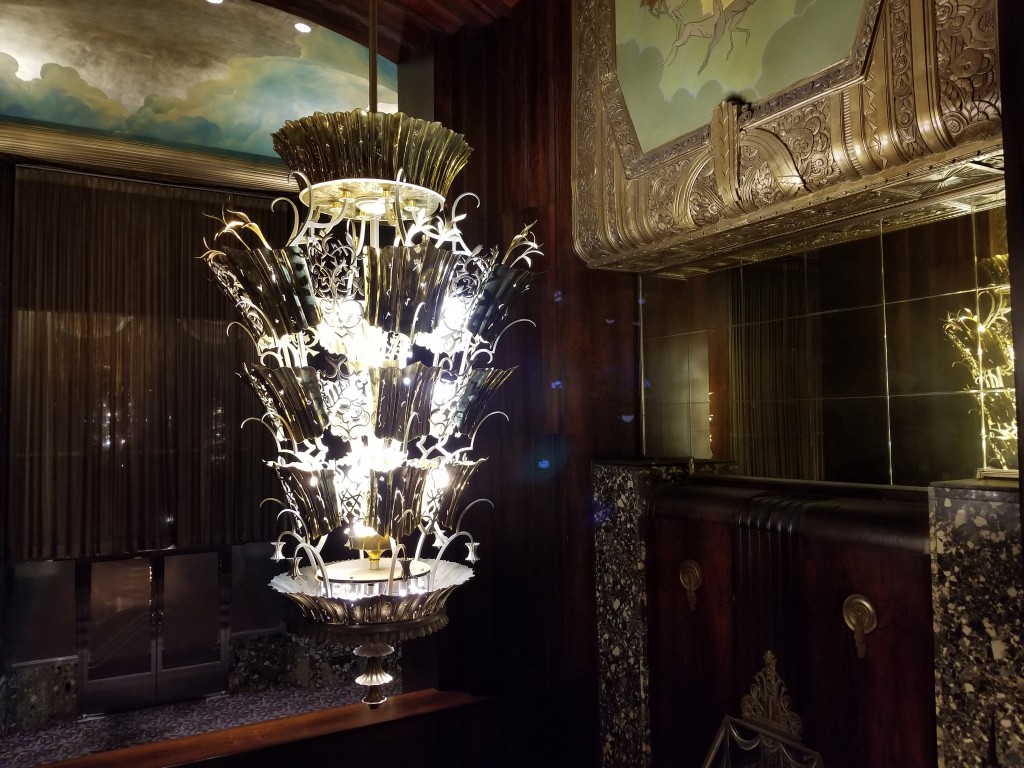
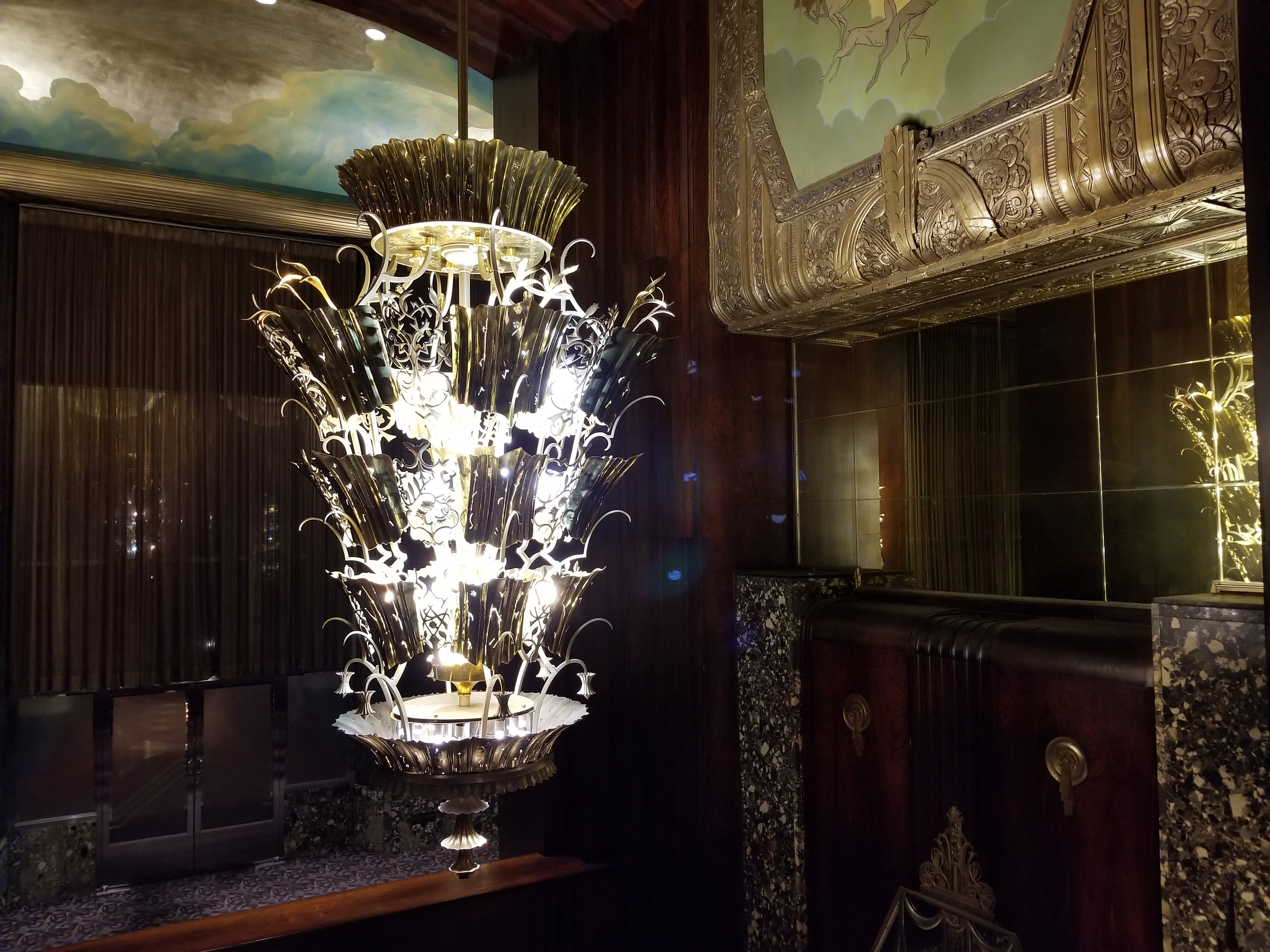
Chandelier and Ceiling Murals at the Netherland Plaza Hotel. Photography by Mildred Budny.

“Seeing the Light”. Chandelier and Ceiling Murals at the Netherland Plaza Hotel.

As customary for our Sessions at the International Congress on Medieval Studies, we publish the Abstracts of the Papers for our Panels at the M-MLA Convention in our Panel Announcements and Reports.

*****

The continuation of the tradition of Permanent Panels at the M-MLA Convention is most welcome, and we thank our organizer, Justin Hastings, and the Midwest Modern Language Association. We congratulate Justin for his expert organizational skills and outstanding collegiality, and we applaud his willingness to continue to organize the panels for the Research Group on Manuscript Evidence.

*****

Program

Session 21. Friday 8:30–9:45 a.m.

“Consuming Cultures and Manuscript Evidence”
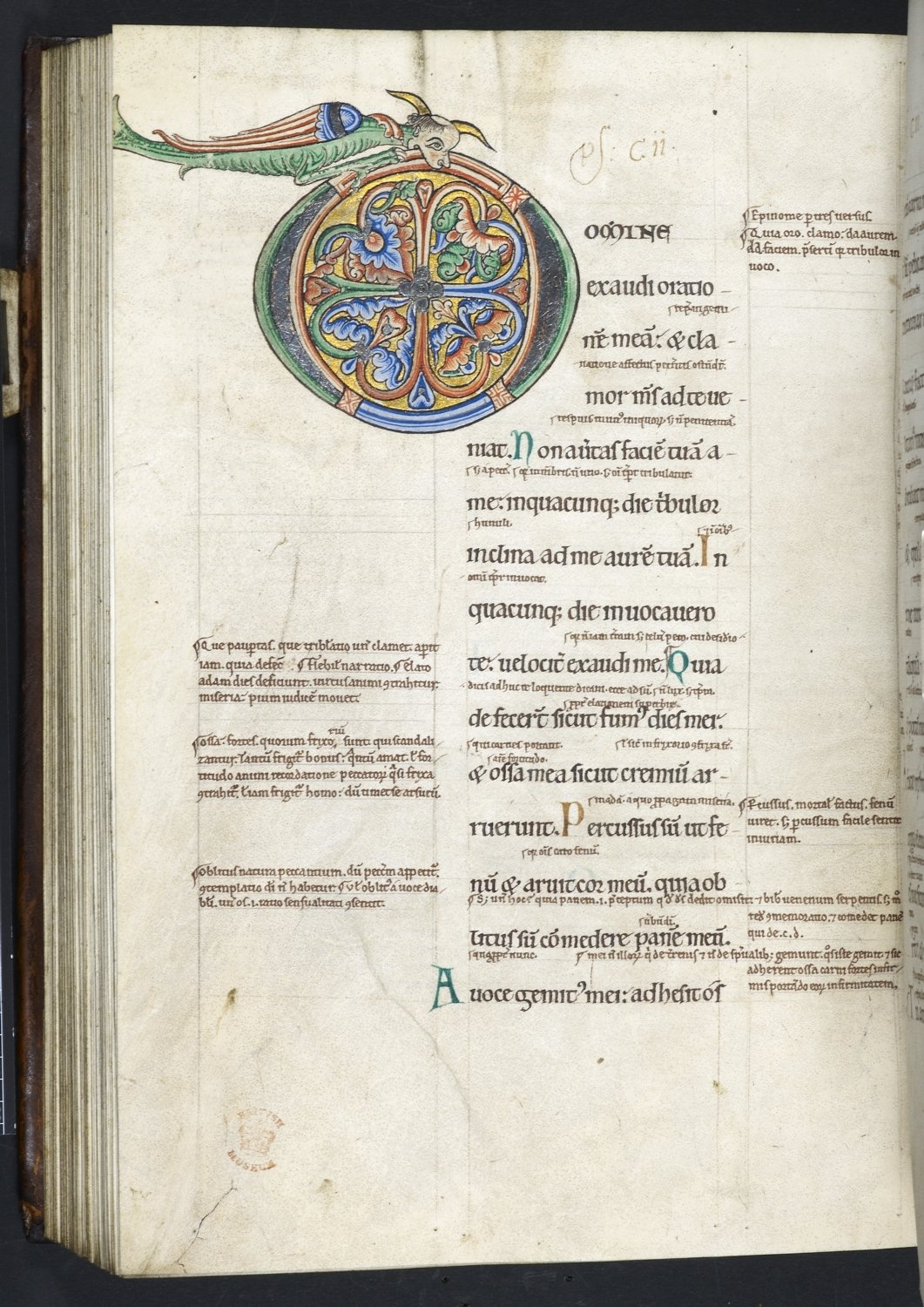
© The British Library Board. Harley MS 628, folio 160 verso. Psalms 101 begin.

© The British Library Board. Harley MS 628, folio 160 verso. Psalms 101 begin.

Panel Sponsored by the Research Group on Manuscript Evidence
at the Midwest Modern Language Association Convention
15 November 2018

Panel Chair:  Justin Hastings, Loyola University Chicago

[Note the recent change in Program, by which the paper by Jessie McDowell will be replaced by Justin’s.]

Chikako D. Kumamoto, College of DuPage, Addison, Illinois
“ ‘The Press and the Fire’ and ‘Discretion’:
Distributing Cognition and Its Reception through Paratextual Apparatus in Print and Manuscript Culture”

Abstract of Paper

Two sources inspire my title.
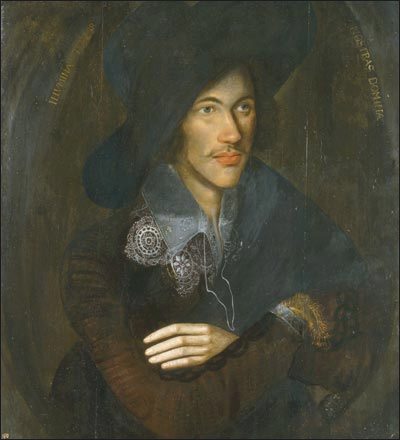
Portrait of John Donne as a young man, circa 1595. London, National Portrait Gallery, via Wikipedia Commons in the Public Domain.

Portrait of John Donne as a young man, circa 1595. London, National Portrait Gallery, via Wikipedia Commons in the Public Domain.

Its first part comes from the letter by John Donne (1572–1631) to Robert Ker (1570? – 1650), wherein he included his manuscript of Biathanatos, while instructing Ker to “publish it not, but yet burn it not, and between those do what you will with it” (Gosse, 2:124).  In this letter, Donne places his writing between the rigid visual fixity of print ([“Press”]) and the complete destruction of his words in the manuscript ([“the Fire”]), and asks Ker to use his “discretion” (“do what you will with it”) to guard against the potential misreading by readers.  The second part refers to Edwin Hutchins’s 1995 study of maritime navigation, Cognition in the Wild, which argues that cognition is “always situated in a complex sociocultural world” (Hutchins, page xiii) and that “thinking and action occur as individuals mobilize a range of external resources and representations” (xii).

Viewing Donne and Hutchins at the trans-epochal threshold of cognition/knowledge-making and its distribution and reception from writer to reader, I seek to examine how Donne’s misgivings about a potential loss of his actual voice in manuscript predictively signal readers’ mental activities occurring during their print-oriented, socially-networked reading — the process to which Hutchings’s cognitive systems, composed of multiple social agents in the material world, can be applied.  For both writers provoke an epistemic dialectics of textual reading as culturally-constituted, collaborative activities (writing and publishing manuscripts, and their paratextual apparatus such as title pages, prefaces, images), impacting on the reader’s thinking, knowing, and interpreting outside the writer’s manuscript culture.

By also analyzing title pages of Quarto 1 and Quarto 2 of Shakespeare’s Romeo and Juliet, I exemplify how their paratextual apparatus transmits the play’s central message which  Shakespeare’s, as well as our contemporary, readers will receive collaboratively from the “discrete” dialogue between writer and reader, between a manuscript text and its paratextual apparatus.

Tentative Bibliography

Donne, John. The Life and Letters of John Donne. Ed. Edmund Gosse.  2 vols. New York: Dodd, Mead and Company, 1899;  rprt. Gloucester, MA: Peter Smith, 1959.

Halio, Jay I. ed. Romeo and Juliet: Parallel Texts of Quart 1 (1597) and Quart 2 (1599). Newark: University of Delaware Press, 2008.

Hutchins, Edwin. Cognition in the Wild. Cambridge, MA, and London: MIT Press, 1995.

Shakespeare, William. The Tragedy of Romeo and Juliet. Folger Library Shakespeare. Ed. Barbara A. Mowat and Paul Werstine. New York: Washington Square Press, 1992.
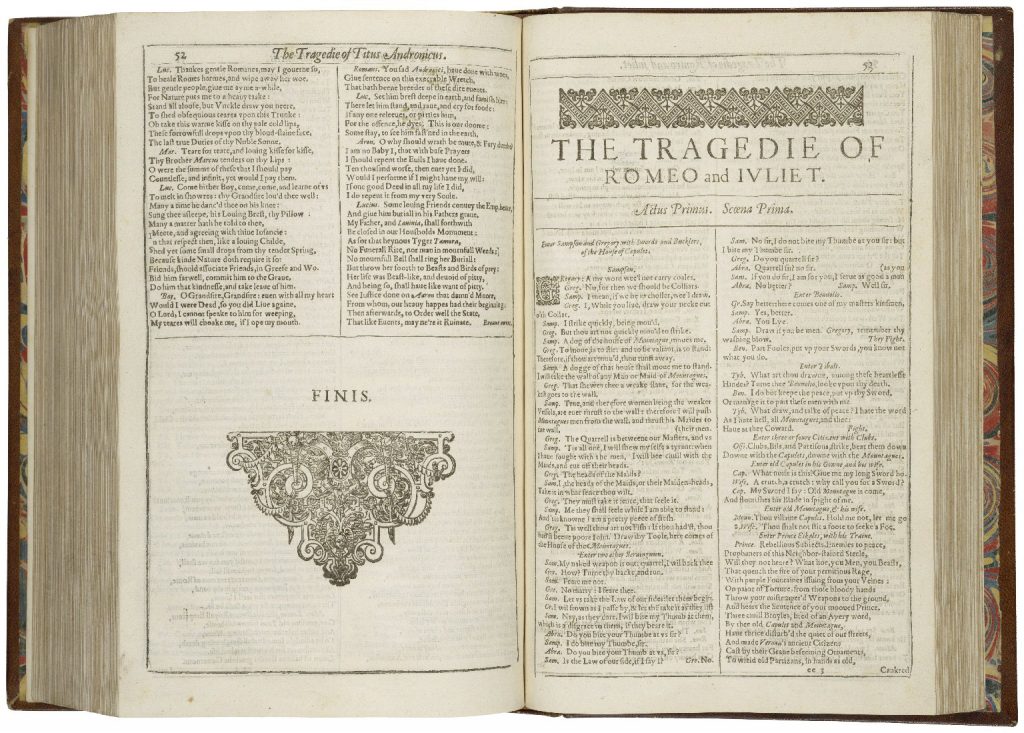
Title Page of "Romeo and Juliet" in the First Folio (1631). Folger Shakespeare Library., via Wikipedia Commons.

Title Page of “Romeo and Juliet” in the First Folio (1631). Folger Shakespeare Library., via Wikipedia Commons.

[This paper has been withdrawn:

Jessie McDowell, Loyola University Chicago
“Medieval Manuscripts and Interoperability:
Scholarly Editing, Collaboration, and the Digital Artisan”]

Justin Hastings, Loyola University Chicago
“Sexual Consumption and Paratextual Restraint in Lady Margaret Cavendish’s ‘The Convent of Pleasure’:
Newberry Library Case Y 135.N43”

Abstract:
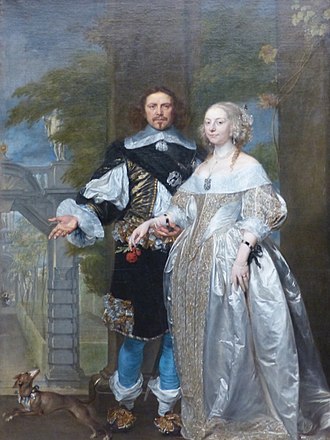
Portraits of Margaret Cavendish and her husband, William Cavendish, 1st Duke of Newcastle-upon-Tyne. Oil on canvas, attributed to Gonzales Coques (between 1614 and 1618 - 18 April 1684). Image via Wikipedia Commons.

Portraits of Margaret Cavendish and her husband, William Cavendish, 1st Duke of Newcastle-upon-Tyne. Berlin, Gemäldegalerie. Oil on canvas, attributed to Gonzales Coques (between 1614 and 1618 – 18 April 1684). Image via Wikipedia Commons.

In “The Convent of Pleasure” by Margaret Cavendish (1623-1673), Duchess of Newcastle, the play’s protagonist Lady Happy, finding herself her father’s sole heir, proposes to encloister herself with “so many Noble Persons of my own Sex, as my Estate will plentifully maintain, such whose Births are greater then their Fortunes, and are resolv’d to live a single life and vow Virginity” (2.2).  Lady Happy’s rationale for this is that it is impossible for a woman to be happy in marriage, since under the contemporary legal doctrine of Coverture, a wife not only surrendered her wealth to her husband, but her very selfhood was legally consumed as well.

Lady Happy, consequently, removes both herself and a coterie of similar wellborn women from a system of economic exchange in which an aristocratic women serves simply as the financial instrument by which wealth and power may pass from a hegemonic male to his heir. The fourth act of the play interrupts the otherwise subversive thrust of the play to present a reimagined fertility ritual accompanied by a pair of verse passages written by William Cavendish (1592–1676), 1st Duke of Newcastle, that serve to reinscribe the very system of aristocratic marriage that the rest of the play seeks to complicate: coats of arms are offered up as the prize for the maypole dance, and “holy Hymen’s Law” is reinstated and reinforced (4.1).

Unlike the 1662 edition of the play, the 1668 edition, as attested by Chicago, Newberry Library, Case Y 135.N43, explicitly ascribes authorship of these passages via a pair of pasted-down strips of paper imprinted with “VVritten by my Lord Duke.”  Other extant copies of the 1668 edition preserve this feature along with a sequence of hand-corrections throughout the volume.

This paper will examine these and other codicological features, including an interruption in the regular quire construction at the play’s fourth act, to argue that the 1668 edition’s explicit attribution of authorship of these verse passages is tied to shifts in William Newcastle’s political fortunes and a renewed need to be seen to curb his wife’s literary aspirations, which were understood as a form of marital unchastity that diminished the Duke’s social reputation.

*****

Further information about the Convention can be found on its website. See also the M-MLA Convention Permanent Section Call for Papers .

Please Contact Us with your questions and suggestions. See you there!

For our other events, please see our News & Views”, and the reports of our activities at the annual International Congress on Medieval Studies and elsewhere.
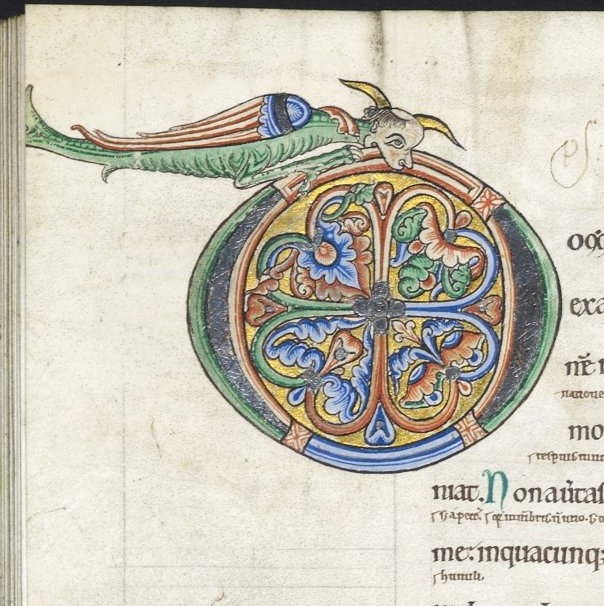
© The British Library Board. Harley MS 628, folio 160 verso. the initial 'd' for 'Domini'.

© The British Library Board. Harley MS 628, folio 160 verso, detail. Psalm 101 begins with the initial ‘d’ for ‘Domini’.

*****

Tags: "The Convent of Pleasure", Conference, Conference Announcement, Edwin Hutchins, John Donne, Margaret Cavendish Dutchess of Newcastle, Midwest Modern Language Association, Newberry Library, Robert Ker, Romeo & Juliet, Shakespeare, William Cavendish 1st Duke of Newcastle
No Comments »

Design & Layout of “The Illustrated Catalogue”

October 12, 2018 in Bembino, Design, Interviews, Manuscript Studies, Parker Library, Photographic Exhibition, Reports, Uncategorized

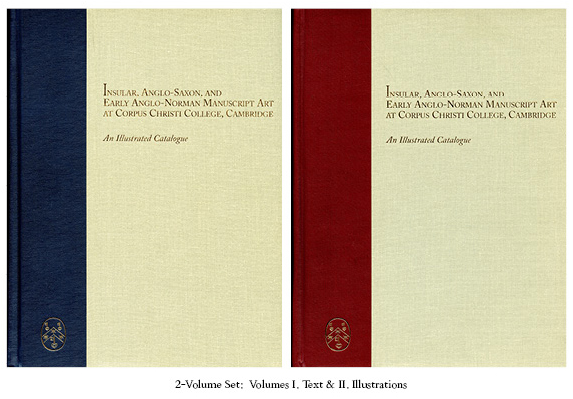
Gold stamp on blue cloth of the logo of the Research Group on Manuscript Evidence. Detail from the front cover of Volume II of 'The Illustrated Catalogue'Continuing our series of interviews and reports, we explore the processes by which Mildred Budny’s 2-volume Insular, Angl0-Saxon, and Early Anglo-Norman Manuscript Art at Corpus Christi College, Cambridge:  An Illustrated Catalogue (“The Catalogue” or “The Illustrated Catalogue”) was designed, laid out, and typeset to camera-ready copy for its publication as a set of 2 volumes of “Text” and “Plates”.

Now we present a joint interview with the Author and the Layout Designer of “The Illustrated Catalogue”.

For information about that publication see Insular, Anglo-Saxon, and Early Anglo-Norman Manuscript Art at Corpus Christi College, Cambridge: An Illustrated Catalogue.

Our interview appears in the new Booklet describing “The Design and Layout of ‘The Illustrated Catalogue’ “.  This 16-page booklet is available freely as a pdf for quarto-size pages:

  • As a series of consecutive pages.
  • In foldable booklet form suitable for printing on 11 1/2 in. × 17 in. sheets.

Front Covers for Volumes I & II of 'Insular, Anglo-Saxon, and Anglo-Norman Manuscript Art at Corpus Christi College, Cambridge: An Illustrated Catalogue' by Mildred Budny, with the title of the publication and the gold-stamped logo of the Research Group on Manuscript Evidence, co-publisher of the volumes


Some of the background for preparing this ground-breaking publication is described in the “Interview with our Font & Layout Designer” (published in print on 25 September 2016 and online on 6 October 2016), with illustrations, and downloadable here.

For the progress and development of our Research Group Publications, please see our Publications. We invite your contributions, suggestions, and feedback.

*****

Tags: Anglo-Saxon Manuscripts, Budny's Illustrated Catalogue, Manuscript Illumination, Medieval manuscripts
No Comments »

2019 International Congress on Medieval Studies Program

September 25, 2018 in Announcements, Conference, Conference Announcement, International Congress on Medieval Studies, Uncategorized

Events
Sponsored and Co-Sponsored
by the Research Group on Manuscript Evidence
at the 54th International Congress on Medieval Studies
9–12 May 2019

[Published on 24 September 2019, with updates.  With the achievement of our Activities at the 2018 Congress, we offered the 2018 Congress Report, and move forward with the preparations for the 2019 Congress.   Now we announce the 2019 Congress Program.  For updates, please watch this space and our Facebook Page.]

*****

In 2019, the Research Group on Manuscript Evidence celebrates its 20th year as a nonprofit educational corporation and its 30th year as an international scholarly organization.  Accordingly, we aim to hold both customary and extra-special events, both at the Congress and elsewhere.

We have a tradition of celebrating landmark Anniversaries, both for our organization, with organizations which which we share anniversaries, and for other events. As described, for example, in our 2014 Anniversary Reflections. For 2019, our events aim to represent, to explore, to promote, to celebrate, and to advance aspects of our shared range of interests, fields of study, subject matter, and collaboration between younger and established scholars, teachers, and others, in multiple centers.

In June 2018, we learned that most — not all — of our Session Proposals (due on 1 June 2018) for the 2019 Congress were accepted by the Congress Committee, so that we progressed to their Call for Papers. We regret the rejections for proposed Sessions which, for example, promoted initiatives by Graduate Students and by Independent Scholars, and which we wished to support.  However, we worked with what was granted.  With the strong responses to that Call (due on 15 September), we selected the Programs for the Sessions, the details of which we submitted to the Committee for review (due on 1 October).  Now we announce the Programs for our Sessions, as well as our other Events planned for the Congress.

Who, What, Why Not

Logo of the Research Group on Manuscript Evidence (colour version)As in recent years, we co-sponsor Sessions with the Societas Magica (2 Sessions). It will be the 14th year of this co-sponsorship. It will be the first year of co-sponsorship with the newly-founded organization Polytheism-Oriented Medievalists of North America (POMONA).

Also, like the 2015–2018 Congresses, we plan for

  • an Open Business Meeting and
  • a Reception.

As usual, we aim to publish the Program for the accepted Papers, as their Authors permit. Abstracts for previous Congresses appear in our Congress Abstracts, conveniently Indexed both by Year and by Author.

Read the rest of this entry →

Tags: Celtic Magic Texts, History of Magic, Societas Magica
No Comments »

“Consuming Cultures & Manuscript Evidence” – 2018

August 30, 2018 in Conference, Conference Announcement, M-MLA, Midwest Modern Language Association, Uncategorized

“Consuming Cultures and Manuscript Evidence”

2018 Permanent Panel
sponsored by the
Research Group on Manuscript Evidence
at the
Midwest Modern Language Association (M-MLA)

2018 Convention
Kansas City, Missouri
November 15–18, 2018

[Posted on 30 August 2018, with updates, now with a change to the Program.  Now see a newer version of this post: 2018 M-MLA Panel.]

The Research Group on Manuscript Evidence, in keeping with the M-MLA’s theme of “Consuming Cultures” for its 2018 Convention, sponsors a panel on the “Consumption of Manuscripts”.  After the completion of the Call for Papers, we now announce the Program for the Panel, which will take place on 15 November. The Program for the Convention in full is now available in preview through the M-MLA website: 2018 Program Booklet.

Food for Thought

In our design for the Panel, both in its proposal (as circulated in the Call for Papers) and in the selected design for its Program, we recognize that consideration of “consumption” can be literal, metaphorical, or both.  For example, the process and product could mean the destruction wrought by bookworms, fires, and biblioclasts, and/or the consumption effected by textual transmission and reception more broadly.

Accordingly, we have invited all approaches, including textual, art historical, codicological, and paleographical.  Also invite subjects from all periods.  Nice.

© The British Library Board. Harley MS 628, folio 160 verso. Psalms 101 begin.

© The British Library Board. Harley MS 628, folio 160 verso. Psalms 101 begin.

Year 3 of Our Panels at the M-MLA

Thanks to the expert initiatives by our Associate Justin Hastings, this will be the 3rd year that the Research Group sponsors Permanent Panels at the Annual Convention of the Midwest Modern Language Association.

The plan to sponsor the 2018 Panels draws inspiration from the success of our Panels at the M-MLA in the past 2 years. Details here:

2017

2017 M-MLA Panel on “Artists, Activists, and Manuscript Evidence”
2017 M-MLA Panel Report

2016

“Marginalia in Manuscripts and Books” for the 2016 M-MLA
2016 M-MLA Report

Chandelier and Ceiling Murals at the Netherland Plaza Hotel. Photography by Mildred Budny.

“Seeing the Light”. Chandelier and Ceiling Murals at the Netherland Plaza Hotel.

As customary for our Sessions at the International Congress on Medieval Studies, we publish the Abstracts of the Papers for our Panels at the M-MLA Convention in our Panel Announcements and Reports.

*****

The continuation of the tradition of Permanent Panels at the M-MLA Convention is most welcome, and we thank our organizer, Justin Hastings, and the Midwest Modern Language Association. We congratulate Justin for his expert organizational skills and outstanding collegiality, and we applaud his willingness to continue to organize the panels for the Research Group on Manuscript Evidence.

*****

© The British Library Board. Harley MS 628, folio 160 verso. the initial 'd' for 'Domini'.

© The British Library Board. Harley MS 628, folio 160 verso, detail. Psalm 101 begins with the initial ‘d’ for ‘Domini’.

*****
Program

Session 21. Friday 8:30–9:45 a.m.

“Consuming Cultures and Manuscript Evidence”

Panel Sponsored by the Research Group on Manuscript Evidence
at the Midwest Modern Language Association Convention
15 November 2018

Panel Chair:  Justin Hastings, Loyola University Chicago

[Note the recent change in Program, as the paper by Jessie McDowell will be replaced by Justin’s]

Chikako D. Kumamoto, College of DuPage, Addison, Illinois
“ ‘The Press and the Fire’ and ‘Discretion’:
Distributing Cognition and Its Reception through Paratextual Apparatus in Print and Manuscript Culture”

Abstract of Paper

[Jessie McDowell, Loyola University Chicago
“Medieval Manuscripts and Interoperability:
Scholarly Editing, Collaboration, and the Digital Artisan”]

Justin Hastings, Loyola University Chicago
“Hic Littera Patet:  Medieval Commentaries on Horace’s Satires and Patterns of Textual Consumption”

*****

Further information about the Convention can be found on its website. See also M-MLA Convention Permanent Section Call for Papers .

Please Contact Us with your questions and suggestions. See you there!

*****

Tags: M-MLA, Manuscript studies
No Comments »

Latin Document of 1437 on Vellum from Barcelona

August 13, 2018 in Manuscript Studies, Uncategorized

Large-Format Single-Sheet Document in Latin on Vellum
Circa 58.4 cm × 34.1 cm|
With a Matching, and Still Conjoint, Pair of Records
for a Sale in 1437 (Perhaps Effected?)
between 2 Named ‘Transporters of Animals’
in the ‘City of Barcelona’

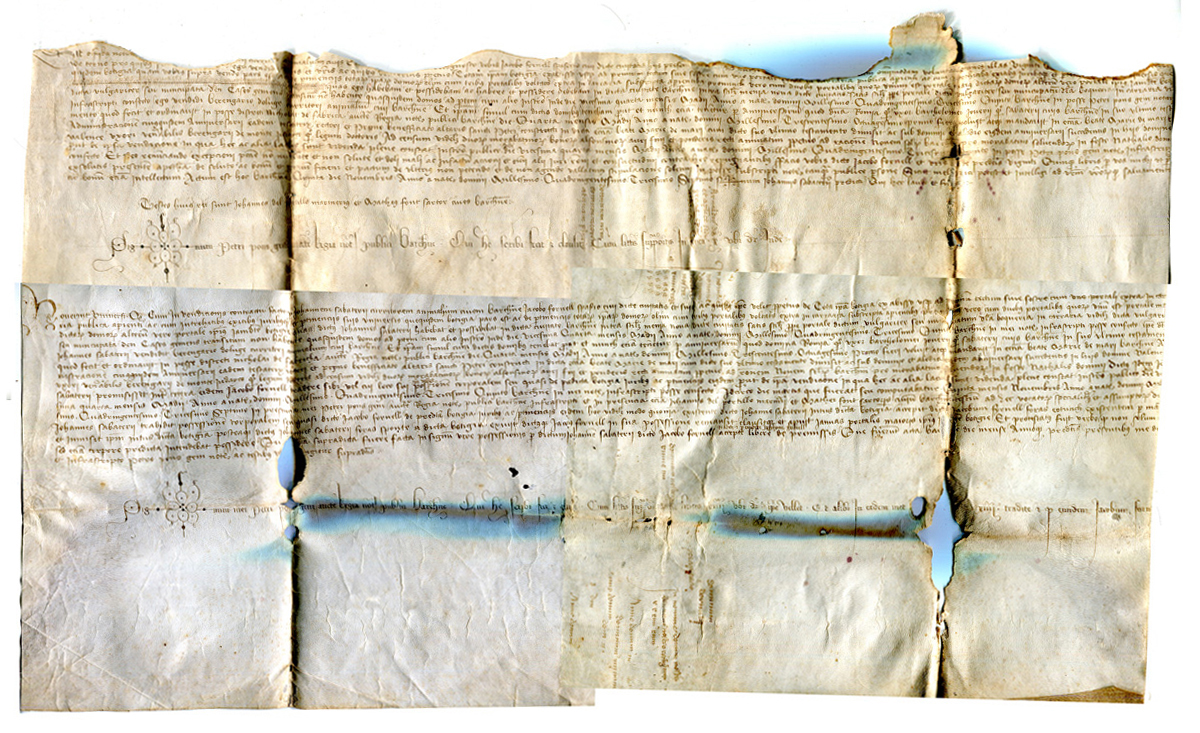
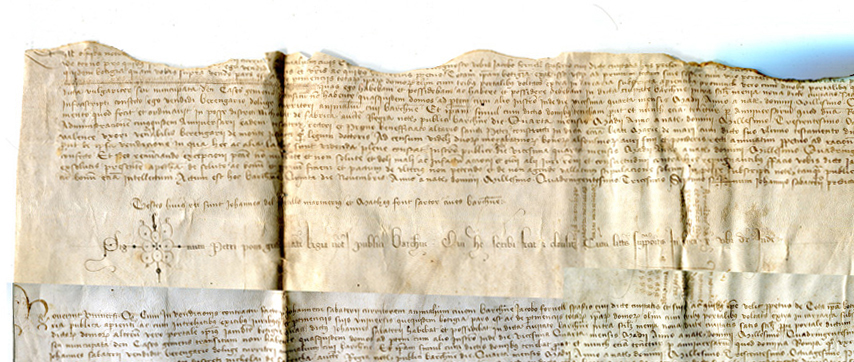
Large Single-Sheet Latin Document on Vellum recording a sale of land of 1437. Private Collection. Reproduced by Permission.[Published on 20 August 2018.  Our blog continues to report discoveries among dispersed manuscript fragments and documents of varying dates and provenance. See the Contents List, arranged principally by genres.

Update on 15 July 2020:  Now see Fragments of a Castle Capbreu from Catalonia, examining parts of the volume for which this pair of documents apparently formerly served as the cover or wrapper.]

Recycling in Action

As a reused older document, the large vellum sheet served for a time as the parchment cover from some later register (now lost, or lost track of).  With an undulating and irregular upper edge, the sheet now measures circa 584 mm × 341 cm.

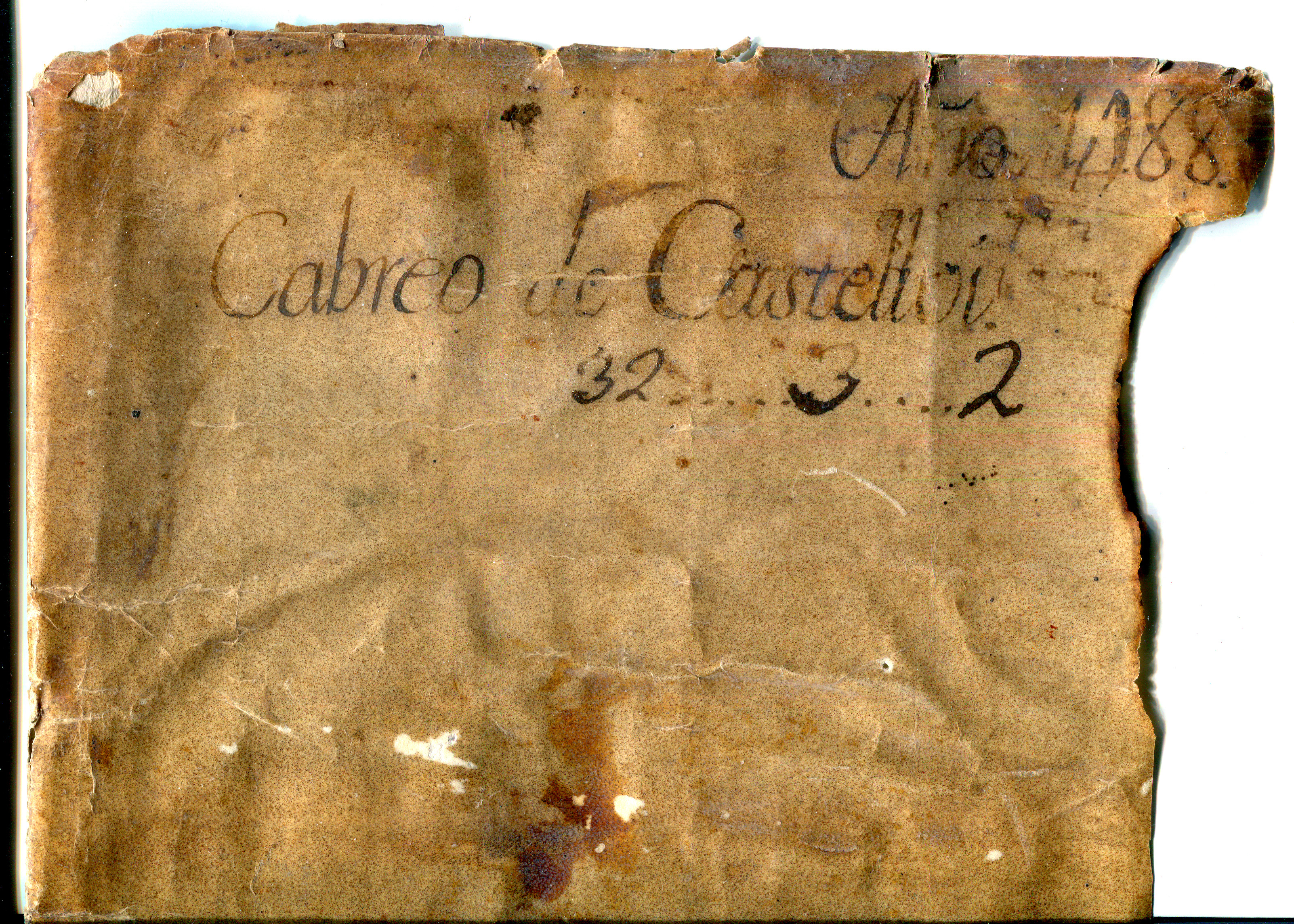
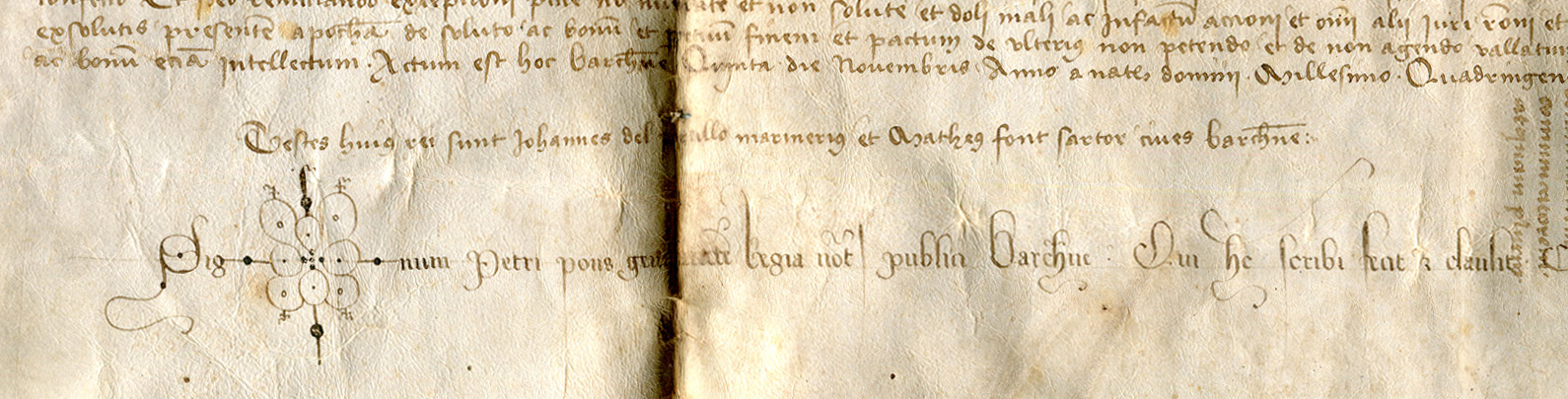
Bipartite 1437 Document in Latin from Barcelona. Docketing Inscription on verso or dorse of the vellum sheet, with information about the former volume which the vellum sheet formerly covered. Private Collection, reproduced by permission.Placed on one side of the sheet, the original text comprises two documents, one after the other, or rather two copies of a single document, regarding the same sale, dated 1437 and supplied with the same notarial signature.  The other side of the sheet carries a set of inscriptions which provide information concerning the contents of the former register, rather than docketing information for the document itself. 

Such docketing inscriptions appear, for example, on some other subjects of our blog, as with some other documents not pressed into service as reused covers: here and here. These differ from the titles or identifying inscriptions for the volumes which the reused sheets formerly covered. Such cases appear, for example, on large vellum sheets, from documents or manuscripts, pressed into service as covers, as here.

The document now resides in a Private Collection, obtained through an online transaction.  We thank the owner for bringing this item to our attention and supplying information as well as images.

Size Matters

The size of the object required a piece-meal set of scans for its reproduction.  Preparing the image shown here, the owner reports that, given the size of the available scanner,

I had to fit four scans together, and it [that is, the image] isn’t quite complete, although it is missing at most three or four letters from [the end of] each line.  One of the parties is a certain Johannem Sabaterii curritorem animalium civem Barchine who sells the property to one Berengario Doluge curritorem animalium civem Barchine.

And so, with that resourceful tesselation, the face of the document appears here more-or-less in full:Large Single-Sheet Latin Document on Vellum recording a sale of land of 1437. Private Collection. Reproduced by Permission.

From One “Animal Transporter” To Another

The transaction(s) on the document concern(s) the sale of property from one “transporter of animals” to another.

Various documentary records which survive and have online access for research cite this occupation for individuals engaging in transactions of some kind or other, as here: curritorem animalium.

Both Agents Based in, or From, the ‘City of Barcelona’

On this document, both individuals which engage in the transaction are identified moreover as coming from, or belonging to, the civ[itat]em Barchine.  That is, presumably, the city of Barcelona: civitatem barcinoniae, or Barcelona.

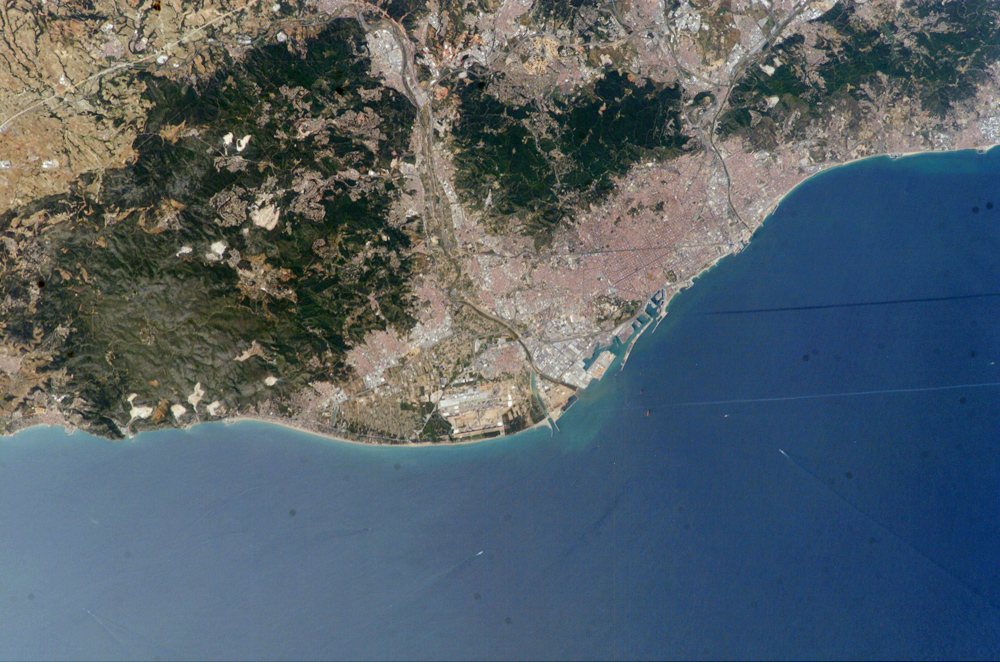
Astronaut photo of Barcelona, Catalonia, Spain (3 June 2004). Via Earth Observations Laboratory, Johnson Space Center. NASA, public domain.

Astronaut photo of Barcelona, Catalonia, Spain (3 June 2004). Via Earth Observations Laboratory, Johnson Space Center. NASA, public domain.

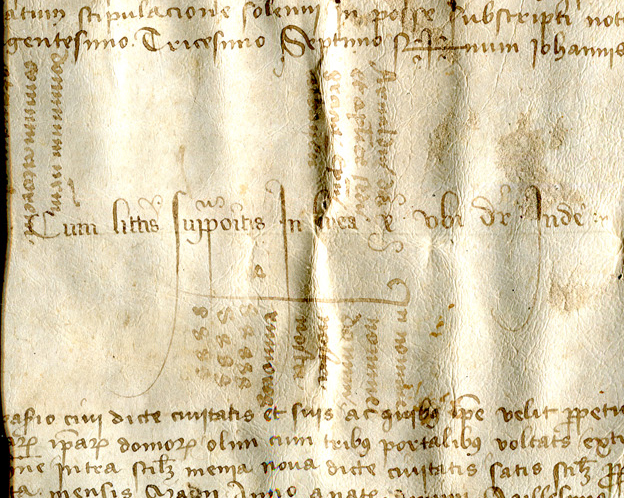
Docketing for the Former Contents:  Cabreo de Castelloni for 1488

On the verso (or dorse) of the document there stands a set of inscriptions written in two stages in two different inks and by two or more different hands identifying the contents.  In three lines, the inscriptions state:

Añ[n]o 14.88.
Cabreo de Castello[n]i.
32 . . . . 3 . . . . 2

“Year 1488.
Cabreo of the Castle
32 . . . . 3 . . . . 2″

The first two lines state their case in a tall, imposing script written in dark brown ink.  The third line rests its case in a series of numerals and dots written in mostly darker ink with a thinner pen (or pens) and partly retraced and add components, perhaps entered by two different hands or one hand on a revisit.

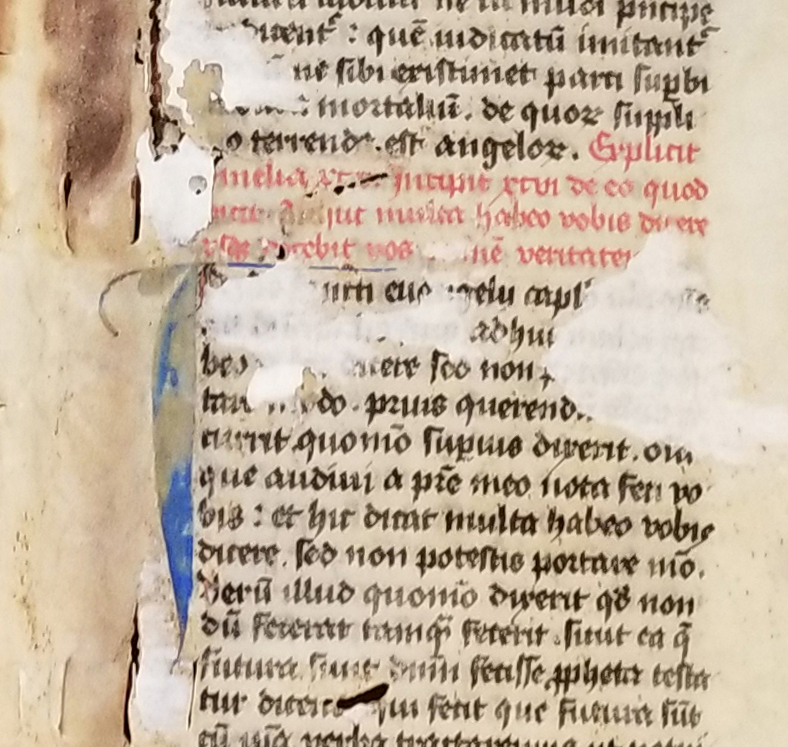
568 1437 Document Docketing

The language is Castellan, as signalled by the word cabreo: “In Catalonia and probably also in other areas of Spain, documents called Capbreus (in Castilian Spanish: Cabreo) are known from the Middle Ages.”

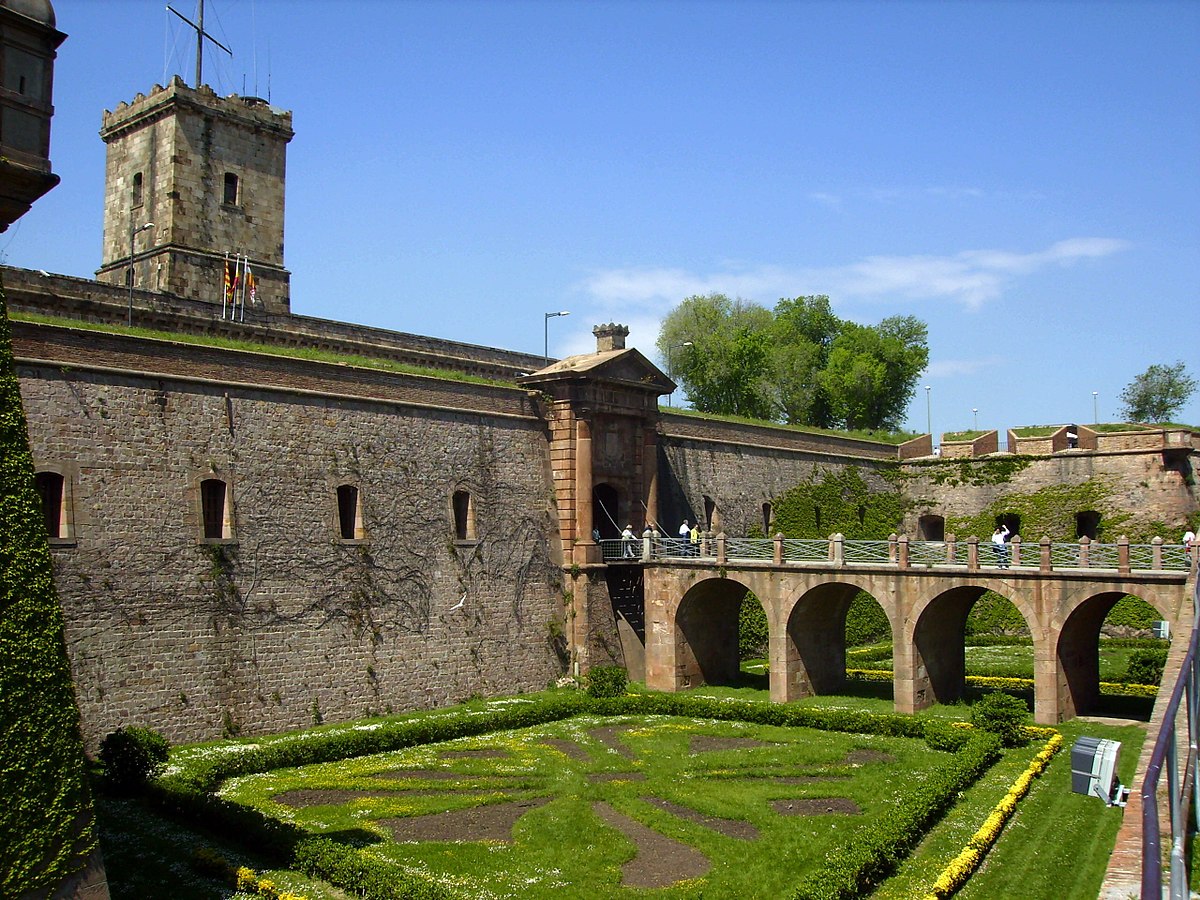
The inscription indicates that the vellum document served for a time as the cover, or part of the cover, of the cartulary of the castle, presumably Montjuïc Castle.  The building still stands, although its former moat has been overplanted. The identification of which castle derives from other evidence pertaining to materials purchased from the same online source.

Entrance to Montjuïc castle across the former moat. Photograph 2007 by Puigalder, via Wikipedia Commons.

Entrance to Montjuïc castle across the former moat. Photograph 2007 by Puigalder, via Wikipedia Commons.

*****

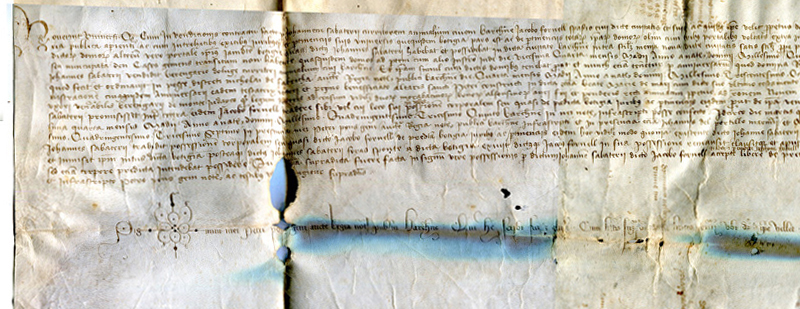
289 1437 Document Top Right cropped

Top Left: Document Version 1

Latin document of 1437 detail of Top Left. Private collection, reproduced by permission.

Bottom Left: Document Version 2

1437 upright Mid Left

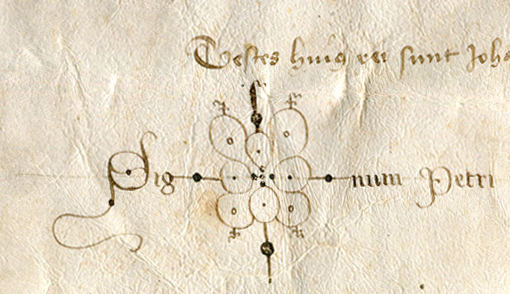
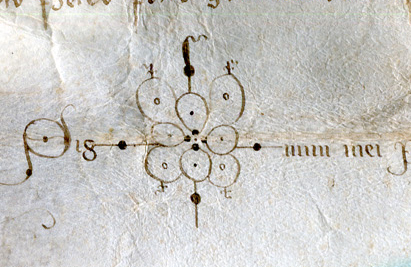
The Notary Petrus Pons of Barcelona and His Sign

So far, as we begin to examine the document, so good.  More research may yield further information about the named individuals, including the notary, whose professional script and distinctive notary sign imply extensive practice at the skill.

290 1437 Top Left rotated Notarial Signature

Signum Petri Pons . . . legia not[aria] publi[c]a barch[i]ue

Notarial Sign Version 1

Notarial Sign Version 1

Notarial Sign Version 2

Notarial Sign Version 2

Also, given the still-conjoined duplicate copies of the transaction, we might wonder if the transaction somehow was incomplete, or aborted, so that one, another, or neither party received his or their copies of the deed.

Perhaps therein lies a tale.

Any Suggestions?

More to Learn

Do you have any suggestions or observations? Might you join the quest to discover more about this large-format single-sheet document on vellum in Latin apparently from Barcelona?

Do you recognize this scribe, his notarial sign, those parties to the transaction, or similar circumstances?  Do you know of other records naming these parties:   Johannem Sabaterii curritorem animalium civem Barchine who sells the property to one Berengario Doluge curritorem animalium civem Barchine?

Please let us know.  Please add your contents here or Contact Us.

*****

Tags: Barcelona, curritorem animalium, Medieval Documents Reused as Binding Covers, Notarial Sign, Petrus Pons Notary of Barcelona
No Comments »

Sanskrit and Prakrit Manuscripts

April 18, 2018 in Manuscript Studies, Uncategorized

Palm-Leaf and Paper Manuscripts

[Posted on 18 April 2018, with updates and corrections.  Among the updates are new images, showing more specimens in the collection.  We thank John Stavrellis, who works toward a Ph.D. in Indology at the University of Bonn, for identifications of the text on some leaves.]

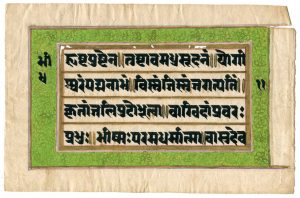
Paper Leaf in Sanskrit with an Ornate Frame for the 4-Line Text. Gold-framed rectangular green border with frieze-like floral designs in dark green pigment. Private Collection. Photography by Mildred Budny.Inspired by some recent communications, as scholars, collectors, and devotees of manuscripts around the world recognize a welcome on our website, we present some fragments from palm-leaf and paper manuscripts which have joined a collection willing to welcome them.  This private collection of many varieties of scripts, texts, languages, formats across the ages and across many cultures — see our Galleries — has generously allowed us to display, study, and publish them, along with discoveries that this collaboration permits.
For some time, I have meant to present these images on a Gallery of one kind or another on our nonprofit website.  In the transition from our first (Drupal) website to the second (WordPress), I encountered so many difficulties regarding any advance with the Galleries and Media, ensuring an inevitably cumbersome transition from one to the other.

That was then.  This is now. Read the rest of this entry →

Tags: Astrological Manuscripts, Bhagavadgita Manuscripts, Devī Māhātmyam Manuscripts, Kalpa Sūtra Manuscripts, Mahābhārata Manuscripts, Palm-Leaf Manuscripts, Prakrit, Sanskrit, Stringing Holes, Vishnu Sahasranāma stotra Manuscripts
5 Comments »

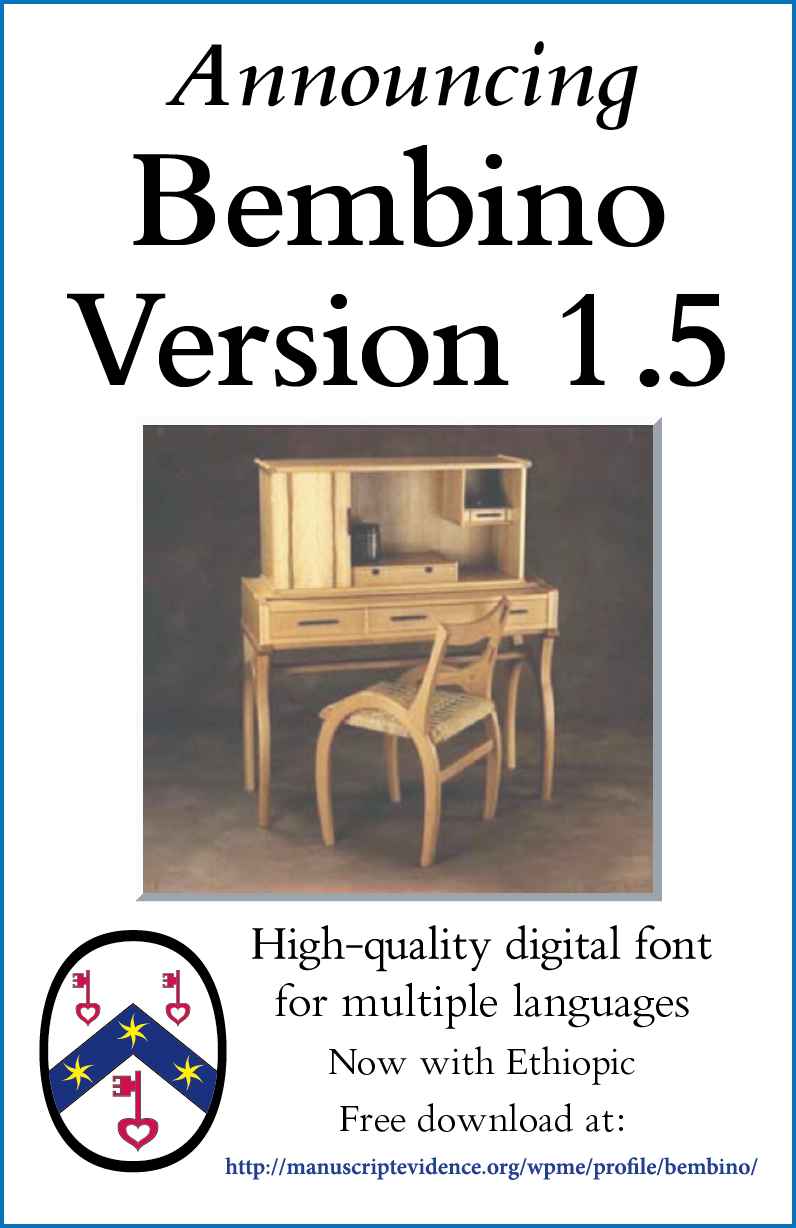
Bembino Version 1.5 (2018)

April 18, 2018 in Announcements, Bembino, Manuscript Studies, Uncategorized

The Newest Version of Bembino (Version 1.5)

Poster Announcing Bembino Version 1.5 (April 2018) with border for Web display

Poster Announcing Bembino Version 1.5

Years in the making, through consultation with scholars, students, and readers in a wide range of fields, Bembino is designed to allow multiple languages to live in harmony on the same page.

We offer Bembino Version 1.5 (2018), together with an updated version of the companion Booklet.

Available FREELY for download here.

Enjoy!

Would you like further elements? Please Contact-Us .

****

Tags: Bembino, Bembino Digital Font
No Comments »

Starter Kit

February 13, 2018 in Announcements, Photographic Exhibition, Uncategorized

Would You Like
Your Very Own Collection of
Medieval Seal Matrices?

Now is your chance

The Research Group on Manuscript Evidence has been offered a starter collection to examine, photograph, and offer for sale. With the donation of proceeds to support our nonprofit educational corporation’s mission.  A generous contribution!

Generosity?  You bet.  That’s how we roll: Contributions and Donations.

*****

About this new Medieval Matrix offering.

Sneak preview here.

Medieval Seal Matrices 1-14  in Tray with color guide at 72 dpiDescriptive booklet coming soon. Ooh!

To Have & To Hold, For Real

Would you want your very own collection of Medieval Seal Matrices to have and to hold? We confidently say that it is a treat to hold these specimens from medieval life.

While we prepare the Sale Catalogue, with photography by our in-house photographer, with layout by our in-house designers, and with research by our resident specialist, we can say that we’d love to sell this collection as a whole, as the complete ensemble.

That is how the collection, they tell us, came to become available.  Through a generous, well-meaning donation, it can be offered for sale with proceeds to support our nonprofit educational mission.

Wouldn’t you love to have this collection, and its specialist booklet showcasing its qualities and varieties, for your very own?

Please Contact Us.

*****

Tags: medieval seal-matrices
No Comments »

« Older Entries
Newer Entries »
  • Top
©2024 Research Group on Manuscript Evidence.


is proudly powered by WordPress. WordPress Themes X2 developed by ThemeKraft.