• News
    • News & Views
    • RGME Activities for 2024 and 2025
    • Around & About with the RGME
    • Reviews
    • Highlights
  • Blogs
    • Manuscript Studies
      • Manuscript Studies: Contents List
    • International Congress on Medieval Studies
      • Abstracts of Congress Papers
        • Abstracts of Papers Listed by Author
        • Abstracts of Papers Listed by Year
  • About
    • Mission
    • Who We Are
      • Officers, Associates & Volunteers
      • RGME Committees
      • Friends of the Research Group on Manuscript Evidence
    • Policies & Statements
      • RGME Privacy Policy Statement
      • RGME Intellectual Property Statement & Agreements
    • People
      • Mildred Budny — Her Page
      • Adelaide Bennett Hagens
    • Activities
      • Events
      • Congress Activities
        • Sponsored Conference Sessions (1993‒)
          • Panels at the M-MLA Convention (from 2016)
        • Co-sponsored Conference Sessions (2006‒)
    • History
      • Seals, Matrices & Documents
      • Genealogies & Archives
    • Contact Us
  • Bembino
    • Multi-Lingual Bembino
    • RGME Bembino: Resources
  • Congress
    • Sponsored Conference Sessions (1993‒)
    • Co-sponsored Conference Sessions (2006‒)
    • Abstracts of Congress Papers
      • Abstracts Listed by Author
      • Abstracts Listed by Year
    • Kalamazoo Archive
    • Panels at the M-MLA Convention (2016-2019)
      • Abstracts of Papers for the M-MLA Convention
      • Panels at the M-MLA Convention (from 2016)
  • Events
    • RGME Activities for 2024 and 2025
      • 2023 Activities and 2024 Planned Activities
    • Seminars, Workshops, Colloquia & Symposia (1989–)
      • Seminars on ‘The Evidence of Manuscripts’
      • Symposia on ‘The Transmission of the Bible’
      • The New Series (2001-)
        • 2019 Anniversary Symposium Program: The Roads Taken
        • 2019 Anniversary Symposium Registration
        • 2019 Anniversary Symposium Registration Open
      • RGME Symposia: The Various Series
      • The Research Group Speaks: The Series
      • Meetings of the Friends of the Research Group on Manuscript Evidence
      • RGME Online Events
    • Abstracts of Papers for Events
      • Abstracts of Papers for Seminars on ‘The Evidence of Manuscripts’
      • Abstracts of Papers for Symposia, Workshops & Colloquia
    • Receptions & Parties
    • Business Meetings
    • Photographic Exhibitions & Master Classes
    • Events Archive
  • ShelfLife
    • Journal Description
    • ShelfMarks: The RGME-Newsletter
    • Publications
      • “Insular, Anglo-Saxon, and Early Anglo-Norman Manuscript Art at Corpus Christi College, Cambridge” (1997)
        • Mildred Budny, ‘Catalogue’
        • The Illustrated Catalogue (1997)
      • The Illustrated Handlist
      • Semi-Official Counterfeiting in France 1380-1422
      • No Snap Decisions: Challenges of Manuscript Photography
    • History and Design of Our Website
  • Galleries
    • Watermarks & the History of Paper
    • Galleries: Contents List
    • Scripts on Parade
    • Texts on Parade
      • Latin Documents & Cartularies
      • New Testament Leaves in Old Armenian
    • Posters on Display
    • Layout Designs
  • Donations and Contributions
    • RGME Donor Promise
    • 2023 End-of-Year Fundraiser for our 2024 Anniversary Year
    • 2019 Anniversary Appeal
    • Orders
  • Links
    • Catalogs, Metadata, and Databases: A Handlist of Links
    • Handlist of Resources for Manuscript Studies and Fragmentology
    • Manuscripts & Rare Books
    • Maps, Plans & Drawings
    • Seals, Seal-Matrices & Documents

  • News
    • News & Views
    • RGME Activities for 2024 and 2025
    • Around & About with the RGME
    • Reviews
    • Highlights
  • Blogs
    • Manuscript Studies
      • Manuscript Studies: Contents List
    • International Congress on Medieval Studies
      • Abstracts of Congress Papers
        • Abstracts of Papers Listed by Author
        • Abstracts of Papers Listed by Year
  • About
    • Mission
    • Who We Are
      • Officers, Associates & Volunteers
      • RGME Committees
      • Friends of the Research Group on Manuscript Evidence
    • Policies & Statements
      • RGME Privacy Policy Statement
      • RGME Intellectual Property Statement & Agreements
    • People
      • Mildred Budny — Her Page
      • Adelaide Bennett Hagens
    • Activities
      • Events
      • Congress Activities
        • Sponsored Conference Sessions (1993‒)
          • Panels at the M-MLA Convention (from 2016)
        • Co-sponsored Conference Sessions (2006‒)
    • History
      • Seals, Matrices & Documents
      • Genealogies & Archives
    • Contact Us
  • Bembino
    • Multi-Lingual Bembino
    • RGME Bembino: Resources
  • Congress
    • Sponsored Conference Sessions (1993‒)
    • Co-sponsored Conference Sessions (2006‒)
    • Abstracts of Congress Papers
      • Abstracts Listed by Author
      • Abstracts Listed by Year
    • Kalamazoo Archive
    • Panels at the M-MLA Convention (2016-2019)
      • Abstracts of Papers for the M-MLA Convention
      • Panels at the M-MLA Convention (from 2016)
  • Events
    • RGME Activities for 2024 and 2025
      • 2023 Activities and 2024 Planned Activities
    • Seminars, Workshops, Colloquia & Symposia (1989–)
      • Seminars on ‘The Evidence of Manuscripts’
      • Symposia on ‘The Transmission of the Bible’
      • The New Series (2001-)
        • 2019 Anniversary Symposium Program: The Roads Taken
        • 2019 Anniversary Symposium Registration
        • 2019 Anniversary Symposium Registration Open
      • RGME Symposia: The Various Series
      • The Research Group Speaks: The Series
      • Meetings of the Friends of the Research Group on Manuscript Evidence
      • RGME Online Events
    • Abstracts of Papers for Events
      • Abstracts of Papers for Seminars on ‘The Evidence of Manuscripts’
      • Abstracts of Papers for Symposia, Workshops & Colloquia
    • Receptions & Parties
    • Business Meetings
    • Photographic Exhibitions & Master Classes
    • Events Archive
  • ShelfLife
    • Journal Description
    • ShelfMarks: The RGME-Newsletter
    • Publications
      • “Insular, Anglo-Saxon, and Early Anglo-Norman Manuscript Art at Corpus Christi College, Cambridge” (1997)
        • Mildred Budny, ‘Catalogue’
        • The Illustrated Catalogue (1997)
      • The Illustrated Handlist
      • Semi-Official Counterfeiting in France 1380-1422
      • No Snap Decisions: Challenges of Manuscript Photography
    • History and Design of Our Website
  • Galleries
    • Watermarks & the History of Paper
    • Galleries: Contents List
    • Scripts on Parade
    • Texts on Parade
      • Latin Documents & Cartularies
      • New Testament Leaves in Old Armenian
    • Posters on Display
    • Layout Designs
  • Donations and Contributions
    • RGME Donor Promise
    • 2023 End-of-Year Fundraiser for our 2024 Anniversary Year
    • 2019 Anniversary Appeal
    • Orders
  • Links
    • Catalogs, Metadata, and Databases: A Handlist of Links
    • Handlist of Resources for Manuscript Studies and Fragmentology
    • Manuscripts & Rare Books
    • Maps, Plans & Drawings
    • Seals, Seal-Matrices & Documents

Log in

Archives

Featured Posts

2026 International Congress on Medieval Studies: Program
Episode 24. “Life with Books” (Interview with John Windle)
Announcing the Launch of RGME Bembino WP
2026 RGME Colloquium at The Grolier Club: Report
Medieval Missal Fragment as Early-Modern Cover
The Weber Leaf from Ege MS 61
"Bembino" Booklet Cover
Episode 23. “Meet RGME Bembino: Facets of a Font”
2026 RGME Colloquium on “Transformations & Renewals” at The Grolier Club
2026 Theme of the Year: “Transformations and Renewals”
A Leaf with Patchwork from the Saint Albans Bible
A Sister Leaf from a Miniature Latin Vulgate Bible
A Little Latin Vulgate Bible Manuscript Leaf in Princeton
J. S. Wagner Collection. Leaf from from Prime in a Latin manuscript Breviary. Folio 4 Verso, with part of Psalm 117 (118) in the Vulgate Version, set out in verses with decorated initials.
2026 Annual Appeal
Episode 22: “Encounters with Local Saints and Their Cults”
Private Collection, Ege's FBNC Portfolio, Dante Leaf, Verso, Detail. Reproduced by Permission.
2025 RGME Autumn Colloquium on Fragments
Workshop 8: A Hybrid Book where Medieval Music Meets Early-Modern Herbal
2025 RGME Autumn Symposium on “Readers, Fakers, and Re-Creators of Books”
RGME Workshops on “The Evidence of Manuscripts, Etc.”
2025 International Medieval Congress at Leeds: RGME Program
Episode 21. “Learning How to Look”
2025 International Congress on Medieval Studies: Program
2025 RGME Visit to Vassar College
Two Leaves in the Book of Numbers from the Chudleigh Bible
Delibovi on Glassgold on Boethius: A Blogpost
Ronald Smeltzer on “Émilie du Châtelet, Woman of Science”
2025 Spring Symposium: “Makers, Producers, and Collectors of Books”
Starters’ Orders
The Weber Leaf from the Saint Albans Bible
Workshop 4. “Manuscript Fragments Compared”
Episode 20. “Comic Book Theory for Medievalists”
Episode 19: “At the Gate: Starting the Year 2025 at its Threshold”
Favorite Recipes for Lemonade, Etc.
RGME Visit to the Lomazow Collection: Report
2024 Autumn Symposium: “At the Helm”
A Latin Vulgate Leaf of the Book of Numbers
The RGME ‘Lending Library’
Florence, Italy, Ponte Vecchio from Ponte alle Grazie. Photo: Ingo Mehling, CC BY-SA 4.0 , via Wikimedia Commons
Episode 17. “RGME Retrospect and Prospects: Anniversary Reflections”
2024 Anniversary Symposium: The Booklet
Jesse Hurlbut at the Bonneville Salt Flats, Utah. Photograph Jesse Hurlbut.
Episode 16: An Interview with Jesse D. Hurlbut
To Whom Do Manuscripts Belong?
Kalamazoo, MI Western Michigan University, Valley III from the side. Photograph: David W. Sorenson.
2024 International Congress on Medieval Studies: Report
2024 Spring Symposium at Vassar College
Puente de San Martín: Bridge with reflection over the River Targus, Toledo, Spain.
2024 Grant for “Between Past and Future” Project from The Gladys Krieble Delmas Foundation Research Libraries Program
2024 Anniversary Symposium in Thanks to Jesse Hurlbut: Program

You are browsing the Blog for Manuscript studies

2025 International Medieval Congress at Leeds: RGME Program

December 9, 2024 in Announcements, Conference, Conference Announcement, Events, ICMS, International Medieval Congress, Leeds, Manuscript Studies

2025 International Medieval Congress
at Leeds:
RGME Program

32nd Annual IMC
Monday to Thursday 07–10 July 2025
(with In-Person and Virtual Components)

“Manuscripts as Worlds of Learning”
(3 Sessions + Roundtable)

“Knowledge Games and Games of Knowledge”
(1 Session)

Congress Theme: “Worlds of Learning”

Private Collection. Stereoscopic Photograph of Bridges of Paris, circa 1850s.

[Posted on 8 December 2024, with updates]

Building upon the successful completion of our RGME Inaugural Session at the International Medieval Congress (IMC) at the University of Leeds in July 2024, and responding to the strength and numbers of proposals for our Call for Papers for the IMC in 2025, we announce the Program for our sponsored activities at next year’s Congress.

For information about the Congress, see

  • its official website and
  • the Padlet Page showing the range of organised sessions advertising for papers (as part of the Call for Papers, now completed).

“Worlds of Learning” at Leeds in 2025

The Thematic Focus for the IMC in 2025 is “Worlds of Learning”. The broad scope is described in the general Call for Papers: IMC 2025 – ‘Worlds of Learning’.

The worlds to explore in and for learning are wide. We look to manuscripts as carriers, portals, and thresholds, in keeping with our chosen theme for 2025 RGME activities, “Thresholds and Communities”.

Our Aims

Our set of interlinked events planned for the Research Group on Manuscript Evidence (RGME) focuses on the power and potential of manuscripts to contain, convey, and embody worlds of learning within their span.  In effect, given their structure and contents, as we approach them as beholder, user, reader, student, teacher, or admirer, they may carry worlds in our hands.

How might medieval manuscripts do so, variously for their medieval audience, later intermediaries, and our own times? How might and do they function as “Worlds of Learning” in their own right/write?  We explore.

As interest has grown, the two sessions (plus roundtable) which we planned for “Manuscripts as Worlds of Learning” grew into three (plus roundtable), amounting to four events.  See:

  • Call for Papers for “Manuscripts as Worlds of Learning”

We also present a Session with Papers devoted to “Game Knowledge and Knowledge of Games”, which follows up a strand in our RGME Inaugural Session this year.

  • “Knowledge Games and Games of Knowledge”: An RGME Session for IMC 2025

Following in succession the close of the Call for Papers, our choices for the programs for the sessions and roundtable, and the acceptance of all these sessions plus roundtable by the IMC, we present

  • a suite of events containing three Sessions with Papers accompanied by a Round Table with Discussion, all dedicated to “Manuscripts as Worlds of Learning”
    (Monday 7 July 2025)
  • a Session with Papers dedicated to “Knowledge Games and Games of Knowledge: A Global Perspective on How Manuscripts Conserve and Transmit Ludic Knowledge”
    (Tuesday 8 July 2025)
    Read the rest of this entry →

Tags: Games of Knowledges, International Medieval Congress, Knowledge Games, Manuscript studies, Manuscripts as Worlds of Learning, University of Leeds, Worlds of Learning
No Comments »

The Latin Vulgate Bible Leaf in the Farrell Collection, Part 3: The Full Leaf

November 14, 2024 in Announcements, Event Registration, Manuscript Studies, Research Group Workshops, RGME Lending Library, RGME Library & Archives

The Latin Vulgate Bible Leaf
in the Collection of Jennah Farrell

Part 3: The Leaf Revealed in Full

Single Leaf from the Book of Numbers
now unframed

Laid out in double columns of 46 lines in Gothic Script

Size of leaf =
maximum circa 29.3 cm. tall
 × 20.1 cm. wide
(circa 11 9/16 in. × 7 15/16 in. )

< ruled writing area
circa 18.7 × 12.5 cm. (circa 7 3/4 × 4 7/8 in.)>

[Posted on 13 November 2024]

Collection of Jennah Farrell, Manuscript Leaf in Frame. Photograph by Jennah Farrrell.

Now that the manuscript leaf has been removed from its modern frame (see Part 2 in this series of blogposts), we display photographs of both sides of the leaf uncropped, showing its full extent at present.

We do so especially to prepare for the pair of online Workshops which we plan so as to crowdsource information, expertise, and collaboration. We invite a shared exploration to learn and teach more about the leaf, its original manuscript, its context within its genre of book and other relatives from the same center, period, or region, and perhaps also its travels from its date and place of origin in medieval Europe to its present collection in the United States.

About the frame and information about the collection from which Jennah Farrell acquired the leaf in its frame, see Part 2 on Provenance:

  • Latin Vulgate Bible Leaf in the Collection of Jennah Farrell, Part 2

Part 1 introduced the leaf in its frame, in the state in which it reached the RGME Lending Library for photography, conservation, research, and teaching:

  • A Latin Vulgate Leaf from the Book of Numbers (Part 1)

Now for Part 3 we focus on the leaf itself, including the evidence which its outer portions and its entire back side, formerly hidden, can reveal.

Side 1

This side faced forward in the former frame.

Collection of Jennah Farrell, Single Leaf from the Book of Numbers in a Medieval Latin Vulgate Bible manuscript. Full extent of the leaf, unframed: Recto. Photography by Mildred Budny.

Side 2

Collection of Jennah Farrell, Single Leaf from the Book of Numbers in a Medieval Latin Vulgate Bible manuscript. Full extent of the leaf, unframed: Verso. Photography by Mildred Budny.

Releasing the Leaf from the Frame

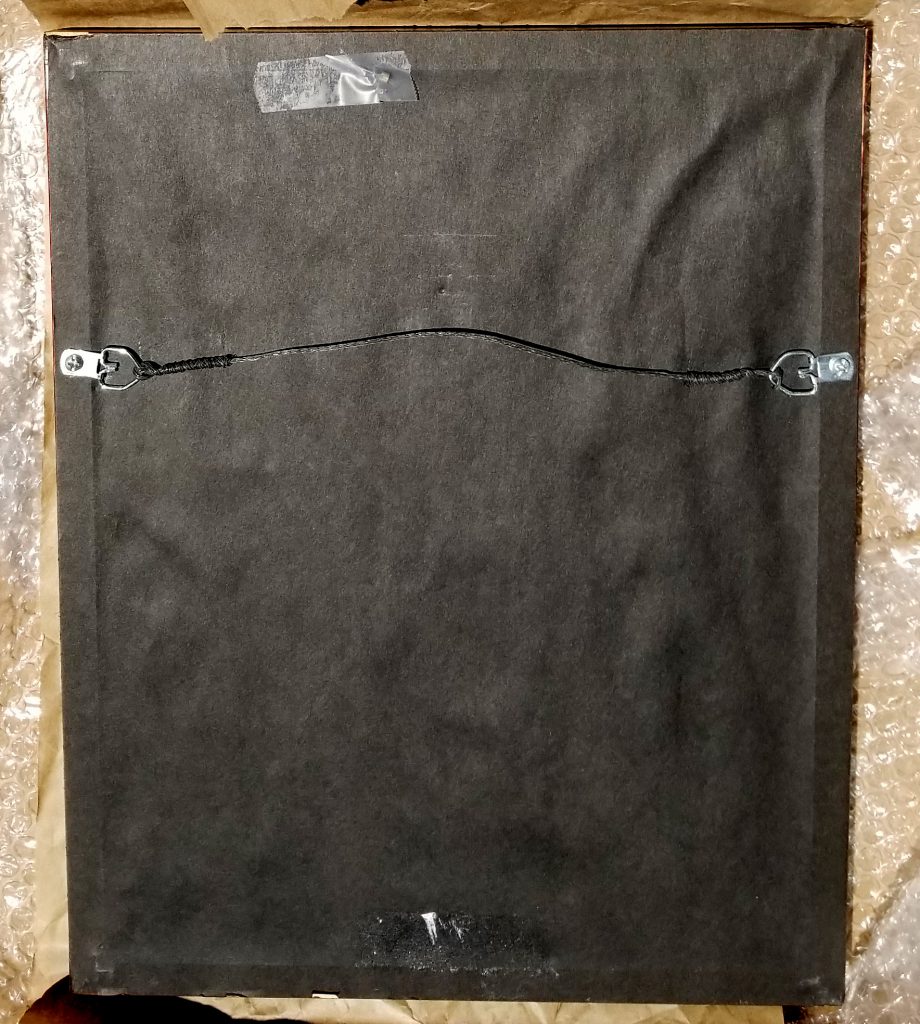
Collection of Jennah Farrell, Manuscript Leaf: Back of Frame. Photograph by Mildred Budny.

Removing the leaf from its frame employed a set of tools 1) to unscrew the mounting hinges and hanging wire, 2) release the backing paper glued to the back edges of the wooden frame, 3) detach the heavy staples which clamped a sheet of foam board to the framing mat, and 4) lift the mat to release the leaf.

Tools to Open the Frame and Left-over Pieces from the Frame containing the Farrell Bible Leaf. Photography by Mildred Budny.

The pieces of the frame are now kept together: stained wooden frame, sheet of glass, windowed mat, foam board, backing paper, staples, and hanging nail. The leaf is now kept in a clear archival L-sheet housed in an archival document binder.

Both Sides Now in View

Released from the frame and its mat, the leaf can be seen to have about 5 cm. more from top to bottom and about 4 more cm. from side to side.  Revealed are the full extent of the margins and parts of the foliate decoration of the ornamental bars which extend from the chapter initials in three columns of the four in the layout of two columns per page or side of the leaf.

Revealed too is the marginal correction for the text entered in the outer margin on the verso and the remnants of the stitching line at the inner edge or gutter of the leaf, where an uneven cut along the full length of the leaf severed it from its formerly conjoint leaf in its original manuscript.

Can you tell which side of the leaf is the front, or original recto, and which is the back, or original verso?

Do you recognize, or would you like to discover, which manuscript the leaf came from when it was cut out of its book and separated from its relatives, to enter the world as a single leaf on its own, suited for framing and display such as on a wall?

Would you like to help us to learn about it?

A Pair of Workshops for this Leaf

We plan two RGME Workshops on Looking at Manuscripts, the first in a new series, to introduce the leaf and learn how to identify its probable date and place of origin, as well as its former manuscript and its context among relatives. Our challenge is to discern what the leaf might itself have to say about these different stages, and what we might discover about its original identity, its former manuscript, and its dispersal.

Both workshops will be held online by Zoom, for which registration (free) is required.

1) Workshop 1 introduces the leaf and sets the groundwork.

Sunday 17 November 2024 at 1:00-2:30 pm EST (GMT-5) by Zoom

  • Workshop 1: Registration

2) Workshop 2 follows up the lines of investigation as we might collectively compare notes and refine our inquiries more fully to understand the leaf and its relatives.

Sunday 16 December 2024 at 1:00-2:30 pm EST (GMT-5)

  • Workshop 2: Registration

After you register, the Zoom Link will be sent to you a few days before the event.

Beginners and experts welcome!

*****

About our new series of Workshops on Looking at Manuscripts, see:

  • The Bridge of Signs

We have been waiting for the opportunity, occasion, and resources to bring to our community for workshops, online and/or in-person, collectively to explore original source materials. With the RGME “Lending Library” as well as our own materials in the RGME Library & Archives, and with our time-tested habits of online events as well as in-person workshops, we launch our new series in a mobile approach to bring together original sources and a community interested in studying them and teaching with them.

Please join our expedition!

*****

Suggestion Box

Please Contact Us or visit

  • our FaceBook Page
  • our Facebook Group
  • our Twitter Feed (@rgme_mss)
  • our Bluesky nest @rgmesocial.bluesky.social)
  • our LinkedIn Group
  • our Blog on Manuscript Studies and its Contents List

Would you like to help?

*****

Tags: Jennah Farrell Collection, Latin Vulgate Bibles, Manuscript studies, Medieval manuscripts
No Comments »

Latin Vulgate Bible Leaf in the Collection of Jennah Farrell, Part 2

November 7, 2024 in Manuscript Studies, Uncategorized

The Latin Vulgate Bible Leaf
in the Collection of Jennah Farrell

Part 2: Provenance

Single Leaf from the Book of Numbers, within Frame
Laid out in double columns of 46 lines in Gothic Script

Visible area within mat:
maximum circa 24.1 cm. tall × 16.3 cm. wide
(circa 9 7/8 in. tall × 6 7/8 in. wide)

< ruled writing area
circa 18.7 × 12.5 cm. (circa 7 3/4 × 4 7/8 in.)>

[Posted on 6 November 2024, with updates]

Collection of Jennah Farrell, Manuscript Leaf in Mat: top left. Photograph by Jennah Farrrell.

Part 2 in our blogposts about a “New Loan” to the RGME “Lending Library” from the Collection of Jennah Farrell examines the evidence for the provenance of the Latin Bible leaf once it reached her collection.  Removing the leaf from its frame waits for a next stage (Part 3).

Part 1 introduced the leaf by examining the span of text and accompanying features on the visible side of the leaf, from the decorated initials and chapter numbers to the full-page vertical bars with extended foliate ornament.

  • A Latin Vulgate Leaf from the Book of Numbers (Part 1)

The visible features establish that this side was the original recto.

Besides the evidence provided by the frame and its backing paper, mounts, and hanging wire, the nature of the acquisition (the ‘find place’ in archaeological terms) affords information about the former owner and its place in that former collection.  Jennah has provided those details from the circumstances of the purchase and her explorations to discover more about the leaf, its identity, and its potential value.

This quest led her to loan the leaf to the RGME and to permit its study, photography, and publication, for which we are grateful. The process, integrated with the on-going work of the RGME in the course of its activities through its 2024 Anniversary Year, gives the opportunity for teaching as the research unfolds.

Read the rest of this entry →

Tags: Collection of Jennah Farrell, Fragmentology, Manuscript Provenance, Manuscript studies, Medieval Latin Vulgate Bibles
No Comments »

The Bridge of Signs

November 5, 2024 in Manuscript Studies, Research Group Workshops

The Bridge of Signs

Bridging the Gap
between Original Source
and its Interpretation

Signposts
by the RGME Research Consultant,
Leslie J. French

with a Foreword by the RGME Director and WebEditor,
Mildred Budny

[Posted on 5 November 2024, with updates]

Foreword

by Mildred Budny

As the RGME plans a new series of Workshops to examine manuscripts and other original sources, we reflect on the plan. In our early years based at the University of Cambridge as an outside-funded research project on selected Anglo-Saxon and Related Manuscripts at the Parker Library of Corpus Christi College (1989–1994), we held a series of RGME Seminars on the Evidence of Manuscripts.

From the start, as manifested in our choice of name, Research Group on Manuscript Evidence, and the integrated scope and functions of our very first project, we have taken care to distinguish between the evidence and interpretations made from it, as well as to attend to the stages or steps between them. Such steps extend from examination of the object, through photography, decipherment (if need be), transcription (diplomatic or normalized), edition (semi-diplomatic or normalized), translation, and placement in context, to reach increased, informed, and it may be collaborative, understanding — in steps which involve interpretation of various kinds.

Collection of Jennah Farrell, Manuscript Leaf in Frame. Photograph by Jennah Farrrell.

Now, in our 2024 Anniversary Year with its theme of Bridges, we prepare to launch a series of RGME Workshops on Manuscripts and Other Sources.  They start with a new Loan of a detached leaf on vellum from a medieval Latin Vulgate Bible in the Collection of Jennah Farrell.

  • A Latin Vulgate Leaf from the Book of Numbers (Part 1)

With permission, our Director Mildred Budny removed the leaf from its modern frame, to reveal its full extent and its back or verso which the frame had hidden, in time for our 2024 Autumn Symposium: Spotlight on Special Collections as Teaching Events (25–26 October). The Symposium Booklet illustrates both sides of the leaf. You may find the booklet for download as:

  • consecutive pages, quarto size (8 1/2″ × 11″ sheets)
    2024 Autumn Symposium Booklet: Consecutive Pages
  • foldable booklet (11″ × 17″ sheets)
    2024 Autumn Symposium Program: Foldable Booklet

Next, we will hold a pair of online Workshops to study the leaf collectively. For example, can we identify what this leaf contains, which manuscript originally contained this detached leaf, where and when it was made, how did it find its way from the manuscript in steps to the Farrell Collection, and what can it tell us about itself and its history?

These Workshops can show and share the detective work. Beginners and advanced scholars alike are welcome, as we compare notes and ‘adopt’ the leaf as a subject of discovery and wonder, while it visits the RGME on generous loan for research, study, and teaching, before it returns to its collection.

  • Workshop 1. Introduction to the Farrell Leaf: What do we See?
    (Sunday 17 November 2024 by Zoom)
    Registration: Workshop 1: Introduction to the Farrell Leaf
  • Workshop 2. Follow-up for the Farrell Leaf: What have we Learned?
    (Sunday 15 December 2024 by Zoom)
    Registration: Workshop 2: Follow Up for the Farrell Leaf

Collection of Jennah Farrell, Single Leaf from the Book of Numbers in a Medieval Latin Vulgate Bible manuscript: Recto, top. Photography by Mildred Budny.

Plan

First, we offer observations about the process, and its strategy, as we prepare this series of collective approaches to teach and learn the methods of examining and studying the sources — in such forms as they and their evidence become accessible, directly and/or through surrogates such as photographs, digital facsimiles, reports, and other means.

As a lead-in to our Workshops, we turn to our Research Consultant, Leslie J. French, for a description of the principles and practices which underpin their approaches and methodology, based on the experiences which the RGME has gathered in its years of work, photography, research, teaching, and publication on original materials. His approach provides both foundation and signposts for the work of the Workshops and the preparation of resources for them. Among such resources are photography, bibliographical references, and our growing

  • Handlist of Resources for Manuscript Studies and Fragmentology
    — for which we invite suggestions and additions.

Stepping Stones
Observations by our Research Consultant

Poster announcing Bembino Version 1.6 (January 2019)Leslie J. French, our Research Consultant and Font & Layout Designer, has contributed to many RGME activities and publications from our very beginnings in 1989 as part of a major, outside-funded, research project on Anglo-Saxon and Related Manuscripts at the Parker Library of Corpus Christi College in the University of Cambridge. His contributions include
  • the design of our logo,
  • the design and layout of most of our publications,
  • the creation of our multi-lingual digital font Bembino (displayed on our website and elsewhere), and
  • the research and preparations for numerous RGME Research Reports and presentations at our scholarly events.

See also:

  • Interview with Our Font & Layout Designer
  • The Design and Layout of the Illustrated Catalogue

In his own words:

Bridge of Signs

by Leslie J. French

View of the Pont Neuf, Paris. Photograph by Claudio Mota via https://www.pexels.com/photo/pont-neuf-bridge-in-paris-9999874/.

Increased digitization of manuscript and printed resources has dramatically improved scholars’ ability to view content.  However, increased accessibility does not imply increased comprehension.  There still remains a gap between what might be observed on a page, and its interpretation.
We seek to bridge that gap between the artefact on one bank and the reader on the other.  This may be a very large gap, particularly for newcomers to the field who are unfamiliar with the script, abbreviations, text and structure of the documents they are viewing.
Our aim is to create a series of pillars, or supports, across the gap, and to build the bridge, section by section, between.

Read the rest of this entry →

Tags: Bridges, Collection of Jennah Farrell, Editions, Le Pont Neuf, Manuscript Photography, Manuscript studies, RGME Lending Library, RGME Seminars on the Evidence of Manuscripts, RGME Workshops on Looking at Manuscripts, Transcriptions
No Comments »

A Latin Vulgate Leaf of the Book of Numbers

September 12, 2024 in Manuscript Studies, RGME Lending Library

A Latin Vulgate Bible Leaf
in the Collection of Jennah Farrell

Part of the Book of Numbers
laid out in double columns of 46 lines in Gothic Script

Visible area within mat:
maximum circa 24.1 cm. tall × 16.3 cm. wide
(circa 9 7/8 in. tall × 6 7/8 in. wide)

< ruled writing area circa 18.7 × 12.5 cm.
(7 3/4 × 4 7/8 in.)

[Posted on 11 September 2024]

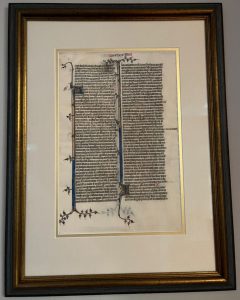
After introducing you to the RGME “Lending Library”, we turn to a “New Loan” mentioned in that blogpost. Sent to the RGME for study, the loan comprises a single vellum leaf from a medieval Latin Vulgate Bible manuscript which the present owner acquired in its frame among a former owner’s belongings.

The new owner approached the RGME Director on the strength of one of our blogposts.  The leaf has been sent on loan to the RGME in June 2024.  With permission, we report results as we continue to study the leaf and its context. Later we will remove the leaf from its modern frame and reveal more discoveries.

First Steps

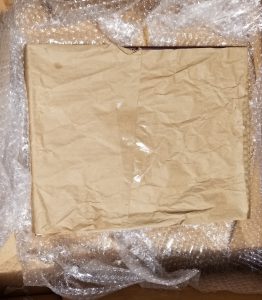
Private Collection. Framed Bible Leaf in its Wrapping for Transit to the RGME in July 2024: View upon arrival in unpacking the leaf. Photograph by Mildred Budny.

Work on the leaf after it had safely arrived, in secure packing, had to wait while disruptions to the RGME website and a cluster of other unexpected issues intervened, requiring attention. Resuming work (as you can see, our website is back in accessible working order), we begin our report on the leaf with this blogpost. It sets the scene and shows first photographs of the leaf still in its frame, to introduce the leaf to you.

At present, the leaf remains in its frame, while we study its visible features and explore its context. Then we will, with permission, remove the leaf from the frame, to photograph and study its other side and outer edges now hidden below the windowed opening of the mat and by the back of the frame.

The Visible Text: Recto or Verso?

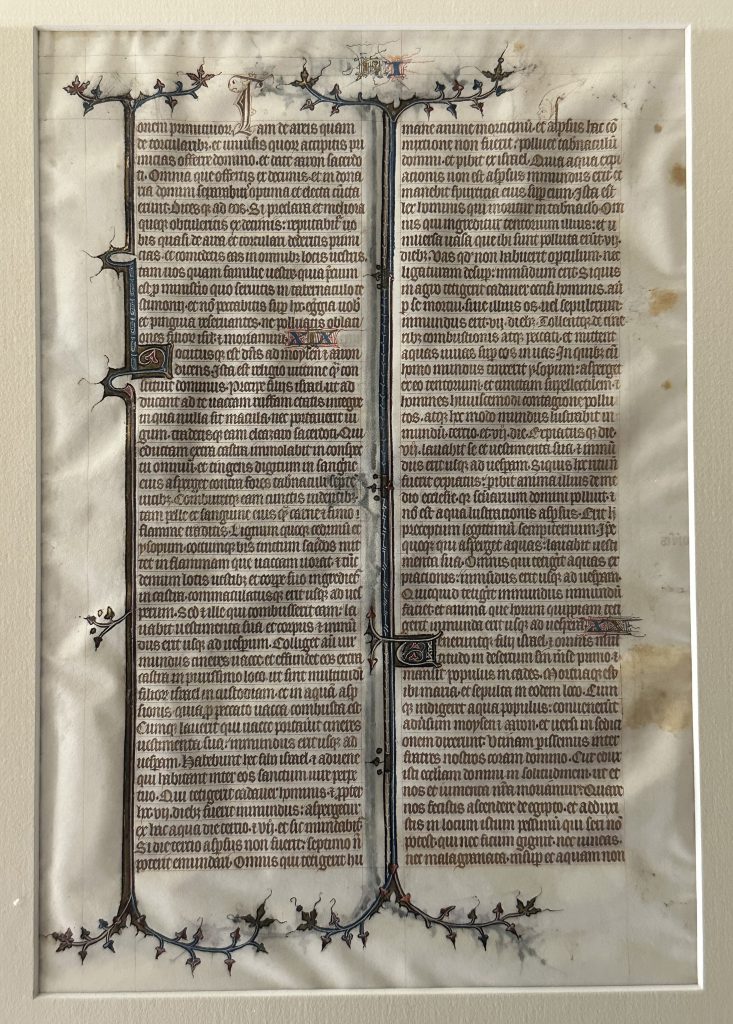
The leaf stands in the windowed glass frame in which it reached its current owner.  On partly puckered vellum, the text in Latin presents part of the Old Testament Book of Numbers in the Vulgate Version.

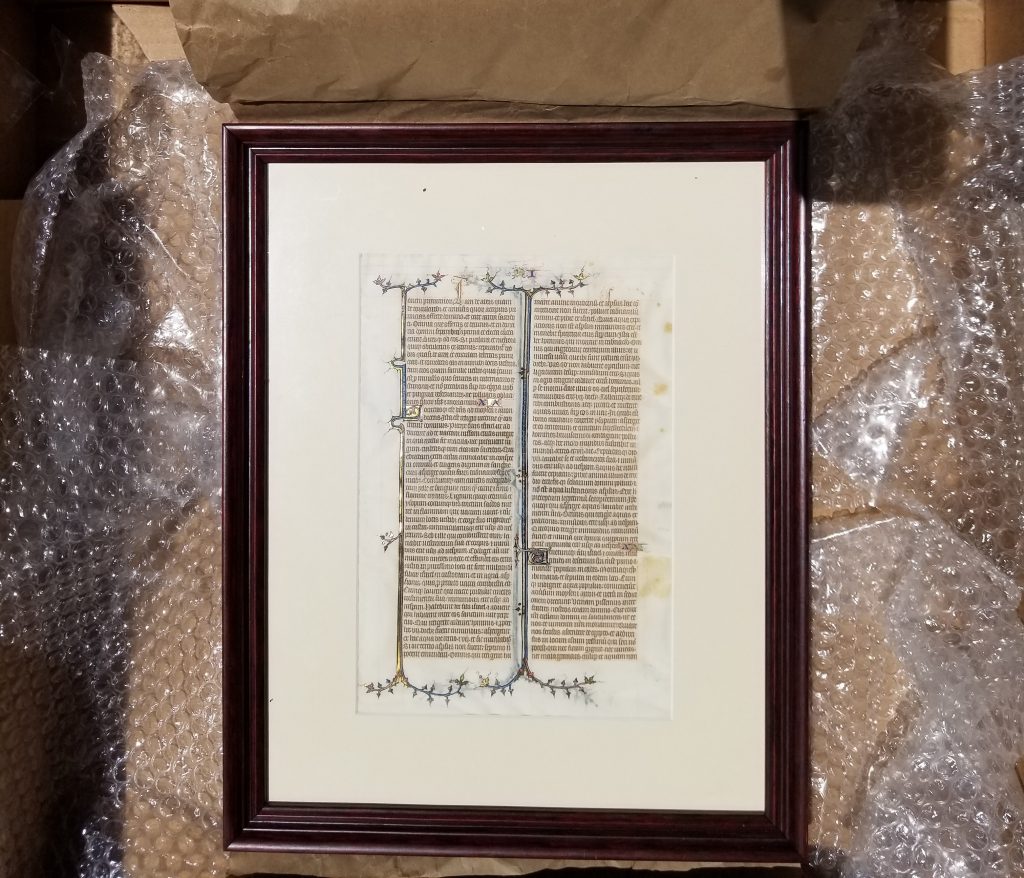
Collection of Jennah Farrell, Manuscript Leaf in Frame: Front, emerging from packaging upon arrival for study. Photograph by Mildred Budny.

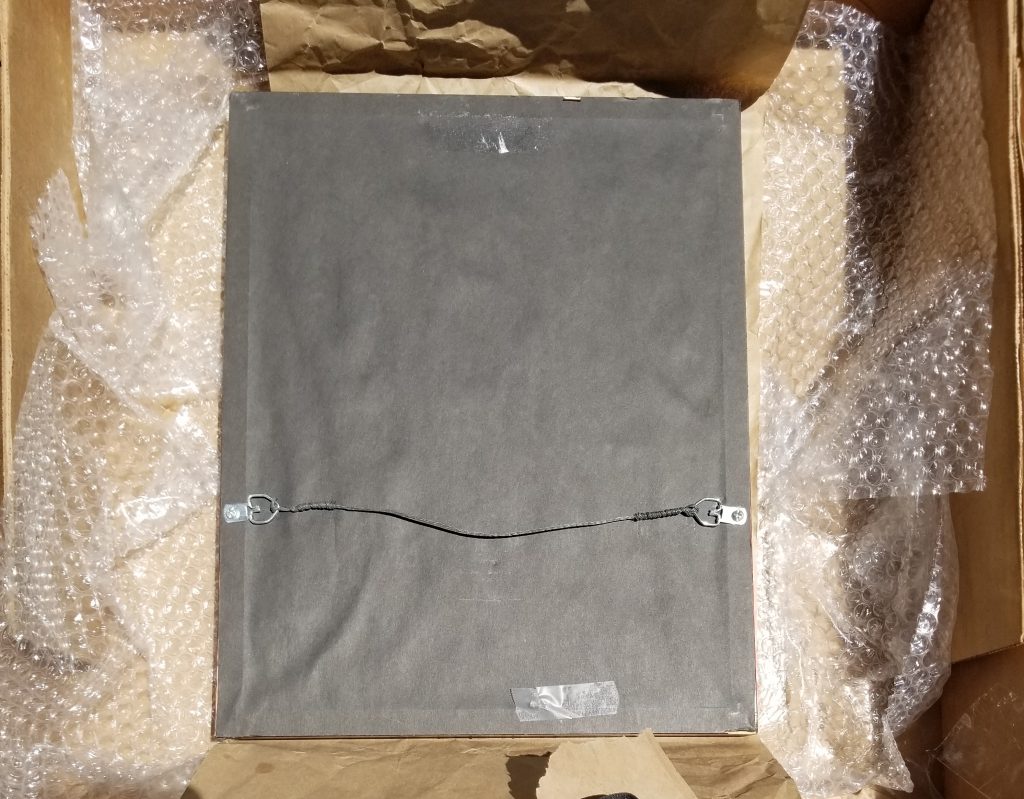
The back of the frame has few identifying features.  Besides the metal hanging wire and its pair of mounts, its black paper covering has the traces of a removed label formerly centered at one end and a companion nail taped off-center to the opposite end.

Collection of Jennah Farrell, Manuscript Leaf: Back of Frame emerging from packaging. Photograph by Mildred Budny.

Through the glass of the frame, most of one side of the leaf can be seen, with its outer edges on all sides covered to some extent by the windowed mat.
The visible extent of the leaf within the mat measures a maximum of circa 24.1 cm. tall × 16.3 cm. wide (circa 9 7/8 in. tall × 6 7/8 in. wide).  The ruled writing area measures circa 18.7 × 12.5 cm. (7 3/4 × 4 7/8 in.). As presented to view, the full extent can be seen of the two columns of script and most of the appendages and additional elements which accompany it as navigation aids. The latter include the running title, inset chapter numerals, and decorative embellishments.

Collection of Jennah Farrell, Manuscript Leaf in Mat. Photograph by Jennah Farrrell.

The Text, Decoration, and Layout

Written in Gothic script, the text in Latin is laid out in two columns of 46 lines each: columns a at the left and b at the right.  To the left of each column stands a decorative vertical bar extending the full height of the column and reaching into the upper and lower margins of the page, with foliate extensions branching sideways in both directions.
Inset decorative 2-line text initials, set in sub-rectangular gold frames, attach to the right-hand sides of the columnar bars, with one per column.  With the identifying Roman chapter-numbers written in Capitals against decorated backgrounds at the ends of the preceding lines, these initials open Chapters XIX and XX in the Old Testament Book of Numbers.
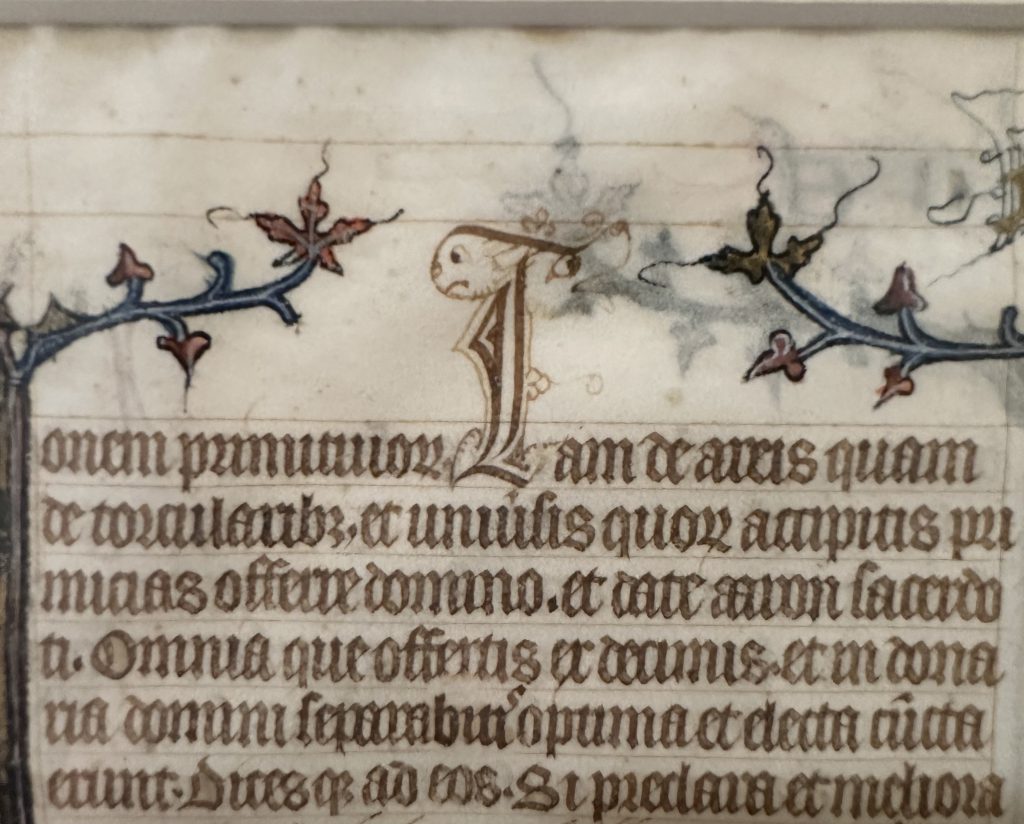
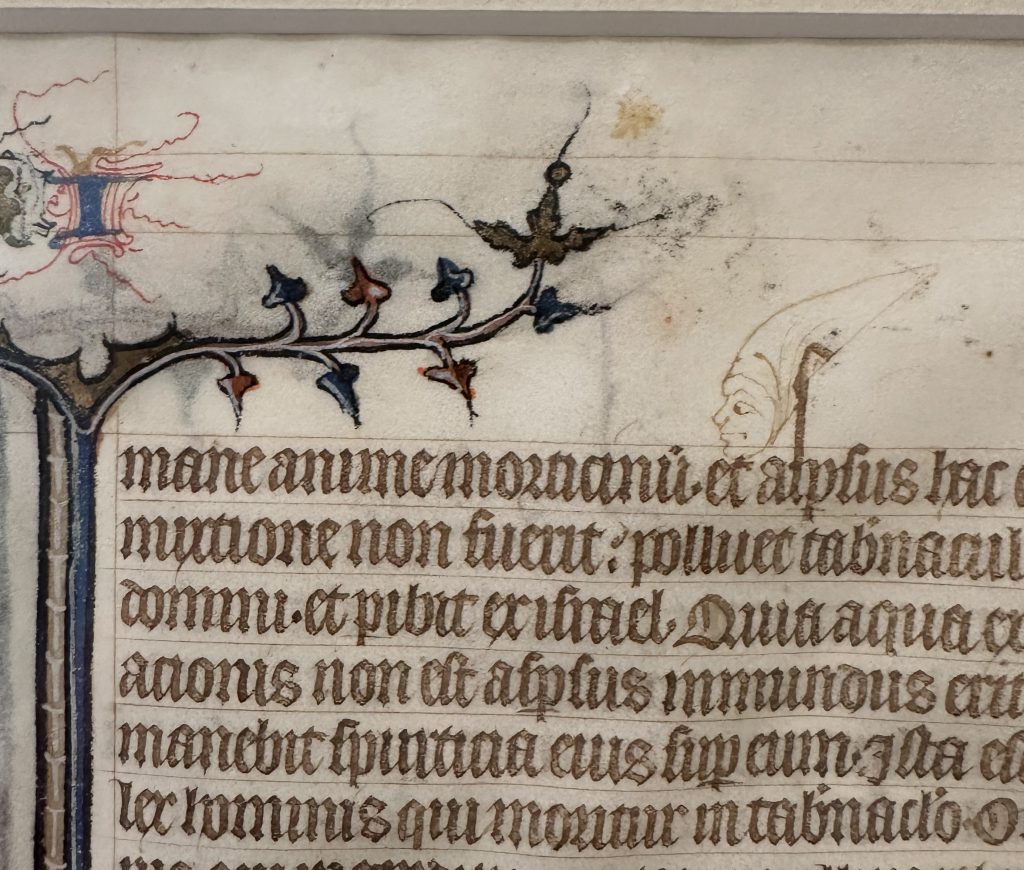
In the top line of each column, an extended letter rises to a leftward-facing head in profile: animal in column a and male with extended pointed cap in column b.

Collection of Jennah Farrell, Manuscript Leaf in Mat: top left. Photograph by Jennah Farrrell.

The running title at the top, set within parallel lines ruled in drypoint, identifies the text with “RI” in Capitals.  Expecting the first part of the word “NUME” on the facing verso of the original manuscript, this would be the recto.

Collection of Jennah Farrell, Manuscript Leaf in Frame: Top right. Photograph by Jennah Farrrell.

The text on the page starts in Numbers 18:27 of the Latin Vulgate version: “. . . [oblati]onem primitovorum.  Tam de areis quam“.  “XIX” marks the start of Numbers 19: “Locutus est dominus ad moysen“.  There then follows a long list of rules about becoming ‘unclean’ after touching a dead body.
“XX” marks the start of Numbers 20: “Veneruntque filii israel“.  The page ends in 20:5 “. . . et aquam non [/ habet ad bibendum]”, expected to continue on the verso.  The last line has “malagranata“, the Latin for “pomegranates”.
The left-facing man’s head at the top of col.b does not appear to be at a significant point in the text.  It stands in the middle of 19:13 against an extended tall-s of “asp[er]sus“.  The text:
[13] omnis qui tetigerit humanae animae morticinum et aspersus hac commixtione non fuerit polluet tabernaculum Domini et peribit ex Israhel quia aqua expiationis non est aspersus inmundus erit et manebit spurcitia eius super eum
[13] Every one that toucheth the corpse of a man, and is not sprinkled with mixture, shall profane the tabernacle of the Lord, and shall perish out of Israel: because he was not sprinkled with the water of expiation, he shall be unclean, and his uncleanness shall remain upon him.

Show-Through and the Other Side

Show-through from the verso reveal features of ink and pigment which diverge from those on the recto.  For example:
1) parts of the running title likewise in Capitals (the letters NUME would be expected);
2) a vertical bar down the intercolumn edging column b, but not one for column a
3) an inset 2-line initial with sub-rectangular frame in column b at the start of lines 23–24 (presumably the q for Quod for Numbers chapter 21); and
4) foliate extensions across most of the lower margin, but not reaching into its span below the inner or outer margins, unlike the formation from the bar for column a on the recto.
Let us see what becomes revealed with the leaf is removed from its frame.  That step comes later, to be revealed in another blogpost.
Meanwhile, we could take as educated ‘predictions’ of what to expect such evidence as the show-through of features from the verso and the place in the course of the known text where column b on the recto breaks off mid-phrase. This process could serve as a useful teaching exercise.
For example, the other side holds evidence which can become available to view once outside the frame. It could correct or confirm our conjectures about its features as we examine the visible recto before then.
How accurate are these conjectures? Let’s see!

More to Come

Watch this space.  A next blogpost would reveal more as our research continues.

Update: See our next blogpost and join a pair of Workshops on “Looking at Manuscripts”, dedicated to this Leaf. Would you like to help us to identify it? Come and learn how!

  • Latin Vulgate Bible Leaf in the Collection of Jennah Farrell: Part 2

Comments? Join the Journey!

Do you recognize this manuscript? Are you familiar with other leaves from it? Please let us know.

Please Contact Us or visit

  • our FaceBook Page
  • our Facebook Group
  • our Twitter Feed (@rgme_mss)
  • our Bluesky nest @rgmesocial.bluesky.social)
  • our LinkedIn Group
  • our Blog on Manuscript Studies and its Contents List

Would you like to help? Donations and contributions, in funds or in kind, are welcome and easy to give.  Given our low overheads, your donations have direct impact on our work and the furtherance of our mission.  For our Section 501(c)(3) nonprofit educational organization, your donations may be tax-deductible to the fullest extent permitted by law.  Thank you for your support!

  • Contributions and Donations
  • 2024 Anniversary Appeal

We look forward to hearing from you.

*****

Tags: Collection of Jennah Farrell, Latin Vulgate Bibles, manuscript fragments, Manuscript studies, Old Testament Book of Numbers
No Comments »

The RGME ‘Lending Library’

September 5, 2024 in Manuscript Studies, RGME Library & Archives

The RGME ‘Lending Library’

Books, Manuscripts, Fragments,
Documents, Seals and Seal Matrices,
Photographs, Prints and Drawings, and other Original Materials

Sometimes the Sources come to visit
the Research Group on Manuscript Evidence

Sometimes our Materials go to visit
for workshops, exhibitions, and study

[Posted on 4 September 2024, with updates]

Dialogues of Gregory the Great, Book III, chapter XIII initial, reproduced by permission

Manuscript Leaf with Dialogues of Gregory the Great, Book III, chapter 13 initial, while on loan. Photography by Mildred Budny.

Over the years, private collectors, scholars, students, and others continue to seek advice and expertise from the Research Group about manuscript, printed, documentary, and other materials in their possession. Indeed, our mission seeks to examine original sources of written works and their relatives by a dedicated process of “Going to the Sources”. (On this mission, see, for example, our 2024 Spring Symposium at Vassar College.)

Often the sources, or their surrogates in photographic and other means, come to us. Sometimes they come to stay, as gifts. Sometimes they come on loan.

How do they find us? They do so as their owners or researchers approach us from learning about the RGME and our wide range of interests and network of contacts, whether through our scholarly events (in person or online) or by word of mouth, posts on social media, or our blog on Manuscript Studies. Then they make contact to ask if we might be interested in looking at the item(s) in question. They send photographs to show the characteristics of the materials, and generously allow us to work with the evidence in their care, whether as gifts or through photographs or loans of the items.

Sometimes the owners generously loan original materials to the RGME for research, conservation, photography, and publication. This process can yield remarkable results.

Preparing now for our 2024 Autumn Symposium showcasing the work and potential of Special Collections of many kinds for teaching, it seems time to describe the years’-long tradition of sharing materials and expertise through the RGME Lending Library. (You are Here.)

Multi-Directional

Sometimes, in turn, we bring original materials — in our own collection, our Director’s, and other collections — to the attention of audiences in various locations, as we might take them for exhibitions, workshops, seminars, tutorials, research consultations, and teaching/learning opportunities. Sometimes this comprises displays at Receptions for our Symposia, and informal, sometimes ad-hoc, gatherings, such as at Sessions or Receptions at the International Congress on Medieval Studies.

David Sorenson and Donncha MacGabhann examine manuscript materials

David Sorenson and Donnach MacGabhann examine manuscript materials after the RGME Writing Materials Session at the 2014 Congress. Photography by Mildred Budny

One of the most memorable on our roster of events over the years was the 2014 Seminar on site at the Index of Christian Art to consider selected examples (manuscripts, fragments, and documents) from a Private Collection on loan to the RGME for some years.

  • 2014 Seminar on Manuscripts and Their Photographs at the Index of Christian Art
    (now the Index of Medieval Art)
Inspecting the despoiled Book of Hours at our 'Show & Tell' Seminar on Manuscripts & Their Photographs on 9 December 2014

Observing the Book of Hours at the 2014 Seminar

Images

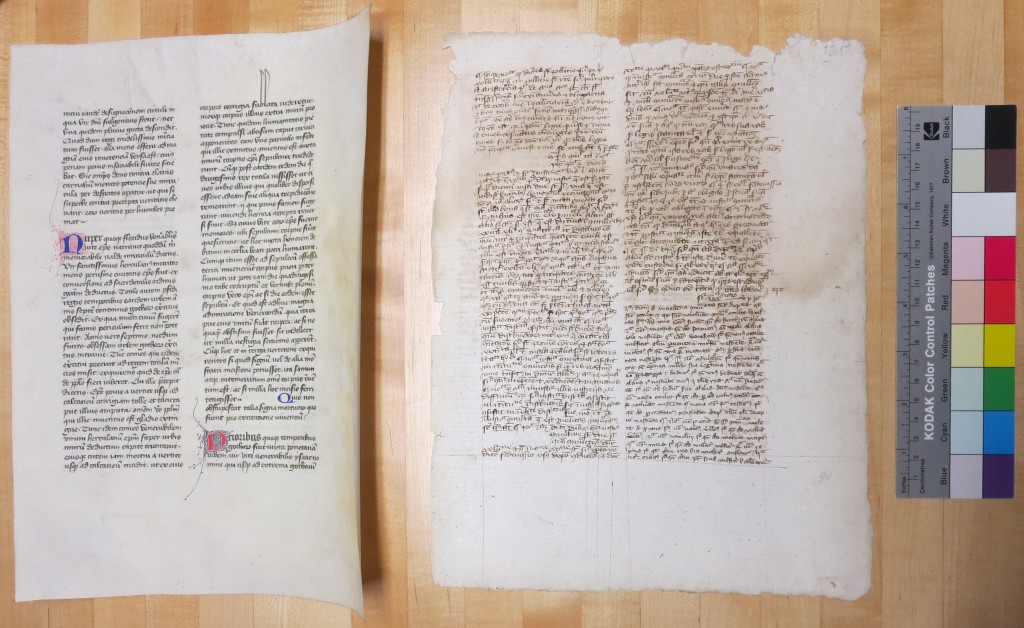
Private Collection, Back Endpaper for Printed Postilla.

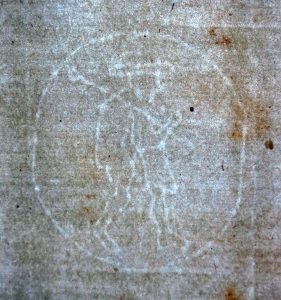
Private Collection, Back Endpaper for Printed Postilla: Watermark of Pilgrim with staff.

Sending photographs to us gives information about the item(s). Having a look, we might propose to help and also, if permission is granted, to ask others within our circles about further information in the areas, regions, subjects, languages, genres of objects, and contexts to which the materials pertain. For example, over the years, sharing photographs from a single private collection has, with permission, generated reports on a wide variety of items on paper and vellum or parchment, manuscript or printed, from many places of origin and in diverse languages.

Sometimes the approach concerns an object which relates to materials which we have already researched and published. Among them are fragments from specific medieval manuscripts or printed materials dispersed by Otto F. Ege (1888–1951) which our research has explored; and fragments from other manuscripts or printed materials also dispersed by Ege alone or in  compilations of Portfolios of fragments reused as specimens intended for teaching and display.  Sometimes (as with some of those cases), as time goes on and opportunity arises, travel permitting, we have the chance to see the originals which have become familiar through our research work from photographs.

'New Leaves' from Ege Manuscript 41, Verso, and from Ege Manuscript 51, Recto, viewed in November 2016. Photograph by Mildred Budny

‘New Leaves’ from Ege Manuscript 41, Verso, and from Ege Manuscript 51, Recto, viewed in November 2016. Photograph by Mildred Budny

Sometimes the collector’s initial approach to us about a specimen broaches a book or fragment of some other kind, in case our sphere of interests and contacts might bring enlightenment.

An example is the query several years ago from a collector abroad about a South Asian manuscript newly acquired from a friend; the language was unfamiliar; might we know what the book is?  The process of constructive, and amiable, collaborative inquiry led, with generous permission, to two blogposts which offer instruction about the book and its place within widespread practices in the book-trading world for tourists who may have little knowledge about the genre of book and its integrity as an object.

Often, as in that case, our research work progresses with the photographic representatives of the materials generously supplied by the owners.  Sometimes, as we explore together, the others take more photographs to illustrate specific features or produce diagrams for ruling patterns, folds, and alignment of the insides and outsides of bifolia within the original book.

On Site

Sometimes the owners generously send the materials themselves on loan to the Research Group, for detailed study in person, over a period of time. This loan enables detailed examination, photography, research, consultation, and refinement of results, whereupon the materials return to their owners or transfer to new ownership according to the owners’ directions.

Sometimes, if wished and permitted by the owner, the period of loan includes the conservation work, such as removal from non-archival frames or boxes, rematting, reframing, and/or placement in archival housing for storage, handling, or display.

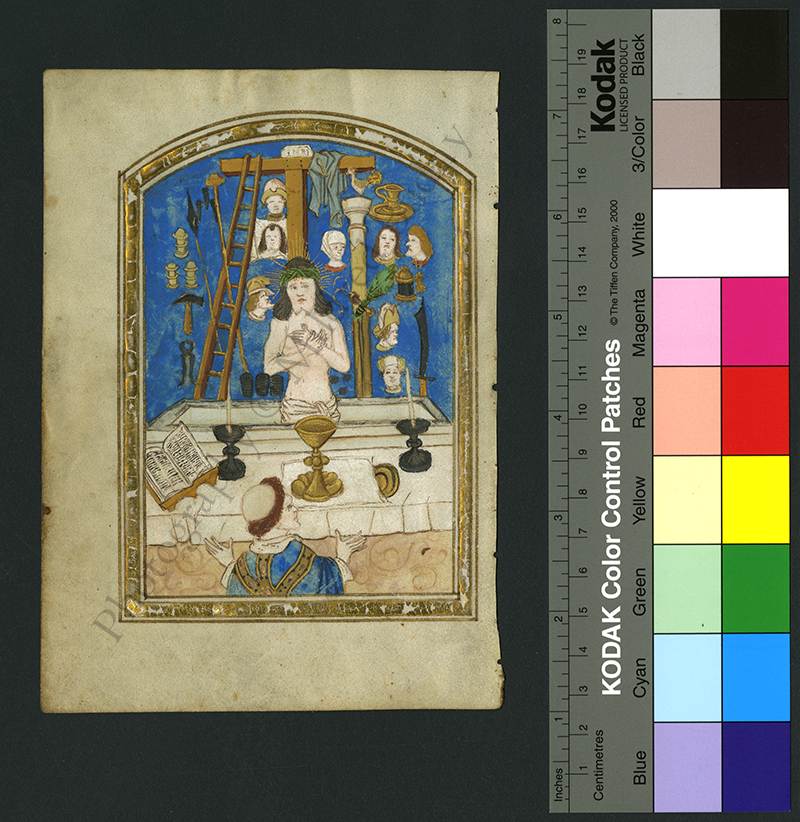
Full-page, framed illustration of the Mass of Saint Gregory on a detached leaf from a prayerbook. Photography © Mildred Budny

Private Collection, Vellum leaf with illustration of “Gregory Mass”, verso. Photograph by Mildred Budny.

With these opportunities, close inspection is possible under various lights and angles of vision. These multiple approaches can be done in the presence of the object. Such variety can reveal features not necessarily clear or apparent in digital reproductions of single views, however high-quality they might be and capable of showing details under high magnification.

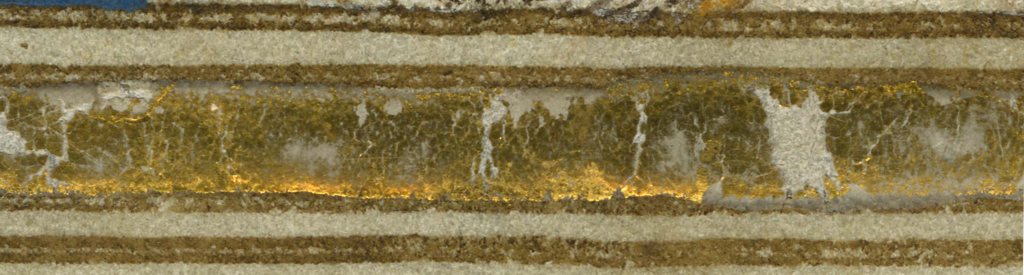
Gold Leaf partly lifted. Photography © Mildred Budny

Private Collection, Vellum leaf with illustration of “Gregory Mass”, verso: detail of lower border. Photograph by Mildred Budny.

Results

Front Cover for Report by Leslie J. French for Wagner Leaf from Ege MS 22 (2021)

Front Cover for Report by Leslie J. French for Wagner Leaf from Ege MS 22 (2021)

The quests can result — depending upon the materials and their context, the time available or required for research and write-up, and the choices for presentation of the results — variously in RGME blogposts, presentations for symposia, conference sessions, or other scholarly events, exhibition displays, RGME Research Booklets, and a combination of these.

With these presentations and publications, knowledge about the original materials can reach a wide audience, and add to knowledge about their contexts, including relatives among surviving witnesses to their periods and places of production, makers, owners, readers, collectors, collections, and other features.

Examples

So far, the range of materials is exemplified by a range of publications of materials from private collections, named or anonymous. Sometimes the publications include or represent materials in institutions, such as university or public libraries.  Named private collections represented include:
Collection of Birgitt G. Lopez, Framed Leaf from ‘Otto Ege Manuscript 14’. Leaf in Frame. Reproduced by permission.

Birgitt G. Lopez Collection

  • Two Ege Leaves and Two Ege Labels in the Collection of Brigitt G. Lopez
  • Another Leaf from a Portable Manuscript Bible in the Collection of Birgitt G. Lopez

Brent Rosenbrook Collection

  • A Leaf of Deuteronomy from ‘Otto Ege Manuscript 14’ in the Rosenbrook Collection

Ronald K. Smeltzer Collection

  • Vellum Binding Fragments in a Parisian Printed Book of 1538

Stephen Soderlind Collection

  • A Detached Folio 108 with Part of Vulgate Psalm 118 (117)
Camelite Booklet Cover Page with New Front Cover with border

Camelite Booklet Cover Page with New Front Cover with border

J.S. Wagner Collection

  • The Penitent King David from a Book of Hours
  • A Leaf from ‘Otto Ege Manuscript 19’ and Ege’s Workshop Practices
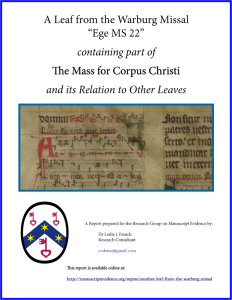
  • Another Leaf from the Warburg Missal
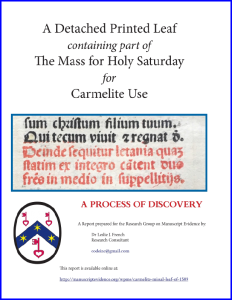
  • Carmelite Missal Leaf of 1509

Robert Weber Collection

  • A Leaf from ‘Otto Ege Manuscript 214’ in the Collection of Robert Weber
  • Portfolio 93 of Ege’s “Famous Books in Eight Centuries (FBEC)” in the Collection of Richard Weber

Two cases from the J.S. Wagner Collection represent:

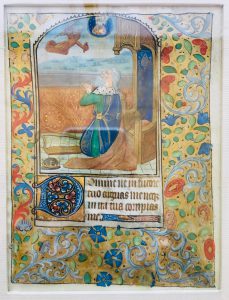
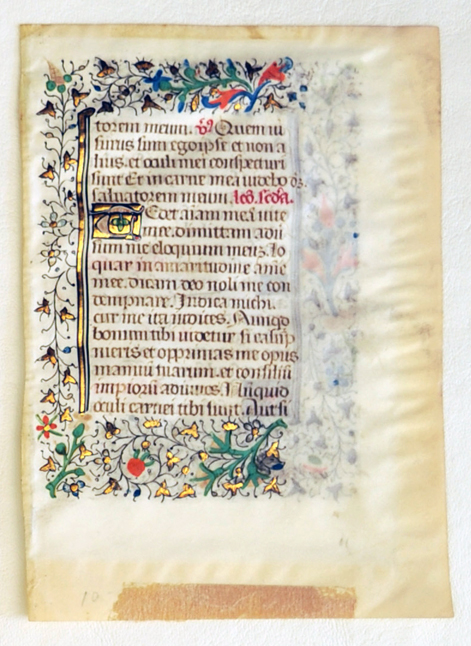
1) The opening of one of the Penitential Psalms (with the Penitent King David) from the Psalter

  • The Penitent King David from a Book of Hours
J. S. Wagner Collection. Detached Manuscript Detached Leaf with the Opening in Latin of the Penitent Psalm 37 (38) and its Illustration of King David.

J. S. Wagner Collection. Detached Manuscript Leaf with the Opening in Latin of the Penitent Psalm 37 (38) and its Illustration of King David.

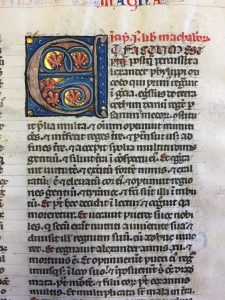
2) The opening of the Old Testament Book of Macabees in a Bible manuscript disbound and distributed by Otto F. Ege

  • A Leaf from ‘Otto Ege Manuscript 19’ and Ege’s Workshop Practices
Opening of the Book of Macabees in Otto Ege MS 19. Private Collection.

Wagner Collection. Opening of the Book of Macabees in Otto Ege MS 19.

Books and Fragments

Examples include

1) books and fragments from a single private assembly in the Illustrated Handlist, including specimens which we were asked to remove from their damaging modern frames for conservation and archival mounting.

Book of Hours with floral border. Photography by Mildred Budny.

2) manuscripts, fragments, documents, printed materials, and other media in various private collections as represented in our blog on Manuscript Studies; and

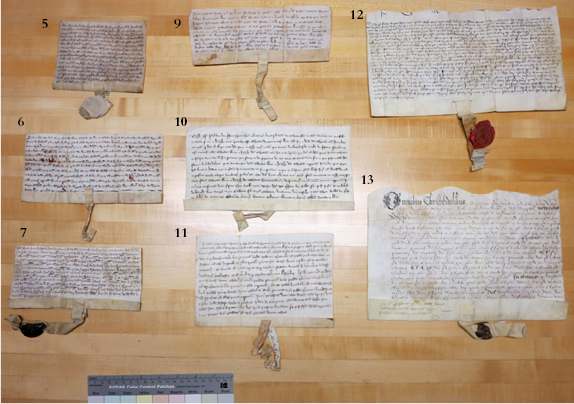
Preston Charters Dorses. Photograph Mildred Budny. Numbers added to the photograph report the present owner's numbering for the set, from 5 to 7 and 9 to 13.

Private Collection. “Preston Charters” Faces. Photograph Mildred Budny.

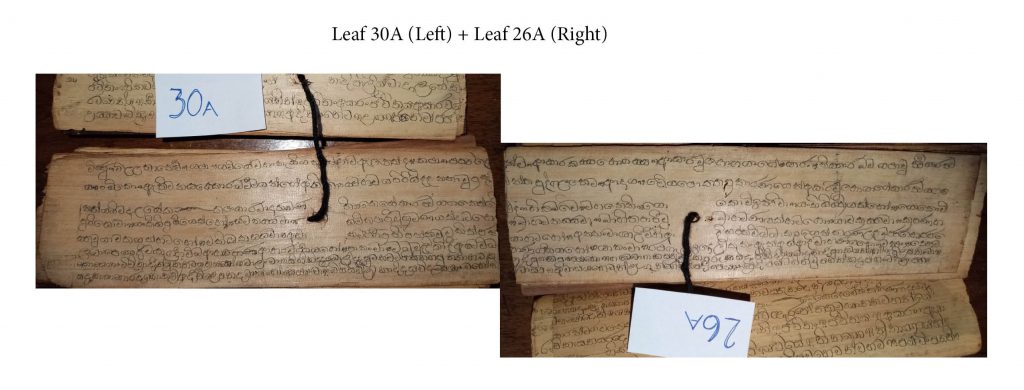
3) books or part-books, such as a disordered and reassembled Sinalese palm-leaf manuscript (with its reworked cover), which our study could reconstruct in part:

  • A Sinhalese Palm-Leaf Manuscript in Deconstructed and Reconstructed Order:
    Part 1 of 2.
  • More Leaves from a Deconstructed Sinhalese Palm-Leaf Manuscript: Part 2 of 2.
Private Collection, Sinhalese Palm-Leaf Manuscript, Reconstructed View of Former Leaf ('30A' + 26A').

Private Collection, Sinhalese Palm-Leaf Manuscript, Reconstructed View of Former Leaf (’30A’ + 26A’).

Books and Fragments On Loan

In some cases, the current owner’s curiosity about materials in his or her collection leads to the loan to the Research Group or its Director to enable direct examination, which can be an optimal circumstance for research.

1. The Illustrated Handlist

For example, the extended loans over several years (in stages) to the Director for conservation, photography, and research of materials in a private collection — comprising an assembly of manuscript, documentary, and early printed materials — provided the impetus for interim and cumulative reports in scholarly events of several kinds, such as conference or symposium sessions, and an RGME seminar at Princeton University.

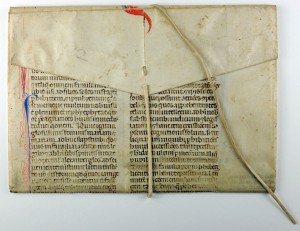
Justinian Wrapper folded from back with flap.

Budny Handlist 7: Folder from Back with Flap.

  • 2014 Seminar on Manuscripts and Their Photographs at the Index of Christian Art of Princeton University
    (now the Index of Medieval Art)

For the range of that assembly, now dispersed in different directions, see

  • the Illustrated Handlist.

For example: It’s a Wrap.

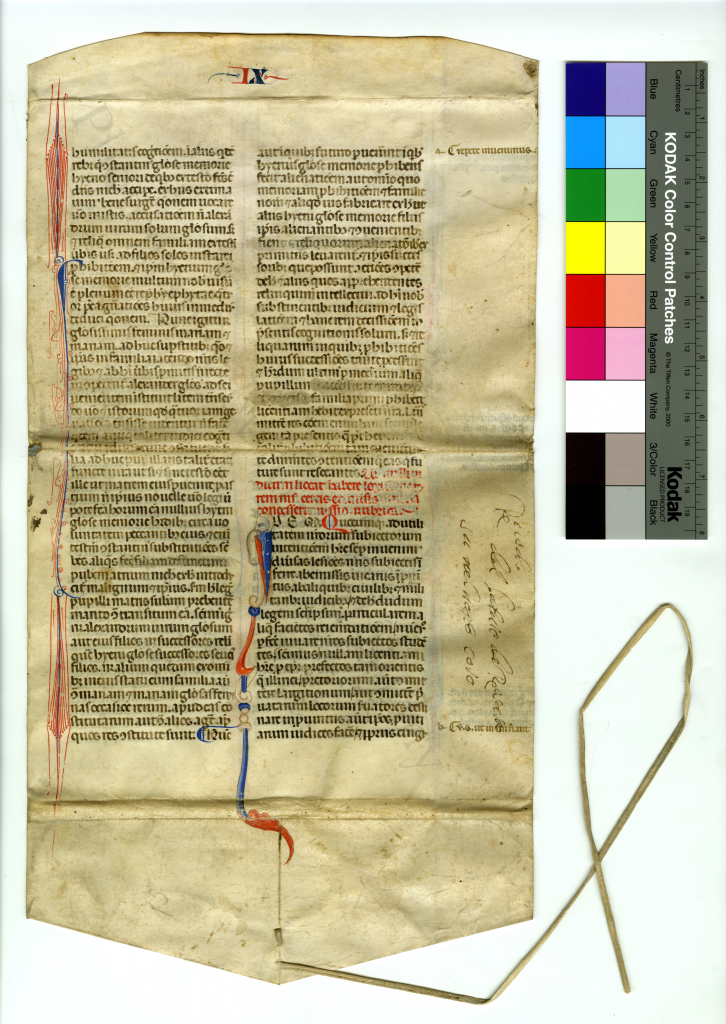
Exterior of Justinian Wrapper Unfolded. Photography © Mildred Budny

Outside of Wrapper = Recto of Leaf

2. A Hybrid Book with Two Layers of Manuscripts

Another extended loan from another private collector in 2022–2023 generously brought a remarkable hybrid book, comprising a sandwiched set of vellum leaves within a limp-vellum binding, to the RGME for close inspection over months. The experience, with different forms of lighting (natural, artificial, enhanced), including back-lighting and side-lighting, made it possible to examine multiple aspects of the book which combines two layers produced in the scholastic period of the High Middle Ages and in the Counter Reformation respectively.  In time, when appropriate, we hope to describe the characteristics of this book and the results of our research.

3. The New Loan of a Manuscript Fragment (2024)

A new loan in 2024 brings a medieval manuscript leaf, in its frame, for study and publication, with permission, before its return.  See below for a first glimpse as our study begins.


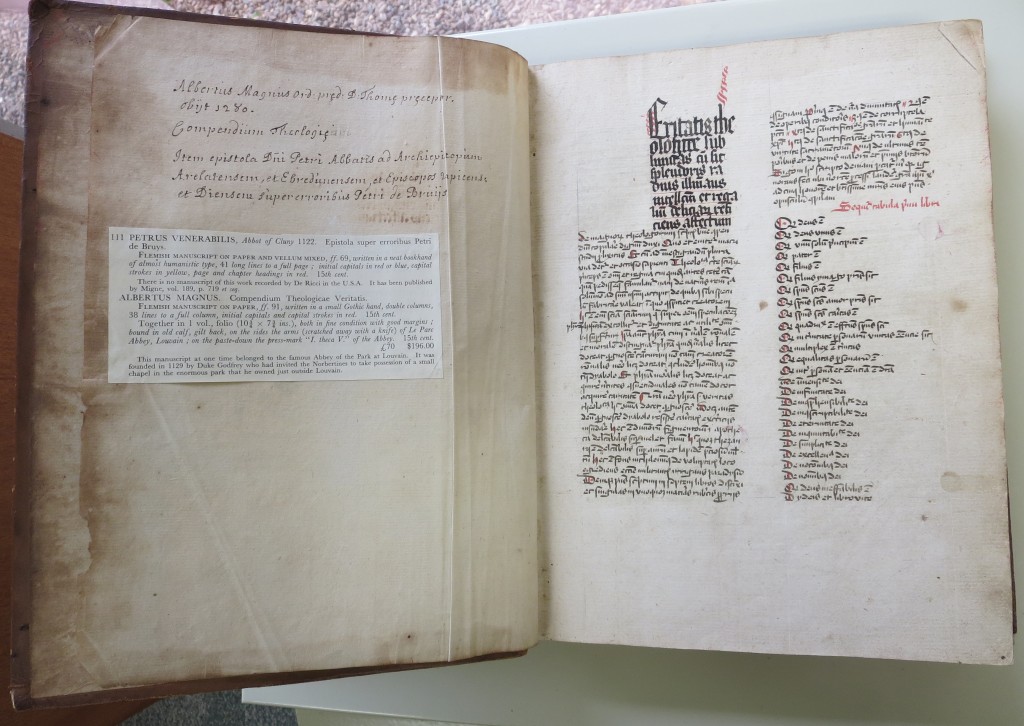
Opening between the Front Flyleaf, Verso, and Folio 1 recto, opening Part A.

Opening between the Front Flyleaf, Verso, and Folio 1 recto, opening Part A (“Albertus Magnus”). Photography Mildred Budny.

Up Close

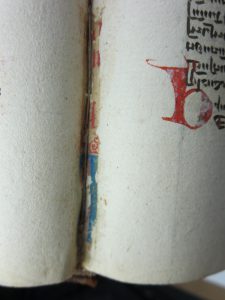
Le Parc Abbey, Theological Volume, Part A, gutter. Photography Mildred Budny.

The opportunity to study these varied materials at close hand and over extended periods of time, as the research advanced and there emerged new discoveries, including by other scholars on related subjects and materials (such as the manuscripts dispersed by Otto F. Ege), spurred the creation of the RGME blog on Manuscript Studies and provided case-studies for multiple  blogposts.

Often these reports have newly discovered results augmenting knowledge about the object, its original state, and its context. They appear on our website as blogposts about individual items or groups of items; a webpage for the The Illustrated Handlist of a single assembly of items; and reports in other forms, including presentations as scholarly events, their publications, and exhibitions both in person and online.  Cases include:

  • Manuscript Studies: Contents List
  • The Illustrated Handlist
  • 2014 Seminar on Manuscripts and Their Photographs at the Index of Christian Art
    (now the Index of Medieval Art)

We give thanks to the collectors who send photographs of their materials and those who lend materials to the RGME for study, learning, and teaching for audiences near and far.

Private Collection, Book of Hours, Decorated Initial and Stub from Despoiled Leaf. Photography Mildred Budny.

Our Records of Earlier States, now Lost

In some cases, as the lent items after their return have transferred to new ownership from the private collections through which we met them, they have undergone transformations in themselves.  In such cases, it can be fortunate that our research has reported their previous stages, as some evidence has been destroyed in new ownership. See, for example, the separation in 2023 of a composite medieval manuscript from Le Parc Abbey, Belgium, into two parts with the removal and loss of the binding given by its original institution.

As a result, our blogposts preserve records of lost evidence.  Perforce, because of our care to record and report the evidence of the original item, in so far as time and resources allow, elements in our photographs, notes, descriptions, and reports reach the level of ‘primary evidence’ or surrogates for evidence in the originals which has been lost.

Opening between the Front Flyleaf, Verso, and Folio 1 recto, opening Part A.

Opening between the Front Flyleaf, Verso, and Folio 1 recto, opening Part A (“Albertus Magnus”). Photography Mildred Budny.

A New Loan

A new loan to the RGME for examination brings a single vellum leaf from a medieval manuscript, which the present owner recently acquired from a former owner’s belongings in its frame with mat.  The new owner approached the RGME Director on the strength of one of our blogposts.  With permission, the leaf has been sent on loan to the RGME in June 2024.

Private Collection. Framed Bible Leaf in its Wrapping for Transit to the RGME in July 2024: View upon arrival in unpacking the leaf. Photograph by Mildred Budny.

Work on the leaf after it had safely arrived, in secure packing, had to wait while disruptions to the RGME website and a cluster of other unexpected issues intervened, requiring attention. Resuming work (as you can see, our website is back in accessible working order), we begin our report on the leaf with this blogpost. It sets the scene and shows first photographs of the leaf still in its frame, to introduce the leaf to you.

At present, the leaf remains in its frame, while we study its visible features and explore its context. Then we will, with permission, remove the leaf from the frame, to photograph and study its other side and outer edges now hidden below the windowed opening of the mat and by the back of the frame.

The Visible Text: Recto or Verso?

The leaf stands in the windowed glass frame in which it reached its current owner.

Collection of Jennah Farrell, Manuscript Leaf in Frame: Front, emerging from packaging upon arrival for study. Photograph by Mildred Budny.

The back of the frame has few identifying features.  Its black paper covering has the traces of a removed label formerly centered at the bottom and a companion picture nail taped off-center at the top.

Collection of Jennah Farrell, Manuscript Leaf: Back of Frame. Photograph by Mildred Budny.

The visible extent of the leaf within the mat measures a maximum of circa 24.1 cm. tall × 16.3 cm. wide (circa 9 7/8 in. tall × 6 7/8 in. wide).  The ruled writing area measures circa 18.7 × 12.5 cm. (7 3/4 × 4 7/8 in.).

Collection of Jennah Farrell, Manuscript Leaf in Mat. Photograph by Jennah Farrrell.

Before the leaf is removed from its frame, the visible features of the leaf within the windowed mat must speak for themselves.
We might use this condition as a teaching exercise or opportunity, to see how much we might learn about the leaf from this perspective, before approaching its other side and the edges of the sheet which lie behind the mat and which remain hidden beneath the back covering of the frame. How much can it tell us in this state, before we move to the next?

Collection of Jennah Farrell, Manuscript Leaf in Mat: top left. Photograph by Jennah Farrrell.

More to Come

Watch this space, as a next blogpost will examine the leaf in its own right.  Join the quest!

Update (11 September 2024):  Now see:

  • A Latin Vulgate Leaf from the Book of Numbers in the Collection of Jennah Farrell (Part 1)
  • Latin Vulgate Bible Leaf in the Collection of Jennah Farrell: Part 2
  • The Latin Vulgate Bible Leaf in the Farrell Collection, Part 3: The Full Leaf

P.S. Do you recognize this manuscript? Are you familiar with other leaves from it? Please let us know.

Please Contact Us or visit

  • our FaceBook Page
  • our Facebook Group
  • our Twitter Feed (@rgme_mss)
  • our Bluesky nest @rgmesocial.bluesky.social)
  • our LinkedIn Group
  • our Blog on Manuscript Studies and its Contents List

We look forward to hearing from you.

Update: Our work with these lent or donated materials has developed into a series of online collaborative workshops. See:

  • RGME Workshops on “The Evidence of Manuscripts, Etc.”

*****

Tags: Manuscript studies, Otto F. Ege, RGME Lending Library, RGME Library & Archives, The Illustated Handlist
No Comments »

Knowledge Games and Games of Knowledge: An RGME Session for IMC 2025

August 13, 2024 in Announcements, Call for Papers, Conference, Events, International Medieval Congress, Leeds, Manuscript Studies

Call for Papers
“Knowledge Games and Games of Knowledge:
A Global Perspective on
How Manuscripts Conserve and Transmit Ludic Knowledge”

Session
Sponsored by the RGME
IMC Leeds 2025

Organised by Michael A. Conrad
(University of Sankt-Gallen)

[Posted on 13 August 2024]

Following the success of our Inaugural Session at the International Medieval Congress this year, the Research Group on Manuscript Evidence announces its proposed Sessions for the International Medieval Congress to be held at the University of Leeds from 1–10 July 2025.

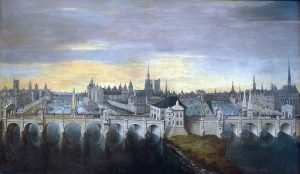
Paris, Musée Carnavalet, Projet pour le Pont Neuf, circa 1577. Image via Wikimedia via Creative Commons Attribution 3.0 Unported.

Background: 2024

Our 2024 Inaugural Session, co-organised by our Associates Ann Pascoe-van Zyl and Michael Allman Conrad, focused on “Building Bridges ‘Over Troubled Waters'”:

  • 2024 International Medieval Congress at Leeds: 2024

Foreground: 2025

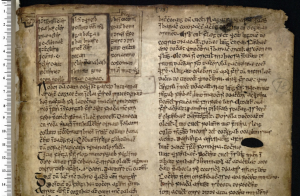
Dublin, Royal Irish Academy, MS 23 E 25, p. 73, top. Image via https://codecs.vanhamel.nl/Dublin,_Royal_Irish_Academy,_MS_23_E_25 via Creative Commons (CC BY-SA 3.0).

For 2025,with the IMC’s Thematic focus of “Worlds of Learning”, the RGME proposes an integrated suite of events comprising a pair of Sessions of papers plus a Roundtable discussion on “Manuscripts as Worlds of Learning”.

  • 2025 International Medieval Congress at Leeds: Call for Papers (Manuscripts as Worlds of Learning)

In addition, following up on a strand in our 2024 Inaugural Session, the RGME also proposes a sponsored session organised by that session’s co-organizer and presenter, Michael Allman Conrad.

The Plan for the Session

“Knowledge Games and Games of Knowledge:
A Global Perspective on
How Manuscripts Conserve and Transmit
Ludic Knowledge”

Recent scholarship has pointed out time and again how much in the Middle Ages games and other joyful pastimes were not only cherished and accepted as an essential part of everyday life, but also well appreciated as educational tools for making difficult lessons more palatable for students.

Some of these educational games have a long tradition, such as rithmomachia, which was used in schools for instruction in the quadrivial arts and still known by scholars of the 17th century. Some disciplines, such as astronomy, even had their own games — in this case, for example, the ludus astrologicus. The knowledge of such elaborate games was transmitted through manuscripts, often as part of miscellanies. Besides, there is no lack of writings dedicated to more profane games either. In fact, there are collections of board games (and other pastimes), with some of these manuscripts showing very rich and ornate embellishments and game diagrams, along with vivid miniatures depicting players in action.

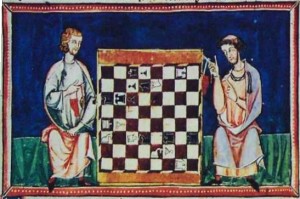
Madrid, Real Biblioteca del Monasterio de El Escorial, MS T-I-6, folio 27 verso. Image in the Public Domain, Via Wikipedia Commons.

Madrid, Real Biblioteca del Monasterio de El Escorial, MS T-I-6, folio 27 verso. Image in the Public Domain, Via Wikipedia Commons.

Examples of such works include
  • the Book of Games (Libro de acedrez dados e tablas c. 1284) by Alfonso X of Castile, in the Bonus Socius group (13th century?),
  • the Paris manuscript of Le jeu de echecs by Nicola de S. Nicholai (Paris, Bibliothèque nationale de France (BNF), MS fr. 1173, 14th century),
  • as well as lesser-known manuscripts, such as Cambridge, Trinity College, MS O 2.45 (after 1248 AD).

The book medium, however, poses serious challenges to scribes concerned with conserving and conveying knowledge related to games and other pastimes, as their existence is ephemeral and their experience difficult to verbalize — which is a reason why in the (Arabic and European) tradition medieval books on games usually came with said pictures and diagrams, with the intent to compensate for what cannot be easily expressed through words alone. What is more, in medieval writings on games their epistemological status often remains ambivalent and uncertain, as they were often touted as morally ambiguous and did not fit existing knowledge systems. That said, there nonetheless were some scholars that tried to fit ludic knowledge into prevalent eschatological framework of knowledge, such as Hugh of Saint-Victor, with some of them basing their (re-)assessments of the morality and epistemic status of games and other forms of entertainment on Arabic and Greek influences.  As reaffirmed by Hugh and in the work of Thomas Aquinas, the Latin concept of ludus could not only serve as an umbrella term for various kinds of games, but all forms of entertainment.

While the focus of the proposed Session is games, the evocation of ludic knowledge is intended as an invitation to different kinds of pastimes in order jointly to examine how medieval scholars dealt with game-related forms of knowledge, from material objects to their metaphysical and anthropological relevance. Especially the latter implies and extends the perspective towards practices employing games and other pastimes methodologically for educational purposes. Consequently, the geographical scope is not restricted to the European sphere. On the contrary, since there is strong evidence that European game manuscripts drew much from Arabic and other non-Latin traditions, contributors focusing on the Byzantine Empire, the Islamic world, India, or other cultural world regions are very much welcome and encouraged to partake.

Some possible questions could be (but are not limited to):

  • What do we know about the authorship of game manuscripts?
  • Are the works written by single individuals or collectives?
  • In what types of miscellanies do writings on games and game manuals appear and why?
  • How do manuscripts/authors deal with ephemeral aspects of games and other pastimes that are difficult to be expressed linguistically?
  • How can we reconstruct the concrete educational practices wherein games and other pastimes were used?
  • What hints thereof can we find in the material evidence of manuscripts?
  • How do authors try to systematize ludic knowledge and where do they position it within given epistemic frameworks?
  • What can we say about the relationship between game diagrams and diagrammatic representations in scientific disciplines in terms of a shared visual vocabulary?

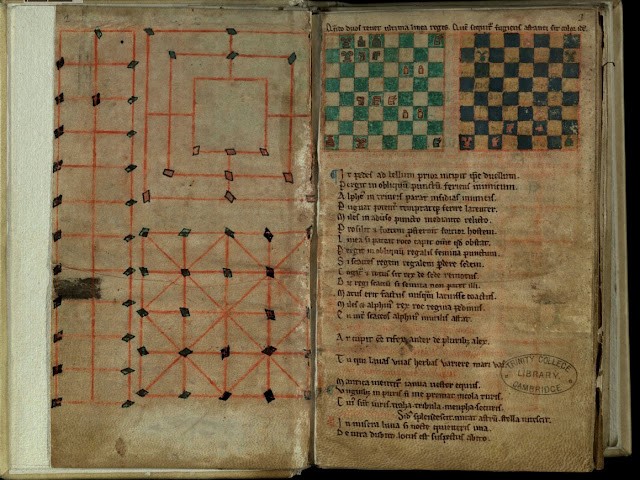
Cambridge, Trinity College, MS O.2.45, fols 2v-3r. Image copyright the Master and Fellows of Trinity College, Cambridge, via CC-NY 4.0.

Note on the Image

Cambridge, Trinity College, MS O 2.45 (after 1248 AD), folios 2v and 3r. Accompanying the text, diagrams and illustrations depict two chess boards, an alquerque, a nine-mens-morris and a daldøsa game board. The first moves of the game are already played.

Image © the Master and Fellows of Trinity College, Cambridge, via License CC BY-NC 4.0 via Trinity College Cambridge.

Proposals

For information about submitting your proposals for our Sessions, please see the CFP for our companion suite for IMC 2025:

  • 2025 International Medieval Congress at Leeds: Call for Papers (Manuscripts as Worlds of Learning)

Deadlines for Proposals

  • 5 September 2024 for your individual paper proposals for our RGME Sessions and Round-table Discussion
  • 30 September 2024 for the RGME to complete and submit its programmes.

To prepare your proposals, see the IMC instructions

  • How to Submit a Proposal

Send your proposals for our Session to us at

  • rgme.imc.sessions@gmail.com by 5 September 2024

When your proposals are accepted, we will direct you to submit them through the

  • IMC-Leeds Confex Submission Portal

Spread the Word

Look for our RGME CFPs on the IMC 2025 website:

  • IMC 2025 Padlet Page

Questions and Suggestions?

If you wish, please:

  • add your Comments here,
  • send us a message (Contact Us),
  • visit our Facebook Page and Facebook Group,
  • join the Friends of the Research Group on Manuscript Evidence (there is no charge), and
  • register for our events on our RGME Eventbrite Portal:
    RGME Eventbrite Collection

*****


Tags: Alfonso X of Castile, Board Games, Book of Games, Chess, Games in the Middle Ages, History of Board Games, Jeu des echecs, Le jeu de echecs, Ludus astrologicus, Manuscript studies, Quadrivia, Rhythmomachy
No Comments »

2025 International Medieval Congress at Leeds: Call for Papers

August 1, 2024 in Announcements, Call for Papers, International Medieval Congress, Leeds, Manuscript Studies

2025 International Medieval Congress
at Leeds:
Call for Papers

“Manuscripts as Worlds of Learning”
(2 Sessions + Roundtable)

32nd Annual IMC
Monday to Thursday 07–10 July 2025
(with In-Person and Virtual Components)

Deadline for your Proposals for Papers: 5 September 2024

Dublin, Royal Irish Academy, MS 23 E 25, p. 73, top. Image via https://codecs.vanhamel.nl/Dublin,_Royal_Irish_Academy,_MS_23_E_25 via Creative Commons (CC BY-SA 3.0).

[Posted on 1 August 2024, with updates]

Building upon the successful completion of our RGME Inaugural Session at the International Medieval Congress (IMC) at the University of Leeds in July 2024, we announce the Call for Papers (CFP) for our activities at next year’s Congress.

For information about the Congress, see

  • its official website,
  • instructions about submitting proposals via their Congress Confex Portal, and
  • the IMC 2025 Call for Papers Padlet page, which shows organised sessions that are advertising for papers, including Twitter/X posts tagging @IMC_Leeds.

Note that the general deadline for individual papers without specified sessions in a general pool is 31 August 2024.

The deadline for proposals for our RGME-sponsored Sessions is 5 September 2024.  Please send your proposals directly to us as organisers; we will select the programmes by their deadline of 30 September 2024.  (Instructions below.)

“Worlds of Learning” at Leeds in 2025

Next year’s Thematic Focus for the IMC is “Worlds of Learning”. The broad scope is described in the general Call for Papers: IMC 2025 – ‘Worlds of Learning’.

We invite you to submit proposals for a set of interlinked events planned for the Research Group on Manuscript Evidence (RGME) to focus on the power and potential of manuscripts to contain, convey, and embody worlds of learning within their span.  In effect, given their structure and contents, as we approach them as beholder, user, reader, student, teacher, or admirer, they may carry worlds in our hands.

How might medieval manuscripts do so, variously for their medieval audience, later intermediaries, and our own times? How might and do they function as “Worlds of Learning” in their own right/write?  We explore.

Update (14 August 2024): As interest grows, we plan several sessions for the 2025 IMC.

In another post, we present a Session with Papers devoted to “Game Knowledge and Knowledge of Games”, which follows up a strand in our RGME Inaugural Session this year.

  • “Knowledge Games and Games of Knowledge”: An RGME Session for IMC 2025

Here we present a suite of events containing two Sessions with Papers accompanied by a Round Table with Discussion, all dedicated to “Manuscripts as Worlds of Learning”.

Read the rest of this entry →

Tags: 'Commonplace Books', Authority Texts, Biblical Commentaries, Classbooks, History of Pedagogy, Instruments of Learning, International Congress on Medieval Studies, International Medieval Congress, Lebor na hUidre (LU), Legal Commentaries, Manuscript Miscellanies, Manuscript studies, Pedagogy, RIA MS 23 E 25, Worlds of Learning
No Comments »

2025 International Congress on Medieval Studies: Call for Papers

July 14, 2024 in International Congress on Medieval Studies, Kalamazoo, POMONA, Societas Magica

2025 International Congress
on Medieval Studies:
Call for Papers

60th ICMS
Thursday through Saturday, 8–10 May 2025
(with Sessions variously
in Person, Online, or  Hybrid)

[Posted on 14 July 2024]

Building upon the successful completion of our activities at the 2024 ICMS (see our 2024 International Congress on Medieval Studies Report), we announce the Call for Papers (CFP) for next year’s Congress. For the CFP for all Sessions for the 2025 Congress, see its Confex Portal.

Here, first comes general information for your consideration, then we present our curated offerings of Sponsored and Co-Sponsored Sessions for your choice of proposals. Links for each Session show the direct lines to the Congress’s Confex System for your proposals for specific Sessions.

Process and Timetable for Proposals

For information about the Congress, see its official website.  There you can also find information and instructions about submitting your proposals.  See especially Submissions.  Your proposals for papers are due by 15 September 2024.

After the close of the Call For Papers, we will select the accepted papers and design the Programs for the Sessions, with the Papers placed in order and Presiders assigned. Some Sessions may also have Respondents.  Notifying you of the decisions about your proposals will come before the deadline for us to submit the Programs for our Sessions to the Congress Committee is 15 October 2024.

Then What?

Next, normally by the turn of the year toward the year of the Congress, on our website we publish the selected Programs for our Sessions and announce our other Activities, while we await the promulgation of the official Schedule for the 2025 Congress.  The Abstracts for the Papers accompany our announced Programs.  Then, with the publication of the Congress Program (or its traditional preliminary ‘Sneak Peek’), we can add the times and venues for our Sessions.  As the 2025 Congress approaches, new, unfolding, and revised information will guide announcements and updates on our website and social media.

RGME @ 2025 ICMS

For 2025, we prepare:

  • four Sessions, sponsored and co-sponsored
  • a customary Open Business Meeting at the Congress
  • and perhaps a Reception.

Four Sessions are our own (Item I).  Our co-sponsors for ICMS Sessions in 2025 are:

  • Societas Magica (with two co-sponsored Sessions)
  • Polytheism-Oriented Medievalists of North America (P.-O.M.o.N.A.)
  • Postal History at Kalamazoo

Among our co-sponsorships for the Congress over the years, 2025 marks Year 21 of our co-sponsorship with the Societas Magica, Year 4 with P.O.M.o.N.A.,  and Year 2 with  Postal History at Kalamazoo.

The Session co-sponsored with Postal History at Kalamazoo continues the tradition of our long-term series of RGME Sessions at the ICMS on “Medieval Writing Materials”, which began in 2014.  (See, for example, our Congress Activities and 2022 International Congress on Medieval Studies Program.)

Our 2025 Sessions

The RGME announces its proposed Sessions for the 2024 Congress and invites your proposals for papers.

Proposals should be made through the Congress’s Confex System. Here we provide session-specific links for each session. The deadline for your proposals is by 15 September 2024.

The Sessions are designed variously as in-person, online, and hybrid.  In the case of an In-Person Session, Congress directions state that “only people who plan to attend the Congress in person next May should submit proposals to it. If there is sufficient interest in this topic to support a corresponding virtual session, please fill out the webform to request an additional session.”

The official call for papers will be posted on the Congress website in early July, with links to submit proposals through the Confex system.

Logo of the Research Group on Manuscript Evidence (colour version)

RGME Logo in Color.

I. Sessions Sponsored by the RGME

1. “Deviant Images: Text/Image Relationships in Medieval Manuscripts” (ID: 5977)

In-Person Session

Organizer: Cortney Anne Berg (CUNY Graduate Center)

Aim

This panel provides a space to examine the ways that images and texts work together (or against each other) in medieval manuscripts. Scholars who study manuscripts often treat the images and the texts as separate phenomena without considering how a medieval reader would have interacted with the holistic object. Many studies of manuscripts treat the images as mere illustrations of the text, and this panel invites all scholars of manuscripts to explore the ways in which images work or do not work with the accompanying text.

Very rarely do images and texts provide the same information, and very rarely are images just illustrations to the text they accompany. Therefore, how can contemporary viewers understand the relationship between medieval images and the texts they accompany?

This panel invites papers that explore medieval manuscripts and how their images deviate from or conform to the text. We encourage inquiries that describe the important intersections between text and image, and attempt to reconstruct the relationship between the two, particularly as these relationships may or may not map to lived conditions. We also encourage inquiries that reveal interesting information about manuscript culture writ large. Although this panel seeks papers that deal directly with images not just as aids to the text or reading, any methodological approach from literature, anthropology, history, religious studies, art history, or any other discipline that can make interesting connections between text and image would be a welcome addition to this panel.

Keywords: Manuscript studies, art history, literature, medieval manuscripts, medieval studies

Proposals

Link to submit your proposals directly to this session by 15 September 2024:

https://icms.confex.com/icms/2025/paper/papers/index.cgi?sessionid=5977

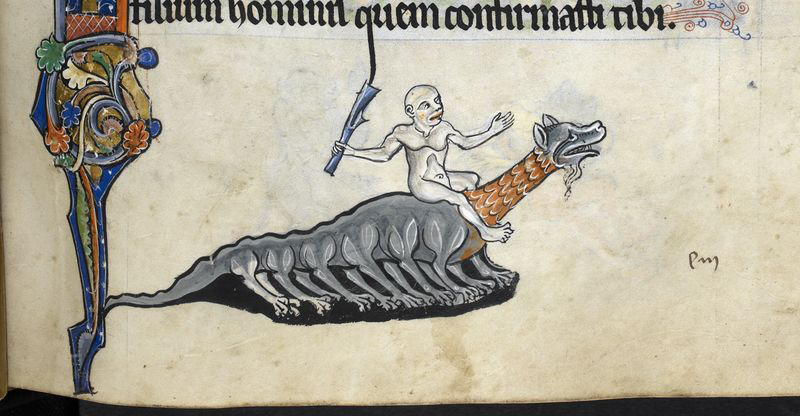
London, British Library, Add. MS 62925, fol. 83r detail. Rutland Psalter in Latin, circa 1260, England (London?). Image via https://blogs.bl.uk/digitisedmanuscripts/2013/05/marginali-yeah-the-fantastical-creatures-of-the-rutland-psalter.html

2. “Rending the Veil:
The Rupture of Image and Text
in Medieval Apocalypse Commentaries”
(ID: 6459)

In-Person Session

Organizers:
Mildred Budny (RGME)
Zoey Kambour (CUNY Graduate Center and RGME Intern Executive Assistant)
Vajra Regan (Centre for Mediaeval Studies, University of Toronto)

Aim

This session explores the various discontinuities between images and texts in illustrated Apocalypse commentaries from the Middle Ages. These differences can manifest in several ways. For instance, an illustration might align more closely with the commentary rather than the biblical text. Additionally, variations can arise from established, highly localized traditions or contemporary innovations. Investigating these differences, whether within a single manuscript or across a complete cycle of illustrations, provides valuable insights into the institutional, political, and intellectual contexts of the manuscript’s production.

Methodologies

This session seeks to explore illustrated Apocalypse commentaries from the Middle Ages through an interdisciplinary lens; therefore, we are open to the methodologies of diverse disciplines including, but not limited to, art history/iconography, manuscript studies, religious studies, and digital humanities. By embracing a wide array of perspectives and analytical frameworks, we hope to foster a holistic understanding of medieval apocalyptic imagery and its multifaceted interpretations.

Keywords: Apocalypse, Beatus, Material Culture, Art History, Literature, Medieval, Manuscript Studies, Religious Studies, Digital Humanities, Manuscript Production

Proposals

Link to submit your proposals directly to this session by 15 September 2024:
https://icms.confex.com/icms/2025/paper/papers/index.cgi?sessionid=6459

New York, Morgan Library and Museum, MS M.644, fol. 222v-223r. Beatus, Saint, Presbyter of Liebana, -798. Commentary on the Apocalypse (MS M.644). Spain, San Salvador de Tábara, ca. 945. Image via https://www.themorgan.org/manuscript/110807.

3. “Women and Manuscripts:
Questions of Authorship” (ID 6310)

Hybrid Session

Co-Organizers:
Jaclyn A. Reed (Research Group on Manuscript Evidence)
Mildred Budny (RGME)

Aim

Paris, Bibliothèque nationale de France, Département des Manuscrits. Français 835, fol. 1r, detail. Frontispiece illustration of the scribal author for collection of texts by Christine de Pizan. Image via https://gallica.bnf.fr/ark:/12148/btv1b8449047c/f9.item.

Women as authors of manuscripts do not always receive adequate attention or study. This past year, the Research Group on Manuscript [and Other] Evidence held an informal, virtual discussion session as part of its “Research Group Speaks” series (Episode 15) focusing on research of manuscripts or texts authored by women and found that the reception and interest were very high both among those wanting to participate and those wanting to attend. Building upon this momentum, we propose further explorations in a panel for the 2025 Congress.

This session will examine women’s relationships with and representations in manuscripts and other evidence, especially those that they personally authored or created. Authorship has sometimes been limited in scope to literary or narrative texts, which can leave out the types of manuscripts that women were more likely to produce such as commonplace books or other collections of receipts, medical treatments, or a variety of other household notations. We welcome methodological approaches that consider manuscripts or other evidence authored by women including, but not limited to, philology, manuscript studies, material culture, and history of the book.

Keywords: History of the book, Manuscript Studies, Material Culture, Representations of Women, Women’s Authorship, Women’s Literature

Proposals

For this Hybrid Session, we solicit participants who plan to attend the Congress in person, as well as participants who plan to attend virtually.

Link to submit your proposals directly to this session by 15 September 2024:
https://icms.confex.com/icms/2025/paper/papers/index.cgi?sessionid=6310

Paris, Bibliothèque nationale de France, Département des Manuscrits. Français 835, fol. 1r. Opening of collection of texts by Christine de Pizan. Image via https://gallica.bnf.fr/ark:/12148/btv1b8449047c/f9.item.

II. Sessions Co-Sponsored by the RGME

4. Moving the Mail: Letters, Couriers, and Post Offices in the Medieval World (ID: 6312)

In-person Session

Co-sponsored with Postal History at Kalamazoo

Organizer: David W. Sorenson (Allan Berman, Numismatist)

Aim

In a world in which communication was necessarily through the written word, getting it from sender to recipient could be a complicated process. While important correspondence could be sent quickly, ordinary letters might be less speedy, and while royal letters might be sent by an efficient official system, ordinary letters between, say, merchants or clergy, might be much less so. This session is intended as a means of examining the ways in which mail moved, whether in Europe or elsewhere.

Keywords: couriers, letters, correspondence, mail, post office, postal, medieval studies

Proposals

Link to submit proposals directly to this session by 15 September 2024:

https://icms.confex.com/icms/2025/paper/papers/index.cgi?sessionid=6312

A courier stands before a figure receiving a letter, with a landscape in the background.

Private Collection, Courier delivering letter. German translation of Petrarch (1559).

Logo of the Societas Magica, reproduced by permission

Societas Magica logo

5. “Grimoires of the Greater West (2): Multicultural Solomonic Magic:
The Case of the Almandal”
(ID 6392)

In-person Session

Co-sponsored with the Societas Magica

Organizers:
Vajra Regan (Centre for Medieval Studies, University of Toronto)
>vajra.regan@mail.utoronto.ca
Gal Sofer (Ben-Gurion University of the Negev)
Matthew Melvin-Koushki (University of South Carolina)

Aim

The Almandal and Almadel of Solomon were among the most influential books of ritual magic in the late Middle Ages. These texts survive in multiple versions that intersect with different cultures and knowledge disciplines. The Almandal was adapted into Latin, most likely in the twelfth century, from one or more lost Arabic exemplars. The fragmentary state of the oldest extant version raises several questions. The text seems to present a work of ritual magic, but certain elements point to an astral magic component. The composite nature of the text has prompted researchers to inquire about the form of the archetype, the role of the Christian translator/editor, and whether the “Almandal” as we know it ever existed in Arabic.

The Almadel first emerged in the fifteenth century and represents a significant Christian revision of the earlier Almandal. Scholars have shown considerable interest in the Almadel for at least two reasons: first, it accrued a complex angelic cosmology that appears to have its origins in the Jewish tradition of the Liber Razielis (The Book of the Angel Raziel or The Book of the Mysteries); second, it exhibits a new, spiritual orientation, absent in the Almandal, thus providing a unique window into the early formation of what many now refer to as “Christian Theurgy.”

To date, scholarly attention has focused predominately on the Latin Almadel and its various vernacular translations (English, German, Italian). This imbalance may be attributed partly to gaps in the manuscript tradition that have isolated the Almandal and obscured its connection with the Almadel. However, over the last fifteen years, the discovery of several Latin and Hebrew manuscripts has helped to clarify the early tradition of the Almandal/Almadel while at the same time complicating previous assumptions about its origins.

This session seeks to reevaluate the history of the Almandal/Almadel in light of these and other discoveries. We invite papers on topics including, but not limited to:

  • The history of the text
  • Its Christian and Jewish reception
  • Connections to traditions such as the Liber Razielis, the Ars notoria, and Berengar Ganell’s Summa sacre magice
  • The role of these texts in the universities and their adoption and use by lay readers

We welcome papers that explore these themes and contribute to a deeper understanding of the Almandal and Almadel and their place in the history of ritual magic and religious practice.

Keywords: Manuscript Studies, Almandal, Magic, Societas Magica, History of the Book, Multicultural, Solomon, History of Magic

Proposals

Please send abstracts of no more than 300 words by 15 September 2024. All paper proposals must be submitted via the official Confex proposal portal.

Link: https://icms.confex.com/icms/2025/paper/papers/index.cgi?sessionid=6392

Halle (Saale), Universitäts- und Landesbibliothek Sachsen-Anhalt, 14 B 36, fol. 243r: Image image of the almadel or “table of spirits”. Astro-magical texts on paper, circa 1400. Image C.C. BY 4.0, via http://dx.doi.org/10.25673/33754.

6. “Sendalphon, Send Me a Dream:
Dream Books, Spells, Divination, Incubation, and Interpretation” (ID #6171)

Online Session

Co-sponsored with the Societas Magica
and
Polytheist-Oriented Medievalists of North America (P.-O.M.o.N.A.)

Organizers:
Phillip Bernhardt-House (Independent Scholar)
Claire Fanger (Department of Religion, Rice University)

Aim

From ancient Mesopotamian cultures, dreams are associated with divine encounters and intervention, particularly with foretelling future events directly or symbolically.  Dream interpretation literature is rife with these understandings.  Magical operations eliciting divinatory dreams are widely encountered.  Particular sacred locations specializing in cultivating divinatory sleep for healing and other purposes, known as “dream incubation,” offered interpreters to assist those who sought such dreams.  This session will explore many examples of dreams in/as divination, the outcome of spells, and through particular practices of incubation, as well as their interpretations and practices related to them in manuscript and other sources of various periods.

Keywords: Dreams, Dream Interpretation, Spells, Divination, Manuscript Studies, Magic, Societas Magica, Dream Incubation

Proposals

Please send abstracts of no more than 300 words by 15 September 2024. All paper proposals must be submitted via the official Confex proposal portal.

Link: https://icms.confex.com/icms/2025/paper/papers/index.cgi?sessionid=6171 

Cambridge, Massachusetts, Harvard University, Houghton Library, MS Typ 7. Macrobius Ambrosius Theodosius, Commentum Macrobii Ambrosii in somnium Scipionis. Dated 1469 Feb. 7. Image Public Domain via https://houghtonlib.tumblr.com/post/146944005911/macrobius-ambrosius-aurelius-theodosius-comentum.

Note on the Image
Commentarii in Somnium Scipionis (Commentary on The Dream of Scipio), by Macrobius Ambrosius Theodosius (fl. c. AD 400) for a portion of De Re Republica by Marcus Tullius Cicero (106 BC – 43 BC).

Image Public Domain via https://houghtonlib.tumblr.com/post/146944005911/macrobius-ambrosius-aurelius-theodosius-comentum.

Los Angeles, Getty Center, Ms. Ludwig XV 7 (83.MR.177), fol. 1. Image Public domain, via Wikimedia Commons.

Note on the Image

Los Angeles, Getty Center, Ms. Ludwig XV 7 (83.MR.177), fol. 1.

Scipio and Guillaume de Lorris Lying in their Beds Dreaming

More information: SEE HERE.

*****

Questions? Suggestions?

  • Leave your comments or questions below
  • Contact Us
  • Sign up for our Newsletter and information about our activities.
    Send a note to director@manuscriptevidence.org or RGMEevents@gmail.com

Visit our Social Media:

  • our FaceBook Page
  • our Facebook Group
  • our Twitter Feed (@rgme_mss)
  • our Bluesky nest @rgmesocial.bluesky.social)
  • our LinkedIn Group

Join the Friends of the RGME. Send your favorite recipe for Lemonade (and perhaps its Story) for our Competition.

Register for our Events by the RGME Eventbrite Collection.

Attend our next Events if your timetable allows. Our next Events:

  • Episode 17. RGME Retrospect and Prospects (Saturday 21 September 2024 online)
  • 2024 Autumn Symposium “At the Helm” (Friday–Saturday 25–26 October 2024 online)
  • Episode 18. “Women as Makers of Books” (Saturday 14 December 2024 online)

Consider making a Donation in Funds or in Kind for our nonprofit educational corporation powered principally by volunteers. Your donations and contributions are welcome, and can go a long way. They may be tax-deductible to the fullest extent provided by the law.

  • Donations and Contributions
  • 2024 Anniversary Appeal

Remember to send your Proposals for Papers for RGME Sessions at the 2025 ICMS by 15 September 2024.  See the instructions above.

We look forward to hearing from you and welcoming you to our events.

*****

Los Angeles, Getty Center, Ms. Ludwig XV 7 (83.MR.177), fol. 1. Scipio and Guillaume de Loris Lying in Their Beds Dreaming. Image Public domain, via Wikimedia Commons.

Tags: Almadel, Almandel, Apocalypse, Art History, Beatus, Correspondence, Couriers, Digital Humanities, Divination, Dream Incubation, dream interpretation, Dreams, Grimoires, History of Magic, History of the Book, Letters, Literature, Magic, Mail, Manuscript Production, Manuscript studies, Material Culture, Medieval manuscripts, Medieval Studies, Multicultural, Post Office, Postal, Religious Studies, Representations of Women, Solomon, Women's Authorship, Women's Literature
No Comments »

To Whom Do Manuscripts Belong?

May 26, 2024 in Manuscript Studies

To Whom Do Manuscripts Belong?

Georgi Parpulov
(independent scholar)

[A Guest Blogpost by our Associate, Georgi Parpulov]

Stray leaf from cod. A 13 of the Lavra on Mount Athos. Recto, detail. Formerly Bath (England), private collection. Present whereabouts uncertain. (Photo: Alexander Saminsky)

A short paper that I published two years ago about dispersed fragments from the library of St Catherine’s Monastery on Mount Sinai prompted a colleague to ask me about ‘manuscripts like these’. ‘What are the ethical issues involved?’, her email went on. ‘Should a collection with fragments from a monastic library offer to return their leaves, for example? Is there any similarity in study of dispersed manuscripts to the study of looted antiquities?’ By way of suggesting possible answers to these questions, I will recount, as accurately and impartially as I can, six distinct series of events.

In March 1917, during World War One, a band of armed men robbed the Greek Eikosiphoinissa Monastery of its library.[1] Because this band was led by the Bulgarian adventurer Todor Panica (1879–1925) and accompanied by the Czech scholar Vladimír Sís (1889–1958), many of the monastery’s manuscripts ended up with public collections in Sofia or Prague. Some, however, remained at first in private hands, and through consecutive sales reached the United States. Two such codices are described, with full provenance information, in a catalogue that Prof. Kenneth Willis Clark (1898–1979) of Duke University published in 1937.[2] In December 2015, ‘the Greek Orthodox Church began sending letters to institutions that possessed the volumes and asked for their return’ (Chicago Tribune of 15 November 2016). The Lutheran School of Theology in Chicago responded by handing over to the Greek Orthodox Archdiocese of America one of the manuscripts that Clark had catalogued. It was subsequently restituted to Eikosiphoinissa, which nowadays functions as a nunnery. Upon request from the Institut für neutestamentliche Textforschung, a liaison contacted the nuns in 2018 and ascertained the codex’s current shelfmark. High-quality photographs taken in 2010 remain on the website of the Center for the Study of New Testament Manuscripts.

On 20 June 1960, the abbot of the Dionysiou Monastery on Mount Athos wrote to the local civil authorities in Karyes that some three months earlier a twelfth-century manuscript had been stolen from his monastery.[3] On Good Friday, namely, about eighty German tourists had arrived at Dionysiou and taken turns, divided into two groups, at visiting its library under the supervision of a senior monk who was not feeling well that day.[4] The codex, the abbot wrote, would have been easy to conceal in the clothing or bag of one of them. Its absence was not immediately marked because it was normally shelved behind the frame of a glazed door.[5] A second letter from the same prelate to the same addressee, bearing date 13/26 June 1961, reported the thereto unnoticed absence of another codex (size 315 × 255 × 120 mm), possibly stolen together with the aforesaid one.[6] Two more codices went missing from the monastery’s library ca. 1960, but the circumstances of their disappearance have never been announced. No steps were taken at the time to identify and arrest the suspected thief or to trace the four stolen items. Detailed descriptions and photographs of one were published in 1979, when in was in private hands,[7] and again in 1987, when it had been purchased by the J. Paul Getty Museum.[8] In January 2014, the 1960 theft report came to the attention of the Hellenic Ministry of Culture and Sports, which asked the Getty to return the codex to Greece. The museum complied and proceeded to remove all photos of the manuscript from its website. The book remains accessible through a digitized microfilm made in 1953,[9] where all figural miniatures are covered up with cloth.

While the repatriations of 2016 and 2014 were widely reported, a slightly earlier and somewhat similar case remains, to my knowledge, completely unpublicized. In 2012, an Orthodox Christian in England presented to his local church an illuminated leaf from a Byzantine manuscript, expecting the parish priest to sell it. Once a colleague of mine had emailed me two photographs, it did not take long to identify the manuscript from which the leaf had been detached. Even without information about the date and circumstances of this removal, the priest was determined to do the right thing: he contacted the Greek embassy in London and handed the leaf to their cultural attaché. Presumably it has been reunited with its parent-volume on Mount Athos, but no public announcements to that effect were ever made.

Stray leaf from Cod. A 13 of the Monastery of the Lavra on Mount Athos. Greek New Testament with Psalter and Nine Odes, 11th century: Verso with LXX Psalm 77: 4-23 (Psalm 78: 4-23 in the English Bible). Formerly Bath (England), private collection. Present whereabouts uncertain. (Photo: Alexander Saminsky).

Those smooth restitutions can be contrasted with the recent history of the ‘Archimedes Palimpsest’.[10] From at least 1846 till ca. 1920, the now-famous codex belonged to a metochion (dependency) of the Greek Orthodox Patriarchate of Jerusalem. It then somehow passed into private hands and was sold at auction to its current owner, an American, in October 1998. A year later the Patriarchate sued for its return. The case was brought before the court of the Southern District of New York and dismissed. ‘Before it filed this lawsuit, the Patriarchate had never asserted claims over other Metochion manuscripts in private hands or announced the disappearance, loss, or theft of any Metochion manuscripts…. In sum, the Patriarchate waited almost seventy years after the Palimpsest was transferred to Mr. Sirieix to bring suit against his heirs [who sold the manuscript in 1998]. The passage of time renders trial of this matter virtually impossible; the Court would be confronted with the Patriarchate’s claim that it clearly possessed the Palimpsest at the beginning of this century against defendants’ claim that they clearly possess it at the end, with little or no evidence of what happened in between.’[11] Since 1999, the palimpsest’s owner has invested generously in its conservation treatment and study. A full set of high-quality digital images has been available for some fifteen years under a Creative Commons license.

My last two stories involve other codices kept in the United States. First we go to Florida. Before The Holy Land Experience, a biblical theme park, closed down in March 2020, all Greek manuscripts of the Van Kampen Collection were housed there. A few of them were on view inside a building called the Scriptorium. When I travelled to Orlando in order to study one that interested me, it was not taken out of its glass case, so I could only see two facing pages. To my joy, the Center for the Study of New Testament Manuscripts had that same book fully photographed in 2008 and made its photographs viewable on the CSNTM website. They remained online till 2020, when a formal letter from a representative of the Van Kampens asked for their removal.

We finally come to Pennsylvania. The library of Bryn Mawr College houses a Greek Psalter from the second half of the twelfth century, Gordan MS 9. It was first offered for sale in 1906 by Karl Wilhelm Hiersemann, whose catalogue description Vladimir Beneševič reprinted in 1911. Its last known owners are the scholar Phyllis Goodhart Gordan (1913–1994) and her spouse John Dozier Gordon Jr. (1907–1968). They had four children. I examined the codex first-hand in 2003, and more recently, on 4 January 2021, wrote to the college’s Curator for Rare Books and Manuscripts to request digital images of it. I was promptly informed that ‘the manuscript in question does not belong to the library, but is on deposit here. We are not able to provide imaging except with the permission of the owner. . . . I will ask our institutional contact with the owner to forward the request. I am not able to guess whether the owner will agree or refuse – or agree with restrictions.’ I am happy to report that I did obtain photographs, in March 2023. I am prohibited from sharing any of them.

By way of conclusion, I must add to the dry facts some general reflections ‘about the state of the field’. Needless to say, from this point on I can only speak for myself. I am not a tenured academic, so I do not absolutely have to study manuscripts for a living. Even so, I am a scholar of sorts, the kind of scholar who is interested in books as objects (rather than just in the texts that they transmit): I want to examine the handwriting, the decoration, the physical structure of a volume. And there has never been a better time than now to study codices from this angle. Various institutions have placed millions of digital images online. Many a library will permit readers to photograph a manuscript they are studying. Collectors want to have their possessions accessed and catalogued.

Thinking of this, I just do not see how property law can be applied to manuscripts without due reflection. The owner of any physical object has the legal right to limit other persons’ access to it: a monastery’s abbot and librarian are not obliged to let me see a book in their custody, photographs once publicly visible may be hidden from view, and so on. Some codices happen to be very expensive: the Archimedes Palimpsest once fetched over $2,000,000 at auction and would almost certainly fetch more nowadays. But these are not just ordinary valuables, they are significant remnants from our common past. Why should a manuscript restituted become a manuscript hidden? Monks or nuns who have managed to reclaim the nineteenth-century content of their libraries ought to remember the gospel: ‘no one after lighting a lamp covers it with a jar or puts it under a bed’. It is bizarre that things as simple as the shelfmark or even the current whereabouts of a leaf sent back to Greece cannot be easily ascertained. It is equally weird to see American owners struggle to keep their manuscripts out of sight for fear of possible restitution claims.

On 23 June 1964, Pope Paul VI told his college of cardinals: ‘Accepting the request of Constantine, Orthodox Metropolitan of Patras, St Peter’s Basilica will return to his see a priceless relic: that of the sacred head of St Andrew the Apostle. This precious relic was entrusted to Our predecessor Pope Pius II, the famous Aeneas Silvius Piccolomini, who received it under peculiar historical circumstances on 12 April 1462 in order that it be worthily kept next to the tomb of Andrew’s brother the Apostle Peter with the intention that it might one day, God willing, be sent back.’ The head was duly returned to Greece three months later. Countless Christians ceaselessly venerate it, and if I ever visit Patras, I shall not be stopped from doing the same. So should a collection with fragments from a monastic library offer to return their leaves? I might as well directly address the possessors or custodians of such relics: If you believe that manuscripts fall in the same class of objects as human remains, then yes, go ahead and return them to those whom you deem to be their rightful heirs. Fiat iustitia, et pereat mundus.

————————————

[1] An eyewitness account by the monastery’s abbot Neophytus is printed in K. E. Tsiakas, Ἱστορία τῆς Ἱερᾶς Μονῆς Εἰκοσιφοινίσσης Παγγαίου (Drama 1958) 40–41.

 [2] K. W. Clark, A Descriptive Catalogue of Greek New Testament Manuscripts in America (Chicago 1937) 51–53, 104–106.

[3] Διὰ τοῦ παρόντος καὶ μετὰ πολλῆς τῆς λύπης μας ἀναφέρομεν Ὑμῖν, ὅτι ἐκ τῆς Βιβλιοθήκης τῆς Μονῆς μας ἐκλάπη πρὸ τριμήνου περίπου, ὡς συμπεραίνομεν, ὁ ὑπ᾽ ἀριθ. 8 περγαμηνὸς χειρόγραφος Κώδιξ (sic) τοῦ 12ου αἰῶνος . . .

[4] Τὴν Μ. Πέμπτην προσήγγισεν εἰς τὴν Μονήν μας τὸ ἀτμόπλοιον “ΑΔΡΙΑΤΙΚΗ” μὲ Γερμανοὺς περιηγητάς, ἐξ ὧν περὶ τοὺς 80 ἀνῆλθον εἰς τὴν Μονήν. Περὶ τῆς ἐλεύσεώς των εἶχομεν προειδοποιηθῆ ἐκ Καριῶν καὶ Δάφνης καὶ ἐπειδὴ ἦλθον περὶ ὥραν 12ην μεσημβρινήν, ὅτε ἐτελεῖτο ἡ θεία λειτουργία, ἐπεσκέφτησαν μόνον τὴν Τράπεζαν τοῦ φαγητοῦ καὶ τὴν Βιβλιοθήκην εἰς δύο ὁμάδας, λόγω στενότητος χώρου. Κατὰ τὴν ἐπίσκεψίν των εἰς τὴν Βιβλιοθήκην περιευρίσκετο καὶ ὁ Ἐπίτροπος Γ. Θεόκλητος, καίτοι ἀσθενής, πρὸς ἀσφάλειαν. Διστυχῶς ἡ εἴσοδος 40 περίπου ἀτόμων εἰς τὸν περιωρισμένον χῶρον τῆς Βιβλιοθήκης καὶ ὁ ὡς ἐκ τούτου συνωστισμὸς διηυκόλησε τοὺς κλέπτας . . .

[5] Ὁ Κῶδιξ εἶναι 30 πόντων ὕφους, 20 πλάτους καὶ 4–5 πάχους καὶ ὡς ἐκ τούτου εὐκόλως ἀπεκρύβη εἰς τὸν κόλπον ἢ τὴν τσάνταν τοῦ κλέψαντος. Ἡ θέσις του ἦτο εἰς τὸ ἄκρον τῆς θυρίδος καὶ σχεδὸν ἐκαλύπτετο ἀπὸ τὸ σανίμα (sic) αὐτῆς, ἐξ οὗ καὶ δὲν ὑπέπεσεν ἐγκαίρως εἰς τὴν ἀντίληψιν τοῦ Βιβλιοθηκαρίου ἡ ἀπουσία του.

[6] Ἀπαντῶντες εἰς Ὑμέτερον ἔγγραφον ἀπὸ 10.7.61 καὶ ὑπ᾽ ἀριθ. 1222.Γ´, ἔχομεν τὴν τιμὴν νὰ ληροφορήσωμεν Ὑμᾶς, ὅτι ὁ ἐν αὐτῷ ἀναφερόμενος περγαμηνὸς Κῶδιξ τῆς Βιβλιοθήκης μας ὑπ᾽ ἀριθ. 49, . . . ἔχει ἐξαφανισθεῖ ἐκ τῆς Βιβλιοθήκης μας, καὶ ἡ ἐξαφάνισίς του ἐγένετο ἀντιληπτὴ ἀπὸ ἔτους. Τὸν χρόνον τῆς ἐξαφανίσεώς του δὲν δυνάμεθα νὰ προσδιορίσωμεν. Ὑποθέτομεν ὅμως, ὅτι δὲν ἀπέχει τῆς διετίας καὶ ἴσως νὰ ἐκλάπη συγχρόνως μὲ τὸν ἄλλον, τὸν ὑπ᾽ ἀριθ. 54, περὶ τοῦ ὁποίου Σᾶς ἀνεφέρομεν τότε ἀμέσως.

[7] A. von Euw, J. M. Plotzek, Die Handschriften der Sammlung Ludwig, I (Cologne 1979) 159–163 with figs 56–63.

[8] R. S. Nelson, ‘Theoktistos and Associates in Twelfth-Century Constantinople: An Illustrated New Testament of A.D. 1133’, The J. Paul Getty Museum Journal 15 (1987) 53–78.

[9] E. W. Sanders, ‘Operation Microfilm at Mt. Athos’, Biblical Archaeologist 18 (1955) 21–41, at 22 and 30.

[10] K. J. Carver, ‘The Legal Implications and Mysteries Surrounding the Archimedes Palimpsest’, American Journal of Legal History 47 (2005) 119–160.

[11] The Greek Orthodox Patriarchate of Jerusalem vs. Christie’s Inc., No. 98 Civ. 7664 (KMW), 1999 WL 673347 (S.D.N.Y. 30 August 1999).

*****


Tags: Access to Manuscripts, Archimedes Palimpsest, Cod. A 13 of the Lavra on Mount Athos, Dionysiou Monastery Mont Athos, Eikosiphoinissa Monastery, History of Collections, Manuscript studies, Manuscript Thefts, Metochion manuscripts, Relic of Saint Andrew the Apostle, Saint Catherine's Monastery, Van Kampen Collection
No Comments »

« Older Entries
Newer Entries »
  • Top
©2024 Research Group on Manuscript Evidence.


is proudly powered by WordPress. WordPress Themes X2 developed by ThemeKraft.