• News
    • News & Views
    • RGME Activities for 2024 and 2025
    • Around & About with the RGME
    • Reviews
    • Highlights
  • Blogs
    • Manuscript Studies
      • Manuscript Studies: Contents List
    • International Congress on Medieval Studies
      • Abstracts of Congress Papers
        • Abstracts of Papers Listed by Author
        • Abstracts of Papers Listed by Year
  • About
    • Mission
    • Who We Are
      • Officers, Associates & Volunteers
      • RGME Committees
      • Friends of the Research Group on Manuscript Evidence
    • Policies & Statements
      • RGME Privacy Policy Statement
      • RGME Intellectual Property Statement & Agreements
    • People
      • Mildred Budny — Her Page
      • Adelaide Bennett Hagens
    • Activities
      • Events
      • Congress Activities
        • Sponsored Conference Sessions (1993‒)
          • Panels at the M-MLA Convention (from 2016)
        • Co-sponsored Conference Sessions (2006‒)
    • History
      • Seals, Matrices & Documents
      • Genealogies & Archives
    • Contact Us
  • Bembino
    • Multi-Lingual Bembino
    • RGME Bembino: Resources
  • Congress
    • Sponsored Conference Sessions (1993‒)
    • Co-sponsored Conference Sessions (2006‒)
    • Abstracts of Congress Papers
      • Abstracts Listed by Author
      • Abstracts Listed by Year
    • Kalamazoo Archive
    • Panels at the M-MLA Convention (2016-2019)
      • Abstracts of Papers for the M-MLA Convention
      • Panels at the M-MLA Convention (from 2016)
  • Events
    • RGME Activities for 2024 and 2025
      • 2023 Activities and 2024 Planned Activities
    • Seminars, Workshops, Colloquia & Symposia (1989–)
      • Seminars on ‘The Evidence of Manuscripts’
      • Symposia on ‘The Transmission of the Bible’
      • The New Series (2001-)
        • 2019 Anniversary Symposium Program: The Roads Taken
        • 2019 Anniversary Symposium Registration
        • 2019 Anniversary Symposium Registration Open
      • RGME Symposia: The Various Series
      • The Research Group Speaks: The Series
      • Meetings of the Friends of the Research Group on Manuscript Evidence
      • RGME Online Events
    • Abstracts of Papers for Events
      • Abstracts of Papers for Seminars on ‘The Evidence of Manuscripts’
      • Abstracts of Papers for Symposia, Workshops & Colloquia
    • Receptions & Parties
    • Business Meetings
    • Photographic Exhibitions & Master Classes
    • Events Archive
  • ShelfLife
    • Journal Description
    • ShelfMarks: The RGME-Newsletter
    • Publications
      • “Insular, Anglo-Saxon, and Early Anglo-Norman Manuscript Art at Corpus Christi College, Cambridge” (1997)
        • Mildred Budny, ‘Catalogue’
        • The Illustrated Catalogue (1997)
      • The Illustrated Handlist
      • Semi-Official Counterfeiting in France 1380-1422
      • No Snap Decisions: Challenges of Manuscript Photography
    • History and Design of Our Website
  • Galleries
    • Watermarks & the History of Paper
    • Galleries: Contents List
    • Scripts on Parade
    • Texts on Parade
      • Latin Documents & Cartularies
      • New Testament Leaves in Old Armenian
    • Posters on Display
    • Layout Designs
  • Donations and Contributions
    • RGME Donor Promise
    • 2023 End-of-Year Fundraiser for our 2024 Anniversary Year
    • 2019 Anniversary Appeal
    • Orders
  • Links
    • Catalogs, Metadata, and Databases: A Handlist of Links
    • Handlist of Resources for Manuscript Studies and Fragmentology
    • Manuscripts & Rare Books
    • Maps, Plans & Drawings
    • Seals, Seal-Matrices & Documents

  • News
    • News & Views
    • RGME Activities for 2024 and 2025
    • Around & About with the RGME
    • Reviews
    • Highlights
  • Blogs
    • Manuscript Studies
      • Manuscript Studies: Contents List
    • International Congress on Medieval Studies
      • Abstracts of Congress Papers
        • Abstracts of Papers Listed by Author
        • Abstracts of Papers Listed by Year
  • About
    • Mission
    • Who We Are
      • Officers, Associates & Volunteers
      • RGME Committees
      • Friends of the Research Group on Manuscript Evidence
    • Policies & Statements
      • RGME Privacy Policy Statement
      • RGME Intellectual Property Statement & Agreements
    • People
      • Mildred Budny — Her Page
      • Adelaide Bennett Hagens
    • Activities
      • Events
      • Congress Activities
        • Sponsored Conference Sessions (1993‒)
          • Panels at the M-MLA Convention (from 2016)
        • Co-sponsored Conference Sessions (2006‒)
    • History
      • Seals, Matrices & Documents
      • Genealogies & Archives
    • Contact Us
  • Bembino
    • Multi-Lingual Bembino
    • RGME Bembino: Resources
  • Congress
    • Sponsored Conference Sessions (1993‒)
    • Co-sponsored Conference Sessions (2006‒)
    • Abstracts of Congress Papers
      • Abstracts Listed by Author
      • Abstracts Listed by Year
    • Kalamazoo Archive
    • Panels at the M-MLA Convention (2016-2019)
      • Abstracts of Papers for the M-MLA Convention
      • Panels at the M-MLA Convention (from 2016)
  • Events
    • RGME Activities for 2024 and 2025
      • 2023 Activities and 2024 Planned Activities
    • Seminars, Workshops, Colloquia & Symposia (1989–)
      • Seminars on ‘The Evidence of Manuscripts’
      • Symposia on ‘The Transmission of the Bible’
      • The New Series (2001-)
        • 2019 Anniversary Symposium Program: The Roads Taken
        • 2019 Anniversary Symposium Registration
        • 2019 Anniversary Symposium Registration Open
      • RGME Symposia: The Various Series
      • The Research Group Speaks: The Series
      • Meetings of the Friends of the Research Group on Manuscript Evidence
      • RGME Online Events
    • Abstracts of Papers for Events
      • Abstracts of Papers for Seminars on ‘The Evidence of Manuscripts’
      • Abstracts of Papers for Symposia, Workshops & Colloquia
    • Receptions & Parties
    • Business Meetings
    • Photographic Exhibitions & Master Classes
    • Events Archive
  • ShelfLife
    • Journal Description
    • ShelfMarks: The RGME-Newsletter
    • Publications
      • “Insular, Anglo-Saxon, and Early Anglo-Norman Manuscript Art at Corpus Christi College, Cambridge” (1997)
        • Mildred Budny, ‘Catalogue’
        • The Illustrated Catalogue (1997)
      • The Illustrated Handlist
      • Semi-Official Counterfeiting in France 1380-1422
      • No Snap Decisions: Challenges of Manuscript Photography
    • History and Design of Our Website
  • Galleries
    • Watermarks & the History of Paper
    • Galleries: Contents List
    • Scripts on Parade
    • Texts on Parade
      • Latin Documents & Cartularies
      • New Testament Leaves in Old Armenian
    • Posters on Display
    • Layout Designs
  • Donations and Contributions
    • RGME Donor Promise
    • 2023 End-of-Year Fundraiser for our 2024 Anniversary Year
    • 2019 Anniversary Appeal
    • Orders
  • Links
    • Catalogs, Metadata, and Databases: A Handlist of Links
    • Handlist of Resources for Manuscript Studies and Fragmentology
    • Manuscripts & Rare Books
    • Maps, Plans & Drawings
    • Seals, Seal-Matrices & Documents

Log in

Archives

Featured Posts

Workshop 11. “Manuscripts at Play, Continued: Figured Texts”
Episode 29. “The Life and Inquest of Jeanne-Marie de Maillé”
How to Join the RGME: Guide for Newcomers
Episode 28. Preview of Medieval “Printing on Fabric”
Episode 27. “Catalog(u)ing Collections and Materials”
2026 International Medieval Congress at Leeds: Program
Sanskrit and Prakrit Manuscripts, Continued: More Leaves for Manuscript Sample XII
Episode 24. “Life with Books” (Interview with John Windle)
Announcing the Launch of RGME Bembino WP
2026 RGME Colloquium at The Grolier Club: Report
Medieval Missal Fragment as Early-Modern Cover
The Weber Leaf from Ege MS 61
"Bembino" Booklet Cover
Episode 23. “Meet RGME Bembino: Facets of a Font”
2026 RGME Colloquium on “Transformations & Renewals” at The Grolier Club
2026 Theme of the Year: “Transformations and Renewals”
A Leaf with Patchwork from the Saint Albans Bible
A Sister Leaf from a Miniature Latin Vulgate Bible
A Little Latin Vulgate Bible Manuscript Leaf in Princeton
J. S. Wagner Collection. Leaf from from Prime in a Latin manuscript Breviary. Folio 4 Verso, with part of Psalm 117 (118) in the Vulgate Version, set out in verses with decorated initials.
2026 Annual Appeal
Episode 22: “Encounters with Local Saints and Their Cults”
Private Collection, Ege's FBNC Portfolio, Dante Leaf, Verso, Detail. Reproduced by Permission.
2025 RGME Autumn Colloquium on Fragments
Workshop 8: A Hybrid Book where Medieval Music Meets Early-Modern Herbal
2025 RGME Autumn Symposium on “Readers, Fakers, and Re-Creators of Books”
RGME Workshops on “The Evidence of Manuscripts, Etc.”
Episode 21. “Learning How to Look”
2025 International Congress on Medieval Studies: Program
2025 RGME Visit to Vassar College
Two Leaves in the Book of Numbers from the Chudleigh Bible
Delibovi on Glassgold on Boethius: A Blogpost
Ronald Smeltzer on “Émilie du Châtelet, Woman of Science”
2025 Spring Symposium: “Makers, Producers, and Collectors of Books”
Starters’ Orders
The Weber Leaf from the Saint Albans Bible
Workshop 4. “Manuscript Fragments Compared”
Episode 20. “Comic Book Theory for Medievalists”
Episode 19: “At the Gate: Starting the Year 2025 at its Threshold”
Favorite Recipes for Lemonade, Etc.
RGME Visit to the Lomazow Collection: Report
2024 Autumn Symposium: “At the Helm”
A Latin Vulgate Leaf of the Book of Numbers
The RGME ‘Lending Library’
Florence, Italy, Ponte Vecchio from Ponte alle Grazie. Photo: Ingo Mehling, CC BY-SA 4.0 , via Wikimedia Commons
Episode 17. “RGME Retrospect and Prospects: Anniversary Reflections”
Jesse Hurlbut at the Bonneville Salt Flats, Utah. Photograph Jesse Hurlbut.
Episode 16: An Interview with Jesse D. Hurlbut
Kalamazoo, MI Western Michigan University, Valley III from the side. Photograph: David W. Sorenson.
2024 International Congress on Medieval Studies: Report
2024 Spring Symposium at Vassar College
2024 Anniversary Symposium in Thanks to Jesse Hurlbut: Program

You are browsing the Blog for Manuscript studies

To Whom Do Manuscripts Belong?

May 26, 2024 in Manuscript Studies

To Whom Do Manuscripts Belong?

Georgi Parpulov
(independent scholar)

[A Guest Blogpost by our Associate, Georgi Parpulov]
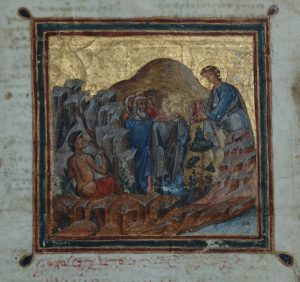
Stray leaf from cod. A 13 of the Lavra on Mount Athos. Recto, detail. Formerly Bath (England), private collection. Present whereabouts uncertain. (Photo: Alexander Saminsky)

A short paper that I published two years ago about dispersed fragments from the library of St Catherine’s Monastery on Mount Sinai prompted a colleague to ask me about ‘manuscripts like these’. ‘What are the ethical issues involved?’, her email went on. ‘Should a collection with fragments from a monastic library offer to return their leaves, for example? Is there any similarity in study of dispersed manuscripts to the study of looted antiquities?’ By way of suggesting possible answers to these questions, I will recount, as accurately and impartially as I can, six distinct series of events.

In March 1917, during World War One, a band of armed men robbed the Greek Eikosiphoinissa Monastery of its library.[1] Because this band was led by the Bulgarian adventurer Todor Panica (1879–1925) and accompanied by the Czech scholar Vladimír Sís (1889–1958), many of the monastery’s manuscripts ended up with public collections in Sofia or Prague. Some, however, remained at first in private hands, and through consecutive sales reached the United States. Two such codices are described, with full provenance information, in a catalogue that Prof. Kenneth Willis Clark (1898–1979) of Duke University published in 1937.[2] In December 2015, ‘the Greek Orthodox Church began sending letters to institutions that possessed the volumes and asked for their return’ (Chicago Tribune of 15 November 2016). The Lutheran School of Theology in Chicago responded by handing over to the Greek Orthodox Archdiocese of America one of the manuscripts that Clark had catalogued. It was subsequently restituted to Eikosiphoinissa, which nowadays functions as a nunnery. Upon request from the Institut für neutestamentliche Textforschung, a liaison contacted the nuns in 2018 and ascertained the codex’s current shelfmark. High-quality photographs taken in 2010 remain on the website of the Center for the Study of New Testament Manuscripts.

On 20 June 1960, the abbot of the Dionysiou Monastery on Mount Athos wrote to the local civil authorities in Karyes that some three months earlier a twelfth-century manuscript had been stolen from his monastery.[3] On Good Friday, namely, about eighty German tourists had arrived at Dionysiou and taken turns, divided into two groups, at visiting its library under the supervision of a senior monk who was not feeling well that day.[4] The codex, the abbot wrote, would have been easy to conceal in the clothing or bag of one of them. Its absence was not immediately marked because it was normally shelved behind the frame of a glazed door.[5] A second letter from the same prelate to the same addressee, bearing date 13/26 June 1961, reported the thereto unnoticed absence of another codex (size 315 × 255 × 120 mm), possibly stolen together with the aforesaid one.[6] Two more codices went missing from the monastery’s library ca. 1960, but the circumstances of their disappearance have never been announced. No steps were taken at the time to identify and arrest the suspected thief or to trace the four stolen items. Detailed descriptions and photographs of one were published in 1979, when in was in private hands,[7] and again in 1987, when it had been purchased by the J. Paul Getty Museum.[8] In January 2014, the 1960 theft report came to the attention of the Hellenic Ministry of Culture and Sports, which asked the Getty to return the codex to Greece. The museum complied and proceeded to remove all photos of the manuscript from its website. The book remains accessible through a digitized microfilm made in 1953,[9] where all figural miniatures are covered up with cloth.

While the repatriations of 2016 and 2014 were widely reported, a slightly earlier and somewhat similar case remains, to my knowledge, completely unpublicized. In 2012, an Orthodox Christian in England presented to his local church an illuminated leaf from a Byzantine manuscript, expecting the parish priest to sell it. Once a colleague of mine had emailed me two photographs, it did not take long to identify the manuscript from which the leaf had been detached. Even without information about the date and circumstances of this removal, the priest was determined to do the right thing: he contacted the Greek embassy in London and handed the leaf to their cultural attaché. Presumably it has been reunited with its parent-volume on Mount Athos, but no public announcements to that effect were ever made.
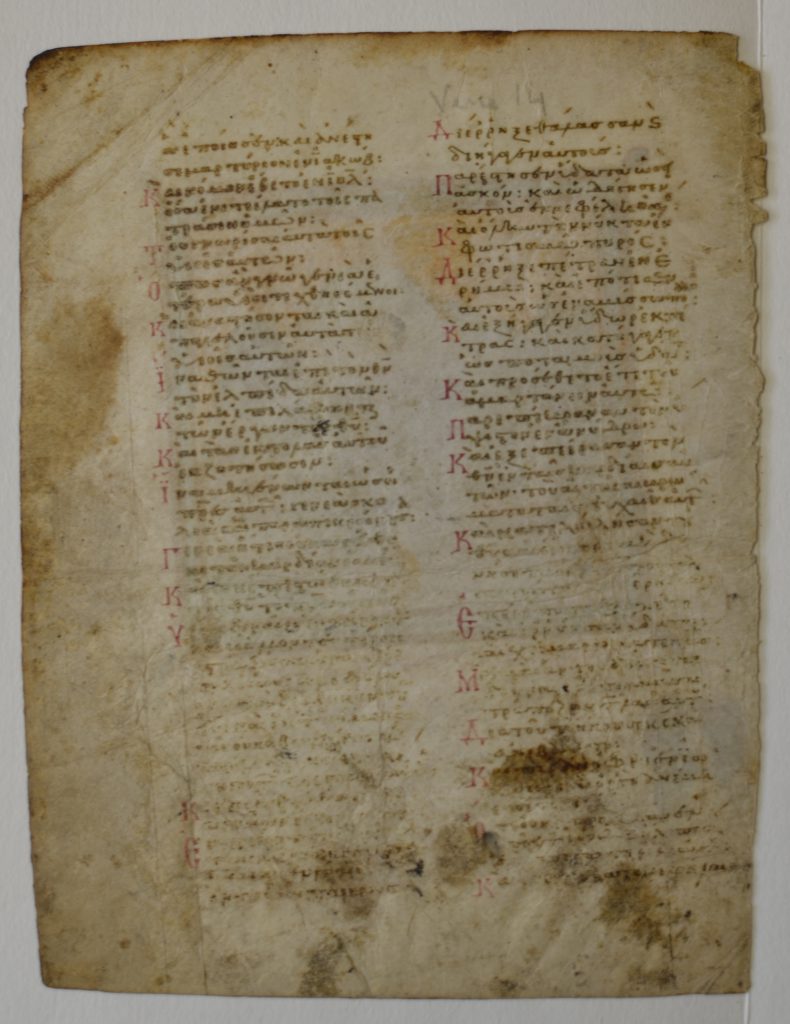
Stray leaf from Cod. A 13 of the Monastery of the Lavra on Mount Athos. Greek New Testament with Psalter and Nine Odes, 11th century: Verso with LXX Psalm 77: 4-23 (Psalm 78: 4-23 in the English Bible). Formerly Bath (England), private collection. Present whereabouts uncertain. (Photo: Alexander Saminsky).

Those smooth restitutions can be contrasted with the recent history of the ‘Archimedes Palimpsest’.[10] From at least 1846 till ca. 1920, the now-famous codex belonged to a metochion (dependency) of the Greek Orthodox Patriarchate of Jerusalem. It then somehow passed into private hands and was sold at auction to its current owner, an American, in October 1998. A year later the Patriarchate sued for its return. The case was brought before the court of the Southern District of New York and dismissed. ‘Before it filed this lawsuit, the Patriarchate had never asserted claims over other Metochion manuscripts in private hands or announced the disappearance, loss, or theft of any Metochion manuscripts…. In sum, the Patriarchate waited almost seventy years after the Palimpsest was transferred to Mr. Sirieix to bring suit against his heirs [who sold the manuscript in 1998]. The passage of time renders trial of this matter virtually impossible; the Court would be confronted with the Patriarchate’s claim that it clearly possessed the Palimpsest at the beginning of this century against defendants’ claim that they clearly possess it at the end, with little or no evidence of what happened in between.’[11] Since 1999, the palimpsest’s owner has invested generously in its conservation treatment and study. A full set of high-quality digital images has been available for some fifteen years under a Creative Commons license.

My last two stories involve other codices kept in the United States. First we go to Florida. Before The Holy Land Experience, a biblical theme park, closed down in March 2020, all Greek manuscripts of the Van Kampen Collection were housed there. A few of them were on view inside a building called the Scriptorium. When I travelled to Orlando in order to study one that interested me, it was not taken out of its glass case, so I could only see two facing pages. To my joy, the Center for the Study of New Testament Manuscripts had that same book fully photographed in 2008 and made its photographs viewable on the CSNTM website. They remained online till 2020, when a formal letter from a representative of the Van Kampens asked for their removal.

We finally come to Pennsylvania. The library of Bryn Mawr College houses a Greek Psalter from the second half of the twelfth century, Gordan MS 9. It was first offered for sale in 1906 by Karl Wilhelm Hiersemann, whose catalogue description Vladimir Beneševič reprinted in 1911. Its last known owners are the scholar Phyllis Goodhart Gordan (1913–1994) and her spouse John Dozier Gordon Jr. (1907–1968). They had four children. I examined the codex first-hand in 2003, and more recently, on 4 January 2021, wrote to the college’s Curator for Rare Books and Manuscripts to request digital images of it. I was promptly informed that ‘the manuscript in question does not belong to the library, but is on deposit here. We are not able to provide imaging except with the permission of the owner. . . . I will ask our institutional contact with the owner to forward the request. I am not able to guess whether the owner will agree or refuse – or agree with restrictions.’ I am happy to report that I did obtain photographs, in March 2023. I am prohibited from sharing any of them.

By way of conclusion, I must add to the dry facts some general reflections ‘about the state of the field’. Needless to say, from this point on I can only speak for myself. I am not a tenured academic, so I do not absolutely have to study manuscripts for a living. Even so, I am a scholar of sorts, the kind of scholar who is interested in books as objects (rather than just in the texts that they transmit): I want to examine the handwriting, the decoration, the physical structure of a volume. And there has never been a better time than now to study codices from this angle. Various institutions have placed millions of digital images online. Many a library will permit readers to photograph a manuscript they are studying. Collectors want to have their possessions accessed and catalogued.

Thinking of this, I just do not see how property law can be applied to manuscripts without due reflection. The owner of any physical object has the legal right to limit other persons’ access to it: a monastery’s abbot and librarian are not obliged to let me see a book in their custody, photographs once publicly visible may be hidden from view, and so on. Some codices happen to be very expensive: the Archimedes Palimpsest once fetched over $2,000,000 at auction and would almost certainly fetch more nowadays. But these are not just ordinary valuables, they are significant remnants from our common past. Why should a manuscript restituted become a manuscript hidden? Monks or nuns who have managed to reclaim the nineteenth-century content of their libraries ought to remember the gospel: ‘no one after lighting a lamp covers it with a jar or puts it under a bed’. It is bizarre that things as simple as the shelfmark or even the current whereabouts of a leaf sent back to Greece cannot be easily ascertained. It is equally weird to see American owners struggle to keep their manuscripts out of sight for fear of possible restitution claims.

On 23 June 1964, Pope Paul VI told his college of cardinals: ‘Accepting the request of Constantine, Orthodox Metropolitan of Patras, St Peter’s Basilica will return to his see a priceless relic: that of the sacred head of St Andrew the Apostle. This precious relic was entrusted to Our predecessor Pope Pius II, the famous Aeneas Silvius Piccolomini, who received it under peculiar historical circumstances on 12 April 1462 in order that it be worthily kept next to the tomb of Andrew’s brother the Apostle Peter with the intention that it might one day, God willing, be sent back.’ The head was duly returned to Greece three months later. Countless Christians ceaselessly venerate it, and if I ever visit Patras, I shall not be stopped from doing the same. So should a collection with fragments from a monastic library offer to return their leaves? I might as well directly address the possessors or custodians of such relics: If you believe that manuscripts fall in the same class of objects as human remains, then yes, go ahead and return them to those whom you deem to be their rightful heirs. Fiat iustitia, et pereat mundus.

————————————

[1] An eyewitness account by the monastery’s abbot Neophytus is printed in K. E. Tsiakas, Ἱστορία τῆς Ἱερᾶς Μονῆς Εἰκοσιφοινίσσης Παγγαίου (Drama 1958) 40–41.

 [2] K. W. Clark, A Descriptive Catalogue of Greek New Testament Manuscripts in America (Chicago 1937) 51–53, 104–106.

[3] Διὰ τοῦ παρόντος καὶ μετὰ πολλῆς τῆς λύπης μας ἀναφέρομεν Ὑμῖν, ὅτι ἐκ τῆς Βιβλιοθήκης τῆς Μονῆς μας ἐκλάπη πρὸ τριμήνου περίπου, ὡς συμπεραίνομεν, ὁ ὑπ᾽ ἀριθ. 8 περγαμηνὸς χειρόγραφος Κώδιξ (sic) τοῦ 12ου αἰῶνος . . .

[4] Τὴν Μ. Πέμπτην προσήγγισεν εἰς τὴν Μονήν μας τὸ ἀτμόπλοιον “ΑΔΡΙΑΤΙΚΗ” μὲ Γερμανοὺς περιηγητάς, ἐξ ὧν περὶ τοὺς 80 ἀνῆλθον εἰς τὴν Μονήν. Περὶ τῆς ἐλεύσεώς των εἶχομεν προειδοποιηθῆ ἐκ Καριῶν καὶ Δάφνης καὶ ἐπειδὴ ἦλθον περὶ ὥραν 12ην μεσημβρινήν, ὅτε ἐτελεῖτο ἡ θεία λειτουργία, ἐπεσκέφτησαν μόνον τὴν Τράπεζαν τοῦ φαγητοῦ καὶ τὴν Βιβλιοθήκην εἰς δύο ὁμάδας, λόγω στενότητος χώρου. Κατὰ τὴν ἐπίσκεψίν των εἰς τὴν Βιβλιοθήκην περιευρίσκετο καὶ ὁ Ἐπίτροπος Γ. Θεόκλητος, καίτοι ἀσθενής, πρὸς ἀσφάλειαν. Διστυχῶς ἡ εἴσοδος 40 περίπου ἀτόμων εἰς τὸν περιωρισμένον χῶρον τῆς Βιβλιοθήκης καὶ ὁ ὡς ἐκ τούτου συνωστισμὸς διηυκόλησε τοὺς κλέπτας . . .

[5] Ὁ Κῶδιξ εἶναι 30 πόντων ὕφους, 20 πλάτους καὶ 4–5 πάχους καὶ ὡς ἐκ τούτου εὐκόλως ἀπεκρύβη εἰς τὸν κόλπον ἢ τὴν τσάνταν τοῦ κλέψαντος. Ἡ θέσις του ἦτο εἰς τὸ ἄκρον τῆς θυρίδος καὶ σχεδὸν ἐκαλύπτετο ἀπὸ τὸ σανίμα (sic) αὐτῆς, ἐξ οὗ καὶ δὲν ὑπέπεσεν ἐγκαίρως εἰς τὴν ἀντίληψιν τοῦ Βιβλιοθηκαρίου ἡ ἀπουσία του.

[6] Ἀπαντῶντες εἰς Ὑμέτερον ἔγγραφον ἀπὸ 10.7.61 καὶ ὑπ᾽ ἀριθ. 1222.Γ´, ἔχομεν τὴν τιμὴν νὰ ληροφορήσωμεν Ὑμᾶς, ὅτι ὁ ἐν αὐτῷ ἀναφερόμενος περγαμηνὸς Κῶδιξ τῆς Βιβλιοθήκης μας ὑπ᾽ ἀριθ. 49, . . . ἔχει ἐξαφανισθεῖ ἐκ τῆς Βιβλιοθήκης μας, καὶ ἡ ἐξαφάνισίς του ἐγένετο ἀντιληπτὴ ἀπὸ ἔτους. Τὸν χρόνον τῆς ἐξαφανίσεώς του δὲν δυνάμεθα νὰ προσδιορίσωμεν. Ὑποθέτομεν ὅμως, ὅτι δὲν ἀπέχει τῆς διετίας καὶ ἴσως νὰ ἐκλάπη συγχρόνως μὲ τὸν ἄλλον, τὸν ὑπ᾽ ἀριθ. 54, περὶ τοῦ ὁποίου Σᾶς ἀνεφέρομεν τότε ἀμέσως.

[7] A. von Euw, J. M. Plotzek, Die Handschriften der Sammlung Ludwig, I (Cologne 1979) 159–163 with figs 56–63.

[8] R. S. Nelson, ‘Theoktistos and Associates in Twelfth-Century Constantinople: An Illustrated New Testament of A.D. 1133’, The J. Paul Getty Museum Journal 15 (1987) 53–78.

[9] E. W. Sanders, ‘Operation Microfilm at Mt. Athos’, Biblical Archaeologist 18 (1955) 21–41, at 22 and 30.

[10] K. J. Carver, ‘The Legal Implications and Mysteries Surrounding the Archimedes Palimpsest’, American Journal of Legal History 47 (2005) 119–160.

[11] The Greek Orthodox Patriarchate of Jerusalem vs. Christie’s Inc., No. 98 Civ. 7664 (KMW), 1999 WL 673347 (S.D.N.Y. 30 August 1999).

*****
 

Tags: Access to Manuscripts, Archimedes Palimpsest, Cod. A 13 of the Lavra on Mount Athos, Dionysiou Monastery Mont Athos, Eikosiphoinissa Monastery, History of Collections, Manuscript studies, Manuscript Thefts, Metochion manuscripts, Relic of Saint Andrew the Apostle, Saint Catherine's Monastery, Van Kampen Collection
No Comments »

2024 International Congress on Medieval Studies: Report

May 15, 2024 in Abstracts of Conference Papers, Anniversary, Announcements, Conference, Conference Announcement, Events, ICMS, Illustrated Handlist, International Congress on Medieval Studies, Kalamazoo, POMONA, Postal History at Kalamazoo, Societas Magica

2024 International Congress on Medieval Studies: Report

59th ICMS (9–11 May 2024)

Held in a transitional ‘hybrid’ form
with RGME Co-Sponsored Sessions,
an Open Business Meeting,
and Co-Sponsored Reception

In a Nutshell:
Mission Accomplished!

With Thanks to our Participants,
Co-Sponsors, Audience, and Friends

[Posted on 14 May 2024]

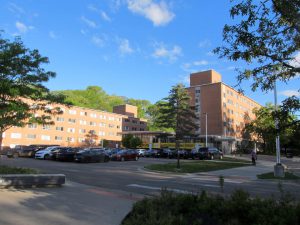
Western Michigan University, Valley III from the side. Photograph: David W. Sorenson.

Western Michigan University, Valley III from the side. Photograph: David W. Sorenson.

After the successful completion of all our activities at the 59th Annual 2024 International Congress on Medieval Studies International Congress on Medieval Studies (ICMS), we report our accomplishments and give updates about changes to the Program which we announced (with updates as appropriate) for its items. See the full ICMS Program issued by its organizing Committee:

  • 2024 Congress Program, with Corrigenda.

The Journey

Already from our first preparations toward the 2024 Congress,

  • starting with the 2023 Congress and our Open Business Meeting there to invite proposals,
  • moving on to our proposals for Sessions for 2024 submitted to the Congress Committee by 1 June 2023,
  • progressing with the approved Call for Papers for the 2024 ICMS,
  • reaching the firm conclusion of that Call on 15 September 2024, and
  • selecting the Program for our Sessions according to responses to that Call and related developments,

we have made revisions and provided updates for our plan.

They gave rise to our announcement for our own (and co-sponsored) Program (including the details of Sessions, their speakers, titles of papers, order of presentation, and so on; as well as ancillary events such as the Anniversary Reception), its updates throughout the months from October to May and the start of the Congress.  Now we follow up with the Report.

The proposals received not only yielded Programs for which the order of Papers and the follow-up invitation to Presiders and Panelists, but also encouraged us to combine resources within the Research Group, with our frequent co-sponsor, the Societas Magica, and with others.  Thus we collaboratively created a strong program of activities for the 2024 Congress.

Along the way, between

  • the submission of our selected Program to the Congress Committee by 15 October 2023,
  • its acceptance,
  • the assignment of dates, times, and venues for the individual activities for the 2024 Congress Program as officially published (with a series of Corrigenda, not affecting us, as the date of the Congress approached), and
  • the start of the Congress itself on Thursday 9 May 2024, with events variously in online and/or in-person formats,

our own 2024 Congress Program has had a few minor revisions, as people and technological arrangements permitted.

These changes did not interfere with the overall success of our activities.  Our 2024 Congress Program reported various changes up to the Congress; this Report describes those effected at or around the Congress.

Access Included

As in 2023, the RGME responded to the partly ‘hybrid’ conditions of the Congress by providing its Zoom Meetings for two scheduled solely ‘In Person’ Sessions, as well as for our In-Person catered lunchtime Open Business Meeting, and by reserving an onsite Remote Participation Room on campus for those participants for a scheduled ‘Virtual’ Session who were present at the Congress to be able to gather to sign on to the online Session hosted by the Congress Confex Portal. The RGME managed all these extra Zoom provisions and reservations, as part of its contribution to sponsoring or co-sponsoring Sessions at the ICMS over the years.

It can be worth noting that those donations — at the cost of the RGME, are made possible by donations to enable its Zoom Subscription, by our own provisions for technical backup, and principally by the many pro-bono donations by its Director as overall organizer and co-ordinator of the RGME activities at the Congress and elsewhere — are not covered within the costs to produce the Congress, which registration fees by attendees online and in-person work to subsidize. The extra efforts by the RGME to provide features or facilities for the contributors, participants, and attendees of its activities at the Congress, whether online or onsite, correspond with our approach to our activities of many kinds.

In this spirit, the RGME has consistently stepped up to the plate in response to changes in the facilities for the ICMS before and after the start of the Covid-19 pandemic, when the Congress was successively

  • 1) cancelled outright (2020),
  • 2) rescheduled in online format only (2021), and
  • 3) re-introduced in a partly in-person, partly virtual, ‘hybrid’ format (2022, 2o23, 2024, and more).

Throughout these developments, responding to their changing requirements, the RGME has continued to seek, insofar as possible with our own limited resources, to provide access to our sponsored and co-sponsored Congress activities to as wide an audience as possible, including those with disablilities, health issues, and difficulties in finding resources to travel and cover expenses to attend the Congress in person.

These ‘extras’ which we provide stand alongside the RGME tradition for many years of promoting our authors and the contributions of their work to our Congress Programs (see our Congress Activities) by the series of RGME promotional notices for the year’s Congress (with updates):

  • on our official Website (You are Here),
  • on our Social Media (listed Below),
  • in the Posters for each of our Congress activities, and
  • in the Congress Abstracts which we publish for the Authors’ presentations.

The Posters normally are displayed in printed form at the Congress — where permitted, such as on cork boards in the different buildings and in the rooms where our events take place — and on the RGME website, with printed copies also sent to presenters as souvenirs to display in their offices or studies and to give to their mothers.  For example for the 2015 Congress:

Derek Shank stands beside the RGME Poster Display for the 2025 ICMS. Photography by Mildred Budny.

The Abstracts appear in their own individual webpages — which can 1) extend for a longer span than the assigned limit (100 words) for the submission of a proposal for a Congress Paper; 2) add notes, links, and bibliography; and 3) include images — as publications in their own right.

Moreover, we take care to index all the Authors’ Abstracts for a given Congress to grant wider access both:

  • Alphabetically by Author’s Surname and
  • Chronologically by Year of Author’s Presentation.

The Arrival

After the Journey to arrive, there remained some bumps in the road at the destination.  The RGME Director was unable to travel for health reasons, and so had to attend online.

Program

One person on the Program for one Session decided not to attend.  Technical issues with one Speaker’s PowerPoint Presentation and its Zoom projection interrupted a short span of the flow of slides in an expertly crafted presentation in another Session, but this interruption could smoothly be kept to a brief minimum through co-ordination prepared ahead of time between the Speaker and the RGME Zoom Host, together with the Session Organizer.  The prepared co-ordination ahead of time for hybrid access dropped the ball between one scheduled in-person Session and the RGME-hosted Zoom online facility, required, it turned out, not as an extra, but as an essential, so as to enable the Presider and two of the Speakers unable to travel to the Congress to participate in the Session.

Audience Participation

At the last minute, an audience member generously offered to lend his computer so that the Organizer / Second Speaker could connect the Zoom Meeting for the Session and the In-Person Room.  We give thanks to collegiality and generous resourcefulness.

Posters

Another surprise came for the RGME Posters for our Congress Activities when the eve of the Congress arrived and participants came on site.  We suddenly discovered that the 2024 Congress prohibited the display of posters anywhere in a printed form, apart from selected tables requiring horizontal piles, rather than enabling vertical display for which our Posters are designed.

This change meant that the extra efforts by our Trustee and Co-Organizer David Porreca in the days before the Congress to produced printed Posters for display and distribution there — while our Director could not travel to the Congress to bring them as usual — were thwarted.  Henceforth, we will plan accordingly and distribute our Posters outside the Congress walls, both in digital and printed formats.

By fortunate choice, without knowing about the Congress’s redirections, the Director had posted the newly-designed Posters in a Web Gallery of their own on our website just a couple of days before the Congress, in a new departure for our tradition of sponsorship and co-sponsorship. Customarily, she would post them in the RGME webpost for the year’s Congress shortly after it had been accomplished, as part of its Report. (See 2023 International Congress on Medieval Studies: Report.)

Now, see the special Pop-Up Exhibition!

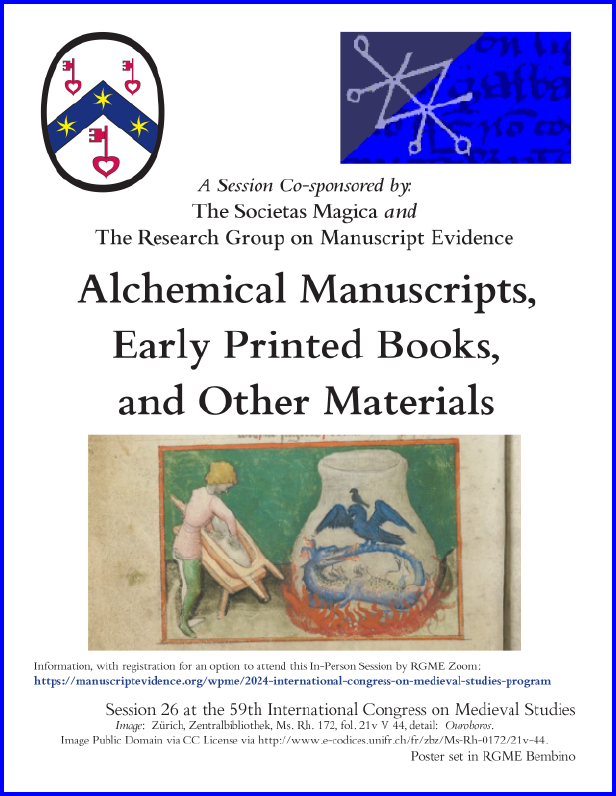
  • RGME Pop-Up Poster Exhibition for the 2024 ICMS
2024 ICMS Alchemical Session Poster 2

2024 ICMS Alchemical Session Poster 2

The Program as Accomplished

Our Program comprised:

  • three Co-sponsored Sessions 
  • our Open Business Meeting and
  • a co-sponsored Anniversary Reception.

In stages, first (in November 2023) we announced the Sessions, and reported the sequence of papers for them.  Next (January 2024), with information from the ICMS, we could report their assigned times, days, and locations on campus in cases of the in-person events, along with our other activities at the Congress.  Then we began to publish the abstracts for them; that process is now completed. Soon we will complete the Indexes for them.

For the In-Person Sessions and the Open Business Meeting, the RGME provided an online option for Congress Registrants through our Zoom Subscription and our Eventbrite Registration Portal:

  • Eventbrite: Research Group on Manuscript Evidence

‘Hybrid’ Facilities

Like last year (see 2023 International Congress on Medieval Studies: Report), the RGME offered Registration (without charge) for Online access through our Zoom Subscription to some of our In-Person events this year.  Likewise we offered registration for our two In-Person events to help us to learn how many to expect to attend for our planning and the catering for our Open Business Meeting and Co-Sponsored Reception.

For one Online Session, a remote-participation conference room was reserved so that participants and attendees on campus for the Congress might gather to join the online format while in company.

At ICMS for the RGME Anniversary Year

In 2024, the RGME celebrates its Anniversary Year to mark 25 years as a nonprofit educational corporation based in Princeton, New Jersey, and 25 years as an international scholarly society founded out of a major research project at Corpus Christi College in the University of Cambridge.

For our Anniversary Year, the theme is “Bridges”.

  • “Bridges” for our 2024 Anniversary Year
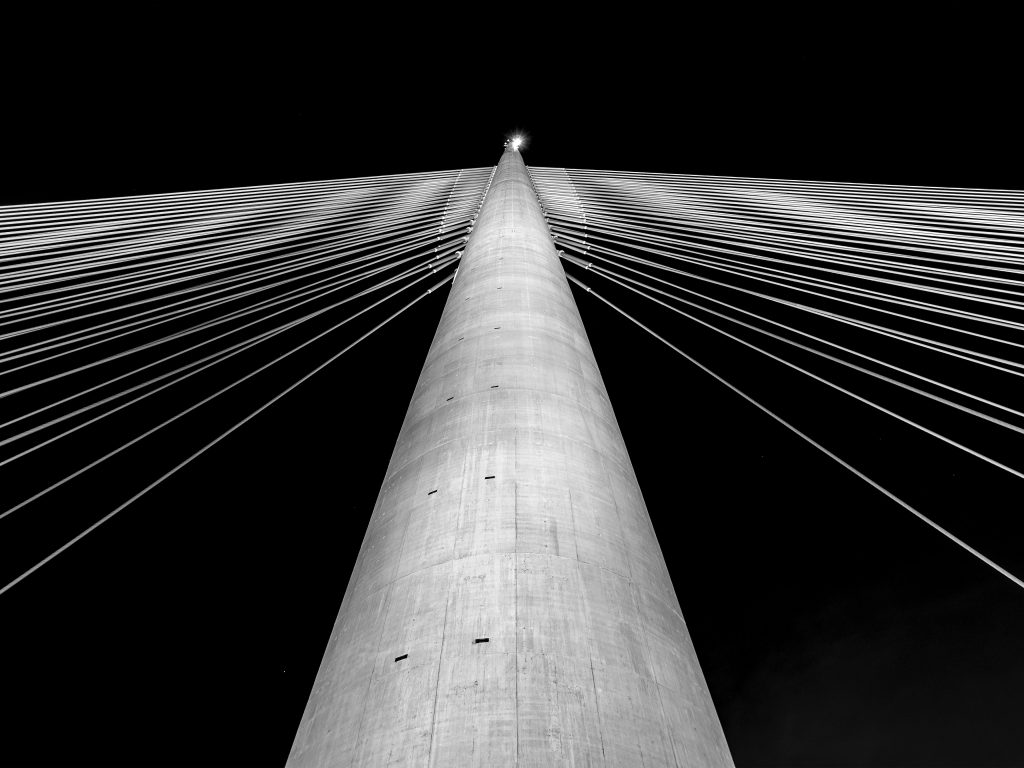
Ada Bridge pylon, Belgrade, Serbia

Ada Bridge pylon, Belgrade, Serbia. Photograph Petar Milošević (1 August 2021). Image via Wikimedia Creative Commons Attribution-Share Alike 4.0 International license.

Read the rest of this entry →

Tags: Abstracts of Congress Papers, Bridges, Early Printed Books, History of Alchemy, ICMS, International Congress on Medieval Studies, Manuscript studies, P.-O.M.o.N.A., Postal History at Kalamazoo, RGME Anniversary, RGME Anniversary Reception, RGME Business Meeting, RGME Posters, Societas Magica
No Comments »

Episode 16: An Interview with Jesse D. Hurlbut

February 14, 2024 in Announcements, Event Registration, Manuscript Studies, Research Group Episodes for The Research Group Speaks, Research Group Speaks (The Series)

The Research Group Speaks
Episode 16

Saturday 22 June 2024 online
1:00–2:30 pm EST (GMT-5) by Zoom

“Trailblazing the Medieval Digital Humanities:
An Interview with Jesse D. Hurlbut”

Interviewer:  Mildred Budny, Director of the RGME

[Posted on 10 February 2024, with updates]

Jesse Hurlbut at the Bonneville Salt Flats, Utah. Photograph Jesse Hurlbut.

Jesse Hurlbut at the Bonneville Salt Flats, Utah. Photograph Jesse Hurlbut.

We invite you to attend Episode 16 in our series:

  • The Research Group Speaks

In this Episode, Jesse D. Hurlbut, RGME First WebMaster Emeritus, will speak informally about his contributions to manuscript studies, websites, digital access, and other interests.

Among them are his contributions to medieval manuscript studies, photography, and digital access; his teaching and research on French studies; his websites for himself and others (academic and non-profit organizations); his interests in promoting online communities for manuscript study and enjoyment; and more.

Update: Jesse returns for Episode 20 in March 2025 to report on his project on comic books and medieval manuscripts, as mentioned in this Episode.

  • Episode 20. “Comic Book Theory for Medievalists”

The Anniversary Symposium
in February 2024

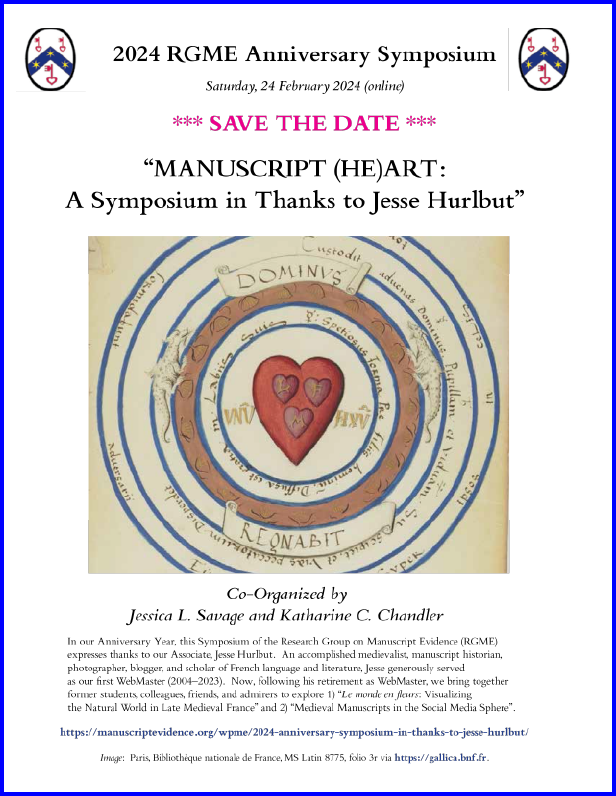
Save-the-Date Poster for 2024 Anniversary Symposium in Thanks to Jesse Hurlbut. Poster set in RGME Bembino.

This event follows upon the 2024 Anniversary “Manuscript (HE)ART”, held online on Saturday 24 February 2024, as the first in the RGME’s set of Symposia for the 2024 Anniversary Year:

  • 2024 Anniversary Symposium in Thanks to Jesse Hurlbut.. co-organized by Katharine C. Chandler and Jessica L. Savage

Taking its title from Jesse’s website Manuscript Art: Taking a Closer Look, the Symposium is designed to gather Jesse’s former students, colleagues, and friends, to consider subjects in manuscript and other studies of interest to him.

The Episode

Now, the Episode gives the chance to hear him, learn more about his interests, and join the conversation.  For example, in particular, he proposes to describe the early digital years. These recollections may record experiences viewed in hindsight and with foresight.

The Q&A to follow — or, if we wish, interlink — with the conversational interview gives the opportunity for feedback and participation.

Jesse Hurlbut holds his newly won manuscript leaf at the Kalamazoo Congress on 10 May 2014. (Photography by Mildred Budny)

Jesse Hurlbut holds his newly won manuscript leaf at the Kalamazoo Congress on 10 May 2014. (Photography by Mildred Budny)

Information about Jesse:

  • Jesse D. Hurlbut: Curriculum Vitae
  • Jesse Hurlbut (LinkedIn)
  • Manuscript Art: Taking a Closer Look

In His Own Words:

  • Interview with Medieval Scholar Jesse Hurlbut (Friday, 21 August 2009)
  • Beatus Vir (December 5, 2015)

Information about the Episode:

  • Episode 16. Trailblazing for the Medieval Digital Humanities: An Interview with Jesse Hurlbut
    You are Here.

Register for the Episode:

  • Episode 16: An Interview with Jesse D. Hurlbut; Tickets

Registration is free.

We offer the option for Registration with a voluntary Donation, which we welcome.

Donations, which may be tax-deductible, help us to continue with our activities and sustain our mission for an organization principally powered by volunteers. See:

  • Donations and Contributions

After registration, the Zoom link will be sent a few days before the event.

If you have questions or issues with the registration process, please contact

  • director@manuscriptevidence.org.
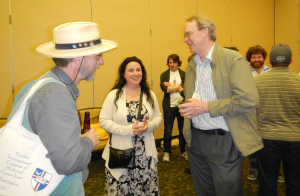
Jesse Hurlbut and others at the RGME Reception at the ICMS 9 May 2024. Photography Mildred Budny.

Jesse Hurlbut and others at the RGME Reception at the ICMS 9 May 2024. Photography Mildred Budny.

See you at the Episode!

*****

Future Episodes

Future Episodes are planned.  See:

  • “The Research Group Speaks”: The Series.

Other Events

We plan various other events for the 2024 Anniversary Year.

  • 2023 and 2024 Activities

For example:

  • 2024 Anniversary Symposium in Thanks to Jesse Hurlbut (online)
  • 2024 Spring and Autumn Symposia-plus-anniversary-symposium
  • 2024 Spring Symposium at Vassar College (hybrid)
  • 2024 International Congress on Medieval Studies: Program (severally in-person, online, and partly hybrid)
  • 2024 International Medieval Congress at Leeds (hybrid)

Questions or Suggestions?

Please leave your questions or comments here (below), Contact Us, or visit

  • our FaceBook Page
  • our Facebook Group
  • our Twitter Feed (@rgme_mss)
  • our Bluesky nest @rgmesocial.bluesky.social)
  • our LinkedIn Group
  • our Blog on Manuscript Studies and its Contents List

We invite you to join:

  • Friends of the RGME.

Donations and contributions, in funds or in kind, are welcome and easy to give.  Given our low overheads, your donations have direct impact on our work and the furtherance of our mission.  For our Section 501(c)(3) nonprofit educational organization, your donations may be tax-deductible to the fullest extent permitted by law.  Thank you for your support!

  • Contributions and Donations
  • 2024 Anniversary Appeal

We look forward to hearing from you and seeing you at our events.

*****

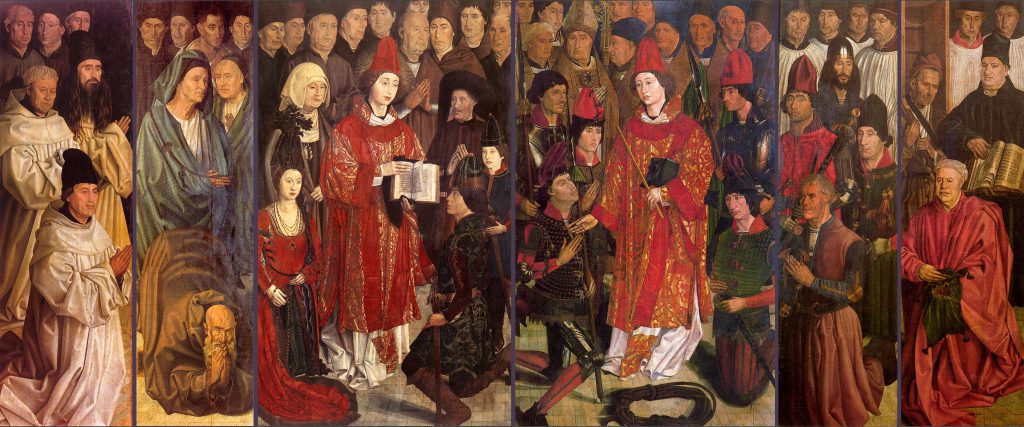
Lisbon, Museu Nacional de Arte Antiga: The mid 15th-century Saint Vincent Panels, attributed to Nuno Gonçalves. Image (https://upload.wikimedia.org/wikipedia/commons/3/3a/Nuno_Gon%C3%A7alves._Paineis_de_S%C3%A3o_Vicente_de_Fora.jpg) via Creative Commons.

*****


Tags: Interview, Jesse D. Hurlbut, Manuscript studies, Medieval Digital Humanities, Medieval manuscripts, RGME Webmaster, The Research Group Speaks, Trailblazing
No Comments »

2024 International Congress on Medieval Studies: Program

November 24, 2023 in Abstracts of Conference Papers, Announcements, Business Meeting, Conference Announcement, ICMS, International Congress on Medieval Studies, Kalamazoo, POMONA, Postal History at Kalamazoo, Reception, Societas Magica

2024 International Congress on Medieval Studies: Program

59th ICMS (9–11 May 2024)

To be held in a transitional ‘hybrid’ form
with RGME Co-Sponsored Sessions,
an Open Business Meeting,
and Co-Sponsored Reception

[Posted on 23 November 2023, with updates]

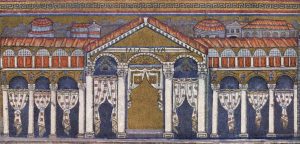
Ravenna, Sant’Apollinare Nuovo, Mosaic. Artwork in the public domain; photograph provided by The Yorck Project / Wikimedia Commons (GFDL).

After the successful completion of our Call for Papers for the 2024 International Congress on Medieval Studies (ICMS), we announce the Program for our activities, with:

  • three Co-sponsored Sessions 
  • our Open Business Meeting and
  • a co-sponsored Anniversary Reception.

In stages, first (in November 2023) we announced the Sessions. Next (4 January 2024), with information from the ICMS, we could report their assigned times, days, and locations on campus in cases of the in-person events, along with our other activities at the Congress.

Now we can report the sequence of papers for the sessions; we also begin to publish the abstracts for them.

Note that for the In-Person Sessions and the Open Business Meeting, the RGME provides an online option for Congress Registrants through our Zoom Subscription and our Eventbrite Registration Portal.  See below and

  • Eventbrite: Research Group on Manuscript Evidence

Congress Information

  • 2024 Congress Program for the full ICMS

Registration (required) for the Congress has opened in February:

  • Registration via ICMS website

‘Hybrid’ Facilities

Like last year (see 2023 International Congress on Medieval Studies: Report), the RGME offers Registration (without charge) for Online access through our Zoom Subscription to some of our In-Person events this year.  Likewise we offer registration for two of our In-Person events to help us to learn how many to expect to attend for our planning and the catering:

  • Open Business Meeting (In Person)
    and
  • Co-Sponsored Reception (In Person)

For an Online Session, a remote-participation conference room has been reserved so that participants and attendees on campus for the Congress might gather to join the online format while in company.

(For information, see below.)

At ICMS for the RGME Anniversary Year

In 2024, the RGME celebrates its Anniversary Year to mark 25 years as a nonprofit educational corporation based in Princeton, New Jersey, and 25 years as an international scholarly society founded out of a major research project at Corpus Christi College in the University of Cambridge.

For our Anniversary Year, the theme is “Bridges”.

  • “Bridges” for our 2024 Anniversary Year
Ada Bridge pylon, Belgrade, Serbia

Ada Bridge pylon, Belgrade, Serbia. Photograph Petar Milošević (1 August 2021). Image via Wikimedia Creative Commons Attribution-Share Alike 4.0 International license.

RGME Sessions (1–3) at the 2024 ICMS

For the 59th International Congress on Medieval Studies in 2024, with responses to our Call for Papers, the RGME co-sponsors these three Sessions.  Two of three are scheduled to take place in person, with the other online.

Arrangements have been made so that all three can be accessed both in person (whether as scheduled in the Congress Program or as arranged by especially reserving a room on campus) and online (whether as scheduled or as arranged for a Zoom Meeting hosted by the RGME).  Thus their access can constitute a truly hybrid approach to the conference.

We begin (2 May) to post the Abstracts of the Papers for the Sessions.

Locations on Campus

For the locations on campus, see these campus maps:

  • WMU Visitors’ Map
  • Parking Combined
  • Interactive Map with Building, Parking, Accessibility Information.

Read the rest of this entry →

Tags: Alchemical Books, Curtains, Early Printed Books, Hermes Trismegistus, Hieronmus Brunschwig, History of Magic, Manuscript studies, Medieval History, Medieval Studiies, Merchant Letters, Postal Couriers, Postal History, Postal History at Kalamazoo, RGME Anniversary Reception, RGME Open Business Meeting, Societas Magica
1 Comment »

2023 International Congress on Medieval Studies: Report

October 23, 2023 in Events, ICMS, Index of Medieval Art, International Congress on Medieval Studies, Kalamazoo, Manuscript Studies, POMONA, Societas Magica, Uncategorized

2023 International Congress on Medieval Studies: Report

58th ICMS (11–13 May 2023)

Held in a transitional ‘hybrid’ form
with Sponsored and Co-Sponsored Sessions
an Open Business Meeting
and Co-Sponsored Reception

[Posted on 22 October 2023]

After the successful completion of our activities at the 2023 International Congress on Medieval Studies (ICMS), we offer a Report about them.  For their programs and the abstracts of their presentations, see 2023 International Congress on Medieval Studies: Program.

Note that Abstracts for Papers published on our website appear in the Indexes of the Abstracts for Papers, listed both by Alphabetical order of Author’s Surname and by Year.

Logistics

2023 ICMS: Pedagogy II viewed online. Michael Allman presents. Photography by Mildred Budny.

This year’s Congress presented more logistical challenges than ever before, in our experience of attending the annual ICMS.  They were due to the complex and incompletely or perplexingly described conditions for holding the Congress in a nominal ‘hybrid’ format, with few fully hybrid events and the necessity for organizers mostly to choose either in-person or online formats — or to provide the alternative through their own resources.

In that way, for example, once the rules were clarified (within only a fortnight of the Congress), the RGME was able resourcefully to provide (through its own Zoom subscription) for online access to events assigned as in-person and to arrange (sometimes with payment) for a room to be made available for registrants on site at the Congress to gather for participating in sessions assigned as online.  We thank the Congress staff for enabling those arrangements once we learned that they might be permitted.

Our activities comprised five co-sponsored scholarly Sessions, our annual Open Business Meeting at the Congress, and a co-sponsored Reception.

The extra arrangements for in-person facilities for the online sessions and online access for in-person sessions were designed also for the convenience of participants for our events on the first day of the Congress, which had a consecutive series of Morning Session / Lunchtime Business Meeting / two Afternoon Sessions / Reception.  With the Morning Session in a nearby building, the other events that day, by design, took place on one building.

Co-Sponsorship

  • Societas Magica:  2 Sessions and the Reception
  • Schoenberg Institute for Manuscript Studies (SIMS): 2 Sessions
  • Polytheism-Oriented Medievalists of North America (P.-O.M.o.N.A.): 1 Session
  • Index of Medieval Art at Princeton University: Reception

This year marked Year 19 of our co-sponsorship with the Societas Magica; the second (non-consecutive) year of co-sponsorship with POMONA, the third of co-sponsorship with the Index of Medieval Art, and the first year of co-sponsorship with SIMS.

As always, we thank the host, organizers, co-sponsors, presiders, speakers, respondents, advisers, and participants for our activities at the Congress, along with the Congress staff and support staff.

The Sequence of Events

Day 1 of the Congress (Thursday 11 May) had a full set of events. They opened with the Morning Session, led to the RGME Open Business Meeting (with lunch provided), followed with a pair of Afternoon Sessions, and rounded out with the co-hosted Reception.

Day 3 (Saturday 13 May) had a pair of Afternoon Sessions.

The shortness of the notice and the complexity of the RGME’s extra preparations for an ad-hoc fully hybrid format imposed further problems in communicating updated information which, in the rush of last-minute preparations and conflicting information, meant that not all participants received the relevant information in time. Notably this affected the extra online arrangements for the in-person sessions on Saturday afternoon, so that the first one did not have an on-site log-in for the online component.

Informal “Evening Sessions”. Outside the Program, a set of traditional informal gatherings offered the occasion to revive the in-person tradition of meetings in an ad-hoc ‘Board Room’ where board games, brought to the table for the occasion, formed a focus of activity and conversation.  As usual, they included some elements of RGME planning.  This year, they  included an ad-hoc hybrid component for participation at a distance as well.

Our Report of all our activities at the 2023 Congress relates their accomplishment, celebrates the presentations, praises the work of organization, notes a few changes in the program and accessibility for the sessions, displays the full set of posters for our events, and illustrates some memorable moments.

Read the rest of this entry →

Tags: Albert the Great, Binding Archaeology, Binding Spines and Fastenings, Board Games, Board Room, Corpus Christi College Cambridge MS 286, Datini Collection, Ephesia Grammata, Gospels of Saint Augustine of Canterbury, Gutenberg Biblt, History of Bindings, History of Pedagogy, Index of Medieval Art, International Congress on Medieval Studiesieval Studies, Islamic Bookbindings, Manuscript studies, Open Business Meeting, Otto Ege Fragments, Reception, Schoenberg Institute for Manuscript Studies, Societas Magica, William Fulke, Words as Agents
No Comments »

2024 Anniversary Symposium in Thanks to Jesse Hurlbut: Program

October 18, 2023 in Announcements, Conference, Conference Announcement, Event Registration, Manuscript Studies, RGME Symposia, Uncategorized

“MANUSCRIPT (HE)ART”

An RGME Anniversary Symposium
in Thanks to Jesse Hurlbut
(RGME WebMaster Emeritus)

Co-Organized by
Katharine C. Chandler and Jessica L. Savage

Saturday 24 February 2024 online by Zoom
10:00 am – 4:00 pm EST (GMT-5)

Announcement Part 1: The Program

[Posted on 18 October 2023, with updates]

We announce the 2024 RGME Anniversary Symposium, as an expression of thanks to our RGME WebMaster Emeritus, Jesse Hurlbut, upon his retirement. This Symposium is the first in our Symposia for 2024, when the RGME celebrates an anniversary of 35 years as an international scholarly society founded in England, and 25 years as a nonprofit educational corporation based in Princeton, New Jersey.

Jesse’s contributions to the RGME as Associate and WebMaster date from 2005, a few years after our incorporation in 1999 as a 501(c)(3) nonprofit organization.  The generosity of his contributions to the RGME and many others in fields of manuscript and other studies across the years lead us, in the company of some of his former students and colleagues, to offer this Symposium in thanks.

For the background for this Symposium, see the companion post to this one:

  • 2024 Anniversary Symposium in Thanks to Jesse Hurlbut: Plan

The First WebMaster of the RGME

An accomplished medievalist, manuscript historian, photographer, blogger, and scholar of French language and literature, Jesse Hurlbut generously served as the first WebMaster of the Research Group on Manuscript Evidence (2005–2023). Following Jesse’s retirement on 30 June 2023, we wish to offer this event in thanks, to examine subjects related to his interests, work, and teaching in the world of manuscript studies. The Symposium brings together former students, colleagues, and friends to share their work and work-in-progress in various subjects or projects which his work, teaching, and example may have helped to inspire or refine.

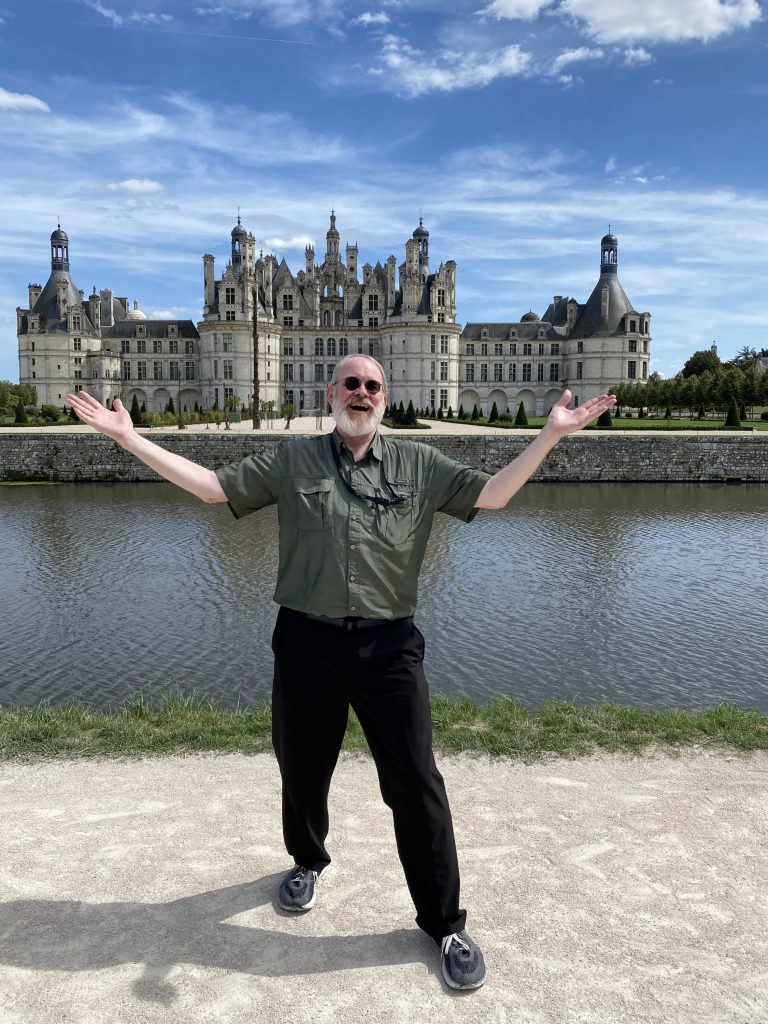
Jesse Hurlbut and the Château de Chambord in 2023. Photograph by Patricia Stevenson.

The Purpose

Our Save-the-Date Poster expresses the plan in word and image for an Anniversary Symposium full of “MANUSCRIPT (HE)ART”.  (You may download it here.)

Save-the-Date Poster for 2024 Anniversary Symposium in Thanks to Jesse Hurlbut. Poster set in RGME Bembino.

Read the rest of this entry →

Tags: 2023 Autumn Symposium Progam, Anniversary Symposium, Giving Thanks, Jesse Hurlbut, Manuscript studies, Medieval manuscripts, RGME Symposia
No Comments »

2024 Spring Symposium at Vassar College

October 16, 2023 in Announcements, Conference, Conference Announcement, Manuscript Studies, Reception, RGME Symposia, Uncategorized

2024 RGME Spring Symposium
at Vassar College

Vassar College: Current Seal.

“Between Past and Future:
Building Bridges
between Special Collections
and Teaching for the Liberal Arts”

Friday to Sunday, 18 to 21 April 2024

(hybrid, with both in-person events
and online participation by Zoom)

Celebrating the Acquisition of the
Nicholas B. Scheetz Collection
of Medieval and Renaissance Manuscripts

[Posted on 16 October 2023, with updates]

Update 15 April 2024:  Now see the updated Program (below).
Update 16 April:  For registrations, now see Late Registrations (below)

2024 RGME Spring Symposium at Vassar College:
“Between Past and Future:
Building Bridges
between Special Collections and Teaching for the Liberal Arts”
Friday to Sunday, 19 to 21 April 2024
https://library.vassar.edu/…/2024-RGME-Spring-Symposium…
(hybrid, with both in-person events and online participation by Zoom)

*****

For 2024, the Research Group on Manuscript Evidence celebrates an anniversary. Our Theme for the Year is “Bridges”. See “Bridges” for our 2024 Anniversary Year.

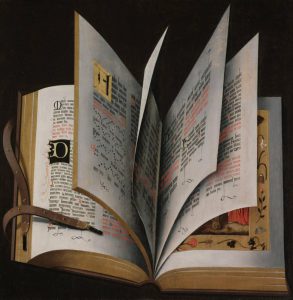
Vassar College, Frances Lehman Loeb Art Center, “The Open Missal”. Ludger tom Ring the Younger, circa 1570.

Among our celebrations, the RGME continues with its Symposium Series. With a Spring Symposium at Vassar College, in Poughkeepsie, New York, the RGME Symposia return to an in-person event, this time as a hybrid event also with online participation.

In 2023, the RGME began to return to in-person events with its activities at the partly-hybrid 58th International Congress on Medieval Studies. This step came after the cancellation of the Congress in 2020 and an online Congress in both 2021 and 2022. For 2024, our Symposia join this return, with the invitation to hold our Spring Symposium at Vassar College.

For some of our Symposia, whether in-person at Princeton University in 2019 (and intended there in 2020), or online by Zoom in 2022, 2023, and 2024, our RGME Associates at Vassar have given presentations about their work, the Library, and Special Collections. See, for example,

  • 2019 Anniversary Symposium Report: The Roads Taken
  • 2022 Spring and Autumn Symposia
  • 2023 Spring and Autumn Symposia
  • 2023 Autumn Symposium “Between Earth and Sky”
  • 2023 Spring Symposium “From the Ground Up”
  • 2024 Anniversary Symposium in Thanks to Jesse Hurlbut

Now we visit Vassar to join the celebrations for a new catalogue and exhibition of Medieval and Renaissance Books in the collection. We do so by gathering scholars, librarians, curators, cataloguers, collectors, vendors, teachers, and others to participate in an RGME Symposium which showcases the materials in the light of expertise and appreciation dedicated to them.

The choice of the Program and other components of the Symposium is guided by the Vassar/RGME Symposium Advisory Committee, and by other advisers both at Vassar and elsewhere. The Advisory Committee comprises

  • Ronald Patkus,
  • Elizabeth Lastra,
  • Mildred Budny, and
  • Barbara Williams Ellertson.

Note on the Image

Poughkeepsie, New York, Vassar College, Frances Lehman Loeb Art Center. The Open Missal (circa 1570) attributed to Ludger tom Ring the Younger (1522-1582). Image via “The Open Missal”.

Read the rest of this entry →

Tags: Early Printed Books, Frances Lehman Loeb Art Center, Frederick Ferris Thompson Memorial Library, History of Bridges, Les Enluminures, Manuscript studies, Manuscripts & Early Printed Books, Nicholas B. Scheetz Collection, RGME Anniversary Year, RGME Symposia, Symbols in Vassar Architecture, Vassar College, Vassar College Library, Vassar College Special Collections and Archives
No Comments »

Episode 15: Women Writers from the Medieval to Post-Modern Periods

October 5, 2023 in Manuscript Studies, Uncategorized

The Research Group Speaks
Episode 15

Saturday 20 January 2024 online
1:00–2:30 pm EST (GMT-5) by Zoom

“Women Writers
from the Medieval to Post-Modern Periods:
Fiction and/or Reality,
from Literary Narratives to Practical Cookery”

Jackie Reed
Linda Civitello
Hannah Goeselt

[Posted on 5 October 2023, with updates. Registration is now open. See below.]

We invite you to attend Episode 15 in our series:

  • The Research Group Speaks
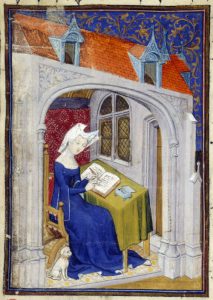
London, British Library, Harley MS 4431, fol. 4r.Christine de Pisan sits at work writing in an interior accompanied by a dog. France (Paris), c. 1410 – c. 1414. Image via https://blogs.bl.uk/digitisedmanuscripts/2013/06/christine-de-pizan-and-the-book-of-the-queen.html.

London, British Library, Harley MS 4431, fol. 4r. Christine de Pizan sits and writes, accompanied by a dog.

This time, some scholars, teachers, and writers will speak about their interests, long-term work, and current projects concerned with the writings of women authors across a long span of time. Our focus is primarily “women’s work” of many kinds, which might, of course, include contributions to their genres by men and other authors’ whose identities have become unknown. Our attention is drawn to creativity, resourcefulness, senses of purpose, convictions, and instructions for potentially reproducible results in the fields of Food for Thought and Food itself.

Reflecting womens’ roles, opportunities, constraints, and resourcefulness, the writings cover a wide range of spheres, subjects, approaches, and styles. The works range from literary creations to recipes for cookery. Sometimes they have illustrations of their authors, readers, and authorial or literary occupations.

The “genre” of writings by women authors, often underrated or outright ignored, has multiple manifestations, of course, across many periods of time, cultures, languages, subjects, and points of view.  To name a few cases, both Western and Eastern:

  • Women Medieval Writers: Women Writers of the Middle Ages, Renaissance, Reformation.
  • Women Writers in Medieval England
  • Category: Women Writers (Medieval)
  • Category: Women Writers (Modern Period)
  • Category: Women Writers by Historical Period

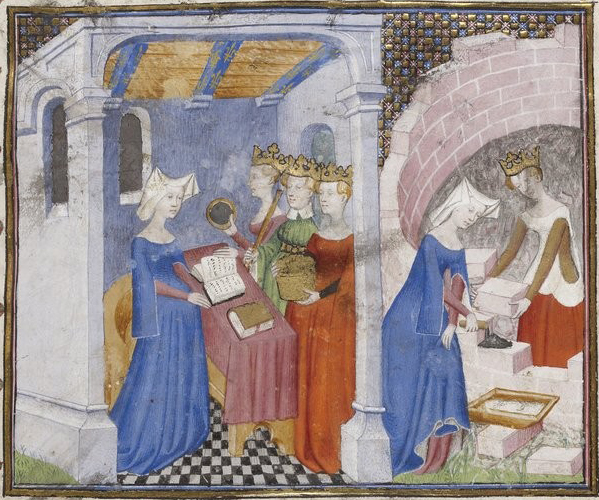
Christine de Pizan, La cité des dames, in the copy in Paris, Bibliothèque nationale de France, Département des Manuscrits, Français 1179, folio 3 recto. Image Public Domain via gallica.bnf.fr.

Note on the Image
Headpiece illustration for Christine de Pizan, La cité des dames, in the copy in Paris, Bibliothèque nationale de France, Département des Manuscrits, Français 1179, folio 3 recto.  Image via gallica.bnf.fr.
Read the rest of this entry →

Tags: Ali Smith, Book History, Christine de Pizan, Cookbooks, Early Modern Women Writers, Emily Dickinson, Florence Nightengale, History of Recipes, Jane Austen, Louisa May Alcott, Lydia Maria Child, Manuscript Cookbooks Survey, Manuscript studies, Medieval Women Writers, Modern Women Writers, Narrative Structures, Natalie Zemon Davis, Postmodern Women Writers, Sarah Josepha Hale, The Research Group Speaks, Women Writers
No Comments »

Episode 14: “Translating the Latin Hermetica by Committee”

September 19, 2023 in Manuscript Studies, Uncategorized

The Research Group Speaks
Episode 14
Sunday 19 November 2023 online
1:00–2:30 pm EDT (GMT-5) by Zoom

“Translation by Committee:
The Latin Hermetica“

David Porreca, Dan Attrell, and Brett Bartlett

[Posted on 18 September 2023, with updates]

We invite you to attend Episode 14 in our series.

The Series:

  • The Research Group Speaks

The Eventbrite Portal for this Series:

  • The Research Group Speaks

Meet the Committee

This time, a team of scholars — including two of our RGME Associates — will speak about their current project of translating a complex occult text from Latin to English.

They are:  The Teacher, his Former Student, and his Student.

  • David Porreca
  • Dan Attrell (see also Congratulations and Podcasts with Dan Attrell)
  • Brett Bartlett (see also Brett Bartlett)

Over the years, David Porreca has organized or co-organized Sessions for the RGME and our frequent co-sponsor, the Societas Magica, at the annual International Congress on Medieval Studies. He has presented Papers for them or other Sessions which we have sponsored or co-sponsored.  He has contributed regularly to our online Symposia and Episodes of “The Research Group Speaks”.  A good number of his students and former students have contributed, and continue to contribute, to RGME activities, including our events and work behind the scenes enabling them.

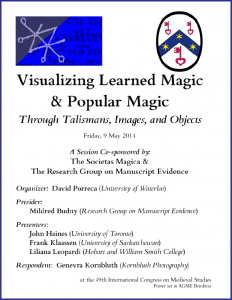
Poster for "Visualizing Learned & Popular Magic" Congress Session (May 2014)Some of his contributions:

  • Porreca (2023 Congress)
  • Porreca (2022 Congress)
  • Porreca (2021 Congress)
  • Porreca (2020 Congress)
  • Porreca (2018 Congress)
  • 2023 International Congress on Medieval Studies Program
  • 2022 International Congress on Medieval Studies Program
    (Etc.)

David serves on the RGME Editorial Committee, where his experienced advice about texts and handling them effectively for publication comes in handy.

Dan Attrell also has presented reports on his work for the RGME.

  • Attrell (2018 Congress)

Brett Bartlett, when we first met years ago in Kitchener, Ontario, demonstrated quick and erudite acumen when, almost at once, he pointed out a small mistake in the Old English portion of our then-new publication of Multi-Lingual Bembino; it was swiftly corrected in a next issue, which we, as the publisher, could make very soon.

In this context, we will be able to see that, when it comes to the demands of (and for) the translations, “Not Two but Three [Talking] Heads are Better Than One”.

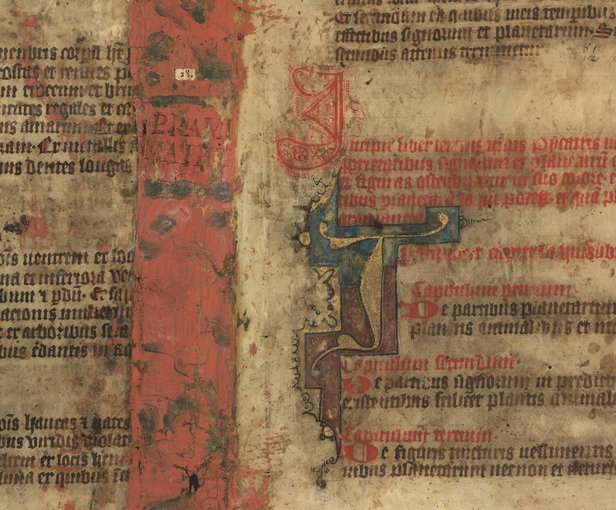
Martin, Slovakia, Slovak National Library, Fragment of the Picatrix, circa 1400 CE. Image Public Domain via Wikimedia Commons.

Martin, Slovakia, Slovak National Library, Fragment of the Picatrix, circa 1400 CE. Image Public Domain via Wikimedia Commons.

Read the rest of this entry →

Tags: History of Magic, History of Translation, Latin Hermetica, Manuscript studies, Marsilio Ficino, Textual Studies, The Research Group Speaks
No Comments »

Episode 13: Bridget Whearty on “Digital Codicology”

September 4, 2023 in Interviews, Manuscript Studies, Research Group Episodes for The Research Group Speaks, Research Group Speaks (The Series), Uncategorized

The Research Group Speaks
Episode 13

Decretum Gratiani plus sleeved Manicule, via gallica.bnf.fr from Bibliothèque municipale de Rouen. Ancien fonds, Ms E 1a, folio 195v.

Saturday 21 September 2023 online
12:00–1:30 pm EDT (GMT-4) by Zoom

“Making Digital Codicology:
Research and Writing in Community”

Bridget Whearty

[Posted on 4 September 2023, with updates]

We invite you to attend Episode 13 in our series.

  • The Research Group Speaks

The Eventbrite Portal for this Series:

  • The Research Group Speaks

To register for This Episode:

  • Episode 13. Bridget Whearty

Bridget Whearty: Faculty Profile via https://www.binghamton.edu/english/faculty/profile.html?id=bwhearty.

Episode 13 showcases the work of Bridget Whearty, Associate Professor of English, General Literature and Rhetoric at Binghamton University, State University of New York (see her Curriculum Vitae).  She will speak informally about her work and research interests, focusing upon her recent book on Digital Codicology: Medieval Books and Modern Labor (Stanford University Press, 2022).  About the work, see, for example, her observations for the Coding Codices Podcast.

We learned about her work toward the book in an earlier stage, well before it appeared in print, in 2018, when we met as audience members at the 11th Annual Symposium of the Schoenberg Institute for Manuscript Studies. It was inspiring to hear her then , and to have the opportunity to meet and talk more — as it happened, walking to the conference and in the parking lot as we were both preparing to leave. I found this meeting wonderfully memorable. Our subjects of discussion then included not only books, but also cats and cooking.

Fast forward.  As the RGME began its series of online Episodes in 2021, and their momentum came into place across the series, which now reaches Number 13, the suggestion that we invite Bridget came naturally.  Responding to the suggestion, I made the invitation, Bridget generously responded, we explored what she might like to focus on — and so, now, we welcome her gladly to our series.

We look forward to hearing more about Bridget’s quest, along with its challenges, discoveries, and recognition of the people behind the books in whichever ways they become known to us — by presenting themselves, in one and/or other ways, materially or by representatives, including digitally.

Come to think of it, that meeting of the people in (or of) the books is what we try to do with medieval and other books, only without being able to meet them in person . . .

Now is our chance with Bridget, and, through her, others who work behind the scenes in the study and presentation of books for our inspection, study, instruction, reflection, and questions.

You can register for this event by our RGME Eventbrite Collection. To register for Bridget’s Episode 13, visit this portal.  Information below.

Read the rest of this entry →

Tags: Anonymous Hands, Anonymous Labor, Bibliothèque nationale de France MS 12476, Digital Codicology, Digital Codicology The Book, digitization of manuscripts, Digitizers' Hands, Henry Noel Humphreys' Specimens of Illuminated Manuscripts, Johanna Green, Le Champion des Dames, Manuscript studies, Medieval manuscripts, Research and Community, Stanford University Libraries MSS Codex MO379CB, The Research Group Speaks
No Comments »

« Older Entries
Newer Entries »
  • Top
©2024 Research Group on Manuscript Evidence.


is proudly powered by WordPress. WordPress Themes X2 developed by ThemeKraft.