• News
    • News & Views
    • RGME Activities for 2024 and 2025
    • Around & About with the RGME
    • Reviews
    • Highlights
  • Blogs
    • Manuscript Studies
      • Manuscript Studies: Contents List
    • International Congress on Medieval Studies
      • Abstracts of Congress Papers
        • Abstracts of Papers Listed by Author
        • Abstracts of Papers Listed by Year
  • About
    • Mission
    • Who We Are
      • Officers, Associates & Volunteers
      • RGME Committees
      • Friends of the Research Group on Manuscript Evidence
    • Policies & Statements
      • RGME Privacy Policy Statement
      • RGME Intellectual Property Statement & Agreements
    • People
      • Mildred Budny — Her Page
      • Adelaide Bennett Hagens
    • Activities
      • Events
      • Congress Activities
        • Sponsored Conference Sessions (1993‒)
          • Panels at the M-MLA Convention (from 2016)
        • Co-sponsored Conference Sessions (2006‒)
    • History
      • Seals, Matrices & Documents
      • Genealogies & Archives
    • Contact Us
  • Bembino
    • Multi-Lingual Bembino
    • RGME Bembino: Resources
  • Congress
    • Sponsored Conference Sessions (1993‒)
    • Co-sponsored Conference Sessions (2006‒)
    • Abstracts of Congress Papers
      • Abstracts Listed by Author
      • Abstracts Listed by Year
    • Kalamazoo Archive
    • Panels at the M-MLA Convention (2016-2019)
      • Abstracts of Papers for the M-MLA Convention
      • Panels at the M-MLA Convention (from 2016)
  • Events
    • RGME Activities for 2024 and 2025
      • 2023 Activities and 2024 Planned Activities
    • Seminars, Workshops, Colloquia & Symposia (1989–)
      • Seminars on ‘The Evidence of Manuscripts’
      • Symposia on ‘The Transmission of the Bible’
      • The New Series (2001-)
        • 2019 Anniversary Symposium Program: The Roads Taken
        • 2019 Anniversary Symposium Registration
        • 2019 Anniversary Symposium Registration Open
      • RGME Symposia: The Various Series
      • The Research Group Speaks: The Series
      • Meetings of the Friends of the Research Group on Manuscript Evidence
      • RGME Online Events
    • Abstracts of Papers for Events
      • Abstracts of Papers for Seminars on ‘The Evidence of Manuscripts’
      • Abstracts of Papers for Symposia, Workshops & Colloquia
    • Receptions & Parties
    • Business Meetings
    • Photographic Exhibitions & Master Classes
    • Events Archive
  • ShelfLife
    • Journal Description
    • ShelfMarks: The RGME-Newsletter
    • Publications
      • “Insular, Anglo-Saxon, and Early Anglo-Norman Manuscript Art at Corpus Christi College, Cambridge” (1997)
        • Mildred Budny, ‘Catalogue’
        • The Illustrated Catalogue (1997)
      • The Illustrated Handlist
      • Semi-Official Counterfeiting in France 1380-1422
      • No Snap Decisions: Challenges of Manuscript Photography
    • History and Design of Our Website
  • Galleries
    • Watermarks & the History of Paper
    • Galleries: Contents List
    • Scripts on Parade
    • Texts on Parade
      • Latin Documents & Cartularies
      • New Testament Leaves in Old Armenian
    • Posters on Display
    • Layout Designs
  • Donations and Contributions
    • RGME Donor Promise
    • 2023 End-of-Year Fundraiser for our 2024 Anniversary Year
    • 2019 Anniversary Appeal
    • Orders
  • Links
    • Catalogs, Metadata, and Databases: A Handlist of Links
    • Handlist of Resources for Manuscript Studies and Fragmentology
    • Manuscripts & Rare Books
    • Maps, Plans & Drawings
    • Seals, Seal-Matrices & Documents

  • News
    • News & Views
    • RGME Activities for 2024 and 2025
    • Around & About with the RGME
    • Reviews
    • Highlights
  • Blogs
    • Manuscript Studies
      • Manuscript Studies: Contents List
    • International Congress on Medieval Studies
      • Abstracts of Congress Papers
        • Abstracts of Papers Listed by Author
        • Abstracts of Papers Listed by Year
  • About
    • Mission
    • Who We Are
      • Officers, Associates & Volunteers
      • RGME Committees
      • Friends of the Research Group on Manuscript Evidence
    • Policies & Statements
      • RGME Privacy Policy Statement
      • RGME Intellectual Property Statement & Agreements
    • People
      • Mildred Budny — Her Page
      • Adelaide Bennett Hagens
    • Activities
      • Events
      • Congress Activities
        • Sponsored Conference Sessions (1993‒)
          • Panels at the M-MLA Convention (from 2016)
        • Co-sponsored Conference Sessions (2006‒)
    • History
      • Seals, Matrices & Documents
      • Genealogies & Archives
    • Contact Us
  • Bembino
    • Multi-Lingual Bembino
    • RGME Bembino: Resources
  • Congress
    • Sponsored Conference Sessions (1993‒)
    • Co-sponsored Conference Sessions (2006‒)
    • Abstracts of Congress Papers
      • Abstracts Listed by Author
      • Abstracts Listed by Year
    • Kalamazoo Archive
    • Panels at the M-MLA Convention (2016-2019)
      • Abstracts of Papers for the M-MLA Convention
      • Panels at the M-MLA Convention (from 2016)
  • Events
    • RGME Activities for 2024 and 2025
      • 2023 Activities and 2024 Planned Activities
    • Seminars, Workshops, Colloquia & Symposia (1989–)
      • Seminars on ‘The Evidence of Manuscripts’
      • Symposia on ‘The Transmission of the Bible’
      • The New Series (2001-)
        • 2019 Anniversary Symposium Program: The Roads Taken
        • 2019 Anniversary Symposium Registration
        • 2019 Anniversary Symposium Registration Open
      • RGME Symposia: The Various Series
      • The Research Group Speaks: The Series
      • Meetings of the Friends of the Research Group on Manuscript Evidence
      • RGME Online Events
    • Abstracts of Papers for Events
      • Abstracts of Papers for Seminars on ‘The Evidence of Manuscripts’
      • Abstracts of Papers for Symposia, Workshops & Colloquia
    • Receptions & Parties
    • Business Meetings
    • Photographic Exhibitions & Master Classes
    • Events Archive
  • ShelfLife
    • Journal Description
    • ShelfMarks: The RGME-Newsletter
    • Publications
      • “Insular, Anglo-Saxon, and Early Anglo-Norman Manuscript Art at Corpus Christi College, Cambridge” (1997)
        • Mildred Budny, ‘Catalogue’
        • The Illustrated Catalogue (1997)
      • The Illustrated Handlist
      • Semi-Official Counterfeiting in France 1380-1422
      • No Snap Decisions: Challenges of Manuscript Photography
    • History and Design of Our Website
  • Galleries
    • Watermarks & the History of Paper
    • Galleries: Contents List
    • Scripts on Parade
    • Texts on Parade
      • Latin Documents & Cartularies
      • New Testament Leaves in Old Armenian
    • Posters on Display
    • Layout Designs
  • Donations and Contributions
    • RGME Donor Promise
    • 2023 End-of-Year Fundraiser for our 2024 Anniversary Year
    • 2019 Anniversary Appeal
    • Orders
  • Links
    • Catalogs, Metadata, and Databases: A Handlist of Links
    • Handlist of Resources for Manuscript Studies and Fragmentology
    • Manuscripts & Rare Books
    • Maps, Plans & Drawings
    • Seals, Seal-Matrices & Documents

Log in

Archives

Featured Posts

2026 RGME Symposium: “Teaching for the Future”
Workshop 11. “Manuscripts at Play, Continued: Figured Texts”
Episode 29. “The Life and Inquest of Jeanne-Marie de Maillé”
How to Join the RGME: Guide for Newcomers
Episode 28. Preview of Medieval “Printing on Fabric”
Episode 27. “Catalog(u)ing Collections and Materials”
2026 International Medieval Congress at Leeds: Program
Sanskrit and Prakrit Manuscripts, Continued: More Leaves for Manuscript Sample XII
Episode 24. “Life with Books” (Interview with John Windle)
Announcing the Launch of RGME Bembino WP
2026 RGME Colloquium at The Grolier Club: Report
Medieval Missal Fragment as Early-Modern Cover
The Weber Leaf from Ege MS 61
"Bembino" Booklet Cover
Episode 23. “Meet RGME Bembino: Facets of a Font”
2026 RGME Colloquium on “Transformations & Renewals” at The Grolier Club
2026 Theme of the Year: “Transformations and Renewals”
A Leaf with Patchwork from the Saint Albans Bible
A Sister Leaf from a Miniature Latin Vulgate Bible
A Little Latin Vulgate Bible Manuscript Leaf in Princeton
J. S. Wagner Collection. Leaf from from Prime in a Latin manuscript Breviary. Folio 4 Verso, with part of Psalm 117 (118) in the Vulgate Version, set out in verses with decorated initials.
2026 Annual Appeal
Episode 22: “Encounters with Local Saints and Their Cults”
Private Collection, Ege's FBNC Portfolio, Dante Leaf, Verso, Detail. Reproduced by Permission.
2025 RGME Autumn Colloquium on Fragments
Workshop 8: A Hybrid Book where Medieval Music Meets Early-Modern Herbal
2025 RGME Autumn Symposium on “Readers, Fakers, and Re-Creators of Books”
RGME Workshops on “The Evidence of Manuscripts, Etc.”
Episode 21. “Learning How to Look”
2025 International Congress on Medieval Studies: Program
2025 RGME Visit to Vassar College
Two Leaves in the Book of Numbers from the Chudleigh Bible
Delibovi on Glassgold on Boethius: A Blogpost
Ronald Smeltzer on “Émilie du Châtelet, Woman of Science”
2025 Spring Symposium: “Makers, Producers, and Collectors of Books”
Starters’ Orders
The Weber Leaf from the Saint Albans Bible
Workshop 4. “Manuscript Fragments Compared”
Episode 20. “Comic Book Theory for Medievalists”
Episode 19: “At the Gate: Starting the Year 2025 at its Threshold”
Favorite Recipes for Lemonade, Etc.
RGME Visit to the Lomazow Collection: Report
2024 Autumn Symposium: “At the Helm”
A Latin Vulgate Leaf of the Book of Numbers
The RGME ‘Lending Library’
Florence, Italy, Ponte Vecchio from Ponte alle Grazie. Photo: Ingo Mehling, CC BY-SA 4.0 , via Wikimedia Commons
Episode 17. “RGME Retrospect and Prospects: Anniversary Reflections”
Jesse Hurlbut at the Bonneville Salt Flats, Utah. Photograph Jesse Hurlbut.
Episode 16: An Interview with Jesse D. Hurlbut
Kalamazoo, MI Western Michigan University, Valley III from the side. Photograph: David W. Sorenson.
2024 International Congress on Medieval Studies: Report
2024 Spring Symposium at Vassar College
2024 Anniversary Symposium in Thanks to Jesse Hurlbut: Program

You are browsing the Blog for Research Group Speaks (The Series)

Patrick Wormald (1947–2007): A Memoir by David Ganz

August 12, 2024 in Announcements, Bembino, Manuscript Studies, Memoirs, Research Group Episodes for The Research Group Speaks, Research Group Speaks (The Series)

Patrick Wormald (1947–2007):
A Memoir by David Ganz

2024 RGME Anniversary Recollections
Part 2

[Posted on 12 August 2024]

Patrick Wormald at one of Wendy Davies’s charter weekends of the Bucknell group at Bucknell, Shropshire, in the late 1980s. Photograph by Rosemary Morris.

Our series of 2024 Anniversary Reflections continues its tributes for people who have contributed to our formation, progress, and the mission over the years.

Part 1 focused on Giles Constable (1929—2021), RGME Honorary Trustee, Colleague, Friend, and Mentor.

  • Recollections for the 2024 RGME Anniversary, Part 1: Giles Constable

Part 2 turns to our long-term Associate Patrick Wormald (1947–2007), Angl0-Saxon Legal Historian, with a Memoir by our Trustee David Ganz. We offer it as a booklet freely for download.

Anniversary Reflections

In 2024, with our year’s theme of Bridges, the RGME celebrates:

  • 25 years as a nonprofit educational organization incorporated in Princeton, New Jersey, and
  • 35 years as an international scholarly organization founded as part of a major research project on “Anglo-Saxon and Related Manuscripts” at The Parker Library of Corpus Christi College in the University of Cambridge in the United Kingdom.

Among the ways to mark our anniversary, the RGME continues with its series of Memoirs (including these Parts 1 and 2 in 2024) and prepares an Episode in our online series “The Research Group Speaks” to consider

  • Episode 17. “RGME Retrospect and Prospects: Anniversary Reflections”

To register:

  • Episode 17. Retrospect and Prospects: Anniversary Reflections
    Saturday 21 September 2024, 1:00–2:30 EDT (GMT-4) online via Zoom

The Episode aims to include recollections of people who have gone before us, and whose memory we wish to honor with informal conversation and a roundtable.

Memoir of Patrick Wormald
Angl0-Saxon Legal Historian

In preparation for the Episode in September 2024, David Ganz has offered this Memoir.

“The Schartz–Metterhulme Method:
A Memoir of Patrick Wormald (1947–2007)”
by David Ganz

David began its composition years ago, following the Memorial Service for Patrick in Oxford.  He returned to it recently for us in preparing for our Episode 17.  Additions for the publication include

  • photographs of Patrick, generously provided by Rosemary Morris;
  • David’s description of Patrick’s attention to and use of manuscript evidence and contributions to some RGME events;
  • bibliographical references; and
  • an Afterword by Mildred Budny.

The title takes its name from a short story with that name by Saki, the pen name of Hector Hugh Munro (1870–1916). First published in 1911, “The Schartz—Metterklume Method” appeared in the volume of Beasts and Super-Beasts (1914).

In conjuring up the world and horizons of historians at Oxford in an earlier generation when Patrick Wormald embarked upon his studies, giving shape to their pursuit across a lifetime at the University of Oxford and elsewhere, the Memoir by David Ganz offers perspectives from a near-contemporary of that life’s work, which continued to engage with various of those historians and their antecedents, not least Frederic William Maitland (1850–1906). The Memoir signals Patrick’s attention repeatedly to the evidence of manuscripts, as part of his research, teaching, and publications. Some of his publications long-planned found fruition posthumously after Patrick’s death too soon at the age of fifty-seven.

We publish this Memoir as an RGME Publication, following the principles of our Style Manifesto, set in our digital font Bembino, and freely available for circulation.  (For information about download or printed copies, see below.)

Patrick Wormald on a charter weekend at Bucknell, Shropshire, in the late 1980s. Photograph by Rosemary Morris.

Read the rest of this entry →

Tags: All Soul's College, Anglo-Saxon legal history, Christ Church University of Oxford, David Ganz, Elizabeth A.R. Brown, Frederic William Maitland, Memoirs, Oxford Historians, Patrick Wormald, Peggy Brown, RGME Anniversary, RGME Colloquia, RGME Seminars on the Evidence of Manuscripts, University of Glasgow, University of Oxford
No Comments »

Memoirs

July 23, 2024 in Announcements, Bembino, Manuscript Studies, Memoirs, Research Group Speaks (The Series), RGME Recollections, RGME Symposia, Seminars on Manuscript Evidence

Remembering
Those Who Have Gone Before

[Posted on 22 July 2024]

In our 2025 Anniversary Year, the Research Group on Manuscript Evidence reflects on people who have gone before us and whom we wish to recollect as companions or mentors, advisers, colleagues, and friends contributing to the origins, history, and growth of our organization across the years.

Part of that process has yielded the formation of our own nonprofit educational publishing house.  Our books and booklets in printed form and digital formats include Memoirs, to which we add this year.

1. Oleg Andreevich Grabar

The first of these Memoirs appeared quietly in 2015 as a 4-page booklet.  It offers a Memorial for Oleg Grabar, art historian and archaeologist:

In Memory of
Oleg Andreevich Grabar
[Олег Андреевич Грабар]
(3 November 1929 – 8 January 2011)

Composed by Leonid A. Beliaev, the text was published first in Russian. By request, it was translated from the Russian into English, set in multi-lingual RGME Bembino, provided with a photograph by permission, and laid out as a booklet corresponding with our RGME Style Manifesto.

Although Oleg did not participate in RGME activities, he generously gave advice for our research over several years while our Director worked as a part-time research assistant for his colleague Giles Constable (see below).  The translation and publication of the English version of the Memoir in Russian were carried out for its author, an RGME Associate, at the request and with the assistance of a long-term supporter and advisor of the RGME.  Note that the RGME font Bembino supports the Cyrillic font appropriate for portions of the text of the published Memoir.

The booklet can freely be downloaded:

  • Memorial for Oleg Grabar.

*****

2. Vivien Anne Law

For our blog on Manuscript Studies, in 2014 our Director, Mildred Budny, provided a blogpost called Memorials.  Principally it shares recollections of friend, colleague, and long-time RGME participant (first as Associate of our international scholarly organization in England and then as Trustee of our non-profit corporation), Vivien Anne Law (1954–2002). This forms part of a larger report or Memoir responding, in part, to the opportunity to examine and advise on Vivien’s archives in late 2005 at the request of her widower, Sir Nicholas Shackleton (1937–2006).

Our Director’s paper for our 2002 Colloquium at the British Museum in London in March (a month after Vivien’s death) is dedicated to her memory, as well as that of another, dear, friend and mentor.

  • 2002 Colloquium on “Shaping Understanding: Form and Order in the Anglo-Saxon World (400–1100)”.
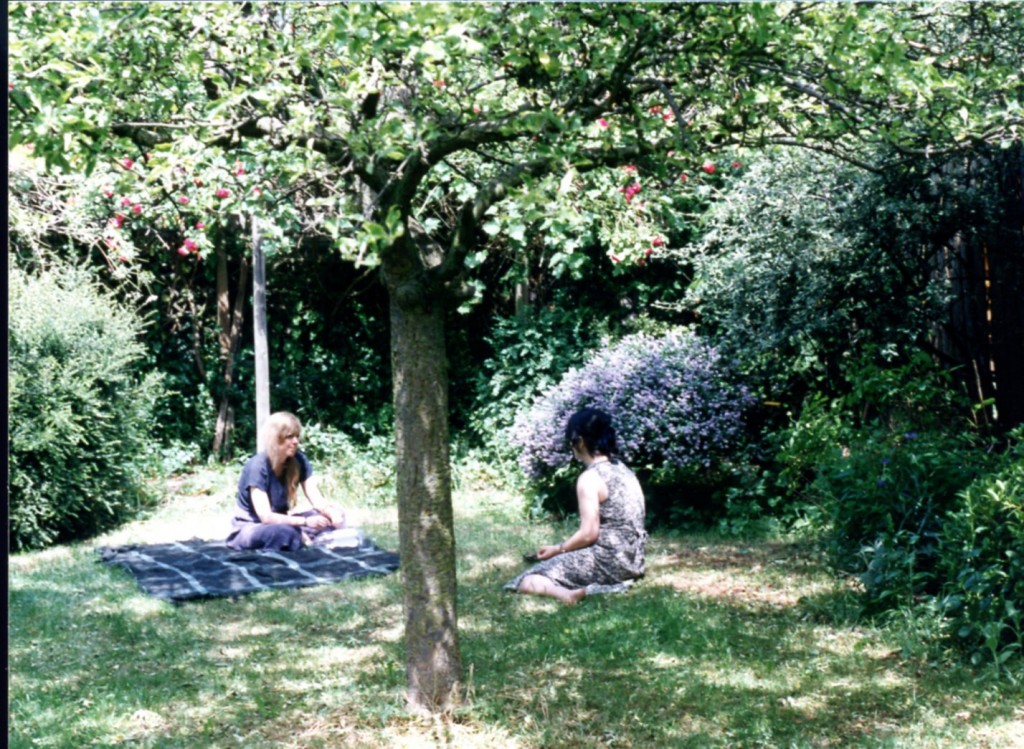
Vivien Law in her Garden in Cambridge, England,June 1996 Photograph © Mildred Budny

Vivien Law in her Cambridge Garden in June 1996 (Photograph © Mildred Budny)

*****

3. Giles Constable

Also for our blog Manuscript Studies, this year we posted a set of recollections about of Giles Constable (1 June 1929 — 17 January 2021), friend, colleague, mentor, and RGME Associate and Honorary Trustee.  These recollections do not comprise an obituary as such, because Giles often and firmly expressed his wish for no such thing, nor any Memorial Service or Festschrift for him in his honor.

Instead, after an interval of mourning, we record appreciation for his contributions as a presence and guiding force for our organization since its early years in the United States, following the move of our principal base from the United Kingdom to Princeton, New Jersey, in October of 1994.

  • Recollections for the 2024 RGME Anniversary Year, Part 1. Giles Constable.
Giles Constable reading in his office at the Institute for Advanced Studies. Photograph by Mildred Budny.

Giles Constable reading in his office at the Institute for Advanced Studies. Photograph by Mildred Budny.

Also, his generous encouragement of our work for manuscript studies by long-term loans or gifts made it possible closely to examine, over time, groups of original specimens of medieval manuscripts, manuscript fragments, documents, seals in metal or wax, early printed materials, bindings, and associated records.  The work included conservation, photography, research, seminars, display, and publication in our blog and other forms.

Discoveries abounded, and found expression in those publications as well as in various of our RGME events. For example:

  • 2014 Seminar on Manuscripts and Their Photographs, held at the Index of Christian Art of Princeton University in its Seminar Room.

*****

5. Patrick Wormald

Now, in preparation for our Episode 17. “RGME Retrospect and Prospects: Anniversary Reflections” in September 2024, our RGME Associate and Trustee David Ganz offers a Memoir of our RGME Associate Patrick Wormald (1947–2004).

Coffee Break at the 2002 British Museum Colloquium.

Patrick Wormald at the 2002 Colloquium

*****

In Memoriam

See also RGME Officers, Associates, and Volunteers: In Memoriam.

Another Memoir composed by our Director in booklet format, published in a limited edition:

  • “The Guessing Game:  A Memoir of My Uncle Bob, Robert Roger McEwan (1918‒2007)” (Princeton, New Jersey:  Milly Budny Designs, 2017)

*****

Others?

Are there others whom you wish to remember?  Please let us know.  Would you like to contribute a Memoir of some kind about someone you recall with appreciation and seek to record?

For example, you could Contact Us or write to the director@manuscriptevidence.org with your requests or suggestions.

*****

Episode 17 of “The Research Group Speaks”

As part of our anniversary celebrations, the RGME prepares an Episode in our online series “The Research Group Speaks” to consider our past, present, and future.

  • Episode 17. “RGME Retrospect and Prospects: Anniversary Reflections”

It will, for example, offer recollections of people who have loomed large in our history, and whom we remember with affection, admiration, and gratitude.  Among them are Giles Constable, Vivien Law, and Patrick Wormald (see above).  Please join us.

To register:

  • Episode 17. Retrospect and Prospects: Anniversary Reflections
    Saturday 21 September 2024, 1:00–2:30 EDT (GMT-4) online via Zoom

See you there?

*****

Tags: Giles Constable, Memoirs, Oleg Grabar, Patrick Wormald, Vivien Law
No Comments »

Episode 18. “Women as Makers of Books”

May 5, 2024 in Anniversary, Book, Design, Manuscript Studies, Research Group Episodes for The Research Group Speaks, Research Group Speaks (The Series)

“The Research Group Speaks”
Episode 18
“Women as Makers of Books”

Saturday 14 December 2024
1:00–2:30 pm EST (GMT-5) by Zoom

Jaclyn Reed, Hannah Goeselt, Linda Civitello,
Mildred Budny, and Others

[Posted on 3 May 2024, with updates]

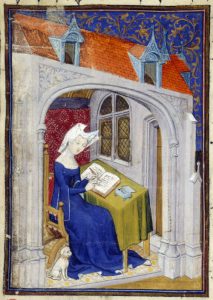
London, British Library, Harley MS 4431, fol. 4r.Christine de Pisan sits at work writing in an interior accompanied by a dog. France (Paris), c. 1410 – c. 1414. Image via https://blogs.bl.uk/digitisedmanuscripts/2013/06/christine-de-pizan-and-the-book-of-the-queen.html.

London, British Library, Harley MS 4431, fol. 4r.Christine de Pisan sits at work writing in an interior accompanied by a dog. France (Paris), c. 1410 – c. 1414. Image via https://blogs.bl.uk/digitisedmanuscripts/2013/06/christine-de-pizan-and-the-book-of-the-queen.html.

By its focus upon the agency of women in and for books, this Episode offers a pendant at the end of our 2024 Anniversary Year for the Episode which opened the year.

  • See Episode 15. Women Writers from the Medieval to Post-Modern Periods

Then, in January, scholars, teachers, and writers spoke about their interests, long-term work , and current projects concerned with the writings of women authors across a long span of time. Reflecting women’s roles, opportunities, constraints, and resourcefulness, the writings cover a wide range of spheres, subjects, approaches, and styles. The works range from literary creations to recipes for cookery.

Now, in December, the same speakers from that Episode return to offer reflections, presentations, or responses on the subject of women who contributed in one or more ways to the production of books in various forms during a range of periods across history. Other speakers and respondents join them, along with our audience engaging in the discussion with questions, comments, and observations.

For the January Episode, Mildred Budny was the presider. For the December Episode, Justin Hastings will preside.

We thank all our contributors, presiders, and attendees.

Lewistown, Pennsylvania, Old Stone Arch Bridge spanning Jack’s Creek. Built by Philip Diehl in 1815. Photograph by KAATMAAN (August 2011) via Wikimedia Commons via CC BY-SA 3.0 License.

A Bridge for, or across,
Our 2024 Anniversary Year

In keeping with the Theme of our Anniversary Year, Bridges, this Episode brings the opportunity to round out the year by means of a bridge across the RGME’s year with a return or expansion upon the theme of women responsible for contributions to the making of books. Now, we think of them not only as writers of texts, as at the beginning of the year in Episode 15, but also, or instead, as makers of the images, scripts, bindings, and/or other materials which make up books themselves as carriers of knowledge, art, expressions,  explorations, and manifestations of human aspirations.

Genres and Styles

Womens’ contributions to the “making of books” also extend to manuscripts or other forms of presenting the written word in material form. These makers chose to work in spheres ranging from calligraphy to illustrations and the designs which governed the layout or production of the works themselves.

Periods under consideration might range widely across centuries and cultures.  Examples include the Arts and Crafts Movement which flourished in Europe and North America circa 1880–1920, the Art Nouveau Movement of circa 1890–1910, and the Art Deco Style of the 1910s to 1930s.

Update:
Since we began to plan this Episode, more of our events in our 2024 Anniversary Year address the subject.

For example, in October, online by Zoom:

  • the co-sponsored set of webinars on Medieval Women’s Networks” on Thursday and Friday 17–18 October by Zoom
  • and the Autumn Symposium 2024 Autumn Symposium “At the Helm: Spotlight on Special Collections as Teaching Events”
    on Friday and Saturday 25–26 October by Zoom; its first session showcases contributions to book-production in the Victorian period Read the rest of this entry →

Tags: Ali Smith, Art Nouveau, Arts & Crafts Movement, Calligraphers, Cheap Repository Tracts, Cookbooks, Élisabeth Sonrel, Hannah More, History of Book Production, Illustrators, Lucy Maynard Salmon, Mary Mape Dodge, Muriel Spark, Recipes, RGME Publications, Saint Nicholas Magazine, Seasons Personnified as Women, The Little Red Hen, Women as Makers, Women in Books, Women Printers, Women Writers
No Comments »

Episode 17. “RGME Retrospect and Prospects: Anniversary Reflections”

April 30, 2024 in Interviews, Manuscript Studies, Research Group Episodes for The Research Group Speaks, Research Group Speaks (The Series)

Episode 17 (Saturday 21 September 2024)
“RGME Retrospect and Prospects:
Anniversary Reflections”

[Posted on 30 April 2024, with updates]

This Episode in our online series The Research Group Speaks” offers Anniversary Reflections for the Research Group on Manuscript Evidence, as we draw on highlights of our history, reflect on memories and people, and bring forth observations from living memory.

Florence, Italy, Ponte Vecchio from Ponte alle Grazie. Photo: Ingo Mehling, CC BY-SA 4.0 <https://creativecommons.org/licenses/by-sa/4.0>, via Wikimedia Commons

Florence, Italy, Ponte Vecchio from Ponte alle Grazie. Photo: Ingo Mehling, CC BY-SA 4.0 via Wikimedia Commons

In keeping with the Theme of our Anniversary Year, Bridges, this Episode gives the opportunity to share recollections, with series of comments in a roundtable conversation.

Subjects include recollections of people, events, and landmarks in the history and legacy of the RGME as we celebrate our heritage and achievements during the 2024 Anniversary Year and beyond.  For example, we wish to bring forth the memories preserved in Oral Tradition, with their stories to tell and people’s memories to preserve and share.

James Marrow and Giles Constable at the Meeting of the Honorary Trustees of the Research Group on Manuscript Evidence, 13 December 2013

James Marrow and Giles Constable at the Meeting of the Honorary Trustees of the Research Group on Manuscript Evidence, 13 December 2013 Photography by Mildred Budny

In Memoriam

People to remember include

  • our Trustee Vivien Law
  • our Honorary Trustee Giles Constable
  • our Associates
    C. Patrick Wormald
    Roger E. Reynolds
    Elizabeth (“Peggy”) A.E. Brown
  • and others.

Would you like to suggest more names as memorials?

Survey Questions as Recollections, Souvenirs, and Records

In preparation, we would circulate a survey asking people if they would like

  1. to propose ideas beforehand for an open discussion, such as recollections of particular events and/or people in our history;
  2. to share some reflections or comments in the roundtable; and
  3. to make suggestions.

Also, might you have some souvenirs or photographs from RGME events that you would like to share with the audience of the Episode and/or with the RGME Library & Archives?  We would be glad to see them.

We encourage you to join the conversation and celebrations.

Awards

Would you like to propose someone for an Award for contributions to the RGME?  Please let us know your nominations, with a description of the reasons for them.

A delightful pair of Awards, both earnest and lighthearted, with an Award Ceremony, can be seen in the Certificates or ‘Diplomas’ which our late Associate, James P. Heidere, displayed by turns on the walls of his dental office and his kitchen at home.

James Heidere with his RGME Associate's 'Diploma' with Photography by Mildred Budny

James Heidere with his RGME Associate’s ‘Diploma’

See Heidere: Diplomas and Investiture (2002).

Information about our Episode 17:

  • Episode 17. “RGME Retrospect and Prospects: Anniversary Reflections”.

For this event, we celebrate RGME history, impact, and potential.

Register for the Episode:

  • Episode 17. Eventbrite Tickets

*****

Suggestion Box

Please Contact Us or visit

  • our FaceBook Page
  • our Facebook Group
  • our Twitter Feed (@rgme_mss)
  • our Bluesky nest @rgmesocial.bluesky.social)
  • our Blog on Manuscript Studies and its Contents List

Donations and contributions , in funds or in kind, are welcome and easy to give.

  • See Contributions and Donations.

We look forward to hearing from you.

*****

Tags: Elizabeth A.R. Brown, Giles Constable, In Memoriam, Living Memory, Memorials, Oral Tradition, Patrick Wormald, Ponte Vecchio, RGME Anniversary, RGME History, RGME Origins, RGME Surveys, Roger E. Reynolds, Vivien A. Law
No Comments »

Episode 16: An Interview with Jesse D. Hurlbut

February 14, 2024 in Announcements, Event Registration, Manuscript Studies, Research Group Episodes for The Research Group Speaks, Research Group Speaks (The Series)

The Research Group Speaks
Episode 16

Saturday 22 June 2024 online
1:00–2:30 pm EST (GMT-5) by Zoom

“Trailblazing the Medieval Digital Humanities:
An Interview with Jesse D. Hurlbut”

Interviewer:  Mildred Budny, Director of the RGME

[Posted on 10 February 2024, with updates]

Jesse Hurlbut at the Bonneville Salt Flats, Utah. Photograph Jesse Hurlbut.

Jesse Hurlbut at the Bonneville Salt Flats, Utah. Photograph Jesse Hurlbut.

We invite you to attend Episode 16 in our series:

  • The Research Group Speaks

In this Episode, Jesse D. Hurlbut, RGME First WebMaster Emeritus, will speak informally about his contributions to manuscript studies, websites, digital access, and other interests.

Among them are his contributions to medieval manuscript studies, photography, and digital access; his teaching and research on French studies; his websites for himself and others (academic and non-profit organizations); his interests in promoting online communities for manuscript study and enjoyment; and more.

Update: Jesse returns for Episode 20 in March 2025 to report on his project on comic books and medieval manuscripts, as mentioned in this Episode.

  • Episode 20. “Comic Book Theory for Medievalists”

The Anniversary Symposium
in February 2024

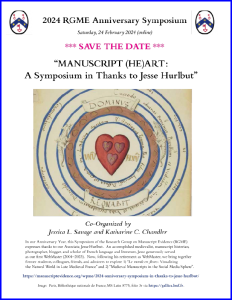
Save-the-Date Poster for 2024 Anniversary Symposium in Thanks to Jesse Hurlbut. Poster set in RGME Bembino.

This event follows upon the 2024 Anniversary “Manuscript (HE)ART”, held online on Saturday 24 February 2024, as the first in the RGME’s set of Symposia for the 2024 Anniversary Year:

  • 2024 Anniversary Symposium in Thanks to Jesse Hurlbut.. co-organized by Katharine C. Chandler and Jessica L. Savage

Taking its title from Jesse’s website Manuscript Art: Taking a Closer Look, the Symposium is designed to gather Jesse’s former students, colleagues, and friends, to consider subjects in manuscript and other studies of interest to him.

The Episode

Now, the Episode gives the chance to hear him, learn more about his interests, and join the conversation.  For example, in particular, he proposes to describe the early digital years. These recollections may record experiences viewed in hindsight and with foresight.

The Q&A to follow — or, if we wish, interlink — with the conversational interview gives the opportunity for feedback and participation.

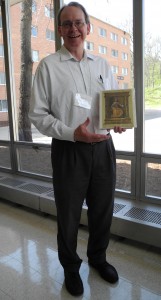
Jesse Hurlbut holds his newly won manuscript leaf at the Kalamazoo Congress on 10 May 2014. (Photography by Mildred Budny)

Jesse Hurlbut holds his newly won manuscript leaf at the Kalamazoo Congress on 10 May 2014. (Photography by Mildred Budny)

Information about Jesse:

  • Jesse D. Hurlbut: Curriculum Vitae
  • Jesse Hurlbut (LinkedIn)
  • Manuscript Art: Taking a Closer Look

In His Own Words:

  • Interview with Medieval Scholar Jesse Hurlbut (Friday, 21 August 2009)
  • Beatus Vir (December 5, 2015)

Information about the Episode:

  • Episode 16. Trailblazing for the Medieval Digital Humanities: An Interview with Jesse Hurlbut
    You are Here.

Register for the Episode:

  • Episode 16: An Interview with Jesse D. Hurlbut; Tickets

Registration is free.

We offer the option for Registration with a voluntary Donation, which we welcome.

Donations, which may be tax-deductible, help us to continue with our activities and sustain our mission for an organization principally powered by volunteers. See:

  • Donations and Contributions

After registration, the Zoom link will be sent a few days before the event.

If you have questions or issues with the registration process, please contact

  • director@manuscriptevidence.org.
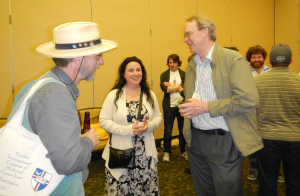
Jesse Hurlbut and others at the RGME Reception at the ICMS 9 May 2024. Photography Mildred Budny.

Jesse Hurlbut and others at the RGME Reception at the ICMS 9 May 2024. Photography Mildred Budny.

See you at the Episode!

*****

Future Episodes

Future Episodes are planned.  See:

  • “The Research Group Speaks”: The Series.

Other Events

We plan various other events for the 2024 Anniversary Year.

  • 2023 and 2024 Activities

For example:

  • 2024 Anniversary Symposium in Thanks to Jesse Hurlbut (online)
  • 2024 Spring and Autumn Symposia-plus-anniversary-symposium
  • 2024 Spring Symposium at Vassar College (hybrid)
  • 2024 International Congress on Medieval Studies: Program (severally in-person, online, and partly hybrid)
  • 2024 International Medieval Congress at Leeds (hybrid)

Questions or Suggestions?

Please leave your questions or comments here (below), Contact Us, or visit

  • our FaceBook Page
  • our Facebook Group
  • our Twitter Feed (@rgme_mss)
  • our Bluesky nest @rgmesocial.bluesky.social)
  • our LinkedIn Group
  • our Blog on Manuscript Studies and its Contents List

We invite you to join:

  • Friends of the RGME.

Donations and contributions, in funds or in kind, are welcome and easy to give.  Given our low overheads, your donations have direct impact on our work and the furtherance of our mission.  For our Section 501(c)(3) nonprofit educational organization, your donations may be tax-deductible to the fullest extent permitted by law.  Thank you for your support!

  • Contributions and Donations
  • 2024 Anniversary Appeal

We look forward to hearing from you and seeing you at our events.

*****

Lisbon, Museu Nacional de Arte Antiga: The mid 15th-century Saint Vincent Panels, attributed to Nuno Gonçalves. Image (https://upload.wikimedia.org/wikipedia/commons/3/3a/Nuno_Gon%C3%A7alves._Paineis_de_S%C3%A3o_Vicente_de_Fora.jpg) via Creative Commons.

*****


Tags: Interview, Jesse D. Hurlbut, Manuscript studies, Medieval Digital Humanities, Medieval manuscripts, RGME Webmaster, The Research Group Speaks, Trailblazing
No Comments »

Episode 13: Bridget Whearty on “Digital Codicology”

September 4, 2023 in Interviews, Manuscript Studies, Research Group Episodes for The Research Group Speaks, Research Group Speaks (The Series), Uncategorized

The Research Group Speaks
Episode 13

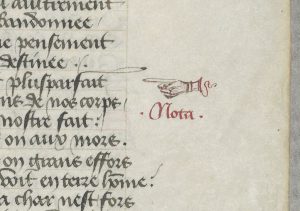
Decretum Gratiani plus sleeved Manicule, via gallica.bnf.fr from Bibliothèque municipale de Rouen. Ancien fonds, Ms E 1a, folio 195v.

Saturday 21 September 2023 online
12:00–1:30 pm EDT (GMT-4) by Zoom

“Making Digital Codicology:
Research and Writing in Community”

Bridget Whearty

[Posted on 4 September 2023, with updates]

We invite you to attend Episode 13 in our series.

  • The Research Group Speaks

The Eventbrite Portal for this Series:

  • The Research Group Speaks

To register for This Episode:

  • Episode 13. Bridget Whearty

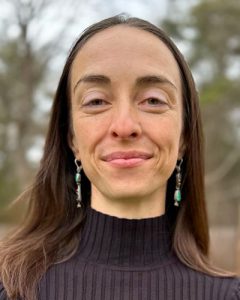
Bridget Whearty: Faculty Profile via https://www.binghamton.edu/english/faculty/profile.html?id=bwhearty.

Episode 13 showcases the work of Bridget Whearty, Associate Professor of English, General Literature and Rhetoric at Binghamton University, State University of New York (see her Curriculum Vitae).  She will speak informally about her work and research interests, focusing upon her recent book on Digital Codicology: Medieval Books and Modern Labor (Stanford University Press, 2022).  About the work, see, for example, her observations for the Coding Codices Podcast.

We learned about her work toward the book in an earlier stage, well before it appeared in print, in 2018, when we met as audience members at the 11th Annual Symposium of the Schoenberg Institute for Manuscript Studies. It was inspiring to hear her then , and to have the opportunity to meet and talk more — as it happened, walking to the conference and in the parking lot as we were both preparing to leave. I found this meeting wonderfully memorable. Our subjects of discussion then included not only books, but also cats and cooking.

Fast forward.  As the RGME began its series of online Episodes in 2021, and their momentum came into place across the series, which now reaches Number 13, the suggestion that we invite Bridget came naturally.  Responding to the suggestion, I made the invitation, Bridget generously responded, we explored what she might like to focus on — and so, now, we welcome her gladly to our series.

We look forward to hearing more about Bridget’s quest, along with its challenges, discoveries, and recognition of the people behind the books in whichever ways they become known to us — by presenting themselves, in one and/or other ways, materially or by representatives, including digitally.

Come to think of it, that meeting of the people in (or of) the books is what we try to do with medieval and other books, only without being able to meet them in person . . .

Now is our chance with Bridget, and, through her, others who work behind the scenes in the study and presentation of books for our inspection, study, instruction, reflection, and questions.

You can register for this event by our RGME Eventbrite Collection. To register for Bridget’s Episode 13, visit this portal.  Information below.

Read the rest of this entry →

Tags: Anonymous Hands, Anonymous Labor, Bibliothèque nationale de France MS 12476, Digital Codicology, Digital Codicology The Book, digitization of manuscripts, Digitizers' Hands, Henry Noel Humphreys' Specimens of Illuminated Manuscripts, Johanna Green, Le Champion des Dames, Manuscript studies, Medieval manuscripts, Research and Community, Stanford University Libraries MSS Codex MO379CB, The Research Group Speaks
No Comments »

Episode 12: Vajra Regan on Engraved Magic and Astrological Images

May 30, 2023 in Manuscript Studies, Research Group Speaks (The Series), Uncategorized

The Research Group Speaks
Episode 12
Saturday 12 August 2023 online
1:00–2:30 pm EST (GMT-5) by Zoom

“The Sources of the Engraved Magic and Astrological Images
in the Book of Sigils (Liber Sigillorum)
and the Ghāyat al-Hakīm (The Goal of the Wise)”

Vajra Regan

[Posted on 30 May 2023, with updates]

We invite you to attend Episode 12 in our series.

  • The Research Group Speaks

Our Associate, Vajra Regan will speak about the subject of his new joint publication, which has now appeared in early August 2023, a few days before our event.  Vajra’s presentation about this project and the process towards its publication explores explore the subject of visual imagery for astrological magic as transmitted across time, languages, and cultural settings.

Over the years, Vajra has presented papers and organized Sessions for the RGME and our co-sponsor, the Societas Magica, since 2019.

  • Regan (2019 Congress)
  • Regan (2020 Congress)
  • 2022 International Congress on Medieval Studies Program

These activities allow us to continue to learn about Vajra’s research as it continues to expand, to deepen, and to unfold.  We are glad for his offer to talk with us for the Episode.

Vajra’s Plan for the Episode, in his Own Words

The Title

“The Sources of the Engraved Magic and Astrological Images
in the Book of Sigils (Liber Sigillorum)
and the Ghāyat al-Hakīm (The Goal of the Wise)”

The Abstract

The twelfth century saw the translation into Latin of a group of Arabic texts on astrological image magic with titles such as The Book of Planets (Liber Planetarum), The Stations of the Cult of Venus (De stationibus ad cultum Veneris), and The Book of Venus (Liber Veneris). These texts, usually attributed to Hermes or one of his retinue, provided detailed instructions relating to the liturgy of the planets and the fabrication of engraved astrological images or talismans. Unfortunately, in the following centuries, they were systematically suppressed to such an extent that today many survive in only one or two late manuscripts.

Although long recognized as important to the history of learned magic in the West, these texts have so far received little scholarly attention.  Consequently, the precise nature and extent of their influence have remained largely a matter of conjecture.

Read the rest of this entry →

Tags: Alfonso X, Astrological Images, Engraved Magic, Firenze Biblioteca Nazionale Centrale II.III.214, Ghāyat al-Hakīm, History of Magic, Jupiter Enthroned, Lapidaries, Liber Planetarum, Liber Sigillorum, Picatrix, The Research Group Speaks
No Comments »

Episode 11: Michael Allman Conrad on “Gamified Numbers”

May 26, 2023 in Manuscript Studies, Research Group Speaks (The Series), Uncategorized

The Research Group Speaks
Episode 11
Saturday 8 July 2023 online
12:00–1:30 pm EDT (GMT-4) by Zoom

“Gamified Numbers and Digitalized Castles:

Digital Reconstructions of Medieval Board Games
and Other Forms of Data Visualization
as Methods in the Humanities
“

Michael Allman Conrad

[Posted on 5 June 2023, with updates]

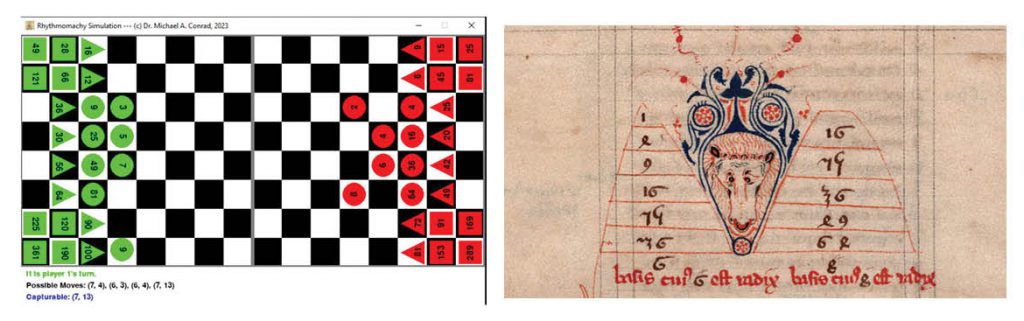
For Episode 11 in the online series of The Research Group Speaks, our Associate Michael Allman Conrad will talk about his ongoing work on games, board games, and interrelations between gameplay and numbers.

Left: Rhythmomachy Simulation (Player 1's turn). Image © 2023 Michael A. Conrad. Right: Bibliothèque interuniversitaire, Section Médecine, Montpellier, H 366, f. 13v, with rhythmomachy pyramids at the top flanking a lion's mask. Image via Creative Commons, via https://portail.biblissima.fr/fr/ark:/43093/mdata268b7df0d12be6fa155f802fd66b4123b9ddd65a.Left: Rhythmomachy Simulation (Player 1's turn). Image © 2023 Michael A. Conrad. Right: Bibliothèque interuniversitaire, Section Médecine, Montpellier, H 366, f. 13v, with rhythmomachy pyramids at the top flanking a lion's mask. Image via Creative Commons, via https://portail.biblissima.fr/fr/ark:/43093/mdata268b7df0d12be6fa155f802fd66b4123b9ddd65a.

Left: Rhythmomachy Simulation (Player 1’s turn). Image © 2023 Michael A. Conrad.
Right: Bibliothèque interuniversitaire, Section Médecine, Montpellier, H 366, f. 13v, with rhythmomachy pyramids at the top flanking a lion’s mask. Image via Creative Commons.

Recently, Michael spoke about some aspects of this work for a Session co-sponsored by the Societas Magica and the Research Group on Manuscript Evidence at the 2023 International Congress on Medieval Studies in May.  See the Program for our activities there (2023 Congress Program) and the illustrated Abstract for Michael’s paper.

In our co-sponsored Session on “Teaching Astrology and Other Liberal Arts” , Michael’s topic was “Gamified Numbers:  Board Games as Educational Instruments for Teaching Astrology and Other Quadrivial Arts”.  In the short time-span permitted by a full Session with four individual presentations , he briefly examined the game of rhythmomachy (rhitmomachia or “Battle of Numbers”), an early mathematical board game, and described his project of studying and preparing a computer simulation for its play.

Now we have the opportunity to hear Michael describe this complicated game, its origins, and its intricate relationship with knowledge of Boethian theories on the mathematical arts. That is, its structure is grounded in the understanding of those arts expounded by Anicius Manlius Severinus Boethius (circa 480 – 524 CE) in his influential manual De Institutione arithmetica Libri duo, based upon his loose translation of the treatise on the subject composed in Greek by the Neopythagorean philosopher Nicomachus of Gerasa (circa 60 – circa 120 CE).

More than that, Michael’s explorations of the game and its underlying theories build a bridge to a more general debate on the use of digital methods in the humanities, which he is also exploring in different ongoing data projects of his, some of which he is also going to introduce briefly in the course of his paper. The discussion will start with reflections on his experiences with using these methods, their requirements, benefits, and downsides.

Please register to attend this online event (see below).

Read the rest of this entry →

Tags: Alfonso X of Castile, Anicius Manilius Severinus Boethius, De consolatione philosophiae, De institutione arithmetica, Gameplay, History of Board Games, Mathematical Games, Nichomachus of Gerasa, Rhythmomachy, Ritmomachia, Scholasticism, The Research Group Speaks
No Comments »

Donncha MacGabhann on the Making of “The Book of Kells”

November 1, 2022 in Announcements, Manuscript Studies, Research Group Speaks (The Series)

The Research Group Speaks
Episode 9
Saturday 19 November 2022 online

“The Book of Kells:  A Masterwork Revealed”
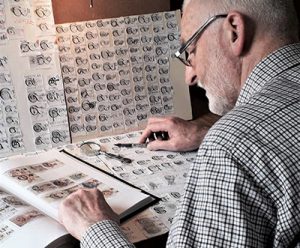
Donncha MacGabhann at work on his close study of letter forms in the Book of Kells. Photograph via his publisher, Sidestone Press (Leiden 2022)

Donncha MacGabhann at work on his close study of letter forms in the Book of Kells. Photograph via his publisher, Sidestone Press (Leiden 2022)

– An informal Interview/Conversation with Donncha MacGabhann, Associate of the RGME, about his newly published book

[Posted on 31 October 2022 by Mildred Budny, with updates]

For Episode 9 in the online series of The Research Group Speaks, we present an informal Conversation or Interview with the author about his new book on The Book of Kells:  The Making of a Masterwork (Leiden, 2022).

The Book has emerged from Donncha’s detailed study for the Ph. D. dissertation (London, 2016), as well as his own experience as an artist.  For our Episode, he will tell us about the making of his Book on the making of the Book of Kells . . .

To Register for the event, see Below.

The Book of Kells

One of the chief treasures of the Library of Trinity College Dublin (since at least 1661), and the subject of widespread fame, the Book of Kells might need no introduction.
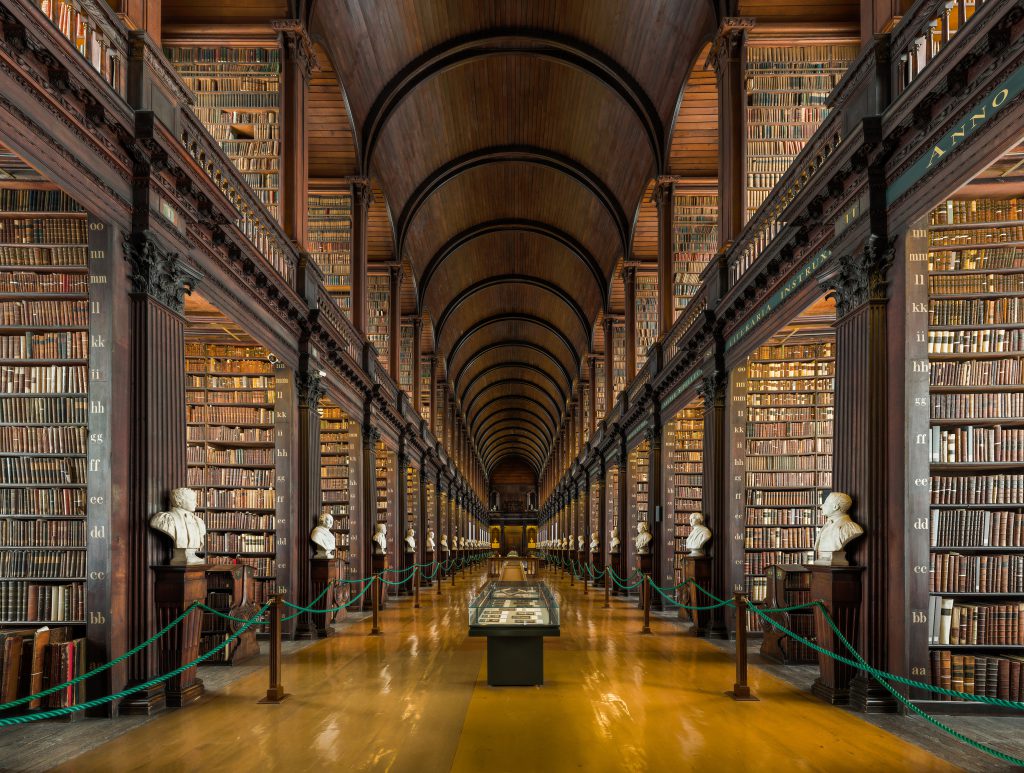
The Long Room of the Old Library, Trinity College Dublin, seen from the entrance (2015). Photo by DAVID ILIFF. License: CC BY-SA 3.0.

  • Dublin , Trinity College Library, MS A. I. [58], the Codex Cennanensis, now comprising 340 vellum folios, bound (since 1953) in four volumes, one for each Gospel.

The online Library catalogue offers concise descriptions.  About the contents, for example, some essential facts:

The Book of Kells (Leabhar Cheanannais, Trinity College Dublin MS 58) contains the four Gospels in Latin based on the Vulgate text which St Jerome [circa 342 – circa 347 – 30 September 420] completed in 384AD, intermixed with readings from the earlier Old Latin translation. The gospel texts are prefaced by other texts, including “canon tables”, or concordances of gospel passages common to two or more the Evangelists; summaries of the gospel narratives (Breves causae); and prefaces characterizing the Evangelists (Argumenta).

A different approach can be found, for example, in a concise guide for the curious:

  • Ten Things You Should Know about the Book of Kells, or the Book of Columba
    — along with, say, 10 Things You Should Know About The Gutenberg Bible.

Have a Look:

  • The Book itself, in online facsimile: Book of Kells. IE TCD MS 58
  • Its introduction: Book of Kells

For my part, one of the principal highlights — not the only one — of my long study of early medieval manuscripts from the British Isles, their companions, and their contexts (for example, British Library, Manuscript Royal 1 E. vi: The Anatomy of an Anglo-Saxon Bible Fragment and Deciphering the Art of Interlace), was the opportunity to examine directly, turning the pages, two volumes of the Book of Kells. That experience, over some days, augmented and amplified the observations of the volumes on display, along with other treasures, in the imposing Long Hall of the Library. The opportunity, with permission, to look at the Book itself took place in the Director’s office, with the clear light of natural light during an unusually dry summer with cloudless skies. Memorable indeed.  #turnedthepages.

A few years later, while part of the Book came on tour among the travelling Treasures of Ireland (1982 and 1983), I could see part of it again, in museums in Paris and in New York, under subdued light and behind the glass case. Different views, same astonishing monument.

Very, very many people can say that they have seen the Book of Kells.  Attracted by its fame, visitors to the Library, where it has been displayed since the nineteenth century, number on average some 500,000 each year.  On her visit, Queen Victoria (1819–1901) was encouraged to sign it — as an extraordinary form of ‘Visitors’ Book’.

Over the centuries, many have commented upon the Book of Kells.  They include scholars, historians, palaeographers, art historians, authors, artists, and others.  Some observers have taken inspiration from it in multiple ways, verbal and visual, to form creative works of their own, ranging from, say, Finnegans Wake (1939) to The Secret of Kells (2009).

Donncha MacGabhann’s long-term study, considering detail after detail of script and ornament, of the original Book of Kells as a whole brings fresh views of its process of creation, as the scribes worked their way across the pages and into an accomplishment truly worthy of curiosity, admiration, and wonder.  Aware of Donncha’s study for some years, I have looked forward to his book revealing the results of his research.

Donncha MacGabhann’s Book on Kells

About Donncha, see, for example,

  • Donncha MacGabhann Curriculum Vitae
  • Curriculum Vitae.

His Book, just about to appear in print, examines

  • The Book of Kells. A Masterwork Revealed: Creators, Collaboration, and Campaigns
    (Leiden: Sidestone Press, 2022).
    Paperback ISBN: 9789464261226 | Hardback ISBN: 9789464261233 |
    Ebook only (pdf) and Ebook (read online for free)Format: 210x280mm | 324 pp. | Language: English | 11 illus. (bw) | 109 illus. (fc) |
    Keywords: Book of Kells; insular manuscripts; insular art; palaeography; Early Medieval gospel books; Early Medieval Christianity; art history; calligraphy |


From the publisher comes this description:
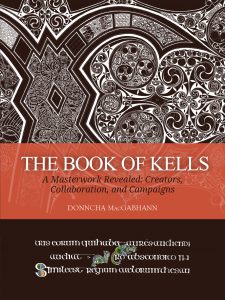
Front Cover of Donncha MacGabhann, “The Book of Kells: A Masterwork Revealed” (2022).

Sublime calligraphy, marvelous art, and amazing initials, have charmed and captivated the audience of the Book of Kells for over twelve hundred years. This remarkable illuminated Gospel book attracts the attention of scholars as well as those more generally interested in the fabulous artifacts of the past.

Everybody knows it was made by an extensive team of scribes and artists. Donncha MacGabhann knew that too. However, he was certain that a thorough examination could clearly identify the various contributions of its creators.

His life and work as an artist and teacher inspired the belief that a close visual study could solve some of its enduring puzzles. The deeper he delved, the more he was convinced that Kells is entirely the work of two individuals. This evolved into a novel paradigm through which he came to know and understand the manuscript. Following years of meticulous research, this book tells the story of Kells’ two Masters and their collaboration to create a Gospel book of unprecedented magnificence. Most poignantly, it reveals the struggle of the lone survivor of the two-man team to attempt the completion of their magnum opus.

The most important outcomes of this book go far beyond the simple attribution of work to different hands. Much more significantly, it affords insights into the imagination which inspired its creators, especially the unique vision of Kells’ great Scribe-Artist. Collectively, these new perspectives reveal a previously unknown ‘Book of Kells, ‘ one which, as it were, has remained hidden in plain sight.

Descriptions of Donncha’s book and its contents, approach, discoveries, and significance appear among various booksellers, as with

  • https://www.bookdepository.com/Book-Kells-Donncha-MacGabhann/9789464261226

The Process of Research and Discovery

In Donncha’s own words, as the research unfolded:
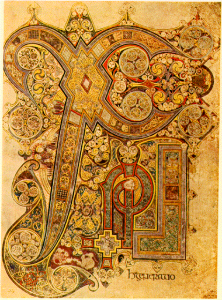
Dublin, Trinity College, MS A. 1 (58), folio 34r. Chi-Rho Initial Page (Matthew 1:18). Image via Wikimedia Commons; Public Domain in the US.

Key research interests include Insular palaeography and illumination. My current focus is to extend and develop the research which was the basis for my PhD (2016). My thesis investigation was concentrated on the makers and the making of The Book of Kells. This provides the first in-depth and comprehensive analysis of both the illumination and the scribal work in the manuscript.

My research was significantly informed by the experience gained in my career as an Artist and Art-Teacher. Complementary to the more traditional modes of academic enquiry this enabled me to draw on a skill-set which was integral to the development of my research methodology. This methodology of close visual analysis was central to my approach.

My immediate aim is communicate, through publication, the results of my doctoral research to the scholarly community. It is also my intention to extend the application of the methodology developed in my thesis to a number of other Insular manuscripts and to consider the implications of the revision of hands in the material culture of the Insular world more broadly. (Donncha MacGabhann)

Donncha’s Ph.D. dissertation is freely available for download:

  • The making of the Book of Kells: two Masters and two Campaigns (Doctoral thesis, University of London, 2016)  https://sas-space.sas.ac.uk/6920/ (via Creative Commons)

Its Abstract:

This thesis investigates the number of individuals involved in the making of the Book of Kells. It demonstrates that only two individuals, identified as the Scribe-Artist and the Master-Artist, were involved in its creation. It also demonstrates that the script is the work of a single individual – the Scribe-Artist. More specific questions are answered regarding the working relationships between the book’s creators and the sequence of production. This thesis also demonstrates that the manuscript was created over two separate campaigns of work. The comprehensive nature of this study focuses on all aspects of the manuscript including, script, initials, display-lettering, decoration and illumination.
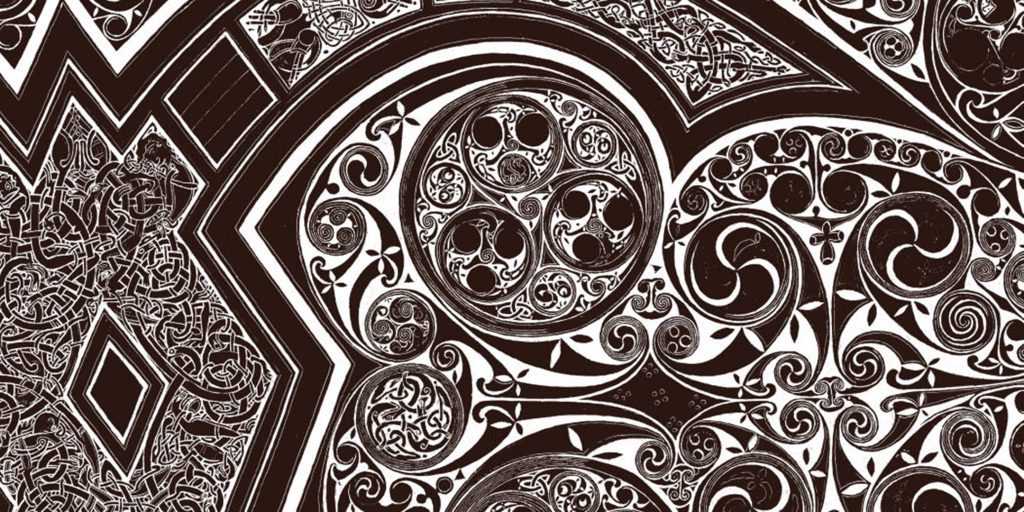
Detail from Front Cover of Donncha MacGabhann, “The Book of Kells: A Masterwork Revealed” (2022): Black-and-white reproduction by the author of the ornamented center of the Chi-Rho Initial Page (Dublin, Trinity College, MS 58, folio 34r).

Previews

We met Donncha when he spoke for the RMGE about a facet of the Ph.D. research on the manuscript for one of our Sessions at the 49th International Congress on Medieval Studies (Kalamazoo, Michigan, May 2014).  The Session considered “Individual Style or House Style?  Assessing Scribal Contributions, Artistic Production, and Creative Achievements”.

Donncha’s paper examined the scribal uses of two forms or grades of late-antique and early-medieval script, Half-Uncial and Uncial, for the letter a at line-endings, where options for compression and variation could call for choice and artistic expression.

Half-Uncial a and Uncial a at Line-Ends:
The Division of Hands in the Book of Kells
and an Insight
into the ‘Calligraphic Imagination’ Evident in the Script

The abstract for Donncha’s paper appears on our website: MacGabhann 2014 Congress.

At the Congress, although we had corresponded earlier, we could meet Donncha, learn about his careful studies, his approaches to the creation and understanding of forms of the written word, and his observations about the original materials, in manuscript and in print, offered for display at some of our sessions.
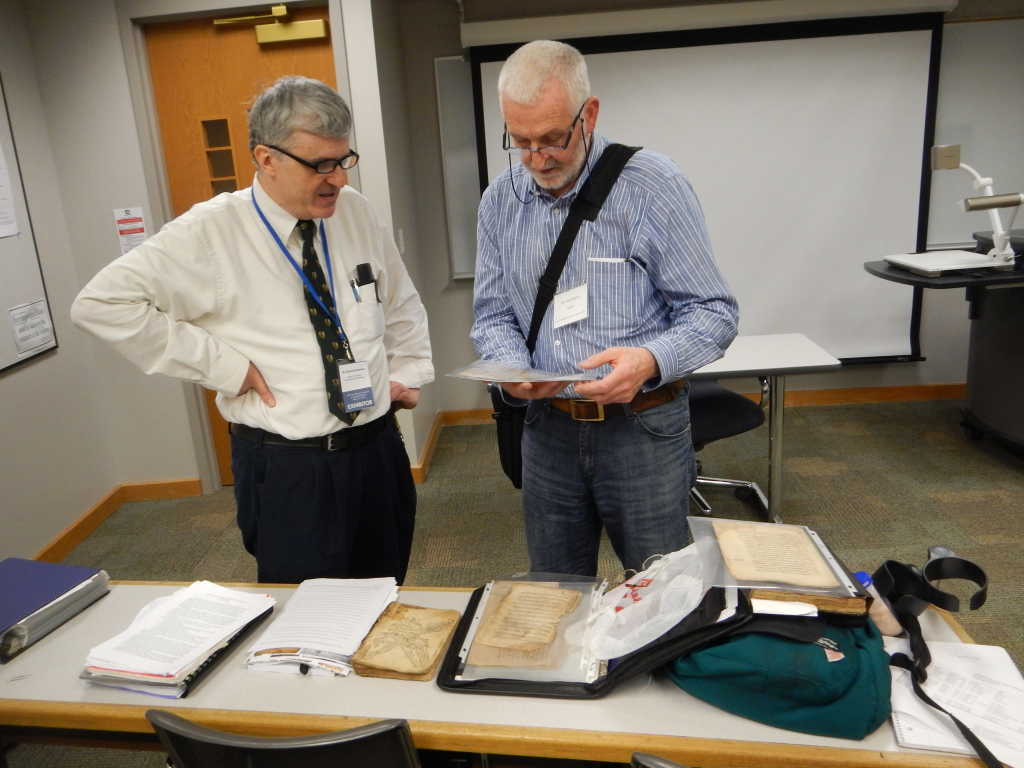
David Sorenson and Donncha MacGabhann examine manuscript materials

David Sorenson and Donnach MacGabhann examine manuscript materials after the RGME Writing Materials Session at the 2014 Congress. Photography by Mildred Budny.

Several papers published in the course of the research spell out the methodological approach.  For example,

Palaeographer Erika Eisenlohr has stated that ‘the similarity or dissimilarity of hands in Kells has so far mainly been based on more general impressions of the scripts’ (1994). My research attempts a more comprehensive investigation of the evidence including illuminated pages, script and illumination of the canon tables, mise-en-page, punctuation, display script, decorated initials, regular script and elaborations to the script.

— Donncha MacGabhann, Abstract for “The et-ligature in the Book of Kells (Revealing the ‘calligraphic imagination’ of its great scribe)” (2017), in Conor Newman, Mags Manion, and Fiona Gavin, eds., Islands in a Global Context. Proceedings of the seventh Conference on Insular Art, held at the National University of Ireland, Galway, 16–20 July, 2014 (Dublin, 2017), pp. 138–48.

The Script(s) of Kells

Discussion of the varieties of script, ornamented letter forms, and other forms of ornament in the Book of Kells continues in its own right over time.  It also forms, or should form, an integral part in an ongoing consideration of many features of the book, both individually and in combination.  That is:  the various texts (Gospel texts , their companion texts including prefaces, summaries, and canon tables with numerals and titles, as well as added texts such as Irish charters), illustrations, canon arcades and frameworks, scribal characteristics, writing materials (animal skins, inks, pigments, their binding agents, traces of layout marks, and so on), layers of accretion, condition, sewing patterns, binding history, library history, layout, design, artistry, and more.

Many features figure, to varying degrees, in assessments of the likely place and date of production of the manuscript.  Those assessments may remain open to exploration and refinement, as research advances, methods of exploration expand, attitudes may direct, and discoveries emerge.

Reproductions, Photographic and Pre-Photographic
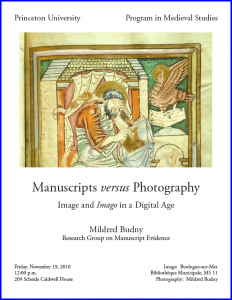
Poster for lecture on 'Manuscripts versus Photography: Image and "Imago" in a Digital Age' by Mildred Budny at Princeton University on 19 November 2010. Photograph by Mildred Budny of MS 10, Boulogne-sur-Mer, Bibliothèque des Annonciades,reproduced by permission.

Poster, designed by the RGME, for a lecture on 19 November 2020. Image: Photograph by Mildred Budny of Boulogne-sur-mer, Bibliothèque des Annonciades, MS 11, reproduced by permission.

With restricted access nowadays to the treasured original, and with the proliferation of digital means of reproduction and dissemination, close study of the multiple features of the manuscript would mostly rest upon consultation of such reproductions, however high in quality or ‘fidelity’.  That those reproductive materials would, in no small measure, determine, affect, or direct the nature of the forms of study — as well as, it may be, the interpretations of that (indirect) evidence — should be evident.

Such factors in the study of manuscripts under current, prevailing, conditions in the age of photographic reproduction and the age of the internet remain a subject of considerable interest for the Research Group on Manuscript Evidence.  For example:

  • Mildred Budny, “No Snap Decisions:  Challenges of Manuscript Photography”.  Paper delivered at the Session on “Imaging Manuscripts for the Twenty-First Century:  Photographs and Beyond” (1994), sponsored by the RGME at the 1994 International Congress on Medieval Studies.
    Published, with its Abstract, Text, and Images, here.
  • “Manuscripts versus Photography:  Image and Imago in a Digital Age”.  Lecture for the Program in Medieval Studies, Princeton University (19 November 2010).

Our events continue to consider such factors of manuscript studies, whether as, perhaps, part-and-parcel, bread-and-butter, or meat-and-potatoes.  That is, as Food for Thought.

As always, our interest in the processes of production and the people behind the books, keenly explored in cases of the medieval objects, extends also to the processes which underpin, sustain, and shape the studies themselves of those materials.  These interests are manifest in many RGME activities, as with continuing explorations of relationships between “Manuscripts and Photography” in Seminars, Workshops, Conference Sessions, and Symposia; and in Episodes of our series wherein The Research Group Speaks.  On such occasions, we might have opportunity to hear the authors of close studies of manuscripts or other materials speak about the origins, progress, and processes of their research, as well as its results.  Such is the case for this Episode with Donncha MacGabhann, as his new book, long in the making, reaches publication.

Drawings of elements in the Book of Kells — as appear among Donncha’s figures — belong to a venerable tradition which reaches back to pre-photographic means of reproduction.  Notable examples in that tradition include images from the manuscript carefully prepared by the observant entymologist and antiquarian John Obadiah Westwood (1805–1893).  Examples appear in these of Westwood’s publications:

  • Palaeographia sacra pictoria: Being a series of illustrations of the ancient versions of the Bible , copied from illuminated manuscripts, executed between the fourth and sixteenth centuries (London, 1845)
  • Facsimiles of Anglo-Saxon and Irish Manuscripts (London, 1868)
    Also, in excerpts: Facsimiles of Anglo-Saxon and Irish Manuscripts (London, 1868)

Close examination fostered by line-by-line reproduction, from one surface to another, may develop a keen awareness of specific details, in much the same way that detailed verbal descriptions can do, as with a catalogue or ‘inventory’ of features within a manuscript (or other monument).  I myself learned the lasting value of preparing such descriptions — from the originals, aided by my photographic reproductions including macro-photography — for features of manuscripts in the Illustrated Catalogue, one of the co-publications of the Research Group on Manuscript Evidence.

From observations of the evidence, by various means and methods, the interpretations may follow, redirect, or revise.

In the new book, the choice of methodology of palaeographical examination, centered upon photographic reproductions and drawings, focuses upon excerpts of specimen letters and initials.  Arrayed on these pages (printed or digital) in groups or rows of related letter-forms, the specimens stand removed or isolated from the ebb-and-flow of their naturally-occurring lines and columns of running texts upon their pages, and their openings, across the unfolding of the original book as a whole.

Mostly at a distance perforce from that original (even when viewed through the glass case of its exhibited pages), and very exceptionally in a direct encounter, we might find ways variously to imagine, to ‘reconstruct’, or to recollect, the process of turning its very pages and sensing the feel of the width of its leaves as their edges are turned.

Donncha’s Book on The Book of Kells
in our Episode for 19 November 2022

The publication of Donncha MacGabhann’s book is expected on 31 October 2022.  The book can be ordered in print and pdf forms from the publisher and other booksellers.  From the publisher’s website, it can be read online free of charge.  See:

  • The Book of Kells. A Masterwork Revealed: Creators, Collaboration, and Campaigns

Episode 9 in the online series of “The Research Group Speaks” is planned for Saturday 19 November 2022, via Zoom, at 12 pm EST (GMT – 5) for about 1 1/2 hours, with discussion and Q&A.  You are welcome to join us.

Registration for the Episode

If you wish to attend, please register here:

  • The Research Group Speaks, 9: Donncha MacGabhann on Making the Book of Kells

If you have questions or issues with the registration process, please contact director@manuscriptevidence.org.

Future Episodes

Future Episodes are planned.  See

  • “The Research Group Speaks”: The Series.

Suggestion Box

Please leave your Comments or questions here, Contact Us, or visit

  • our FaceBook Page
  • our Twitter Feed (@rgme_mss)
  • our Blog on Manuscript Studies and its Contents List

Donations and contributions, in funds or in kind, are welcome and easy to give.  See Contributions and Donations.

We look forward to hearing from you.
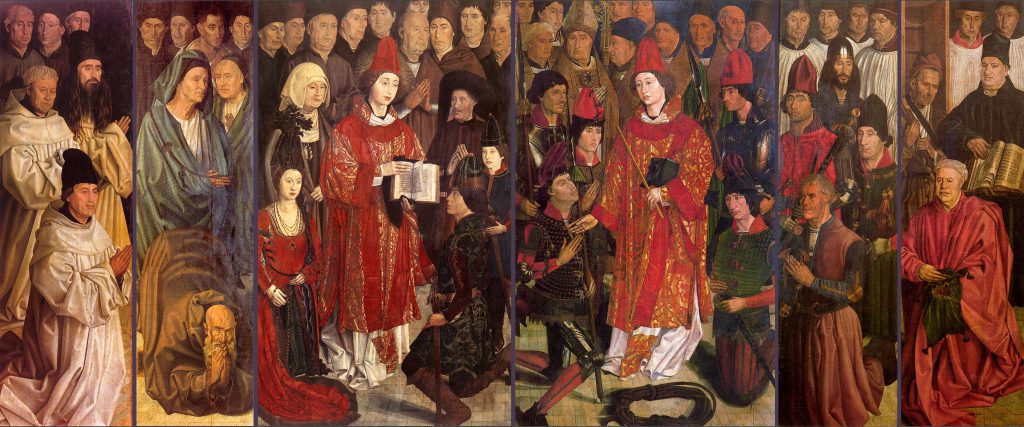
Lisbon, Museu Nacional de Arte Antiga: The mid 15th-century Saint Vincent Panels, attributed to Nuno Gonçalves. Image (https://upload.wikimedia.org/wikipedia/commons/3/3a/Nuno_Gon%C3%A7alves._Paineis_de_S%C3%A3o_Vicente_de_Fora.jpg) via Creative Commons.

*****
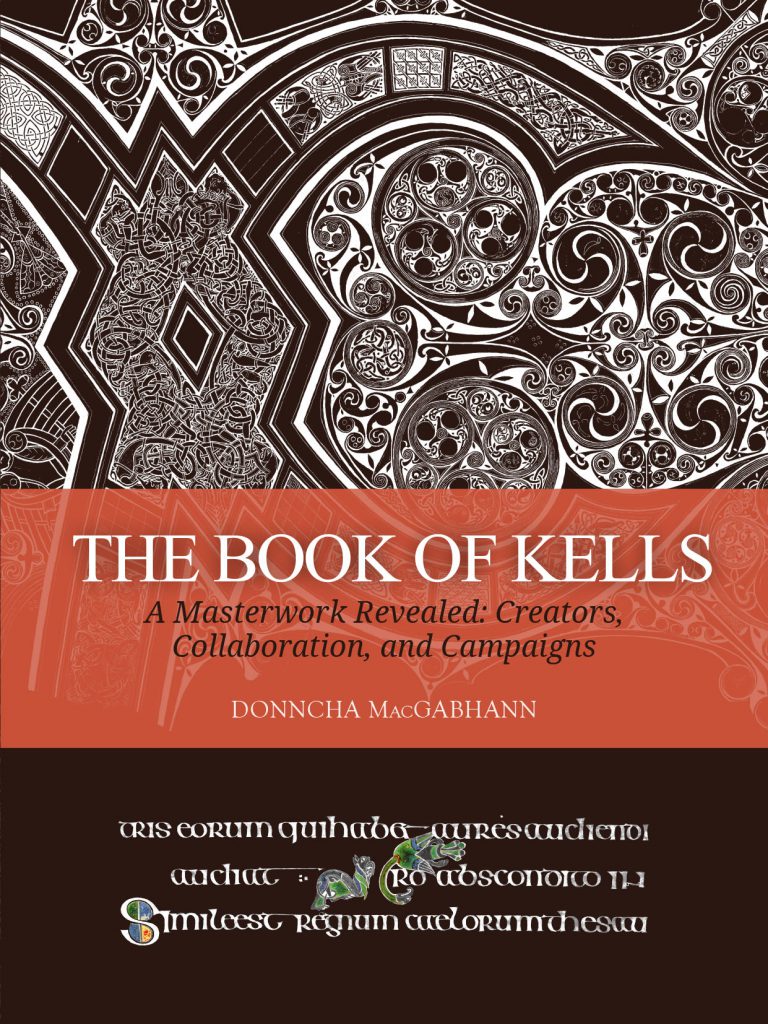
Front Cover of Donncha MacGabhann, “The Book of Kells: A Masterwork Revealed” (2022).

*****

Tags: Book of Kells, Donncha MacGabhann, Early Medieval Gospel Books, early medieval manuscripts, Finnegans Wake, Manuscript Photography, Manuscript studies, Medieval manuscripts, Palaeography, The Research Group Speaks, The Secret of Kells, Trinity College Dublin, Trinity College Dublin MS A 1 [58]
1 Comment »

How to Be Tarzan in the Catalog, Or, Tarzan-Moves of the Mind

July 2, 2022 in Manuscript Studies, Research Group Speaks (The Series)

The Research Group Speaks
Episode 8

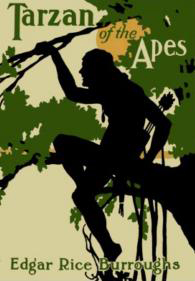
Tarzan of the Apes (1914). Image Public Domain via Wikimedia Commons.

Tarzan-Moves of the Mind
— or —
Brachiation in Research:
Going from Indiana Jones’s Big Picture
to Effective Research Moves

Linde M. Brocato

Saturday, 17 September 2022 online via Zoom

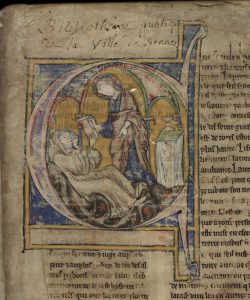
Rennes, Bibliothèque Municipale, MS 255, folio 1 recto. L’Estoire del saint Graal, Opening initial.
Photographer: Peter Scott. Image via Wikimedia Commons.

[Posted on 2 July 2022, with updates]

The Plan

This Episode in the online series of The Research Group Speaks complements and develops from Episode 4 (11 December 2021):

  • “How to be Indiana Jones in the Catalog:  Treasure and Power in/of the Bibliographical Record”.

As the next installment, this one about Tarzan and Brachiation applies the ideas and techniques explored then to some specific problems.

While we might informally call the subject of Episode 8 “How to be Tarzan in the Catalog”, the full title reveals the complexity and some appropriate exercises to strengthen skills for encountering the challenges — some of which might be unexpected.

The Aim and the Reach

Our presenter Linde M. Brocato, scholar-librarian, is Associate of the Research Group on Manuscript [and Other] Evidence, and long-time contributor to our events of various kinds. On her experience and expertise, see Linde Brocato, Linde M. Brocato, Curriculum Vitae, and Google Scholar.

She describes her plan for the Episode as an invitation, and an inviting challenge:

Tarzan-Moves of the Mind,
— or —
Brachiation in Research:

Going from Indiana Jones’ Big Picture to Effective Research Moves

Linde M. Brocato

This workshop / demonstration of how to leverage the power of the bibliographical catalog follows up on the presentation 11 December 2021,“How to be Indiana Jones in the Catalog:  Treasure and Power in/of the Bibliographical Record”, applying those ideas and techniques to specific bibliographic problems.

I invite submissions of irritating and evasive bibliographic problems for a demonstration of how I would go about solving them.  Let’s see if we can!

The earlier Episode, with a Handout with useful links, considered as ‘model’ the popular fictional figure of Indiana Jones (or Dr. Henry Walton “Indiana” Jones, Jr.) in the quest for a Holy Grail of some kind.

Now, the Episode turns to another “notable” character for inspiration and possible instruction in an authentic encounter of material evidence “in the wild”.

Brachiation in Research

After Indiana Jones, this Episode turns to another imaginary figure, larger perhaps than life, and evocative as can be:  Tarzan in one form and another.

Color cover of the book Tarzan of the Apes, written by Edgar Rice Burroughs and published in 1914. Image Public Domain via Wikimedia Commons.

For example, the fabulous character created by Edgar Rice Burroughs, starting with a magazine publication in 1912, Tarzan (John Clayton II, Viscount Greystoke) had a feral upbringing and an intricate, conflicted, introduction to ‘civilization’, before choosing to return to the wild (in whatever forms) — with heroic encounters. Many films, among other media, ensued, successfully to promulgate, expand, and reinforce knowledge (or the like) about this mythical creature, as a foil or embodiment of the situation of the individual in (or against) the prevailing general cases or standards.

With this resonant model, what might we discover in the wilds — or a hitherto neglected or ill-tended wilderness — to be found in the catalog (however defined)?

Some of our earlier blogposts have expressed grumbles about the standardization of catalog descriptions, notably where WorldCat lumps together multiple cases of individual sets of various Portfolios, with specimen manuscript and printed leaves, assembled from dismembered books by Otto Ege.  See, for example, More Discoveries for ‘Otto Ege Manuscript 61″.

We look forward to learning more about the skills of Brachiation, and how to exercise as well as to develop and deploy them, when we find ourselves in the Catalog(ue) — and in the world of exploring books and related written materials of whatever kind or unkind.

This Episode engages in conversation not only with other Episodes of The Research Group Speaks:  The Series, but also with other sessions in our RGME events.  Notable among them are the examinations of “Catalogs, Metadata, and Databases” in that series as well as in our 2022 Spring and Autumn Symposia on “Structured Knowledge”, whose theme was designed and inspired by Linde Brocato.

Send Suggestions for Bibliographical Problems to Explore

Please let us know if you wish to attend this Episode and if you have specific bibliographic wishes on your To Do List.  If so, please contact director@manuscriptevidence.org.

*****

[Update:

Soon after the event, there appeared a news story about a discovery which Linde mentioned in the University of Miami Libraries — discoveries by a new member of staff, Catherine Steele, bringing to light not only one, but two, important books.

  • “Valuable Treasures Unearthed in the University’s Special Collections”.

Among the findings was a sketch in a book at the University of Miami Otto G. Richter Library determined to be a drawing by Mexican muralist Diego Rivera. . . . It was owned by Andy Warhol, the famous artist, and then sold to Jay Jensen, a University of Miami alumnus and former actor who taught drama at Miami Beach Senior High School for many years. Jensen donated the book to the University.

The next discovery, only a few days later, “was a green cloth tome of ‘Leaves of Grass’ signed by the author, American poet Walt Whitman, which was published in 1882″.

Recognized for what they are, they can tell their stories more clearly.

“These treasures, and others housed by Special Collections, provide many opportunities for students and scholars to do research and delve deeper into areas of study such as art, history, and literature”, [Linde M.] Brocato pointed out.

“This collection is heavily used for teaching and that is why you want to have these kinds of books.”

There is a special excitement when a user encounters a book like Whitman’s and the one with the Rivera sketch, Brocato explained. “Once you have opened it up there is a physical engagement. It almost jumps out at you.”

We know the feeling.

*****

More Episodes are in hand and in preparation.  See The Research Group Speaks:  The Series.

Do you have suggestions for subjects?  Please let us know.  Please leave your Comments below, Contact Us, and visit our FaceBook Page.  We look forward to hearing from you.

Lisbon, Museu Nacional de Arte Antiga: The mid 15th-century Saint Vincent Panels, attributed to Nuno Gonçalves. Image (https://upload.wikimedia.org/wikipedia/commons/3/3a/Nuno_Gon%C3%A7alves._Paineis_de_S%C3%A3o_Vicente_de_Fora.jpg) via Creative Commons.

*****

Tags: Bibliographical Records, Brachiation, Catalogs & Metadata & Databases, Indiana Jones, Tarzan
No Comments »

« Older Entries
Newer Entries »
  • Top
©2024 Research Group on Manuscript Evidence.


is proudly powered by WordPress. WordPress Themes X2 developed by ThemeKraft.