
Episode 27. “Catalog(u)ing Collections and Materials”
July 10, 2026 in Announcements, Early-Printed Books, History of Printing, Manuscript Studies, Research Group Episodes for The Research Group Speaks, Research Group Speaks (The Series)
“The Research Group Speaks”
Episode 27
Saturday 25 July 2026
“Catalog(u)ing Collections and Materials:
Processes, Challenges, Requests, and Opportunities”
Featuring a Report on Work
by David L. DiLaura
Part 1 in a series on
“Catalog(u)ing for Everyone”
Part 1 of a Series
[Posted on 11 July 2026]
By request, we explore the subject of catalogues and cataloguing (or catalogs and cataloging). Those of us with experience with making or using catalogues (traditional, digital) of original materials, of whatever kind (languages, genres, etc.), might wish to learn from each other’s perspectives. For example, we in the RGME continue to respond to conversations about descriptive catalogues of manuscripts, documents, printed materials, as we reflect upon “best practices,” wishes, and projects (individual, institutional, and collective).
The formats and long-term results for ‘catalogues’ and ‘catalogs’ differ, and deserve attention and respect in their own terms and for their different purposes. ‘Catalogues’ are works of scholarship by individuals, published in printed form. ‘Catalogs’ are digital items, as the work of many individuals, and can be updated as more information becomes available. The latter can have a fragility, as with the disruptions to the British Library database.
The Plan
An informal roundtable gathers participants who engage in cataloguing materials (such as their own or others’ collections), in consulting catalogues (online, in print) and metadata describing those materials or indicating features thereof, and in pursuing research about them.
We’ll compare notes.
The Prospects
As with our series of Episodes and Symposium Sessions on “Catalogues, Metadata, and Databases,” this roundtable may well lead to a series of Episodes and Sessions. For a precedent:
- “Catalogs, Metadata, and Databases: Part I
- Session on “Catalogs, Metadata, and Databases, Part II” in the 2024 Spring Symposium on “Structures of Knowledge”
- Session on “Catalogs, Metadata, and Databases, Part III” in the 2024 Autumn Symposium on “Supports for Knowledge”
- Catalogs, Metadata, and Databases: A Handlist of Links
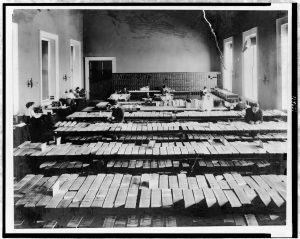
Card Division in the Library of Congress, Washington, D.C. Photograph circa 1900-1920. Image Public Domain.
Renewing our attention and explorations, we launch a Series on Catalog(u)es and Catalog(u)ing. It is dedicated to a subject of perennial interest — which inevitably has evolving approaches, not least as some goalposts have a habit of moving, as conditions or constraints of digital resources move forward or backward, and as research methods, approaches, and requirements might change or expand. For our series, panelists and speakers may include:
- Mildred Budny, David DiLaura, Hannah Goeselt, Beppy Landrum Owen, and others
For the plan, we quote our Associate, Jennifer Larson:
I love the concept of “Catalog(u)ing for Anyone.” It strikes me that a key difference between institutional cataloging and individual is that the institutional kind strives to meet a set of external criteria, formats and goals, while the individual kind is by nature flexible and the goal is to meet the needs of the collector. So it is an interesting question where they connect and cross-fertilize.
Do you wish to join us and contribute your observations, perspectives, questions, and requests? Please let us know.
To Start the Series
For Episode 27, David L. DiLaura will speak about his experiences in catalog(u)ing. We look forward to hearing him “share his vision of the importance of collectors not only making catalogs but sharing them with the public and preserving the information so that it is not lost.”
To set the stage, after a brief introduction to the series, David will talk about his experiences in creating his substantial catalogue, for which he both expertly wrote the text and professionally made all the photography.
David L. DiLaura
Bibliotheca Opticoria, 1475–1925:
A Library of the History of our Understanding of Light and Vision
(Printed for the author, 2021)

Front Cover Title: Bibliotheca Opticoria, 1475-1925, by David L. DiLaura.
This work documents his own collection, assembled over time, and records significant discoveries. The illustrated catalogue gives us the opportunity to look over his shoulder, as it were, as he observes the books, one by one, from the points of view of an expert.
Following this presentation, we may turn to a discussion about cataloguing and its processes, challenges, results, and desiderata — from the perspectives of makers and users.
Next, David will describe the stage which followed the publication of his printed catalogue, and that is a turn to digital format and access. Thus he will describe and illustrate the visionary online project BookPageant, which now showcases collections of several owners, including David’s Biblioteca Opticoria and some RGME Associates’ collections or highlights. For example, we celebrate the generous demonstrations of materials for Jennifer Larson’s Biblioteca Minuscula and Beppy Landrum Owen’s Eine kleine Ausstellung.
Landing Page

David L. DiLaurea’s BookPageant.net: landing page (screenshot 20 July 2026)
Instructions for Navigating the Site
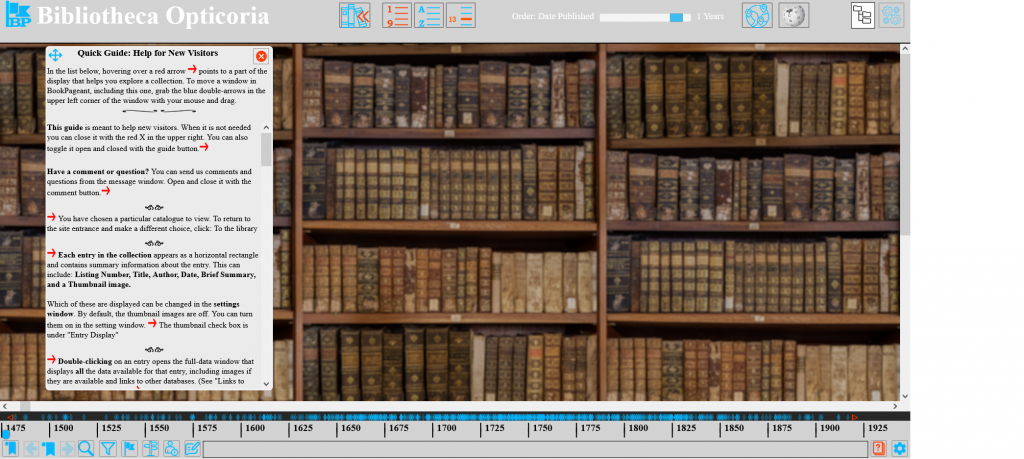
David L. DiLaurea’s BookPageant.net: Instructions page for Bibliotheca Opticora (Screenshot on 24 July 2026)
Opening Page for Bibliotheca Opticoria on BookPageant.net
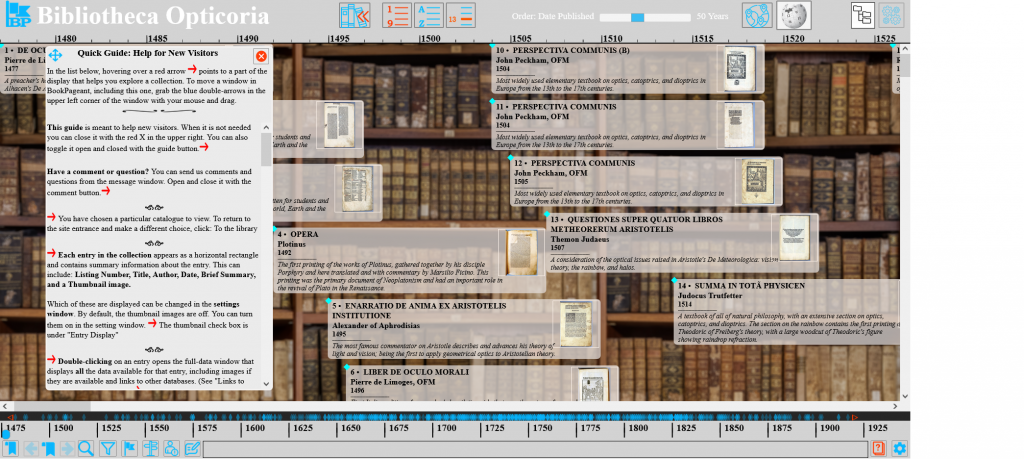
David L. DiLaurea’s BookPageant.net: Opening page for Bibliotheca Opticora (Screenshot on 24 July 2026)
We will round out the session with a discussion, for which we welcome questions, feedback, and requests.
See you at the Episode!
Registration
See the RGME Eventbrite Collection and its Portal for this Episode
Images
The RGME’s interest in catalog(u)ing materials to provide improved access, guided by experts’ research, for readers seeking to learn about them, goes back a long way, even before the rise of digital access. Our commitment to the task and goal is manifested not only in this new series but also in the RGME co-publication of the 2-volume Illustrated Catalogue which emerged from our initial multi-year research project at Corpus Christi College, Cambridge. See
- The Illustrated Catalogue (1997)
Front Cover
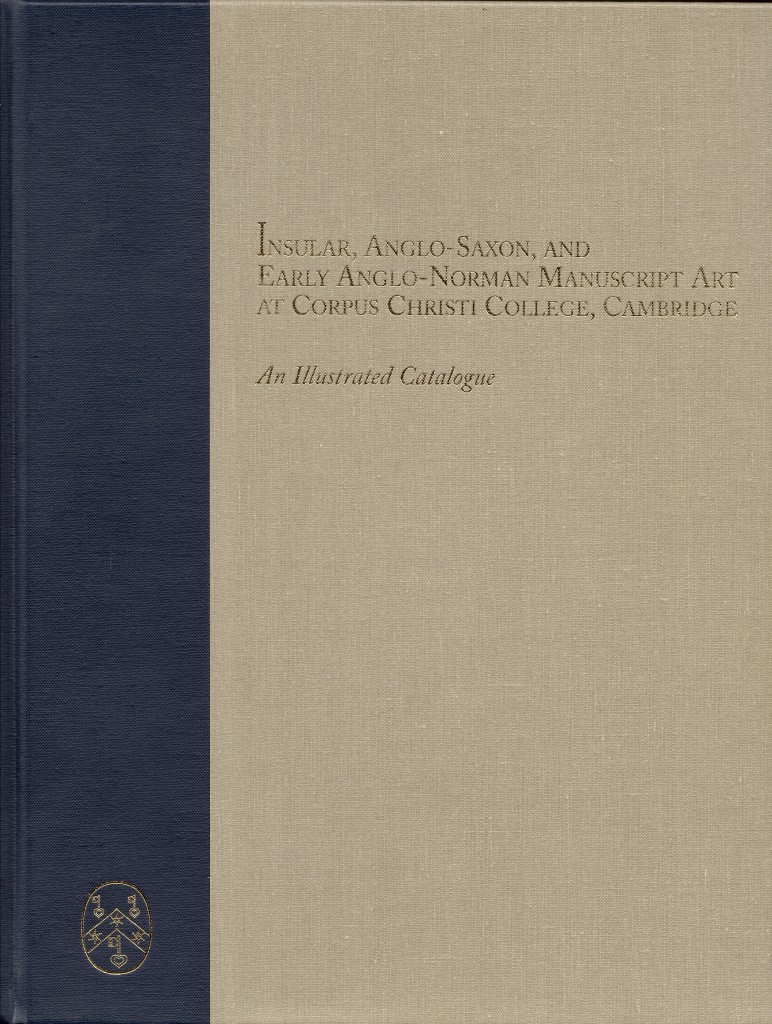
An Illustrated Catalogue, Front Cover Volume II: Plates
Spine View

Spine view of 2-volume Illustrated Catalogue co-published by the RGME, with Volume 1 of Text and Volume 2 of Plates.
***********