• News
    • News & Views
    • RGME Activities for 2024 and 2025
    • Around & About with the RGME
    • Reviews
    • Highlights
  • Blogs
    • Manuscript Studies
      • Manuscript Studies: Contents List
    • International Congress on Medieval Studies
      • Abstracts of Congress Papers
        • Abstracts of Papers Listed by Author
        • Abstracts of Papers Listed by Year
  • About
    • Mission
    • Who We Are
      • Officers, Associates & Volunteers
      • RGME Committees
      • Friends of the Research Group on Manuscript Evidence
    • Policies & Statements
      • RGME Privacy Policy Statement
      • RGME Intellectual Property Statement & Agreements
    • People
      • Mildred Budny — Her Page
      • Adelaide Bennett Hagens
    • Activities
      • Events
      • Congress Activities
        • Sponsored Conference Sessions (1993‒)
          • Panels at the M-MLA Convention (from 2016)
        • Co-sponsored Conference Sessions (2006‒)
    • History
      • Seals, Matrices & Documents
      • Genealogies & Archives
    • Contact Us
  • Bembino
    • Multi-Lingual Bembino
    • RGME Bembino: Resources
  • Congress
    • Sponsored Conference Sessions (1993‒)
    • Co-sponsored Conference Sessions (2006‒)
    • Abstracts of Congress Papers
      • Abstracts Listed by Author
      • Abstracts Listed by Year
    • Kalamazoo Archive
    • Panels at the M-MLA Convention (2016-2019)
      • Abstracts of Papers for the M-MLA Convention
      • Panels at the M-MLA Convention (from 2016)
  • Events
    • RGME Activities for 2024 and 2025
      • 2023 Activities and 2024 Planned Activities
    • Seminars, Workshops, Colloquia & Symposia (1989–)
      • Seminars on ‘The Evidence of Manuscripts’
      • Symposia on ‘The Transmission of the Bible’
      • The New Series (2001-)
        • 2019 Anniversary Symposium Program: The Roads Taken
        • 2019 Anniversary Symposium Registration
        • 2019 Anniversary Symposium Registration Open
      • RGME Symposia: The Various Series
      • The Research Group Speaks: The Series
      • Meetings of the Friends of the Research Group on Manuscript Evidence
      • RGME Online Events
    • Abstracts of Papers for Events
      • Abstracts of Papers for Seminars on ‘The Evidence of Manuscripts’
      • Abstracts of Papers for Symposia, Workshops & Colloquia
    • Receptions & Parties
    • Business Meetings
    • Photographic Exhibitions & Master Classes
    • Events Archive
  • ShelfLife
    • Journal Description
    • ShelfMarks: The RGME-Newsletter
    • Publications
      • “Insular, Anglo-Saxon, and Early Anglo-Norman Manuscript Art at Corpus Christi College, Cambridge” (1997)
        • Mildred Budny, ‘Catalogue’
        • The Illustrated Catalogue (1997)
      • The Illustrated Handlist
      • Semi-Official Counterfeiting in France 1380-1422
      • No Snap Decisions: Challenges of Manuscript Photography
    • History and Design of Our Website
  • Galleries
    • Watermarks & the History of Paper
    • Galleries: Contents List
    • Scripts on Parade
    • Texts on Parade
      • Latin Documents & Cartularies
      • New Testament Leaves in Old Armenian
    • Posters on Display
    • Layout Designs
  • Donations and Contributions
    • RGME Donor Promise
    • 2023 End-of-Year Fundraiser for our 2024 Anniversary Year
    • 2019 Anniversary Appeal
    • Orders
  • Links
    • Catalogs, Metadata, and Databases: A Handlist of Links
    • Handlist of Resources for Manuscript Studies and Fragmentology
    • Manuscripts & Rare Books
    • Maps, Plans & Drawings
    • Seals, Seal-Matrices & Documents

  • News
    • News & Views
    • RGME Activities for 2024 and 2025
    • Around & About with the RGME
    • Reviews
    • Highlights
  • Blogs
    • Manuscript Studies
      • Manuscript Studies: Contents List
    • International Congress on Medieval Studies
      • Abstracts of Congress Papers
        • Abstracts of Papers Listed by Author
        • Abstracts of Papers Listed by Year
  • About
    • Mission
    • Who We Are
      • Officers, Associates & Volunteers
      • RGME Committees
      • Friends of the Research Group on Manuscript Evidence
    • Policies & Statements
      • RGME Privacy Policy Statement
      • RGME Intellectual Property Statement & Agreements
    • People
      • Mildred Budny — Her Page
      • Adelaide Bennett Hagens
    • Activities
      • Events
      • Congress Activities
        • Sponsored Conference Sessions (1993‒)
          • Panels at the M-MLA Convention (from 2016)
        • Co-sponsored Conference Sessions (2006‒)
    • History
      • Seals, Matrices & Documents
      • Genealogies & Archives
    • Contact Us
  • Bembino
    • Multi-Lingual Bembino
    • RGME Bembino: Resources
  • Congress
    • Sponsored Conference Sessions (1993‒)
    • Co-sponsored Conference Sessions (2006‒)
    • Abstracts of Congress Papers
      • Abstracts Listed by Author
      • Abstracts Listed by Year
    • Kalamazoo Archive
    • Panels at the M-MLA Convention (2016-2019)
      • Abstracts of Papers for the M-MLA Convention
      • Panels at the M-MLA Convention (from 2016)
  • Events
    • RGME Activities for 2024 and 2025
      • 2023 Activities and 2024 Planned Activities
    • Seminars, Workshops, Colloquia & Symposia (1989–)
      • Seminars on ‘The Evidence of Manuscripts’
      • Symposia on ‘The Transmission of the Bible’
      • The New Series (2001-)
        • 2019 Anniversary Symposium Program: The Roads Taken
        • 2019 Anniversary Symposium Registration
        • 2019 Anniversary Symposium Registration Open
      • RGME Symposia: The Various Series
      • The Research Group Speaks: The Series
      • Meetings of the Friends of the Research Group on Manuscript Evidence
      • RGME Online Events
    • Abstracts of Papers for Events
      • Abstracts of Papers for Seminars on ‘The Evidence of Manuscripts’
      • Abstracts of Papers for Symposia, Workshops & Colloquia
    • Receptions & Parties
    • Business Meetings
    • Photographic Exhibitions & Master Classes
    • Events Archive
  • ShelfLife
    • Journal Description
    • ShelfMarks: The RGME-Newsletter
    • Publications
      • “Insular, Anglo-Saxon, and Early Anglo-Norman Manuscript Art at Corpus Christi College, Cambridge” (1997)
        • Mildred Budny, ‘Catalogue’
        • The Illustrated Catalogue (1997)
      • The Illustrated Handlist
      • Semi-Official Counterfeiting in France 1380-1422
      • No Snap Decisions: Challenges of Manuscript Photography
    • History and Design of Our Website
  • Galleries
    • Watermarks & the History of Paper
    • Galleries: Contents List
    • Scripts on Parade
    • Texts on Parade
      • Latin Documents & Cartularies
      • New Testament Leaves in Old Armenian
    • Posters on Display
    • Layout Designs
  • Donations and Contributions
    • RGME Donor Promise
    • 2023 End-of-Year Fundraiser for our 2024 Anniversary Year
    • 2019 Anniversary Appeal
    • Orders
  • Links
    • Catalogs, Metadata, and Databases: A Handlist of Links
    • Handlist of Resources for Manuscript Studies and Fragmentology
    • Manuscripts & Rare Books
    • Maps, Plans & Drawings
    • Seals, Seal-Matrices & Documents

Log in

Archives

Featured Posts

2026 International Congress on Medieval Studies: Program
Episode 24. “Life with Books” (Interview with John Windle)
Announcing the Launch of RGME Bembino WP
2026 RGME Colloquium at The Grolier Club: Report
Medieval Missal Fragment as Early-Modern Cover
The Weber Leaf from Ege MS 61
"Bembino" Booklet Cover
Episode 23. “Meet RGME Bembino: Facets of a Font”
2026 RGME Colloquium on “Transformations & Renewals” at The Grolier Club
2026 Theme of the Year: “Transformations and Renewals”
A Leaf with Patchwork from the Saint Albans Bible
A Sister Leaf from a Miniature Latin Vulgate Bible
A Little Latin Vulgate Bible Manuscript Leaf in Princeton
J. S. Wagner Collection. Leaf from from Prime in a Latin manuscript Breviary. Folio 4 Verso, with part of Psalm 117 (118) in the Vulgate Version, set out in verses with decorated initials.
2026 Annual Appeal
Episode 22: “Encounters with Local Saints and Their Cults”
Private Collection, Ege's FBNC Portfolio, Dante Leaf, Verso, Detail. Reproduced by Permission.
2025 RGME Autumn Colloquium on Fragments
Workshop 8: A Hybrid Book where Medieval Music Meets Early-Modern Herbal
2025 RGME Autumn Symposium on “Readers, Fakers, and Re-Creators of Books”
RGME Workshops on “The Evidence of Manuscripts, Etc.”
2025 International Medieval Congress at Leeds: RGME Program
Episode 21. “Learning How to Look”
2025 International Congress on Medieval Studies: Program
2025 RGME Visit to Vassar College
Two Leaves in the Book of Numbers from the Chudleigh Bible
Delibovi on Glassgold on Boethius: A Blogpost
Ronald Smeltzer on “Émilie du Châtelet, Woman of Science”
2025 Spring Symposium: “Makers, Producers, and Collectors of Books”
Starters’ Orders
The Weber Leaf from the Saint Albans Bible
Workshop 4. “Manuscript Fragments Compared”
Episode 20. “Comic Book Theory for Medievalists”
Episode 19: “At the Gate: Starting the Year 2025 at its Threshold”
Favorite Recipes for Lemonade, Etc.
RGME Visit to the Lomazow Collection: Report
2024 Autumn Symposium: “At the Helm”
A Latin Vulgate Leaf of the Book of Numbers
The RGME ‘Lending Library’
Florence, Italy, Ponte Vecchio from Ponte alle Grazie. Photo: Ingo Mehling, CC BY-SA 4.0 , via Wikimedia Commons
Episode 17. “RGME Retrospect and Prospects: Anniversary Reflections”
2024 Anniversary Symposium: The Booklet
Jesse Hurlbut at the Bonneville Salt Flats, Utah. Photograph Jesse Hurlbut.
Episode 16: An Interview with Jesse D. Hurlbut
To Whom Do Manuscripts Belong?
Kalamazoo, MI Western Michigan University, Valley III from the side. Photograph: David W. Sorenson.
2024 International Congress on Medieval Studies: Report
2024 Spring Symposium at Vassar College
Puente de San Martín: Bridge with reflection over the River Targus, Toledo, Spain.
2024 Grant for “Between Past and Future” Project from The Gladys Krieble Delmas Foundation Research Libraries Program
2024 Anniversary Symposium in Thanks to Jesse Hurlbut: Program

You are browsing the Blog for

2024 Spring Symposium at Vassar College

October 16, 2023 in Announcements, Conference, Conference Announcement, Manuscript Studies, Reception, RGME Symposia, Uncategorized

2024 RGME Spring Symposium
at Vassar College

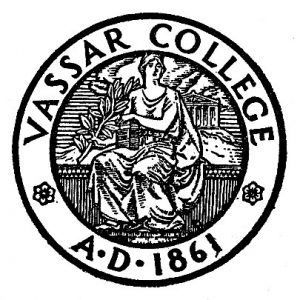
Vassar College: Current Seal.

“Between Past and Future:
Building Bridges
between Special Collections
and Teaching for the Liberal Arts”

Friday to Sunday, 18 to 21 April 2024

(hybrid, with both in-person events
and online participation by Zoom)

Celebrating the Acquisition of the
Nicholas B. Scheetz Collection
of Medieval and Renaissance Manuscripts

[Posted on 16 October 2023, with updates]

Update 15 April 2024:  Now see the updated Program (below).
Update 16 April:  For registrations, now see Late Registrations (below)

2024 RGME Spring Symposium at Vassar College:
“Between Past and Future:
Building Bridges
between Special Collections and Teaching for the Liberal Arts”
Friday to Sunday, 19 to 21 April 2024
https://library.vassar.edu/…/2024-RGME-Spring-Symposium…
(hybrid, with both in-person events and online participation by Zoom)

*****

For 2024, the Research Group on Manuscript Evidence celebrates an anniversary. Our Theme for the Year is “Bridges”. See “Bridges” for our 2024 Anniversary Year.

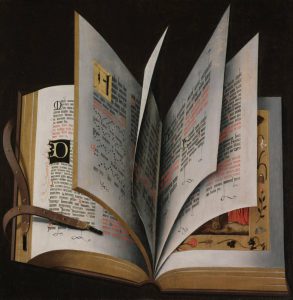
Vassar College, Frances Lehman Loeb Art Center, “The Open Missal”. Ludger tom Ring the Younger, circa 1570.

Among our celebrations, the RGME continues with its Symposium Series. With a Spring Symposium at Vassar College, in Poughkeepsie, New York, the RGME Symposia return to an in-person event, this time as a hybrid event also with online participation.

In 2023, the RGME began to return to in-person events with its activities at the partly-hybrid 58th International Congress on Medieval Studies. This step came after the cancellation of the Congress in 2020 and an online Congress in both 2021 and 2022. For 2024, our Symposia join this return, with the invitation to hold our Spring Symposium at Vassar College.

For some of our Symposia, whether in-person at Princeton University in 2019 (and intended there in 2020), or online by Zoom in 2022, 2023, and 2024, our RGME Associates at Vassar have given presentations about their work, the Library, and Special Collections. See, for example,

  • 2019 Anniversary Symposium Report: The Roads Taken
  • 2022 Spring and Autumn Symposia
  • 2023 Spring and Autumn Symposia
  • 2023 Autumn Symposium “Between Earth and Sky”
  • 2023 Spring Symposium “From the Ground Up”
  • 2024 Anniversary Symposium in Thanks to Jesse Hurlbut

Now we visit Vassar to join the celebrations for a new catalogue and exhibition of Medieval and Renaissance Books in the collection. We do so by gathering scholars, librarians, curators, cataloguers, collectors, vendors, teachers, and others to participate in an RGME Symposium which showcases the materials in the light of expertise and appreciation dedicated to them.

The choice of the Program and other components of the Symposium is guided by the Vassar/RGME Symposium Advisory Committee, and by other advisers both at Vassar and elsewhere. The Advisory Committee comprises

  • Ronald Patkus,
  • Elizabeth Lastra,
  • Mildred Budny, and
  • Barbara Williams Ellertson.

Note on the Image

Poughkeepsie, New York, Vassar College, Frances Lehman Loeb Art Center. The Open Missal (circa 1570) attributed to Ludger tom Ring the Younger (1522-1582). Image via “The Open Missal”.

Read the rest of this entry →

Tags: Early Printed Books, Frances Lehman Loeb Art Center, Frederick Ferris Thompson Memorial Library, History of Bridges, Les Enluminures, Manuscript studies, Manuscripts & Early Printed Books, Nicholas B. Scheetz Collection, RGME Anniversary Year, RGME Symposia, Symbols in Vassar Architecture, Vassar College, Vassar College Library, Vassar College Special Collections and Archives
No Comments »

Grant from The Gladys Krieble Delmas Foundation for the RGME Library & Archives in 2023

October 16, 2023 in Announcements, Manuscript Studies, Uncategorized

Announcement

2023 Grant from
The Gladys Krieble Delmas Foundation
Research Libraries Program
for Phase 1 for the RGME Library & Archives

“Building the Plan for ‘The Plan’ “

Logo of the Research Group on Manuscript Evidence (colour version)

RGME Logo in Color (2014).

Gratefully we announce that The Gladys Kreible Delmas Foundation, through its Research Libraries Program, has awarded the Research Group on Manuscript Evidence (RGME) a grant for 2023 to begin the process of structuring our Library & Archives as a collection.

The grant is awarded through the Research Libraries Program, for which “the overall objective . . .  is to improve the ability of research libraries to serve the needs of scholarship in the humanities and the performing arts, and to help make their resources more widely accessible to scholars and the general public.”

Building the Plan

With this funding, the RGME undertakes a one-year planning stage to produce an initial survey of the collection and its records and to plan for its Records-Management overall.  This project, which would comprise Phase 1 of work on the collection long-term, has the task of “Building the Plan for Recording, Structuring, and Accessing the RGME Library & Archives”.

The scope and purpose of the work as a whole will permit us to address more holistically the structure, maintenance, and longevity of our collection.  We will do so, moreover, in ways concordant with best practices for preservation, cataloguing, access, and other responsibilities.

The beginning work for Phase 1 supported by this grant belongs within the cohesion of RGME activities on multiple fronts for this year’s overarching theme of “Materials and Access”, as are addressed in our corporate activities and explored throughout our scholarly events, meetings, and publications, such as our 2023 Spring and Autumn Symposia dedicated specifically to the theme.

The RGME has formed a Task Force to guide and oversee the funded work to build the plan for the collection and its records-management, wider access, and development.  Guided by shared experiences and expert advice, we look toward creating improved, structured ways — taking into account our characteristics, abilities, and needs as an organization — for preparing our resources for the future, new records, and improved access by scholars and others.

The project funded by The Gladys Krieble Delmas Foundation Grant will span the entirety of the 2023 calendar year, concluding with an end-of-the-year report and a formal initial plan for the RGME’s archives and library.  This project will leave the Research Group, which in 2024 celebrates a key anniversary, in surer knowledge of its past and increased, informed, preparation for its future.

A Grant Unprecedented in our History

Logo of the Research Group on Manuscript Evidence in Monochrome Version

The original RGME Logo in black-and-white (1989).

The RGME has never had a grant of this kind before.  During our history, first as an international scholarly society founded in England in 1989 (from a major research project on “Anglo-Saxon and Related Manuscripts” at the Parker Library of Corpus Christi College, Cambridge), then based at Princeton, New Jersey, since 1994, and now established there as a nonprofit educational organization (incorporated in 1999), our work has primarily focused on the activities in pursuit of our mission.

Formerly, grants from various sources have supported research projects on specific materials, or scholarly events such as our Symposia and Colloquia held in various centers, in the United States and elsewhere.  While those earlier grants have enabled activities pursuant to our mission, this grant from The Gladys Krieble Delmas Foundation fosters the very essence of both our pursuits and our products as an entity, which was incorporated “for the purposes of lectures, discussions, and other publications”.

The Plan for the Project

The aim is to address our existing, in-coming, and future records (physical as well as digital, born-digital, obsolete digital, and digitized) with a responsible program according to “best practices” for preserving, conserving, archiving, cataloguing, digitizing, and accessing these materials for research, teaching, publication, and related purposes.  Equally, we take into account the needs of conducting our work as a living entity, for which more records continue to emerge.

For this year’s Pilot Project, to span the full course of the year, we have appointed a Task Force to guide and oversee the process of the work, and to produce a final report at the completion of this stage, along with our report to The Gladys Krieble Delmas Foundation at the close of Phase 1.  The Task Force will remain in place to continue to provide guidance in a next phase as it emerges.

The grant for 2023 gives the Research Group the opportunity to purchase equipment to archive digital materials and facilitate off-site consultation, and archival supplies to stabilize physical materials.  The grant also provides financial support for conservation services, technical back-up for our online meetings, and outside expertise in audio-visual processing/editing to increase the usability and access of our collections for scholars and others.  Significantly, too, the grant enables the process of undertaking the first steps for preparing for circulation the store of recordings which have emerged from our online events (since 2021), but had to await such an opportunity.  These measured steps in the project stand alongside, and integrate carefully with, the on-going work of our corporate and program activities as a living entity building for our future work, beginning with our Anniversary Year in 2024.

The Way Forward

The Research Group on Manuscript Evidence is most grateful for the generosity of spirit, the model, and the financial support of The Gladys Krieble Delmas Foundation for this significant step in the continuing history of our organization, as we now turn to addressing the nature, characteristics, responsibilities, and research potential of our Library & Archives as a collection.  The Pilot Project in 2023 enables us to prepare the Plan to do so.

For information, please contact director@manuscriptevidence.org.

*****

Tags: 2023 Pilot Project for RGME Library & Archives, Records Management, Research Library Program Grant, RGME Library & Archives, The Gladys Krieble Delmas Foundation
No Comments »

Episode 15: Women Writers from the Medieval to Post-Modern Periods

October 5, 2023 in Manuscript Studies, Uncategorized

The Research Group Speaks
Episode 15

Saturday 20 January 2024 online
1:00–2:30 pm EST (GMT-5) by Zoom

“Women Writers
from the Medieval to Post-Modern Periods:
Fiction and/or Reality,
from Literary Narratives to Practical Cookery”

Jackie Reed
Linda Civitello
Hannah Goeselt

[Posted on 5 October 2023, with updates. Registration is now open. See below.]

We invite you to attend Episode 15 in our series:

  • The Research Group Speaks
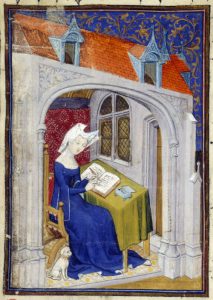
London, British Library, Harley MS 4431, fol. 4r.Christine de Pisan sits at work writing in an interior accompanied by a dog. France (Paris), c. 1410 – c. 1414. Image via https://blogs.bl.uk/digitisedmanuscripts/2013/06/christine-de-pizan-and-the-book-of-the-queen.html.

London, British Library, Harley MS 4431, fol. 4r. Christine de Pizan sits and writes, accompanied by a dog.

This time, some scholars, teachers, and writers will speak about their interests, long-term work, and current projects concerned with the writings of women authors across a long span of time. Our focus is primarily “women’s work” of many kinds, which might, of course, include contributions to their genres by men and other authors’ whose identities have become unknown. Our attention is drawn to creativity, resourcefulness, senses of purpose, convictions, and instructions for potentially reproducible results in the fields of Food for Thought and Food itself.

Reflecting womens’ roles, opportunities, constraints, and resourcefulness, the writings cover a wide range of spheres, subjects, approaches, and styles. The works range from literary creations to recipes for cookery. Sometimes they have illustrations of their authors, readers, and authorial or literary occupations.

The “genre” of writings by women authors, often underrated or outright ignored, has multiple manifestations, of course, across many periods of time, cultures, languages, subjects, and points of view.  To name a few cases, both Western and Eastern:

  • Women Medieval Writers: Women Writers of the Middle Ages, Renaissance, Reformation.
  • Women Writers in Medieval England
  • Category: Women Writers (Medieval)
  • Category: Women Writers (Modern Period)
  • Category: Women Writers by Historical Period

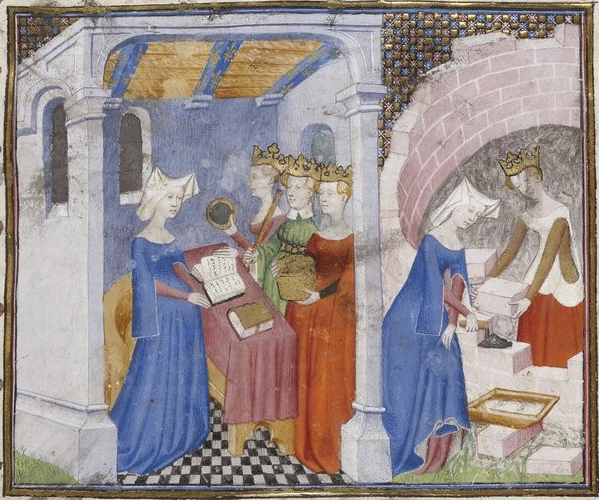
Christine de Pizan, La cité des dames, in the copy in Paris, Bibliothèque nationale de France, Département des Manuscrits, Français 1179, folio 3 recto. Image Public Domain via gallica.bnf.fr.

Note on the Image
Headpiece illustration for Christine de Pizan, La cité des dames, in the copy in Paris, Bibliothèque nationale de France, Département des Manuscrits, Français 1179, folio 3 recto.  Image via gallica.bnf.fr.
Read the rest of this entry →

Tags: Ali Smith, Book History, Christine de Pizan, Cookbooks, Early Modern Women Writers, Emily Dickinson, Florence Nightengale, History of Recipes, Jane Austen, Louisa May Alcott, Lydia Maria Child, Manuscript Cookbooks Survey, Manuscript studies, Medieval Women Writers, Modern Women Writers, Narrative Structures, Natalie Zemon Davis, Postmodern Women Writers, Sarah Josepha Hale, The Research Group Speaks, Women Writers
No Comments »

Episode 14: “Translating the Latin Hermetica by Committee”

September 19, 2023 in Manuscript Studies, Uncategorized

The Research Group Speaks
Episode 14
Sunday 19 November 2023 online
1:00–2:30 pm EDT (GMT-5) by Zoom

“Translation by Committee:
The Latin Hermetica“

David Porreca, Dan Attrell, and Brett Bartlett

[Posted on 18 September 2023, with updates]

We invite you to attend Episode 14 in our series.

The Series:

  • The Research Group Speaks

The Eventbrite Portal for this Series:

  • The Research Group Speaks

Meet the Committee

This time, a team of scholars — including two of our RGME Associates — will speak about their current project of translating a complex occult text from Latin to English.

They are:  The Teacher, his Former Student, and his Student.

  • David Porreca
  • Dan Attrell (see also Congratulations and Podcasts with Dan Attrell)
  • Brett Bartlett (see also Brett Bartlett)

Over the years, David Porreca has organized or co-organized Sessions for the RGME and our frequent co-sponsor, the Societas Magica, at the annual International Congress on Medieval Studies. He has presented Papers for them or other Sessions which we have sponsored or co-sponsored.  He has contributed regularly to our online Symposia and Episodes of “The Research Group Speaks”.  A good number of his students and former students have contributed, and continue to contribute, to RGME activities, including our events and work behind the scenes enabling them.

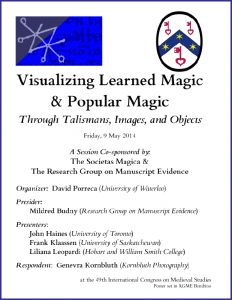
Poster for "Visualizing Learned & Popular Magic" Congress Session (May 2014)Some of his contributions:

  • Porreca (2023 Congress)
  • Porreca (2022 Congress)
  • Porreca (2021 Congress)
  • Porreca (2020 Congress)
  • Porreca (2018 Congress)
  • 2023 International Congress on Medieval Studies Program
  • 2022 International Congress on Medieval Studies Program
    (Etc.)

David serves on the RGME Editorial Committee, where his experienced advice about texts and handling them effectively for publication comes in handy.

Dan Attrell also has presented reports on his work for the RGME.

  • Attrell (2018 Congress)

Brett Bartlett, when we first met years ago in Kitchener, Ontario, demonstrated quick and erudite acumen when, almost at once, he pointed out a small mistake in the Old English portion of our then-new publication of Multi-Lingual Bembino; it was swiftly corrected in a next issue, which we, as the publisher, could make very soon.

In this context, we will be able to see that, when it comes to the demands of (and for) the translations, “Not Two but Three [Talking] Heads are Better Than One”.

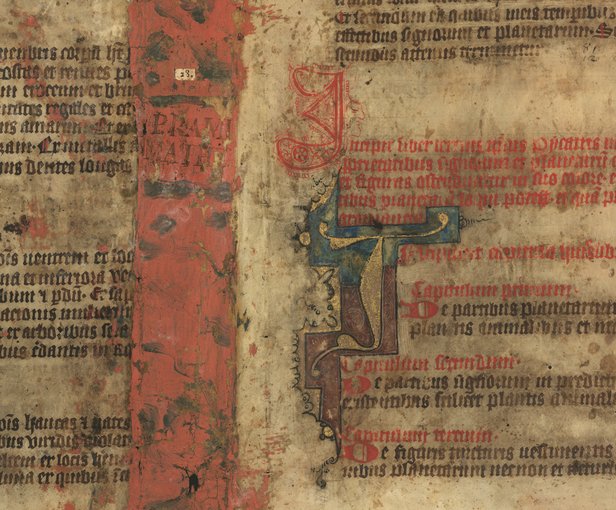
Martin, Slovakia, Slovak National Library, Fragment of the Picatrix, circa 1400 CE. Image Public Domain via Wikimedia Commons.

Martin, Slovakia, Slovak National Library, Fragment of the Picatrix, circa 1400 CE. Image Public Domain via Wikimedia Commons.

Read the rest of this entry →

Tags: History of Magic, History of Translation, Latin Hermetica, Manuscript studies, Marsilio Ficino, Textual Studies, The Research Group Speaks
No Comments »

Episode 13: Bridget Whearty on “Digital Codicology”

September 4, 2023 in Interviews, Manuscript Studies, Research Group Episodes for The Research Group Speaks, Research Group Speaks (The Series), Uncategorized

The Research Group Speaks
Episode 13

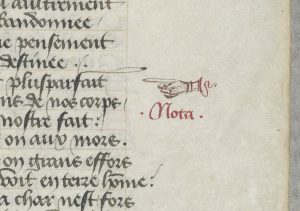
Decretum Gratiani plus sleeved Manicule, via gallica.bnf.fr from Bibliothèque municipale de Rouen. Ancien fonds, Ms E 1a, folio 195v.

Saturday 21 September 2023 online
12:00–1:30 pm EDT (GMT-4) by Zoom

“Making Digital Codicology:
Research and Writing in Community”

Bridget Whearty

[Posted on 4 September 2023, with updates]

We invite you to attend Episode 13 in our series.

  • The Research Group Speaks

The Eventbrite Portal for this Series:

  • The Research Group Speaks

To register for This Episode:

  • Episode 13. Bridget Whearty

Bridget Whearty: Faculty Profile via https://www.binghamton.edu/english/faculty/profile.html?id=bwhearty.

Episode 13 showcases the work of Bridget Whearty, Associate Professor of English, General Literature and Rhetoric at Binghamton University, State University of New York (see her Curriculum Vitae).  She will speak informally about her work and research interests, focusing upon her recent book on Digital Codicology: Medieval Books and Modern Labor (Stanford University Press, 2022).  About the work, see, for example, her observations for the Coding Codices Podcast.

We learned about her work toward the book in an earlier stage, well before it appeared in print, in 2018, when we met as audience members at the 11th Annual Symposium of the Schoenberg Institute for Manuscript Studies. It was inspiring to hear her then , and to have the opportunity to meet and talk more — as it happened, walking to the conference and in the parking lot as we were both preparing to leave. I found this meeting wonderfully memorable. Our subjects of discussion then included not only books, but also cats and cooking.

Fast forward.  As the RGME began its series of online Episodes in 2021, and their momentum came into place across the series, which now reaches Number 13, the suggestion that we invite Bridget came naturally.  Responding to the suggestion, I made the invitation, Bridget generously responded, we explored what she might like to focus on — and so, now, we welcome her gladly to our series.

We look forward to hearing more about Bridget’s quest, along with its challenges, discoveries, and recognition of the people behind the books in whichever ways they become known to us — by presenting themselves, in one and/or other ways, materially or by representatives, including digitally.

Come to think of it, that meeting of the people in (or of) the books is what we try to do with medieval and other books, only without being able to meet them in person . . .

Now is our chance with Bridget, and, through her, others who work behind the scenes in the study and presentation of books for our inspection, study, instruction, reflection, and questions.

You can register for this event by our RGME Eventbrite Collection. To register for Bridget’s Episode 13, visit this portal.  Information below.

Read the rest of this entry →

Tags: Anonymous Hands, Anonymous Labor, Bibliothèque nationale de France MS 12476, Digital Codicology, Digital Codicology The Book, digitization of manuscripts, Digitizers' Hands, Henry Noel Humphreys' Specimens of Illuminated Manuscripts, Johanna Green, Le Champion des Dames, Manuscript studies, Medieval manuscripts, Research and Community, Stanford University Libraries MSS Codex MO379CB, The Research Group Speaks
No Comments »

A 13th-Century Pocket Vulgate Bible at Smith College

August 13, 2023 in Manuscript Studies

A Thirteenth-Century Pocket Vulgate Bible
at Smith College:
“The Dimock Bible”
(Mortimer Rare Book Collection MS 240)

 Hannah Goeselt
RGME Guestblogger

[Posted on 30 October 2023]

Note:  For this Blogpost, we welcome Guest Blogger, Hannah Goeselt, who reports on a manuscript which first caught her attention when examining manuscripts at Smith College in Northampton, Massachusetts, as part of her undergraduate studies.  Now, having recently finished an MS at Simmons University in Library and Information Science (Cultural Heritage Informatics), she offers a guided tour to this book deserving wider attention and further research.  We thank her for her contribution and invite you to join this guided tour.

As part of the tour, Hannah showcases the manuscript for its interest in its own right, and also, as she says, “to use it as an example of how one might go about using some of the online research tools out there to assist in manuscript studies”.  Accordingly, she includes “everything from the De Ricci census, Conway–Davis directory, Schoenberg database, and Digital Scriptorium (with Smith’s own consortium database)”, as well as the Grolier Club, “which played an important part in assessing the content of the auction catalogs mentioned in Schoenberg”. Brava!

Over to you, Hannah . . .

Our Guest Manuscript:
Mortimer Rare Book Collection MS 240

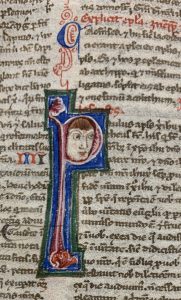
Smith College, MRBC MS 240, fol. 191v. Historiated initial for the Pauline Epistle to the Ephesians, with outward-looking male face. Photography by Hannah Goeselt.

While taking survey of material pertaining to manuscripts from Otto F. Ege (1888–1951) in collections across the campus of Smith College, I was drawn to this thirteenth-century Pocket Bible, with the pressmark “MRBC MS 240″, and thought it’d be worth initiating a sort of “meet-and-greet” with this codex. I have a fondness for 13th-century Latin Vulgate Bibles, often noted for their similarities and their contribution to forming our current concept of the Bible’s format.  And yet within all that seemingly mass uniformity, on second glance they all contain their own unique qualities and histories.

At the Mortimer Rare Book Collection (MRBC) at Neilson Library, several jewels of medieval manuscripts among keep this book company, alongside a host of fragments.  Notable examples are

  1. a large-scale Vulgate Bible written in a single column layout,
  2. a lovely mid-thirteenth-century French Psalter with early-modern devotional marginalia,
  3. a Book of Hours associated with Philip the Good, Duke Philip III of Burgundy (1306—1467, duke from 1419).

All three of these have featured on posts in Peter Kidd’s blog on Medieval Manuscripts Provenance:

  1. “A 13th-Century Bible from Beauvais at Smith College”
    https://mssprovenance.blogspot.com/2014/12/a-13th-century-bible-from-beauvais-at.html
  2. “A French 13th-Century Psalter at Smith College”
    https://mssprovenance.blogspot.com/2015/07/a-french-13th-century-psalter-at-smith.html
  3. “An Unrecognised Book of Hours Made for Philip the Good [Part I]”
    https://mssprovenance.blogspot.com/2015/12/an-unrecognised-book-of-hours-made-for.html

They, along with many others, are available on the Digital Scriptorium website.  However more recently the collections have also been added to the Five College Compass website, where MS 240 has joined them with a full digitization:

  • https://compass.fivecolleges.edu/object/smith:1365930 (apart from its folio 1r, which I show here).

For users of the Smith College Libraries database (Students, Faculty, Staff, Community Borrowers), this is internal Permalink for the manuscript.

Let us, for the duration of this post, call it the Dimock Bible, as referred to in the Directory of Collections in the United States and Canada with Pre-1600 Manuscript Holdings (pages 52 and 62) by Melissa Conway and Lisa Fagin Davis, and due to the family name associated with its recent ownership. Within the library record, we see that the cataloger of this manuscript has done wonderful work in linking the manuscript to two very important sources that will help us in our search for more information.

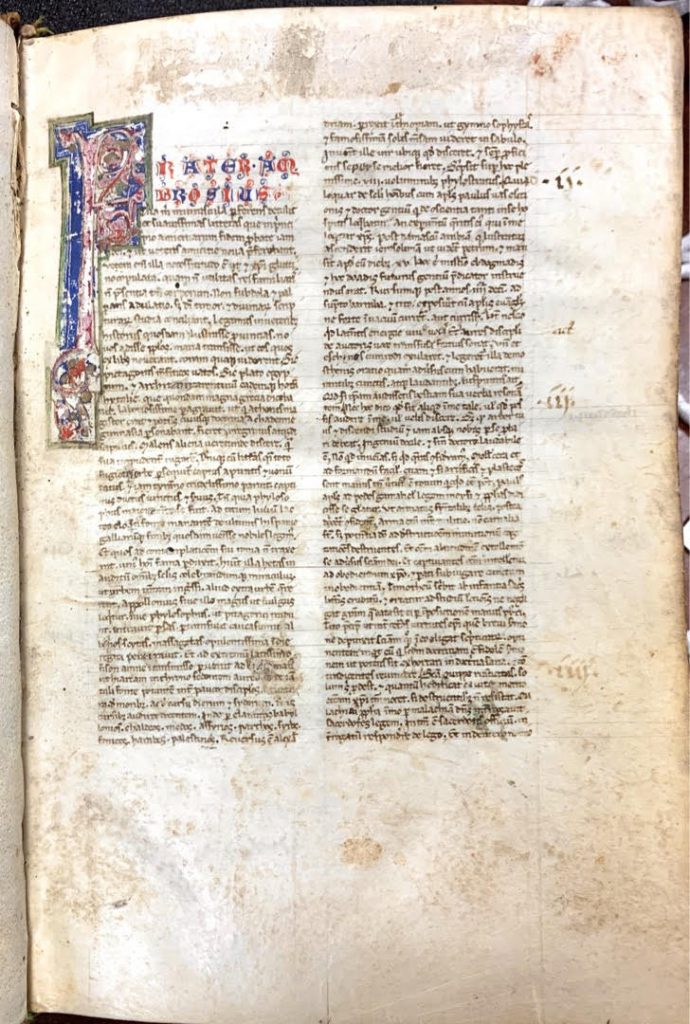
Upon opening, we are met by the first page of the Bible text, which opens the preface to the bible unit itself by its translator Jerome (circa 342–347 – 420), who produced the Latin Vulgate Version. This image is omitted in the digital facsimile, though one can see a painted offset on the verso of the preceding leaf.

First page of the Dimock Bible, with two columns of text which begin the preface "Frater Ambrosius" describing the Latin translation/

Smith College, MRBC MS 240, fol. 1r. Opening of Jerome’s preface ‘Frater Ambrosius’ for the bible unit. Photograph by Hannah Goeselt.

Read the rest of this entry →

Tags: Cardinal Alderano Cybo, Digital Scriptorium, Dimock Bible, Elizabeth Jordan, Emily Clara Jordan Folger, Erased Ownership Inscriptions, George Edward Dimock, GuestBlogger Hannah Goeselt, Image-Enhancement, Latin Vulgate Bibles, Manuscript studies, Mary Augusta Jordan, Medieval manuscripts, Medieval Seals and Seal Matrices, Mortimer Rare Book Collection MS 240, Nota-bene Marks, Otto F. Ege, Pilgrims' Badges, Schoenberg Database of Manuscripts, Seal Impression, Seal Matrices, Seymour de Ricci, Smith College, Stephen the Deacon Protomartyr, Things Found In Books, Thomas Becket, Vassar College, William Edwin Bools
1 Comment »

“Bridges” for our 2024 Anniversary Year

August 9, 2023 in Conference, International Congress on Medieval Studies, International Medieval Congress, Uncategorized

“Building Bridges ‘Over Troubled Waters’
For 25 Years and More”

Our Theme of “Bridges” for our 2024 Anniversary Year

with the

Call for Papers for
an Inaugural RGME-Sponsored Session
at the 2024 International Medieval Congress at Leeds
(1–4 July 2024 in hybrid format)

Blogpost composed by Michael Allman Conrad, with Mildred Budny and Ann Pascoe–van Zyl

[Posted on 9 August 2023]

In 2024 the Research Group on Manuscript Evidence (RGME) will celebrate its 25th Anniversary as a Nonprofit Educational Corporation based in the United States and its 35th Anniversary as an International Scholarly Organization founded in England.  Among its 2024 Anniversary Celebrations (Events such as Symposia, Episodes of our online series “The Research Group Speaks”, and more), the RGME prepares a set of Conference Sessions by “Setting Sails for A Double Gig in the USA and the United Kingdom”.

A Tale of Two Congresses

First, we revisit the annual International Congress on Medieval Studies (ICMS) at Kalamazoo in May.  As customary for many years, we plan for RGME-sponsored and co-sponsored Sessions there. For these plans, see our 2024 Call for Papers for these Sessions.  Also, for the first time, we prepare to sponsor a Session at the International Medieval Congress (IMS) at Leeds in July.

For 2024, the former conference will be held, somewhat confusingly, partly online and partly in-person (with individual Sessions either the one of the other). In contrast, the latter is fully hybrid, with in-person and online participation together. For the thematic subject of “Crisis” chosen for the 2024 Leeds Congress, we bring our own 2024 Anniversary Theme of “Bridges”.
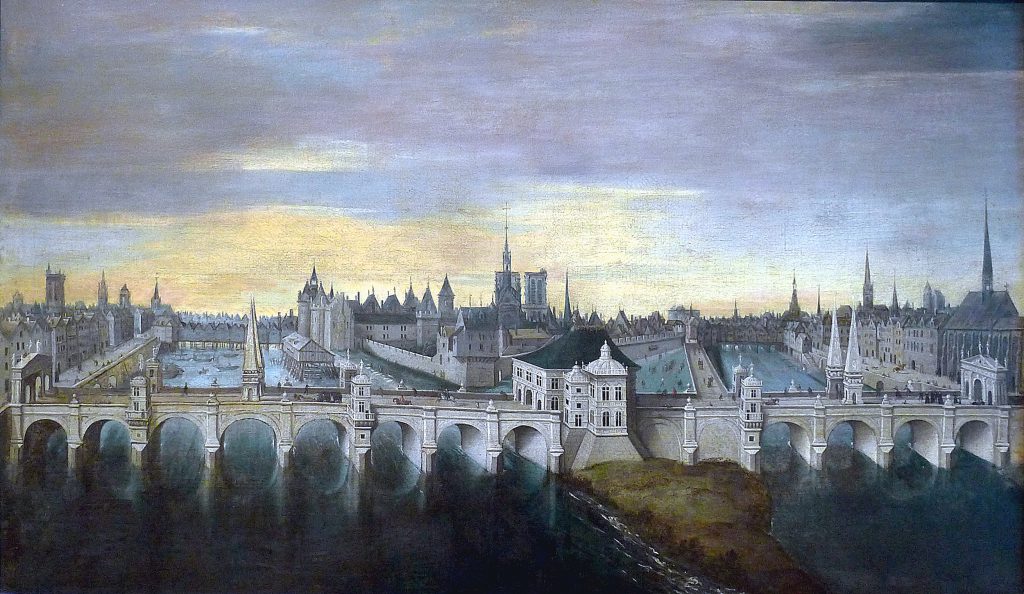
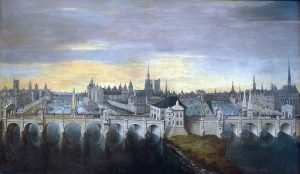
Paris , Musée Carnavalet, Projet pour le Pont Neuf, by an anonymous artist, circa 1577. Image via Wikimedia via Creative Commons Attribution 3.0 Unported.

Note on the image:  The Pont Neuf (“New Bridge”) was the first Parisian bridge to have no houses; it is the oldest standing bridge to survive in Paris.  The painting in the Musée Carnavalet shown above depicts the design approved in 1578 by King Henry III (1551–1589), who laid the first stone on 31 May 1578. The bridge as completed in 1606 had a simpler design, partly in response to constraints and challenges — crises amidst the French Wars of Religion — during this time in the king’s reign leading, for example, to his assassination. The bridge provided both a thoroughfare for horses and conveyances, and pavements for pedestrians.  See Le Pont_Neuf.  See also below.

For information on how to submit your Proposal for a Paper for our Inaugural Session, see below.

Building (and Rebuilding) Bridges

Whenever we speak of bridges as structures or constructions over physical objects by land or sea — rather than, say, a card game, a trick-taking game, some prosthesis for teeth, or the pilothouse of a ship — we speak of connections and obstacles. Can we even think of bridges without also thinking of dangers, of collapse, of falling down, of burning?

No bridge is needed where connection is simple and guaranteed, where creeks can be passed easily, where communication flows unhindered. It is only when underlying currents become perilous, when we are to transverse to unknown shores that may challenge our bare existence that we yearn for a bridge to provide us safe passage. In such cases, we might even wonder on occasion if the passage and its direction (let alone its progress) constitutes ‘coming’ or ‘going’. With such potential, depending upon how and from whence the traveller approaches a passageway not necessarily unidirectional, the viewpoints for a given bridge might resemble the dual perspectives of the antique Roman god Janus , presider over doorways, gates, thresholds, passages, beginnings and endings, war and peace.
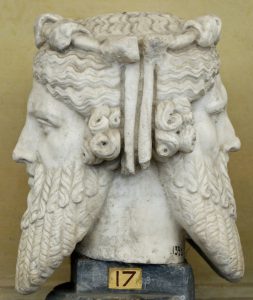
Vatican City, Vatican Museums, Museo Chiaramonti, section XIV, no.17. Janus-type Double Herm. Marble, Roman copy after a Greek original. Image via Wikimedia via Creative Commons 3.0 Unported.

And so, a bridge turns out to be a very ambivalent endeavor (as indeed all crossings and bifurcations are), living in the fuzzy realm between stability and destabilization, between safety and risk. With bridges, we might enter dangerous worlds otherwise inaccessible to us (sometimes for the better), so that the mere existence of bridges as gateways to these spaces can appear dangerous in itself, whilst they create an opening, and thus, opportunities in its original Latin sense as opportunus.

Knowing this far too well, we are required to cultivate trust in a bridge’s supports to safely guide us to the other side, but also to return if things turn out harmful. In such conditions we might, if circumstances and structures warrant, call upon the facilities and resourcefulness of a draw-bridge or pontoon bridge, and be prepared for the potential (and sometimes uneasily apparent) insecurity of suspension bridges.

Bear in mind the double-meaning of support here: bridges stand on supports and lend us support. They stabilize passages to cross what otherwise would be uncrossable – and thereby “ease your mind”, as Simon & Garfunkel sang in Bridge Over Troubled Water (1970); see the lyrics. Nor need we overlook the implication of the symbol of the Cross as the signature of Christ.

That said, shouldn’t all researchers thus be bridge-makers? Since what else is the prototype of a researcher than a person who, driven by endless curiosity, feels a strong inner desire of wanting to pass over to those unexplored realms on the other side?

It is this ambiguous nature of an in-between, of an entity standing in two worlds at once while creating an own space that belongs to none of them fully that make bridges such interesting transitional spaces. Yes, more than that: the bridge is the Urbild, the archetype of what transition and transitional spaces mean avant la lettre. This condition, by the way, is no less true for the double-identity of the messenger, a figure that embodies both bridge and bridge-maker to create meaningful connections between senders and receivers, between material and immaterial worlds, between heaven and the earth. And how could we forget that the Roman chief High Priest was known as the pontifex maximus, the great bridge-builder, a title later related to the Pope in Rome?[1]

Already in antiquity, the ambivalent figure of Hermes[2] as Olympic Messenger encapsulated the ambiguity of all bridges, as he is the protector not only of human heralds, travelers, merchants, and orators, but also of thieves, pointing out how much all hermeneutics convey risky endeavors, since all acts of interpretations may fail, or even be the cause of dangers of their own.

As a model of transition par excellence, bridges also remind us negatively of its connective nature, especially whenever we cross the Rubicon or burn down bridges, and thereby pass the point of no return — a very current fear in respect to Climate Change and Anthropocene. Either way, Hermes makes us aware of the close proximity of commuting and communicating.
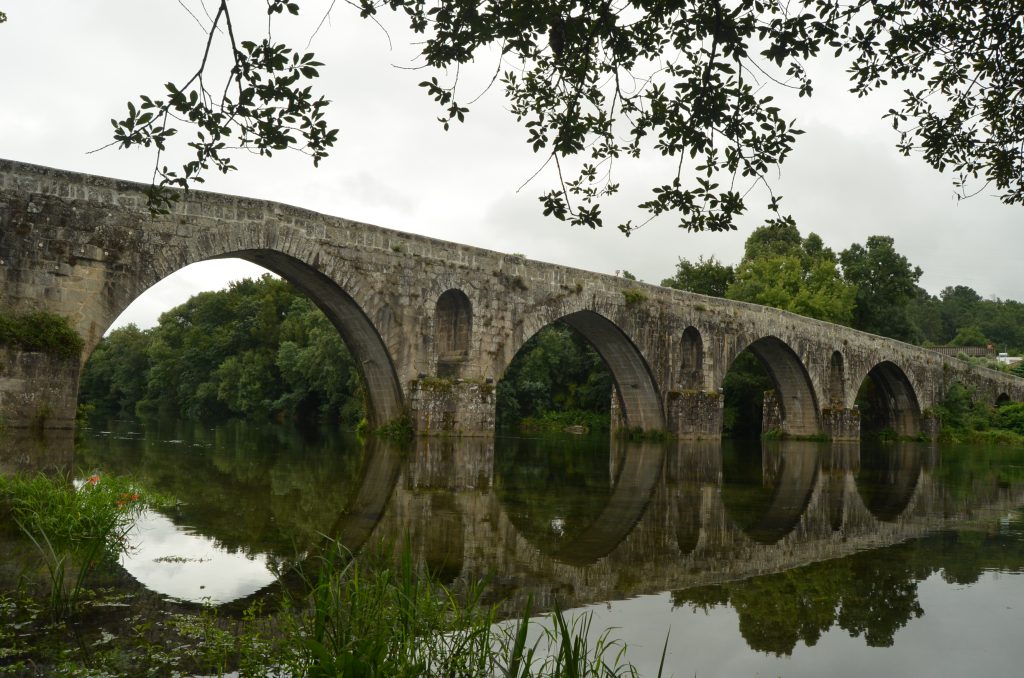
“Study on a Medieval Bridge” at Amares, Braga District, Portugal. Image by Pedro Nuno Caetano (2019) via Wikimedia Commons via Creative Commons 2.0 Generic.

Bridges Then and Now

For its next Anniversary Year, the Research Group for Manuscript Evidence has chosen the Theme of Bridges as its guiding symbol. In fact, it has been the mission of the RGME to build bridges since its first beginning — between disciplines, methods and media, and scholars from different countries, even continents, all driven by their passion for manuscripts and their historical significance, as well as their context among written texts as such and within the course (or coursing) of history.

For its anniversary, the RGME takes this mission one step further, by crossing the great sea in an attempt to bridge the academic cultures of the New World and Old World — in what could be described as a reversal of the Mayflower’s itinerary, from the Americas back to the British Isles, and back again. Let’s hope for calm waters and steady weather! (And is it too far-fetched to remind us that both Cambridge and Oxford are names that allude to bridge-like passages? Isn’t education always a bridge, a rite of passage?)

CFP for a RGME Session at the 2024 ICMS
(1–4 July 2024 in hybrid format)

In this spirit, we prepare sponsored Sessions, as usual, for the International Congress on Medieval Studies (ICMS) at Kalamazoo in May.  See our Call for Papers for the 2024 ICMS.

Also, for the first time, we prepare an Inaugural Sponsored Session for the International Medieval Congress (IMC) at Leeds in July 2024. The chosen Thematic Focus for the Leeds Congress is  “Crisis”.

The Co-Organisers for our Leeds Session are

Ann Pascoe–van Zyl (Trinity College Dublin)
and
Michael Allman Conrad
(Research Group on Manuscript Evidence and Universität St. Gallen)

Bridges and “Troubled Waters”

Under our guiding concept of “bridges,” the RGME invites papers for a Session at Leeds on all kinds of bridges and bridge-related topics. Be it more literally, as physical architectures and landmarks, such as historically significant specimens, or be it more abstractly, as architectural devices of the mind that enable us to make unexpected and unpredicted connections between marginal, off-field, divergent media, methods, and subjects that are usually not made or ignored.

In addition, we ask how bridges answer to different forms of crises, especially, but not only, with regard to communication, travel, social, cultural or political relations, or of the natural environment. In turn, we are also interested in papers that discuss how the establishment and maintenance of bridges may prevent crises or, contrarily, cause new unforeseen forms of crisis.

In summary, we welcome all bold bridge-makers willing to traverse pathways that others have not dared to take. In such ways, we might also respond to the opportunities and challenges which the captain and officers on the bridge of a ship can observe directly, better to steer a course in the passage.
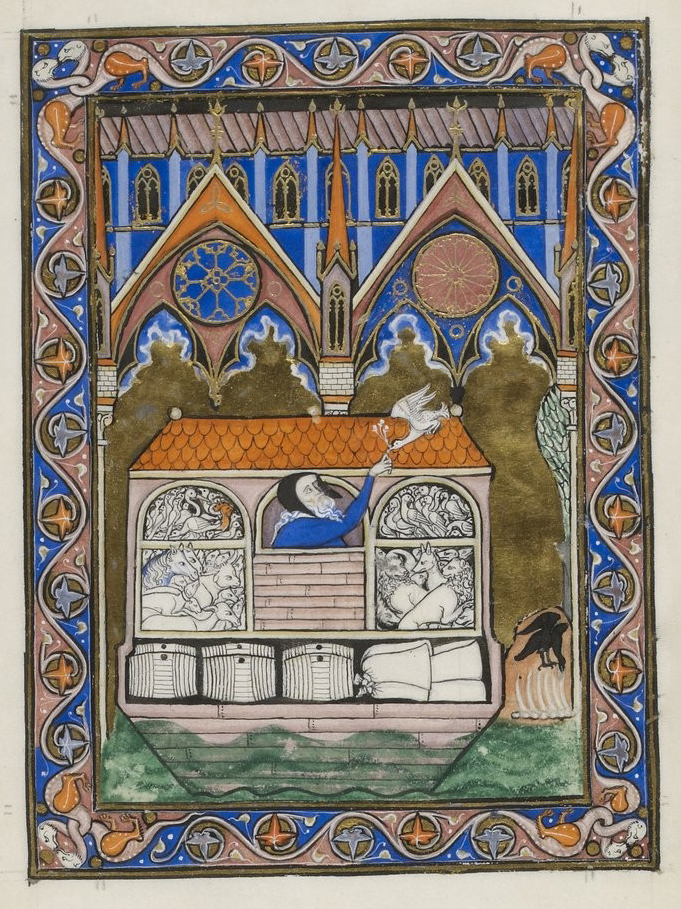
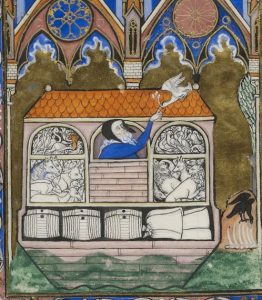
Paris , Bibliothèque nationale de France, Département des manuscrits, MS Lat 10525, fol. 3v, detail. Noah’s Ark. Image Public Domain via https://gallica.bnf.fr/ark:/12148/btv1b8447877n.

Note on the image:  Paris, Bibliothèque nationale de France, Département des manuscrits, MS Lat 10525, folio 3v. Psalter of Saint Louis, Paris circa 1270. See Psautier de Saint Louis: Latin 10525. On the genre, see, for example, Noah’s Ark; and Noah’s Arkhive.

*****

Proposals Invited for Papers
for our 2024 Session at Leeds
— Due by 31 August 2023

We invite abstracts of 200–300 words.  Your proposals should be made to the Session Co-Organisers to the address below by 31 August 2023.  Following this Call for Papers, the RGME Session will be selected and submitted to the Congress by 30 September 2023.  We will inform you of the selection by this time.

The Congress at Leeds will be held in person, with provisions for online participation. In this way, we hope that you might be able to attend onsite or at a distance, depending upon your travel arrangements.  Please indicate in your Proposal if you you would prefer to present your paper or session in-person or virtually.

  • Congress Website
    https://www.imc.leeds.ac.uk/imc-2024/
  • Proposal Criteria
    https://www.imc.leeds.ac.uk/proposals/criteria/

Deadline for Paper Proposals:  Due by 31 August 2023

We look forward to your contributions.

For information about this RGME Session, and to make your Proposal, please contact the Co-organisers:

Ann Pascoe-van Zyl and Michael Allman Conrad
for the Research Group on Manuscript Evidence

rgmesessions@gmail.com

*****

Footnotes

[1] Originally, this might have been meant literally: the position of bridge-builder was an important one in Rome, where the major bridges were over the Tiber. Considered a deity, only authorities with sacral functions could be allowed to “disturb” the river with mechanical additions. The title of “pontifex” for the Pontiff in Rome was already around for centuries, but did not become a regular title of honor for Popes before the 15th century, which is probably linked to the Fall of Constantinople in 1453 and the death of the last East Roman Emperor.

Fun fact: Pope Benedict XVI adopted @pontifex as his Twitter handle, which has been maintained by his successor Pope Francis.
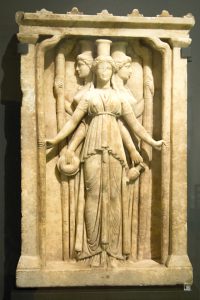
Prague, National Gallery, Kinský Palace, NM-H10 4742. Marble relief of triplicate Hekate. Image via Creative Commons Attribution Share-Alike 3.0 Unported.

[2] There is something strange to be observed when we look at antiquity in this regard. The areas of expertise and responsibility for Greek and Roman Gods with respect to bridges is not clear-cut.

In fact, Janus seems to be the more suitable candidate if we want to know what God was actually related to bridges, as he generally was the God of motion, of pathways, doors and gates, of beginnings and endings, devoted to spatial and temporal transitions.

However, if we think about the mitigation, communication between different realms, dominions, and areas, this job would be that of Hermes as mitigator and messenger.

But, thirdly, there’s also Hecate, as the dark Goddess of crossings, of magic and witchery. Sometimes represented as triple-formed, her associations include crossroads, entrance-ways, night, light, sorcery, witchcraft, necromancy, graves, and protection from witchcraft. These powers extended her realms of transitions to stretch beyond the worlds of the living.

The lines seem to be a bit blurred here, and it seems to depend on what aspect of bridges interests us exactly to know which God to tend to: the dark aspects of all crossings (as mixing things that should be kept separate), the mitigation and moderation in communicative acts (Hermes), or transition and ambivalence in general?

We invite you to join the conversation.

*****
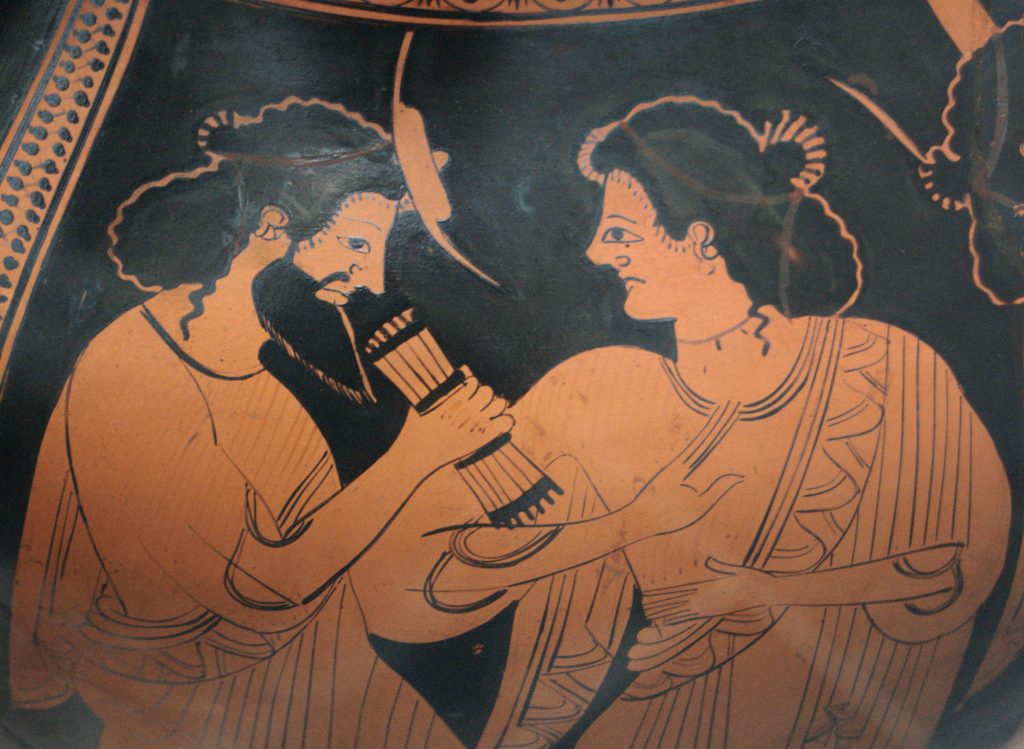
Munich, Staatliche Antikensammlungen, Nikoxenos Painter, Attic red-figure belly-amphora, ca. 500 BC, Side B, detail of Council of the Gods on Mount Olympus: Hermes with his mother Maia. Image via Wikimedia via Creative Commons.

Note on the image:  See Council of the Gods.

*****
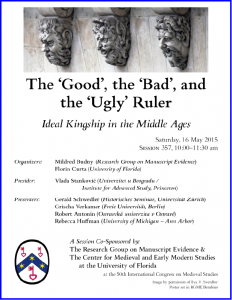
2015 Poster for the Session on 'Ideal Kingship' co-sponsored by the Research Group on Mauscript Evidence and the Center for Medieval and Early Modern Studies at the University of Florida, set in RGME Bembino, with a photograph of Le Pont Neuf in Paris by Ilya V. Sverdlov, reproduced by permission.

RGME Poster for 2015 Session on “Ideal Kingship”.

Note on Le Pont Neuf
(see image above)

The ornate sculptural masks (mascarons) on the sides of Le Pont_Neuf in Paris inspired the series of posters for our Sessions at the 2015 ICMS at Kalamazoo.  See:

  • 2015 International Congress on Medieval Studies Report.

For the photographs in the posters, we thank Ilya V. Sverdlov.

The 381 original and individual Renaissance mascarons were replaced in the complete rebuilding of the bridge in 1851–1854 with copies by 19th-century sculptors. At the time, some of the 16th-century originals — attributed to the French Renaissance sculptor Germain Pilon (1525–1590) — were placed in the Musée Carnavalet (six originals and eight molds of others) and the Musée de Cluny – Musée national du Moyen Âge (eight originals); the latter were transferred later to the French National Museum of the Renaissance in the Château d’Écouen.

The masks are said to “represent the heads of forest and field divinities from ancient mythology, as well as satyrs and sylvains.” (Le Pont_Neuf.) With elaborate beards, enlarged ears, and animated and often threatening expressions, the faces of the mascarons stand constant watch both upstream and downstream on “The New Bridge”.  It is as if — from their stable supports on the stone structure — they pose both troubled and troubling outlooks for the waters below, as well as toward all passengers upon or beside them.

In two spans, that construction links opposite sides of the River Seine with the western (downstream) end “of the Île de la Cité, the island in the middle of the river that was, between 250 and 225 BC, the birthplace of Paris, then known as Lutetia and, during the medieval period, the heart of the city.”  (Le Pont_Neuf.)
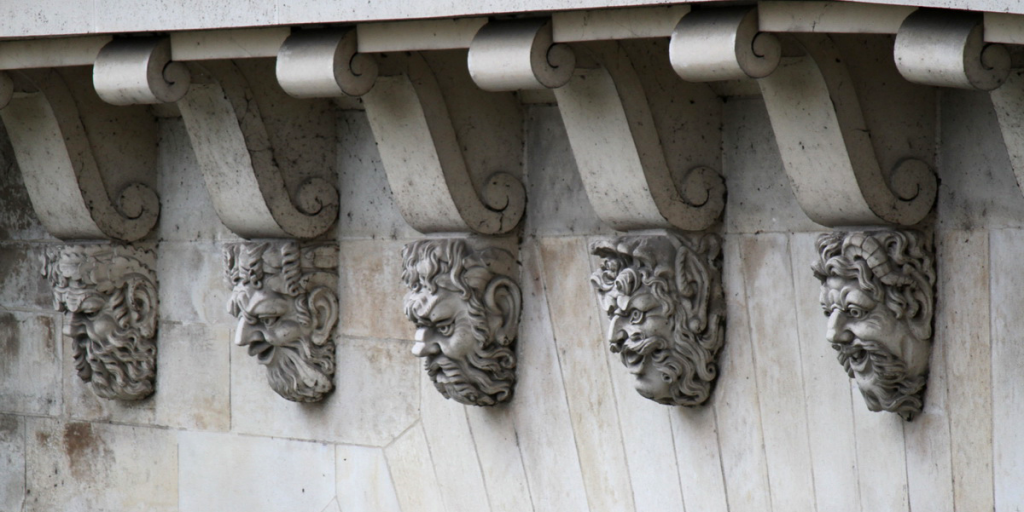
Le Pont Neuf, 5 Corbel Heads All in a Row. Photography by Ilya V. Sverdlov. Reproduced by permission.

*****

We look forward to your contributions.  We invite Proposals for Papers in our Inaugural Sponsored Session on “Building Bridges ‘Over Troubled Waters’ ” at the 2024 International Medieval Congress at Leeds.

Please be sure to submit your Proposal by 31 August 2023 to the address above.

*****

Please leave your Comments or questions here, Contact Us, or visit

  • our FaceBook Page
  • our Twitter Feed (@rgme_mss)
  • our Blog on Manuscript Studies and its Contents List

Donations and contributions, in funds or in kind, are welcome and easy to give.  See Contributions and Donations.

We look forward to hearing from you.

*****

Tags: "Bridge Over Troubled Water", Bridges, Council of the Gods, Crises, Hecate, Hermes, History of Bridges, International Congress for Medieval Studies, International Medieval Congress, Janus, Le Pont Neuf, Le Pont Neuf Paris, Medieval Studies, Noah's Ark, RGME Anniversary Year
No Comments »

2024 International Medieval Congress at Leeds: Call for Papers

August 9, 2023 in Announcements, Call for Papers, Conference Announcement, International Congress on Medieval Studies, International Medieval Congress, Leeds, Uncategorized

RGME Call For Papers
for the 2024 International Medieval Congress at Leeds
(1–4 July 2024 in hybrid format)

“Building Bridges ‘Over Troubled Waters’
For 25 Years and More”

An Inaugural RGME-Sponsored Session at Leeds

[Posted on 9 August 2023]

Paris, Musée Carnavalet, Projet pour le Pont Neuf, circa 1577. Image via Wikimedia via Creative Commons Attribution 3.0 Unported.

The Research Group on Manuscript Evidence prepares an Inaugural Sponsored Session at the International Medieval Congress (IMC), University of Leeds, United Kingdom, to be held in hybrid format from 1st – 4th July, 2024. This Session comprises our first Sponsored Session at the Congress.

The Congress subject for 2024 is “Crisis”. The RGME Theme for its Anniversary Year of 2024 is “Bridges”.

For the 2024 ICMS at Leeds we propose to examine subjects pertaining to the challenges and opportunities of “Building Bridges Over Troubled Waters”.  We invite your proposals for Papers for this Session.

Our 2024 Anniversary Year: “Bridges”

In 2024 the Research Group on Manuscript Evidence (RGME) celebrates its 25th Anniversary as a Nonprofit Educational Corporation based in the United States and its 35th Anniversary as an International Scholarly Organization founded in England.

To mark our anniversary year, we prepare sponsored Sessions, as usual, for the International Congress on Medieval Studies (ICMS) at Kalamazoo in May.  See our Call for Papers for the 2024 ICMS.

Also, for the first time, we prepare an Inaugural RGME-sponsored Session for the International Medieval Congress (IMC) at Leeds in July 2024.


Paris, Bibliothèque nationale de France, Département des manuscrits, MS Lat 10525, fol, 3v, detail. Noah’s Ark. Image Public Domain via https://gallica.bnf.fr/ark:/12148/btv1b8447877n.

The 2024 Leeds Congress:  “Crises”

The chosen “Thematic Focus” for the Leeds Congress in 2024 is “Crisis”.

Bridges and “Troubled Waters”

Under our guiding concept of “Bridges” for 2024 (see Bridges for our 2024 Anniversary Year), the RGME invites papers for a Session at Leeds on all kinds of bridges and bridge-related topics. Be it more literally, as physical architectures and landmarks, such as historically significant specimens, be it more abstractly, as architectural devices of the mind that enable us to make unexpected and unpredicted connections between marginal, off-field, divergent media, methods, and subjects that are usually not made or ignored.

In addition, we ask how bridges answer to different forms of crises, especially, but not only, with regard to communication, travel, social, cultural or political relations, or of the natural environment. In turn, we are also interested in papers that discuss how the establishment and maintenance of bridges may prevent crises or, contrarily, cause new unforeseen forms of crisis.

In summary, we welcome all bold bridge-makers willing to traverse pathways that others have not dared to take. In such ways, we might also respond to the opportunities and challenges which the captain and officers on the bridge of a ship can observe directly, better to steer a course forward in the passage.

How to Submit your Proposal
for a Paper for our 2024 Session at Leeds
— Due by 31 August 2023

“Building Bridges ‘Over Troubled Waters’ ”

Session Co-Organisers:

Ann Pascoe-van Zyl (Trinity College Dublin)
and
Michael Allman Conrad (Research Group on Manuscript Evidence and Universität St. Gallen)

We invite abstracts of 200–300 words. Your proposals for papers should be made directly to the organisers by 31 August 2023.

We seek papers on a wide range of subjects pertaining to Bridges and to Crises.

Our own experience with RGME activities over the years, in promoting the possibilities of “Building Bridges” between disciplines, centres, and individuals, provides a keen interest in these issues and potential solutions.  See, for example, our

  • Events,
  • Congress Activities, and
  • Publications.

From your Proposals due by the end of August, the RGME Session will be selected and submitted to the Congress at Leeds by 30 September 2023.  We will inform you of our selection by that time.

Congress information

  • Congress Website
    https://www.imc.leeds.ac.uk/imc-2024/
  • Proposal Criteria
    https://www.imc.leeds.ac.uk/proposals/criteria/

The Congress will be held in person, with provisions for online participation. In this way, we hope that you might be able to attend onsite or at a distance, depending upon your travel arrangements.

Deadline for Paper Proposals:  Due by 31 August 2023

Please send your Proposal of 200–300 words for your Paper to the organisers at their address below.  Might you please note your preferred mode for presenting your paper — in person or virtually.

Address to send your Proposals:  rgmesessions@gmail.com

For information about this RGME Inaugural Session at the IMC, please contact the Session Co-organisers at their address.

We look forward to your contributions.

*****

Paris, Bibliothèque nationale de France, Département des manuscrits, MS Lat 10525, fol, 3v, detail. Noah’s Ark. Image Public Domain via https://gallica.bnf.fr/ark:/12148/btv1b8447877n.

*****

Tags: Bridges, Crises, International Medieval Congress, Medieval Studies, Noah's Ark
No Comments »

2024 International Congress on Medieval Studies: Call for Papers

July 8, 2023 in International Congress on Medieval Studies, Kalamazoo, POMONA, Postal History at Kalamazoo, Societas Magica, Uncategorized

2024 International Congress on Medieval Studies: Call for Papers

59th ICMS (9–11 May 2024)
To occur in ‘hybrid’ form
(with some Sessions in Person, some Online)

[Posted on 7 July 2023, with updates]

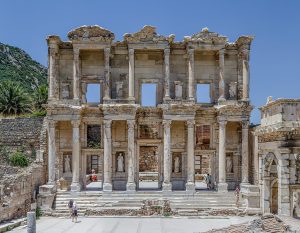
Façade of the Celsus library, in Ephesus, near Selçuk, west Turkey. Photograph (1910): Benh LIEU SONG, via Creative Commons.

Façade of the Celsus library , in Ephesus, near Selçuk, west Turkey. Photograph (1910): Benh LIEU SONG, via Creative Commons.

Building upon the successful completion of our activities at the 2023 ICMS (see our 2023 International Congress on Medieval Studies Program and 2023 International Congress on Medieval Studies: Report), we announce the Call for Proposals (CFP) for next year’s Congress, which will take place in a modified hybrid format from Thursday to Saturday 9–11 May 2024.

For information about the Congress, see its website.  There you can also find information and instructions about submitting your proposals.  See especially Submissions.  Your proposals for papers are due by 15 September 2023.

After the close of the CFP, we will select the accepted papers and design the programs for the Sessions.  Notifying you of the decisions about your proposals will come before the deadline for us to submit the Programs for our Sessions to the Congress Committee is 15 October 2023.

Next, normally by the turn of the year toward the year of the Congress, we publish the selected Programs for our Sessions and announce our other Activities, while we await the promulgation of the official Schedule for the 2023 Congress as a whole.  Accompanying our announced Programs are the Abstracts for the Papers.  Then, with the publication of the Congress Program (or its traditional ‘Sneak Peek’), we can add the times and venues for our Sessions.  As the 2024 Congress approaches, new information can guide announcements and updates on our website and social media.

For 2024, with some Sessions on line and some in person in a transitional ICMS, we prepare:

  • four Sessions, sponsored and co-sponsored
  • a customary Open Business Meeting at the Congress
  • and perhaps a Reception.

In 2024, the RGME celebrates an Anniversary Year, for which the chosen Theme is “Bridges”.

One Session is our own (Item I).  With one session each, our co-sponsors for ICMS Sessions in 2024 are:

  • Societas Magica
  • Polytheism-Oriented Medievalists of North America (P.-O.M.o.N.A.)
  • Postal History at Kalamazoo

This year marks Year 20 of our co-sponsorship with the Societas Magica, Year 3 of co-sponsorship with P.O.M.o.N.A.,  and the first year of co-sponsorship with the newly founded Postal History at Kalamazoo.

Both our own RGME Session (Item I here) and the Session co-sponsored with Postal History at Kalamazoo (Item IV) are designed to continue the tradition of our long-term series of RGME Sessions at the ICMS on “Medieval Writing Materials”, which began in 2014.  (See, for example, our Congress Activities and 2022 International Congress on Medieval Studies Program.)

The Organizers and Co-Organizer of the two Sessions this year include all three founders of that series.  It was proposed to the RGME Director Mildred Budny in 2013 by Eleanor A. Congdon and David W. Sorenson.

Here we announce the subjects of the Sessions and invite your Proposals for Presentations.

Read the rest of this entry →

Tags: Blood in Books, Book History, Classical & Medieval Studies, Datini Archives, Fugger Archives, History of Commerce, History of Correspondence, History of Curtains, History of Magic, International Congress on Medieval Studies, Medici Archives, Medieval Sources for Pre-Christian Practices, Paston Letters, Postal History, Powers of Blood
No Comments »

Episode 12: Vajra Regan on Engraved Magic and Astrological Images

May 30, 2023 in Manuscript Studies, Research Group Speaks (The Series), Uncategorized

The Research Group Speaks
Episode 12
Saturday 12 August 2023 online
1:00–2:30 pm EST (GMT-5) by Zoom

“The Sources of the Engraved Magic and Astrological Images
in the Book of Sigils (Liber Sigillorum)
and the Ghāyat al-Hakīm (The Goal of the Wise)”

Vajra Regan

[Posted on 30 May 2023, with updates]

We invite you to attend Episode 12 in our series.

  • The Research Group Speaks

Our Associate, Vajra Regan will speak about the subject of his new joint publication, which has now appeared in early August 2023, a few days before our event.  Vajra’s presentation about this project and the process towards its publication explores explore the subject of visual imagery for astrological magic as transmitted across time, languages, and cultural settings.

Over the years, Vajra has presented papers and organized Sessions for the RGME and our co-sponsor, the Societas Magica, since 2019.

  • Regan (2019 Congress)
  • Regan (2020 Congress)
  • 2022 International Congress on Medieval Studies Program

These activities allow us to continue to learn about Vajra’s research as it continues to expand, to deepen, and to unfold.  We are glad for his offer to talk with us for the Episode.

Vajra’s Plan for the Episode, in his Own Words

The Title

“The Sources of the Engraved Magic and Astrological Images
in the Book of Sigils (Liber Sigillorum)
and the Ghāyat al-Hakīm (The Goal of the Wise)”

The Abstract

The twelfth century saw the translation into Latin of a group of Arabic texts on astrological image magic with titles such as The Book of Planets (Liber Planetarum), The Stations of the Cult of Venus (De stationibus ad cultum Veneris), and The Book of Venus (Liber Veneris). These texts, usually attributed to Hermes or one of his retinue, provided detailed instructions relating to the liturgy of the planets and the fabrication of engraved astrological images or talismans. Unfortunately, in the following centuries, they were systematically suppressed to such an extent that today many survive in only one or two late manuscripts.

Although long recognized as important to the history of learned magic in the West, these texts have so far received little scholarly attention.  Consequently, the precise nature and extent of their influence have remained largely a matter of conjecture.

Read the rest of this entry →

Tags: Alfonso X, Astrological Images, Engraved Magic, Firenze Biblioteca Nazionale Centrale II.III.214, Ghāyat al-Hakīm, History of Magic, Jupiter Enthroned, Lapidaries, Liber Planetarum, Liber Sigillorum, Picatrix, The Research Group Speaks
No Comments »

« Older Entries
Newer Entries »
  • Top
©2024 Research Group on Manuscript Evidence.


is proudly powered by WordPress. WordPress Themes X2 developed by ThemeKraft.