• News
    • News & Views
    • RGME Activities for 2024 and 2025
    • Around & About with the RGME
    • Reviews
    • Highlights
  • Blogs
    • Manuscript Studies
      • Manuscript Studies: Contents List
    • International Congress on Medieval Studies
      • Abstracts of Congress Papers
        • Abstracts of Papers Listed by Author
        • Abstracts of Papers Listed by Year
  • About
    • Mission
    • Who We Are
      • Officers, Associates & Volunteers
      • RGME Committees
      • Friends of the Research Group on Manuscript Evidence
    • Policies & Statements
      • RGME Privacy Policy Statement
      • RGME Intellectual Property Statement & Agreements
    • People
      • Mildred Budny — Her Page
      • Adelaide Bennett Hagens
    • Activities
      • Events
      • Congress Activities
        • Sponsored Conference Sessions (1993‒)
          • Panels at the M-MLA Convention (from 2016)
        • Co-sponsored Conference Sessions (2006‒)
    • History
      • Seals, Matrices & Documents
      • Genealogies & Archives
    • Contact Us
  • Bembino
    • Multi-Lingual Bembino
    • RGME Bembino: Resources
  • Congress
    • Sponsored Conference Sessions (1993‒)
    • Co-sponsored Conference Sessions (2006‒)
    • Abstracts of Congress Papers
      • Abstracts Listed by Author
      • Abstracts Listed by Year
    • Kalamazoo Archive
    • Panels at the M-MLA Convention (2016-2019)
      • Abstracts of Papers for the M-MLA Convention
      • Panels at the M-MLA Convention (from 2016)
  • Events
    • RGME Activities for 2024 and 2025
      • 2023 Activities and 2024 Planned Activities
    • Seminars, Workshops, Colloquia & Symposia (1989–)
      • Seminars on ‘The Evidence of Manuscripts’
      • Symposia on ‘The Transmission of the Bible’
      • The New Series (2001-)
        • 2019 Anniversary Symposium Program: The Roads Taken
        • 2019 Anniversary Symposium Registration
        • 2019 Anniversary Symposium Registration Open
      • RGME Symposia: The Various Series
      • The Research Group Speaks: The Series
      • Meetings of the Friends of the Research Group on Manuscript Evidence
      • RGME Online Events
    • Abstracts of Papers for Events
      • Abstracts of Papers for Seminars on ‘The Evidence of Manuscripts’
      • Abstracts of Papers for Symposia, Workshops & Colloquia
    • Receptions & Parties
    • Business Meetings
    • Photographic Exhibitions & Master Classes
    • Events Archive
  • ShelfLife
    • Journal Description
    • ShelfMarks: The RGME-Newsletter
    • Publications
      • “Insular, Anglo-Saxon, and Early Anglo-Norman Manuscript Art at Corpus Christi College, Cambridge” (1997)
        • Mildred Budny, ‘Catalogue’
        • The Illustrated Catalogue (1997)
      • The Illustrated Handlist
      • Semi-Official Counterfeiting in France 1380-1422
      • No Snap Decisions: Challenges of Manuscript Photography
    • History and Design of Our Website
  • Galleries
    • Watermarks & the History of Paper
    • Galleries: Contents List
    • Scripts on Parade
    • Texts on Parade
      • Latin Documents & Cartularies
      • New Testament Leaves in Old Armenian
    • Posters on Display
    • Layout Designs
  • Donations and Contributions
    • RGME Donor Promise
    • 2023 End-of-Year Fundraiser for our 2024 Anniversary Year
    • 2019 Anniversary Appeal
    • Orders
  • Links
    • Catalogs, Metadata, and Databases: A Handlist of Links
    • Handlist of Resources for Manuscript Studies and Fragmentology
    • Manuscripts & Rare Books
    • Maps, Plans & Drawings
    • Seals, Seal-Matrices & Documents

  • News
    • News & Views
    • RGME Activities for 2024 and 2025
    • Around & About with the RGME
    • Reviews
    • Highlights
  • Blogs
    • Manuscript Studies
      • Manuscript Studies: Contents List
    • International Congress on Medieval Studies
      • Abstracts of Congress Papers
        • Abstracts of Papers Listed by Author
        • Abstracts of Papers Listed by Year
  • About
    • Mission
    • Who We Are
      • Officers, Associates & Volunteers
      • RGME Committees
      • Friends of the Research Group on Manuscript Evidence
    • Policies & Statements
      • RGME Privacy Policy Statement
      • RGME Intellectual Property Statement & Agreements
    • People
      • Mildred Budny — Her Page
      • Adelaide Bennett Hagens
    • Activities
      • Events
      • Congress Activities
        • Sponsored Conference Sessions (1993‒)
          • Panels at the M-MLA Convention (from 2016)
        • Co-sponsored Conference Sessions (2006‒)
    • History
      • Seals, Matrices & Documents
      • Genealogies & Archives
    • Contact Us
  • Bembino
    • Multi-Lingual Bembino
    • RGME Bembino: Resources
  • Congress
    • Sponsored Conference Sessions (1993‒)
    • Co-sponsored Conference Sessions (2006‒)
    • Abstracts of Congress Papers
      • Abstracts Listed by Author
      • Abstracts Listed by Year
    • Kalamazoo Archive
    • Panels at the M-MLA Convention (2016-2019)
      • Abstracts of Papers for the M-MLA Convention
      • Panels at the M-MLA Convention (from 2016)
  • Events
    • RGME Activities for 2024 and 2025
      • 2023 Activities and 2024 Planned Activities
    • Seminars, Workshops, Colloquia & Symposia (1989–)
      • Seminars on ‘The Evidence of Manuscripts’
      • Symposia on ‘The Transmission of the Bible’
      • The New Series (2001-)
        • 2019 Anniversary Symposium Program: The Roads Taken
        • 2019 Anniversary Symposium Registration
        • 2019 Anniversary Symposium Registration Open
      • RGME Symposia: The Various Series
      • The Research Group Speaks: The Series
      • Meetings of the Friends of the Research Group on Manuscript Evidence
      • RGME Online Events
    • Abstracts of Papers for Events
      • Abstracts of Papers for Seminars on ‘The Evidence of Manuscripts’
      • Abstracts of Papers for Symposia, Workshops & Colloquia
    • Receptions & Parties
    • Business Meetings
    • Photographic Exhibitions & Master Classes
    • Events Archive
  • ShelfLife
    • Journal Description
    • ShelfMarks: The RGME-Newsletter
    • Publications
      • “Insular, Anglo-Saxon, and Early Anglo-Norman Manuscript Art at Corpus Christi College, Cambridge” (1997)
        • Mildred Budny, ‘Catalogue’
        • The Illustrated Catalogue (1997)
      • The Illustrated Handlist
      • Semi-Official Counterfeiting in France 1380-1422
      • No Snap Decisions: Challenges of Manuscript Photography
    • History and Design of Our Website
  • Galleries
    • Watermarks & the History of Paper
    • Galleries: Contents List
    • Scripts on Parade
    • Texts on Parade
      • Latin Documents & Cartularies
      • New Testament Leaves in Old Armenian
    • Posters on Display
    • Layout Designs
  • Donations and Contributions
    • RGME Donor Promise
    • 2023 End-of-Year Fundraiser for our 2024 Anniversary Year
    • 2019 Anniversary Appeal
    • Orders
  • Links
    • Catalogs, Metadata, and Databases: A Handlist of Links
    • Handlist of Resources for Manuscript Studies and Fragmentology
    • Manuscripts & Rare Books
    • Maps, Plans & Drawings
    • Seals, Seal-Matrices & Documents

Log in

Archives

Featured Posts

2026 International Congress on Medieval Studies: Program
Episode 24. “Life with Books” (Interview with John Windle)
Announcing the Launch of RGME Bembino WP
2026 RGME Colloquium at The Grolier Club: Report
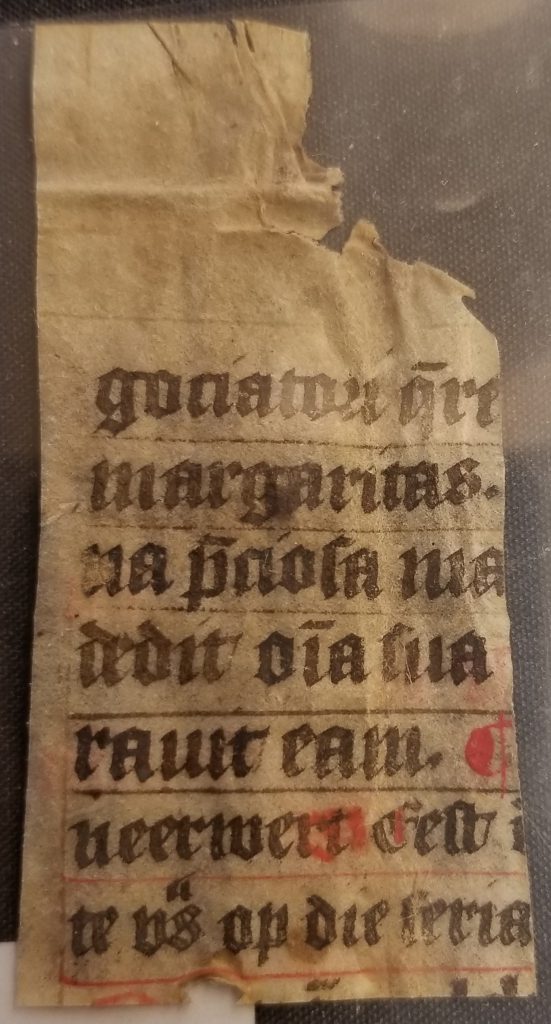
Medieval Missal Fragment as Early-Modern Cover
The Weber Leaf from Ege MS 61
"Bembino" Booklet Cover
Episode 23. “Meet RGME Bembino: Facets of a Font”
2026 RGME Colloquium on “Transformations & Renewals” at The Grolier Club
2026 Theme of the Year: “Transformations and Renewals”
A Leaf with Patchwork from the Saint Albans Bible
A Sister Leaf from a Miniature Latin Vulgate Bible
A Little Latin Vulgate Bible Manuscript Leaf in Princeton
J. S. Wagner Collection. Leaf from from Prime in a Latin manuscript Breviary. Folio 4 Verso, with part of Psalm 117 (118) in the Vulgate Version, set out in verses with decorated initials.
2026 Annual Appeal
Episode 22: “Encounters with Local Saints and Their Cults”
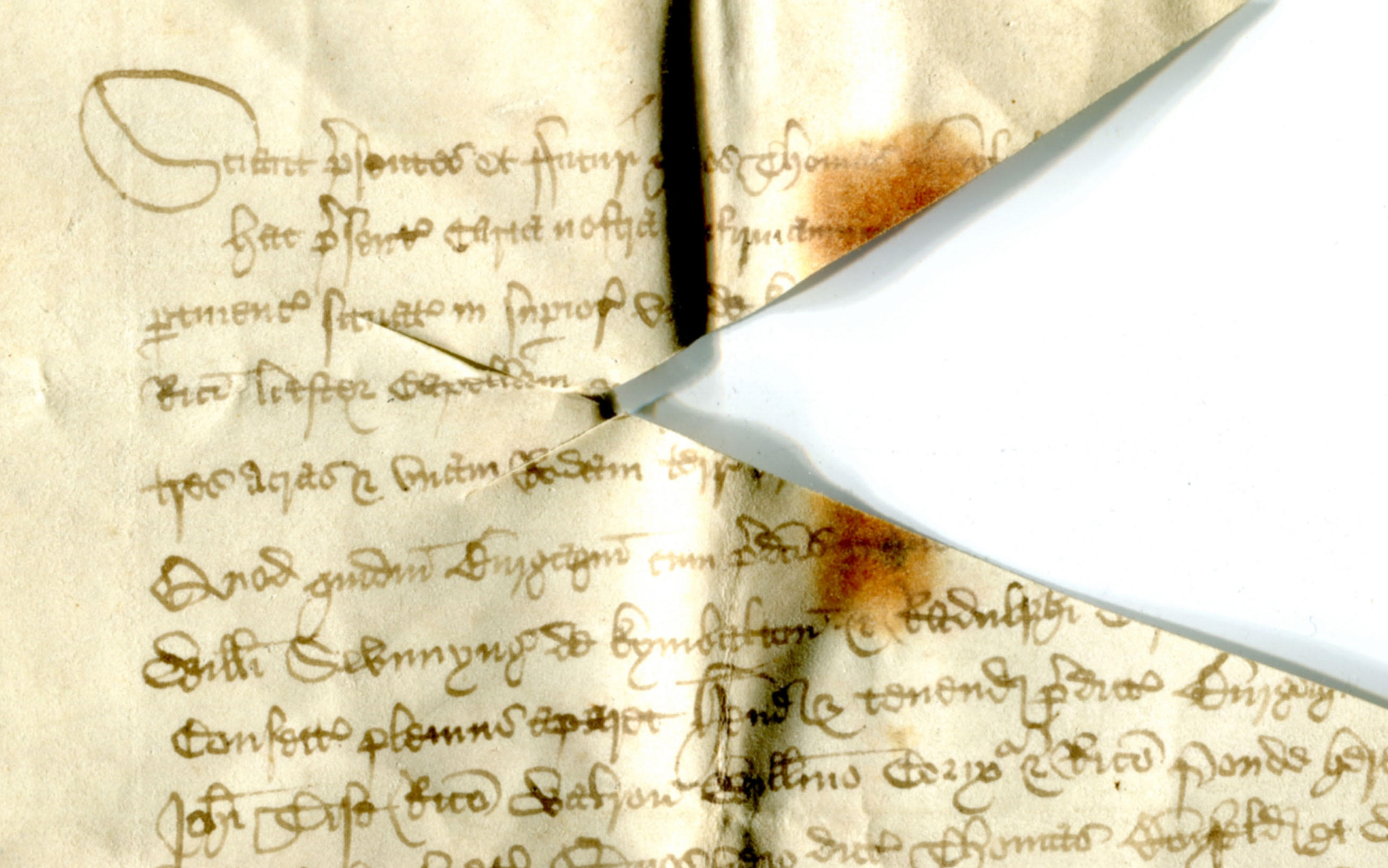
Private Collection, Ege's FBNC Portfolio, Dante Leaf, Verso, Detail. Reproduced by Permission.
2025 RGME Autumn Colloquium on Fragments
Workshop 8: A Hybrid Book where Medieval Music Meets Early-Modern Herbal
2025 RGME Autumn Symposium on “Readers, Fakers, and Re-Creators of Books”
RGME Workshops on “The Evidence of Manuscripts, Etc.”
2025 International Medieval Congress at Leeds: RGME Program
Episode 21. “Learning How to Look”
2025 International Congress on Medieval Studies: Program
2025 RGME Visit to Vassar College
Two Leaves in the Book of Numbers from the Chudleigh Bible
Delibovi on Glassgold on Boethius: A Blogpost
Ronald Smeltzer on “Émilie du Châtelet, Woman of Science”
2025 Spring Symposium: “Makers, Producers, and Collectors of Books”
Starters’ Orders
The Weber Leaf from the Saint Albans Bible
Workshop 4. “Manuscript Fragments Compared”
Episode 20. “Comic Book Theory for Medievalists”
Episode 19: “At the Gate: Starting the Year 2025 at its Threshold”
Favorite Recipes for Lemonade, Etc.
RGME Visit to the Lomazow Collection: Report
2024 Autumn Symposium: “At the Helm”
A Latin Vulgate Leaf of the Book of Numbers
The RGME ‘Lending Library’
Florence, Italy, Ponte Vecchio from Ponte alle Grazie. Photo: Ingo Mehling, CC BY-SA 4.0 , via Wikimedia Commons
Episode 17. “RGME Retrospect and Prospects: Anniversary Reflections”
2024 Anniversary Symposium: The Booklet
Jesse Hurlbut at the Bonneville Salt Flats, Utah. Photograph Jesse Hurlbut.
Episode 16: An Interview with Jesse D. Hurlbut
To Whom Do Manuscripts Belong?
Kalamazoo, MI Western Michigan University, Valley III from the side. Photograph: David W. Sorenson.
2024 International Congress on Medieval Studies: Report
2024 Spring Symposium at Vassar College
Puente de San Martín: Bridge with reflection over the River Targus, Toledo, Spain.
2024 Grant for “Between Past and Future” Project from The Gladys Krieble Delmas Foundation Research Libraries Program
2024 Anniversary Symposium in Thanks to Jesse Hurlbut: Program

You are browsing the Blog for

Selbold Cartulary Fragments

July 4, 2020 in Manuscript Studies


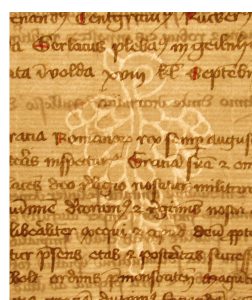
Grapes Watermark in a Selbold Cartulary Fragment.

Selbold Cartulary Fragments

3 Leaves on Paper

Single columns of 38 lines
Circa 28.3 × 210 cm < written area of circa 20.6 × 15.5 cm>
Presumably Stift Selbold or its Region (Hessen) in Germany
Late 14th or early 15th Century
Watermark of Grape Cluster

[Posted on 3 July 2020, with updates]

Continuing our blog on Manuscript Studies (see its Contents List), we publish images and descriptions of a set of three leaves from the dismembered paper copy of a Latin cartulary (or codex diplomaticus or Kopialbuch, in Latin and German) of the former Premonstratensian monastery-and-then-abbey of Selbold in Hessen, Germany.  The set presents a now-disrupted series of uniform transcriptions in book form of individual dated documents issued by ecclesiastical and secular rulers confirming, or reconfirming, rights and privileges pertaining to that institution and its dependencies.

Purchased from Boyd Mackus in the United States some years ago and now in a private collection, the fragments comprise 1 single leaf and 1 bifolium.  We identify them here as folios “1” and “2–3”, using inverted commas or quotation marks to indicate a non-original sequence and location within the former volume.  Written by a single scribe with a uniform layout, the leaves contain a late-medieval copy of the texts of 8 documents (not all complete) issued by various authorities in a range from the 12th to 14th centuries.  Upon the original pages, even apart from the subsequent disruptions to the text through dispersal of leaves, the transcriptions are set out in sequences that are only partly chronological according to the issued dates of the documents.

Written in ink with elements of red pigment, the text is laid out on the leaves in single columns of 38 lines.  One leaf has a watermark.

These leaves deserve to be considered in the contexts not only of the transmission of the documents which they represent, but also of the preservation and circulation of Selbold Cartularies or Kopialbucher, insofar as they are known or survive.  Here we distinguish in red such historical records as the Selbold Cartulary Fragment(s) showcased here, on the one hand, and, on the other hand, one or more Selbold Kopialbuche (or Copialbuche) reported in German by various observers.  We indicate one or other of those  books known to have survived to the early modern or modern periods, but subsequently lost, or presumed to be lost, by a prefixed asterisk (*). Also recorded in some notices or copies thereof is a late-medieval [*]Liber privilegiorum et libertatum ecclesie Selboldensis (“Book of the Privileges and Rights of the Church of Selbold”), presumed to be lost.

Among the challenges, we might wonder to what extent one or other of those recorded  [*]Selbolder Kopialbucher corresponds to this dismembered one.  This post includes some detailed examinations of published editions of its texts and related texts.  Why this detailed work is useful, and can yield strikingly significant results even for only a few leaves from a dispersed manuscript otherwise inaccessible, is revealed in the PostScript. 

The subtitle for this post could be Manuscript Studies in a Time of Bibliographical ‘Lock-Down’.  [Now see also the Addendum below.]

Read the rest of this entry →

Tags: Archbishop Heinrich I of Mainz, Birstein, Briquet Number 13003, Büdingen, Conrad III, Frederick II, Gustav Simon, Heinrich Reimer, Helfrich Bernhardt Wenck, History of Documents, History of Watermarks, Integrated, Isenburg, Karl IV, King Adolf of Germany, Langenselbold, Otto Ege's Manuscripts, Prince Bruno of Ysenburg-Büdingen, Royal Bible of St. Augustine's Abbey Canterbury, Selbold, Selbold Cartulary, Selbold Cartulary Fragment, Selbold Kopialbuch, Selbold Monastery, Ysenburg
No Comments »

Vellum Binding Fragments in a Parisian Printed Book of 1598

June 30, 2020 in Documents in Question, Manuscript Studies

Pieces of an Early 16th-Century French Legal Document
Reused as Vellum Supports or Guards
in the Quarto Binding of
Henry de Suberville’s L’Henry-Metre
Printed in Paris in 1598

Manuscript Binding Fragments Remaining In Situ

[Posted on 30 June 2020, with updates]

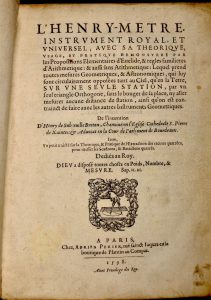
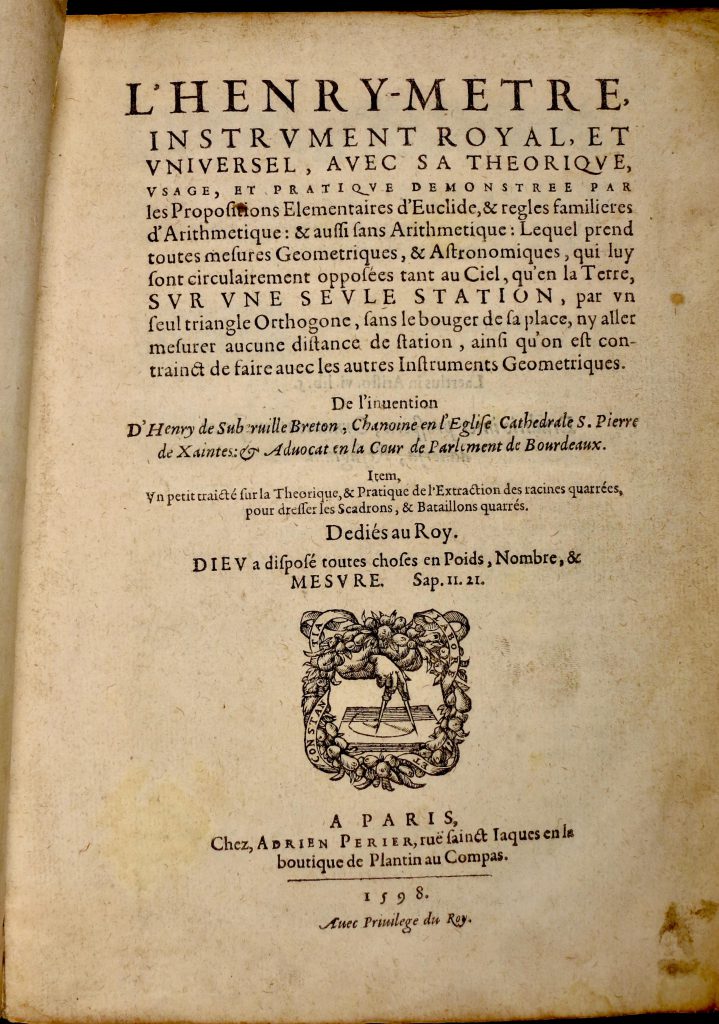
Smeltzer Collection, Henry de Suberville, 'L'Henry-metre' (1598), Title Page.

Smeltzer Collection, Henry de Suberville, ‘L’Henry-metre’ (1598), Title Page.

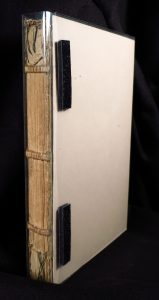
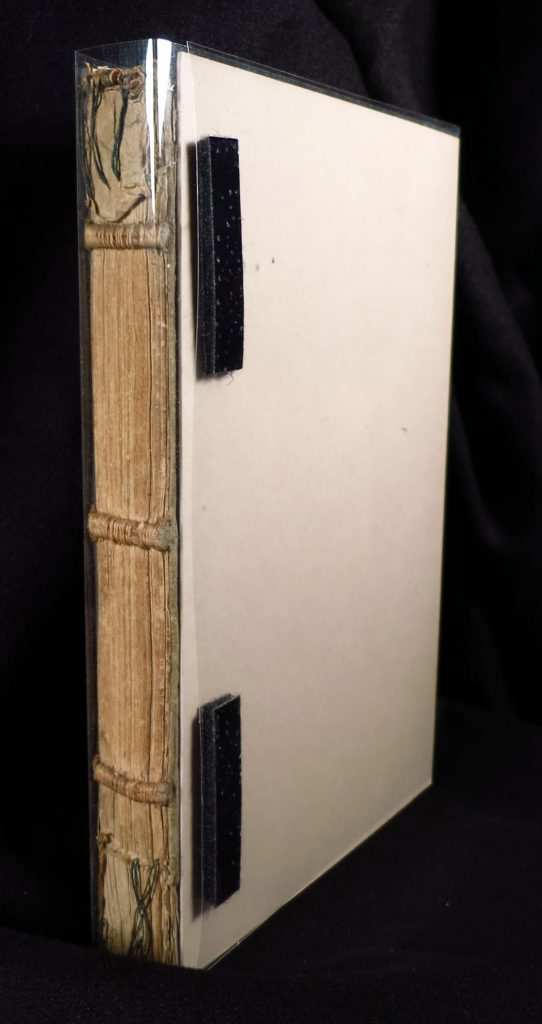
Smeltzer Collection, Henri de Suberville (1598), Spine View as Preserved.

Smeltzer Collection, Henri de Suberville (1598), Spine View as Preserved.

With thanks to the owner, our Associate, Ronald K. Smeltzer, we observe some recycled vellum stiffeners which still stand in situ in a scientific book by the author and inventor Henry de Suberville, printed in Paris in 1598 by Adrien Perier.  All the photographs here are Ronald’s, reproduced with permission.  The volume has lost the boards and any covering of its former cover, but it retains elements of the binding, including the stitching and some stiffeners repurposed from earlier hand-written material. Our purpose here is to examine and illustrate the reused binding fragments in their settings.

Inspired by The Caxton Club/Bibliographical Society of America Symposium on the Book held in April 2015 on “Preserving the Evidence: The Ethics of Book and Paper Conservation”, Ronald has published a concise report (freely downloadable) about the volume and his approach to conserving and conserving it.

  • Ronald K. Smeltzer, “Preserving the Evidence:  A 16th-Century Book Absent Its Binding”, Caxtonian:  Journal of the Caxton Club, 18:9 (September, 2015), 1–3.

His Figure 5 (shown at the left) shows the volume in 3-quarter view, from the front and the spine, with minimal intervention.  Here, we learn, is “Suberville’s treatise in its polyester enclosure with hook-and-loop fasteners, showing the intact structure of the spine, including the remains of head and tail bands and cords”.

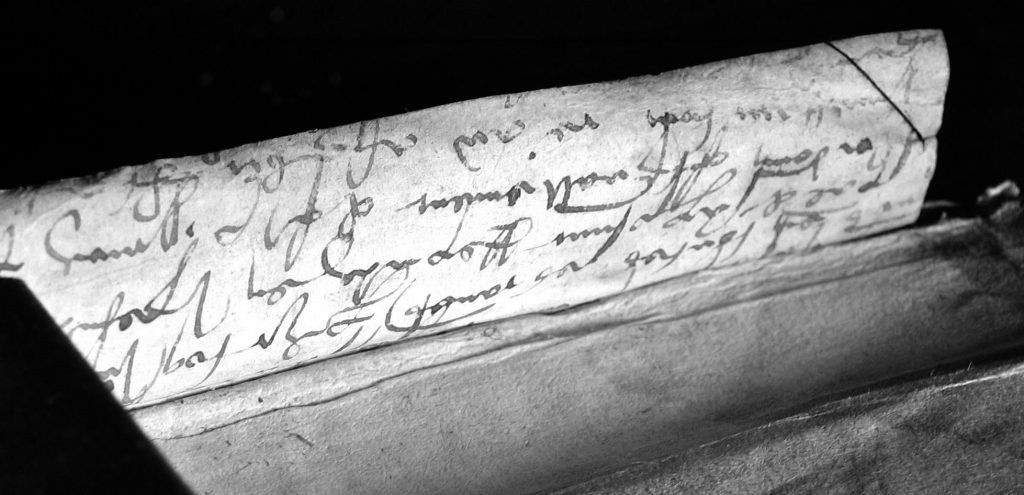
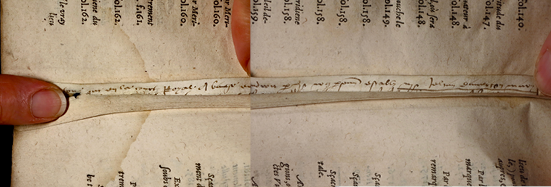
Moreover, there survive further remnants from the former state of the volume.  “Apparently as guards, vellum flaps are present, but not visible in Fig. 5, on both sides of the spine. Very old handwriting, not decipherable by me, is on the inner side of the vellum pieces, as illustrated in Fig. 6.”

Figure 6 (shown below) shows a reused vellum fragment as it fits in the volume, with the tops of the original script turned to the gutter and spine of the binding.

Smeltzer Collection, Henri de Suberville (1598): Vellum Support, as shown in Smeltzer (2015), Figure 6.

Smeltzer Collection, Henri de Suberville (1598): Vellum Support, as shown in Smeltzer (2015), Figure 6.

As Ronald observed, “Considering the interesting visible and apparently contemporary structure of this late 16th-century book, it seems appropriate to leave it as-is.”

We agree.  See, for example, Physical Evidence and Manuscript Conservation:  A Scholar’s Plea (1994) by our Director, and posts throughout our blog, listed in the Contents List.

The Volume ‘As Is’

The volume is a copy of Henry de Suberville’s L’Henry-Metre, Instrument Royal et Universal avec sa théorique, usage et pratique démontrée . . . (Paris:  Adrien Perier, 1598), lacking its former binding.  The title-page lists the printer’s address as rue sainct Iacques en le boutique de Plantin au Compass, on a notable street in Paris in the Latin Quarter, among other booksellers and printers.  Adrien Périer had marred Madeleine (or Magdalena) Plantin, daughter of Christophe Plantin and widow of Guy Beys (who died in 1595), and he came to use the Plantinian compasses as printing mark.  The colophon of the volume states that the book was printed by Jamet Mettayer, printer and bookseller, that is, during the second period of Mettayer’s work in Paris (1594–1605).

We might wonder what scraps lay to hand to put to use in the sewing when the individual copies of the work received their bindings.

This volume is described thus:

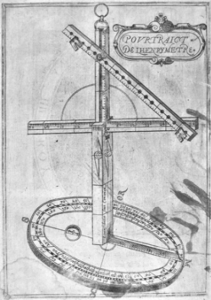
It joins Ronald’s collection of works on early scientific instruments.  On an “obscure” subject, Suberville’s book presents a text on mensuration with the trigonometric device which he had invented:  the HenryMetre.  Its Portraict is illustrated in the book and reproduced in Smeltzer’s Figure 2 (below left).  “With its circular base, both horizontal and vertical angles could be measured.  Hence, it could be used for surveying, measuring heights and distances, and carrying out astronomy measurements”.  Basically, the text offers a guide to the instrument.

Paris, Musée du Louvre, Department of Paintings, Henry IV, King of France in Black Dress (1610), by Frans Pourbus the Younger. Image Public Domain via Wikimedia Commons.

Paris, Musée du Louvre, Department of Paintings, Henry IV, King of France in Black Dress (1610), by Frans Pourbus the Younger. Image Public Domain via Wikimedia Commons.

Smeltzer Collection, Henri de Suberville (1598), 'Pourtraict de l'HenryMetre'.

Smeltzer Collection, Henri de Suberville (1598), ‘Pourtraict de l’HenryMetre’.

The book is a modest quarto.  Its first half has 72 woodcut illustrations, many full page or nearly so, showing how the Henry-Meter is used and providing diagrams of the relevant geometry for calculations based upon measurements to be made with it.  The second half of the text mainly considers specific problems, mathematical calculations, and tables of numbers.  The 4 engraved plates include the “Pourtraict” of the device and the frontispiece portrait, by Thomas de Leu, of the dedicatee, King Henri IV (1553–1610), King of France and Navarre.  (On this frontispiece, see, for example, its record in the British Museum collection.)

The Volume

The title page announces the Henry-Metre as subject, describes its abilities, names its inventor–author, Henry de Subreville Breton, and describes him as Chanoine en l’Eglise Cathedrale S. Pierre de Xaintes; & Aduocat en la Cour de Parlement de Bourdeaux.  The cathedral church at which he was a canon was the former Cathédrale Saint-Pierre de Saintes in Saintes, Carente-Maritime, France.  Suberville composed his text apparently during the last few years of the wars of religion in 16th-century France — to which it refers.

Smeltzer Collection, Henry de Suberville, 'L'Henry-metre' (Paris, 1598), Title Page.

Smeltzer Collection, Henry de Suberville, ‘L’Henry-metre’ (Paris, 1598), Title Page.

The Spine

Apparently original, the sewing remains mostly intact.

Smeltzer Collection, Henri de Suberville (1598), Spine View as Preserved.

Smeltzer Collection, Henri de Suberville (1598), Spine View as Preserved.

The Location of the Strips

It is useful to recognize how the vellum supports are integrated into the book’s structure, noting neighboring blank leaves not part of the gathering structure. The gathering formula encapsulates the structure of this unusual book:

Suberville (1598) gathering formula.

At both front and back, a folded pair of blank paper leaves (comprising a bifolium) stands at the outer side of each gathering which has a vellum support.  At the front, the vellum support encompasses gathering ã and two blank leaves before it. At the rear, the vellum support encompasses gathering H and two blank leaves following leaf H2.  That the 2 blank leaves in each case are not part of the gathering structure itself is seen by their chain-lines that are vertical, and not horizontal as for the text leaves.  The paper of the blanks seems to be slightly different to the touch.  They carry no watermarks.

The Fragments and Their Text

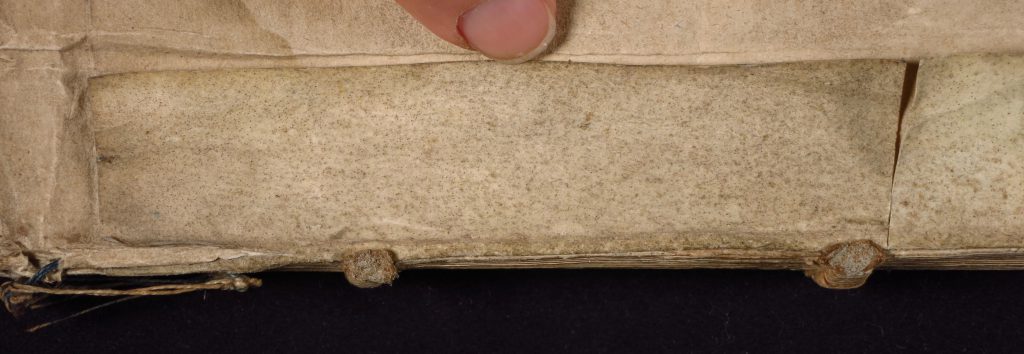
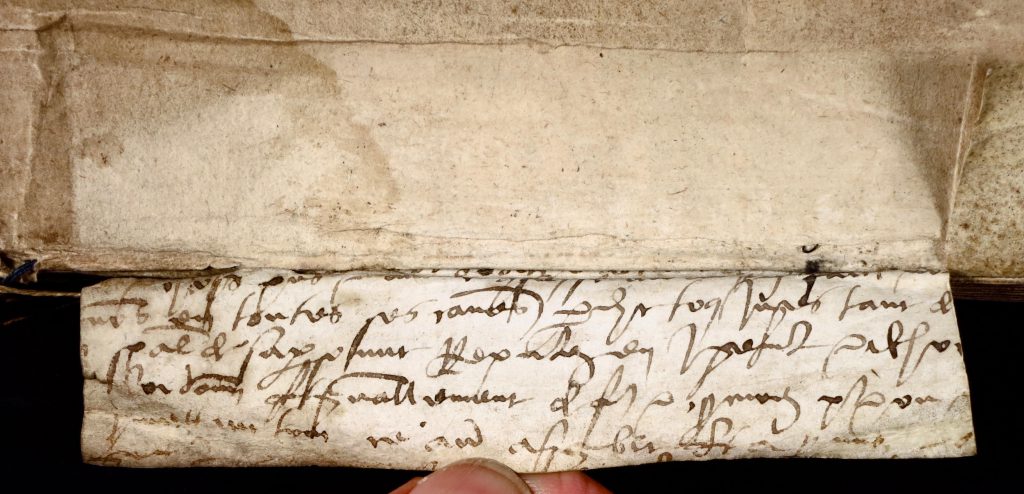
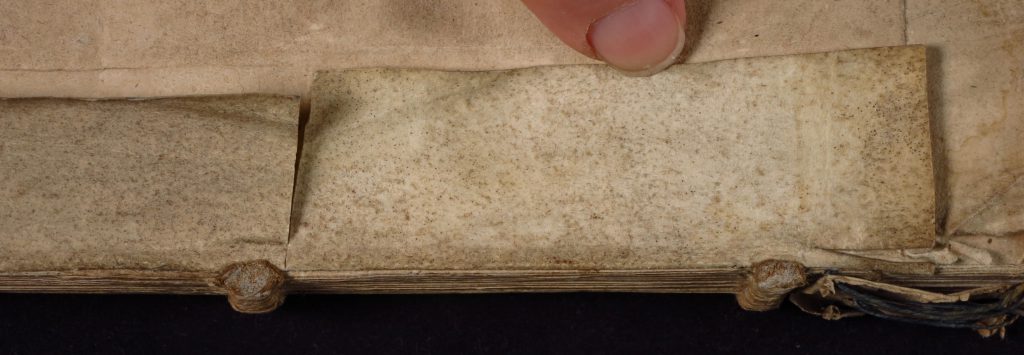
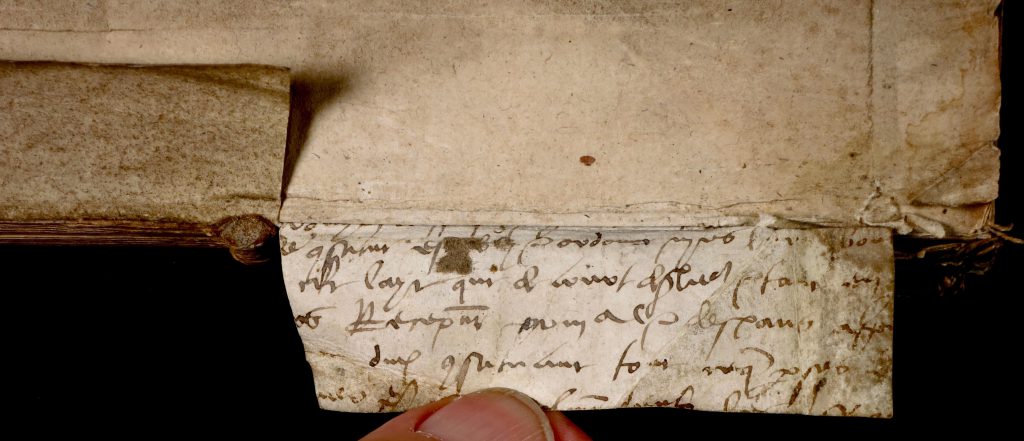
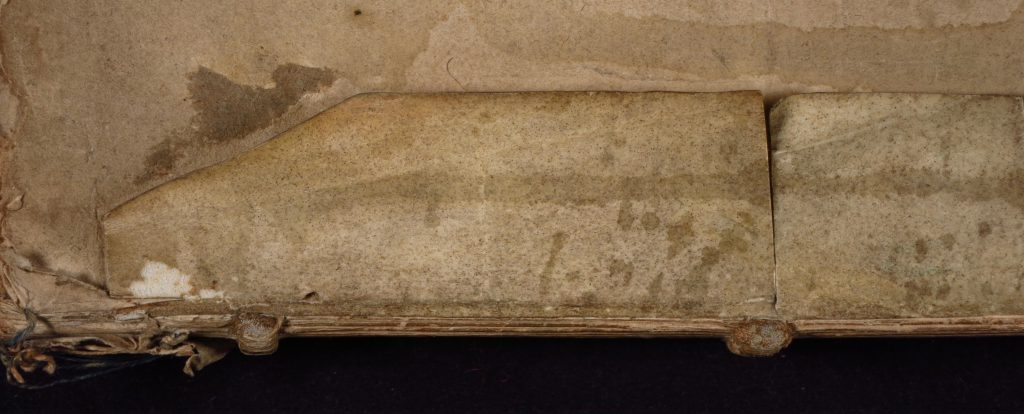
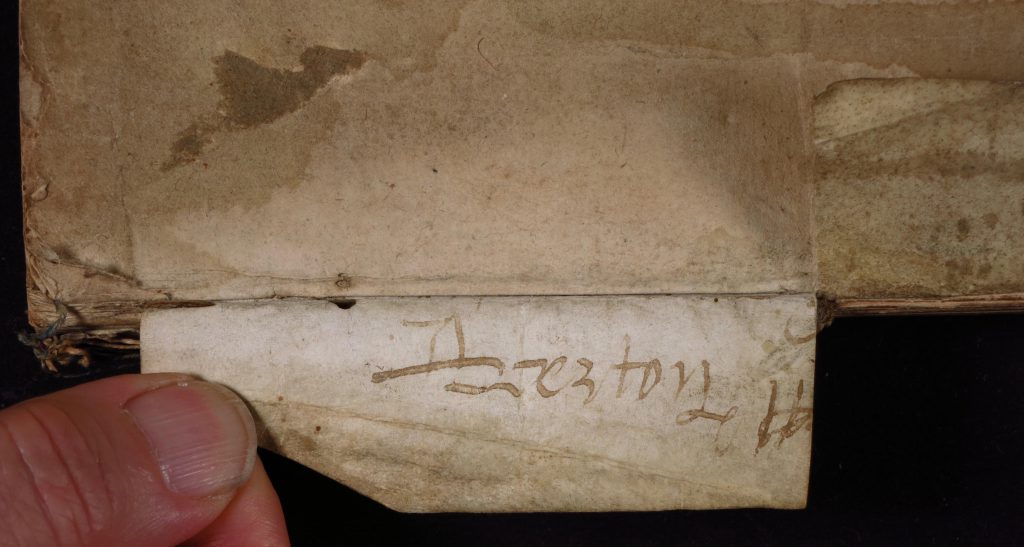
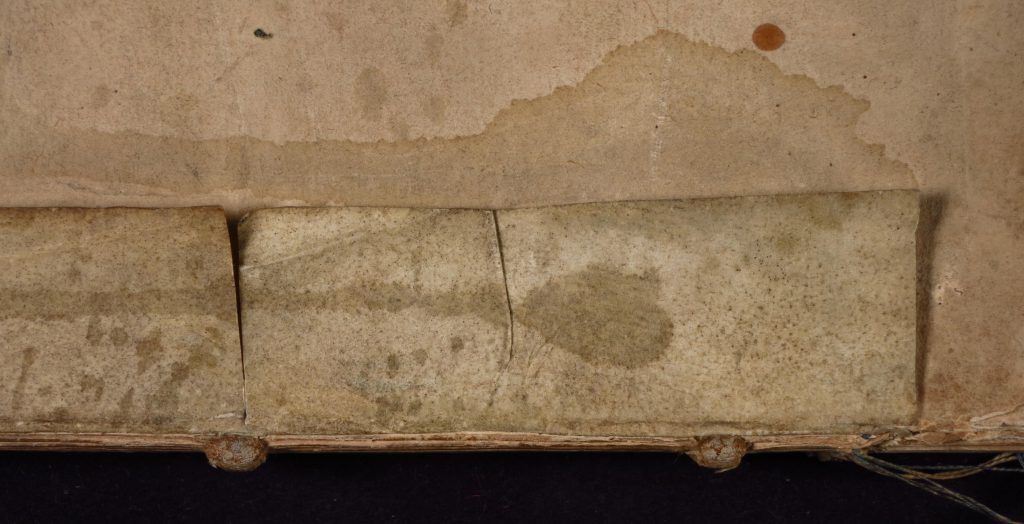
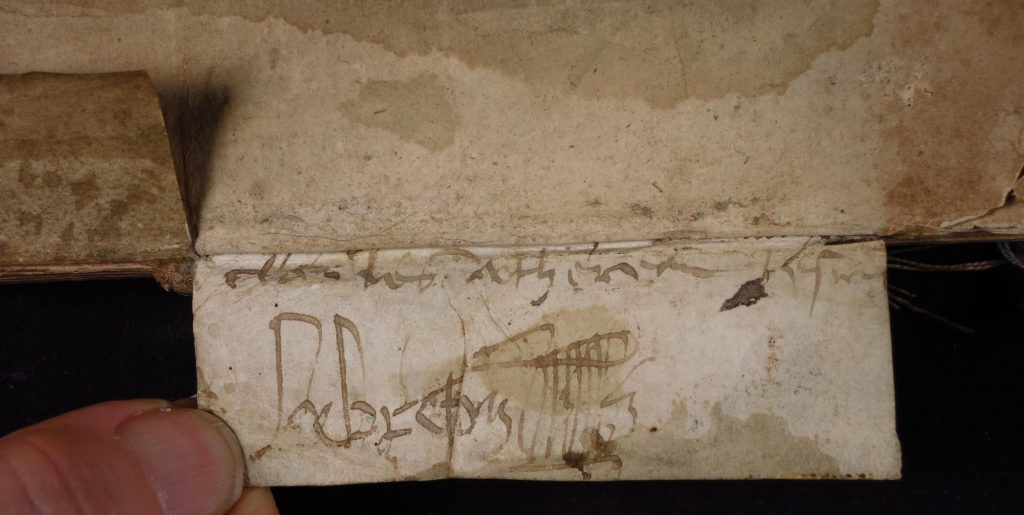
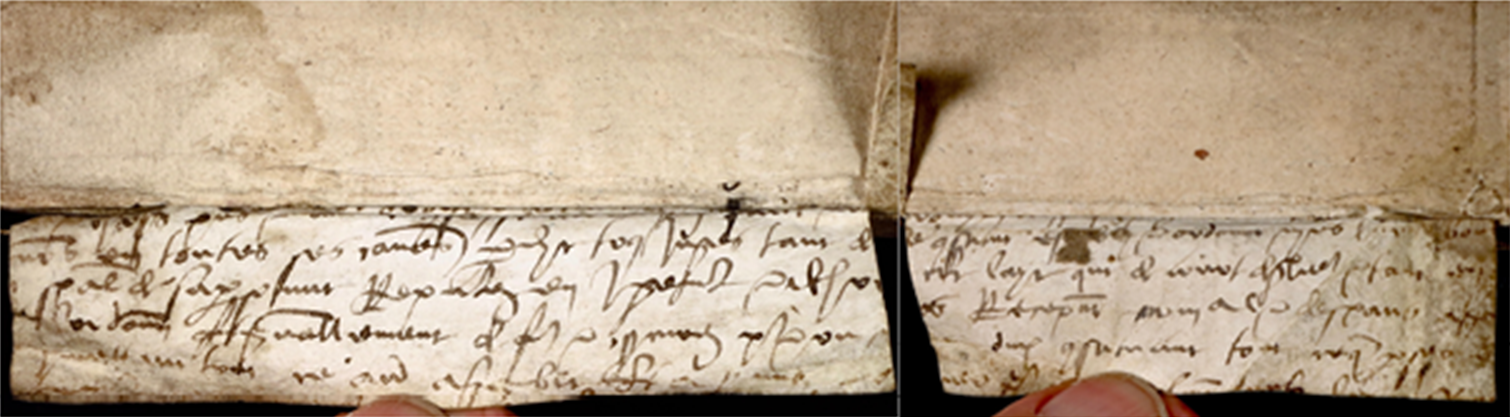
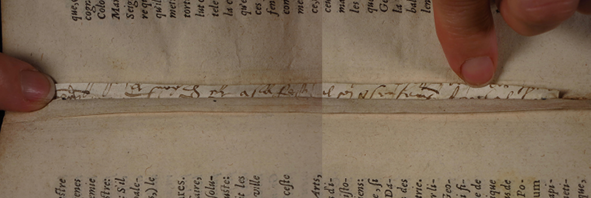
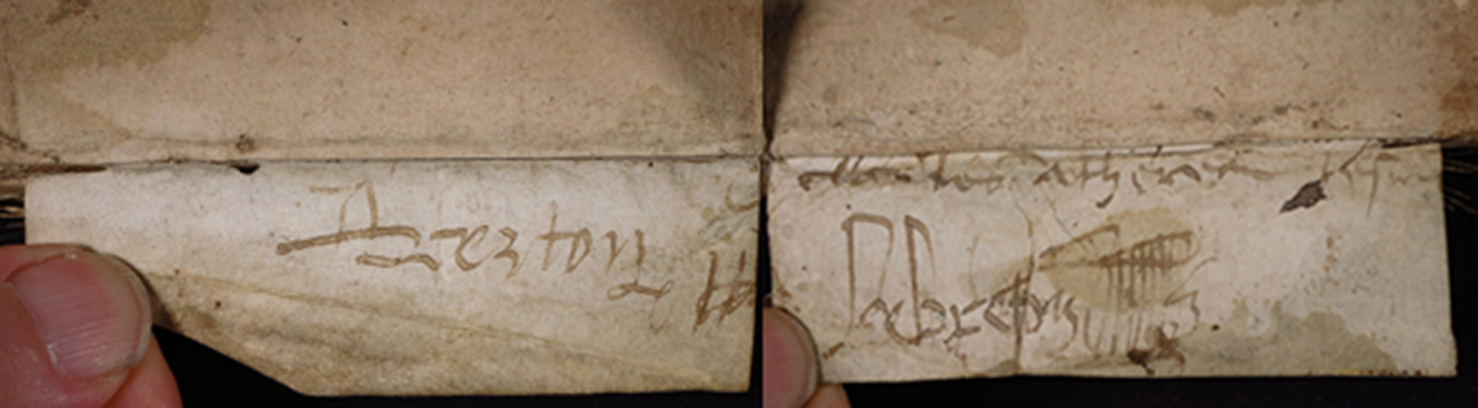
The guards comprise 2 reused Strips, cut to shape.  The Strips are visible at each end of the volume, as a narrow Flap at the end of the text-block, formerly facing the boards and any pastedowns or endleaves pertaining to them.  Wrapping around the fold of its gathering, each Strip re-emerges into view within the text-block as a narrower Stub in the gutter in the opening between pages at the other end of the gathering.

Each Strip carries writing in ink only on one side, which is the flesh side of the animal skin and the Face of the written material.  The Dorse (hair side) is turned outward around the gathering.

We call the guards Strips 1 at the back and 2 at the front, each with a Flap on the outside of the gathering and a Stub on the inside.  Why number them that way, seemingly inverted?  Spoiler Alert:  Both Strips apparently come from a single manuscript or document, and the structure of their text indicates that Strip 1 would originally have preceded Strip 2.

The “outer” portion of each Strip, that is, the Flap, is slit about midway along into 2 sections.  The slit corresponds to the middle row of sewing across the gatherings and its raised band.

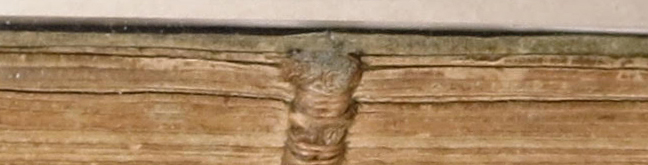
Along the spine, it is possible to see the exposed outer edge of the guard at the front of the volume.  Its color and texture contrasts with the paper of the gatherings otherwise.  The guard extends not the full length of the gathering, but rather between its rows of kettle-stitchings at head and foot. At the end of the textblock, the guard sits alongside the 3 raised bands of stitchings spaced at even intervals along the spine.  The slit midway along the guard which produced the 2 halves of the Flap on the outer side, but no division in the Stub on the inner side, is visible emerging alongside the raised middle band of stitching.

Smeltzer Collection, Henri de Suberville (1598), Spine View, with 3 Raised Bands flanked by a Row of Kettle-Stitching at either end.

Smeltzer Collection, Henri de Suberville (1598), Spine View, with 3 Raised Bands flanked by a Row of Kettle-Stitching at either end.

Close up:

Smeltzer Collection, Henri de Suberville (1598), Spine: Front Midsection.

Smeltzer Collection, Henri de Suberville (1598), Spine: Front Midsection.

For each Strip, we show both front and back of each “outer” portion, or Flap, but only the visible Text Side of its Stub on the other side of the gathering.

Note that we view and number their portions taking the upright orientation of the script as the standard, not necessarily the position of the Strip as aligned with respect to the head or tail of the spine.

Strip 1 (at the Back of the Volume)

Flap 1a (Left-Hand Side)

Dorse (Hair side)

Smeltzer Collection, Henri de Suberville (1598), Vellum Supports, Strip 1 'Upper' Dorse.

Smeltzer Collection, Henri de Suberville (1598), Vellum Supports, Strip 1 ‘Upper’ Dorse.

Face / Text Side (Flesh Side), with the text seen upright.  Compare Ronald’s Figure 6 above in black-and-white.

Smeltzer Collection, Henri de Suberville (1598): Vellum Support 1, 'Upper', Face of Text.

Smeltzer Collection, Henri de Suberville (1598): Vellum Support 1, ‘Upper’, Face of Text.

Flap 1b (Right-Hand Side)

Dorse (Hair Side)

Smeltzer Collection, Henri de Suberville (1598), Vellum Supports, Strip 1 'Lower' Dorse.

Smeltzer Collection, Henri de Suberville (1598), Vellum Supports, Strip 1 ‘Lower’ Dorse.

Face (Flesh Side), with the text seen upright

Smeltzer Collection, Henri de Suberville (1598), Vellum Supports, Strip 1 'Lower' Face.

Smeltzer Collection, Henri de Suberville (1598), Vellum Supports, Strip 1 ‘Lower’ Face.

*****

Strip 2 (At the Front of the Volume)

Flap 2a (Left-Hand Side)

Dorse (Hair side)

Smeltzer Collection, Henri de Suberville (1598), Vellum Supports, Strip 2 'Upper' Dorse.

Smeltzer Collection, Henri de Suberville (1598), Vellum Supports, Strip 2 ‘Upper’ Dorse.

Face (Flesh Side), with the text upright

Smeltzer Collection, Henri de Suberville (1598), Vellum Supports, Strip 2 'Upper' Face.

Smeltzer Collection, Henri de Suberville (1598), Vellum Supports, Strip 2 ‘Upper’ Face.

Flap 2b (Right-Hand Side)

Dorse (Hair side)

Smeltzer Collection, Henri de Suberville (1598), Vellum Supports. Strip 2 'Lower' Dorse.

Smeltzer Collection, Henri de Suberville (1598), Vellum Supports. Strip 2 ‘Lower’ Dorse.

Face (Flesh Side), with the text upright

Smeltzer Collection, Henri de Suberville (1598), Vellum Supports, Strip 2 'Lower' Face.

Smeltzer Collection, Henri de Suberville (1598), Vellum Supports, Strip 2 ‘Lower’ Face.

On the Other Side of the Gathering

Stub 1 (Strip 1)

Left-Hand Side

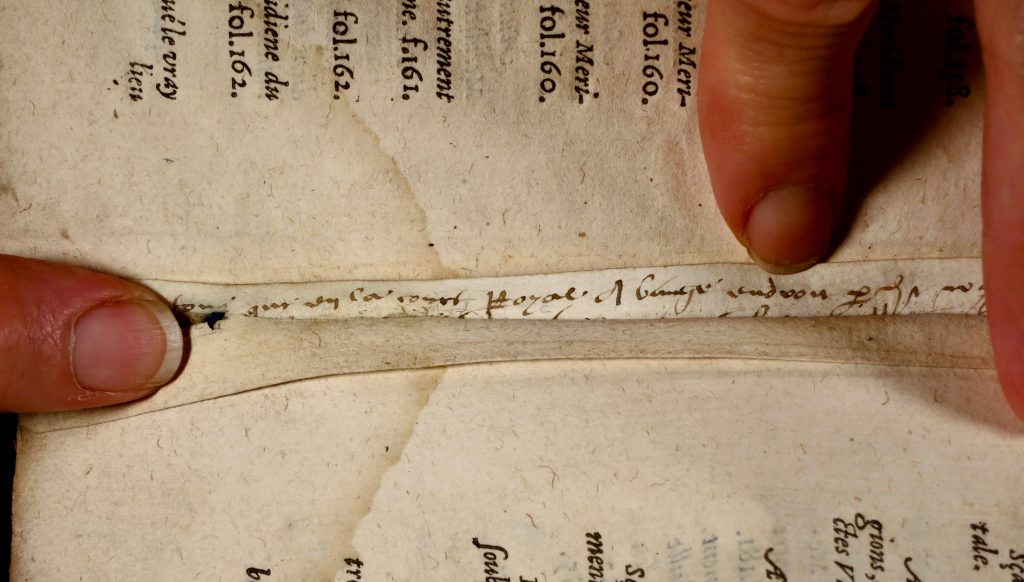
Smeltzer Collection, Henri de Suberville (1598), Vellum Support Slip 1, Stub, Left ("Royal").

Smeltzer Collection, Henri de Suberville (1598), Vellum Support Slip 1, Stub, Left (“Royal”).

Right-Hand Side

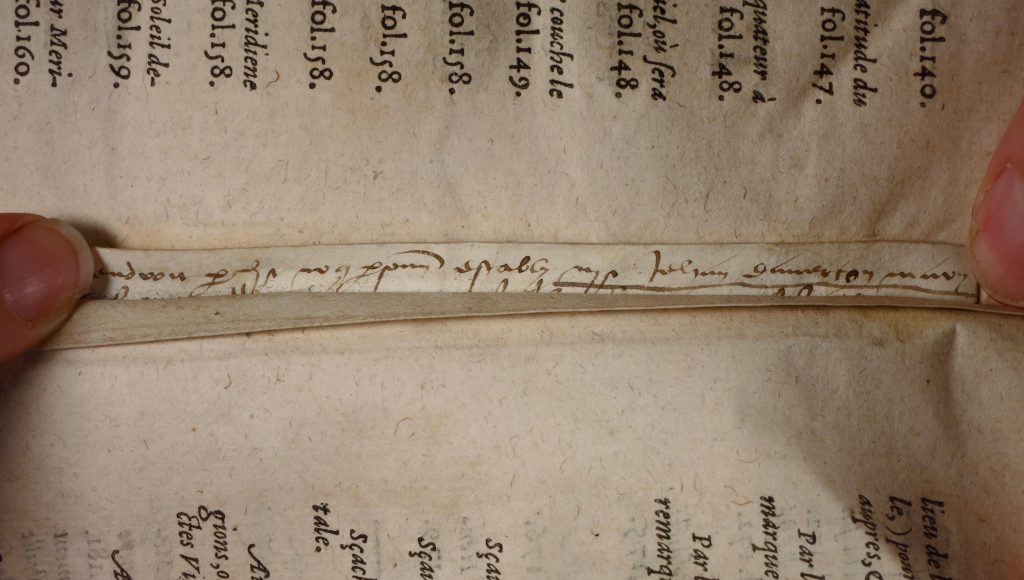
Smeltzer Collection, Henri de Subermeyer (1598), Vellum Support Slip 1, Stub, Right.

Smeltzer Collection, Henri de Suberville (1598), Vellum Support Slip 1, Stub, Right-Hand Side.

Stub 2 (Strip 2)

Left-Hand Side

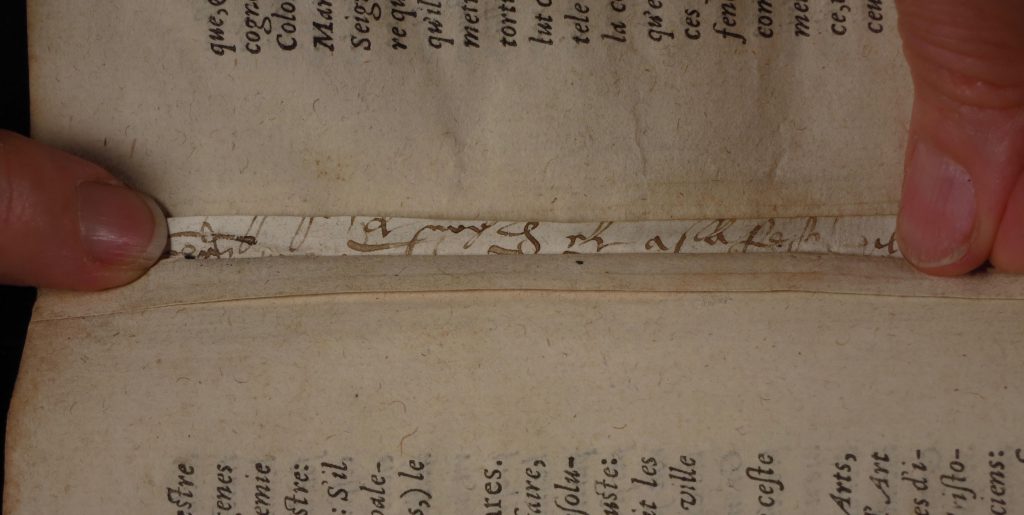
Smeltzer Collection, Henri de Suberville (1598), Vellum Support Slip 2, Stub, Left.

Smeltzer Collection, Henri de Suberville (1598), Vellum Support Slip 2, Stub, Left.

Right-Hand Side

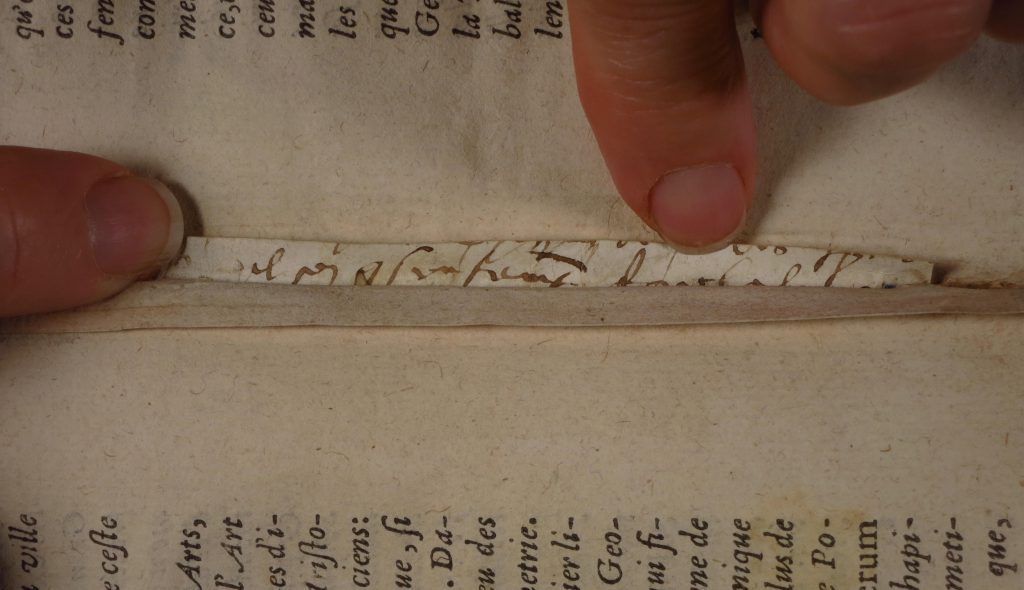
Smeltzer Collection, Henri de Suberville (1598), Vellum Support Slip 2, Stub, Right.

Smeltzer Collection, Henri de Suberville (1598), Vellum Support Slip 2, Stub, Right.

The Pieces ‘Rejoined’

We virtually reconstruct the visible portions of the Strips, which had to be photographed in sections.  The fit in the reconstructed view is approximate, rather than exact, because, in photographing the elements within the still-sewn structure, the angles and distances would have varied between 1 half of an individual Strip and the other.

Strip 1 (Stub 1 + Flap 1)

Stub 1

Smeltzer Collection, Henri de Suberville (1598), Vellum Supports Slip 1, Inner Stub, Text 'Rejoined'.

Smeltzer Collection, Henri de Suberville (1598), Vellum Supports Slip 1, Inner Stub, Text ‘Rejoined’.


Flap 1

Smeltzer Collection, Henri de Suberville (1598), Vellum Support Slip 1, Outer Flap, Text 'Rejoined'.

Smeltzer Collection, Henri de Suberville (1598), Vellum Support Slip 1, Outer Flap, Text ‘Rejoined’.

Strip 2 (Stub 2 + Flap 2)

Stub 2

Smeltzer Collection, Henri de Suberville (1598), Vellum Support Slip 2, Inner Stub, Text 'Rejoined'.

Smeltzer Collection, Henri de Suberville (1598), Vellum Support Slip 2, Inner Stub, Text ‘Rejoined’.

Flap 2

Smeltzer Collection, Henri de Suberville (1598), Vellum Support Slip 2, Outer Flap, Text 'Rejoined'.

Smeltzer Collection, Henri de Suberville (1598), Vellum Support Slip 2, Outer Flap, Text ‘Rejoined’.

The Location of the Fragments in the Original Document
and in the Current Binding

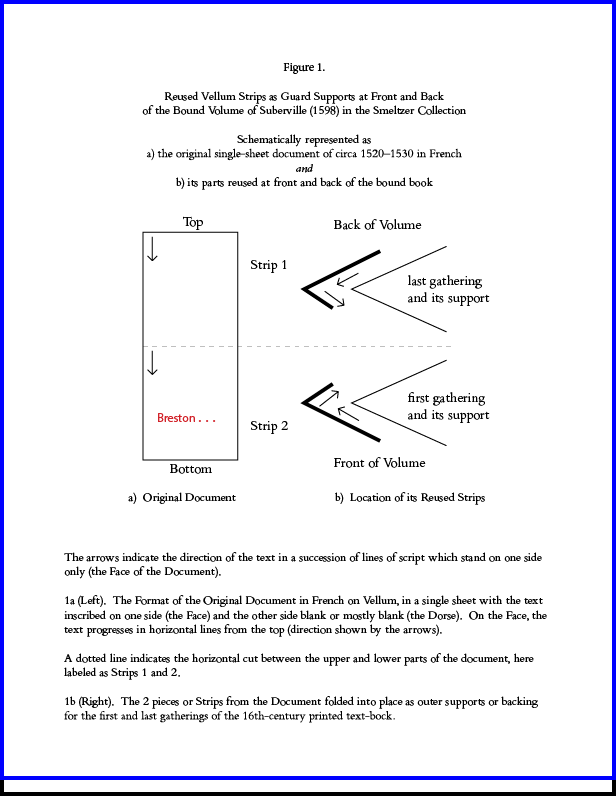
A set of diagrams represent the placement of the pieces of the vellum and the direction of its written text both on its document and in its pair of reused strips.  With thanks to Leslie French for the renditions.

Reused Vellum Binding Fragments for Suberville (1598) in the Smeltzer Collection.

Reused Vellum Binding Fragments for Suberville (1598) in the Smeltzer Collection.

*****

The Script and Contents

Parts of the text are visible.  Some are legible.

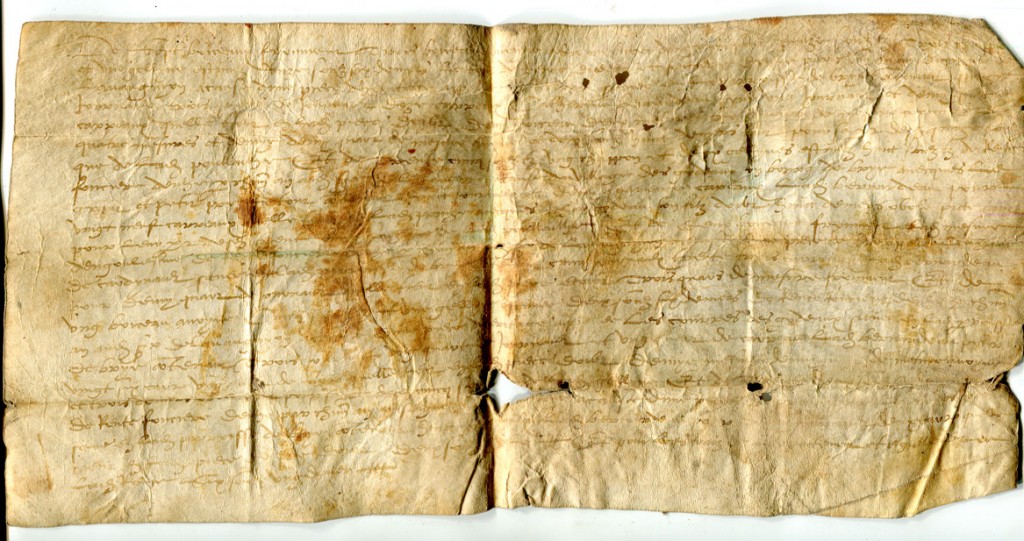
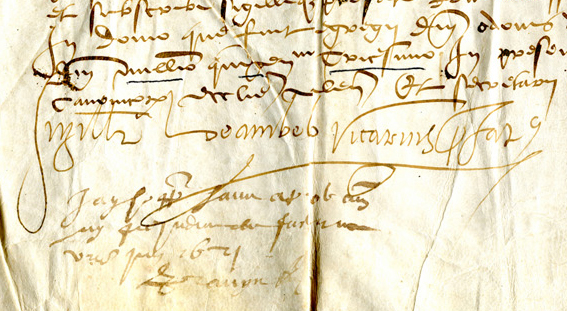
The Stubs carry parts of 1 or 2 long lines of cursive script.  Flap 2 carries parts of 2 lines of script, comprising a line of text and a staggered line of names, plus flourishes.  Remnants of at least 6 lines of script can be seen on the Flap of Strip 1.  Near the beginning of its line ‘2’, there stand the words toutes ses . . . (“all his/her/its/their”).   Following the ‘join’ of the parts of the Flap in line ‘3’, there are the word loys qui . . . (“all his/her/its/their”).  The word Royal, with a distinctive capital R, appears clearly on Stub 1a.  Similar Rs occur elsewhere as well.  Made with a pen having a broader, scratchy nib and paler ink than the text above, the prominent signature(s), accompanied by flourishes (#), spread(s) across most of the Flap on Strip 2 ( . –reston # Lebr . . . #).

The 2 Strips manifestly derive from the same written text, which stood on the Face or recto of the vellum sheet (rather than sheets, presumably).  Given the location of the signature(s) and the orientation of the lines of script, it is appropriate to reconstruct the original — at least in its visible surviving parts — with Strip 1 before, or indeed above, Strip 2.  The text on each Stub precedes the text on its Flap, with an interval of script now hidden within the inside of the fold, amounting to 1 or more lines.  Perhaps the script on the 2 Strips interlocks at the cutting line between them?

Written in ink in a “loose and sloppy hand” characteristic of the period (as described by our Associate, David Sorenson), the now-bipartite fragment comes from a French charter from about 1510–1520 or so.  It was evidently a legal document of some sort, possibly a deed, lease, or other contract.  Perhaps its signer(s) might be identified in other sources.

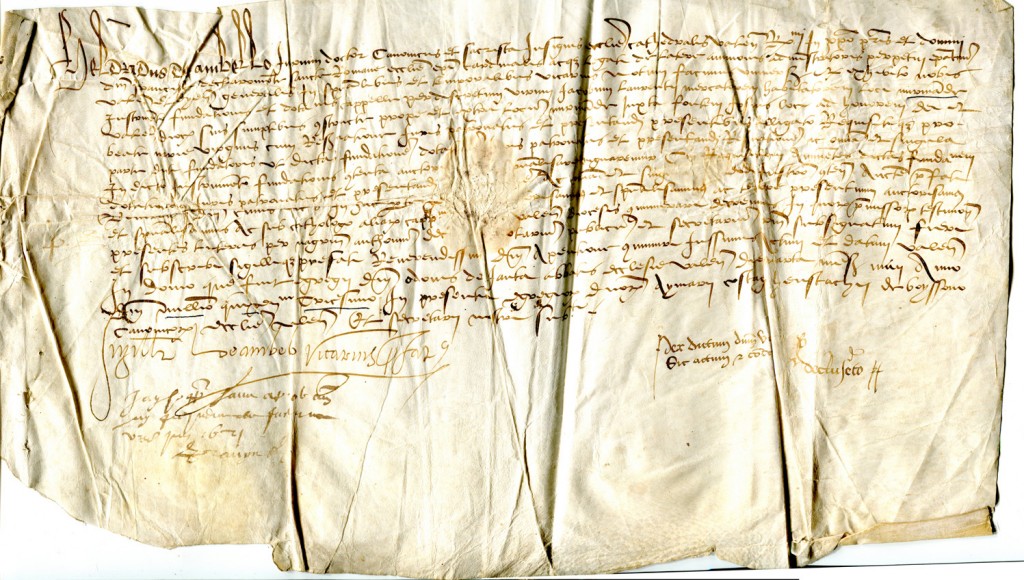
Our blog has already presented some French documentary materials on vellum with 16th-century script from other private collections.

  • Say Cheese.  Single-sheet document in Latin, circa 1530s, listing rents for plots of land, from Brie.
Single-sheet document in Latin on vellum, circa 1530s, listing rents for plots of land, from Brie in France. Private collection, reproduced by permission.

Private collection, Single-sheet document in Latin on vellum, circa 1530s, from Brie in France.

  • Scrap of Information.  Single-sheet document in Latin, circa 1530s, with a transaction at Vienne, in Isère.
Private Collection, Latin document from Vienne, France, circa 1530s. Reproduced by permission

Private Collection, Document in Latin from Vienne, circa 1530s.

Its Signatures:

Detail of document of 1530 for a transaction relating to Vienne in France, showing the lower left-hand side of the document, with its citation of the date in Latin and with attesting signatures. Reproduced by permission.

Private Collection, Document in Latin from Vienne, France, circe 1530s

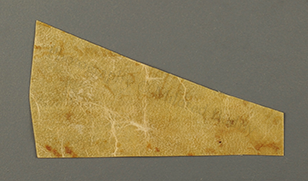
  • Scrap of Information.  Fragment of a leaf or document on vellum with the number/date 1538.
    Recto of Scrap from a leaf or document, with the date 1538. Photography © Mildred Budny

    Recto of Scrap from a leaf or document, with the date 1538.

    Image-enhancement reveals more of its features:

    Recto of Scrap from a leaf or document, with the date 1538. Photography © Mildred Budny

    Recto of Scrap from a leaf or document, with the date 1538.

*****

We thank Ronald Smeltzer for permission to examine this volume and for information about its structure and context.  We also thank David Sorenson for advice about the script and type of document from which came the reused vellum strips.

Do you recognize this reused document or its scribe?  Can you read more of the text?

Do you know of other parts of the same document (or similar documents), say in the binding structures of other books — including this text by Henri de Suberville (1598) —  printed by the same printer/producer, whether Adrien Périer or Jamet Mettayer, for example when the latter returned to set up shop in Paris?

Please let us know.  You might reach us via Contact Us or our Facebook Page. Comments here are welcome too.

Watch for more discoveries.  See the Contents List for this blog.

*****

Update:  In January 2022, for the online series on “The Research Group Speaks”, Ronald Smeltzer gave a presentation on The Curious Printing History of La Science de L’Arpenteur.

Dupain de Montesson, La science de l’arpenteur (1766), Title Page Vignette. Ronald K. Smeltzer Collection. Photograph by Ronald K. Smeltzer, reproduced by permission.

*****

Tags: Adrien Périer, Binding Fragments, Binding History, Documents of the Ancien Regime., Henry de Suberville, History of Documents, Jamet Mettayer, Reused Documents
No Comments »

Some Leaves in Set 1 of Ege’s FOL Portfolio

June 19, 2020 in Manuscript Studies

Leaves from
‘Otto Ege Manuscripts 8, 14, 19, and 41’
In a Newly Discovered Portfolio
of Fifty Original Leaves (“FOL”)

[Published on 18 June 2020, with updates]

[Update on 22 January 2021:  This set, sold at auction at Christie’s in London on 8 December 2020, has been acquired by the Houghton Library at Harvard University, as announced by John Overholt.]

Continuing our series of blogposts (see our Contents List) on some manuscripts dismembered and dispersed by Otto F. Ege (1888–1951) in various Portfolios or by other means, we report on selected leaves which emerge into view in a newly discovered set of the Portfolio of Fifty Original Leaves (“FOL”). 

Set 1 of Ege's FOL Portfolio, Leaf 14 recto: Initial for Lamentations.

Set 1 of Ege’s FOL Portfolio, Leaf 14 recto: Initial for Lamentations.

Among the numbered sets, the ‘new’ one has the Number 1.  This “previously-unknown” set of Ege’s “Fifty Original Leaves” in private hands is reported by our Associate Lisa Fagin Davis in her blog: Manuscript Road Trip: Otto Ege, St. Margaret. and Digital Fragmentology, Part 2 (June 7, 2020), following her Part 1 describing her own and other scholars’ work — ours included — on the FOL manuscripts:  Manuscript Road Trip: Fragmentology in the Wild (July 14, 2019).

We thank the owner and Lisa for allowing us to see images of the relevant leaves in the new set, resulting in updates for the manuscripts which we have already considered within Ege’s FOL Portfolio.  A complete set of the Portfolio contains ‘Ege MSS 1–50’, as numbered both by Ege and by Scott Gwara in his book on Otto Ege’s Manuscripts (2013). 

Here, augmenting our work already on survivors from some of those Fifty manuscripts in other settings (sets of the FOL Portfolio and elsewhere), we focus on Ege MSS 8, 14, 19, and 41.   This post contributes to our on-going study of Ege’s manuscripts and other materials, medieval and other, Western and more.  So far:  Ege MSS 8, 14, 41, 51, 56, 61, and 214 (see our Contents List). Read the rest of this entry →

Tags: Christie's, De tribus diebus by Hugh of Saint-Victor, Dialogues of Gregory the Great, Dispersed Manuscript Leaves, Ege's FOL Portfolios, Epistles of John Chrysostom, Fragmentology, History of Manuscripts, Houghton Library, Hugh of Saint-Victor, Latin Vulgate Bible, Medieval Manuscript Fragments, Meditations of Saint Anselm, Otto Ege, Otto Ege MS 14, Otto Ege MS 19, Otto Ege MS 41, Otto Ege MS 8, Otto Ege Portfolios, Wilton Processional
3 Comments »

A Charter of 1399 from High Ongar in Essex

May 11, 2020 in Manuscript Studies, Uncategorized

A Charter of
23 Richard II (=1399)
Issued on 17 July 1399
at Alta Aungre (High Ongar)
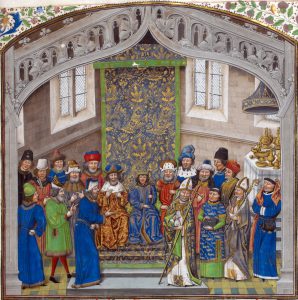
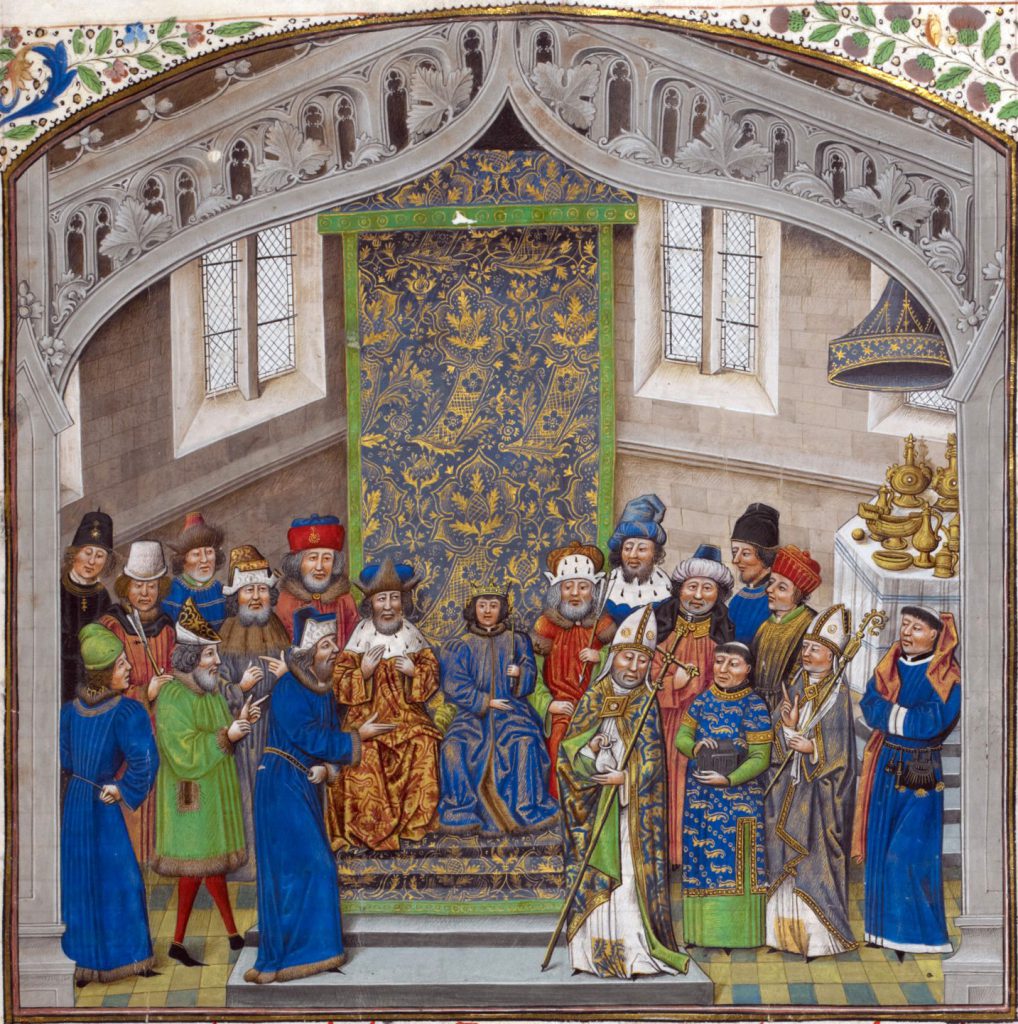
London, British Library, Royal MS 14 E IV, folio 10 recto. "Recueil des croniques" by Jean de Wavrin. Coronation of Richard II at the age of 10 in 1377.

London, British Library, Royal MS 14 E IV, folio 10 recto. “Recueil des croniques” by Jean de Wavrin. Coronation of Richard II at the age of 10 in 1377.

[Posted on 12 May 2020, with updates]

Mildred Budny continues the series of posts on medieval and early modern charters from England in a private collection. See our Contents List.

First we examined the numbered group of documents mainly from Preston in Sussex.  Then we turned to documents from other places.

  • Full Court Preston
  • Preston Take 2
  • Preston Charters, Continued
  • Charter the Course:  More on Preston Charters
  • Preston Charters:  The Chirographs
  • More Light on English Charters

From the Time of Richard II

Once again, we examine a charter from the time of King Richard II (6 January 1367 – c. 14 February 1400), who reigned from 1377 until he was deposed in 1399.

6 Richard II

Previously we considered a charter from this king’s Regnal Year 6, issued at an unnamed location on the Feast of Saint Michael the Archangel, that is, on 19 September 1382.  That one is Charter 1 in the numbered series in that private collection which opens the section devoted to English charters.  Charter 1 made its appearance in casting More Light on English Charters.

6 Richard II (= 22 June 1382 – 21 June 1383)
“On the Feast of Saint Michael Archangel” = 19 September
I. e. 19 September 1382
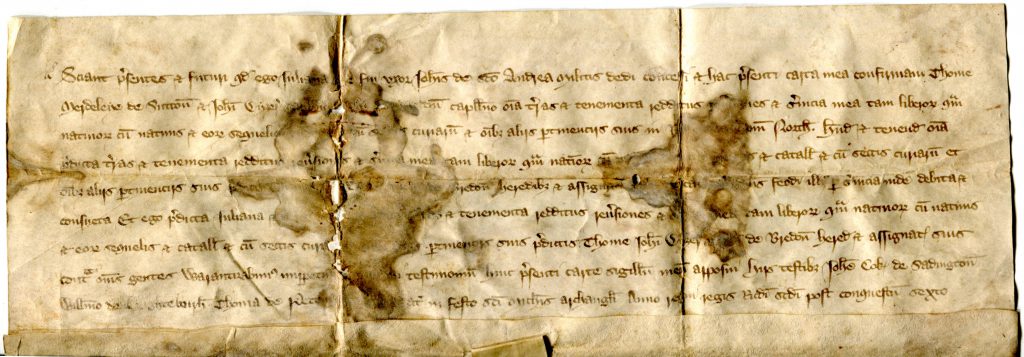
6 Richard II Face.

Private Collection, “Charter 1”: 6 Richard II Face.

The document retains its original seal, more-or-less intact, with its Legend in Lombard Capitals and its Device in the form of a (partly rubbed) heraldic shield.  The Legend begins with a customary star (*) and the word SIGILLUM (“Seal”).
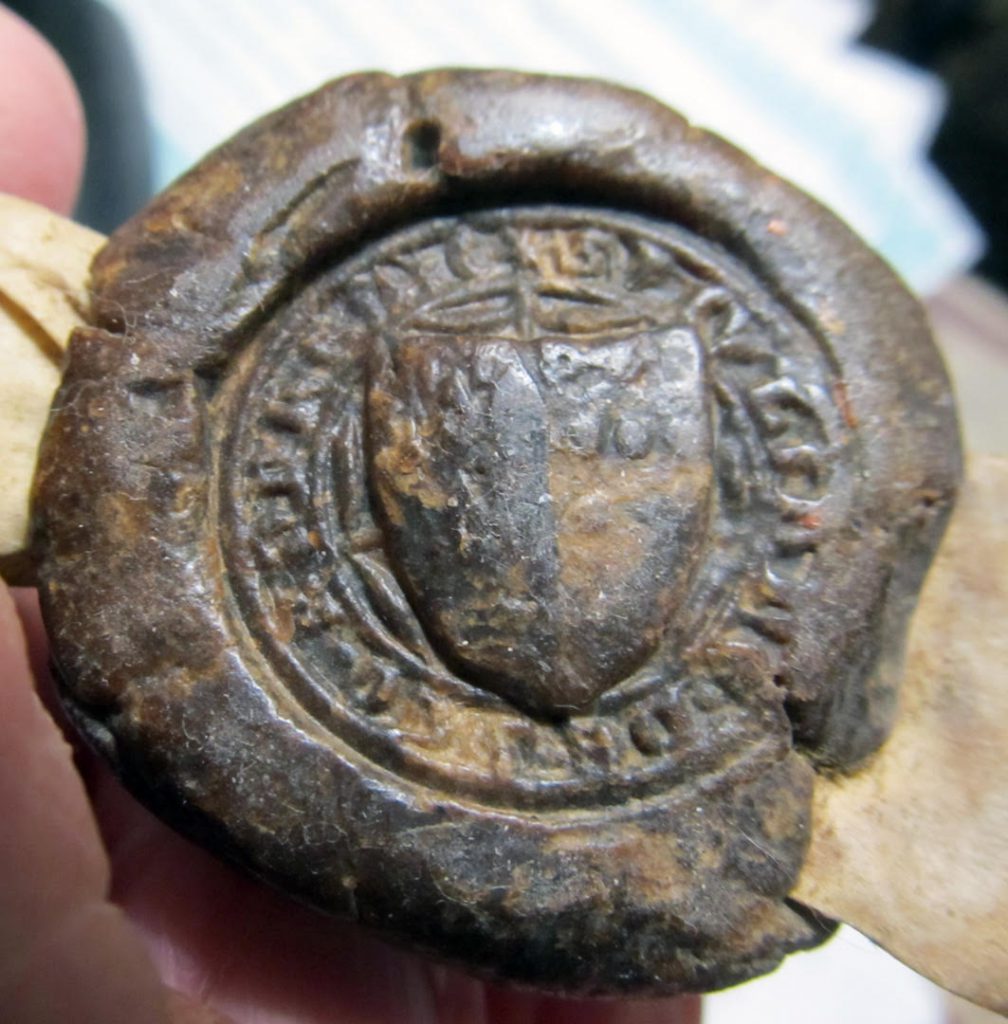
Charter 1: 6 Richard II Charter Seal.

Charter 1: 6 Richard II Charter Seal.

The Document in Question:  23 Richard II from High Ongar

The later specimen from the reign of Richard II which we showcase here is not only later in date of origin, but also a later addition to the private collection; we had the chance to see it soon after its acquisition.

Like “Charter 1”, this document specifies both the Regnal year and a certain day within the year, upon a specific saint’s feast day.  Unlike Charter 1, it names its place of issue.

Single Sheet with Tag and Seal

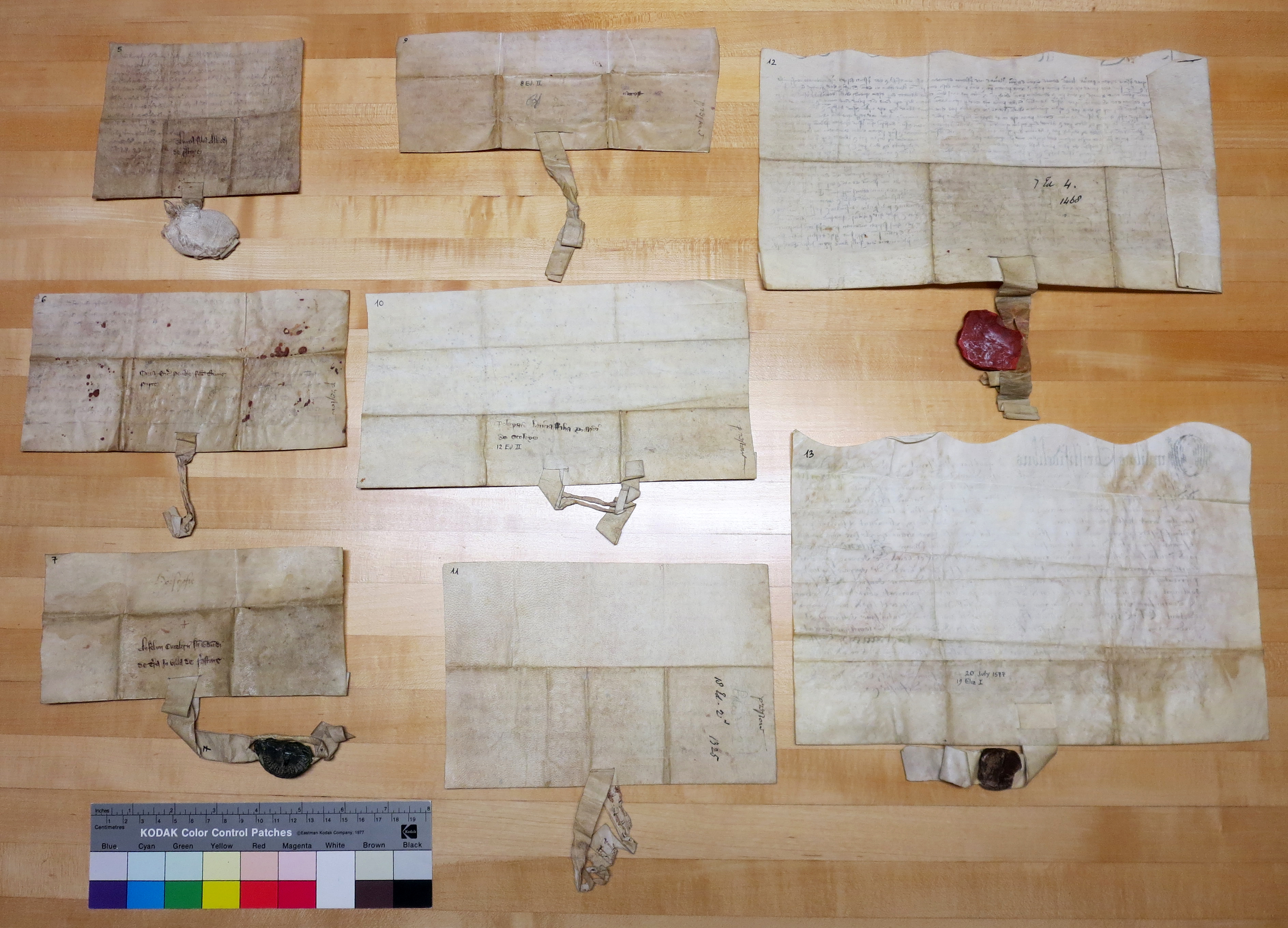
Like all those others in the series (from Full Court Preston onward), this document in Latin on vellum stands on a single sheet.  It places the hair-side of the animal skin to the outside, folds its lower edge inward to form a flap, and holds between slits a pendant vellum tag upon which to attach the wax seal.

On the face of the sheet, the text forms a single column of 11 long lines, professionally written in Anglicana Formata script.  (See another in similar script, by a different scribe: Preston Charters Continued.) The dorse, originally blank, carries a few docketing inscriptions.  The uncolored seal survives in part.
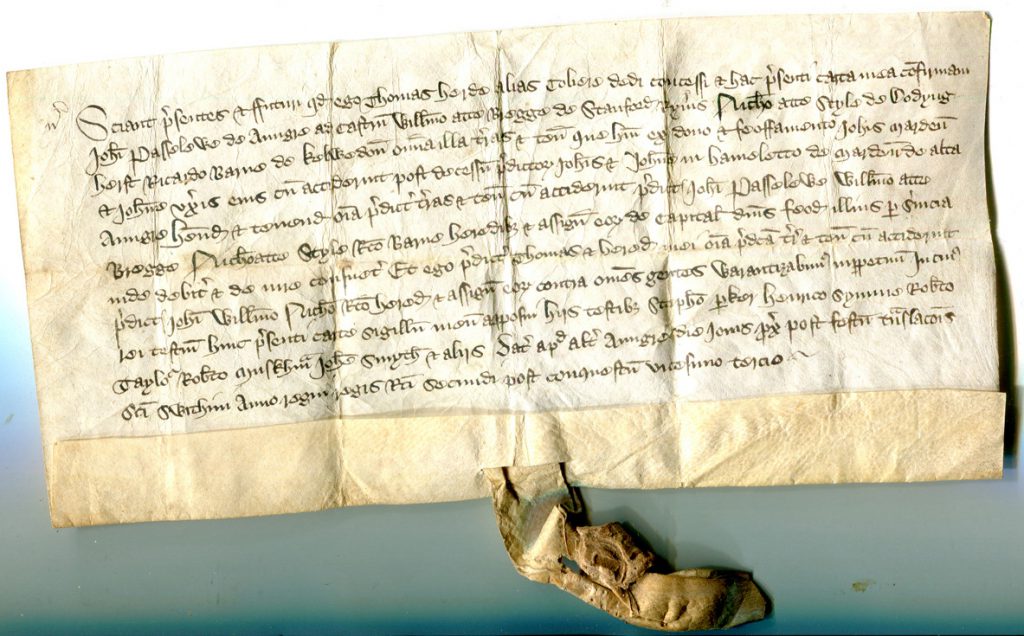
Private Collection, Document of 23 Richard II, Face.

Private Collection, Document of 23 Richard II, Face.

The Dorse

The dorse is creased and stained.  The fold-lines and their directions demonstrate that the sheet was folded in half horizontally, then into thirds to form a packet, from which the tag extended.

Originally blank, the dorse acquired 3 docketing inscriptions. They stand in a “vertical row”, with their tops turned to the right-hand side of the sheet in one of its folded sections.  It would appear that they gathered upon that section as it lay or stood ‘upright’, and with the seal and its tag extending to the right.
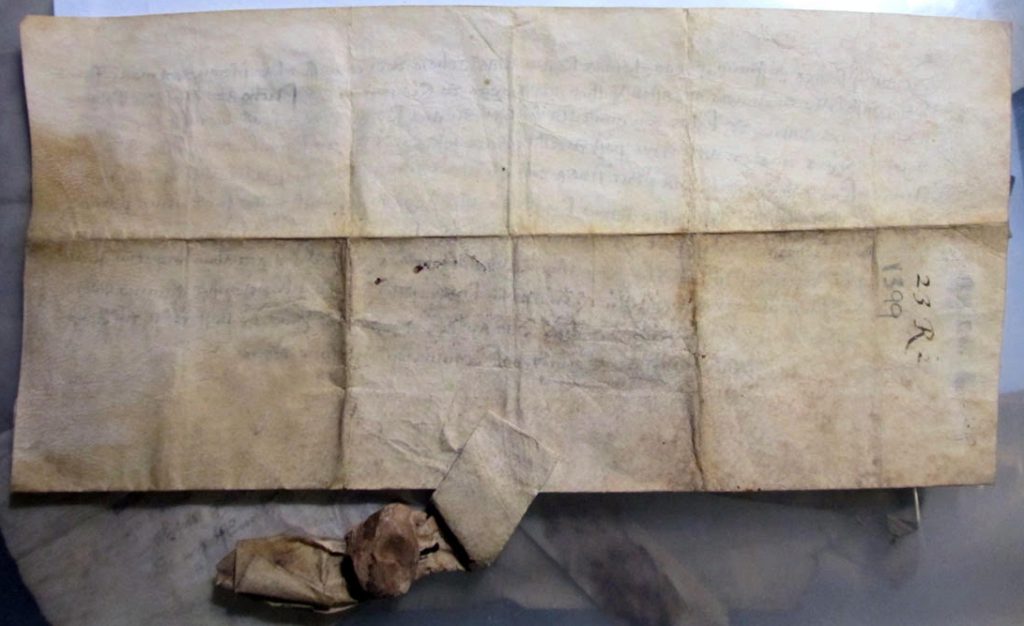
23 Richard II Dorse with Tag and Seal..

23 Richard II Dorse with Tag and Seal.

The Docketing

The 3 lines of docketing entries on the dorse include a mostly erased line in brown ink, a statement of the Regnal Year (“23 R 2”) in dark brown ink with arabic numerals, and the date in pencil in arabic numerals (“1399”).
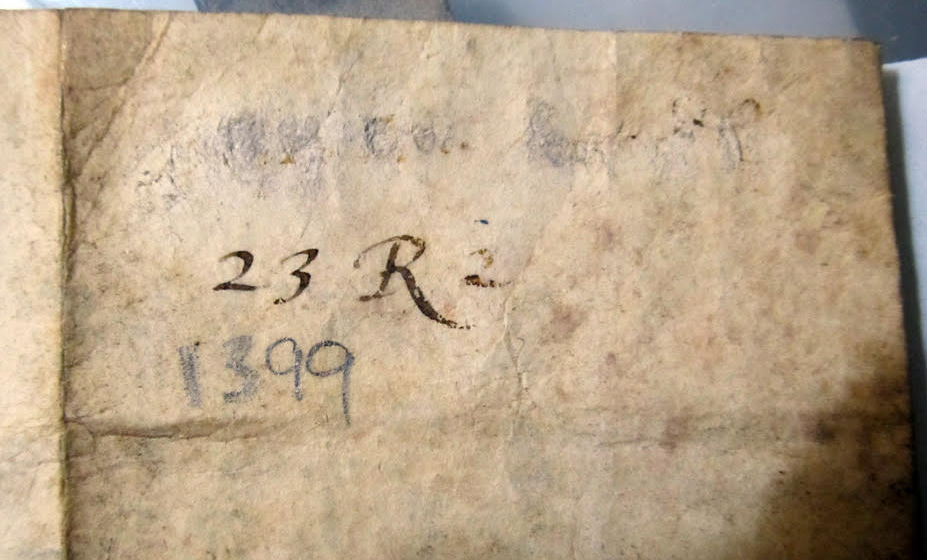
23 Richard II Dorse

23 Richard II Dorse

Back-lighting reveals a few more traces of the erased inscription and the differences of in width and smoothness between the strokes in the first and second ‘halves’ of the arabic numeral.
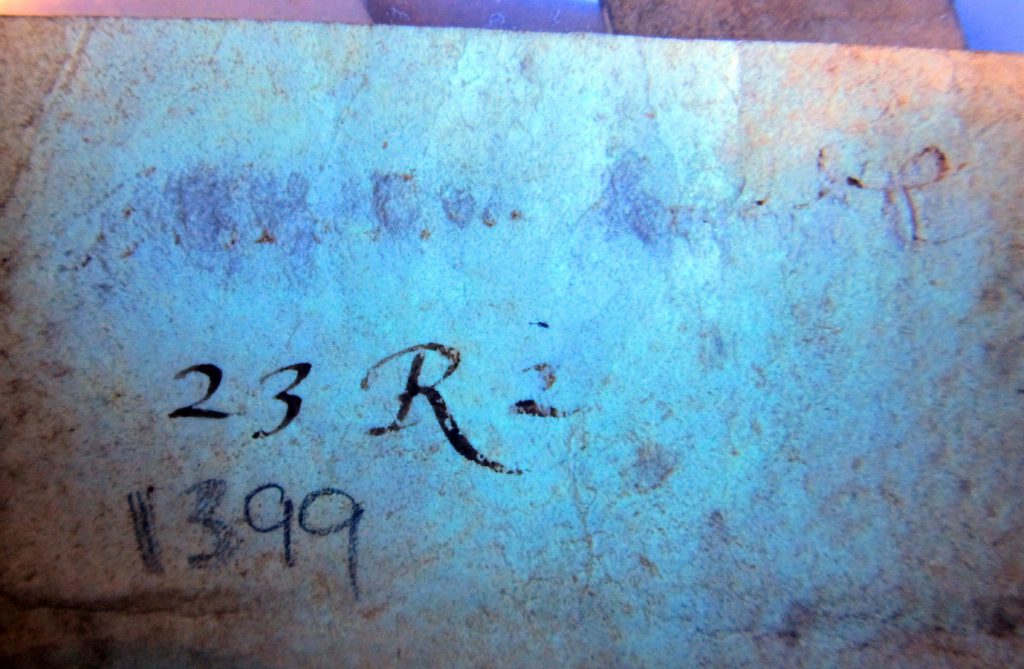
23 Richard II Docketing under Back-Lighting.

23 Richard II Docketing under Back-Lighting.

The Face

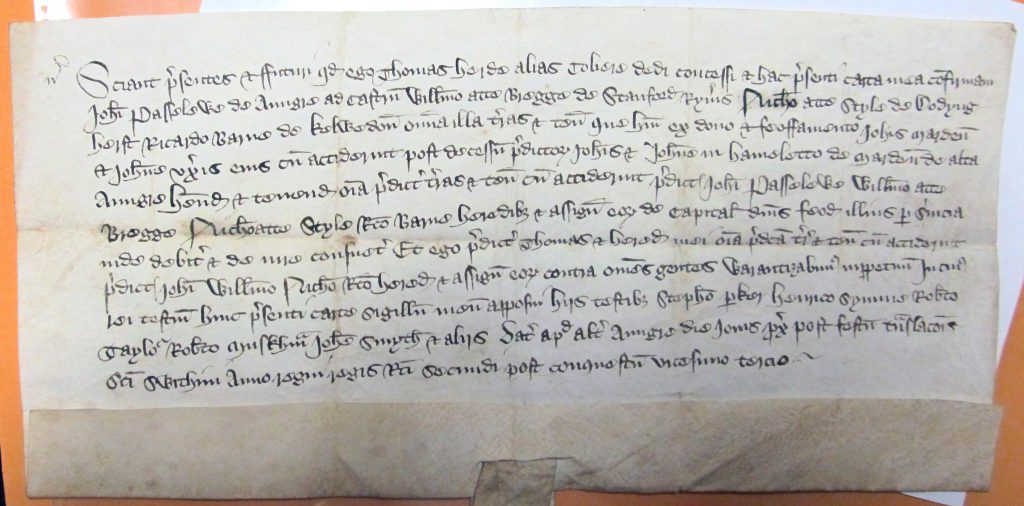
The text is laid out in a single column of 11 long lines written by a single scribe in a professional version of Angicana Formata documentary script (see Charter 6 in Preston Charters Continued).  Mostly the ink is light brown in color, but in some places, where the freshly dipped pen left darker strokes, it looks almost black.

Such is noticeably the case in line 2, where one personal name stands out jarringly in darker color than the flow of the script to either side.  Perhaps this effect resulted from a space left in the course of the transcription, to be filled upon a return (line 2) once the scribe had ascertained the name of this tenant (Nich’o) among the group of 4.

To the left of the first line and its enlarged initial, there stands a flourished mark, likewise in ink, forming an n-shaped feature rising to a clockwise loop.  The text concludes with a separate flourish, which forms an undulating hook-like motif suspended after the conclusion of the text.
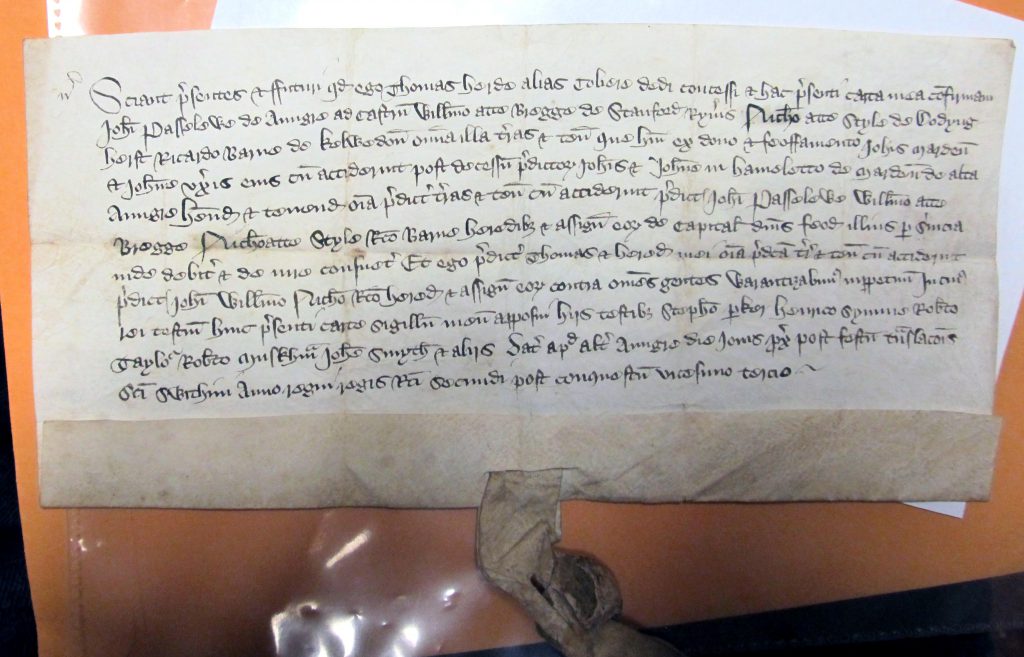
23 Richard II Face with Tag and Seal.

23 Richard II Face with Tag and Seal.

The Tag and Seal

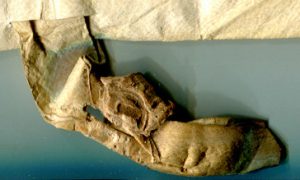
Part of the uncolored wax seal survives upon the partly crumpled vellum tag.
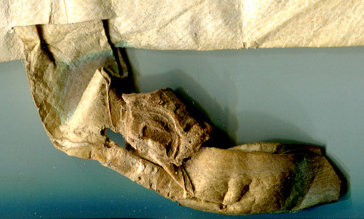
Private Collection, Document of 23 Richard II, Tag and Seal.

Private Collection, Document of 23 Richard II, Tag and Seal.

The wax by now is friable, as a close view shows.  To judge by the remnant of the seal, its matrix was round.  The imprint of its face retains about half of the rimmed border containing an illegible legend or inscription.  At the center the device has an oblong central element of some kind.
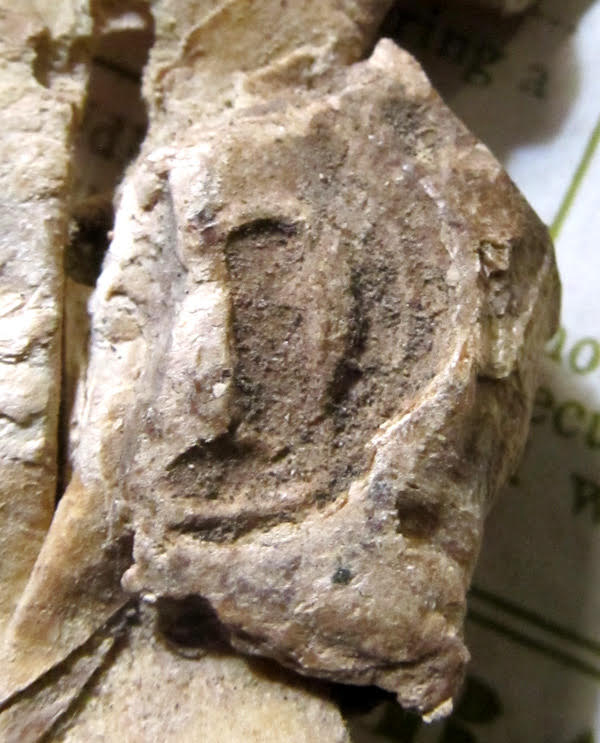
23 Richard II Seal Now.

23 Richard II Seal Now.

The Script

The document presents its record entirely in ink, the work of a single scribe.  It begins with an enlarged initial S which rises both above the line and into the left-hand margin, opening the process with minimum fanfare.  Along with such customary features of Anglicana Formata script as a double-compartment a, this scribe consistently used a rounded, closed, theta-like e formed in a single looped stroke, with the tongue descending to the right within the closed bow.
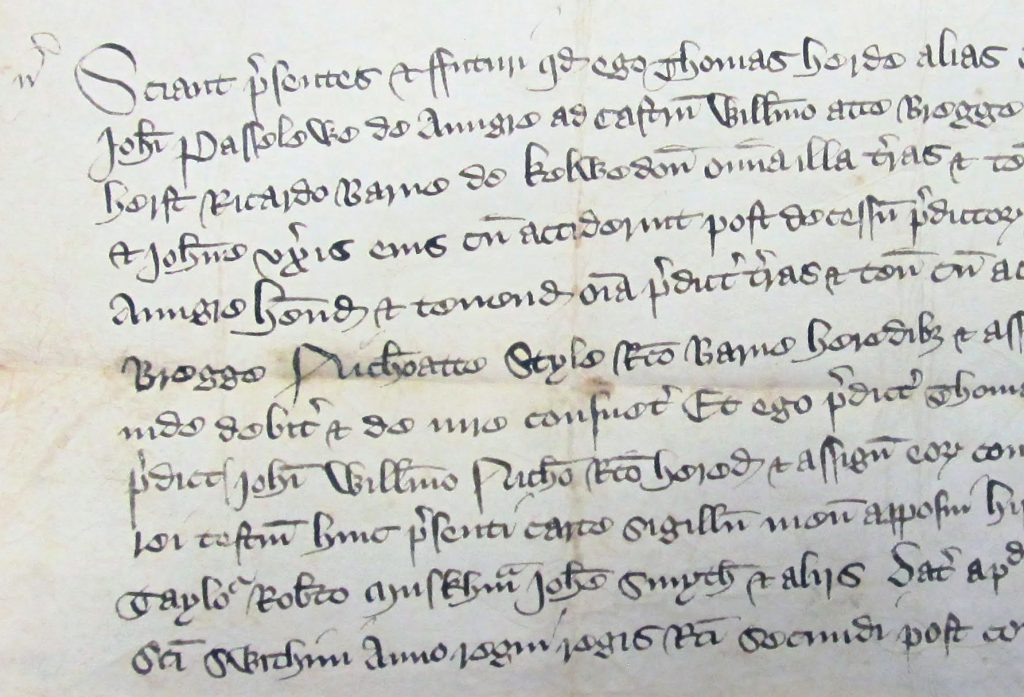
23 Richard II Face

23 Richard II Face: Left-Hand Side.

Of all the enlarged initial letters, the repeated N of the name Nich’o (lines 2 and 6) is both broad and distinctive, with a descending first stem, a slanted top leading to the second stem, and a backward-descending diagonal cross-stroke.
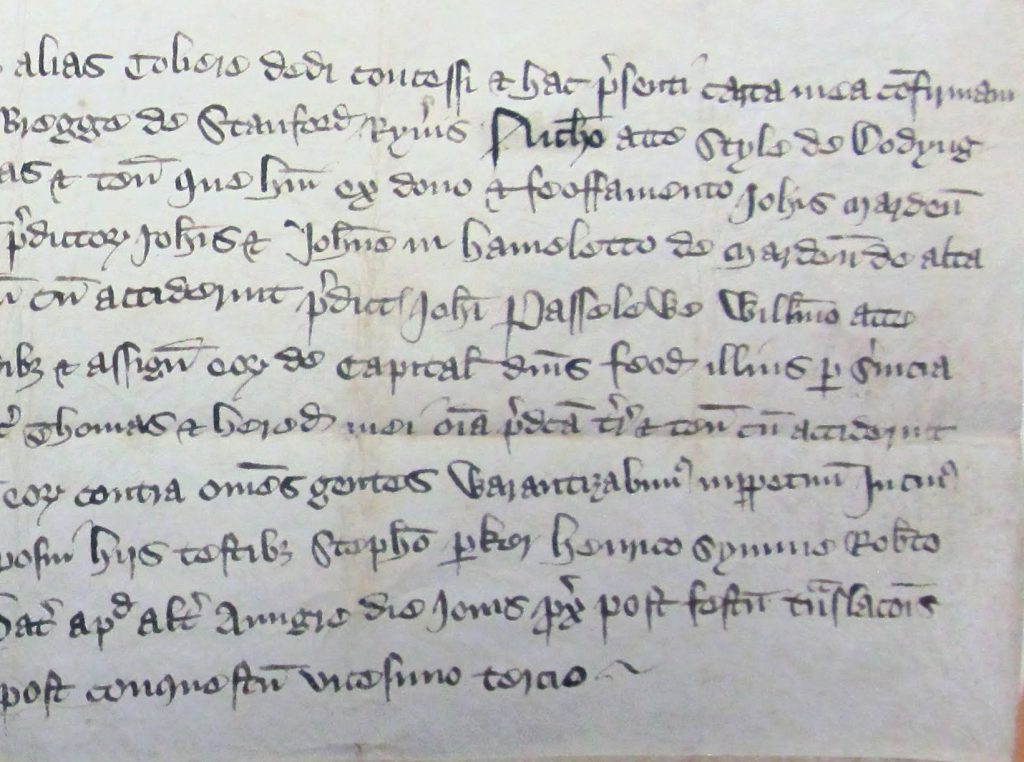
23 Richard II Face

23 Richard II Face

The Text

The text of the document exhibits similar wording and formulae to some charters in our earlier posts.  (For example, Preston Charters Continued.)  Into such a formula, the scribe would enter the relevant particulars:

Sciant presentes et futuri quod ego . . . dedi concessi et hac praesenti carta mea confirmavi . . . presenta carta sigillum meum apposui hiis testibus . . . Anno regni . . . etc.

Thus, with those ‘supplied’ particulars highlighted here in BOLD, with abbreviations expanded between square brackets ([so]), with superscript letters indicated between inverted commas [‘so’], and with the text transcribed line by line, the document declares:

[Line 1]

Sciant pr[e]sentes et ffuturi q[uo]d Ego Thomas Herde alias Tobere dedi concessi et hac p[rae]senti carta mea co[n]firmaui

Joh[a[n]i Passelewe de Aungre ad Castrum Will[el]mo atte Bregga de Stanford Ryi’r’us Nich[el]o Atte Style de Dodyng[-]

herst R[i]c[ardo Barne de Kelwedon[e] om[n]ia illa t[err]as et ten[ementa] que h[ab]ui ex dono et foeffamento Joh[an]is Marden[is]

Et Joh[a]ne ux[o]’r’is eius cu[m] accederint post decessu[m] p[rae]dictor[um] Joh[an]is et Joh[an]e in hameletto de marden[e] de alta

[Line 5]

Aungre h[ab]end[um] et tenend[um] o[mn]ia pr[ae]dict[as] t[err]as et ten[emena] cu[m] accederint p[raed]ict[i]s Joh[an]i Passelewe Will[e]mo atte

Bregge Mich[el]o atte Style R[i]c[ard]o Barne heredib[is] et assign[antis] eor[um] de capital[ibus] d[o]m[ini]s feod[i] illius p[er] S[e]’r’uicia

inde debit[ur] et de iure consuet[a] Et ego p[rae]dict[us] Thomas et hered[es] mei o[mn]ia p[rae]d[i]cta t[e]r[ra] et ten[ementa] cu[m] accederint

p[rae]dict[is] Joh[an]i Will[el]mo Nich[el]o R[i]c[ar]o heredi[bus] et assign[antis] eoru[m] contra omnes gentes Warrantizabim[us] in p[er]petu[m] In cuius

rei test[i]m[onium] huic p[rae]senti carte sigillu[m] meu[m] apposui hiis testib[us] Steph[an]o P[ar]ker Herico Symms Roberto

[Line 10]

Taylor Rob[er]to Muskh’a’m Joh[an]e Smyth et alis Datur apud alt[am] Aungre die Iovis p[ro]x[ime] post festu[m] t[ra]nslatio[ni]s

S[an]c]t]i Swithini Anno Regno regis R]i]c[ard]i Secundi post conquestu]m] vicesimo tercio.
Private Collection, Document of 23 Richard II, Tag and Seal.

In Sum

Supplied particulars:

Where & When

23 Richard II (= 22 June 1399 – 29 September 1399)
“On the First Thursday after the Feast of the Translation of Saint Swithin” (= 15 July in England)
I. e. 17 July 1399
at Alta Aungre (High Ongar, Essex)

From

Thomas Herda alias Tobere

What

Omnia terras et tenementa (“All lands and holdings”)
received of the late John Marden and his wife Johanna
in the Hamlet of Marden of Alta Angre

To a Group of 4 Tenants

John Passelewe of Aungre ad Castrum (Chipping Ongar, Essex)
William Atte Bregge of Stanford Ryirus (Stanford Rivers , Essex)
Nicholaus Atte Style of Dodyngherst (presumably Doddinghurst, Essex)
Richard Barne of Kelwedon (Kelvedon Hatch, Essex)

Witnesses

John Parker
Henricus Symms
Robert Taylor
Robert Muskham
John Smyth
Et Aliis

How do we know?  Read on, Dear Reader, Read On.

The Day and the Date of Issue

Among Richard II’s Regnal Years, Year 23 was his last, brief, Regnal Year, spanning 22 June 1399 – 29 September 1399.  The dating clause at the end of the charter spells it out, as pertaining to Anno regnis regis Ricardi Secundi post Conquestum vicesimo tercio (“in the 23rd year of the reign of King Richard II after the Conquest”).

This clause also specifies the place and the day:  Datum . . . die Jovis proxime post festum translationis sancti Swithini (“Issued . . . on the day of the first Thursday after the feast of the Translation of Saint Swithin”).  The feast-day of one of the principal English saints, Saint Swithin (circa 800 – 2 July 863), Bishop of Winchester from 852 to 863, is celebrated on 2 July or 15 July, marking the date of his death or the date of the translation of his relics.

The choice of the latter in the document commemorates the translation on 15 July 971 of Swithin’s body to the newly restored basilica at Winchester, newly  dedicated to him as its patron saint (in place formerly of the Apostles, Saints Peter and Paul).  The Benedictional made for the Anglo-Saxon reformer, Saint Æthelwold, Bishop of Winchester from 963 to 984, for whom the translation was effected, takes care to include an image of this patron among its magnificently illuminated pages.  There, the full-page image faces the opening of the text for the celebration of Swithin’s Deposition (2 July).
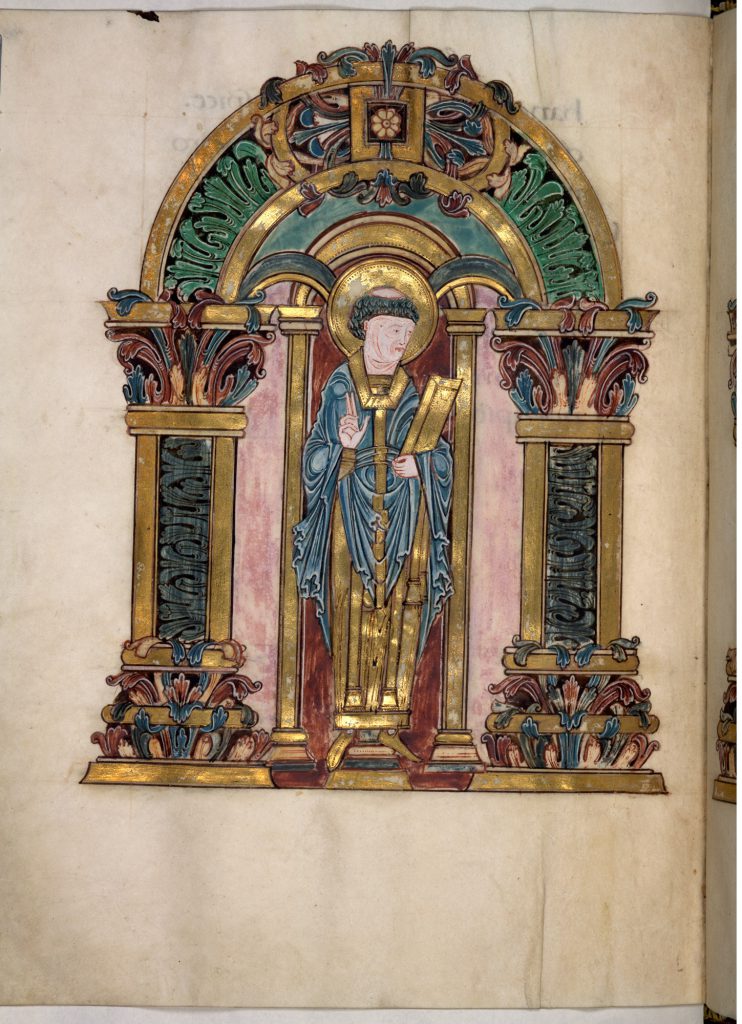
London, The British Library, Add MS 49598, folio 97v. Saint Swithin. Image Public Domain.

London, The British Library, Add MS 49598, folio 97v. Saint Swithin. Image Public Domain.

The document of 23 Richard II specifies the Feast of Swithin’s Translation.   In 1399, Saint Swithin’s Day on 15 July fell on a Tuesday.  The first Thursday after that would have been 17 July.  By such calculations can we find the day upon which the document was issued, and not only the year.
23 Richard II Face

23 Richard II Face

Names and Places

The place-name Aungre appears thrice in the document. First it qualifies the name of the first tenant:  Johannis Passelewe de Aungre ad Castrum (line 2).  Next it refers to a finding point in the boundary clause:  in hameletto de marden’ de alta Aungre (lines 4–5).  Then it specifies the location at which the document itself was issued:  apud alt’ Aungre (line 10).

23 Richard II Face

23 Richard II Face

The name Aungre stands for Ongar (meaning “Grassland” in Old English) in Essex.  Aungre is an oft-recorded spelling for that place.

Its appelation ad castrum (“at or by the castle”) relates to Chipping Ongar, which still has a a castle — albeit now in ruins.
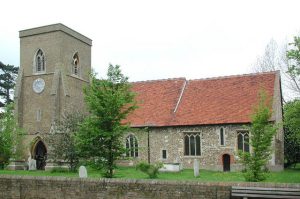
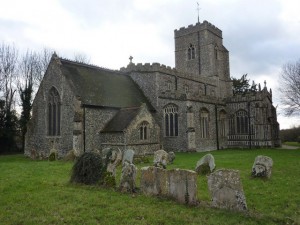
Church of Saint Mary, High Ongar, Essex, with 12th-Century Nave. Photograph by John Salmon (8 May 2004), Image via Wikipedia.

Church of Saint Mary, High Ongar, Essex, with 12th-Century Nave. Photograph by John Salmon (8 May 2004), Image via Wikipedia.

The appelation alta (“tall” or “high”) designates High Ongar (see also High Ongar) — at the time probably only a hamlet.  High Ongar lies about 1 mile (1 1/2 km) to the south and east from Chipping Ongar.

The “hamlet of Marden of High Ongar” (in hameletto de Marden’ de alta Aungre) appears to have a modern incarnation in Marden Ash, which formerly formed part of the parish of High Ongar. Here “the name Marden goes back at least to the 11th century and means ‘boundary valley’:  it suggests that this was the boundary between Chipping Ongar and High Ongar even at that time”.
— — P. H. Reamey, The Place-Names of Essex.  English Place-Name Society, Vol. 12 (Cambridge:  At the University Press, 1935), page 73; also British History Online: High Ongar.

In this context, it may accord with long-standing practice that the document locates boundaries with reference to Marden as one of them.

Stanford Rivers is also near by, only about 2 miles (3 km) south of Chipping Ongar.  The common place-name Stanford derives from “a stone, or stony, ford” in Old English. A Stanford survives in Norfolk as a deserted village.  As with some other Stanfords, the place called Stanford in the document both received and retained an appelation.  Stanford Rivers is listed in the Doomsday Book as Stanfort, but in 1289 as Stanford Ryueres, adopting the name of the 13th-century manorial family Ryueres.  See, for example, Anthony David Mills, A Dictionary of British Place Names (Oxford:  Oxford University Press, revised edition, 2011:   ISBN 019960908X ), p. 432.  The document spells the name as Ryi’r’us (line 2), with a superscript r between the 3 minims (i and u); a similar superscript r stands above ux’r’is in line 4.

Dodyngherst is presumably Doddinghurst, in Essex, to the southeast of High Ongar and close to Stanford Rivers.  Across time, its recorded spellings varied, for example with Duddingeherst in 1218.  Pertaining to an early layer of Old English place-naming patterns in the early medieval migrations to England, the Old English name means “the wooded hill of Dudda‘s people”.  (For example, the Dictionary of British Place Names, page 146.)

Richard Barne of Kelwedon came also from Essex. Villages in Essex among medieval settlements still extant with such a name are Kelvedon (Kelvedon) in northeast Essex and Kelvedon Hatch (Kelvedon Hatch).  The latter stands within the Hundred of Ongar and considerably closer than the former to the other places cited in the document, pertaining to Aungre in its several manifestations, both on higher ground and near a castle, and now known as High Ongar and Chipping Ongar.  Kelvedon Hatch lies 3 miles south of Chipping Ongar.

The Hundred of Ongar comprised 26 parishes, including Kelved Hatch, Stanford Rivers, Cheping Ongar, and High Ongar.  Some Ongar parishes are picturesquely described and illustrated in “The Hundred of Ongar” by the English antiquary Elizabeth Ogborne (1763/4 – 1853) in The History of Essex from the Earliest Period to the Present Time (London:  R. H. Kelham,1 814), pages 235–280, with the full list of parishes on page 236.  The subtitle of this work advertised it as being Illustrated with accurate Engravings of Churches, Monuments, Ancient Buildings, Seals, Portraits, Autographs, &c., With Biographical Notices of the most distinguished and remarkable Natives.  Alas, the work was unfinished, with only Volume I, in which the illustrated descriptions of the individual parishes of this Hundred cease before they reach any of those names within whose reach the place-names of the document come to rest.

Spellings very similar to those in the document are recorded in the Essex Poll Tax for 1377, which dates only some 20 years earlier.  The modern edition of that record notes the modern equivalents.

  • Stanford Rever = Stanford Rivers
  • Alta Aungr = High Ongar
  • Kelwedon = Kelvedon Hatch
  • Aungr ad Castrum = Chipping Ongar

— — The Poll Taxes of 1377, 1379, and 1381, Part I:  Bedfordshire–Leicestershire, edited by Carolyn C. Fenwick.  Record of Social and Economic History, New Series, 37 (Oxford:  Oxford University Press, 1998–2005), “Essex 1377:  Ongar and Rochford Hundreds”, at E179.

Such close, and even precise, correspondences for the individual place-names — as their records adapted across time — and for the cluster of names recorded within the transaction appear to establish their identities in the document beyond doubt as pertaining to the Hundred of Ongar in Essex.
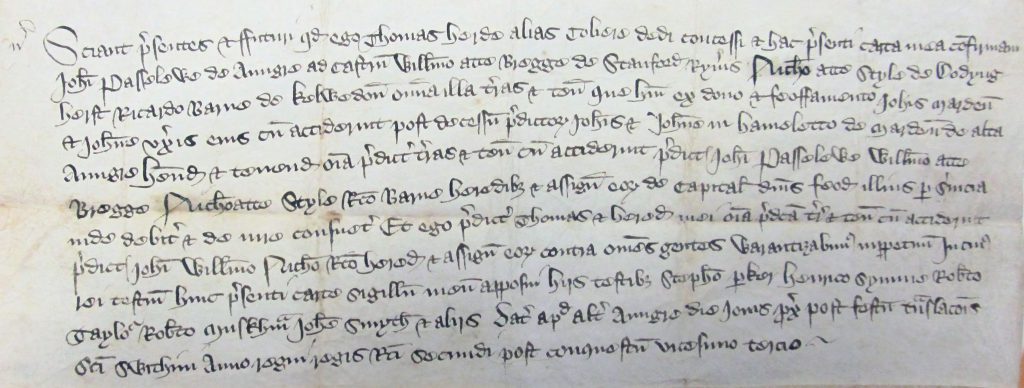
23 Richard II Face: Text.

23 Richard II Face: Text.

Location, Location, Locations

These places, with a few variants in spelling, appear on Old Maps of Essex, available among the Old Maps Online and other digital resources:

  • Map of Essex among the 35 colored maps published by Christopher Saxon in the Atlas of England and Wales (1579).
  • Interactive version of the Map of the County of Essex from the atlas of 25 engraved sheets by John Chapman & Peter André (1777).
  • Map of Essex actually surveyed with the several Roads from London, etc.  (London [1678]).

The latter, via Public Domain, comes from the Norman B. Leventhal Map & Education Center at the Boston Public Library:

Boston Public Library, Map of "Essex actually surveyed with the several Roads from London, etc." (London [1678]), Image via Public Domain.

Boston Public Library, Map of “Essex actually surveyed with the several Roads from London, etc.” (London [1678]), Image via Public Domain.

With a detail of Ongar Hundred:

Boston Public Library, Map of "Essex actually surveyed with the several Roads from London, etc." (London [1678]), Detail of Ongar Hundred. Image via Public Domain.

Boston Public Library, Map of “Essex actually surveyed with the several Roads from London, etc.” (London [1678]), Detail of Ongar Hundred. Image via Public Domain.

The Transaction as Record

From its details, the document yields information about a set of individuals and their interrelationships regarding landscapes, both which they have been associated — Aungre ad castrum, Alta Aungra, Stanford Ryirus, Dodyngherst, and Kolwedon — and over which they formally transfer custodianship on Saint Swithin’s Day, 1399.  In the case of the land at the center of the transaction, we learn also about its previous transfer (at an unspecified date) from a named couple after their death.

Private Collection, Document of 23 Richard II, Tag and Seal.

Private Collection, Document of 23 Richard II, Tag and Seal.

*****

Do you recognize other examples of this scribe’s work?  Do you know more about the history of these features, places, and persons?

Please contact us via Contact Us or our Facebook Page. Comments here are welcome too.

*****

More to Come. See the Contents List for this blog.

*****

P. S.  On a Personal Note (17 May 2020).  Although I don’t remember if I visited any of the places mentioned in the document, I vividly recall visiting Greensted close by. The purpose of the visit was Greensted Church, located about one mile west of Chipping Ongar town center. My interest resided in seeing the wooden structure of the building, because of its age and its Anglo-Saxon construction.

This was while I lived in London and engaged in long-term postgraduate study of Anglo-Saxon and related manuscripts and their broader context — leading from the M. A. in English Language and Literature before 1525 (University of London, 1972) to the Ph. D. in Anglo-Saxon Manuscripts (London, 1985). An important component of the research was travel to examine material evidence first hand.

It was natural that part of the observation attended to building structures, given their settings for the production, viewing, and use of the manuscripts and other media, and given my studies in seminars with archaeologists and building historians, among others. Apart from archaeological excavations and ruins, many of the viewing opportunities allowed for more imposing architectural structures, but I wished also to see the “only remaining example of the many timber churches” of the Anglo-Saxon period before the Norman Conquest, as Greensted Church is described in a standard reference work on the subject.
— — H. M. and Joan Taylor, Anglo-Saxon Architecture (Cambridge:  Cambridge University Press, 3 volumes, 1965 and 1978), Volume 1, pages 262–264, at page 263.
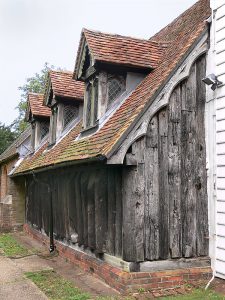
North Side of Wooden Church at Greensted-juxta-Ongar, Essex. Photograph by Simon Garbutt via Wikimedia Commons.

North Side of Wooden Church at Greensted-juxta-Ongar, Essex. Photograph by Simon Garbutt via Wikimedia Commons.

The Church of Saint Andrew at Greensted is regarded as “the oldest wooden building in Europe still standing, albeit only in part, since few sections of its original wooden structure remain”. The nave, made of large split oak tree trunks, is mostly original.  The official name of the place is Greensted-juxta-Ongar (“Greensted adjoining Ongar”), to distinguish it from another Greenstead, also in Essex, but some 30 miles distant, in Colchester.

My visit took place on a sunny day, in a day trip by car from London.  I forget which year, but having a car places the date in the later 1970s.  I remember well the warm sunshine outside the building and the dark wooden interior, so it would probably have been in the spring or summer.  There are photographs from the visit, so others’ available photographs might serve.

From the distance of this blogpost, I survey the distance travelled across time and space by the document from its origins in Essex to my view of it as it first entered its current collection in the United States several years ago, and by my understanding of the subjects from immersion in study for the M. A. onward.  The “papers” selected for that M. A.  in London were dedicated to Language, Palaeography, Archaeology, and English Place-Names.

In all the travels and studies over the years devoted to such subjects (see, for example, Her Page and (Selected Publications), I might not have guessed that they would have come to include a close look at place-names centered upon one of the central areas of Ongar Hundred.

*****

 

Tags: Alta Aungre, Anglicana Formata, Aungre ad Castrum, Chipping Ongar, Dodyngherst, High Ongar, History of Documents, History of English Place Names, Hundred of Ongar, Kelvedon Hatch, King Richard II, Kolwedon, Medieval English Documents, Medieval Seals, Place Names of Essex, Preston Charters, Saint Swithin, Stanford Rivers, William Herde alias Tobere
No Comments »

Simurgh and Zal from a Persian “Shahnameh”

May 7, 2020 in Manuscript Studies, Uncategorized

Simurgh and Zaal
from a Persian Shahnameh

[Posted on 7 May 2020]

Private Collection, Leaf from a Persian Shanameh. Simurgh and Zal.

Continuing to examine manuscripts or manuscript fragments and related materials in our blog, we turn to an illustrated paper leaf, now in a private collection, from a Persian Shahnameh or ŠĀH-NĀMA (“Book of Kings”).

The Contents List for our blog shows the range of our explorations.  Our Galleries of Scripts on Parade include specimens of script in Persian as well as other languages, Western and non-Western.

The Paper Leaf

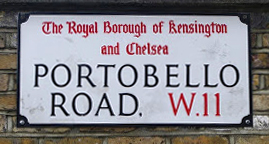
The leaf was purchased in the Portabello Road in London circa 1985.  The paper is typical of Persian paper from at least the fifteenth through the nineteenth centuries CE. One side has text, and the other has both text and inset illustration. The ensemble probably dates from the 19th century, with acquired damage of various kinds, including unevenly trimmed edges.

Private Collection, Leaf from a Persian Shanameh. Simurgh and Zal.

Private Collection, Leaf from a Persian Shanameh. Simurgh and Zal.

Read the rest of this entry →

Tags: Freer Gallery, Houghton Library, Illustrated Manuscripts, manuscript fragments, Morgan Library & Museum, Shahnameh, Simurgh, Simurgh and Zal, Tahmasp Shahnameh, Zal
No Comments »

2019 Congress Behind the Scenes Report

May 6, 2020 in Anniversary, Conference, Events, International Congress on Medieval Studies, Kalamazoo, Reception, Societas Magica, Uncategorized

Light at the End of the Corridor

Behind the Scenes

RGME Activities
at the 2019 International Congress on Medieval Studies

[Posted on 6 May 2020]

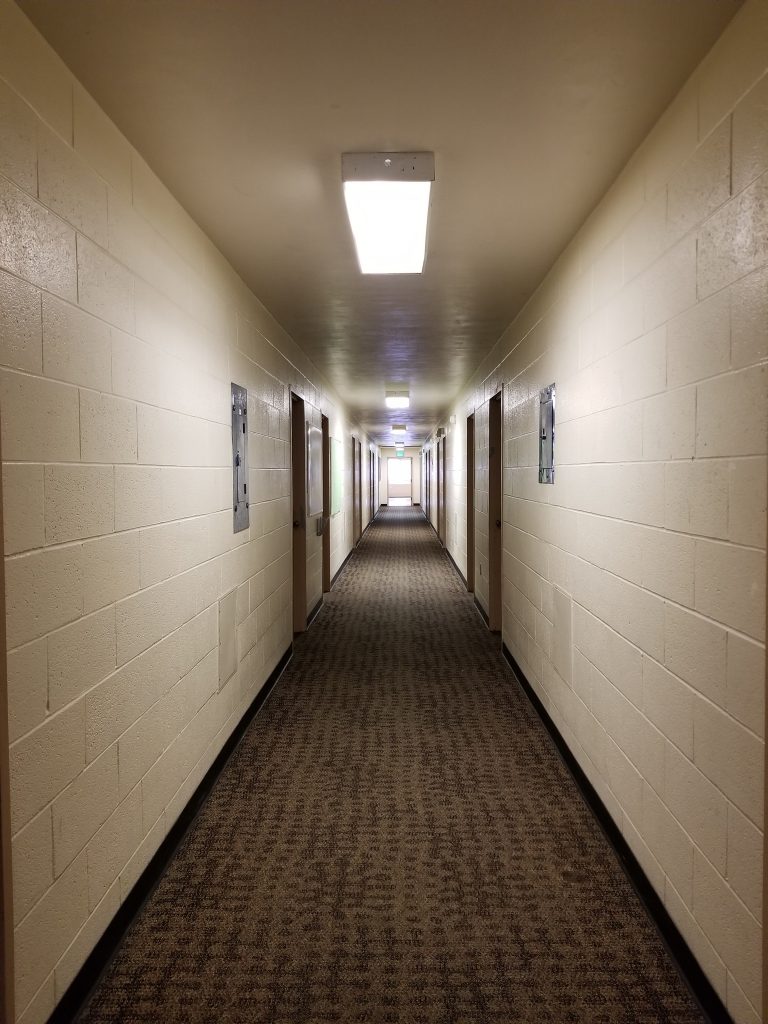
At the End of the 2019 Congress. A view down the dorm corridor, with Light at the End of the Tunnel.

At the End of the 2019 Congress: “Light at the End of the Corridor”.

Following the successful completion of our activities at the 2019 Congress, we offer an informal glimpse Behind the Scenes.  Customarily, the completion of the Congress is followed by its Report.  Occasionally, there also follows a Behind-the-Scenes Report.  For the 2019 Congress, we planned already then to offer such an additional, informal Report, but events and tasks arising along the way back from the Congress pushed back its timetable for completion.  Then, in steady succession, other tasks and activities occupied attention.

Some are reported in our blog about our Congress Activities, as we prepared for the 2020 Congress, while others have their say in our blog about Manuscript Studies, and in our reports about other Events, including the 2020 Spring Symposium. The required cancellation in March and April 2020 of that Symposium and the 2020 Congress as a whole led to further re-arrangements. Among other things, we attended to publishing the 2020 Symposium Booklet and the Abstracts for all our 2020 Congress Sessions as “souvenirs” of what had been planned.  Research Group plans and adaptations, including possible rescheduling of parts of those events, are reported in the announcement about Keeping Up: Updates for Spring 2020. Now, as the appointed time would have come to travel to the 2020 Congress as formerly intended, we revisit the 2019 Congress with its Behind-the-Scenes Report, including some hindsight.

Earlier Reports from Behind-the-Scenes

Tardis2 via Wikipedia Commons

Tardis

For the 2016 Congress Report, its Follow-Up Report took shape under the title of Doctor Who-Done-It.  That term had its inspiration from a conversation on the way from one of the Research Group co-sponsored Sessions to our Reception, likewise co-sponsored with the Societas Magica.  Then it was revealed that our Director, Dr. Mildred Budny, drives an equivalent of the  Tardis (a conveyance for “Time and Relative Dimension in Space”).  

As described on the official website for Doctor Who (see also Doctor Who), the Tardis is the “Doctor’s method of travel through both time and space — all Gallifreyan Time Lords use TARDISes for getting from A to B — and from then to now.”  Who knew that this conveyance would also figure among the activities behind the scenes at the 2019 Congress?

The conversation at the 2016 Congress had to do with transporting some copies of the Illustrated Catalogue to the Reception for collection by their new owners.  2016 was the first year that our Director elected to drive, rather than to fly, to Kalamazoo for the Congress — because of the new arrangements by which the Research Group, as its co-publisher, took over the distribution of that Publication, and through which our Director had identified prospective owners, who wished to collect their copies at the Congress (rather than, say, to have to cover the international shipping costs).  At that Congress, our Director could be seen with some of these copies in tow, on a wheeled luggage cart, on the way from one Session or Meeting to another.  On the way to the Reception, there came the question if the ones that time were the only ones that had been brought.  “Oh, no!  These are not the same ones that you have seen on earlier days of the Congress.  These are new, and there are more where they came from, for tomorrow.””

“Ah”, said Collin.  “Where do they [meaning the new ones] come from?”
“Ah”, said our Director, “They come from the back of my car.  There are the refills.”
“Oh!  So your car is the Tardis”.

And so came the title Doctor Who-Done-It.

At the next Congress, the 2017 Congress Report included an image of that conveyance, again in the company of the Illustrated Catalogue and one of its new owners.

Book Signing for Mildred Budny's Illustrated Catalogue, on a Sunny Afternoon outside Fetzer at the 2017 International Congress on Medieval Studies, Tardis Included.

Book Signing Scene outside Fetzer at the 2017 Congress. Photograph by Mildred Budny.

Gathering

Arriving at the Congress base to register on the Eve of the Congress, some of us gathered, as customary, at Bilbos Pizza.  Then it was time to place the Research Group Posters on billboards, where permitted and where space allowed.

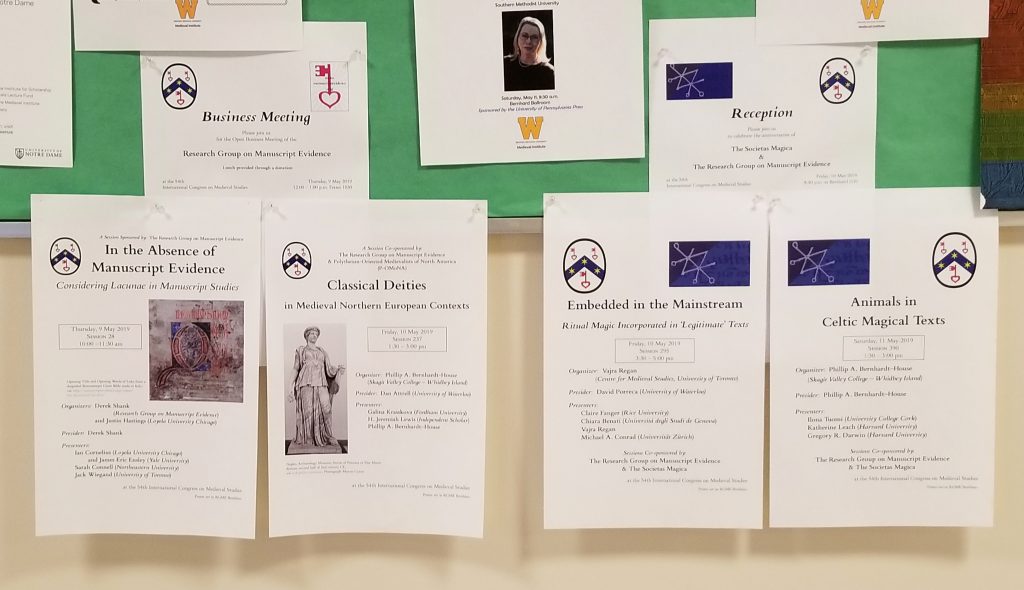
RGME and Other Posters at the 2019 Congress.

RGME and Other Posters at the 2019 Congress.

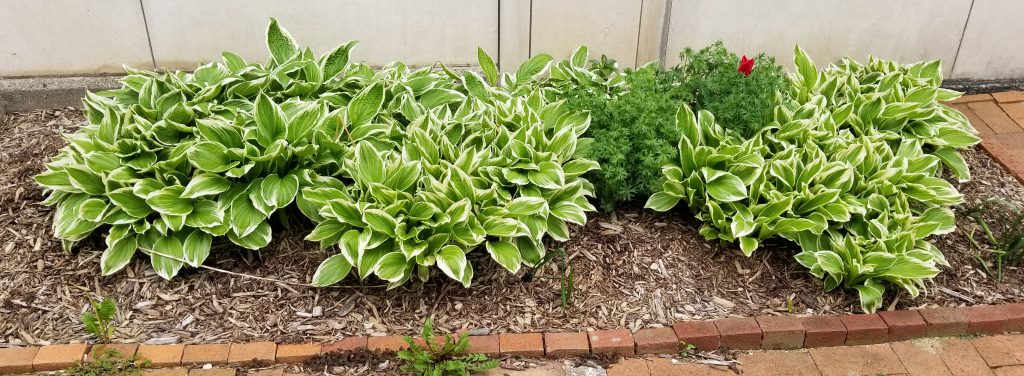
The landscapes also await Arrivals.  Here, outside one of the Dorms — inside which, on occasions, we visit the Board Room (see below).

Plant Life to Greet the Congress Attendees. Row of Hostas alongside the Walkway. Photograph Mildred Budny.

Plant Life to Greet the Congress Attendees. Photograph Mildred Budny.

Setting the Stage

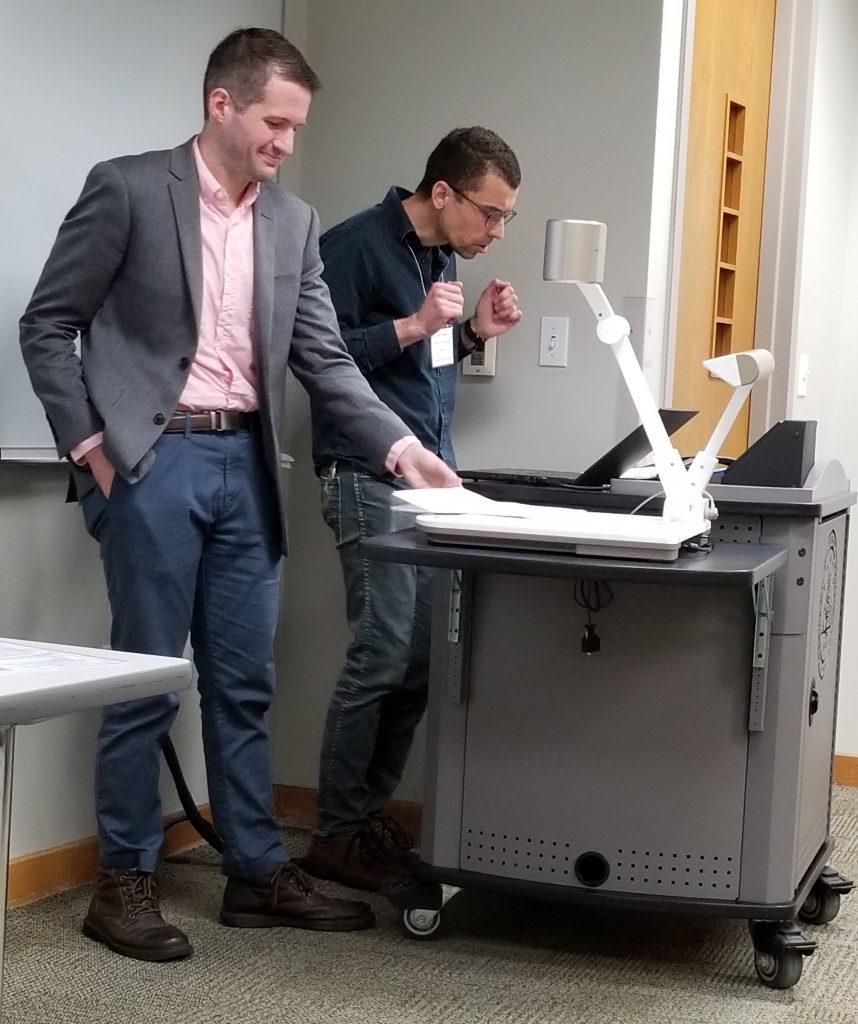
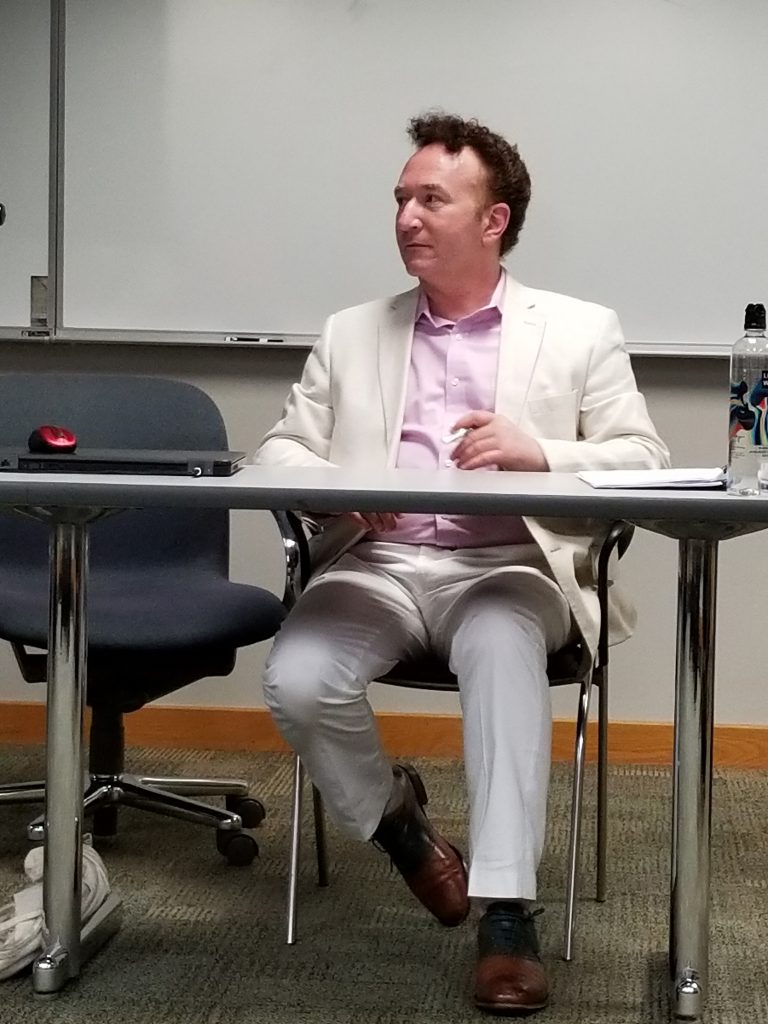
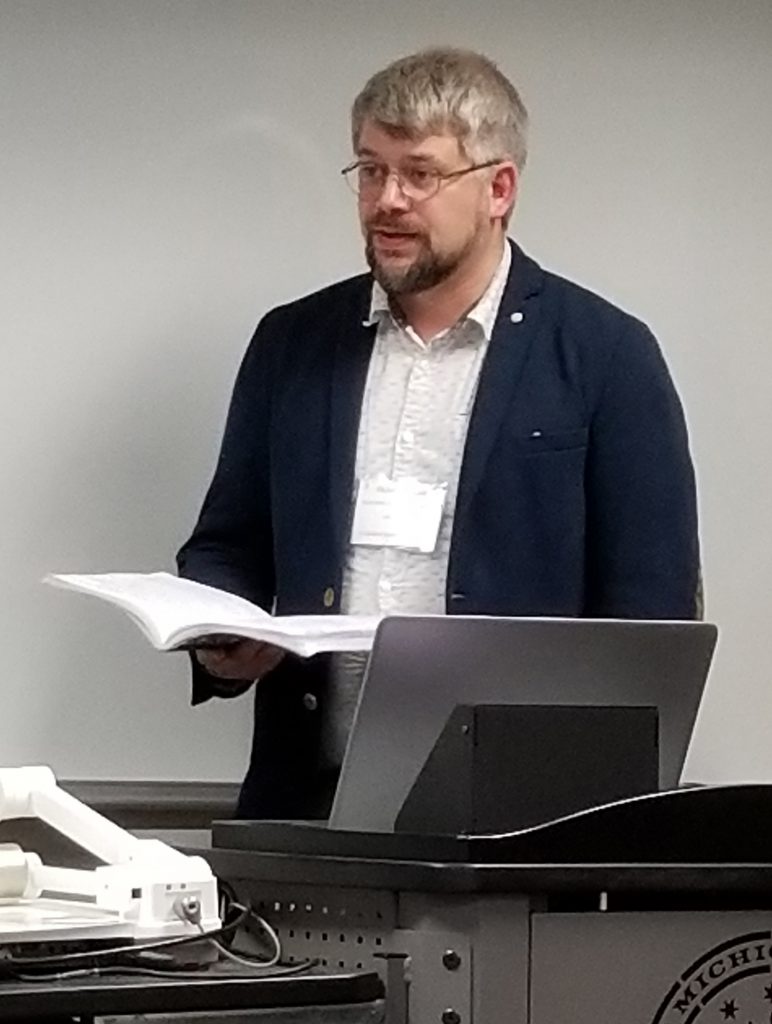
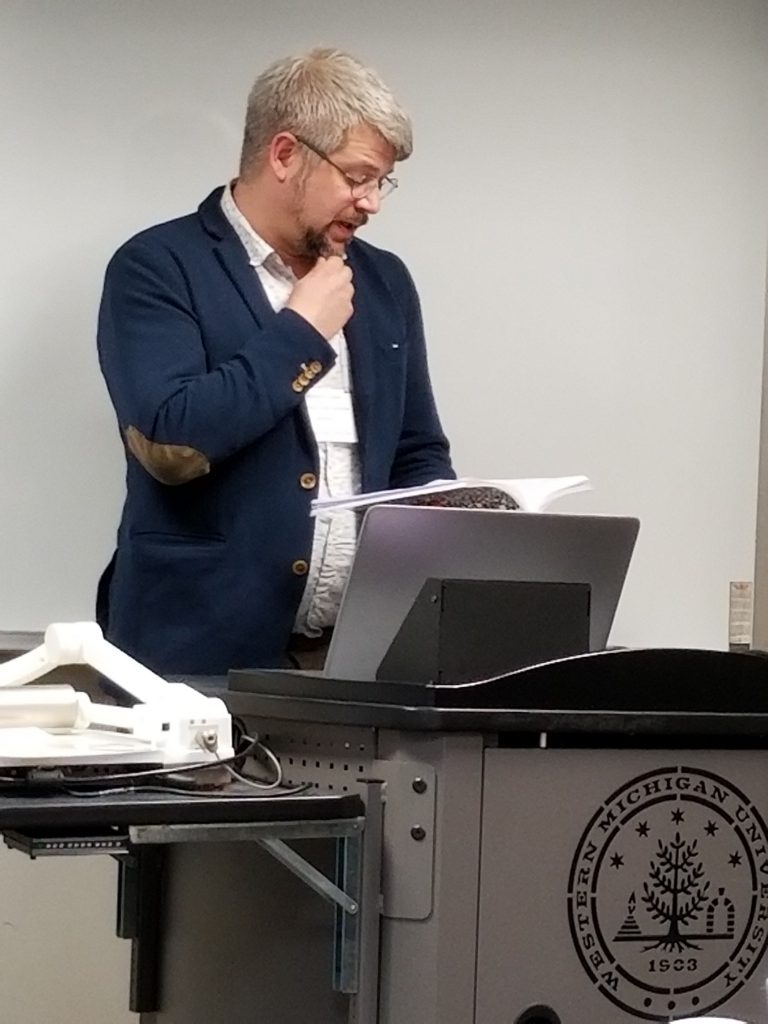
Preparing to start the Sessions and to engage in their Question-and-Answer discussions, our participants engaged in arranging the projection and other aims. The official Report for this Congress includes some Group Portraits of contributors to the different Sessions.  Here, two Speakers set up the projection for their joint paper at our first Session of the Congress, the Organizer of one of our co-sponsored Sessions participates in its discussion, and the Respondent for that Session strokes his beard as he delivers his paper.

Ian Cornelius and James Eric Ensley prepare to tell us about “The Lost Medieval Exemplar of Beinecke Library, Takamiya MS 23”

Eric and Ian Check the Projection for their Joint Paper at the 2019 Congress.

Eric and Ian Check the Projection for their Joint Paper at the 2019 Congress.

Vajra Regan listens to the progress of his Session on “Embedded in the Mainstream: Ritual Magic Incorporated in ‘Legitimate’ Texts”, one of the 2 Sessions co-sponsored by the Research Group and the Societas Magica .

Vajra at his Session at the 2019 Congress.

Vajra at his Session at the 2019 Congress.

Michael A. Conrad offers an erudite Response to Vajra’s Session by his observations “In Plain Sight:  The Promotion of Astrology and Magic at Royal Courts in the Thirteenth Century in Transcultural Perspective”.

Michael Presents His Paper at the the 2019 Congress.

Michael Presents His Paper at the the 2019 Congress.

It was then that we learned that often, giving Papers, Michael ponders while he holds his beard — an observation which he readily confirmed.

Michael Presents His Paper at the the 2019 Congress.

Michael Presents His Paper and Beard at the the 2019 Congress.

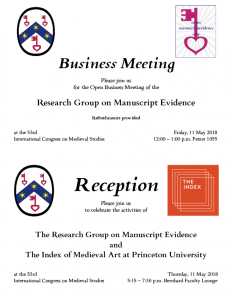
2019 Reception and Business Meeting Invitations.

2019 Reception and Business Meeting Invitations.

Our Business Meeting

This year’s Open Business Meeting was an outstanding success.  So many attendees — newcomers gladly included — that we had to bring in more chairs.  Our Associate, William H. Campbell, volunteered to find those arrangements.  As customary, Derek Shank recorded the Minutes.  Constructive suggestions abounded.

Scheduled for lunchtime (lunch provided) on the first full day of the Congress, and right after our first Session (only 1 building away), the Meeting offered an excellent way to launch our activities at the Congress and beyond.  Apparently there are no photographs of the occasion, but the 1-page Agenda not only sets the stage, but also provides a concise record of our achievements and aims for 2017–2018 and beyond, with requests for suggestions and contributions in funds and in kind.

The 2019 Agenda is now downloadable.  Please join us!

Our Reception

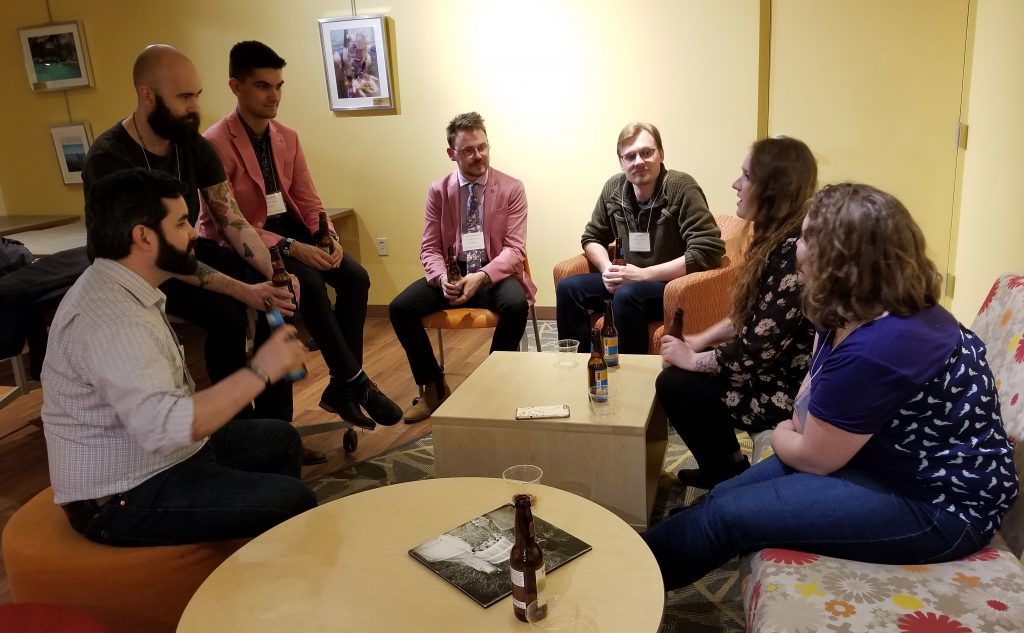
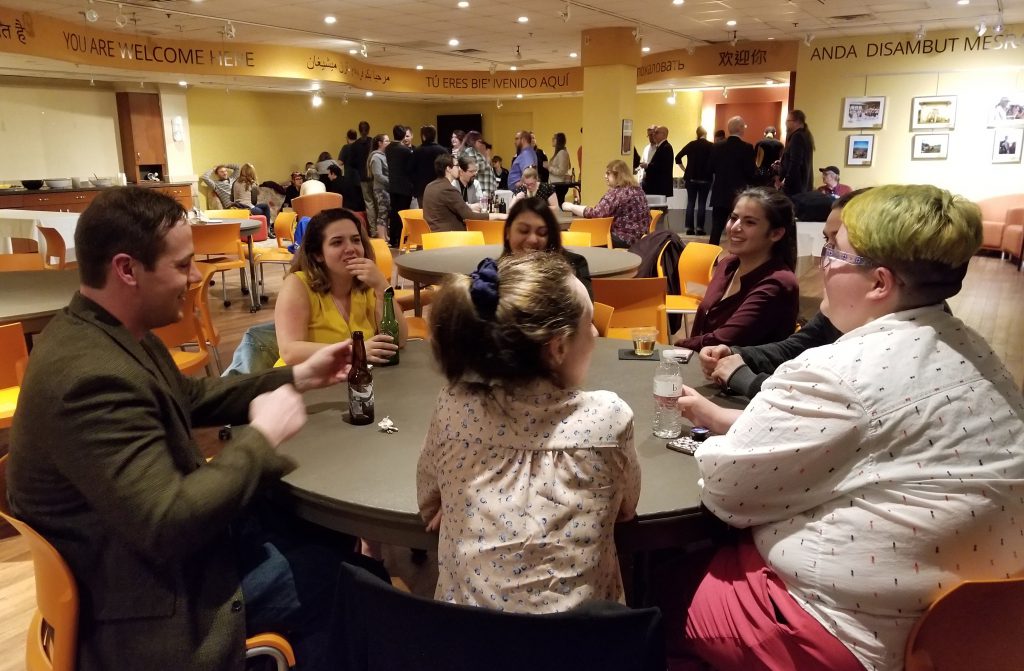
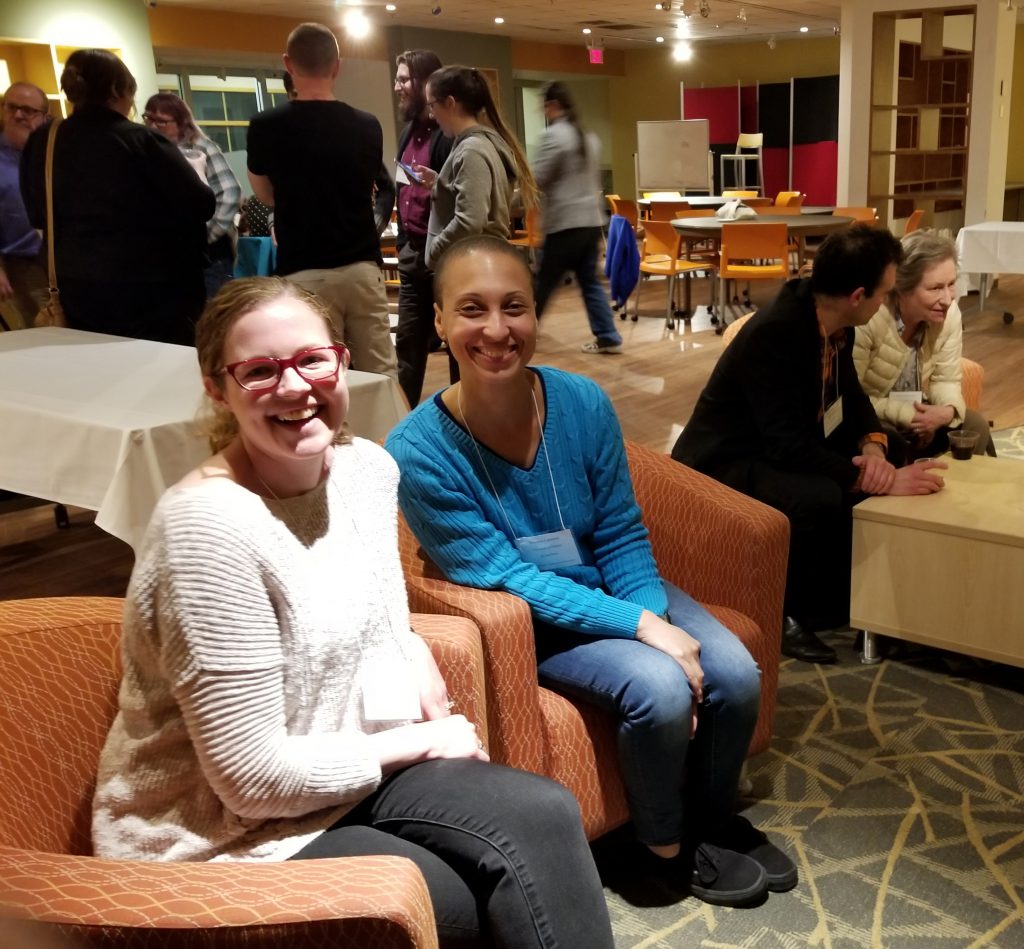
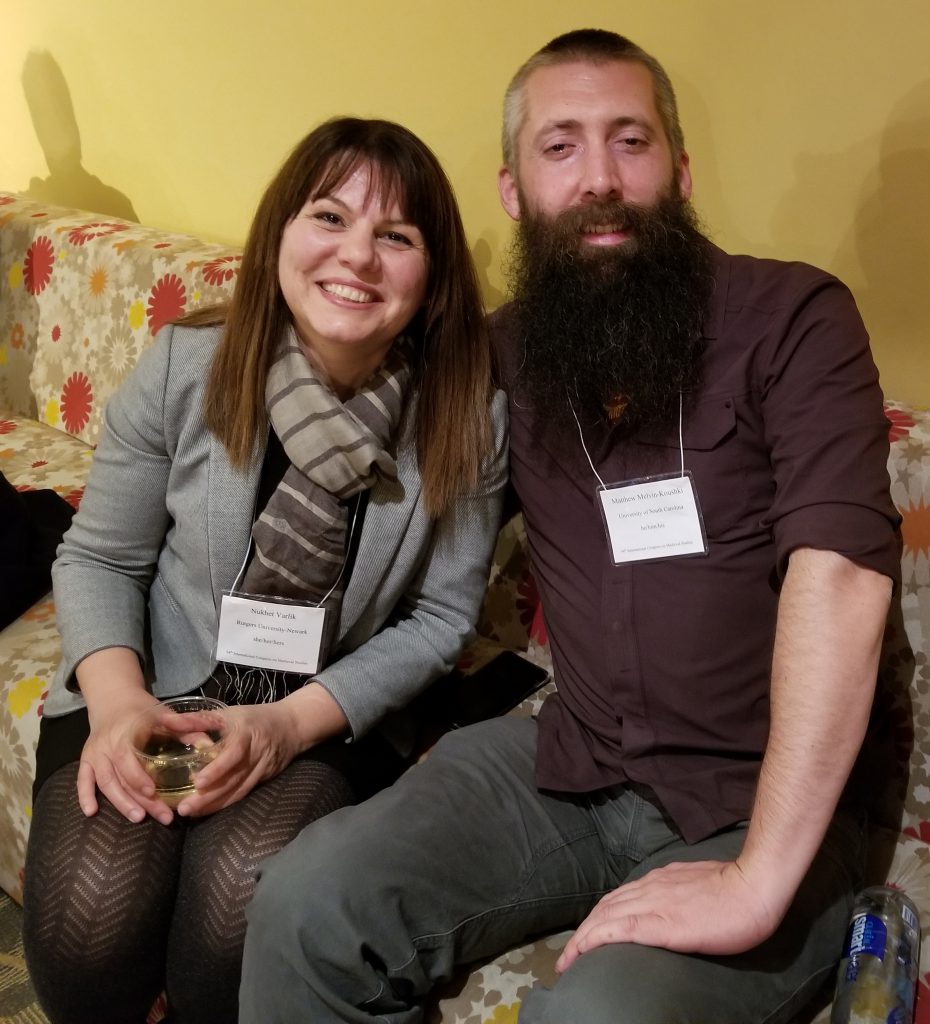
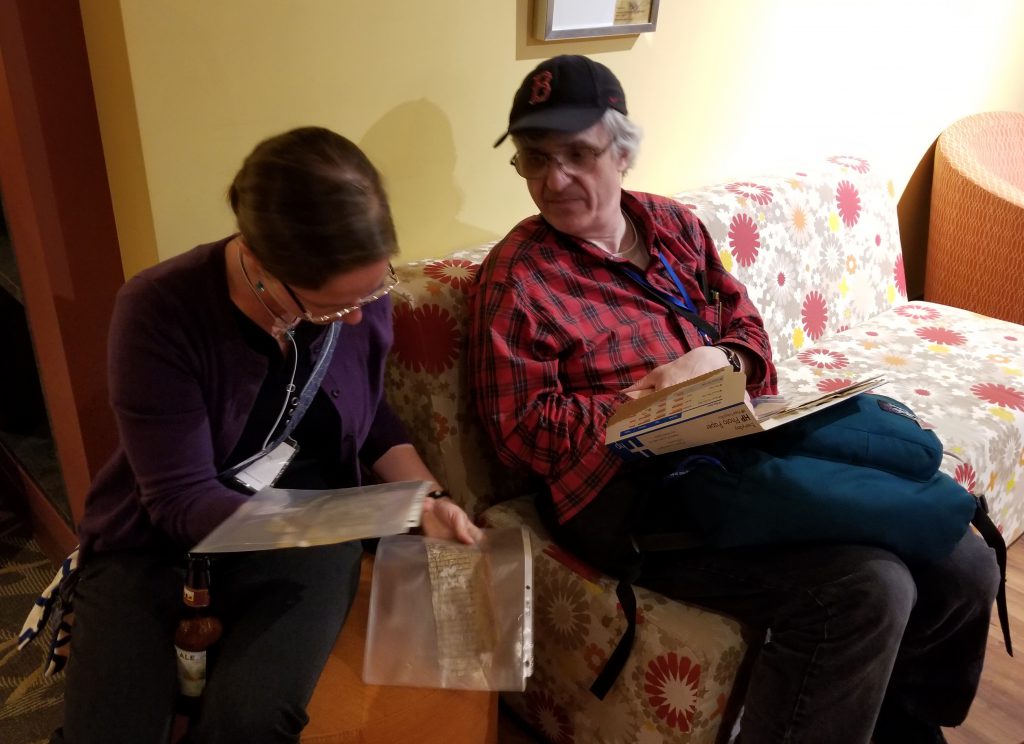
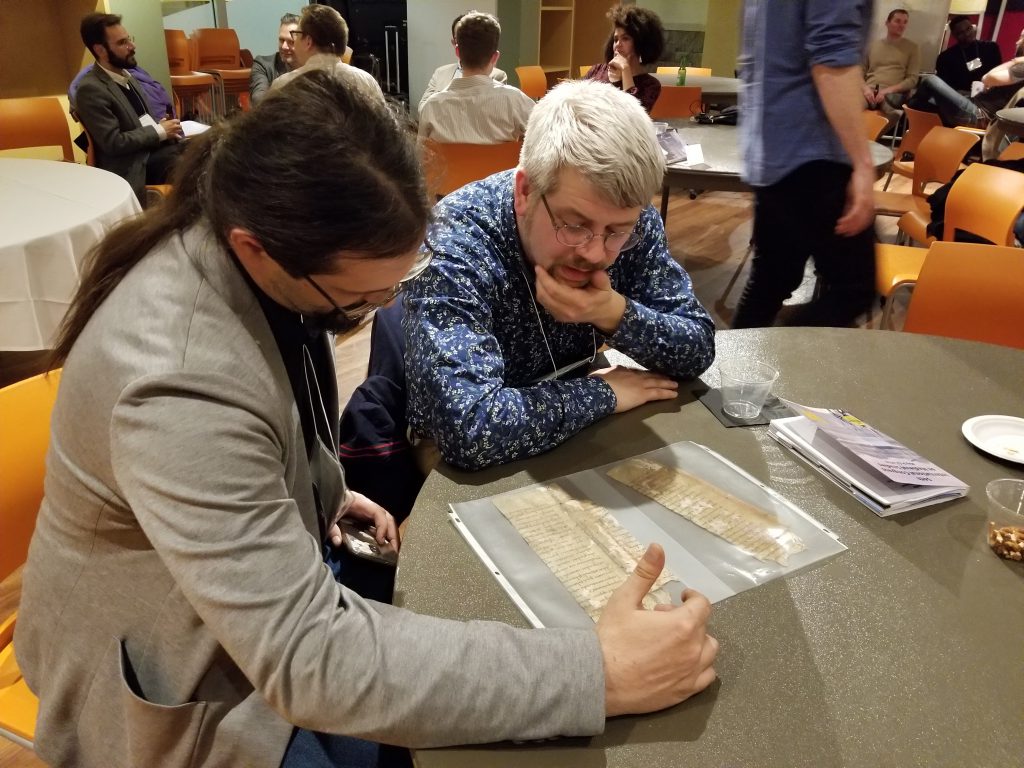
As in some previous years, our Reception was co-sponsored with the Societas Magica .  Conversation flowed, and some manuscript materials were examined.

Our Reception at the 2019 Congress.

Our Reception at the 2019 Congress.

Dan Attrell heads the table.

Our Reception at the 2019 Congress.

Our Reception at the 2019 Congress.

Groups hold conversations.

Our Reception at the 2019 Congress.

Our Reception at the 2019 Congress.

Greeting the gatherers.

Our Reception at the 2019 Congress.

Our Reception at the 2019 Congress.

Showing some specimens.

Our Reception at the 2019 Congress.

Our Reception at the 2019 Congress.

Pondering.

Our Reception at the 2019 Congress.

Our Reception at the 2019 Congress.

*****

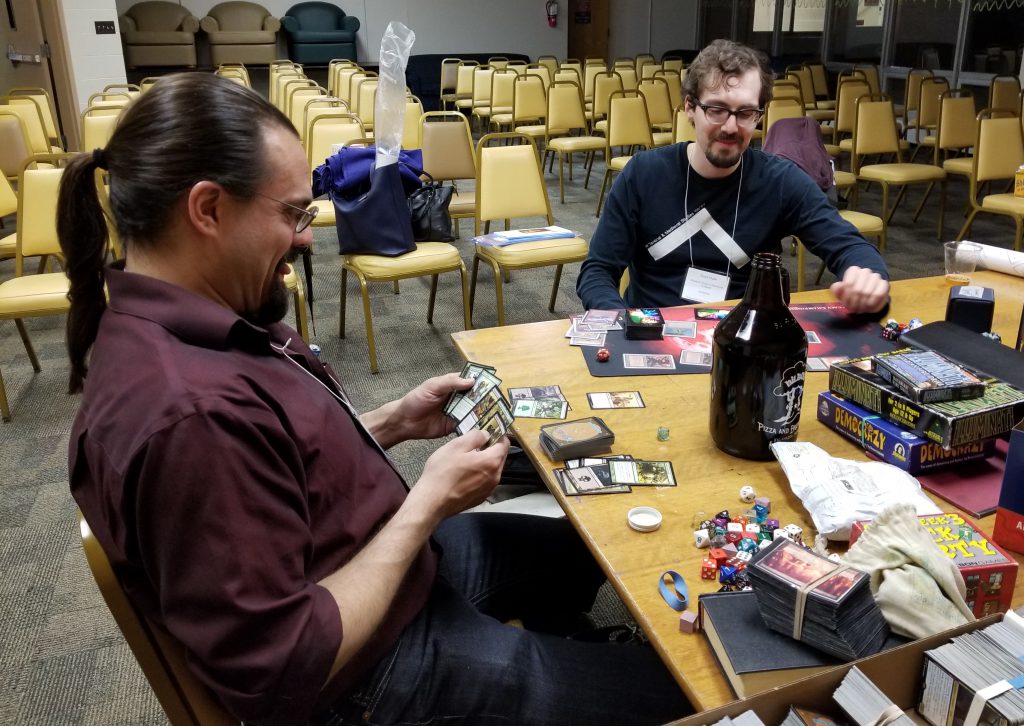
The Board Room

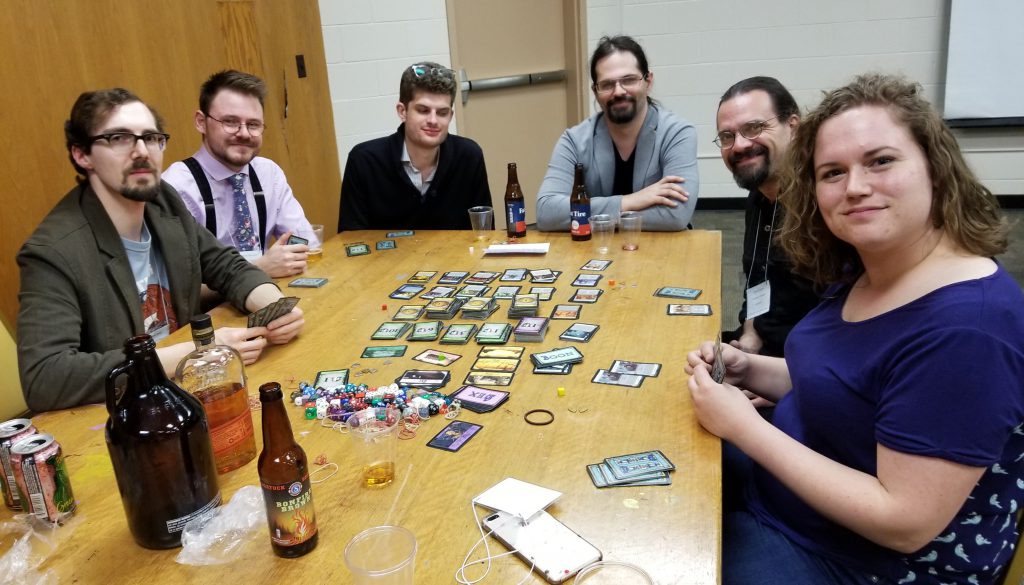
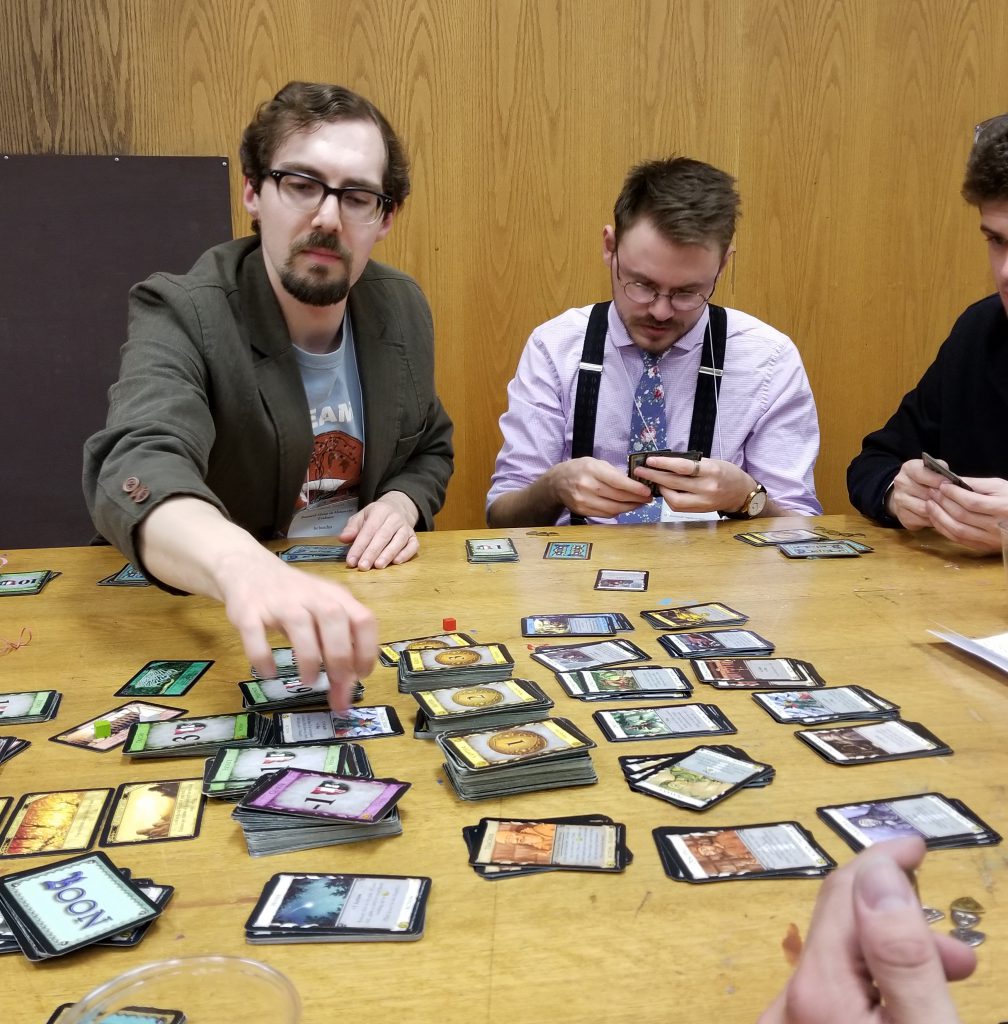
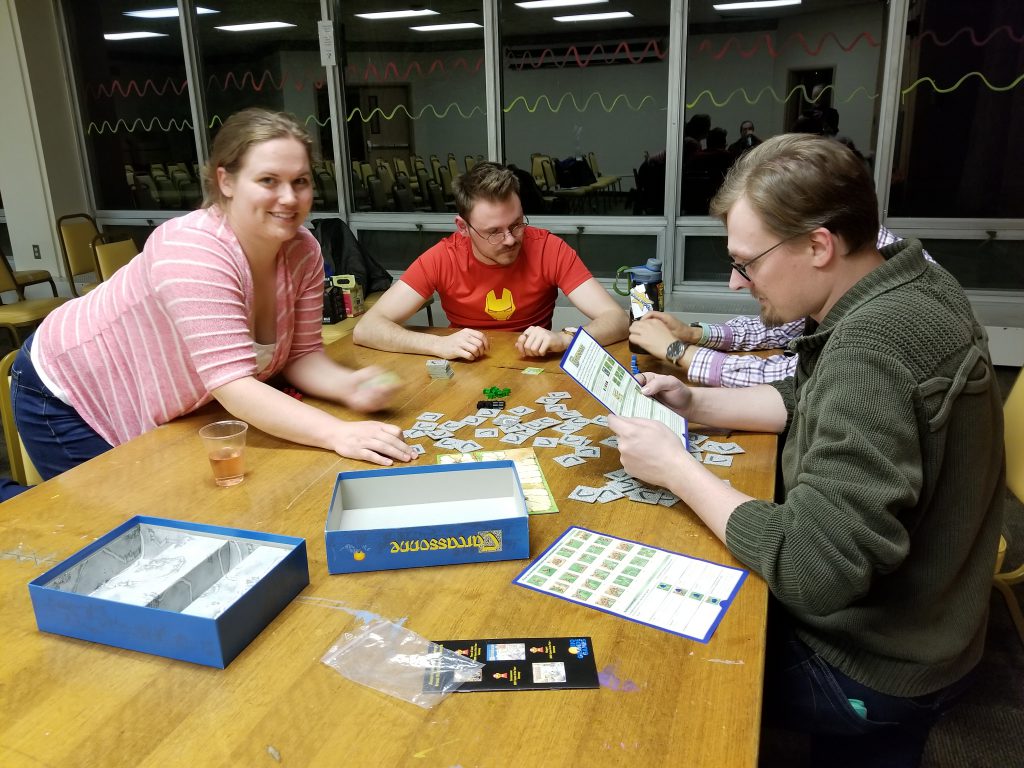
At the end of the day, as in previous years, it was possible to retreat to one of the Student Lounges, where we gathered to talk, relax, and, on occasion, play board games.  Hence my customary term for that Room.  (Never “Bored”.)

In the Board Room at the 2019 Congress.

In the Board Room at the 2019 Congress.

Making a Move.

In the Board Room at the 2019 Congress.

In the Board Room at the 2019 Congress.

Engaging in the Game.

In the Board Room at the 2019 Congress.

Options.

In the Board Room at the 2019 Congress.

In the Board Room at the 2019 Congress.

The customary Shedding of Shoes.

Bare Feet in the Board Room at the 2019 Congress.

Bare Feet in the Board Room at the 2019 Congress.

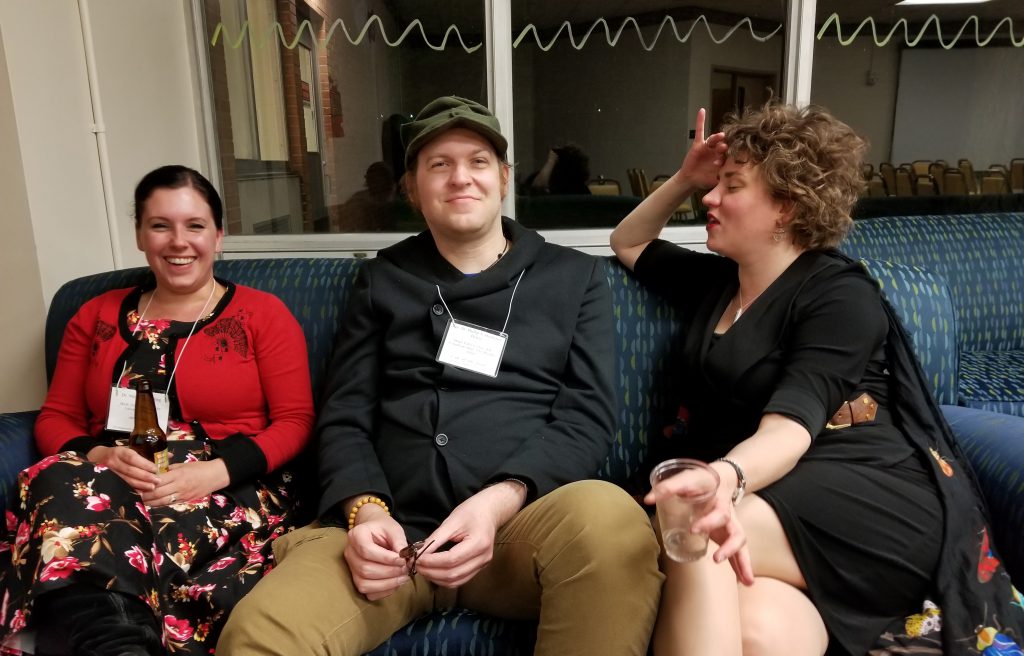
Conversing in the Board Room.

In the Board Room 2019 Congress.

In the Board Room 2019 Congress.

Telling Stories.

In the Board Room at the 2019 Congress.

In the Board Room at the 2019 Congress.

Not forgetting Refreshments.

In the Board Room at the 2019 Congress.

In the Board Room at the 2019 Congress.

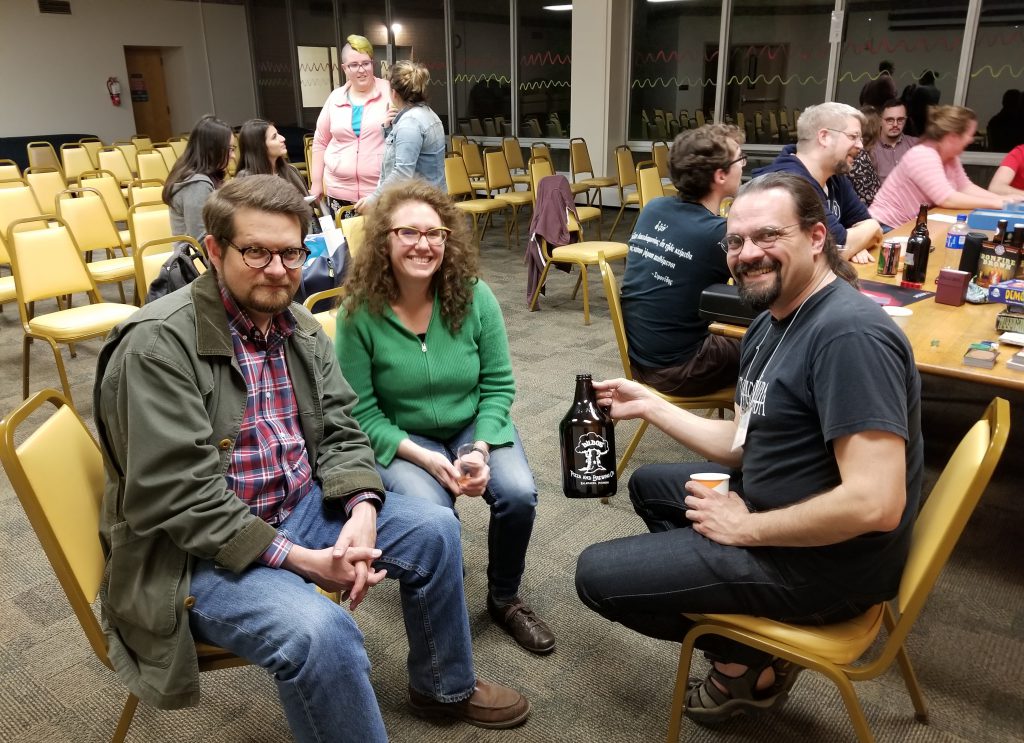
Happy Traditions in Good Company among Colleagues and Friends.

*****

Book Signing

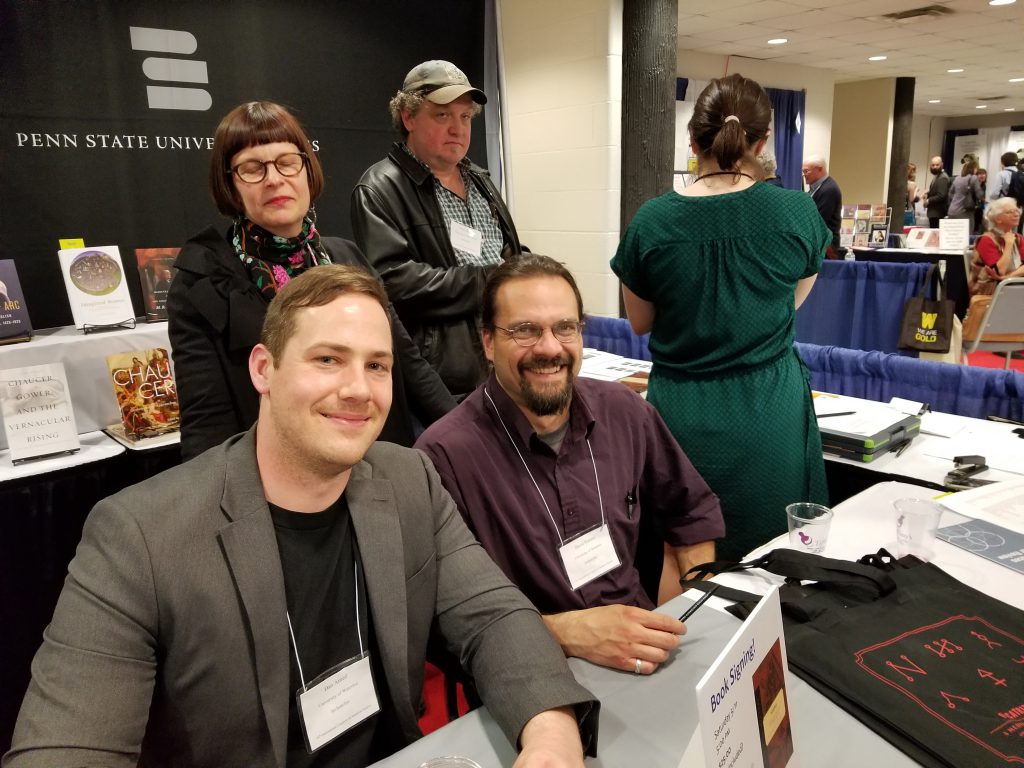
At last, the edition and translation has appeared.  The Picatrix: A Medieval Treatise on Astral Magic, translated with an introduction by Dan Attrell and David Porreca (2019). The authors sign copies.   Hurray!

Congratulating the achievement, we join the company of admirers with the happy awareness that we have heard about the research for this publication over the years, including in some of our Sessions at the Congress.

Dan and David at Their Book-Signing at the 2019 Congress.

Dan and David at Their Book-Signing at the 2019 Congress.

For example, at the 2018 Congress, Abstract of Paper included.

Poster for our Session co-sponsored with the Societas Magica on "Occult Blockbusters of the Islamicate World", Part I: The Piccatrix (A Magical Bestseller)", organized by David Porreca and sponsored by both the Research Group on Manuscript Evidence amd the Societas Magica at the 2018 International Congress on Medieval Studies. Poster set in RGME Bembino.

2018 Poster for “Occult Blockbusters” Session.

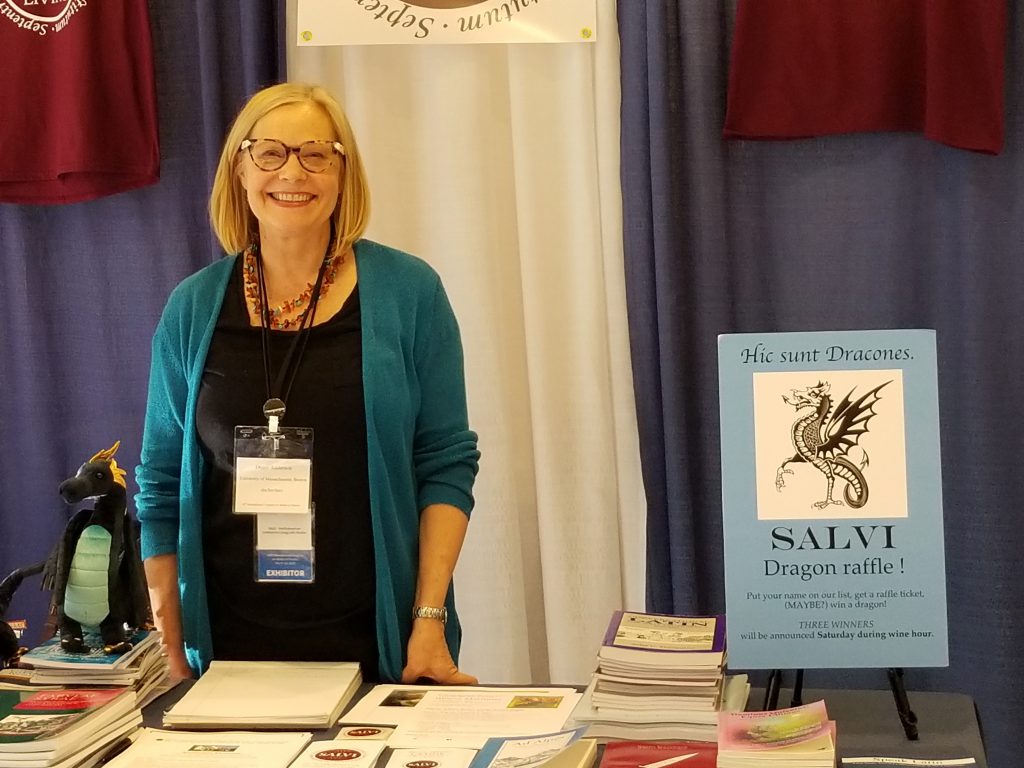
Displays, Dragons Included.

Diane in the Display 2019 Congress.

Display at the 2019 Congress.

*****

Sunday Lunch, Plus Some Manuscript Materials

As customary in recent years, some of us gather at the cafeteria for Sunday lunch, as the Congress draws to its close and we prepare for return journeys.  As in recent years, the gathering gives the opportunity to look afresh at some manuscript materials.

Here.

Adelaide, Eleanor, and David at Sunday Lunch at the 2019 Congress.

Sunday Lunch at the 2019 Congress.

With some improvised, reclaimed materials, Michael wraps his newly won Manuscript Facsimile Page for safe transit.

Michael at Sunday Lunch at the 2019 Congress.

Michael at Sunday Lunch at the 2019 Congress.

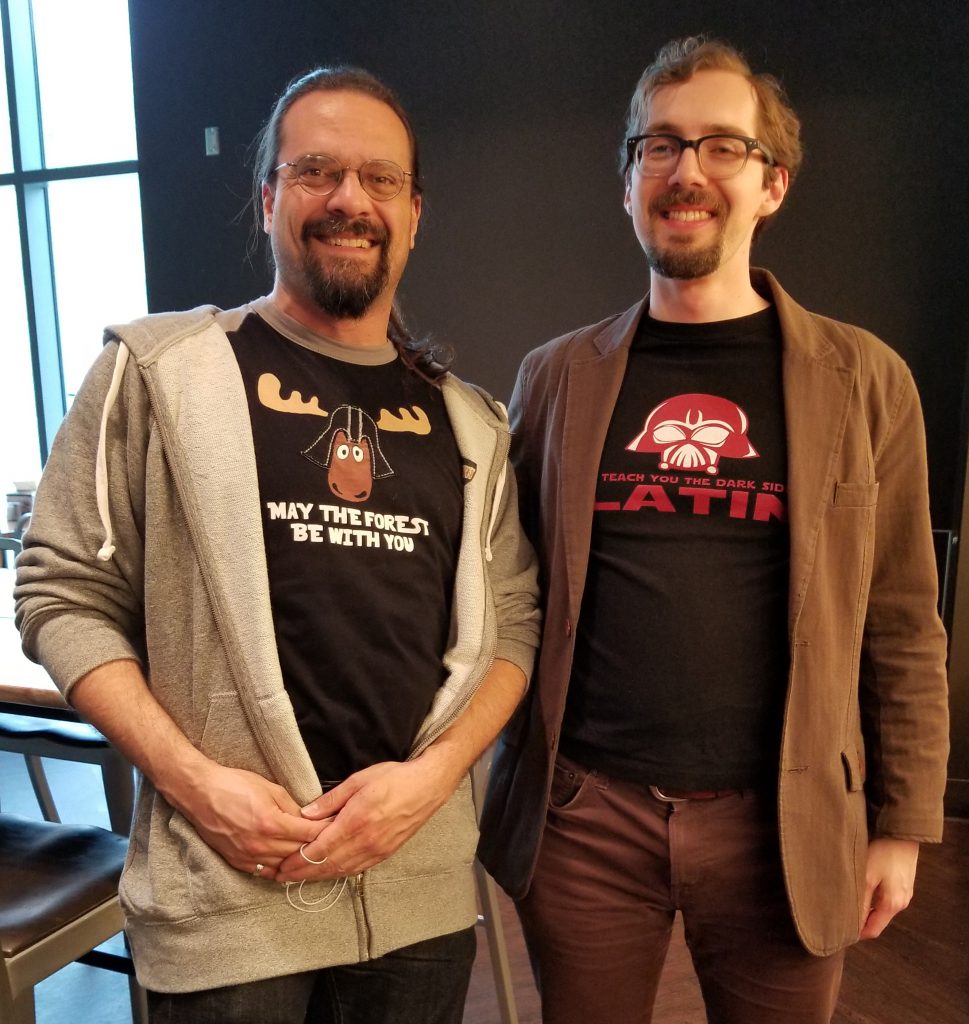
Travelling T-Shirts as Selected and Modelled by Research Group Associates.

T-Shirts at Sunday Lunch at the 2019 Congress.

Derek and David with T-Shirts at Sunday Lunch at the 2019 Congress.

*****

Heading Home

As the Congress shuts down, participants, exhibitors, staff, and employees, hurry to pack and depart.  Then comes a quiet time, as some await their transport.  Among them is Ilona.

Ilona Awaits at the End of the 2019 Congress. Photograph by Mildred Budny.

Ilona Awaits at the End of the 2019 Congress.

As packing is completed, there is pause to look around the setting and reflect upon the completion of another Congress.

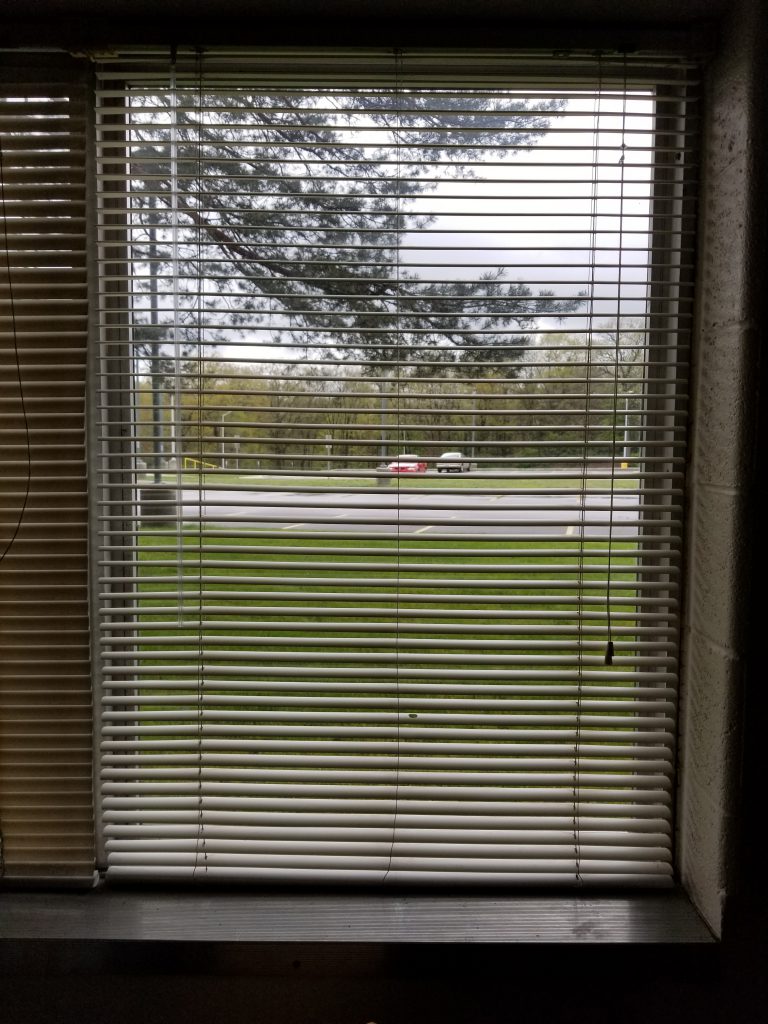
1) Looking out from a ground-floor dorm room toward the Parking Lot as its spaces have cleared.

View from the Dorm at the End of the Congress.

View from the Dorm at the End of the Congress.

2) A view of the Corridor leading to and from that room shows some “Light at the End of the Corridor”.

At the End of the 2019 Congress. A view down the dorm corridor, with Light at the End of the Tunnel.

At the End of the 2019 Congress: Light at the End of the Tunnel.

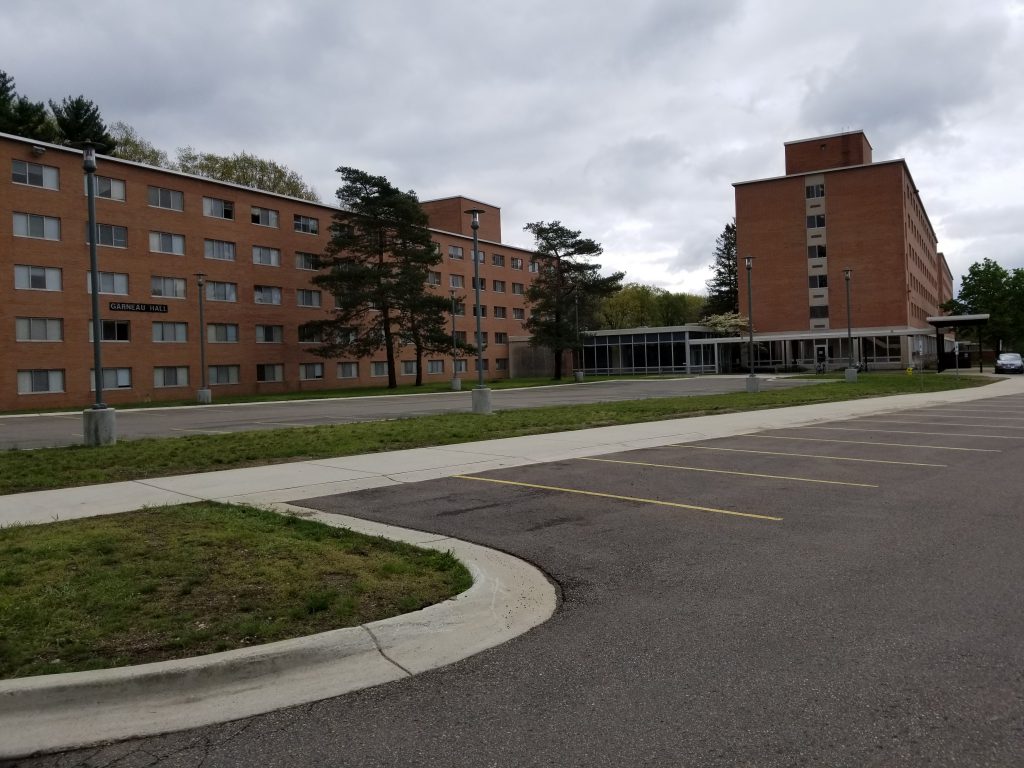
Now is the time to drive away.

The Empty Parking Lot after the 2019 Congress.

The Empty Parking Lot after the 2019 Congress.

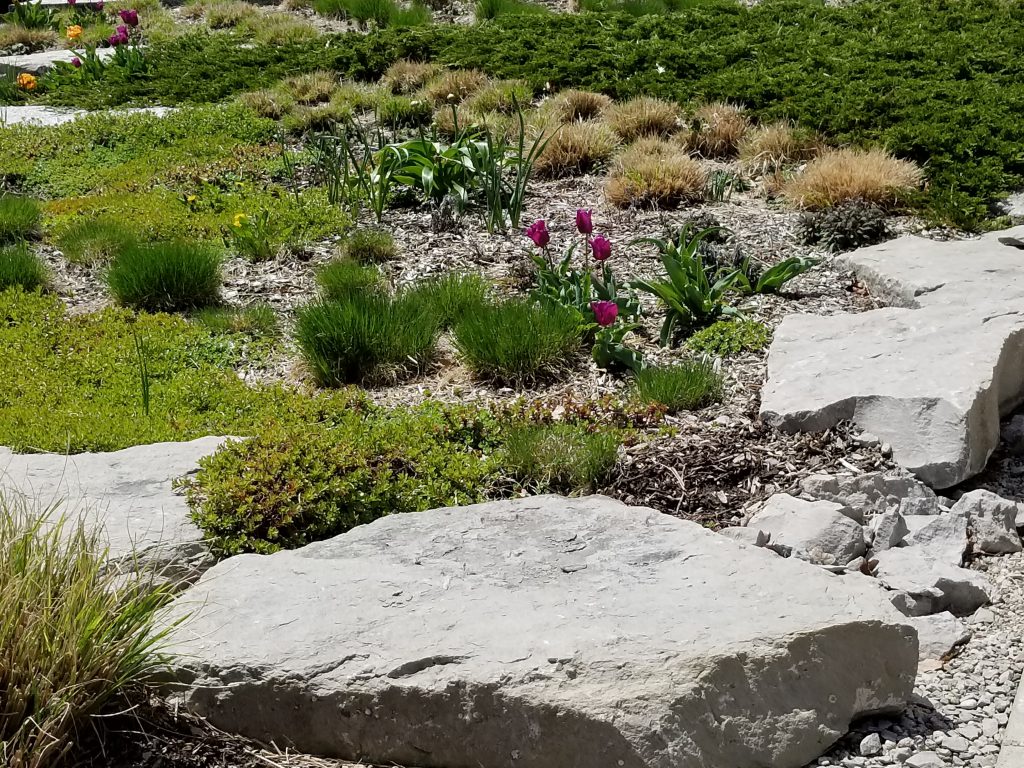
The grey weather following the Congress made a contrast with the sunny days along part of its course. By some of that sunlight might we remember it.

Central Rock Garden at WMU International Congress on Medieval Studies at Kalamazoo May 2019. Photograph Mildred Budny.

Central Rock Garden at WMU Kzoo 2019

*****

“Le Chariot” Hitches a Ride and Comes to the End of the Line

Remember the  Tardis-like conveyance driven by our Director?  See Above and also the Reports for the  2016 Congress and the 2017 Congress .

Our lamented Associate, Michel Huglo, named this selfsame vehicle “Le Chariot de Milly” when he caught first sight of it.  That was when our Director came to collect him for brunch in Princeton following our 1998 Symposium on The Bible and the Liturgy, at which he had spoken.  That name has proved as trusty as, for years, did the car.  With the Director, it has ventured to conferences — including those in which the Research Group participated as organizer and sponsor or co-sponsor — in various states, including MA, CT, PA, OH, and MI.

This time, on the way back from the Kalamazoo Congress, the car gave up with a pop on the Ohio Turnpike.  In the middle lane, at that, but with no traffic, so that it was possible safely to move to the side of the road, where conveniently stood a layby.

Le Chariot at the Side of the Ohio Turnpike Returning from the 2019 Congress.

Le Chariot at the Side of the Road.

It took some time for help to arrive, but then Le Chariot was able to hitch a ride.

Le Chariot Hitches a Ride on the Way Back from the 2019 Congress.

Le Chariot Hitches a Ride on the Way Back from the 2019 Congress.

This car had come to the end of the line, so had to remain in Ohio.  Another means of conveyance could be found for the return to home base, but that car has now passed into history.  Legend, some might say?

*****

With hindsight, it seems somehow fitting that my thoughtful photographs in leaving the Congress rooms and spaces included choices to record them in the absence of people within the frame, but not without their presence, and their presence of mind.

*****
The grey weather following the Congress made a contrast with the sunny days along part of its course. By some of that sunlight might we remember it.

Central Rock Garden at WMU International Congress on Medieval Studies at Kalamazoo May 2019. Photograph Mildred Budny.

Central Rock Garden at WMU Kzoo 2019

Or, as I also wish to think about it, there might be some “Light at the End of the Corridor”.

*****
Now see the 2020 International Congress Program Announced.

Although some of our Sessions planned for the 2020 Congress considered aspects of Divination and other approaches to “Seeing the Unknown” (in Parts I & II), we did not guess that the Congress itself would have to be abandoned.  And so now, on the day which would have been devoted to travel to the 2020 Congress, I reflect on the forms of light which presence and hindsight — perhaps also forethought — might offer for our explorations across time and space, guided by experiences and reflections.

At the End of the 2019 Congress. A view down the dorm corridor, with Light at the End of the Tunnel.

At the End of the 2019 Congress: Light at the End of the Tunnel.

*****
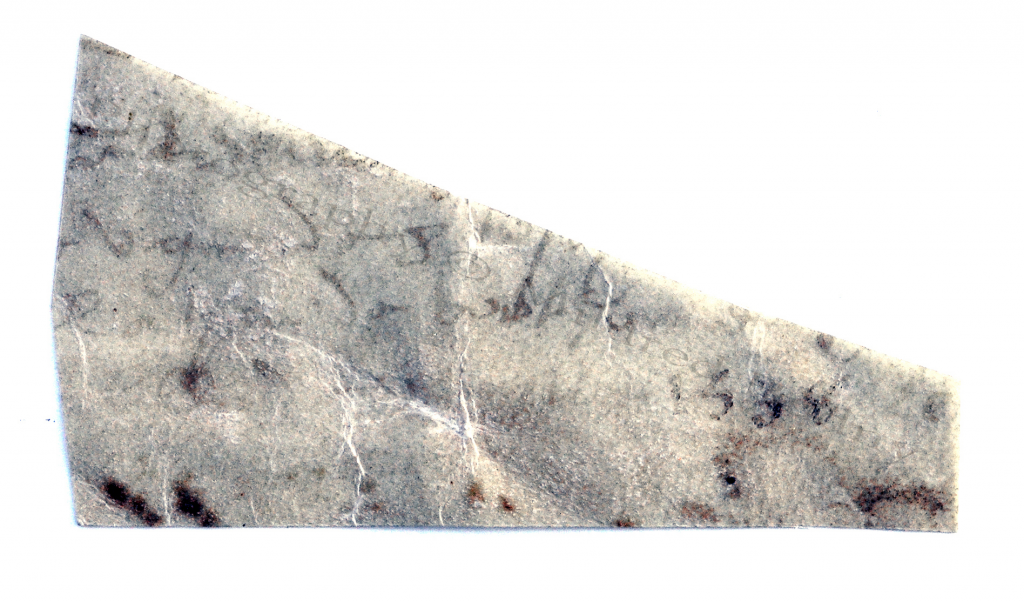
Tags: Board Room, Business Meeting, Reception, Targis
No Comments »

A Leaf from ‘Otto Ege Manuscript 19’ and Ege’s Workshop Practices

May 1, 2020 in Manuscript Studies, Uncategorized

An Old Testament Leaf from ‘Otto Ege Manuscript 19’

And Ege’s Workshop Habits
in Assembling His Portfolios

Opening of the Book of Macabees in Otto Ege MS 19. Private Collection.

Portable Bible in the Latin Vulgate Version
Italy, circa 1275, with Illuminations made apparently in Paris

Double columns in 48 lines
circa 235 × 170 mm <written area circa 153 × 107 mm>

End of Malachi (within 2:13 – 4:10),
Jerome’s Prologue to Maccabees, Argumentum,
and Opening of I Maccabees (1:1 – within 1:21)

J. S. Wagner Collection

[Posted on 1 May 2020, with updates]
A detached leaf from ‘Otto Ege Manuscript 19’, now in the J. S. Wagner Collection, provides the transition from one Old Testament Book to the next.  In reporting its survival and setting it into the context of its former manuscript and the known patterns of Otto Ege’s distribution of his dismembered manuscripts, we examine the leaf, its presentation as part of a larger series (initially as Ege’s Number 19, altered for some reason to a Number 13), and Ege’s evolving “workshop practices” in mounting and distributing manuscript leaves to wider audiences.

[Note:  This post began as the report of a Leaf from one of the manuscripts dispersed by Otto F. Ege, to follow our earlier reports for some other manuscripts of his.  It grew into a report also of Ege’s varying workshop practices over time in assembling or reassembling his Portfolios of specimen Leaves extracted from manuscripts and other books.  Selected specimens would be mounted in mats, often with identifying labels or inscriptions in print or pencil, arranged in groups (notably in the Portfolios, but also in other batches) or distributed as left-overs, and sold far and wide.  Mercifully, apart from cutting the individual leaves out of the books, Ege did not crop them except by the rectangular windows of their mats.

As reported in other posts on this blog (see the Contents List), our cumulative examination of various Portfolios, individual sets thereof, and individual leaves either extracted from Portfolios or distributed on their own (as “Strays”), has yielded detailed grounds for conjectures about Ege’s evolving and revolving practices over an extended period of intense activity dedicated to maximizing the teaching (and commercial) potential of his collection.  We share some results of that research here.]

Opening of the Book of Macabees in Otto Ege MS 19. Private Collection.

Wagner Leaf from Ege Manuscript 19, verso, detail.

With thanks to the present collector, J. S. Wagner, who drew this find to our attention on account of our blog (You are Here), we present the images, front and back, of a detached leaf from a small-format 13th-century Vulgate Latin Bible dispersed by Otto F. Ege (1888–1951).  The leaf was formerly part of Ege Manuscript 19 (Gwara, Handlist, No. 19, page 124).

Already, in our blog on Manuscript Studies (You are Here), we have considered leaves from other manuscripts distributed by Ege.  See our Contents List for the series of discoveries, which so far principally concern Ege Manuscripts 8, 14, 41, 51, 61,  and 214; we begin work also on Ege Manuscript 56 in Armenian.

This new opportunity opens the possibility to consider another of Ege’s dismembered manuscripts showcased in his Portfolio of Fifty Original Manuscripts (= “FOL”), for which a core study was developed with the website devoted to a group of its survivors as ege.denison.edu, and for which work has continued to advance apace in multiple centers.

This Portfolio is one of several which Ege devoted to specific titles or genres of books in manuscript and/or print (such as the Bible in several languages).  Ege gave this one the title of Fifty Leaves from Medieval Manuscripts, XII–XVI Century [sic for the plural].  Ege numbered its Leaves as “1–50”, in the sequence which he chose for their presentation there.  Their source manuscripts, accordingly, in Scott Gwara’s Handlist of Ege’s manuscripts are known as “Ege Manuscripts 1–50” (of at least 1–325, and counting).  A provisional summary of the contents of this Portfolio and some of its known sets appears online in The Otto F. Ege Palaeography Portfolio: Towards a Virtual and Interactive Reconstruction of Fifty Dismembered Manuscripts.  Virtual reconstructions of one and another of its manuscripts continue to emerge, as with FOL Leaf 15, the 14th-century Beauvais Missal.

J. S. Wagner Collection. Leaf from from Prime in a Latin manuscript Breviary. Folio 4 Recto, Initial C for "Confitimini" of Psalm 117 (118), with scrolling foliate decoration.

Already, in this blog, we have presented 2 leaves from the J. S. Wagner Collection:

  • The Penitent King David from a Book of Hours
  • A Leaf from Prime in a Large-Format Breviary .

Now we turn to the Ege Leaf in that Collection.

Read the rest of this entry →

Tags: "Fifty Original Manuscripts", Bible Manuscripts, Charles Carmichael Lacaita, Ege's Portfolios, Ege's Workshop Practices, J.S. Wagner Collection, Latin Vulgate Bible, manuscript fragments, Otto Ege, Otto Ege Manscript 61, Otto Ege Manuscriipt 23, Otto Ege Manuscript 13, Otto Ege Manuscript 14, Otto Ege Manuscript 19, Otto Ege Manuscript 41, Otto Ege Manuscripts, Portable Bibles, Sir Joseph Lacaita
6 Comments »

The Pearly Gateway: A Scrap from a Latin Missal or Breviary

April 26, 2020 in Manuscript Studies, Uncategorized

The Pearly Gateway:
A Scrap from a Latin Missal or Breviary

[Published on 25 April 2020]

A scrap of a late-medieval Latin manuscript joins the company of fragments from religious texts for collective use, including missals and breviaries, and also that of medieval manuscript fragments retrieved from secondary reuse in binding other forms of text.  See the Contents List for this blog.

Private Collection, "Margaritas" fragment front side.

Private Collection, "Margaritas" fragment back side

Recently a small fragment of a leaf was acquired for a private collection from an unknown Latin manuscript.  We had the opportunity to examine and photograph the fragment, and we offer images of it here, along with preliminary observations.   Perhaps you recognize the script or text?

The scrap retains part of a single column of text, including some of the upper margin of the leaf.  The text amounts to one side of the column and 7 of its lines, plus the top of a next line.  One side of the scrap holds the opening, or left-hand side, of the column of text; the other holds the ending, or right-hand side, of its column.

The shape of the scrap shows that it was excised or trimmed down to its present limited extent by an uneven vertical slice both at the left of the column and through its middle, and an uneven horizontal slice through the top of its line 8.  It may have seemed unnecessary to cut through the upper margin, so perhaps the present height of the margin is the same as it was when the spoliation occurred.

Other forms of damage affect the scrap, including fold-lines, creases, tears, stains, and pigment offsets.  The patterns of folds, rubbed portions of text, and the losses probably from a mitred corner may show that this scrap came from a reused piece of vellum which served as the covering of a binding for some other text.  If so, the trimming of the part-column would have followed the retrieval of that reused vellum and its division into smaller portions for individual distribution, that is, sale.

Fuller leaves deformed by reuse in bindings have passed through our blog.  They show more of the folding and mitering patterns which such reuse would have entailed.  For example, A Leaf from Gregory’s Dialogues Reused to Bind Euthymius:

Verso of Leaf from the Dialogues of Gregory the Great, Book III, chapter 7. Photography by Mildred Budny

Verso of Leaf from the Dialogues of Gregory the Great, Book III, chapter 7. Photography by Mildred Budny

Script and Layout

It is not clear whether the original leaf originally held a single column or double columns of text.  The margin to the right of the column might represent part of the inner margin of the leaf or part of the intercolumn separating the 2 columns (let us call them ‘a’ and ‘b’ from left to right).  If it came from a double-column format, this scrap would represent the first part of column a or b on one side, and the last part of the reverse (column b or a) on the other.  The distance textually between those remnants, as yet unknown, could help to assess the length of the columns as well as their number per page.

The text is written in ink, with rubricated elements in red pigment.  That pigment remains bright, without discoloration, probably indicating its vegetal (rather than metallic) origin.  Line 1 stands below the top ruled line of the framework for the text.  The ladder-like framework has outlined ‘rungs’ upon which the lines of script stand.  The lines of the framework are made in ink on one side of the scrap, but partly in ink and partly (in the lower part) in red pigment on the other side.

The text is written clearly in upright Gothic textura, with a few capitals.  The script employs a few abbreviations, low points for punctuation, and diagonal hairline strokes rising to the right as the dots over the i‘s.  The letter a has a firmly closed double-compartment bow.

Side 1

Private Collection, "Margaritas" fragment back side

Private Collection, “Margaritas” fragment back side.

Lines 1–3 on Side 1 correspond to part of De Uirgine que Martyr Fuerit in the published Missal of Saint Augustine’s Abbey, Canterbury, Appendix B, page 167. Here.  Andreas Falow observed that the passage belongs to the Responsonium
Simile est regnum caelorum homini negotiatori.

From these sources we supply, within square brackets [thus], the missing parts of each line opening the column.  Line 1 begins mid-word.

Line 1

[ne-/]gociatori queren[ti bonas]

margaritas. [inuenta u-]

[-]na preciosa ma[rgariti]

dedit omnia sua [et conp-]

Line 5

[-]aruit eam.  ¶ [ . . . ]

[]ue erineit ?est i[ . . . ]

[-]te us’ op die feria [ . . . ]

[ . . . ]

The passage in full would begin on at the bottom of the preceding column of text, either on the same page (in column a for column b in 2-column layout) or on the preceding page (in the single column in 2-column layout or in column b for 2-column layout).  Depending upon the location of this damaged column, it if stood at the left on the recto, the preceding column would have belonged to the preceding leaf.  By these words, we might recognize it, if it comes to light among surviving fragments.

The Response:

Simile est regnum caelorum homini negotiatori,
quaerenti bonas margaritas;
inventa una pretiosa margarita,
dedit omnia sua
et comparavit eam.

In German:

Das Reich der Himmel gleicht einem Kaufmann,
der schöne Perlen suchte.
Als er eine kostbare Perle fand,
gab er all das seine
und kaufte sie.

As Chris Nighman observes, the passage refers to the Parable of the Pearl, related in Matthew 13:45–46:

45 iterum simile est regnum caelorum homini negoiatori quaertenti bonas margaritas
46 inventa autem una pretiosa margarita abiit et vendid omnia que habuit et emit eam

In the King James Version:

Again, the kingdom of heaven is like unto a merchant man, seeking goodly pearls: Who, when he had found one pearl of great price, went and sold all that he had, and bought it.

That passage, known as the Parable of the Pearl, or the Pearl of Great Price, alludes to the rarity and value of pearls both as physical and as symbolical treasures.

Washington, D. C., National Gallery of Art. Jan Vermeer, "The Pearl Merchant" or "Woman holding a Balance"(circa 1665). Image Public Domain via Wikimedia.

Washington, D. C., National Gallery of Art. Jan Vermeer, “The Pearl Merchant” or “Woman Holding a Balance” (circa 1665). Image Public Domain via Wikimedia.

Side 2

Private Collection, "Margaritas" fragment front side.

Private Collection, “Margaritas” fragment front side.

Line 1

[ . . . ]s et [ . . . ] eligit eam

[ . . . ]tare  [ . . . ]au[?]i facit

[ . . . ]uaci [ . . . ]o suo In

[ . . . ]le uii[ . . . ] Au’ de lau-

Line 5

[ . . . ]feria [.]s. Cap[itu]l[um] in

[ In] ecclesiis altissi[-]

[ -m]i apieret os su-[um . . . ]

In the Breviarium Remense (1830), In ecclesiis altisimi apieret os suum is a Response in Dominica I post Epiphianium in II Nocturno.

The Columns of Text Reconstructed

The portions of text which we can so far reconstruct through their recognition in other sources establish that each column had short lines, of which the scrap retains about one-half to one-third the former width.  Such presentation may indicate that the original manuscript had double columns.

Front & Back

It is not yet clear which side of the scrap was the front, or recto in the manuscript.  More research may clarify the issue.

But we can see which side of the skin is which.

The whitish flesh side of the animal skin stands on the side of the fragment which opens its column of text and places the word margaritas (“pearls”) in line 1.

Private Collection, "Margaritas" fragment back side, lines 2-5.

Private Collection, “Margaritas” fragment back side, lines 2-5.

The darker hair side includes a few short hairs from the animal on the partly-healed hole which interferes with the lower part of the o of os in the last line.  The slice through the leaf below this line bisects the hole.

Private Collection, "Margaritas" fragment front side, lines 4-7.

Private Collection, “Margaritas” fragment front side, lines 4-7.

It was the hair side which the leaf turned outside when it was reused to cover a binding.

*****
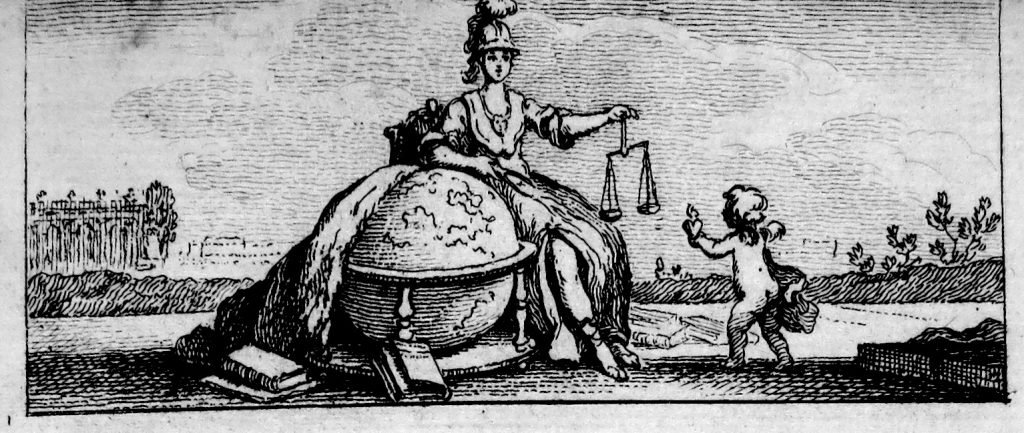
Do you recognize this scribe or the texts?

Please leave your Comments here, Contact Us with your questions and suggestions, and visit our Facebook Page.

Also, watch this blog for more discoveries.

*****
Tags: Breviary, manuscripts reused in bindings, Medieval Manuscript Fragments, Missal, Parable of the Pearl, Pearl of Great Price
3 Comments »

More Light on English Charters

April 16, 2020 in Manuscript Studies, Uncategorized

2 More English Charters
“English Charters 1–2”

6 Richard II (19 September 1382)
10 Henry VII (7 December 1494)

[Published on 16 April 2020]

Having completed the round of posts about a set of charters pertaining mostly to Preston in Suffolk, England, we turn to 2 more English charters in that private collection, as now revealed to our view.

Group of 8 Preston Charters: Front. Photograph Mildred Budny.

Group of 8 Preston Charters: Front. Photograph Mildred Budny.

The first round considered the group in stages, pair by pair:

  • Charters 5 and 7:  Full Court Preston and Preston Take 2
  • Charters 6 and 9:  Preston Charters Continued
  • Charters 10 and 11:  Charter the Course:  More on Preston Charters
  • Charters 12 and 13: Preston Charters: The Chierographs

(Remember, Charter 8 is missing.)

Now we turn to a new pair:  Charters 1 and 2 in the same set.

These documents have the owner’s numbers 1 and 2 entered on their dorse in black ink, at top left.  The numbers on the “Preston” group as we considered them show their placement clearly.

Private Collection, Preston Charters: Dorse with Guide. Photograph Mildred Budny.

Preston Charters: Dorse with Guide. Photograph Mildred Budny.

For Charters 1 & 2, the first purchased among the collector’s English charters, we can at present show you their face, not dorse. These 2 were purchased as single items.

Charter 1

6 Richard II (= 22 June 1382 – 21 June 1383)
“On the Feast of Saint Michael Archangel” = 19 September
19 September 1382

From Juliana X [Name to be deciphered], Wife of John of Saint Andrew, Miles (“Soldier”)

To Thomas Merdeleye of Sutton and others

Charter 6 Richard II Face.

Charter 1: 6 Richard II Face.

Richard II (6 January 1367 – c. 14 February 1400), who reigned from 1377 until he was deposed in 1399.
Among his Regnal Years, Year 6 spanned spanned 22 June 1382 – 21 June 1383.

London, British Library, Royal MS 14 E IV, folio 10 recto. "Recueil des croniques" by Jean de Wavrin. Coronation of Richard II at the age of 10 in 1377.

London, British Library, Royal MS 14 E IV, folio 10 recto. “Recueil des croniques” by Jean de Wavrin. Coronation of Richard II at the age of 10 in 1377.

The document specifies the date of the Feast of Saint Michael the Archangel — namely 19 September.  Within the span of this king’s regnal years, crossing from one June to the next, that feast fell in the first calendar year.

Damage to the document by liquid, smears, folds, and holes imposes strategic impediments to deciphering some of the names.  Examples include the surname or appelation of the vendor

Ego Juliana ???  uxor Johannis de sancto Andrea milities

“Juliana [???], wife of John of Saint Andrew, miles” (line 1 and again line 6, both times disrupted after her first name)

and the names of some buyers and witnesses.

Charter 1: 6 Richard II Face top center.

Charter 1: 6 Richard II Face top center.

Image enhancement by the owner improves the legibility.  For example, viewing with Black Light reveals more of the text through the water damage.

Charter 1: 6 Richard II Charter Face with black-lighting of water damage.

Charter 1: 6 Richard II Charter Face with black-lighting of water damage.

Similar for other portions of the water-damage, lower down on the document.

Charter 1: 6 Richard II Charter black-lighting of water damage midway down.

Charter 1: 6 Richard II Charter with black-lighting of water damage.

Docketing

Another method, Back-lighting, reveals more of the docketing inscription on the dorse.  That inscription, for what it is worth, had the benefit of viewing the text before the water damage, which affected the docketing as well.

Charter 1: 6 Richard 11. Docketing Inscription under back-lighting.

Charter 1: f 6 Richard 11. Docketing Inscription under back-lighting.

All the same, the inscription exhibits some variations from the text of the document.

A Deede from Julian [sic] . . . wife of John S[. . .] A[.]nd[ . .]/
to Thomas Mo[?]edoley, of Sutton, to John d[. . . ] /
au to John de Bredon capellan [. . . ] /
dated on . . . sct[. . . ] /
[ . . . ]

People

The names might find identifications with persons recorded in other sources — provided, of course, that the dates are correct and the identifications are secure.  For example, records survive for

  • a Johannis de sancto andrea at Byfield, in 1428 (Way too late)
  • a Thomas de Merdeleye and Thomas de Merdeley, and
  • a John de Bredon.

More work to do.  Would you like to join the quest?

And the Seal

Charter 1: 6 Richard II Charter Seal.

Charter 1: 6 Richard II Charter Seal.

Charter 2

10 Henry VII (22 August 1494 – 21 August 1495)
“Seventh Day of December” = 7 December 1494

From Thomas X
To X
At “Kymbaston”

Charter 2: 10 Henry VII Face.

Charter 2: 10 Henry VII Face.

Date and Place

The text closes with its dating clause.

Charter 2: 10 Henry VII Face, lower left.

Charter 2: 10 Henry VII Face, lower left.

Apud Kymbaston . . . septimo die mensis decembris anno regni Regis Henrici septimi post conquestum Anglis decimo.

“At Kymbaston . . . on the seventh day of the month of December in the tenth regnal year of King Henry VII after the conquest of the English.”

Henry VII (28 January 1457 – 21 April 1509) reigned from 22 August 1485 until his death. Among his Regnal Years, Year 10 spanned 22 August 1494 – 21 August 1495.

So:  7 December 1491, at a place then called Kymbaston.

London, National Portrait Gallery, Portrait painted 29 October 1505. Henry VII wearing the Collar of the Order of the Golden Fleece and holding a rose.

London, National Portrait Gallery, Portrait painted 29 October 1505. Henry VII wearing the Collar of the Order of the Golden Fleece and holding a rose.

Who, What, Where

The forcible removal of much of the document by excision prevents a clear view of the transaction entire.

The vendor was a Thomas. That much is clear.

Charter 2: 10 Henry VII Face top left.

Charter 2: 10 Henry VII Face top left.

More research may reveal more about the persons and places.

Do you recognize any of these features, places, and persons?

Please contact us via Contact Us or our Facebook Page. Comments here are welcome too.

*****
More to Come. See the Contents List for this blog.

*****
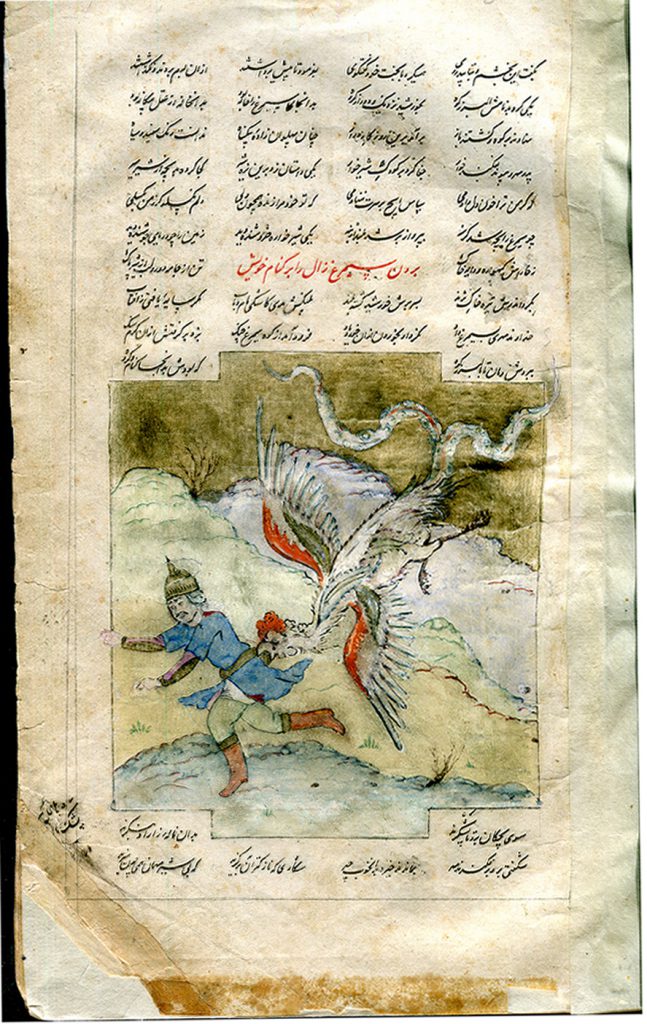
Tags: Hency VII, Henry VII, History of Documents, John of Saint Andrew, Kymbaston, Medieval English Documents, Medieval Seals, Richard II, Saint Michael Archangel
No Comments »

Charter the Course: More on Preston Charters

April 13, 2020 in Manuscript Studies, Uncategorized

Charter the Course

More on Preston Charters:
Charters 10 and 11
from Regnal Years 12 and 18 of Edward II

[Published on 13 April 2020, with Updates.]

Following our 3 previous blogposts on the group of charters from Preston in Suffolk, England, now in a private collection, we advance with further reports about them.  Those blogposts focused upon 4 of the group of 8 charters.  Employing the owner’s numbering system, they considered

  • Preston Charter 9 Face.

    Preston Charter 9 Face.

    Charters 5 and 7:  Full Court Preston and Preston Take 2

  • Charters 6 and 9:  Preston Charters Continued

(Remember, Charter 8 is missing.)

Now we turn to others.  Here we focus upon Charters 10 and 11.

Both of these are dated, like Charter 9; all 3 of these have dates within the reign of King Edward II, spaced at 4-year intervals.  Charter 9, already examined (also see its image to the right here), is dated to Year 8 of the reign.

The Group of Preston Charters

Sign for the Portobello Road, W11, London

https://upload.wikimedia.org/wikipedia/commons/7/7d/Church_at_Preston_St_Mary_-_geograph.org.uk_-_1598436.jpg

Church at Preston St Mary. Photograph by Andrew Hill via Wikimedia Creative Commons

The owner purchased the group of 9 documents in the 1980s in London, probably — according to his recollection — in the Portobello Road, a renowned location of markets and shops of many kinds, including used goods, curiousities, and antiquities.  The group has a consecutive series of modern Arabic numbers, running from 5 to 13.  The individual number is entered in black ink at the top left corner of the dorse (or back) of each document.

Of that original group, only 8 survive in the “Preston” collection, because Charter 8 went missing after a class some years ago, considerably before the group came into our view.  Consequently, we know now only of Charters 5–7 and 9–13.

Charters 5 and 7 have figured already in 2 previous blogposts, with an introduction, photographs and descriptions, transcriptions and translations of their texts, and some observations about their characteristics and contexts (Full Court Preston and Preston Take 2).  Next, Charters 6 and 9 took the stage (Preston Charters Continued).

We continue here to Charter the Course.

Now is the time for Charters 10 and 11.  Both carry the dates of their transactions during the reign of King Edward II, who lived from 25 April 1284 – 21 September 1327, and reigned from 7 July 1307 until his deposition in January 1327.

Read the rest of this entry →

Tags: History of Documents, King Edward II, Portobello Road, Preston, Preston Saint Mary, Reused Documents, Seal Tags
No Comments »

« Older Entries
Newer Entries »
  • Top
©2024 Research Group on Manuscript Evidence.


is proudly powered by WordPress. WordPress Themes X2 developed by ThemeKraft.